

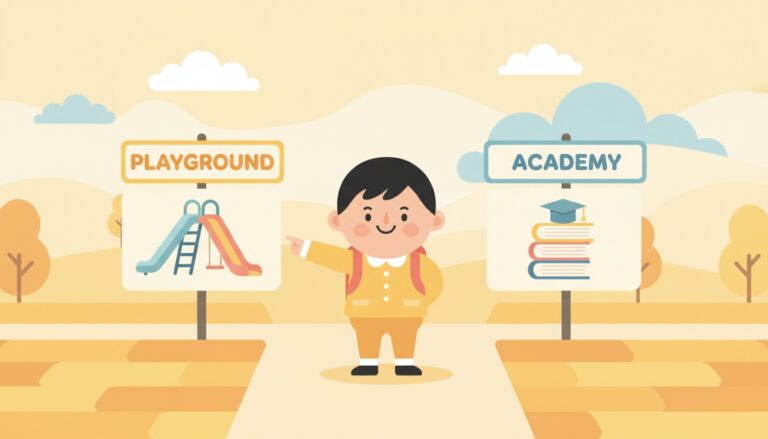
Is ‘Sky Castle’ Real? Talking About Korean Early Education 🏫
1. Introduction: Is Drama Life Real Life?
Hello, everyone! It’s Daily Hangul here! 😊
Have you ever watched the K-Drama “Sky Castle” or “Crash Course in Romance”? If you have, you probably dropped your jaw seeing Korean students studying until late at night and parents fighting to get them into the best academies.
One of my students actually asked me last week, “Teacher, do Korean 5-year-olds really learn coding and English?”
Well… the short answer is YES.
Today, we are going to talk about a very hot topic in Korea: Early Education (Jo-gi-gyo-yuk). Knowing how to discuss this will not only help you understand Korean society but also give you great talking points when chatting with Korean friends (especially those with kids!). Let’s dive into the real Korean expressions regarding this intense “Education Fever”!
2. Today’s Core Expressions: The Deep Dive 🤿
Here are the 3 key phrases you need to discuss education in Korea.
1. 조기 교육 (Jogi gyoyuk)
- Meaning: Early childhood education
- Pronunciation: [Jo-gi gyo-yuk]
[Tutor’s Secret Note 🤫]
This isn’t just about kindergarten. In Korea, this often implies learning difficult subjects (like English, Math, Coding) at a very young age, sometimes before elementary school. If you hear parents sighing while saying this word, they are probably stressed about the cost!
2. 경쟁이 치열해요 (Gyeongjaeng-i chiyeol-haeyo)
- Meaning: The competition is fierce / It’s a rat race.
- Pronunciation: [Gyeong-jaeng-i chi-yeol-hae-yo]
[Tutor’s Secret Note 🤫]
You will hear this everywhere. Korea is a highly competitive society. You can use this phrase not just for school, but also for K-Pop auditions or getting concert tickets!
* Tip: If “chiyeol-haeyo” is too hard to pronounce, just say “Gyeongjaeng-i sim-haeyo” (Competition is severe/strong).
3. 찬성해요 / 반대해요 (Chanseong-haeyo / Bandae-haeyo)
- Meaning: I agree / I disagree.
- Pronunciation: [Chan-seong-hae-yo] / [Ban-dae-hae-yo]
[Tutor’s Secret Note 🤫]
These are essential for any debate. But be careful! Saying “I disagree” (bandae-haeyo) directly to an elder or a boss can sound too strong. In casual debates about social issues, it’s perfect.
3. Textbook Korean vs. Real Korean 🥊
How do actual Koreans talk about sending kids to many academies?
| Book Korean (Textbook) | Real Korean (Slang/Nuance) |
|---|---|
| 학생들이 학원에 많이 다닙니다. (Students attend many private academies.) |
학원 뺑뺑이 돌려요. (Running the Hagwon loop / Spinning the academy wheel.) |
Why use the Real one?
* “뺑뺑이 (Bbaeng-bbaeng-i)” refers to the act of going round and round in circles.
* When moms say, “Today, I have to spin the Hagwon bbaeng-bbaeng-i,” it means they are sending their kid from Math academy to English academy to Piano academy, back-to-back, with no break. It captures the exhausting reality much better than the textbook version!
4. Real Life Scenario: At a Cafe in Gangnam ☕
Situation: You are asking your Korean friend, Minji, about her young nephew’s schedule.
You: 민지 씨, 조카가 벌써 영어를 배워요? (Minji, your nephew is already learning English?)
Minji: 네, 요즘은 조기 교육이 필수예요. (Yes, these days early education is a must.)
You: 아이가 힘들지 않을까요? (Wouldn’t it be hard for the child?)
Minji: 힘들죠. 하지만 한국은 경쟁이 너무 치열해서 어쩔 수 없어요. (It is hard. But competition in Korea is so fierce, there’s no choice.)
You: 저는 너무 어린 나이에 공부하는 건 반대해요. (I disagree with studying at such a young age.)
[K-Culture Tip 💡]
Did you notice Minji said “There’s no choice”? In Korea, even parents who hate over-studying feel ‘Peer Pressure.’ If everyone else sends their kids to academies, they feel guilty if they don’t. This is called the “Gangnam Mom” mindset!
5. FAQ: Questions My Students Always Ask 🙋♀️
Q1: Can I use “Chanseong-haeyo” (I agree) to my boss?
* A: It’s grammatically correct, but a bit direct. In a business setting, it’s softer and more professional to say “저도 동의합니다” (Jeo-do dong-ui-ham-nida) or “좋은 생각입니다” (That’s a good idea).
Q2: What exactly is a “Hagwon”? Is it a school?
* A: Great question! A Hagwon is a private for-profit academy. It is NOT a regular school. Students go there after regular school finishes. There are Hagwons for everything: Math, English, Taekwondo, Piano, and even K-Pop dance!
6. Wrap-up & Today’s Mission 🚀
Today we looked at the intense world of Korean Early Education (Jogi gyoyuk). It might seem scary, but it shows how much Koreans value growth and self-improvement!
🌟 Today’s Mission:
Go to YouTube or Netflix and search for a clip from the drama “Sky Castle”. Listen closely! Can you hear the word “Gyeongjaeng” (Competition) or “Hagwon”? If you catch it, you’ve succeeded!
⬇️ Pop Quiz (Scroll down for answers)
- How do you say “I disagree” in Korean?
- What is the slang for sending kids to multiple academies back-to-back?
.
.
.
.
.
Answers:
1. 반대해요 (Bandae-haeyo)
2. 학원 뺑뺑이 (Hagwon bbaeng-bbaeng-i)
See you next time! 안녕! 👋
Frequently Asked Questions (FAQ)
Q: What does "경쟁이 치열해요 (Gyeongjaeng-i chiyeol-haeyo)" mean in Korean and how do you pronounce it?
A: In Korean, "경쟁이 치열해요 (Gyeongjaeng-i chiyeol-haeyo)" is pronounced [Gyeong-jaeng-i chi-yeol-hae-yo] and means: The competition is fierce / It's a rat race.
Q: What does "찬성해요 / 반대해요 (Chanseong-haeyo / Bandae-haeyo)" mean in Korean and how do you pronounce it?
A: In Korean, "찬성해요 / 반대해요 (Chanseong-haeyo / Bandae-haeyo)" is pronounced [Chan-seong-hae-yo] and means: I agree / I disagree.







