

Hello! It’s your favorite Korean guide, Everyday Korean, here to level up your language skills!
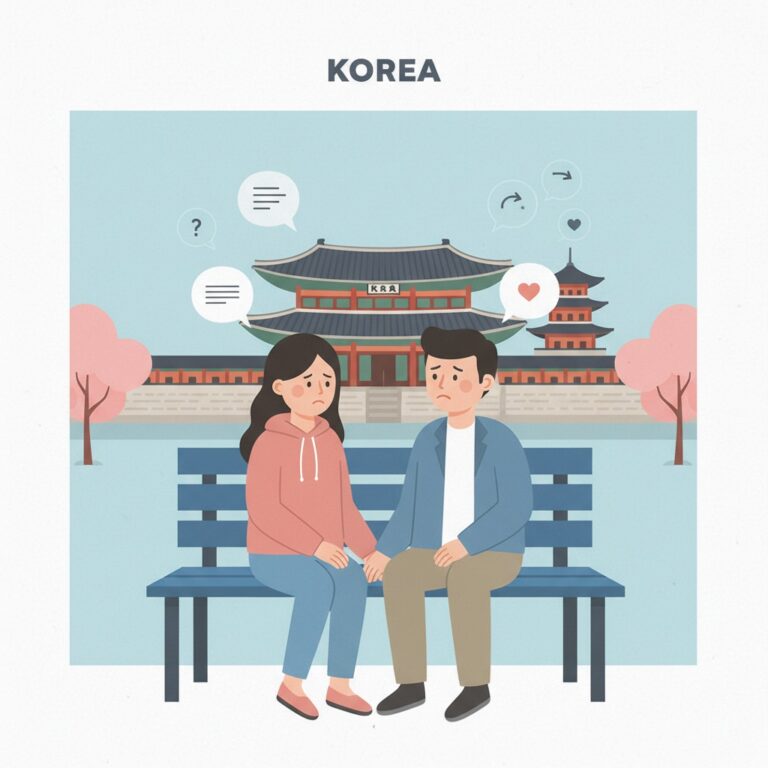
Today, we’re diving into a situation that’s tricky even in your native language: resolving a serious conflict with a friend while traveling. It’s a challenge, but handling it well in Korean will not only save your trip but also make you feel like a true master of the language.
Recently in Korea, travel reality shows like NANA TOUR with SEVENTEEN or the classic Youth Over Flowers are incredibly popular. A fun part of these shows is watching celebrity friends navigate the small disagreements and bits of friction that inevitably pop up on a trip. They show us that talking things out is the best way to keep the friendship strong and the adventure going. So today, let’s learn how to do just that, like a pro!
Core Expressions for a Peaceful Resolution
Here are some key phrases to help you navigate a tough conversation and find a happy compromise.
1. 우리 잠깐 얘기 좀 할까? (Starting the Conversation)
- Pronunciation [Romanization]: Uri jamkkan yaegi jom halkka?
- English Meaning: Can we talk for a minute?
- Detailed Explanation: This is the perfect way to gently but seriously initiate a conversation. It’s softer and less confrontational than saying “We need to talk.” The phrase signals that you have something important on your mind and want to discuss it calmly. It’s a phrase used between people who are close, like friends or partners.
- 💡 Pronunciation Tip: The word 얘기 (yaegi) is a common contraction of the full word 이야기 (iyagi). Many Koreans use the shorter version in casual speech. Make sure to pronounce it as two distinct syllables: [yae-gi].
2. 솔직히 말하면, 아까는 좀 서운했어. (Expressing Your Feelings)
- Pronunciation [Romanization]: Soljiki malhamyeon, akkaneun jom seounhaesseo.
- English Meaning: To be honest, I felt a bit hurt/disappointed earlier.
- Detailed Explanation: 서운하다 (seounhada) is a crucial Korean emotion that’s hard to translate with one word. It’s a mix of sadness, disappointment, and feeling slighted, usually by someone you care about and have expectations for. Using 솔직히 말하면 (soljiki malhamyeon), which means “if I speak honestly,” shows that you’re being vulnerable and sincere, which encourages an open conversation.
- 💡 Pronunciation Tip: The pronunciation of 솔직히 is not [sol-jik-hi] but [솔지키 / soljiki]. In Korean, when a final consonant ‘ㄱ’ (k) is followed by ‘ㅎ’ (h), they combine to create an aspirated ‘ㅋ’ (k) sound. This is a common phonetic rule called “aspiration” (거센소리되기).
3. 네 입장도 이해는 가. (Acknowledging Their Perspective)
- Pronunciation [Romanization]: Ne ipjangdo ihaeneun ga.
- English Meaning: I see where you’re coming from, too. / I understand your position.
- Detailed Explanation: This phrase is key to de-escalating a conflict. 입장 (ipjang) means “stance” or “perspective.” By saying you understand their side, you show that you’re listening and respecting their feelings, even if you don’t fully agree. The particle ‘는 (neun)’ attached to 이해 (ihae) adds a subtle nuance: “I do understand your part… (but there’s still my part to consider).” It validates their view while allowing you to maintain your own.
- 💡 Pronunciation Tip: Pronunciation here is straightforward. Just focus on linking the sounds smoothly: [Ne-ip-jang-do-i-hae-neun-ga].
4. 우리 서로 조금씩 양보하는 게 어때? (Suggesting a Compromise)
- Pronunciation [Romanization]: Uri seoro jogeumssik yangbohaneun ge eottae?
- English Meaning: How about we each compromise a little?
- Detailed Explanation: This is the ultimate goal! 양보하다 (yangbohada) means “to concede” or “to compromise.” 서로 (seoro) means “each other,” and 조금씩 (jogeumssik) means “little by little.” This phrase proposes a fair, mutual solution, focusing on teamwork rather than winning or losing the argument. It’s a constructive and mature way to find a middle ground.
- 💡 Pronunciation Tip: When a syllable ending in a consonant is followed by ‘ㅅ’ (s), the ‘ㅅ’ is often tensed, sounding like ‘ㅆ’ (ss). So, 조금씩 is pronounced [조금씩 / jogeumssik] with a stronger “ssik” sound at the end.
Example Dialogue
Let’s see these expressions in action. Imagine friends Minjun (A) and Chloe (B) are traveling in Busan. They had planned to visit a temple, but Minjun spent too long at a souvenir shop, and now they’re late.
A (Chloe): (Sighs) 민준아, 우리 잠깐 얘기 좀 할까?
(Minjun, can we talk for a minute?)
B (Minjun): 응? 왜 그래? 표정이 안 좋네.
(Huh? What’s wrong? You don’t look happy.)
A (Chloe): 솔직히 말하면, 아까는 좀 서운했어. 우리가 절에 가기로 약속했는데, 너 때문에 늦었잖아.
(To be honest, I felt a bit disappointed earlier. We promised to go to the temple, but we’re late because of you.)
B (Minjun): 아… 미안해. 그 가게에 사고 싶은 게 너무 많아서 시간 가는 줄 몰랐어.
(Ah… I’m sorry. There were so many things I wanted to buy at that shop, I lost track of time.)
A (Chloe): 네 입장도 이해는 가. 여행 왔으니까 기념품 사고 싶은 마음은 알겠어. 그래도 계획은 같이 세운 거니까 존중해 줬으면 했어.
(I see where you’re coming from. I get that you want to buy souvenirs since we’re traveling. But I just hoped you’d respect the plans we made together.)
B (Minjun): 정말 미안해. 그럼 내일은 내가 일찍 일어나서 네가 가고 싶어 했던 카페에 꼭 같이 갈게. 우리 서로 조금씩 양보하는 게 어때?
(I’m really sorry. Then tomorrow, I’ll wake up early and make sure we go to that café you wanted to visit. How about we each compromise a little?)
A (Chloe): 좋아. 그렇게 하자. 이제 기분 풀렸어.
(Okay. Let’s do that. I feel better now.)
Culture Tip: “Jeong” (정) and The Art of a Sincere Apology
In Korea, maintaining harmony in relationships is very important. This is deeply connected to the concept of 정 (jeong)—a powerful feeling of attachment, loyalty, and connection.
When a conflict arises between friends, it threatens to damage this 정. That’s why resolving it properly is so crucial. You’ll notice in K-dramas or reality shows that after a fight, there’s often a scene where friends sit down for a late-night chat over soju or chicken. This isn’t just for dramatic effect; it’s a reflection of the cultural importance of clearing the air to preserve the relationship.
Using phrases like “솔직히 말하면” (to be honest) and genuinely trying to understand the other’s “입장” (perspective) shows that you value the friendship (and the 정) more than being right. It’s a mature way to show you care.
Let’s Practice!
Ready to test your new diplomatic skills?
- Fill-in-the-blank: Your travel buddy wants to go to a club, but you’re exhausted and want to rest at the hotel. How do you acknowledge their desire while also stating your own?
클럽에 가고 싶은 ___ ___ ____ 가지만, 나는 오늘 너무 피곤해서 좀 쉬고 싶어. (Hint: I understand your perspective…)
- Make a Sentence: You and your friend both want to eat different things for dinner (e.g., Tteokbokki vs. Samgyeopsal). Suggest a compromise using the phrase we learned today.
Great job today! Navigating conflict is an advanced skill, and now you have the tools to do it gracefully in Korean.
Try using one of today’s expressions to make a sentence in the comments below! See you in the next lesson
Frequently Asked Questions (FAQ)
Q: What does "얘기" mean in Korean and how do you pronounce it?
A: In Korean, "얘기" is pronounced [yaegi] and means: is a common contraction of the full word
Q: What does "이야기" mean in Korean and how do you pronounce it?
A: In Korean, "이야기" is pronounced [iyagi] and means: . Many Koreans use the shorter version in casual speech. Make sure to pronounce it as two distinct syllables: [yae-gi].
Q: What does "서운하다" mean in Korean and how do you pronounce it?
A: In Korean, "서운하다" is pronounced [seounhada] and means: is a crucial Korean emotion that's hard to translate with one word. It’s a mix of sadness, disappointment, and feeling slighted, usually by someone you care about and have expectations for. Using
Q: What does "솔직히 말하면" mean in Korean and how do you pronounce it?
A: In Korean, "솔직히 말하면" is pronounced [soljiki malhamyeon] and means: , which means "if I speak honestly," shows that you're being vulnerable and sincere, which encourages an open conversation.







