

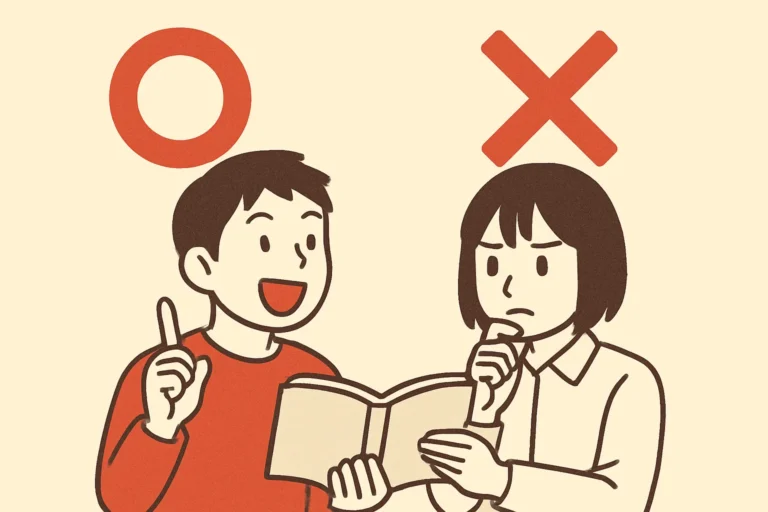
Spill the Tea on Books: Agree & Disagree Like a Pro in Korean!
Hello! This is [매일한글] (Maeil Hangul), here to upgrade your Korean skills! 😊
Have you ever finished a fantastic book, rushed to see what others thought, and found a review you completely agreed or disagreed with? Today, we’re diving into the essential Korean phrases you need to join that conversation!
Nowadays in Korea, sharing your opinion on books is a huge trend on social media, especially on “Bookstagram” (북스타그램). People don’t just post pretty pictures of books; they write detailed reviews and have lively debates in the comments. Learning how to express your agreement or disagreement politely and clearly will not only make you sound more natural but also allow you to connect with fellow book lovers. Let’s get started!
Core Expressions for Your Book Club
Here are four key phrases that will take your book discussions to the next level.
1. 완전 공감해요 (Wanjeon gonggamhaeyo)
- Pronunciation [Romanized]: Wanjeon gong-gam-hae-yo
- English Meaning: I totally agree / I completely relate.
- Detailed Explanation: This is much stronger than just “I agree” (동의해요). 공감하다 (gonggamhada) means to empathize or feel the same way. When a reviewer perfectly captures your feelings about a book, this is the phrase to use. It shows a deep, emotional agreement. It’s friendly and commonly used among friends and in online comments.
- 💡 Pronunciation Tip: The word 공감 (gonggam) has two nasal sounds, ‘ㅇ’ (ng) and ‘ㅁ’ (m). Make sure to close your lips for the ‘ㅁ’ (m) sound at the end of ‘감’ (gam). It’s a soft, humming sound, not a hard stop.
2. 그 부분은 일리가 있지만, 저는 좀 다르게 생각해요 (Geu bubuneun illiga itjiman, jeoneun jom dareuge saenggakaeyo)
- Pronunciation [Romanized]: Geu bu-bu-neun il-li-ga it-ji-man, jeo-neun jom da-reu-ge saeng-ga-kae-yo
- English Meaning: That part makes sense, but I think a little differently.
- Detailed Explanation: This is the master key to polite disagreement! Instead of saying “You’re wrong,” you first acknowledge the other person’s point with 일리가 있다 (illiga itda), which means “to have a point” or “to be reasonable.” Then, you gently introduce your own perspective with 좀 다르게 생각해요 (jom dareuge saenggakaeyo). It’s a sophisticated and respectful way to debate.
- 💡 Pronunciation Tip: Notice the sound change in 있지만. It’s written as it-ji-man but pronounced as [이찌만, i-jji-man]. The 받침 (final consonant) ‘ㅅ’ (t-sound) meets ‘ㅈ’ (j), which tenses the ‘ㅈ’ into a ‘ㅉ’ (jj) sound. This is a common rule that will make you sound much more fluent!
3. 제 생각은 좀 달라요 (Je saenggageun jom dallayo)
- Pronunciation [Romanized]: Je saeng-ga-geun jom dal-la-yo
- English Meaning: My opinion is a bit different.
- Detailed Explanation: This is a more direct but still polite way to state that you have a different opinion. 제 생각은 (je saenggageun) means “In my opinion” or “As for my thoughts.” It’s a standard, go-to phrase for expressing a contrary view without being confrontational. You can use it in both casual and slightly more formal situations.
- 💡 Pronunciation Tip: The magic of the ‘ㄹ’ consonant! When two ‘ㄹ’s appear back-to-back like in 달라요 (dallayo), they create a clear, liquid “L” sound, not an “R” sound. Pronounce it as [dal-la-yo], letting your tongue smoothly tap the roof of your mouth twice.
4. 저는 그 해석이 조금 아쉬웠어요 (Jeoneun geu haeseogi jogeum aswiwosseoyo)
- Pronunciation [Romanized]: Jeo-neun geu hae-seo-gi jo-geum a-swi-wo-sseo-yo
- English Meaning: For me, that interpretation was a little disappointing / lacking.
- Detailed Explanation: The word 아쉽다 (aswipda) is a gem of the Korean language. It expresses a feeling of sadness, disappointment, or that something is “a shame” because it didn’t meet its full potential. By saying an interpretation (해석) was 아쉬웠어요, you’re not attacking it directly. Instead, you’re expressing your personal feeling that it could have been better or deeper. It’s a very nuanced and common way to critique something gently.
- 💡 Pronunciation Tip: Let’s look at 아쉬웠어요 [a-swi-wo-sseo-yo]. The double consonant ‘ㅆ’ in ‘었어요’ is a tensed sound. You need to make a stronger, shorter “ss” sound than a single ‘ㅅ’. Practice making a hissing sound with a bit more force!
Example Dialogue
Let’s see how these phrases work in a real conversation! Two friends, Minjun (A) and Sora (B), are talking about the famous novel, Kim Jiyoung, Born 1982.
A: 소라야, ‘김지영’에 대한 온라인 서평 봤어? 주인공이 너무 수동적이라는 말이 있던데.
(Sora, did you see the online review for ‘Kim Jiyoung’? It said the main character was too passive.)B: 응, 봤어. 완전 공감해요. 나도 읽는 내내 그게 좀 답답했어.
(Yeah, I saw it. I totally agree. I felt frustrated by that the whole time I was reading.)A: 정말? 제 생각은 좀 달라요. 나는 그게 현실을 그대로 보여주는 장치라고 느꼈거든.
(Really? My opinion is a bit different. I felt it was a device to show reality as it is.)B: 흠… 그 부분은 일리가 있지만, 저는 좀 다르게 생각해요. 작가가 의도한 건 알겠지만, 독자로서 저는 그 캐릭터 해석이 조금 아쉬웠어요. 조금 더 저항했으면 어땠을까 싶어.
(Hmm… That part makes sense, but I think a little differently. I understand what the author intended, but as a reader, for me, that character interpretation was a little lacking. I wonder what it would have been like if she had resisted a little more.)
Culture Tip & Trend Deep Dive
In Korea, the culture of “reading debates” (독서 토론) is very active, both online and offline. When disagreeing, especially with someone you don’t know well, it’s crucial to be polite.
- The “Cushion Word” Technique: Notice how Koreans often “cushion” their disagreement. Phrases like “그 부분은 일리가 있지만…” (That part makes sense, but…) or “좋은 지적이네요. 그런데 제 생각은…” (That’s a good point. However, in my opinion…) are used to show respect for the other person’s view before presenting your own. This is a reflection of a communication style that values harmony.
- Bookstagram Hashtags: On Instagram, you’ll see hashtags like #북스타그램 (Bookstagram), #책추천 (Book Recommendation), and #독후감 (Book Review). If you search these, you’ll find thousands of examples of Koreans discussing books. Try reading the comments to see today’s phrases in action! You’ll often see “완전 공감” (short for 완전 공감해요) everywhere!
Let’s Practice!
Time to check your understanding.
1. Fill in the Blank:
Your friend says, “I think the book’s ending was perfect.” You feel the exact same way. What’s the most natural way to express your strong, emotional agreement?
“네 말이 맞아! 나도 그렇게 생각해. ____________.”
a) 제 생각은 좀 달라요
b) 완전 공감해요
c) 조금 아쉬웠어요
2. Make a Sentence:
Imagine you read a review that says a fantasy novel’s magic system was “too complicated.” You think it had a point, but you personally found the complexity interesting. How would you politely disagree using one of today’s patterns?
(Try to form a sentence using “…일리가 있지만…”)
Great job today! You’re now equipped to share your brilliant thoughts on books with Korean speakers.
What’s a book you’ve read recently? Try leaving a comment below using one of today’s expressions! We’d love to hear your opinion! Happy reading and happy learning! 📚✨
Frequently Asked Questions (FAQ)
Q: What does "[매일한글]" mean in Korean and how do you pronounce it?
A: In Korean, "[매일한글]" is pronounced [Maeil Hangul] and means: , here to upgrade your Korean skills! 😊
Q: What does "공감하다" mean in Korean and how do you pronounce it?
A: In Korean, "공감하다" is pronounced [gonggamhada] and means: means to empathize or feel the same way. When a reviewer perfectly captures your feelings about a book, this is the phrase to use. It shows a deep, emotional agreement. It's friendly and commonly used among friends and in online comments.
Q: What does "공감" mean in Korean and how do you pronounce it?
A: In Korean, "공감" is pronounced [gonggam] and means: has two nasal sounds, 'ㅇ' (ng) and 'ㅁ' (m). Make sure to close your lips for the 'ㅁ' (m) sound at the end of '감' (gam). It's a soft, humming sound, not a hard stop.
Q: What does "일리가 있다" mean in Korean and how do you pronounce it?
A: In Korean, "일리가 있다" is pronounced [illiga itda] and means: , which means "to have a point" or "to be reasonable." Then, you gently introduce your own perspective with







