Phase 1: Beyond the Standard Highway
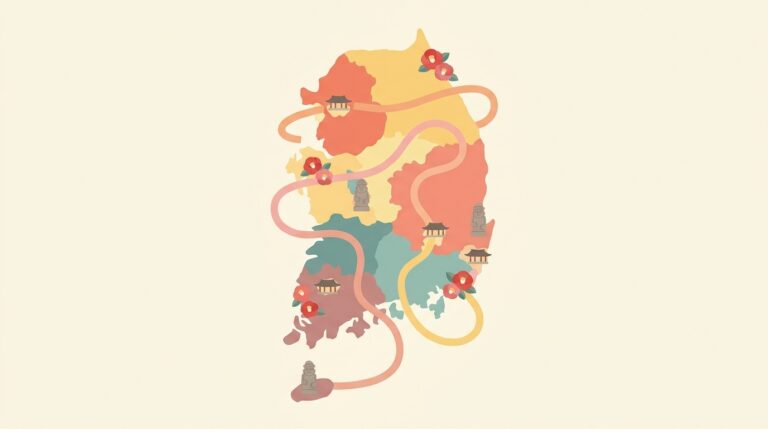
안녕하세요! 매일한글 에디터입니다. (Hello! I’m your Daily Hangul Editor.) Picture this: you have mastered TOPIK Level 6, yet the moment you step off the KTX in Busan or watch a drama set in Jeolla or Jeju, everyone seems to switch to a secret code. Standard Korean (표준어, pyojuneo) is a sleek highway, but the winding paths of Korea’s six dialect zones—Northwest, Northeast, Central, Southwest, Southeast, and Jeju—hold the language’s truest soul and literary heritage. Built from real feedback by advanced learners who hit this exact wall, this guide turns regional confusion into effortless cultural fluency.
Phase 2: Deep Dive into 3 Iconic Regional Expressions
While South and North Korea span six major linguistic zones—Northwest (서북, Seobuk), Northeast (동북, Dongbuk), Central (중부, Jungbu), Southwest (서남, Seonam), Southeast (동남, Dongnam), and Jeju (제주)—these three expressions unlock the emotional and historical core of Korean dialects.
1. 거시기하다 (Geosigihada)
- Pronunciation: geosigihada (Sounds like “guh-see-gee-ha-da,” delivered with a gentle, melodic Jeolla lilt where the middle syllables glide smoothly like a warm sigh.)
- Meaning: Literally “to do whatchamacallit.” In real usage across the Southwest (Jeolla) zone, it functions as a hyper-contextual pronoun, verb, or adjective meaning “awkward,” “indescribable,” “that thing we both know,” or “emotionally delicate.”
- K-Culture Moment: In historical dramas and comedies like Hwangsanbeol or Jeongnyeon: The Star Is Born, characters hold entire heartfelt conversations using almost nothing but variations of 거시기 (geosigi) while nodding knowingly.
- Editor’s Insight: Foreign learners often think 거시기 (geosigi) is lazy vocabulary, when it is actually high-context linguistic brilliance! Rooted in Southwest agricultural communities and cherished in novels by Jo Jung-rae, it relies on shared intimacy (정, jeong)—saying less so the heart can infer more.
- Situation Spectrum: Casual ✅ | Semi-formal ⚠️ (with warm rapport) | Formal 🚫
- 🤔 Think About It: English uses “whatchamacallit” mainly when you forget a word, whereas Jeolla speakers use 거시기 (geosigi) intentionally to soften blunt truths or preserve social harmony. What filler word in your native language carries emotional subtext rather than mere forgetfulness?
2. 가가 가가? (Gaga gaga?)
- Pronunciation: gaga gaga? (Think of musical notes rather than flat syllables: the first “ga” hits a high crisp pitch like a plucked violin string, dropping down on the second, rising on the third, and gliding low on the last—”GA-ga ga-ga?”)
- Meaning: Literally “Is that person that person?” (Standard Korean: 그 아이가 그 아이인가요?, geu aiga geu aiingayo?). It asks, “Is he/she the one we were talking about?”
- K-Culture Moment: Countless K-Variety shows (like 2 Days & 1 Night) and dramas set in Busan or Daegu (Reply 1997, Our Blues) feature Seoulites hilariously baffled by this four-syllable tongue twister.
- Editor’s Insight: Here is your Level 6 linguistics flex: the Southeast (Gyeongsang) zone—alongside the Northeast (Hamgyeong) zone—preserved pitch accent (성조, seongjo) from 15th-century Middle Korean, which Standard Central Korean lost! Without pitch, 가가 가가? (gaga gaga?) is gibberish; with pitch, it effortlessly distinguishes subject, demonstrative, and question marker.
- Situation Spectrum: Casual ✅ | Semi-formal ⚠️ (among regional peers) | Formal 🚫
- 🤔 Think About It: Standard Korean treats vowel length as dying out, yet Gyeongsang Korean differentiates words like “snow” and “eye” purely by tonal contour. How does intonation change literal grammar in your mother tongue?
3. 폭싹 속았수다 (Pokssak sogassuda)
- Pronunciation: pokssak sogassuda (“POHK-ssahk so-gaht-soo-da”—hit the tense double “ss” sharply like a brisk ocean breeze hitting Jeju basalt stone, then let the ending “-suda” flow gently downward.)
- Meaning: Literally looks like “I was completely fooled” to Standard Korean ears! In Jeju, however, 속다 (sokda) retains its Middle Korean root meaning “to toil/labor hard,” so the phrase deeply means “You have worked terribly hard / Thank you so much for your endurance.”
- K-Culture Moment: Globally spotlighted by the drama When Life Gives You Tangerines (whose Korean title is literally 폭싹 속았수다), starring IU and Park Bo-gum, celebrating generations of resilient Jeju life.
- Editor’s Insight: Jeju is so linguistically distinct—retaining the extinct Middle Korean vowel 아래아 (araea, ㆍ) and archaic endings—that UNESCO classifies it as a critically endangered language rather than a mere dialect. Saying 폭싹 속았수다 (pokssak sogassuda) to an elderly haenyeo (female diver) conveys profound respect that Standard 수고하셨습니다 (sugohasyeotseumnida) simply cannot match.
- Situation Spectrum: Casual ✅ | Semi-formal ✅ | Formal ✅ (toward Jeju elders as an honorific expression of gratitude)
- 🤔 Think About It: Why do island or mountain regions often preserve older linguistic forms longer than capital cities? Does your country have a regional dialect that sounds “Shakespearean” or archaic to urban speakers?
Phase 3: Textbook Korean vs. Real Korean
Situation 1: Expressing Mild Frustration or Curiosity (Southeast / Gyeongsang Flavor)
- 📖 Textbook Korean: 요즘 왜 그렇게 행동하시는 거예요? (Yojeum wae geureoke haengdonghasineun geoyeyo?) — “Why are you acting like that lately?”
- 🗣️ Real Korean: 니 요즘 와 이라노? (Ni yojeum wa irano?) / 뭐하노? (Mwohano?) — “Hey, what’s got into you lately?”
- 💡 Why the difference? In Southeast (Gyeongsang) grammar, -노 (-no) is strictly used for wh-questions (who, what, why), whereas -나 (-na) is used for yes/no questions (밥 뭇나?, Bap munna? — “Did you eat?”). Confusing the two immediately flags an outsider!
Situation 2: Politely Declining or Downplaying Kindness (Central / Chungcheong Flavor)
- 📖 Textbook Korean: 아닙니다, 그렇게까지 신경 안 쓰셔도 괜찮습니다. (Animnida, geureokekkaji singyeong an sseusyeodo gwaenchanseumnida.) — “No, you really don’t need to trouble yourself that much.”
- 🗣️ Real Korean: 아이고, 뭘 그런 걸 다 챙겼슈. 괜히 미안허게… (Aigo, mwol geureon geol da chaenggyeotsyu. Gwaenhi mianheoge…) — “Oh my, why’d you bother with all that… making me feel sheepish.”
- 💡 Why the difference? Part of the Central (중부) zone, Chungcheong speech is famous for unhurried vowel elongation and -유 (-yu) endings (derived from -요). Instead of blunt refusal, speakers wrap gratitude and reluctance in gentle, humorous understatement.
Phase 4: K-Culture Deep Dive & Non-Verbal Manners
4-1. Nunchi (눈치) & Regional Body Language
Navigating regional Korea requires reading sound and posture. First-time travelers in Busan or Daegu often panic, assuming two locals loudly debating over pork soup are seconds away from a fistfight—when they are actually best friends catching up! In the Southeast, economy of syllables (dropping redundant particles) paired with crisp pitch accents creates an intense cadence that conveys brisk affection, not hostility. Conversely, in Chungcheong or Jeolla, conversational pacing slows down; interrupting too quickly shows poor nunchi. When elders speak to you in thick regional speech, lean slightly forward, maintain a warm, attentive gaze, and mirror their relaxed hand gestures rather than stiffly apologizing in ultra-formal Seoul textbook phrasing.
4-2. Cultural Code: Dialects as Korea’s Literary Backbone
If Standard Korean is the language of administration, regional dialects are the bedrock of Korean literature. Take the Northwest (Pyeongan) dialect: banned or politicized after division, its haunting beauty survives in the modernist poetry of Baek Seok (백석), whose verses use Pyeongan food names and soft nasal endings to evoke lost hometown warmth. Meanwhile, the Northeast (Hamgyeong) zone preserves rare 15th-century consonant clusters and interrogatives heard in Pachinko or stories of Yanbian communities. In South Korea, Jeolla’s poetic rhythm drives masterpieces like Taebaek Mountain Range, while Gangwon (Central/Yeongdong) mountain idioms color Kim Yu-jeong’s rustic short stories. Understanding these six zones means unlocking the emotional palette of modern Korean art.
Phase 5: Real-World Roleplay — Tea & Poetry in Jeonju
Setting: Rain patters softly against the paper lattice doors of Gorae Bookstore & Tea Salon in Jeonju Hanok Village. The scent of roasted jujube tea and old paper fills the air. Min-jun (민준), a charismatic 50-year-old literary archivist wearing horn-rimmed glasses, sorts vintage dialect poetry anthologies.
- Min-jun: 🎭 Looks up warmly over his glasses, holding out a steaming celadon cup 비도 오는데 여기까지 오느라 고생 많았지라. 어여 앉아유. (Bido oneunde yeogikkaji oneura gosaeng manatjira. Eoyeo anjayu.) — “Coming all this way in the rain must have been tough. Come on, have a seat.”
- You: 🎭 Bowing gratefully and warming your hands on the teacup 아이고, 감사합니다! 방금 전라도 말하고 충청도 말을 섞어 쓰신 거 맞죠? (Aigo, gamsahamnida! Banggeum Jeollado malhago Chungcheongdo maleul seokkeo sseushin geo matjyo?) — “Oh, thank you! You just mixed Jeolla and Chungcheong speech, didn’t you?”
- Min-jun: 🎭 Chuckles delightedly, tapping a stack of old poetry books 허허, 귀가 밝네! 아버지가 충청도 양반이라 어릴 때부터 말투가 거시기하게 섞여 버렸소. (Heoheo, gwiga bangne! Abeojiga Chungcheongdo yangbanira eoril ttaebuteo maltuga geosigihage seokkyeo beoryeotsso.) — “Haha, sharp ears! My father was from Chungcheong, so since childhood my speech got, well, sort of blended together.”
- You: 🎭 Gesturing curiously toward a volume of Baek Seok’s poems 선생님, 저는 표준어만 공부해서 그런지 사투리 문학을 읽을 때마다 벽에 부딪히는 기분이 들어요. (Seonsaengnim, jeoneun pyojuneoman gongbuhaeseo geureonji saturi munhageul ilgeul ttaemada byeoge budichineun gibuni deureoyo.) — “Teacher, maybe because I only studied Standard Korean, I hit a wall whenever I read dialect literature.”
- Min-jun: 🎭 Opening the book gently to a dog-eared page 표준어는 고속도로 같아서 빠르긴 한데, 정작 사람 냄새는 구불구불한 사투리 오솔길에 다 있거든. (Pyojuneoneun gosokdoro gataseo ppareugin hande, jeongjak saram naemsaeneun gubulgubulhan saturi osolgire da itgeodeun.) — “Standard Korean is fast like a highway, sure, but the real scent of human life lives along the winding paths of regional dialects.”
- You: 🎭 Nodding intently, tracing a Pyeongan word on the page 아, 북쪽의 서북이나 동북 방언에도 중세 한국어 흔적이 많이 남아 있다고 들었어요. (A, bukjjogui Seobugina Dongbuk bangeonedo jungse hangugeo heunjeogi mani nama itdago deureosseoyo.) — “Ah, I heard plenty of Middle Korean traces also survive in the northern Northwest and Northeast dialects.”
- Min-jun: 🎭 Beaming with genuine admiration 맞소! 특히 함경도나 제주도 말은 언어의 살아 있는 박물관이지. 오늘 시 한 편 낭독해 볼텨? (Matsso! Teukhi Hamgyeongdona Jejudo maleun eoneoui sara inneun bangmulgwaniji. Oneul si han pyeon nangdokhae boltyeo?) — “Exactly! Hamgyeong and Jeju speech especially are living museums of language. Care to read a poem aloud today?”
- You: 🎭 Smiling with newfound confidence 네! 사투리 뉘앙스를 제대로 살려서 읽어 보고 싶어요. (Ne! Saturi nyuangseureul jedaero sallyeoseo ilgeo bogo sipeoyo.) — “Yes! I want to try reading it while bringing out the true dialectal nuance.”
🔀 Interactive Branching Point
Min-jun hands you a poem filled with regional warmth and asks how you feel about tackling it. How do you respond?
* A) “에이, 선생님! 제가 외국인이라고 너무 거시기하게 보지 마셔요. 폭싹 잘해 볼게요!” (Ei, seonsaengnim! Jega oeguginirago neomu geosigihage boji masyeoyo. Pokssak jalhae bolgeyo!) — (Playfully weaving in regional vocabulary while keeping polite honorifics)
* B) “사투리는 비표준어니까 제가 굳이 발음까지 따라 할 필요는 없는 것 같습니다.” (Saturineun bipyojuneonikka jega gudi bareumkkaji ttara hal piryoneun eomneun geot gatseumnida.) — (Stiffly stating dialects are non-standard so imitation isn’t necessary)
* C) “어이, 아저씨! 함 읊어 봐유!” (Eoi, ajeossi! Ham eulpeo bwayu!) — (Casually tossing out raw slang to an older stranger)
Branching Feedback:
* Choice A (Best): Brilliant cultural poise! Using 거시기 (geosigi) and 폭싹 (pokssak) playfully shows deep appreciation without sounding mocking, and keeping polite endings (-셔요, -게요) preserves respect.
* Choice B (Bad): Ouch—technically true in a dusty rulebook, but calling living heritage “non-standard” in a literary salon feels dismissive and kills the warm jeong in the room.
* Choice C (Risk): Bold energy, but calling an archivist “아저씨 (ajeossi)” with “어이 (eoi)” crosses honorific lines! Even in relaxed regional speech, age hierarchy in Korean remains sacred.
Phase 6: 10-Second Emotional Shadowing Drill
Practice reading aloud with the / marks as rhythmic breath pauses and match the emotional cue:
- [😊 Warmly and playfully]
거시기… / 요즘 세상 참 / 빠르제? (Geosigi… / yojeum sesang cham / ppareuje?) — “You know… the world sure moves fast these days, doesn’t it?” - [🤨 Crisp, witty, and inquisitive]
니 / 지금 / 와 이라노? (Ni / jigeum / wa irano?) — “Hey, why are you acting like this right now?” - [🥺 Deeply moved and sincere]
이 먼 길 / 오느라 / 폭싹 속았수다. (I meon gil / oneura / pokssak sogassuda.) — “Coming all this long way, you have worked so hard.”
Phase 7: K-Culture Mini Dictionary
- 팔도 사투리 (Paldo saturi) | Dialects of the Eight Provinces | Used warmly in culture, food marketing, and TV to celebrate regional authenticity—from royal-era provincial borders to modern culinary tourism.
- 성조 (Seongjo) | Pitch Accent / Tonal Contour | Essential linguistics term when discussing Southeast (Gyeongsang) and Northeast (Hamgyeong) dialects; distinguishes homonyms strictly by high/low pitch rather than vowel length.
- 아래아 (Araea) | Archaic Middle Korean Vowel (ㆍ) | Pronounced roughly between “a” and “o”; extinct in Standard Korean since early modern times, yet actively preserved in Jeju speech (e.g., ᄒᆞᆫ저, honjeo).
- 정감 (Jeonggam) | Warm, nostalgic affection | A staple literary and business-branding word; brands use regional dialect slogans specifically to evoke jeonggam—trustworthy, down-to-earth sincerity.
Phase 8: Traveler’s Survival Kit
Top 3 Regional Survival Phrases
- 천천히 말씀해 주시면 감사하겠습니다 (Cheoncheonhi malsseumhae jusimyeon gamsahagetseumnida) — Pro Tip: When regional pitch or speed overwhelms you, never blame their dialect; politely ask them to slow down so they happily switch to clearer phrasing.
- 여기 토속 음식이 뭐가 제일 유명해요? (Yeogi tosok eumsigi mwoga jeil yumyeonghaeyo?) — Pro Tip: Asking for tosok eumsik (authentic local heritage food) sparks instant pride and often earns free side dishes (seobiseu)!
- 진짜 맛있네요! (Jinjja masinneyo!) — Pro Tip: Pair this with local flair—say “억수로 맛있네예! (Eoksuro masinneye!)” in Busan or “겁나게 맛있소! (Geomnagye masitsso!)” in Jeonju for instant smiles.
Editor’s Travel Note
Beyond Seoul, regional buses rarely show full English announcements. Be sure to download the Naver Map app for accurate rural bus schedules before hopping onto local routes in Gangwon or Jeju, and book intercity KTX tickets via the official Korail website early on weekends. Carry a topped-up T-money card for regional buses and small crisp cash bills (1,000-won and 5,000-won notes) for traditional ojang (five-day folk markets) where dialectal banter thrives.
Phase 9: One Step Deeper
For much of the 20th century, rapid industrialization pushed Standard Seoul Korean as the sole ticket to success, quietly shaming regional speakers into erasing their mother tongues. Yet dialects across all six zones—from Pyeongan’s gentle nasality in the north to Jeju’s ancient island cadence in the south—are living archives of how Koreans survived hardship, farmed rugged mountains, and loved across generations. When an advanced learner moves past viewing saturi as “broken Korean” and embraces it as living literature, they stop merely translating Korea and start truly feeling it.
💬 Your Turn: Which Korean dialect zone fascinates you most—the musical tones of Busan, the poetic warmth of Jeolla, or the ancient charm of Jeju? Drop a comment below!
Phase 10: FAQ & Common Mistakes
Q: Why do linguists divide Korean into six dialect zones instead of South Korea’s modern provinces?
A: Because language ignores modern political borders and follows mountain ranges, rivers, and historical provinces! The six-zone framework—Northwest (Pyeongan), Northeast (Hamgyeong), Central (Gyeonggi, Chungcheong, Yeongseo), Southwest (Jeolla), Southeast (Gyeongsang), and Jeju—captures shared phonological traits like pitch accent, palatalization, and archaic vowel retention across the entire Korean Peninsula.
Q: Is Jeju-eo really a separate language from Korean?
A: Linguistically, yes—many scholars and UNESCO classify Jeju-eo as a distinct, critically endangered language within the Koreanic family because its vocabulary, grammar endings, and preserved Middle Korean vowel araea make it largely unintelligible to mainland Seoul speakers without study.
Q: As an advanced foreigner, should I try speaking in dialect to locals?
A: Passive comprehension is your superpower, while active use works best in small, affectionate doses! Dropping a cheerful local word like “억수로 (eoksuro, super)” or “폭싹 속았수다 (pokssak sogassuda)” delights locals, whereas forcing a full mock accent can accidentally sound like caricature.
🚨 Common Mistakes
- Mistake: Assuming Gyeongsang speakers are angry because of their loud, clipped pitch. -> Correct Action: Listen for warmth in context and smiling eyes; pitch accent is grammatical melody, not aggression.
- Mistake: Mixing Southeast (-노/-나) and Southwest (-잉/-지라) endings in one sentence. -> Correct Action: Keep your speech polite in Standard Korean while sprinkling just one clear regional lexical gem at a time.
- Mistake: Translating Jeju verbs literally using Standard Korean dictionaries (like assuming 속았수다 means “got tricked”). -> Correct Action: Always check regional semantics before responding, especially with Middle Korean roots!
Phase 11: Action Mission & Engagement
- 🥉 Bronze Mission: Pick one dialect zone (e.g., Southwest or Jeju) and read aloud the 3 shadowing phrases from Phase 6 three times, exaggerating the pause marks.
- 🥈 Silver Mission: Share your favorite regional Korean word on social media with a quick note about its cultural meaning and tag
@DailyHangul. - 🥇 Gold Mission: Next time you talk to a Korean language partner or visit a regional restaurant, ask where their family hometown is and ask them to teach you one affectionate phrase from that region!
🎮 K-Culture Mission: Watch 15 minutes of Our Blues, Reply 1988, or Jeongnyeon with Korean subtitles turned ON. Spot at least two dialectal sentence endings (like -노, -유, -지라, or -수다) and note how Standard subtitles translate—or soften—their nuance!
Phase 12: Interactive Quiz Challenge
Quiz 1 (Situational Judgment): You finish helping an elderly farmer in Jeju harvest tangerines, and she beams and says, “아이고, 오늘 폭싹 속았수다!” How should you react?
* A) Apologize frantically for tricking her.
* B) Bow warmly and say, “아닙니다, 할머니도 고생 많으셨어요!” (Not at all, you worked hard too, Grandma!)
* C) Laugh and tell her Standard Korean doesn’t use that word.
Quiz 2 (Fill in the Blank): In Southeast (Gyeongsang) Korean, because _______ (pitch accent / 성조) survived from Middle Korean, a sentence like “가가 가가?” can carry completely clear grammatical meaning.
Quiz 3 (True or False): The six traditional Korean dialect zones only cover South Korea, excluding North Korean regions.
👇 Click to Reveal Answers & Explanations
- Quiz 1 Answer: B. Explanation: Choosing A falls into the false-friend trap (thinking 속다 means “to be tricked”), and C is culturally insensitive. In Jeju, 폭싹 속았수다 warmly honors hard work and endurance!
- Quiz 2 Answer: 성조 (seongjo / pitch accent). Explanation: Both the Southeast (Gyeongsang) and Northeast (Hamgyeong) zones preserved Middle Korean tonal distinctions that Central/Standard Korean lost.
- Quiz 3 Answer: False. Explanation: The classic six-zone linguistic classification spans the entire Korean Peninsula, explicitly including the Northwest (Pyeongan) and Northeast (Hamgyeong) dialect zones alongside Central, Southwest, Southeast, and Jeju.
🎬 Watch Our Daily Videos! (Daily Hangul Official Instagram)
Review the expressions you learned in this article with our fun daily short videos! Check out native pronunciation and real-life nuances in action.
- Instagram @dailyhangul_en