

Phase 1: Why Every Bubble Eventually Pops
안녕하세요! 매일한글 에디터입니다. (Hello! I’m your Daily Hangul editor.)
Imagine watching a gripping K-Drama like Reborn Rich—a ruthless tycoon builds an empire, only for a market crash to wipe it out overnight. Or picture your Korean friend staring at a plummeting crypto chart over a cold bottle of soju. As a Level 5 learner, saying ‘It disappeared’ (사라졌어요) just doesn’t capture that poetic sting. Many of my advanced students confess they freeze up when natives drop four-character idioms like 일장춘몽 (一場春夢) to sum up burst bubbles and fallen power. Mastering this expression lets you speak with real depth and cultural soul. Let’s dive into this learner-tested guide!
Phase 2: 3 Core Expressions Deep Dive
1. 일장춘몽 (一場春夢)
- Pronunciation: [Il-jang-chun-mong] (Think of “eel-jahng-choon-mong”, where choon rhymes with “tune” starting with ch-, and mong sounds like the start of “mongoose” with a crisp, rounded “oh”.)
- Meaning: Literal: “One scene of a spring dream.” | Nuance: Wealth, glory, or speculative hype that feels intoxicatingly real—until it vanishes in a blink, leaving only quiet reflection.
- K-Culture Moment: Picture the finale of a chaebol drama like Reborn Rich or The Penthouse, where a once-untouchable villain sits in an empty mansion after their stock empire collapses. Or listen to Korean news anchors reflecting on a speculative real estate or coin boom after prices crash.
- Editor’s Insight: Unlike simple words for failure, 일장춘몽 (Iljangchunmong) carries a poetic, almost cinematic sigh. Natives often pair it with
결국(gyeolguk — ultimately) or한순간에(hansungane — in a split second). Save it for big rises and falls—using it because you dropped your croissant sounds hilariously overdramatic (though fun as sarcastic humor with close friends!).- Situation Spectrum: Casual ⚠️ (great for wry, self-deprecating humor) | Semi-formal ✅ | Formal ✅
- 🤔 Think About It: In English, people call fleeting hype a “pipe dream” or “castle in the air.” Why do you think Korean frames lost fortune not as an illusion that never existed, but as a warm “spring dream” you genuinely experienced before waking up?
2. 화무십일홍 (花無十日紅)
- Pronunciation: [Hwa-mu-si-bil-hong] (Flows smoothly like “hwah-moo-shee-beel-hong”, keeping the hwah light and airy.)
- Meaning: Literal: “No flower stays red for ten days.” | Nuance: No power, beauty, or market dominance lasts forever—often spoken as a sobering reminder to arrogant elites or about fallen empires.
- K-Culture Moment: Think of historical sageuk dramas like Queen Seondeok or Mr. Sunshine, when a corrupt prime minister is stripped of his robes, or K-Pop industry commentators discussing how quickly chart-topping trends shift.
- Editor’s Insight: While 일장춘몽 focuses on the dreamer waking up empty-handed, 화무십일홍 (Hwamusibirhong) zooms out to the cosmic law of impermanence. In Korean journalism and political commentary, dropping this idiom shows Level 5 mastery and sharp historical awareness.
- Situation Spectrum: Casual ⚠️ | Semi-formal ✅ | Formal ✅
- 🤔 Think About It: English speakers say “All good things must come to an end,” which sounds matter-of-fact. How does Korea’s botanical metaphor change the emotional tone when critiquing power?
3. 물거품이 되다 (Mulgeopumi doeda)
- Pronunciation: [Mul-geo-pu-mi doe-da] (Sounds like “mool-guh-poo-mee dweh-dah”—smooth and rhythmic.)
- Meaning: Literal: “To turn into water bubbles.” | Nuance: Years of hard work, massive investments, or ambitious plans popping into nothingness right before your eyes.
- K-Culture Moment: In startup dramas like Start-Up or Itaewon Class, this is the exact phrase founders choke out when an investor pulls out at the eleventh hour and months of sleepless nights dissolve.
- Editor’s Insight: If 일장춘몽 is the philosophical morning-after reflection, 물거품이 되다 (Mulgeopumi doeda) is the gut-punch moment the bubble actually bursts. You will hear it constantly in both casual venting and serious business meetings.
- Situation Spectrum: Casual ✅ | Semi-formal ✅ | Formal ✅
- 🤔 Think About It: Korean visualizes ruined effort as fragile “water bubbles,” while English often says “go up in smoke” or “go down the drain.” What do these elemental metaphors reveal about how each culture views sudden loss?
Phase 3: Textbook Korean vs. Real Korean
Situation 1: Venting over a crashed investment with a close friend
- 📖 Textbook Korean: 그동안의 투자가 결국 헛수고가 되어 매우 허무합니다. (Geudongan-ui tujaga gyeolguk heotsugoga doeeo maeu heomuhamnida. — The investment made so far ultimately became wasted effort, so I feel very empty.)
- 🗣️ Real Korean: 다 일장춘몽이었네, 뭐. 영끌했던 거 한순간에 날아갔어. (Da iljangchunmong-ieonne, mwo. Yeongkkeulhaetdeon geo hansungane naragasseo. — Guess it was all a fleeting spring dream. Everything I scraped together vanished in a second.)
- 💡 Why is it different?: Koreans love pairing classical four-character idioms (
일장춘몽) with punchy modern slang like영끌(scraping every last cent to invest) and the casual tag뭐(“oh well”). It softens financial heartbreak with dark, philosophical humor.
Situation 2: Commenting on a fallen celebrity or disgraced executive
- 📖 Textbook Korean: 그 사람의 권력은 시간이 지나면서 완전히 사라졌습니다. (Geu saram-ui gwollyeogeun sigani jinamyeonseo wanjeonhi sarajyeotseumnida. — That person’s power completely disappeared as time passed.)
- 🗣️ Real Korean: 권력이란 게 다 한때지. 진짜 화무십일홍이야. (Gwollyeogiran ge da hanttaeji. Jinjja hwamusibirhong-iya. — Power is really just for a brief moment. Truly, no flower stays red for ten days.)
- 💡 Why is it different?: At a Level 5 conversational standard, stacking
한때(a fleeting moment) with화무십일홍lets you sound perceptive and understated—like someone who has seen how the world works.
Phase 4: K-Culture Deep Dive & Non-Verbal Manners
4-1. Nunchi (눈치) & Gestures
Because 일장춘몽 (Iljangchunmong) touches on ruin, lost wealth, or humbled pride, your delivery requires sharp nunchi (social awareness). Never deliver it with a bright grin or finger-pointing energy—that reads as cold schadenfreude. Instead, lower your voice slightly, break eye contact briefly to glance downward or toward your drink, and exhale a gentle sigh (휴... / hyu…) before speaking. A small, slow nod communicates empathy and philosophical acceptance rather than judgment.
4-2. Cultural Code Analysis: Why Iljangchunmong Hits So Hard in Modern Korea
If you watch K-Dramas like Reborn Rich, Misaeng, or Sky Castle, you’ll notice an obsession with soaring ambition followed by sudden collapse. Korea achieved the “Miracle on the Han River” within a single generation, creating a hyper-fast ppalli-ppalli (빨리빨리 — hurry-hurry) culture where fortunes in real estate, tech, and crypto can skyrocket—and crash—at dizzying speed. Having lived through the 1997 IMF financial crisis and recurring housing bubbles, Koreans instinctively carry both fierce drive and ancient East Asian wisdom about impermanence. Saying 일장춘몽 isn’t giving up; it’s a cultural exhale that helps people process shock and start over.
Phase 5: Practical Roleplay Scenario
Setting: Rain patters against the orange vinyl tarp of a cozy pojangmacha (포장마차 — street tent bar) in Euljiro, Seoul. Neon signs blur in the puddles outside while steam rises from a pot of spicy fish cake broth.
NPC: Min-jun (34), your sharp-witted Korean friend and former startup co-founder, staring thoughtfully into his green soju glass after your AI startup’s funding round suddenly collapsed.
- Min-jun: 야, 우리가 2년 동안 밤새워 만든 게 이렇게 끝나다니… 아직도 안 믿긴다. (Ya, uriga inyeon dongan bamsaewo mandeun ge ireoke kkeutnadani… ajikdo an mitginda. — Hey, I still can’t believe what we stayed up all night building for two years ended like this.)
🎭 Stares blankly at his empty glass and shakes his head slowly. - You: 나도 그래. 투자 확정이 코앞이었는데, 다 물거품이 됐잖아. (Nado geurae. Tuja hwakjeongi koapieonneunde, da mulgeopumi dwaetjana. — Me too. The investment confirmation was right in front of us, and it all turned into bubbles.)
🎭 Sets chopsticks down gently and lets out a quiet breath. - Min-jun: 작년 붐 때만 해도 우리가 곧 대박 날 줄 알았지. 진짜 다 일장춘몽이었네. (Jangnyeon bum ttaeman haedo uriga got daebak nal jul aratji. Jinjja da iljangchunmong-ieonne. — During last year’s boom, I really thought we’d hit the jackpot soon. It really was all a fleeting spring dream.)
🎭 Gives a bitter, wry half-smile while swirling the soju bottle. - You: 그러게 말이야. 한때는 우리 회사 가치가 수백억이라고 떠들썩했는데. (Geureoge mariya. Hanttaeneun uri hoesa gachiga subaegeogirago tteodeulsseokhaenneunde. — Tell me about it. For a while, everyone was buzzing that our company was worth tens of billions of won.)
🎭 Pours Min-jun a fresh glass with both hands to comfort him. - Min-jun: 시대가 너무 빨리 변해. 잘나가던 경쟁사도 결국 문 닫았잖아. 화무십일홍이라는 말이 괜히 있는 게 아니야. (Sidaega neomu ppalli byeonhae. Jallagadeon gyeongjaengsado gyeolguk mun dadatjana. Hwamusibirhong-iraneun mari gwaenhi inneun ge aniya. — The times change so fast. Even our thriving rival ended up shutting down. There’s a reason people say no flower stays red for ten days.)
🎭 Clinks his glass softly against yours. - You: 맞네. 그래도 꿈꾼 시간까지 아예 없었던 건 아니니까, 너무 허무해하진 말자. (Manne. Geuraedo kkumkkun sigankkaji aye eopseotdeon geon aninikka, neomu heomuhaehajin malja. — True. Still, the time we spent dreaming wasn’t completely wasted, so let’s not feel too empty.)
🎭 Meets his eyes with warm reassurance. - Min-jun: 크… 역시 너밖에 없다. 야, 한잔 털고 내일부터 다시 판 짜보자! (Keu… yeoksi neobakke eopda. Ya, hanjan teolgo naeilbuteo dasi pan jja-boja! — Ah… you’re really the only one who gets it. Hey, let’s knock this drink back and draw up a new game plan tomorrow!)
🎭 Downs his glass in one go and grins.
🔀 Interactive Branching Point: Turn 8 — How do you respond to Min-jun’s sudden burst of resilience?
- A: 그래! 실패도 자산이지. 건배! (Geurae! Silpaedo jasaniji. Geonbae! — Yes! Failure is an asset too. Cheers!)
- B: 글쎄, 넌 항상 너무 낙관적이야. 또 일장춘몽 될걸? (Geulsse, neon hangsang neomu nakgwanjeogiya. Tto iljangchunmong doelgeol? — Well, you’re always too optimistic. Won’t it become another spring dream?)
- C: 근데 우리 빚은 어떻게 갚아? (Geunde uri bijeun eotteoke gapa? — But how are we going to pay back our debt?)
Feedback on Your Choice:
* Choice A (Best!): Native-level nunchi! In Korean drinking culture, after sharing a heavy philosophical moment (일장춘몽), lifting the mood with forward-looking solidarity cements deep friendship (정 / jeong).
* Choice B (Bad!): Using 일장춘몽 to pour cold water on a friend’s comeback feels cynical and breaks the emotional bond you just built.
* Choice C (Risk!): Practical, yes—but dropping blunt financial anxiety right after a motivational toast kills the vibe. Save the spreadsheet talk for coffee tomorrow morning!
Phase 6: 10-Second Emotional Shadowing Drill
Practice these out loud using the / pause marks and emotional cues to nail native Korean cadence!
- [😌 Reflective & Bittersweet]
한때는 영원할 것 같았는데 / 결국 다 / 일장춘몽이었네.
(Hanttaeneun yeongwonhal geot gatanneunde / gyeolguk da / iljangchunmong-ieonne.)
It felt like it would last forever once, / yet in the end it was all / a fleeting spring dream. -
[😔 Quietly Sobering]
거품이 꺼지고 나니 / 남은 건 / 허무함뿐이야.
(Geopumi kkeojigo nani / nameun geon / heomuhamppuniya.)
Once the bubble bursts, / all that’s left / is emptiness. -
[🧐 Wise & Grounded]
아무리 막강한 권력도 / 결국 / 화무십일홍이야.
(Amuri makganghan gwollyeokdo / gyeolguk / hwamusibirhong-iya.)
No matter how mighty the power, / ultimately / no flower stays red for ten days.
Phase 7: K-Culture Mini Dictionary
- 영끌 (Yeongkkeul) | Literal: Pulling together down to one’s soul | Usage: Massive buzzword in Korean news and casual chats referring to borrowing every possible won to buy apartments or crypto during a boom—often followed by iljangchunmong regrets.
- 거품 경제 (Geopum gyeongje) | Bubble economy | Usage: Essential Level 5 business/economics term used when discussing overheated housing markets or speculative stock manias before they pop.
- 허무감 (Heomugam) | A deep sense of emptiness / futility | Usage: The emotional hangover you feel after waking up from a spring dream—when intense effort yields nothing.
- 몰락 (Mollak) | Downfall / collapse | Usage: Dramatic noun heard constantly in Korean documentaries and K-Dramas to describe the fall of a dynasty, chaebol family, or fallen star.
Phase 8: Survival Kit for Travelers
Even when exploring Korea, these high-level phrases help you connect deeply with locals over history, food, and culture:
- 세월이 참 빠르네요. (Sewori cham ppareuneyo. — Time really flies.)
- Pro Tip: Use this with older café owners or taxi drivers in historic neighborhoods like Jongno—they’ll instantly warm up and share neighborhood stories.
- 예전 모습이 많이 사라졌네요. (Yejeon moseubi mani sarajyeonne-yo. — A lot of the old look has disappeared.)
- Pro Tip: Perfect when walking through trendy redeveloped areas like Seongsu-dong or Euljiro where old workshops meet sleek boutiques.
- 한때 여기서 정말 유명했대요. (Hanttae yeogiseo jeongmal yumyeonghaetdaeyo. — They say this place used to be super famous once.)
- Pro Tip: Great conversational opener when visiting classic markets or heritage spots.
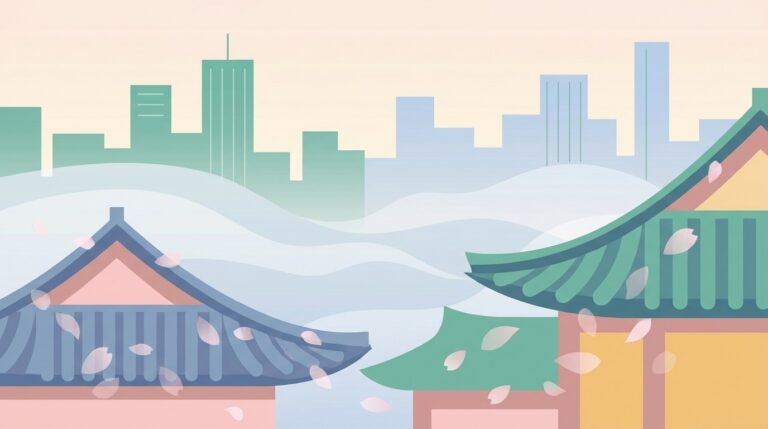
Editor’s Travel Note: Want to feel the true poetry of 일장춘몽 in person? Visit Gyeongbokgung Palace at twilight, when golden light fades over Joseon-era roofs framed by Seoul’s modern skyscrapers. Before heading out, download the Naver Map app for seamless Seoul navigation since Google Maps has limited walking directions in Korea, and grab a T-money card at any convenience store to tap effortlessly onto Seoul’s subway and buses. For seasonal palace night-tour schedules, browse the Korea Tourism Organization cultural guide in advance.
Phase 9: One Step Deeper — Ambition Meets Impermanence
In a society famous for fierce competition—from grueling university entrance exams to high-stakes tech innovation—Korean idioms like 일장춘몽 (一場春夢) serve as a vital philosophical counterweight. Rooted in East Asian Buddhist and Taoist traditions, this mindset reminds people that status, wealth, and applause are borrowed props rather than permanent possessions. Interestingly, Koreans don’t use this fatalism as an excuse to stop trying; instead, acknowledging that every empire fades gives people the humility to laugh at burst bubbles and the resilience to rebuild from zero. It is the quiet wisdom humming beneath Korea’s relentless energy.
💬 Your Turn: Have you ever experienced an iljangchunmong moment—a trend, hype, or dream that vanished overnight? Share your story in English or try writing a Korean sentence using today’s idioms in the comments below!
Phase 10: FAQ & Common Mistakes
Q: Can I use 일장춘몽 (Iljangchunmong) to comfort someone who just lost their job or suffered a real tragedy?
A: Be very careful! Because 일장춘몽 literally calls past glory a “dream” and highlights vanity, saying it to someone grieving a painful personal loss can sound dismissive or preachy. It works best when reflecting on your own setback, analyzing historical/political downfalls, or mutually laughing off a speculative hype bubble.
Q: How is 일장춘몽 (Iljangchunmong) different from 인생무상 (Insaengmusang)?
A: 인생무상 (人生無常) means “life itself is transient/fleeting” and feels broader, heavier, and more existential—often heard at funerals or when aging. 일장춘몽 specifically targets worldly glory, wealth, power, or sudden booms that dissolve like a sweet dream.
Q: Do young Koreans in their 20s and 30s actually say four-character idioms like this?
A: Yes, especially 일장춘몽 and 화무십일홍! Even on YouTube finance channels, blind-app workplace forums, and memes about coin crashes, younger Koreans love using classical idioms for ironic punchlines.
🚨 Common Mistakes TOP 3
- Wrong: Saying
일장춘몽을 꿨어요(“I dreamed an iljangchunmong”) like a literal sleeping dream.- Correct Action: Use
일장춘몽이었다(“it was an iljangchunmong”) or일장춘몽에 불과하다(“it is nothing more than an iljangchunmong”).
- Correct Action: Use
- Wrong: Mixing up 일장춘몽 with everyday minor disappointments (like missing a bus).
- Correct Action: Use
허탕 치다(heotang chida — to come up empty-handed) for small errands; save 일장춘몽 for grand ambitions, wealth, or power.
- Correct Action: Use
- Wrong: Forgetting the particle or verb pairing with 물거품.
- Correct Action: Always attach
-이/가 되다(물거품이 되다) or-으로 돌아가다(물거품으로 돌아가다) to show that plans turned into bubbles.
- Correct Action: Always attach
Phase 11: Action Mission & Engagement
- 🥉 Bronze Mission (Solo Practice): Say the 3 sentences in Phase 6 out loud three times while matching the emotional tone in front of a mirror.
- 🥈 Silver Mission (Social Share): Post a story or comment summarizing a famous pop-culture or market bubble using the hashtag
#DailyHanguland the phrase결국 일장춘몽이었다! - 🥇 Gold Mission (Real-World Use): Next time you talk with a Korean friend or language partner about a past craze (like NFTs, fidget spinners, or a fallen trend), drop 일장춘몽 naturally and watch their eyebrows shoot up in admiration!
- 🎮 K-Culture Mission: Watch an episode of a Korean financial/power drama (Reborn Rich, Misaeng, or Money Flower) or check a Korean news clip on YouTube and try to catch 일장춘몽, 물거품, or 거품이 꺼지다 in the wild.
Phase 12: Interactive Quiz Challenge
Test your Level 5 intuition! Pick your answers before opening the spoiler toggles.
Quiz 1: Situational Judgment
Your Korean colleague spent six months negotiating a massive partnership, only for the other company to go bankrupt the day before signing. Which reaction is most natural and empathetic?
* A) 아휴, 그동안 노력한 게 다 물거품이 돼서 너무 속상하겠다.
* B) 야, 원래 부귀영화는 다 일장춘몽이야. 꿈 깼네!
* C) 화무십일홍이라더니 네가 거품이었구나.
Click to reveal Answer & Feedback for Quiz 1
Correct Answer: A — “Ah, it must be so upsetting that all your hard work turned into water bubbles.” Why B & C fail: Option B sounds mocking and philosophical at the wrong moment, while Option C weirdly insults your colleague by calling them a bubble. Use 물거품이 되다 to validate wasted effort!
Quiz 2: Fill in the Blank
Complete this news commentary sentence with the best idiom:
“한때 시장을 독점하던 그 기업도 시대의 변화를 따라가지 못해 결국 몰락하고 말았다. 권력과 부의 무상함을 보여주는 전형적인 ( ________ )이다.”
(That company, which once monopolized the market, failed to keep up with the changing times and ultimately collapsed. It is a classic case of ________ showing the vanity of power and wealth.)
Click to reveal Answer for Quiz 2
Answer: 일장춘몽 (Iljangchunmong) — In formal news writing, 전형적인 일장춘몽이다 (“it is a textbook fleeting spring dream”) elegantly summarizes a fallen corporate empire.
Quiz 3: True or False Cultural Quiz
Statement: Because 일장춘몽 (一場春夢) contains the character for “dream” (夢), Koreans primarily use it in spring when talking about pleasant naps and cherry blossoms.
Click to reveal Answer for Quiz 3
False! While the literal imagery comes from a brief spring nap, in real Korean usage it almost exclusively refers to the vanity of faded wealth, fallen power, or burst speculative bubbles—at any time of year!
🎬 Watch Our Daily Videos! (Daily Hangul Official Instagram)
Review the expressions you learned in this article with our fun daily short videos! Check out native pronunciation and real-life nuances in action.
- Instagram @dailyhangul_en







