

Phase 1: The Day All of Korea Holds Its Breath
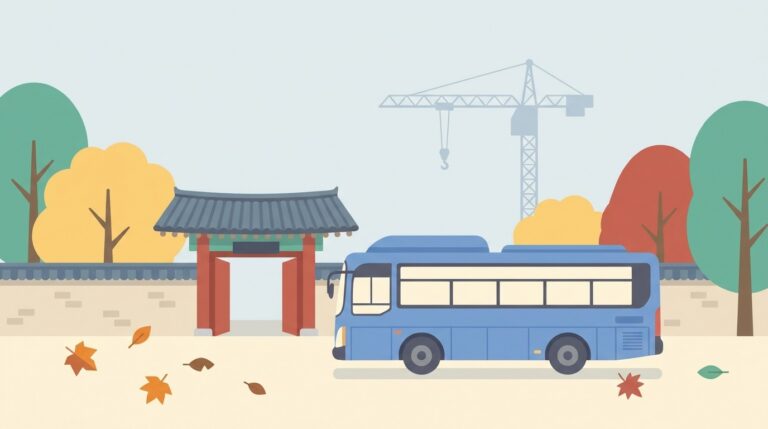
안녕하세요! 매일한글 에디터입니다. (Annyeonghaseyo! Maeilhangeul editeoimnida.) Hello! I’m your Daily Hangul editor. Imagine hopping on a Seoul bus on a crisp November afternoon. Suddenly, the bus slows to a crawl, construction cranes freeze mid-air, and nobody honks—not even once! Welcome to Suneung (수능) day, Korea’s high-stakes college entrance exam. Many B1 learners tell me they feel totally bewildered in this sudden silence, worrying they might accidentally speak too loudly or annoy someone when asking why traffic stopped. Based on real learner feedback, this guide gives you the exact natural Korean phrases to navigate this unforgettable day with total confidence and cultural grace!
Phase 2: 3 Essential Expressions for Suneung Day
1. 방해되지 않게 조용히 해요 (Banghaedoeji anke joyonghi haeyo)
- Pronunciation: Bang-hae-doe-ji an-ke jo-yong-hi hae-yo (Think of “bang” like a drum, “hae” like “hey” without the y-glide, “an-ke” like “ahn-keh” with a crisp k sound, and “jo-yong-hi” flowing smoothly like “Joe-yong-hee”).
- Meaning: Literally “Let’s be quiet so as not to become a disturbance.” Actually means “Let’s keep our voices down so we don’t bother them.”
- K-Culture Moment: In dramas like Crash Course in Romance or Reply 1988, you’ll often see family members tiptoeing around the house and whispering this phrase when a student is doing a mock exam in their room.
- Editor’s Insight: The grammar pattern
-지 않게 (-ji anke)means “so that it doesn’t happen” and is a huge B1 level-up! Instead of just barking “Be quiet!” (조용히 해!), adding방해되지 않게shows deep empathy and awareness of the people around you. - Situation Spectrum:
- Casual (
방해되지 않게 조용히 해): ✅ Great with friends or younger siblings. - Semi-formal (
방해되지 않게 조용히 해요): ✅ Natural with peers, coworkers, or fellow passengers. - Formal (
방해되지 않게 조용히 해 주세요): ✅ Best for public announcements or addressing strangers politely.
- Casual (
- 🤔 Think About It: In Korean, you often frame requests around not harming or bothering others (
방해되다) rather than just stating a rule. In your native language, do people ask for quiet by focusing on the rule or on the other person’s feelings?
2. 수능 날이라서 다들 배려하는 거예요 (Suneung nariraseo dadeul baeryeohaneun geoyeyo)
- Pronunciation: Su-neung na-ri-ra-seo da-deul bae-ryeo-ha-neun geo-ye-yo (Say “Su-neung” like “soo-nuhng” with a flat mouth; “na-ri-ra-seo” rolls smoothly like “nah-ree-rah-suh”).
- Meaning: Literally “Because it is Suneung day, everyone is being considerate.” Actually means “Everyone is pitching in and being thoughtful because of the big exam today.”
- K-Culture Moment: Whenever international news crews film Seoul’s streets going silent for the Suneung English listening test in November, Korean interviewees almost always use the word
배려 (baeryeo - consideration)to explain why commuters don’t complain about delays. - Editor’s Insight:
배려 (baeryeo)is a golden Korean value word. It goes beyond basic politeness—it means actively putting yourself in someone else’s shoes and adjusting your behavior to help them. Pairing it with~는 거예요gently explains the reason behind a surprising scene. - Situation Spectrum:
- Casual (
수능 날이라서 다들 배려하는 거야): ✅ Warm and explanatory with close friends. - Semi-formal (
수능 날이라서 다들 배려하는 거예요): ✅ Friendly, informative, and widely usable. - Formal (
수능 날이라서 모두가 배려하고 있습니다): ✅ Ideal for news reports or formal explanations.
- Casual (
- 🤔 Think About It: On Suneung day, even unrelated strangers pause construction and slow down trains for teenagers they have never met. How does your home country support students during major national exams?
3. 시험장 주변에서는 서행해야 해요 (Siheomjang jubyeoneseonun seohaenghaeya haeyo)
- Pronunciation: Si-heom-jang ju-byeon-e-seo-neun seo-haeng-hae-ya hae-yo (“Si-heom” sounds close to “she-uhm”, “seo-haeng” rhymes with “suh-hang” with a soft h).
- Meaning: Literally “Around the exam site, one must drive slowly.” Actually means “Drivers have to crawl carefully without honking near testing schools.”
- K-Culture Moment: You’ll hear this exact vocabulary on Korean morning traffic broadcasts or see it on glowing LED road signs in K-Dramas set during autumn.
- Editor’s Insight:
서행 (seohaeng)is a concise Sino-Korean word meaning “slow driving.” While you might say천천히 가다 (cheoncheonhi gada)in casual talk, knowing서행하다 (seohaenghada)lets you read street signs near schools and sound impressively fluent at a B1 level! - Situation Spectrum:
- Casual (
학교 앞에서는 천천히 가야 돼): ⚠️ Better to swap서행하다for천천히 가다with close friends. - Semi-formal (
시험장 주변에서는 서행해야 해요): ✅ Crisp, clear, and natural. - Formal (
시험장 주변에서는 서행해 주시기 바랍니다): ✅ Standard polite signage and announcements.
- Casual (
- 🤔 Think About It: Korean packs big traffic concepts into two-syllable Hanja words like
서행 (slow driving)and경적 (horn). What road-etiquette words in your language are unique to specific situations?
Phase 3: Textbook Korean vs. Real Korean
Situation 1: Explaining why everyone goes silent at 1:10 PM
- 📖 Textbook Korean: 지금은 대학수학능력시험 듣기 평가 시간이므로 소음을 내지 마십시오. (Jigeumeun daehaksuhangneungnyeoksiheom deutgi pyeongga siganimeuro soeumeul naeji masipsio.) – “Since it is currently the College Scholastic Ability Test listening evaluation time, please do not make noise.”
- 🗣️ Real Korean: 지금 영어 듣기 시간이라서 숨소리도 조심해야 돼요! (Jigeum yeongeo deutgi siganiraseo sumsorido josimhaeya dwaeyo!) – “It’s English listening test time right now, so we even have to be careful with our breathing!”
- 💡 Why the difference? Native speakers rarely say the full formal name
대학수학능력시험in daily chat—they just say수능 (Suneung)or영어 듣기 시간 (English listening time). Adding숨소리도 조심해야 돼요(even watch the sound of your breathing) is a classic friendly exaggeration Koreans love to show just how serious the hush is!
Situation 2: Asking why a bus slows down and construction stops
- 📖 Textbook Korean: 시험장 인근에서 공사가 일시 중단되고 차량이 서행하고 있습니다. (Siheomjang ingeuneseo gongsaga ilsi jungdandoego charyangi seohaenghago itseumnida.) – “Near the test site, construction is temporarily suspended and vehicles are driving slowly.”
- 🗣️ Real Korean: 저기 학교가 시험장이라서 공사도 멈추고 차들도 살살 가는 거래요. (Jeogi hakgyoga siheomjangiraseo gongsado meomchugo chadeuldo salsal ganeun georaeyo.) – “That school over there is a test site, so I heard construction stopped and cars are creeping along gently.”
- 💡 Why the difference? Instead of heavy news terms like
일시 중단 (temporary suspension)and서행, Koreans use the vivid mimetic word살살 (salsal - gently/softly)and~는 거래요(“I heard that…”) to share local info smoothly.
Phase 4: K-Culture Deep Dive & Non-Verbal Manners
4-1. Nunchi (눈치) & Non-Verbal Manners
On Suneung day, reading the room—or having good 눈치 (nunchi)—is everything! When your bus or train passes a high school designated as a test site (시험장), notice how passengers instinctively lower their gaze to their phones, switch ringtones to silent (무음 모드), and refrain from loud laughter or phone calls. If you are driving or taking a taxi, never tap the horn (경적을 울리지 마세요), and close car doors gently instead of slamming them. Near school gates in the morning, bystanders keep a respectful distance, offering quiet nods or soft waves rather than blocking the path so students stay focused.
4-2. Cultural Code Analysis: K-Drama & Real-Life Korea
If you’ve watched Sky Castle or Crash Course in Romance, you know Korea’s intense educational culture isn’t just about individual students—it’s a nationwide collective event. On the third Thursday of November, stock markets and many offices open an hour late (at 10:00 AM instead of 9:00 AM) just to clear morning traffic for test-takers! Even more astonishing for travelers: between 1:10 PM and 1:35 PM, during the 25-minute English listening section (영어 듣기 평가), all airplanes across South Korea are banned from taking off or landing to eliminate sky noise. Buses and trains slow down without honking, and construction jackhammers fall completely silent so every student gets a fair, distraction-free shot.
Phase 5: Real-Life Roleplay Scenario
Setting: It’s 1:12 PM on a crisp November Thursday. You’re riding a blue Seoul city bus (간선버스) near Gangnam. Suddenly, the bus driver slows down to 20 km/h, and a noisy construction site across the street goes eerily quiet.
Characters:
* You (B1 Learner): Curious and polite traveler wondering why the bus slowed down.
* Jiwon (지원): A friendly Korean office worker sitting beside you.
* Driver Kim (김 기사님): A veteran bus driver carefully navigating past a high school gate.
Dialogue:
1. You: 저기요, 혹시 앞에 사고가 났나요? 버스가 갑자기 너무 천천히 가네요. (Jeogiyo, hoksi ape sagoga nannayo? Beoseuga gapjagi neomu cheoncheonhi ganeyo.) – Excuse me, did an accident happen ahead? The bus is suddenly going so slowly. 🎭 (Leaning slightly toward Jiwon, speaking in a normal voice)
2. Jiwon: 쉿, 목소리를 조금만 낮춰 주세요! 지금 저기 학교에서 수능 시험을 보고 있어요. (Swit, moksorireul jogeumman natwo juseyo! Jigeum jeogi hakgyoeseo Suneung siheomeul bogo isseoyo.) – Shh, please lower your voice just a little! They’re taking the Suneung exam at that school right now. 🎭 (Smiling kindly while gently holding a finger to her lips)
3. You: 아, 죄송해요! 오늘이 수능 날이군요. 그래서 공사장도 다 멈췄네요! (A, joesonghaeyo! Oneuri Suneung narigunyo. Geuraeseo gongsajangdo da meomchwotneyo!) – Oh, I’m sorry! Today is Suneung day. So that’s why the construction site stopped too! 🎭 (Whispering with wide, surprised eyes)
4. Jiwon: 네, 맞아요. 지금은 영어 듣기 평가 시간이라서 차들도 서행하고 경적도 못 울려요. (Ne, majayo. Jigeumeun yeongeo deutgi pyeongga siganiraseo chadeuldo seohaenghago gyeongjeokdo mot ullyeoyo.) – Yes, that’s right. Because it’s the English listening test right now, cars drive slowly and can’t honk either. 🎭 (Nodding toward the quiet school wall)
5. Driver Kim: 손님 여러분, 시험장 주변이라 서행하겠습니다. 잠시만 협조 부탁드립니다. (Sonnim yeoreobun, siheomjang jubyeonira seohaenghagetseumnida. Jamsiman hyeopjo butakdeurimnida.) – Dear passengers, we are driving slowly as we are near a test site. Thank you for your cooperation for a moment. 🎭 (Speaking softly over the bus microphone, keeping both hands steady on the wheel)
6. You: 한국 사람들은 수험생들을 정말 많이 배려하는 것 같아요. 멋지네요! (Hanguk saramdeureun suheomsaengdeureul jeongmal mani baeryeohaneun geot gatayo. Meotjineyo!) – Koreans really seem to care a lot for the test-takers. That’s awesome! 🎭 (Giving a quiet thumbs-up)
7. Jiwon: 다들 한 번쯤 겪어 본 일이라서 방해되지 않게 조심하는 거예요. (Dadeul han beonjjeum gyeokkeo bon iriraseo banghaedoeji anke josimhaneun geoyeyo.) – Everyone has been through it at least once, so we’re careful not to disturb them. 🎭 (Smiling warmly)
8. You: 저도 내릴 때까지 조용히 있어야겠어요. 알려 주셔서 감사해요! (Jeodo naeril ttaekkaji joyonghi isseoyagesseoyo. Allyeo jusyeoseo gamsahaeyo!) – I’ll stay quiet until I get off too. Thank you for letting me know! 🎭 (Whispering gratefully and checking the bus stop screen)
🔀 Interactive Branching Point
Right before your stop, your phone suddenly rings loudly inside your bag! Everyone turns slightly. What do you say and do?
- Option A: Immediately hit mute, give a quick apologetic bow, and whisper:
어머, 죄송합니다! 얼른 무음으로 바꿀게요.(Eomeo, joesonghamnida! Eolleun mueumeuro bakkulgeyo. – Oh my, I’m sorry! I’ll switch it to silent right away.) - Option B: Answer the phone normally and say:
여보세요? 나 지금 버스 안인데 조금만 기다려!(Yeoboseyo? Na jigeum beoseu aninde jogeumman gidaryeo! – Hello? I’m on the bus right now, wait a second!) - Option C: Ignore the ringing phone for 30 seconds hoping it stops on its own, without touching your bag.
Feedback:
* Option A (Best!): 10/10 Nunchi! Stopping the noise immediately and apologizing softly in -ㄹ게요 shows genuine respect and B1 fluency.
* Option B (Bad!): Talking on the phone near a quiet zone during Suneung listening time will draw serious frowns (눈총) from fellow riders.
* Option C (Risk!): Letting it keep ringing makes more noise for longer! Even if you’re embarrassed, silencing it right away is always the best move.
Phase 6: 10-Second Emotional Shadowing Drill
Read these aloud smoothly, pausing briefly at each / and matching the emotion!
[😲 Surprised and whispering]오늘이 / 수능 날이라서 / 공사도 / 다 멈췄네요! (Oneuri / Suneung nariraseo / gongsado / da meomchwotneyo!) – Since today is Suneung day, even construction has completely stopped![😌 Relieved and understanding]시험장 주변에서는 / 서행해야 해요. (Siheomjang jubyeoneseonun / seohaenghaeya haeyo.) – Around the test site, we have to drive slowly.[🫶 Warm and supportive]수험생들에게 / 방해되지 않게 / 조용히 해요. (Suheomsaengdeurege / banghaedoeji anke / joyonghi haeyo.) – Let’s be quiet so we don’t disturb the test-takers.
Phase 7: K-Culture Mini Dictionary
- 수능 (Suneung) | College Scholastic Ability Test (CSAT) | Short for
대학수학능력시험. Used everywhere in daily life, from cafe discount promotions (수능 이벤트) to workplace small talk in November. - 서행 (Seohaeng) | Slow driving / Driving cautiously | Commonly seen on traffic signs near schools (
어린이 보호구역 서행), tunnels, and construction zones, as well as in official transit announcements. - 배려 (Baeryeo) | Thoughtful consideration | Essential in both daily friendships and Korean workplace culture (
동료에 대한 배려– consideration for colleagues). Shows high emotional intelligence! - 듣기 평가 (Deutgi pyeongga) | Listening comprehension test | Used in schools, language institutes, and TOPIK exams. If you’re taking TOPIK in Korea, you’ll hear this exact phrase right before the audio starts!
Phase 8: Survival Kit for Travelers
Top 3 Survival Phrases
- 지금 듣기 평가 시간이에요? (Jigeum deutgi pyeongga siganieyo?) – Is it listening test time right now?
- Pro Tip: Ask this softly in a half-whisper if you notice trains or buses suddenly creeping along in mid-November.
- 무음으로 해 놓을게요. (Mueumeuro hae noeulgeyo.) – I’ll put it on silent.
- Pro Tip: Use this handy
-아/어 놓다(do something in advance) phrase if your phone or camera shutter makes noise near a school.
- Pro Tip: Use this handy
- 수험생 여러분, 파이팅! (Suheomsaeng yeoreobun, paiting!) – Test-takers, fighting (you got this)!
- Pro Tip: Save this cheerful phrase for after the exam ends at 5:40 PM, or when posting supportive comments on social media!
Editor’s Travel Note
If you’re visiting Korea on the third Thursday of November, expect morning rush hour to shift about an hour later (around 9:00 AM–10:30 AM) and check transit detours beforehand using a local navigation guide like Naver Map Live Bus and Traffic Detour Guide or Seoul Metro Real-Time Train Delay Alerts. Also, between 1:05 PM and 1:40 PM, avoid booking domestic flights or loud outdoor tours near high schools—instead, enjoy a peaceful museum visit or cozy up in a cafe with a warm 유자차 (yuja-cha - citron tea)!
Phase 9: One Step Deeper
In Korea, individual milestones often feel like shared community moments, reflecting the cultural concept of 우리 (uri - we/our). Even people with no children taking the exam willingly pause construction, accept delayed buses, and hush their voices because they remember their own anxious teenage mornings—or imagine someone they love sitting at that desk. That quiet collective agreement turns an entire bustling metropolis into a protective shield for one day every year. It’s a powerful reminder that language isn’t just grammar; it’s how a society cares for one another.
💬 Your Turn: Have you ever experienced a moment where an entire city or community came together quietly to support students or neighbors? Drop your story in the comments below!
Phase 10: FAQ & Myth-Busting
Q: Do trains and subways actually stop running completely during the Suneung listening test?
A: Not completely! Subways continue running so commuters aren’t stranded, while above-ground trains and KTX trains passing near test sites slow down (서행) and strictly avoid blowing their horns (경적 금지) between 1:10 PM and 1:35 PM.
Q: Can tourists still visit schools or take photos outside the gates on Suneung morning?
A: You can pass by quietly, but avoid stepping into the entrance area or cheering loudly right as students enter. Lately, Korea has even banned loud traditional cheering squads outside gates to keep stress levels low and help students stay calm.
Q: What happens if a student is running late because of traffic?
A: Korean police officers (경찰관) stand ready on motorcycles and patrol cars at major subway exits and intersections! If a student flags them down, the police give them an emergency siren escort straight to the test site before gates lock at 8:10 AM.
🚨 Common Mistakes to Avoid
- Mistake: Saying
시끄러워요!(It’s noisy!) loudly to shush someone else.- Correct Action: Gently say
방해되지 않게 조금만 조용히 해 주세요(Please be a little quiet so we don’t disturb them) in a soft voice.
- Correct Action: Gently say
- Mistake: Asking a bus driver
왜 멈췄어요?!(Why did you stop?!) in an impatient tone.- Correct Action: Politely ask
혹시 시험장 근처라서 서행하는 거예요?(Are we slowing down because we’re near a test site?).
- Correct Action: Politely ask
- Mistake: Using
조용히 하세요sharply like a strict teacher.- Correct Action: Soften requests with
조금만 (just a little)or부탁드려요 (I ask for your favor)so it sounds warm and cooperative.
- Correct Action: Soften requests with
Phase 11: Action Mission & Engagement
- 🥉 Bronze Mission (Solo Practice): Practice the 3 shadowing sentences from Phase 6 in a whisper-soft tone three times today, focusing on the pause marks (
/). - 🥈 Silver Mission (Share & Connect): Share one surprising fact you learned about Suneung day—like flights pausing or construction stopping—on your social media with one Korean hashtag like
#수능or#배려! - 🥇 Gold Mission (Real-Life Use): Next time you’re in a quiet library, cafe, or study room with Korean friends, naturally use
방해되지 않게 조용히 해요(Let’s be quiet so we don’t disturb them)! - 🎮 K-Culture Mission: Watch an exam-day scene in Reply 1988 (Episode 16) or a Korean university vlog on YouTube, and see if you can spot the words
수능,수험생, or듣기 평가in the subtitles!
Phase 12: Interactive Quiz Challenge
Test your B1 Korean and cultural Nunchi!
1. Situational Judgment: You’re in a taxi near a high school at 1:15 PM on Suneung day, and a slow car blocks the lane ahead. What should you say to stop the driver from honking?
* A) 빨리 경적을 울리세요! (Honk the horn quickly!)
* B) 시험장 근처라서 경적 울리면 안 되지 않아요? (Since we’re near a test site, we shouldn’t honk, right?)
* C) 오늘 공사가 다 멈췄어요. (All construction stopped today.)
👉 Click to reveal Answer & Explanation for Q1
Answer: B! Option A breaks Suneung etiquette completely! Option C is grammatically fine, but doesn’t stop the driver from honking. Option B politely reminds the driver using ~지 않아요? without sounding bossy.
2. Fill in the Blank: Complete the natural B1 sentence: “Because today is Suneung day, everyone is being considerate.” -> 수능 날이라서 다들 ( ____ ) 거예요.
* A) 서행하는
* B) 배려하는
* C) 중단하는
👉 Click to reveal Answer & Explanation for Q2
Answer: B (배려하는)! 배려하다 means “to be considerate/thoughtful.” 서행하는 means “driving slowly” and 중단하는 means “pausing/suspending.”
3. True or False Cultural Quiz: True or False: During the 25-minute Suneung English listening test, flights in Korea are temporarily halted, while buses and trains near test sites slow down without honking and construction pauses.
👉 Click to reveal Answer & Explanation for Q3
Answer: True! Every November, Korea coordinates flights, road traffic, trains, and construction schedules nationwide so test-takers can focus completely without any distracting noise.
🎬 Watch Our Daily Videos! (Daily Hangul Official Instagram)
Review the expressions you learned in this article with our fun daily short videos! Check out native pronunciation and real-life nuances in action.
- Instagram @dailyhangul_en







