

Phase 1: Empathy — Surviving Your First Korean Dentist Visit
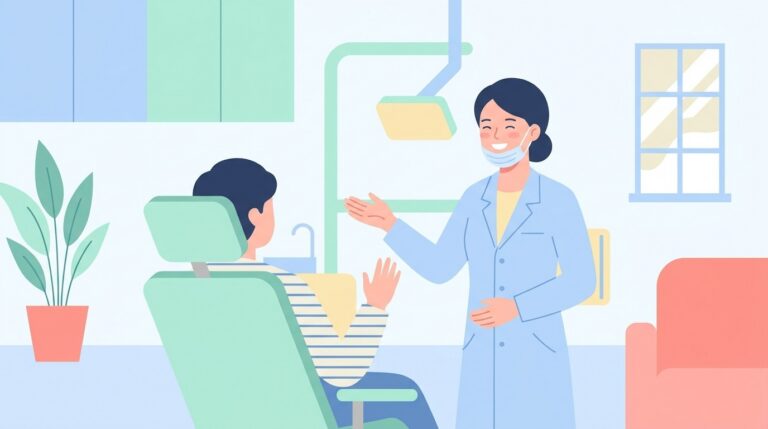
안녕하세요! 매일한글 에디터입니다. (Annyeonghaseyo! Maeil Hangeul editeoimnida. – Hello! I’m your Daily Hangul editor.) Imagine biting into crispy Korean fried chicken while watching your favorite K-Drama, when suddenly—ouch! A sharp cavity or wisdom tooth pain ruins your night. You bravely book a Korean dental clinic, sit in the bright chair, and your heart races as the dentist picks up a tiny needle. Not understanding what they say next is terrifying! Today, based on real feedback from our expat students, you will learn the exact anesthesia and pain-signal phrases Korean dentists use so you can relax and stay safe.
Phase 2: Deep Dive into 3 Core Expressions
1. 마취 주사 놓을 때 따끔해요 (Machwi jusa noeul ttae ttakkeumhaeyo)
- Pronunciation:
[Ma-chwi ju-sa no-eul ttae tta-kkeum-hae-yo](Think of “ttakkeum” like a quick finger snap followed by a tight “uhm” sound!)- Meaning: Literal: “When placing the anesthesia shot, it is prickly.” Actual Nuance: “The numbing shot will give a tiny pinch.”
- K-Culture Moment: Just like in heartwarming medical K-Dramas such as Hospital Playlist, Korean doctors and nurses always give a soft warning right before a needle touches your skin so you do not flinch.
- Editor’s Insight: Koreans love sound-mimicking words! Instead of using a scary word like “painful,” dentists use 따끔해요 (ttakkeumhaeyo) to make the shot sound small, brief, and manageable.
- Situation Spectrum: Casual ⚠️ / Semi-formal ✅ / Formal ✅
- 🤔 Think About It: In English, doctors say “a little pinch.” In Korean, they describe the sharp, tiny sensation with a rhythm word. How do doctors soften scary moments in your native language?
2. 혹시 중간에 아프면 왼손을 드세요 (Hoksi junggane apeumyeon oensoneul deuseyo)
- Pronunciation:
[Hok-ssi jung-ga-ne a-peu-myeon oen-so-neul deu-se-yo](“Oenson” blends “weh” and “n” smoothly, almost like “when-son” without the strong “w” puff.)- Meaning: Literal: “By chance, if it hurts in the middle, lift your left hand.” Actual Nuance: “If you feel any pain during treatment, raise your left hand to pause.”
- K-Culture Moment: Even tough celebrities on Korean variety shows like I Live Alone look terrified in the dental chair and awkwardly keep their left hand hovering in the air, ready to signal!
- Editor’s Insight: Why specifically the LEFT hand (
왼손, oenson)? Because most dentists sit on your right side! Lifting your right hand could bump their dental tools, so raising your left hand is the golden safety rule in every Korean clinic.- Situation Spectrum: Casual 🚫 / Semi-formal ✅ / Formal ✅
- 🤔 Think About It: Adding 혹시 (hoksi – by any chance) turns a strict instruction into a gentle, caring safety net. Why do you think Korean adds soft cushion words like this in medical care?
3. 여기 아파요 / 아직 아파요 (Yeogi apayo / Ajik apayo)
- Pronunciation:
[Yeo-gi a-pa-yo / A-jik a-pa-yo](Pronounce “Yeo” like “yuh” with a relaxed jaw, not “yo.”)- Meaning: “It hurts here” / “It still hurts.”
- K-Culture Moment: You will often see K-Drama characters holding their swollen cheek like a chipmunk and whining “아파요! (Apayo!)” to get sympathy from their best friend.
- Editor’s Insight: Never try to be polite and endure real pain at a Korean dentist! If the anesthesia has not kicked in fully, raise your left hand and simply say “아직 아파요 (Ajik apayo – It still hurts).” The dentist will happily wait or add more numbing gel.
- Situation Spectrum: Casual ⚠️ / Semi-formal ✅ / Formal ✅
- 🤔 Think About It: Some learners stay quiet because they feel shy speaking Korean with a numb mouth. Remember: your comfort matters more than perfect grammar!
Phase 3: Textbook Korean vs. Real Korean
Situation 1: Warning you right before the injection
- 📖 Textbook Korean: 주사를 맞을 때 조금 아플 것입니다. (Jusareul majeul ttae jogeum apeul geosimnida.) — “It will hurt a little when you receive the injection.”
- 🗣️ Real Korean: 살짝 따끔할게요~ (Saljjak ttakkeumhalgeyo~) — “Just a tiny little pinch here~”
- 💡 Why is it different?: Real Korean dentists sound almost like kindergarten teachers when giving shots! Using 살짝 (saljjak – lightly) and the gentle ending
-ㄹ게요 (-lgeyo)calms nervous patients down.
Situation 2: Checking if you are okay mid-treatment
- 📖 Textbook Korean: 치료 중에 통증이 있습니까? (Chiryo junge tongjeungi itseumnikka?) — “Do you have pain during treatment?”
- 🗣️ Real Korean: 지금 아프세요? 괜찮으세요? (Jigeum apeuseyo? Gwaenchaneuseyo?) — “Does it hurt right now? Are you okay?”
- 💡 Why is it different?: 통증 (tongjeung) is formal medical jargon found on paper forms. In the chair, dentists use simple, warm A2 words so you can easily nod or shake your head.
Phase 4: K-Culture Deep Dive & Non-Verbal Manners
4-1. Nunchi (눈치) & Gestures
When you sit in a Korean dental chair, the hygienist will usually place a small sterile towel with an eye-and-mouth cutout over your face so water and bright lights do not bother you. Because you cannot see much, listen closely! If you feel pain, lift your left hand (왼손, oenson) calmly and clearly—do not wave wildly or grab the dentist’s arm, which might be holding a drill. If you need a quick break to swallow or breathe, lift your left hand and make a soft “음! (Eum!)” sound. Many Korean nurses will also gently pat your shoulder (토닥토닥, todak-todak) during the anesthesia shot to help you relax—just breathe slowly through your nose!
4-2. Cultural Code Analysis: K-Life & K-Travel
Foreign travelers are often shocked by how modern, fast, and affordable Korean dental clinics (치과, chigwa) are! Even without local health insurance, a cavity filling or wisdom tooth consultation is usually much cheaper than in North America or Europe. Just like in K-Dramas, clinics feel super cozy—some even play relaxing K-Pop ballads in the lobby and offer disposable toothbrushes right by the bathroom sink so you can brush before your appointment!
Phase 5: Real-Life Roleplay Scenario
Setting: A sleek, lavender-scented dental clinic near Hongdae Station. Soft acoustic K-Pop plays in the background.
Characters: Dr. Min-ji (a warm, smiling dentist) and You (holding your aching cheek from a pesky wisdom tooth).
- Dr. Min-ji: 안녕하세요! 어디가 아파서 오셨어요? (Annyeonghaseyo! Eodiga apaseo osyeosseoyo? – Hello! Where does it hurt today?) 🎭 smiles warmly and adjusts the overhead lamp
- You: 여기 사랑니가 너무 아파요. (Yeogi sarangniga neomu apayo. – My wisdom tooth hurts a lot here.) 🎭 points carefully to your lower back tooth
- Dr. Min-ji: 아, 충치도 조금 있네요. 오늘 치료할게요. (A, chungchido jogeum inneyo. Oneul chiryohalgeyo. – Ah, there is a small cavity too. I’ll treat it today.) 🎭 checks the X-ray screen
- You: 네, 알겠습니다. 주사 아파요? (Ne, algesseumnida. Jusa apayo? – Okay, I understand. Does the shot hurt?) 🎭 grips the chair armrests nervously
- Dr. Min-ji: 마취 주사 놓을 때 살짝 따끔해요. (Machwi jusa noeul ttae saljjak ttakkeumhaeyo. – When I put the numbing shot in, it will pinch just a tiny bit.) 🎭 holds up the numbing gel and syringe gently
- You: 네… 무서워요. (Ne… museowoyo. – Yes… I’m scared.) 🎭 takes a deep breath and closes eyes
- Dr. Min-ji: 괜찮아요. 혹시 중간에 아프면 왼손을 드세요! (Gwaenchanayo. Hoksi junggane apeumyeon oensoneul deuseyo! – It’s okay. If it hurts during treatment, raise your left hand!) 🎭 pats your shoulder gently
- You: 네, 왼손이요! 감사합니다. (Ne, oensoniyo! Gamsahamnida. – Yes, left hand! Thank you.) 🎭 opens mouth wide
🔀 Interactive Branching Point!
Ten minutes later, Dr. Min-ji starts cleaning the cavity, and suddenly you feel a sharp zing in your tooth! What do you do?
- Choice A: Calmly raise your left hand straight up so Dr. Min-ji sees it, wait for her to pause the tool, and say “아직 아파요. (Ajik apayo. – It still hurts.)”
- Choice B: Panic and grab Dr. Min-ji’s right wrist with your right hand while shouting “Stop!”
- Choice C: Squeeze your eyes shut, let tears roll down your cheeks, and stay silent so you don’t bother the doctor.
Feedback:
* Choice A (🏆 Best!): Perfect Nunchi and perfect Korean! Lifting your left hand keeps both you and the dentist safe, and saying “아직 아파요 (Ajik apayo)” tells her immediately that you need more numbing time.
* Choice B (🚫 Bad!): Danger alert! Grabbing the dentist’s working arm can cause an accidental scratch inside your mouth. Always keep your hands away from the tools and use your left hand signal!
* Choice C (⚠️ Risk!): You do not get extra bravery points for suffering in pain! Korean dentists genuinely want you to signal if it hurts—staying silent only makes your visit miserable.
Phase 6: 10-Second Emotional Shadowing Drill
Read these lines out loud! Pause briefly at each / mark and match the emotion!
[😊 Warm & Reassuring]마취 주사 놓을 때 / 살짝 따끔해요. (Machwi jusa noeul ttae / saljjak ttakkeumhaeyo. – Just a light pinch when the numbing shot goes in.)[😟 Nervous but Clear]혹시 중간에 아프면 / 왼손을 드세요. (Hoksi junggane apeumyeon / oensoneul deuseyo. – If it hurts in the middle, please raise your left hand.)[🙋 Honest & Direct]선생님, / 여기 아직 아파요! (Seonsaengnim, / yeogi ajik apayo! – Doctor, it still hurts here!)
Phase 7: K-Culture Mini Dictionary
- 마취 (machwi) | Anesthesia / Numbing | Used everywhere from dental clinics to K-Beauty skin procedures (like numbing cream before laser treatments!).
- 사랑니 (sarangni) | Wisdom tooth | Literally “love tooth”! Koreans joke that wisdom teeth hurt just as much as your first love.
- 충치 (chungchi) | Cavity | Literally “bug tooth.” Korean parents famously warn kids that “cavity bugs” will visit if they eat candy before bed!
- 스케일링 (seukeilling) | Teeth scaling (deep cleaning) | Covered once a year by Korean National Health Insurance, so locals casually chat about getting their annual scaling.
Phase 8: Survival Kit for Travelers
Top 3 Dental Survival Phrases
- 1. 치과 예약하고 싶어요. (Chigwa yeyakago sipeoyo.) — “I want to book a dental appointment.” Pro Tip: Many clinics in Seoul accept walk-ins, or you can message them via KakaoTalk!
- 2. 사랑니가 아파요. (Sarangniga apayo.) — “My wisdom tooth hurts.” Pro Tip: Point to your jaw if you forget the exact tooth name.
- 3. 마취 더 해 주세요. (Machwi deo hae juseyo.) — “Please give me more anesthesia.” Pro Tip: Say this right after raising your left hand if you still feel discomfort.
Editor’s Travel Note
Need a clinic fast while traveling? Use Naver Map App and search “치과” (chigwa) to see real patient reviews, opening hours, and photos of the clinic. Don’t worry about complex menus—you can type symptoms into Papago AI Translator and show your phone screen at the front desk. Most clinics accept international credit cards (카드, kadeu) and T-money/subway stations are usually right downstairs! Need English medical help? Call the Korea Travel Helpline 1330 for free translation support.
Phase 9: One Step Deeper — Care in a Fast-Paced Society
Korea is famous for its fast “ppalli-ppalli” (빨리빨리 – hurry, hurry) culture, and medical appointments are surprisingly speedy too. Yet inside that speed, you will notice a deeply human warmth called jeong (정 – affectionate care). Whether it is placing a soft towel over your eyes, using gentle words like “따끔해요 (ttakkeumhaeyo),” or teaching you the left-hand rule before starting, Korean clinics build small bridges of comfort so you never feel alone in the chair. Even when you are nervous in a foreign country, one small gesture—raising your left hand—keeps you in control.
💬 Your Turn: Have you ever visited a dentist or hospital in Korea? Or which dental phrase makes you feel the most relieved to know? Drop a comment below and tell me your story!
Phase 10: FAQ & Common Mistakes
Q: Why do Korean dentists always ask for my LEFT hand instead of either hand?
A: Dentists almost always sit on your right side to use their tools. Lifting your left hand (왼손, oenson) keeps your arm completely out of the dentist’s workspace so they can pause safely without bumping any instruments.
Q: What if the dentist starts speaking very fast Korean while my mouth is open?
A: Don’t panic! Dentists know you cannot talk with tools in your mouth. You only need to remember three signals: nod for yes, shake your head slightly for no, and raise your left hand (왼손, oenson) if anything hurts.
Q: Are Korean dental clinics expensive for tourists without Korean insurance?
A: Usually, no! A basic consultation, X-ray, and simple cavity filling or prescription for tooth pain are quite affordable compared to Western countries. You can always ask “얼마예요? (Eolmayeyo? – How much is it?)” before treatment starts.
🚨 Common Mistakes TOP 3
- Mistake 1: Saying “손! (Son! – Hand!)” or raising your right hand suddenly. -> Correct Action: Keep your right hand on your lap or armrest and calmly lift your left hand (
왼손, oenson). - Mistake 2: Trying to stay tough and enduring sharp pain because you feel shy. -> Correct Action: Signal immediately! Say “아직 아파요 (Ajik apayo – It still hurts)” once the dentist pauses.
- Mistake 3: Calling a dentist “병원 (byeongwon – hospital)” when asking for directions. -> Correct Action: Use the specific word 치과 (chigwa – dental clinic) so locals point you to the right building!
Phase 11: Action Mission & Engagement
- 🥉 Bronze Mission (Solo Practice): Stand in front of your mirror, practice lifting your left hand calmly, and say “여기 아직 아파요! (Yeogi ajik apayo!)” three times.
- 🥈 Silver Mission (Share It): Send the phrase “사랑니 (sarangni – wisdom tooth)” to a friend studying Korean and ask them if they can guess its romantic literal meaning!
- 🥇 Gold Mission (Real-Life Use): Next time you visit a clinic or pharmacy in Korea (or practice with a language partner), try using “여기 아파요 (Yeogi apayo)” clearly.
- 🎮 K-Culture Mission: Watch a hospital or dentist vlog by your favorite K-Pop idol or YouTuber and listen carefully—can you catch the word 따끔 (ttakkeum) or 아파요 (apayo)?
Phase 12: Interactive Quiz Challenge
Test what you learned today! Click the toggles below to check your answers.
Quiz 1 (Situation Judgment):
You are getting a cavity treated in Seoul. The dentist told you “혹시 중간에 아프면 왼손을 드세요 (Hoksi junggane apeumyeon oensoneul deuseyo).” Suddenly, you feel pain! What should you do?
A) Raise your right hand quickly.
B) Raise your left hand calmly and wait for the dentist to pause.
C) Wait 20 minutes until the treatment is completely finished.
Click to check Answer & Explanation for Quiz 1
Answer: B) Raise your left hand calmly and wait for the dentist to pause.
Why? Raising your right hand (A) risks bumping the dentist’s tools, and waiting in pain (C) is unnecessary! Raising your left hand (왼손, oenson) is the safest way to pause treatment.
Quiz 2 (Fill in the Blank):
Complete the dentist’s gentle warning before giving the anesthesia shot:
“마취 주사 놓을 때 ( _______ )해요!” (When giving the anesthesia shot, it will pinch!)
Click to check Answer & Explanation for Quiz 2
Answer: 따끔 (ttakkeum)
Full sentence: 마취 주사 놓을 때 따끔해요! (Machwi jusa noeul ttae ttakkeumhaeyo!)
Quiz 3 (True / False Culture Quiz):
The Korean word for wisdom tooth, 사랑니 (sarangni), literally means “love tooth.” (True / False)
Click to check Answer & Explanation for Quiz 3
Answer: True!
사랑 (sarang) means love and 이/니 (i/ni) means tooth. Koreans say wisdom teeth grow in when you are old enough to feel the ache of first love!
🎬 Watch Our Daily Videos! (Daily Hangul Official Instagram)
Review the expressions you learned in this article with our fun daily short videos! Check out native pronunciation and real-life nuances in action.
- Instagram @dailyhangul_en







