

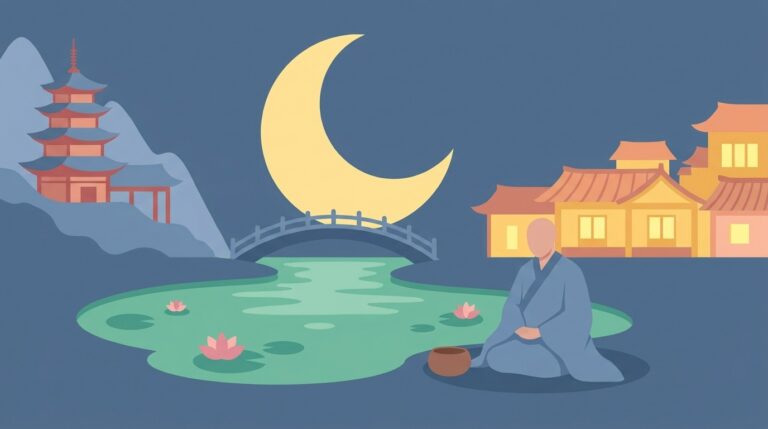
Phase 1: Why Wonhyo’s Skull Water Matters in Your Next Seoul Chat
안녕하세요! 매일한글 에디터입니다. (Annyeonghaseyo! Hello, this is your Daily Hangul Editor.) Picture this: you are sitting in a cozy Jongno makgeolli bar after a K-drama binge, trying to tell your Korean friend that a bad day is all in their head. You drop a heavy Sino-Korean philosophical term, and the table goes dead silent like a graduate seminar! Over ten years of coaching C2 learners, this exact gap—knowing the textbook ideas of Wonhyo (원효) and Jinul (지눌) yet sounding stiff in real life—is the #1 hurdle students tell me about. Mastering how Wonhyo turned his midnight skull-water epiphany into everyday marketplace wisdom lets you bridge deep Korean thought with effortless, witty native banter.
Phase 2: Top 3 C2 Expressions Deep Dive
1. 일체유심조 (Ilcheyusimjo)
- Pronunciation: Ilcheyusimjo — Imagine saying “eel-cheh-yoo-shim-Joe” smoothly in one breath (make sure “cheh” stays crisp without a hard “k” sound).
- Meaning: Literally “all phenomena are created by the mind alone.” In real life, Koreans use it both for profound resilience and with playful, self-deprecating humor when enduring something miserable (like Monday morning subway commutes).
- K-Culture Moment: Think of the existential healing vibes in dramas like My Mister or Our Blues, where characters realize that changing their inner lens transforms a bleak neighborhood into a warm community.
- Editor’s Insight: This is the four-character sajaseongeo (사자성어) born from Wonhyo drinking stagnant water from a human skull in the dark—thinking it was refreshing spring water—and vomiting only after seeing the skull at dawn. Using it at C2 level shows you grasp the philosophical heartbeat of Korean resilience.
- Situation Spectrum: Casual ✅ (when joking or comforting a close friend) / Semi-formal ✅ (great in thoughtful conversations) / Formal ✅ (powerful in speeches or essays)
- 🤔 Think About It: In English, “it’s all in your head” can sound dismissive, as if someone’s pain isn’t real. How does Korean Ilcheyusimjo frame the mind not as an illusion to ignore, but as the active architect of reality?
2. 마음먹기 나름이다 (Maeummeokgi nareumida)
- Pronunciation: Maeummeokgi nareumida — Think “mah-uhm-muhk-gi nah-reu-mi-da” (for “eu,” pull your lips flat like a tight smile and make an “uh” sound).
- Meaning: Literally “it depends on how you eat (set) your mind.” It is the warm, everyday marketplace cousin of Ilcheyusimjo, meaning “mindset makes all the difference.”
- K-Culture Moment: In Korean variety shows or reality travel programs, whenever a cast member complains about sudden rain or spicy food, an older cast member inevitably pats their shoulder and drops this line with a sage grin.
- Editor’s Insight: Notice the verb 먹다 (meokda, to eat)! Koreans literally “eat” or “digest” a resolution (maeumeul meokda). While Wonhyo explained Ilsim (일심, One Mind) in scholarly treatises, ordinary people lived it through this earthy, food-adjacent metaphor.
- Situation Spectrum: Casual ✅ (
마음먹기 나름이지 뭐/ Maeummeokgi nareumiji mwo) / Semi-formal ✅ (마음먹기 나름이에요/ Maeummeokgi nareumieyo) / Formal ⚠️ (in formal reports, switch to인식의 전환에 달려 있습니다/ Insigui jeonhwane dallyeo itseumnida)- 🤔 Think About It: Western philosophy often separates “mind” and “body” strictly. What does the Korean idiom of “eating one’s mind” reveal about how Korean culture connects emotion, gut feeling, and determination?
3. 저잣거리로 내려가 민중과 호흡하다 (Jeojatgeoriro naeryeoga minjunggwa hoheupada)
- Pronunciation: Jeojatgeoriro naeryeoga minjunggwa hoheupada — Picture “juh-jat-guh-ri-ro neh-ryuh-gah min-jung-gwa ho-heu-pah-da” (keep “ho-heup” airy, like a gentle sigh).
- Meaning: Literally “to descend to the marketplace and breathe with the common people.” Figuratively, it praises intellectuals, leaders, or artists who leave their ivory tower to live and empathize with everyday folks.
- K-Culture Moment: Think of cultural documentaries about Jinul’s Jeonghyessangsu (정혜쌍수, cultivating meditation and wisdom together) or indie musicians busking in Hongdae—bringing profound art directly to passersby rather than locking it inside elite halls.
- Editor’s Insight: After his skull-water awakening, Wonhyo famously discarded elitist monastic isolation, sang Muaega (무애가, Song of Unhindered Freedom) in marketplaces, and made Buddhism accessible to everyone. At C2, using
대중과 호흡하다(daejunggwa hoheupada, breathing with the public) in business or cultural critique sounds remarkably sophisticated.- Situation Spectrum: Casual 🚫 (too literary for bar banter unless used humorously) / Semi-formal ✅ (spot-on in book clubs or cultural chats) / Formal ✅ (ideal for op-eds, lectures, and critiques)
- 🤔 Think About It: Why does Korean use the verb “to breathe together” (
호흡하다) instead of “to communicate” (소통하다) when describing empathy with ordinary people?
Phase 3: Textbook Korean vs. Real Korean
Situation 1: Reframing a Stressful Day
- 📖 Textbook Korean:
모든 일은 마음가짐에 따라 달라진다고 생각합니다.(Modeun ireun maeumgajime ttara dallajindago saenggakamnida. — “I believe everything changes depending on one’s mental attitude.”) - 🗣️ Real Korean:
어차피 일체유심조라잖아. 다 마음먹기 나름이지 뭐.(Eochapi ilcheyusimjorajana. Da maeummeokgi nareumiji mwo. — “Well, they say everything’s created by the mind anyway. It’s all in how you frame it.”) - 💡 Why the difference? Real C2 Koreans weave classical idioms (
일체유심조) right next to casual sentence enders like-라잖아and-지 뭐to sound wise without sounding preachy.
Situation 2: Resolving Polarized Opinions (Wonhyo’s Hwajaeng)
- 📖 Textbook Korean:
서로 대립하는 주장을 조화롭게 통합해야 합니다.(Seoro daeripaneun jujangeul johwaropge tongapaeya hamnida. — “We must harmoniously integrate opposing claims.”) - 🗣️ Real Korean:
편 가르지 말고 원효 대사 화쟁 사상처럼 둥글게 아울러야지.(Pyeon gareuji malgo Wonhyo Daesa Hwajaeng sasangcheoreom dunggeulge aureuryeoji. — “Let’s not take sides—we’ve got to embrace it all smoothly like Master Wonhyo’s harmonization philosophy.”) - 💡 Why the difference?
아우르다(aureuda, to encompass/harmonize) and둥글게(dunggeulge, roundedly) reflect Korea’s deep cultural preference for smoothing sharp edges rather than declaring one winner.
Phase 4: K-Culture Deep Dive & Non-Verbal Manners
4-1. Nunchi (눈치) & Gestures
When you bring up Buddhist philosophy in a Korean café or suljip (술집, pub), your nunchi matters! Never lean back with crossed arms like a professor lecturing the table. Instead, Koreans soften intellectual weight with a light chuckle, a relaxed shoulder tilt, or by pouring their friend a drink first (suljjan etiquette). When visiting a real temple like Jogyesa or Songgwangsa (where Jinul taught), shift immediately to quiet mindfulness: clasp both hands gently at your waist (chasu, 차수) and offer a half-bow (banbae, 반배) with hapjang (합장, palms pressed together) when passing monastics.
4-2. Cultural Code Analysis
Wonhyo’s Hwajaeng (화쟁, Harmonization of Disputes) and Jinul’s Jeonghyessangsu (정혜쌍수, Dual Cultivation of Meditation and Wisdom) quietly power modern K-Culture! Take Korea’s booming Templestay culture: stressed Seoulites aren’t retreating to mountains forever—they practice Jinul’s jeong (calm meditation) over the weekend so they can carry hye (active wisdom) back into Monday’s bustling marketplace. Similarly, K-Pop solo artists like RM of BTS and acclaimed K-Dramas frequently echo Wonhyo’s Ilsim (One Mind), reminding listeners that contradictions—joy and sorrow, tradition and modernity—aren’t enemies, but two sides of one mind.
Phase 5: Real-Life Roleplay Scenario
- Setting: A rainy Friday night inside a warm, lantern-lit jeon and makgeolli alley near Jogyesa Temple in Jongno, Seoul. Rain taps on the awning while sizzling kimchi pancakes fill the air.
- NPC: Min-ho (민호), 32, a sharp-witted Korean philosophy PhD candidate who hates pretentious jargon and loves mixing classical wisdom with bar humor.
- Min-ho:
야, 비 온다고 이렇게 우울해하기 있기 없기? 파전 냄새 좀 맡아 봐.(Ya, bi ondago ireoke uulhaehagi itgi eopgi? Pajeon naemsae jom mata bwa. — “Hey, getting gloomy just because it’s raining? Smell that green onion pancake.”)🎭 Pushes the sizzling plate toward you while pouring makgeolli. - You:
아니, 프로젝트가 자꾸 어긋나니까 마음이 복잡해서 그렇지.(Ani, peurojekteuga jakku eogeutnanikka maeumi bokjapaeseo geureoji. — “No, it’s just that my project keeps clashing, so my mind is tangled.”)🎭 Sighs lightly and picks up your ceramic bowl. - Min-ho:
에이, 아까 조계사 돌고 와서 잊었어? 다 일체유심조잖아.(Ei, akka Jogyesa dolgo waseo ijeosseo? Da ilcheyusimjojana. — “Come on, we just walked around Jogyesa and you forgot already? Everything is created by the mind.”)🎭 Winks playfully and taps his temple with one finger. - You:
아, 원효 대사 해골물 이야기? 지금 나보고 이 막걸리를 해골물이라고 생각하라는 거야?(A, Wonhyo Daesa haegolmul iyagi? Jigeum nabogo i makgeollireul haegolmurirago saenggakaraneun geoya? — “Ah, Master Wonhyo’s skull-water story? Are you telling me to pretend this makgeolli is skull water?”)🎭 Laughs and raises an eyebrow skeptically. - Min-ho:
하하, 반대로지! 맑은 물이냐 해골물이냐는 결국 네 마음먹기 나름이라는 거지.(Haha, bandaeroji! Malgeun murinya haegolmurinya-neun gyeolguk ni maeummeokgi nareumiraneun geoji. — “Haha, the opposite! Whether it’s clear water or skull water depends on how you set your mind.”)🎭 Clinks his bowl warmly against yours. - You:
맞아. 지눌 스님의 정혜쌍수처럼, 고민만 하지 말고 마음도 가라앉히고 지혜롭게 풀어야겠네.(Maja. Jinul Seunimui Jeonghyessangsucheoreom, gominman haji malgo maeumdo garaanchigo jihyeropge pureoyagenne. — “True. Like Master Jinul’s Jeonghyessangsu, I shouldn’t just stew—I need to calm my mind and solve it wisely.”)🎭 Takes a slow, relaxed sip and nods. - Min-ho:
오, 대단한데? 이제 원효처럼 저잣거리로 내려가서 사람들하고 호흡만 하면 되겠네!(O, daedanhan-de? Ije Wonhyocheoreom jeojatgeoriro naeryeogaseo saramdeurhago hoheumman hamyeon doegenne! — “Whoa, impressive! Now all you need is to descend to the marketplace like Wonhyo and breathe with the people!”)🎭 Grins broadly, waving his chopsticks toward the lively alley. - You:
좋아, 이 막걸리부터 다 비우고 내일 팀원들 의견도 둥글게 아울러 볼게.(Joa, i makgeollibuteo da biugo naeil timwondeul uigyeondo dunggeulge aulleo bolge. — “Deal! Let’s finish this makgeolli first, and tomorrow I’ll smoothly harmonize my teammates’ opinions.”)🎭 Smiles genuinely, tension gone.
🔀 Interactive Branching Point: How would you respond in Turn 6 when Min-ho brings up Ilcheyusimjo?
- Option A:
고민만 하지 말고 정혜쌍수처럼 마음도 가라앉히고 지혜롭게 풀어야겠네.(“Instead of just worrying, I should calm my mind and solve it wisely like Jeonghyessangsu.”) -> ✅ Best! You seamlessly connect Wonhyo and Jinul’s philosophies to real workplace stress using natural C2 phrasing. - Option B:
일체유심조의 인식론적 함의를 현대 사회에 적용하는 것은 타당하다고 사료됩니다.(“Applying the epistemological implications of Ilcheyusimjo to modern society is deemed valid.”) -> 🚫 Bad! Way too stiff (사료됩니다belongs in an academic paper, not a makgeolli bar—you’ll kill the vibe!). - Option C:
아 몰라, 그냥 술이나 마셔! 다 부질없어.(“Ugh whatever, just drink! Everything is pointless.”) -> ⚠️ Risk! Natural with very close friends, but it reduces Wonhyo’s active enlightenment to nihilism—missing the uplifting C2 nuance.
Phase 6: 10-Second Emotion Shadowing Drill
Read aloud using / for brief pauses and let the emotional markers guide your intonation:
[😌 Enlightened & playful]결국 세상은 / 내가 어떻게 보느냐에 달린 거니까, / 다 일체유심조지 뭐.(Gyeolguk sesangeun / naega eotteoke boneunyae dallin geonikka, / da ilcheyusimjoji mwo. — “In the end, the world depends on how I view it, so it’s all created by the mind anyway.”)[🤔 Thoughtful & grounded]산속에서 홀로 깨닫는 것도 중요하지만, / 결국 저잣거리로 내려와 / 세상과 호흡해야 진정한 지혜죠.(Sansogeseo hollo kkaedanneun geotdo jungyohajiman, / gyeolguk jeojatgeoriro naeryeowa / sesanggwa hoheupaeya jinjeonghan jihyejyo. — “Attaining realization alone in the mountains matters, yet true wisdom means coming down to the marketplace and breathing with the world.”)[🥳 Warm & conciliatory]서로 각만 세우지 말고, / 화쟁의 정신으로 / 둥글게 아우르며 가봅시다.(Seoro gangman seuji malgo, / Hwajaengui jeongsineuro / dunggeulge aureumyeo gabopsida. — “Instead of drawing sharp lines against each other, let’s move forward embracing everyone in the spirit of Hwajaeng.”)
Phase 7: K-Culture Mini Dictionary
- 화쟁 (Hwajaeng) | Harmonization of Disputes | Wonhyo’s signature philosophy of resolving doctrinal clashes without erasing differences. In modern Korean business or politics, it appears in editorials calling for bipartisan compromise (
화쟁의 리더십, Hwajaeng leadership). - 정혜쌍수 (Jeonghyessangsu) | Dual Cultivation of Meditation and Wisdom | Coined by Master Jinul (보조국사 지눌), teaching that serene focus (jeong, 정) and sharp insight (hye, 혜) must work like two wings of a bird. Frequently cited in Korean wellness and leadership columns.
- 해골물 (Haegolmul) | Skull Water | Literally the water Wonhyo drank from a skull in the dark. Today, young Koreans jokingly use
해골물 마신 기분(feeling like I drank skull water) when a realization suddenly ruins something they thought was great—or flips their perspective! - 저잣거리 (Jeojatgeori) | Traditional Marketplace / Bustling Street | A poetic Korean word for the lively, noisy streets of ordinary people. Used in modern journalism and art critiques to mean “grassroots reality” as opposed to elite ivory towers.
Phase 8: Survival Kit for Travelers
Top 3 Survival Phrases for Korean Temples & Philosophy Tours
이 사찰의 창건 설화가 어떻게 되나요?(I sacharui changgeon seolhwaga eotteoke doenayo? — “What is the founding legend of this temple?”) | Pro Tip: Ask temple guides this at Bulguksa or Bunhwangsa (Wonhyo’s home temple in Gyeongju) to unlock incredible oral storytelling.템플스테이 당일 체험도 가능한가요?(Tempeulseutei dangil cheheomdo ganeunghangayo? — “Is a one-day Templestay experience available?”) | Pro Tip: Even if you don’t have time for an overnight stay at Songgwangsa (Jinul’s temple), many temples offer 2–3 hour tea-and-meditation programs!사진 촬영이 금지된 구역이 있나요?(Sajin chwareongi geumjidoen guyeogi innayo? — “Are there areas where photography is prohibited?”) | Pro Tip: Usually, taking photos inside main Buddha halls (대웅전, Daeungjeon) is forbidden out of respect.
Editor’s Travel Note
Before heading to historic temples in Gyeongju or Suncheon, be sure to Download Naver Map for Korean Temple Bus Routes—Google Maps often misses rural mountain shuttle timings. Also, Reserve Official Korean Templestay Programs in advance, especially during autumn foliage season! Load a T-money card at any convenience store for seamless intercity bus transfers, and carry small cash (1,000–5,000 KRW bills) for temple lantern offerings or traditional mountain-herb tea houses.
Phase 9: “One Step Deeper” — Mind Over Binary
Western philosophy has long been shaped by binary tension—mind versus body, sacred versus secular, right versus wrong. Wonhyo’s Hwajaeng and Ilsim, alongside Jinul’s Jeonghyessangsu, offer a radically different lens: apparent opposites are actually interdependent currents flowing from one source. That is why Korean culture rarely asks you to choose strictly between quiet reflection and lively community; instead, it invites you to carry mountain stillness right into the noisy marketplace. Even today, that non-dualistic spirit shapes how Koreans seek social harmony (hwahap, 화합) after conflict.
💬 Your Turn: Have you ever had a “skull-water moment” where shifting your perspective completely changed a tough situation? Share your story in the comments—and try sneaking one Korean expression from today into your reply!
Phase 10: FAQ & Myth-Busting
Q: Is Ilcheyusimjo (일체유심조) only used by Buddhists in Korea?
A: Not at all! Just like Westerners say “karma” or “mind over matter” without being strictly religious, Koreans of all backgrounds—even atheists and Christians—use 일체유심조 casually as a cultural proverb about resilience and mindset.
Q: How do Wonhyo and Jinul differ in Korean Buddhist history?
A: Wonhyo (7th century, Silla) focused on uniting rival scholarly sects through Ilsim (One Mind) and Hwajaeng (Harmonization) and went out to teach commoners directly. Jinul (12th–13th century, Goryeo) reformed a corrupt monastic order by establishing Jeonghyessangsu (meditation + wisdom) and Donojeomsu (돈오점수, sudden awakening followed by gradual cultivation).
Q: Can I use Sino-Korean philosophical idioms like 화쟁 (Hwajaeng) in casual conversation?
A: Yes, at C2 level it sounds brilliant—provided you soften the tone with casual endings like -잖아 or -처럼 and a light smile, rather than using stiff formal endings like -사료됩니다.
🚨 Common Mistakes Warning Board
- Mistake: Saying
마음을 먹다to mean “to eat calmly” literally. -> Correct Action: Remember마음먹기 나름이다always refers to making up one’s mind or mental attitude, never physical digestion! - Mistake: Confusing
원효(Wonhyo) and의상(Uisang) when telling the skull-water story. -> Correct Action: Both traveled toward Tang China together, but Uisang continued to China while Wonhyo turned back after his skull-water awakening! - Mistake: Mispronouncing
정혜쌍수(Jeonghyessangsu) with a flat “s” on쌍수. -> Correct Action: Tense your tongue for the double consonantㅆ(ssangsu)—otherwise, an accidental soft sound can muddy the meaning entirely!
Phase 11: Action Mission & Engagement
- 🥉 Bronze Mission (Solo Practice): Record yourself doing the Phase 6 10-Second Emotion Shadowing Drill three times, focusing on smooth pauses at each
/mark. - 🥈 Silver Mission (Social Share): Post a photo of your favorite coffee or tea on social media with the caption:
오늘도 다 마음먹기 나름! (일체유심조 🌿)and tag Daily Hangul. - 🥇 Gold Mission (Real-World Use): Next time a Korean friend complains about rain, traffic, or work stress, comfort them warmly with
어차피 마음먹기 나름이지 뭐!(Eochapi maeummeokgi nareumiji mwo!) and watch their eyes light up! - 🎮 K-Culture Mission: Watch a healing K-Drama (like My Mister or Misaeng) or listen to a Korean indie track this week and spot one moment where a character practices Hwajaeng (bridging two opposing sides) or leaves their comfort zone to connect with ordinary people (
저잣거리로 내려가다).
Phase 12: Interactive Quiz Challenge
Quiz 1 (Situational Judgment): Your Korean colleague is spiraling before a big presentation, convinced everyone will hate their ideas. Which response sounds most like an empathetic, natural C2 speaker?
A) 모든 현상은 마음에서 비롯된다고 사료됩니다.
B) 너무 긴장하지 마. 결국 다 마음먹기 나름이잖아!
C) 빨리 산속으로 들어가서 정혜쌍수를 닦으세요.
Click to Reveal Answer & Explanation for Quiz 1
Answer: B!
Explanation: Option A uses overly stiff academic phrasing (사료됩니다), which feels robotic toward a stressed colleague. Option C jokes about fleeing to the mountains, which misses the comforting moment. Option B (결국 다 마음먹기 나름이잖아!) hits the warm, encouraging C2 sweet spot.
Quiz 2 (Fill in the Blank): Complete this sentence describing Master Wonhyo’s legacy:원효는 깨달음을 얻은 뒤 엘리트 사원을 떠나 ( ____ )로 내려가 민중과 호흡했다. (After attaining enlightenment, Wonhyo left the elite monastery, went down to the ____, and breathed with the common people.)
Click to Reveal Answer & Explanation for Quiz 2
Answer: 저잣거리 (jeojatgeori)
Explanation: 저잣거리 means the lively traditional marketplace. Together with 민중과 호흡하다, it captures Wonhyo’s populist spirit of making wisdom accessible to everyone.
Quiz 3 (True / False Cultural Quiz): True or False? According to Master Jinul’s Jeonghyessangsu (정혜쌍수), true spiritual growth requires abandoning practical wisdom and focusing only on silent meditation forever.
Click to Reveal Answer & Explanation for Quiz 3
Answer: False!
Explanation: Jeonghyessangsu literally means the dual cultivation of meditation (정, 禪定) and wisdom (혜, 智慧). Jinul taught that stillness and active insight must support each other equally—never one without the other!
🎬 Watch Our Daily Videos! (Daily Hangul Official Instagram)
Review the expressions you learned in this article with our fun daily short videos! Check out native pronunciation and real-life nuances in action.
- Instagram @dailyhangul_en







