

Phase 1: The Moment Subtitles Betray You
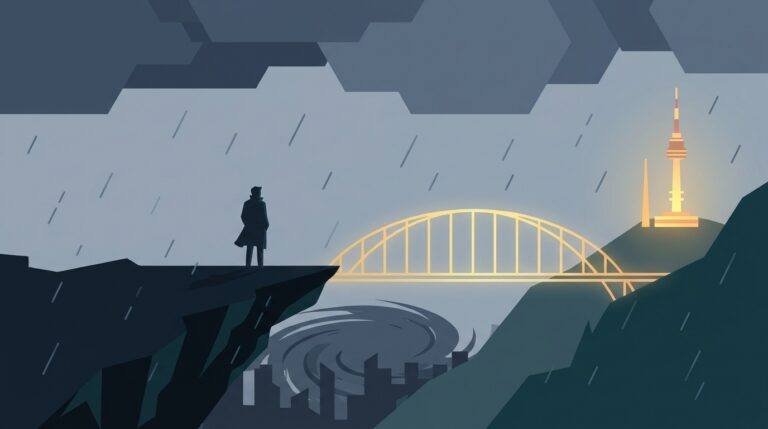
안녕하세요! 매일한글 에디터입니다. (Annyeonghaseyo! Hello, this is your Daily Hangul Editor.) Picture this: you are binging a tense K-drama like Vincenzo or Reborn Rich. The protagonist is trapped in a hostile boardroom, facing bankruptcy, and delivers a chilling four-syllable idiom—yet the English subtitle merely says, ‘We are in trouble.’ Frustrating, right? Many C1 learners tell us they understand daily Korean effortlessly, yet hit a wall when native speakers compress dramatic crises and miraculous comebacks into vivid idioms. Based on real coaching feedback from advanced students, this guide unlocks the exact expressions Koreans use when everything is on the line.
Phase 2: Deep Dive Into 3 Essential C1 Idioms
1. 사면초가 (Samyeonchoga)
- Pronunciation: [sa-myeon-cho-ga] — Think of ‘sah’ (like ‘saw’ without the w), ‘myeon’ (like ‘m-yun’), ‘cho’ (like ‘cho’ in ‘chocolate’), and ‘ga’ (like ‘ga’ in ‘gala’).
- Meaning: Literally ‘Songs of Chu from four sides’ (from ancient Chinese military history where surrounded soldiers heard enemy songs everywhere). In real life, it means being completely cornered with zero allies and no escape route.
- K-Culture Moment: In Squid Game or corporate thrillers like Misaeng, when a character discovers that both their rival and their trusted mentor have betrayed them right before a deadline, they whisper, ‘완전 사면초가네’ (Wanjeon samyeonchogane / We are completely surrounded).
- Editor’s Insight: Unlike casual ‘I’m stressed,’ 사면초가 (samyeonchoga) carries tragic weight. Use it when every possible exit is blocked, not just when you are busy.
- Situation Spectrum: Casual ⚠️ (sounds dramatic among friends, often used playfully) / Semi-formal ✅ / Formal ✅
- 🤔 Think About It: English uses spatial traps like ‘backed into a corner,’ while Korean borrows an auditory siege metaphor—hearing the enemy’s song from all directions. How does your native language frame total isolation?
2. 설상가상 (Seolsang-gasang)
- Pronunciation: [seol-sang-ga-sang] — Say ‘suhl’ (like ‘hull’ with an s), ‘sahng’ (like ‘song’ with an ah sound), ‘gah’ (like ‘ga’ in ‘garden’), and ‘sahng’.
- Meaning: Literally ‘frost added on top of snow.’ It describes a relentless cascade of misfortune—just like ‘when it rains, it pours’ or ‘adding insult to injury.’
- K-Culture Moment: Imagine a chaotic variety show episode like Running Man or a survival cooking show like Culinary Class Wars: a contestant drops their sauce, and seconds later, the stove breaks. The caption flashes ‘설상가상!’ (Seolsang-gasang!) in bold red letters.
- Editor’s Insight: This is one of the most versatile C1 idioms because it fits seamlessly into news broadcasts, business post-mortems, and everyday complaining.
- Situation Spectrum: Casual ✅ / Semi-formal ✅ / Formal ✅
- 🤔 Think About It: Korean uses winter imagery (snow + frost) to evoke sudden paralysis and hardship, whereas English prefers rain (‘when it rains, it pours’). What weather metaphors mean bad luck in your culture?
3. 기사회생 (Gisa-hoesaeng)
- Pronunciation: [gi-sa-hoe-saeng] — Pronounce ‘gi’ (like ‘key’ with a softer g), ‘sah’ (like ‘saw’), ‘hweh’ (like ‘way’ with an h puff), and ‘saeng’ (like ‘sang’ in ‘I sang’).
- Meaning: Literally ‘rising from death and returning to life.’ It depicts a jaw-dropping, against-all-odds comeback or last-second breakthrough when defeat seemed guaranteed.
- K-Culture Moment: Think of a K-league soccer match in stoppage time, or an idol group on the verge of disbandment whose older track suddenly goes viral on Korean charts (역주행 / yeokjuhaeng). Sports commentators and entertainment reporters immediately celebrate their ‘기사회생’ (gisa-hoesaeng).
- Editor’s Insight: Notice the verb pairing! While 사면초가 (samyeonchoga) pairs with ‘이다’ (to be) or ‘에 빠지다’ (to fall into), 기사회생 (gisa-hoesaeng) usually acts as a noun + 하다 (기사회생하다 / to make a miraculous comeback).
- Situation Spectrum: Casual ⚠️ (slightly grand for tiny wins) / Semi-formal ✅ / Formal ✅
- 🤔 Think About It: English loves underdog sports metaphors like ‘saved by the bell’ or ‘comeback kid.’ Why do you think Korean reaches for life-and-death imagery for dramatic turnarounds?
Phase 3: Textbook Korean vs. Real Korean
Situation 1: Facing an Unsolvable Dead End
- 📖 Textbook Korean: 지금 상황이 매우 어려워서 해결할 방법을 전혀 찾을 수 없습니다. (Jigeum sanghwang-i maeu eoryeowoseo haegyeolhal bangbeob-eul jeonhyeo chajeul su eopseumnida. / The current situation is very difficult, so I cannot find a solution at all.)
- 🗣️ Real Korean: 완전 진퇴양난이네. 이러지도 저러지도 못하겠어. (Wanjeon jintoe-yangnan-ine. Ireojido jeoreojido mothagesseo. / We are totally stuck between a rock and a hard place. Can’t move forward or backward.)
- 💡 Why the Difference?: At the C1 level, native speakers rarely spell out ‘it is very difficult.’ Instead, they drop a crisp four-character Hanja idiom like 진퇴양난 (jintoe-yangnan, unable to advance or retreat) paired with the natural rhythmic phrase 이러지도 저러지도 못하다 (unable to do this or that).
Situation 2: Finally Getting Breathing Room After a Crisis
- 📖 Textbook Korean: 큰 위기를 넘겨서 이제 마음이 편안해졌습니다. (Keun wigi-reul neomgyeoseo ije maeum-i pyeonan-haejyeotseumnida. / Having overcome a big crisis, my mind has now become comfortable.)
- 🗣️ Real Korean: 와, 이제야 좀 숨통이 트이네! 진짜 기사회생했다. (Wa, ijeya jom sumtong-i teuine! Jinjja gisa-hoesaeng-haetda. / Whoa, I can finally breathe a little! We seriously came back from the dead.)
- 💡 Why the Difference?: Korean expresses relief somatically—through the body. Saying 숨통이 트이다 (sumtong-i teuida, literally ‘one’s windpipe opens up’) captures the physical release of tension far better than textbook adjectives.
Phase 4: K-Culture Deep Dive & Non-Verbal Manners
4-1. Nunchi (눈치) & Physical Cues in High-Stakes Moments
When Koreans encounter a sudden roadblock, watch their posture and breathing before they even speak. You will often see someone softly tilt their head back, place a hand on the back of their neck—literally enacting the idiom 뒷목을 잡다 (dwinmog-eul japda, to grab the back of one’s neck in shock)—and let out a short, nasal sigh. Conversely, during a workplace crisis, maintaining composed Nunchi (눈치) means lowering your vocal pitch, avoiding frantic hand-waving, and keeping steady eye contact while delivering bad news concisely. Once a breakthrough arrives and 숨통이 트이다 (sumtong-i teuida) happens, the physical shift is unmistakable: shoulders drop noticeably, hands open up, and a quiet collective exhale of ‘휴’ (hyu / phew) ripples through the room.
4-2. Cultural Code: From ‘Goguma’ (고구마) to ‘Saida’ (사이다)
Korean media storytelling thrives on the emotional contrast between extreme crisis and cathartic breakthrough. Fans even have food-based slang for this cycle! When obstacles pile up relentlessly—classic 설상가상 (seolsang-gasang)—viewers call the suffocating tension ‘고구마’ (goguma, sweet potato), because eating roasted sweet potatoes without water feels dry and choking. When the hero outsmarts the villain and pulls off a 기사회생 (gisa-hoesaeng), viewers cheer ‘사이다!’ (saida, lemon-lime soda), describing the crisp, carbonated rush of instant relief. Understanding these idioms lets you ride that exact cultural rollercoaster alongside Korean audiences.
Phase 5: Interactive Roleplay Scenario
Setting: 11:40 PM at a sleek indie game studio in Pangyo (Korea’s Silicon Valley). Rain beats against the glass walls. Tomorrow is the final investor demo, and the server just crashed.
Characters: Team Lead Min-jun (exhausted, gripping an iced Americano) and You (Senior Product Strategist).
- Min-jun: 🎭 (Rubbing his temples, staring blankly at the error screen) 하… 마감 하루 전에 서버가 터지다니. 진짜 설상가상이네요. (Ha… magam haru jeon-e seobeo-ga teojidani. Jinjja seolsang-gasang-ineyo. / Sigh… For the server to crash one day before the deadline. When it rains, it really pours.)
- You: 🎭 (Pulling a chair up beside him, keeping your voice steady) 게다가 아까 디자인 팀 파일도 날아갔잖아요. 완전 사면초가예요. (Gedaga akka dijain tim pail-do naragatjanayo. Wanjeon samyeonchoga-yeyo. / Plus, the design team’s files got wiped earlier too. We are completely surrounded.)
- Min-jun: 🎭 (Slumping back in his chair) 투자사 대표님은 내일 아침 9시에 오신대요. 지금은 진퇴양난이네요. (Tujasa daepyo-nim-eun naeil achim ahop-si-e osindaeyo. Jigeum-eun jintoe-yangnan-ineyo. / The investor CEO says he’s arriving at 9 AM tomorrow. Right now we’re trapped with nowhere to move.)
- You: 🎭 (Tapping the desk decisively) 포기하긴 일러요. 백업 클라우드에 어제 버전 남아 있지 않아요? (Pogihagin illeoyo. Baegeop keullaudeu-e eoje beojeon nama itji anayo? / It’s too early to give up. Isn’t yesterday’s version still in the backup cloud?)
- Min-jun: 🎭 (His eyes widen as he types furiously) 잠깐만요… 있어요! 근데 데이터가 반밖에 복구가 안 돼요. (Jamkkanmanyo… isseoyo! Geunde deiteo-ga ban-bakke bokgu-ga an dwaeyo. / Wait a second… it’s here! But only half the data is restoring.)
- You: 🎭 (Leaning over the monitor and pointing to a folder) 저기요, 로컬 드라이브에 제가 따로 저장해 둔 임시 빌드 파일 있어요! (Jeogiyo, rokeol deuraibeu-e jega ttaro jeojanghae dun imsi bildeu pail isseoyo! / Over there—I have a temporary build file I saved separately on my local drive!)
- Min-jun: 🎭 (Launching the build; the green ‘Success’ bar fills the screen) 대박… 완벽하게 돌아가요! 이제야 숨통이 좀 트이네요. (Daebak… wanbyeokhage doragayo! Ijeya sumtong-i jom teuineyo. / Unbelievable… it runs perfectly! I can finally breathe a little.)
- Min-jun: 🎭 (Looking at you with immense gratitude) 오늘 밤 진짜 기사회생했네요. 내일 발표가 기대됩니다. (Oneul bam jinjja gisa-hoesaeng-haetneyo. Naeil balpyo-ga gidaedoemnida. / Tonight we truly came back from the dead. I’m looking forward to tomorrow’s presentation.)
🔀 Interactive Branching Point: What Do You Say Next?
Morning arrives, and the investor CEO enters the conference room looking skeptical. How do you address last night’s near-disaster?
- Option A: “어젯밤에 기술적인 난관이 있었지만, 팀원들과 협력해 전화위복의 계기로 삼았습니다.” (Eojetbam-e gisuljeog-in nangwan-i isseotjiman, timwon-deul-gwa hyeomnyeok-hae jeonhwawibog-ui gyegi-ro samatseumnida. / We faced a technical obstacle last night, but through teamwork we turned a crisis into a blessing in disguise.)
- Option B: “어젯밤에 완전 망할 뻔했는데 제가 겨우 살렸어요!” (Eojetbam-e wanjeon manghal ppeon-haetneunde jega gyeou sallyeosseoyo! / We almost totally bombed last night, and I barely saved it!)
- Option C: “아무 문제 없었습니다. 완벽했습니다.” (Amu munje eopseotseumnida. Wanbyeok-haetseumnida. / There were no problems at all. It was flawless.)
Choice Feedback:
* Option A (Best): Masterful C1 business Korean! Using 전화위복 (jeonhwawibok, turning misfortune into a blessing) reframes a crisis into proof of resilience and team strength.
* Option B (Bad): Too casual and self-centered. Words like ‘망하다’ (manghada, to fail/go bust) alarm investors, and taking solo credit breaks Korean workplace harmony.
* Option C (Risk): Safe if the investor doesn’t know, risky if they notice subtle UI gaps—and a missed chance to highlight your team’s adaptability under pressure.
Phase 6: 10-Second Emotional Shadowing Drill
Read each line aloud with the slash / as a dramatic micro-pause, matching the emotional cue:
[😰 Desperate and breathless]하나 해결하면 / 또 다른 문제가 터지니 / 진짜 설상가상이에요. (Hana haegyeol-hamyeon / tto dareun munje-ga teojini / jinjja seolsang-gasang-ieyo. / Every time we solve one thing, another problem erupts—it’s truly one disaster on top of another.)[😤 Cornered yet sharp]앞뒤가 다 막혀서 / 완전 사면초가 상태예요. / 다른 돌파구가 필요해요. (Apdwi-ga da makhyeoseo / wanjeon samyeonchoga sangtae-yeyo. / Dareun dolpagu-ga piryohaeyo. / Front and back are both blocked, so we’re totally surrounded. We need another breakthrough.)[😌 Relieved with a deep exhale]휴, 이제야 / 숨통이 트이네요. / 다행히 기사회생했어요. (Hyu, ijeya / sumtong-i teuineyo. / Dahaeng-hi gisa-hoesaeng-haesseoyo. / Phew, I can finally breathe now. Fortunately, we pulled off a miracle comeback.)
Phase 7: K-Culture Mini Dictionary
- 일촉즉발 (Ilchok-jeukbal) | Touch-and-go / On a hair-trigger | Used in news and dramas to describe a tense standoff where the slightest spark could trigger an explosion or collapse.
- 진퇴양난 (Jintoe-yangnan) | Caught between a rock and a hard place | Describes a dilemma where advancing brings trouble and retreating brings loss; very common in career and policy discussions.
- 숨통이 트이다 (Sumtong-i teuida) | To finally get breathing room | Everyday native expression used when an overdue payment arrives, traffic clears, or a suffocating project wraps up.
- 전화위복 (Jeonhwa-wibok) | Blessing in disguise | A polished idiom used in speeches, interviews, and resilience stories when bad luck leads to an unexpectedly better outcome.
Phase 8: Traveler’s Survival Kit
Even seasoned travelers in Korea hit sudden roadblocks—missed last trains, lost transit cards, or sudden downpours. Handle travel crises with grace using these three phrases:
- 막차를 놓쳐서 진퇴양난이에요. (Makcha-reul notchyeoseo jintoe-yangnan-ieyo.)
Pro Tip: Use this at a station info desk if you miss the last subway! Attendants will admire your Korean and immediately help you find a night bus (심야버스 / simya-beoseu). - 지금 설상가상으로 배터리까지 다 닳았어요. (Jigeum seolsang-gasang-euro baeteori-kkaji da darasseoyo.)
Pro Tip: Say this at a convenience store (like CU or GS25) when your phone dies mid-trip—almost every store rents portable chargers! - 덕분에 기사회생했네요! 정말 감사합니다. (Deokbun-e gisa-hoesaeng-haetneyo! Jeongmal gamsahamnida.)
Pro Tip: Say this with a warm smile when a kind local helps you recover a lost item or find your hotel. It shows genuine warmth and wit.
Editor’s Travel Note: Before your trip, download the Naver Map app for real-time subway rerouting and bookmark the 1330 Korea Travel Hotline guide for 24/7 multilingual crisis assistance. Keep a physical T-money card loaded with at least 10,000 KRW as a backup in case mobile payments glitch, and remember that Kakao T lets you call licensed taxis even late at night when street-hailing gets tough.
Phase 9: One Step Deeper — The Philosophy of Resilience
Why do four-character Hanja idioms—사자성어 (sajaseong-eo)—remain so alive among young Koreans texting on KakaoTalk? In a hyper-connected, fast-paced ‘빨리빨리’ (ppalli-ppalli / hurry-hurry) society, people rarely have time to give lengthy explanations of their struggles. Compressing an entire emotional crisis into four syllables like 사면초가 (samyeonchoga) or 기사회생 (gisa-hoesaeng) creates instant shared empathy: everyone immediately grasps the weight of the moment. Even more importantly, pairing dark crisis idioms with hopeful turning-point idioms like 전화위복 (jeonhwa-wibok) reflects a deeply collective Korean resilience—the quiet belief that enduring storms together makes the eventual breakthrough sweeter.
💬 Your Turn: Have you ever experienced a ‘설상가상’ (seolsang-gasang) moment while traveling or learning Korean that turned into a ‘기사회생’ (gisa-hoesaeng)? Share your story in the comments!
Phase 10: FAQ & Misconception Prevention
Q: Are four-character idioms like 사면초가 (samyeonchoga) only used in historical dramas or newspapers?
A: Not at all! While they originated in classical history, Koreans of all generations use them daily in casual banter, YouTube thumbnails, workplace Slack messages, and variety show captions. Using them naturally is actually one of the clearest markers of C1 fluency.
Q: What is the difference between 사면초가 (samyeonchoga) and 진퇴양난 (jintoe-yangnan)?
A: Think of the geometry. 사면초가 (samyeonchoga) means you are surrounded on all four sides by hostility or problems, feeling isolated. 진퇴양난 (jintoe-yangnan) focuses on two choices—moving forward or stepping back are both painful, so you are paralyzed by a dilemma.
Q: Can I conjugate 기사회생 (gisa-hoesaeng) like a normal verb?
A: Yes! Attach -하다 (-hada) to make 기사회생하다 (gisa-hoesaeng-hada, to revive from the brink of ruin), or pair the noun with -에 성공하다 (-e seonggong-hada, to succeed in making a comeback).
🚨 Common Mistakes Warning Board
- Mistake: Saying ‘기사회생이 트이다’ by mixing two idioms together.
Correct Action: Keep them separate! Say ‘기사회생하다’ (to make a comeback) and ‘숨통이 트이다’ (to finally get breathing room). - Mistake: Using 사면초가 (samyeonchoga) for minor inconveniences like dropping your coffee.
Correct Action: Use 설상가상 (seolsang-gasang) for cascading annoyances, and save 사면초가 (samyeonchoga) for truly trapped, multi-sided crises (unless you are clearly exaggerating for comedy). - Mistake: Mispronouncing 설상가상 as ‘설상과상’ (confusing 가 with 과).
Correct Action: Remember the Hanja root 가 (加, to add), pronounced ‘ga’—snow with frost added on top: 설상가상 (seol-sang-ga-sang).
Phase 11: Action Mission & Engagement
- 🥉 Bronze Mission (Solo Practice): Record a 15-second voice memo on your phone summarizing a dramatic moment from your favorite movie using at least two idioms from today’s lesson.
- 🥈 Silver Mission (SNS Share): Post a funny meme or relatable Monday-morning photo on Instagram or X with the caption ‘#설상가상’ (seolsang-gasang) or ‘#숨통이트인다’ (sumtong-i teuinda).
- 🥇 Gold Mission (Real-Life Use): During your next Korean conversation or language exchange, naturally slip in ‘이제야 숨통이 트이네요’ (ijeya sumtong-i teuineyo) when discussing a busy week that just ended.
🎮 K-Culture Mission: Watch one episode of a Korean survival show (like Physical: 100, The Devil’s Plan, or Culinary Class Wars) with Korean subtitles turned on. Spot how many times captions use 설상가상 (seolsang-gasang), 일촉즉발 (ilchok-jeukbal), or 기사회생 (gisa-hoesaeng)!
Phase 12: Interactive Quiz Challenge
Quiz 1: Situational Judgment
Your project team lost their main sponsor this morning, and now the lead presenter just caught a high fever. Which idiom best describes this exact moment?
A) 기사회생 (gisa-hoesaeng)
B) 설상가상 (seolsang-gasang)
C) 숨통이 트이다 (sumtong-i teuida)
Click to Reveal Answer & Feedback
Answer: B) 설상가상 (seolsang-gasang)
Why? One crisis (losing the sponsor) was immediately followed by another (the presenter getting sick)—classic frost on top of snow! Choosing A would mean a miracle recovery already happened, and choosing C would mean you feel relieved, which definitely doesn’t fit here.
Quiz 2: Fill in the Blank
Complete the sentence naturally:
“경쟁사들이 사방에서 공격하고 내부 문제까지 겹쳐서 회사가 지금 완전히 ( ________ )에 빠졌어요.”
(With competitors attacking from all directions and internal issues piling up, the company has fallen into a state of ________.)
Click to Reveal Answer & Explanation
Answer: 사면초가 (samyeonchoga)
Why? Notice the clues ‘사방에서’ (from all directions) and ‘-에 빠졌어요’ (has fallen into). That matches 사면초가 (samyeonchoga)—being surrounded on all four sides—perfectly!
Quiz 3: True or False Culture Quiz
Statement: In Korean business conversations, using traditional four-character idioms like 전화위복 (jeonhwa-wibok) sounds outdated and overly poetic.
Click to Reveal Answer & Explanation
Answer: False!
Why? In Korean corporate and formal settings, well-placed Hanja idioms like 전화위복 (turning a crisis into an opportunity) and 기사회생 (dramatic turnaround) signal executive polish, emotional intelligence, and strong C1–C2 command of Korean.
🎬 Watch Our Daily Videos! (Daily Hangul Official Instagram)
Review the expressions you learned in this article with our fun daily short videos! Check out native pronunciation and real-life nuances in action.
- Instagram @dailyhangul_en







