

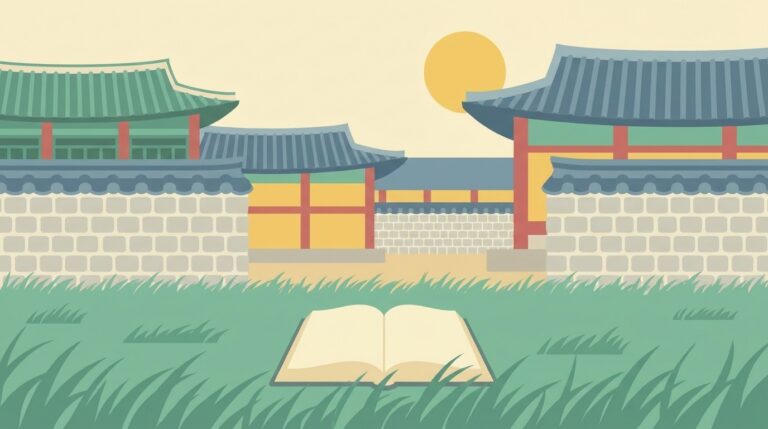
Phase 1: Empathy & Story-Driven Opening
안녕하세요! 매일한글 에디터입니다. (Annyeonghaseyo! Maeil Hangeul editeoimnida. / Hello! I’m your Daily Hangul editor.) Imagine sitting in a cozy Seoul tavern near Gyeongbokgung Palace with Korean literature friends. Someone sighs about daily compromises and brings up Kim Su-young’s poem about leaving the ancient palace, mocking how we only rage at the powerless. Everyone nods in heavy recognition—yet despite your C2 fluency, the biting self-irony slips right past you. Based on real feedback from advanced learners hitting that invisible cultural wall, this guide unpacks Kim Su-young’s fusion of modernism and post-war resistance so you can discuss Korean poetics with sharp, native-level soul.
Phase 2: Deep Dive into 3 Core Expressions
1. 소시민적 비겁함 (Sosiminjeok bigeopam)
- Pronunciation: [So-si-min-jeok bi-geo-pam] — Think of “so” as in so, “she-mean-juck” (softly, like chuck without the strong burst), and “bee-guh-pahm” (with a gentle puff on the final p sound, almost like stopping mid-word on cup).
- Meaning: Literally “petty-bourgeois cowardice.” In real Korean discourse, it means the quiet, shameful complicity of staying silent before big injustices while venting petty frustrations on people weaker than you.
- K-Culture Moment: Picture a tense boardroom or family dinner scene in a prestige K-Drama like My Mister or Misaeng. When a character swallows unfair criticism from a corrupt boss only to snap at an intern moments later, Korean viewers immediately label that behavior 소시민적 비겁함 (sosiminjeok bigeopam / petty-bourgeois cowardice) in online forums.
- Editor’s Insight: After Liberation, the Korean War, and the April 19 Revolution, Kim Su-young refused to romanticize himself as a pure hero. Instead, he turned his modernist lens inward, confessing his own smallness—getting furious over missing fat in a bowl of ox-bone soup instead of confronting authoritarian power. Using this phrase signals that you understand modern Korea’s fiercely self-critical intellectual tradition.
- Situation Spectrum:
- Casual (friends venting over drinks): ✅
- Semi-formal (book clubs, debates, essays): ✅
- Formal (casual small talk with strangers or praising a boss): 🚫 (Too heavy and accusatory!)
- 🤔 Think About It: In English, calling someone “middle-class” or “bourgeois” often relates to taste or materialism, whereas Korean 소시민적 (sosiminjeok) carries a deep ethical sting forged by rapid industrialization and democratization. How does your native language critique someone who chooses comfort over conscience?
2. 온몸으로 밀고 나가다 (Onmomeuro milgo nagada)
- Pronunciation: [On-mo-meu-ro mil-go na-ga-da] — Like “own-moe-muh-roh” (where eu sounds like the stiff, unrounded vowel you make when lifting something heavy) followed by “meal-go nah-gah-dah.”
- Meaning: Literally “to push forward with one’s whole body.” In nuance, it describes living, writing, or resisting with zero safety net—fusing thought and physical action without hypocrisy.
- K-Culture Moment: You will hear this exact expression in Korean indie documentary interviews, literary podcasts, and behind-the-scenes features on historical films like 1987: When the Day Comes or A Taxi Driver, describing citizens or artists who risked everything rather than observing from the sidelines.
- Editor’s Insight: Kim Su-young famously argued that poetry cannot merely describe freedom with pretty ink; it must push forward with one’s entire being (온몸으로 밀고 나가는 문학 / onmomeuro milgo naganeun munhak). At the C2 level, using this phrase moves you beyond basic adjectives like “passionate” (열정적인 / yeoljeongjeogin) into authentic philosophical territory.
- Situation Spectrum:
- Casual (deep late-night heart-to-hearts): ✅
- Semi-formal (presentations, cultural criticism): ✅
- Formal (keynote speeches, literary reviews): ✅
- 🤔 Think About It: Western literary theory often separates the artist’s private life from the text (“the death of the author”). Why do you think post-war Korean poetics—from Yun Dong-ju’s self-examination to Kim Su-young’s “whole body”—insisted that art and lived ethics are inseparable?
3. 자조 섞인 자성 (Jajo seokkin jaseong)
- Pronunciation: [Ja-jo seok-kin ja-seong] — Sound it out as “jah-joe suck-keen jah-sung” (make sure the double kk in seokkin feels like a tight spring snapping forward, like the k in sky).
- Meaning: Literally “self-reflection mixed with self-mockery.” It captures a bittersweet, brutally honest reckoning with one’s own flaws—laughing wryly at your own helplessness without looking away.
- K-Culture Moment: Think of the iconic monologue style in films by Bong Joon-ho or dark-comedy K-Dramas where a protagonist realizes how absurdly complicit they have been in an unfair system, chuckling bitterly under their breath.
- Editor’s Insight: Unlike pure depression or cynical detachment, 자조 섞인 자성 (jajo seokkin jaseong) always retains a spark of awareness. That is precisely how Kim Su-young bridged the lyricism of Kim Sowol and Baek Seok with gritty urban modernism—turning painful honesty into an engine for freedom.
- Situation Spectrum:
- Casual (everyday chat): ⚠️ (Slightly bookish—great in witty banter, odd at a convenience store!)
- Semi-formal (critiques, university seminars): ✅
- Formal (essays, cultural commentary): ✅
- 🤔 Think About It: Does your culture view self-mockery as a sign of weakness, or as a badge of intellectual honesty and resilience?
Phase 3: Textbook Korean vs Real Korean
Situation 1: Admitting you stayed quiet during an unfair moment
- 📖 Textbook Korean: 저는 그때 부당한 상황에서 용기가 부족해서 아무 말도 못 했습니다. (Jeoneun geuttae budanghan sanghwangeseo yonggiga bujokaeseo amu maldo mot haetseumnida. / I lacked courage in that unfair situation and could not say anything.)
- 🗣️ Real Korean: 아, 나 진짜 그때 한마디도 못 하고 속으로만 삭였잖아. 완전 찌질하고 소시민적이었지. (A, na jinjja geuttae hanmadido mot hago sogeuro-man sagyeotjana. Wanjeon jjijilhago sosiminjeogieotji. / Ugh, I couldn’t say a single word then and just swallowed it inside. So pathetic and petty-bourgeois of me.)
- 💡 Why the difference? Textbook Korean sounds like a stiff courtroom confession. Native speakers mix visceral idioms like 속으로 삭이다 (sogeuro sagida / to bottle up resentment inside) with self-aware literary terms like 소시민적 (sosiminjeok) to soften the embarrassment through candid self-irony.
Situation 2: Describing quiet, unbreakable resilience (like Kim Su-young’s Grass)
- 📖 Textbook Korean: 힘든 시련이 와도 포기하지 않고 다시 일어나는 힘이 중요합니다. (Himdeun siryeoni wado pogihaji anko dasi ireonaneun himi jungyohamnida. / Even when hardships come, the strength to rise again without giving up is important.)
- 🗣️ Real Korean: 바람에 눕더라도 결국엔 먼저 일어나는 풀처럼, 질기게 버티고 밀고 나가는 거지. (Barame nupdeorado gyeolgugen meonjeo ireonaneun pulcheoreom, jilgige beotigo milgo naganeun geoji. / Like grass that bends in the wind yet rises first in the end, you just stubbornly endure and push forward.)
- 💡 Why the difference? Rather than reciting abstract nouns like “hardship” and “strength,” Koreans routinely weave poetic imagery—especially Kim Su-young’s metaphor of grass weeping faster than the wind yet rising before it—right into everyday encouragement.
Phase 4: K-Culture Deep Dive & Non-Verbal Manners
4-1. Nunchi (눈치) & Gestures in Literary Discussions
When discussing heavy post-war history, the April 19 Revolution, or Kim Su-young’s sharp self-critiques at a Seoul café or makgeolli tavern, your tone and posture matter just as much as your vocabulary. Avoid theatrical hand-waving or lecturing tone—Koreans value calm, grounded sincerity when touching on collective pain. Lean in slightly, lower your vocal pitch when delivering reflective phrases like 자조 섞인 자성 (jajo seokkin jaseong), and let brief pauses breathe instead of rushing to fill every silence. If you offer a self-deprecating critique first before analyzing Korean society, your listeners’ nunchi radar will immediately recognize your humility and warmth.
4-2. Cultural Code Analysis: From Reply 1988 to Seochon Book Culture
Kim Su-young’s fusion of political engagement and everyday grit lives right at the heart of modern Korean media. Think of the neighborhood warmth and street-level realism in Reply 1988, or the student-led moral awakening in films like 1987: When the Day Comes—both echo his belief that grand history happens inside ordinary, flawed human beings. Today, you can feel this heritage alive in Seoul’s Seochon neighborhood near Gyeongbokgung Palace, where tiny independent bookstores host late-night poetry readings, turning a poet’s mid-century walk out of the ancient palace into a living cultural ritual.
Phase 5: Practical Roleplay Scenario
Setting & Characters: A rain-washed indie book café in Seochon, just west of Gyeongbokgung Palace. Warm jazz murmurs softly in the background. You are chatting over pour-over coffee with Min-jun (민준), a witty, sharply perceptive Korean literary critic and longtime friend.
- Min-jun: 여기 올 때마다 김수영 시인의 〈어느 날 고궁을 나오면서〉가 자꾸 떠올라. (Yeogi ol ttaemada Kim Su-young siinui ‘Eoneu nal gogungeul naomyeonseo’ga jakku tteoolla.)
Every time I come here, poet Kim Su-young’s ‘Leaving the Ancient Palace One Day’ keeps popping into my head.
🎭 Staring out the rain-streaked window toward the palace stone wall. - You: 맞아요. 화려한 궁궐 밖으로 나오자마자 마주하는 그 옹졸한 일상 감각 때문이겠죠? (Majayo. Hwaryeohan gunggwol bakkeuro naojamaja majuhaneun geu ongjolhan ilsang gamgak ttaemunigetjyo?)
Right. Is it because of that petty everyday reality you confront the moment you step outside the grand palace?
🎭 Nodding thoughtfully while wrapping both hands around your warm mug. - Min-jun: 정확해. 정작 큰 불의 앞에서는 입을 꾹 닫고 있다가, 만만한 사람한테만 화를 내는 그 소시민적 비겁함 말이야. (Jeonghwakae. Jeongjak keun burui apeseoneun ibeul kkuk datgo itdaga, manmanhan saramhanteman hwareul naeneun geu sosiminjeok bigeopam mariya.)
Spot on. That petty-bourgeois cowardice of keeping your mouth shut before real injustice, only to lash out at easy targets.
🎭 Laughing wryly and tapping his notebook with his pen. - You: 그런데 그게 남 얘기가 아니라, 결국 우리 자신의 자화상이라서 더 찔리는 것 같아요. (Geureonde geuge nam yaegiga anira, gyeolguk uri jasinui jahwasangiraseo deo jjillineun geot gatayo.)
Yet it hits closer to home because it’s not about someone else—it ends up being a self-portrait of us.
🎭 Giving a half-smile with raised eyebrows. - Min-jun: 바로 그 지점이 김수영 모더니즘의 핵심이지. 김소월이나 윤동주의 서정성을 지나, 시인이 자기 비겁함을 날것으로 까발린 거니까. (Baro geu jijeomi Kim Su-young modeonijeumui haeksimiji. Kim Soworina Yun Dong-juui seojeongseongeul jina, siini jagi bigeopameul nalgeoseuro kkaballin geonikka.)
That exact point is the core of Kim Su-young’s modernism. Moving past the lyricism of Kim Sowol or Yun Dong-ju, he stripped his own cowardice bare.
🎭 Leaning forward enthusiastically. - You: 그러면서도 〈풀〉에서는 끝내 꺾이지 않는 생명력을 노래했잖아요. 온몸으로 밀고 나가는 저항이랄까요. (Geureomyeonseodo ‘Pul’eseoneun kkeunnae kkeokkiji anneun saengmyeongnyeogeul noraehaetjanayo. Onmomeuro milgo naganeun jeohangiralkkayo.)
And yet in ‘Grass,’ he sang of an unyielding vitality that never truly breaks. You could call it resistance pushing forward with one’s whole body.
🎭 Speaking with quiet, steady emphasis. - Min-jun: 와, 너 표현 진짜 깊다. 맞아, 글자로만 쓰는 시가 아니라 온몸으로 자유를 밀어붙이는 시학이지. (Wa, neo pyohyeon jinjja gipda. Maja, geuljaroman sseuneun siga anira onmomeuro jayureul mireobuchineun sihagiji.)
Whoa, your phrasing is seriously deep. Exactly—not poetry written merely with letters, but a poetics that shoves freedom forward with the whole body.
🎭 Widening his eyes in genuine admiration. - You: [🔀 Interactive Branching Point: How do you reply to keep this C2 conversation flowing naturally?]
- Option A: “그렇죠! 어쩌면 오늘 우리가 마시는 이 커피 한 잔 속에도, 현실을 외면하지 않으려는 자조 섞인 자성이 담겨 있는지도 모르겠네요.” (Geureotjyo! Eojjeomyeon oneul uriga masineun i keopi han jan sogedo, hyeonsireul oemyeonhaji aneuryeoneun jajo seokkin jaseongi damgyeo inneunjido moreugenneyo. / Right! Perhaps even in this cup of coffee we’re drinking today, there’s a bit of self-mocking introspection trying not to look away from reality.)
- Feedback (Best!): Absolute chef’s kiss! You smoothly connect Kim Su-young’s everyday realism back to the present moment using high-level C2 nuance without sounding pretentious.
- Option B: “저도 소시민이라서 그냥 매일 회사 욕만 하고 삽니다. 시인은 대단하네요.” (Jeodo sosiminiraseo geunyang maeil hoesa yongman hago samnida. Siineun daedanhaneyo. / I’m just a petty citizen too, so I just curse my company every day. The poet is amazing.)
- Feedback (Risk): Relatable and funny in casual drinking settings, so Min-jun will laugh—but it abruptly flattens a rich literary dialogue into small talk.
- Option C: “당신도 평소에 비겁하게 살지 않도록 매일 반성하셔야 합니다.” (Dangsindo pyeongso-e bigeopage salji antorok maeil banseonghasyeoya hamnida. / You should also reflect daily so you don’t live cowardly.)
- Feedback (Bad!): Ouch! Calling your Korean friend “you” (당신 / dangsin) with a moral lecture violates nunchi instantly and kills the mood.
Phase 6: 10-Second Emotional Shadowing Drill
Read these lines aloud, pausing briefly at each / mark and locking into the emotional cue:
- [😤 Bitterly self-mocking]
왜 나는 / 조그만 일에만 분개하는가 / 결국 그 소시민적 비겁함 때문에. /
(Wae naneun / jogeuman ireman bunggaehaneunga / gyeolguk geu sosiminjeok bigeopam ttaemune. / Why do I get indignant only over trivial things / because of that petty-bourgeois cowardice in the end.) - [🌿 Quietly resilient]
바람보다 더 빨리 울고 / 바람보다 먼저 일어나는 풀처럼 / 오늘도 버텨 내는 거야. /
(Baramboda deo ppalli ulgo / baramboda meonjeo ireonaneun pulcheoreom / oneuldo beotyeo naeneun geoya. / Like grass that weeps faster than the wind / and rises before the wind / we endure today too.) - [🔥 Fierce and resolute]
관념이 아니라 / 온몸으로 밀고 나가는 / 진짜 자유를 원해. /
(Gwannyeomi anira / onmomeuro milgo naganeun / jinjja jayureul wonhae. / Not an abstract idea / but real freedom / pushed forward with one’s entire body.)
Phase 7: K-Culture Mini Dictionary
- 참여시 (Chamyeosi) | Engaged Poetry / Socially Committed Poetry | Used in Korean literature classes, newspaper culture columns, and arts discussions to describe poetry that confronts political reality rather than retreating into pure aestheticism.
- 소시민 (Sosimin) | Petty-bourgeois / Ordinary timid citizen | Heard everywhere from indie film reviews to office banter when gently roasting conformist, risk-averse middle-class habits.
- 4·19 혁명 (Sa-il-gu Hyeokmyeong) | The April 19 Revolution (1960) | A foundational historical milestone in Korean civic identity; referenced frequently in political journalism, dramas, and museum tours to signify grassroots democratic awakening.
- 온몸 시학 (Onmom Sihak) | Poetics of the Whole Body | A signature critical term for Kim Su-young’s philosophy that authentic art demands total existential commitment—used in advanced literary critiques and creative writing workshops.
Phase 8: Survival Kit for Travelers
Heading on a literary pilgrimage to Gyeongbokgung Palace (경복궁), Seochon (서촌), or the Kim Su-young Literary Museum (김수영 문학관) in Dobong-gu? Pack these three C2 phrases:
- 김수영 시인 관련 전시가 지금도 열리고 있나요? (Kim Su-young siin gwallyeon jeonsiga jigeumdo yeolligo innayo? / Is the exhibition related to poet Kim Su-young still open?)
- Pro Tip: Use 관련 (gwallyeon / related to) cleanly—museum docents love helping travelers who ask specific questions!
- 시집 초판본이나 관련 굿즈를 살 수 있는 서점이 근처에 있을까요? (Sijip chopanbonina gwallyeon gutjeureul sal su inneun seojeomi geuncheoe isseulkkayo? / Is there a bookstore nearby where I can buy early poetry editions or related goods?)
- Pro Tip: Neighborhood bookshops in Seochon often carry gorgeously designed Korean poetry reprints.
- 한국 근현대 시 문학에 관심이 많아서 찾아왔어요. (Hanguk geunhyeondae si munhage gwansimi manaseo chajawasseoyo. / I came because I’m deeply interested in modern and contemporary Korean poetry.)
- Pro Tip: Saying this to an indie bookstore owner almost guarantees a warm smile and personalized book recommendations!
Editor’s Travel Note:
Since Google Maps lacks full walking navigation in Korea, make sure to Download the Naver Map App for Korean Transit or Install the KakaoMap Real-Time Navigation Guide before leaving your hotel. To hop effortlessly between Gyeongbokgung Station (Line 3) and Banghak Station (Line 1, near the Kim Su-young Literary Museum), pick up a rechargeable Climate Card (기후동행카드 / Gihudonghaeng Kadeu) or T-money card at any GS25 or CU convenience store using cash.
Phase 9: One Step Deeper
Traditional Korean poetry often leaned into han (한 / deep, unresolved sorrow), gently mourning fate like Kim Sowol’s mountain azaleas or quietly agonizing under colonial darkness like Yun Dong-ju. After Liberation and the trauma of the Korean War, however, Kim Su-young shattered that quiet veil: he dragged Korean poetry onto dusty post-war streets, insisting that true freedom begins only when we confess our own complicity and rise—like blades of grass—with our entire bodies. Even today, that ruthless honesty explains why modern Korean cinema, music, and literature rarely settle for easy fairy-tale endings. They hold up a mirror so society can keep pushing forward.
💬 Your Turn: Which hits closer to home for you—quiet lyrical reflection like Yun Dong-ju, or Kim Su-young’s raw, self-ironic call to action? Drop your thoughts in the comments below!
Phase 10: FAQ & Misunderstanding Prevention
Q: Why did Kim Su-young combine modernism with political engagement? Aren’t those opposites?
A: Not in post-war Korea! While early Korean modernism often focused on formal wordplay or urban alienation, Kim Su-young believed that true formal innovation had to confront real historical trauma—turning fragmented, unvarnished everyday speech into a sharp weapon for civic awakening after the Korean War and the April 19 Revolution.
Q: Is
🎬 Watch Our Daily Videos! (Daily Hangul Official Instagram)
Review the expressions you learned in this article with our fun daily short videos! Check out native pronunciation and real-life nuances in action.
- Instagram @dailyhangul_en







