

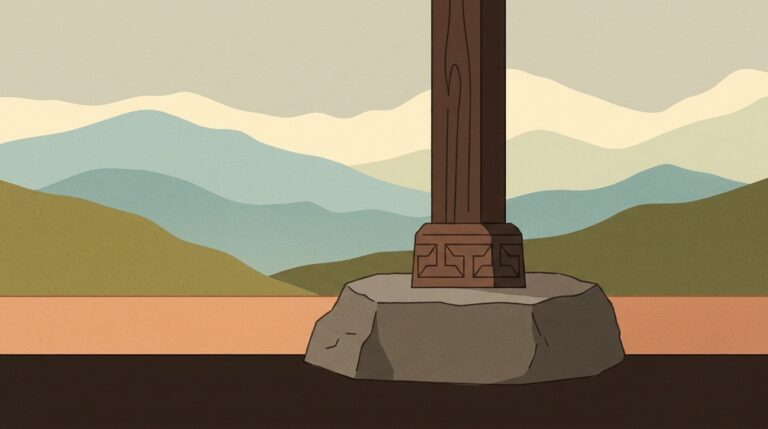
Phase 1: Why “Pretty” Isn’t Enough at a Korean Hanok
안녕하세요! 매일한글 에디터입니다. (Annyeonghaseyo! I’m your Daily Hangul editor.) Imagine standing inside a quiet Hanok or a centuries-old mountain temple from your favorite historical K-drama. You look down at a massive wooden pillar and freeze—the foundation stone underneath isn’t cut flat at all! It’s bumpy and wild, yet the wood is carved so intricately that it hugs every curve. When you want to tell your Korean friend how poetic that geurengijil (그렝이질) craftsmanship is, words like “pretty” just feel too flat. Based on real feedback from B2 learners, this guide gives you the exact nuances to express Korean architectural aesthetics naturally.
Phase 2: Top 3 Core Expressions Deep Dive
1. 자연에 순응하다 (Jayeone suneunghada)
- Pronunciation: ja-yeo-ne su-neung-ha-da (Think “yah” in yacht + “uh” in uh-oh, and “neung” like lung starting with an “n”—never pronounce the “eo” like an English “o”!)
- Meaning: Literally “to obey/comply with nature,” but its real nuance is “to harmonize with and adapt gracefully to nature” rather than conquering it.
- K-Culture Moment: You’ll hear hosts on travel and humanities shows like Youn’s Stay (윤스테이) or Alssulsinjab (알쓸신잡) use this exact phrase when admiring how a Hanok roof follows the curve of a mountain ridge.
- Editor’s Insight: Beginners say 자연을 좋아하다 (jayeoneul joahada – to like nature). At B2, 순응하다 (suneunghada) shows philosophical depth—it captures the geurengijil spirit of shaping the human-made pillar to fit the wild stone, not vice versa.
- Situation Spectrum: Casual ⚠️ (a bit literary for friends over beer) | Semi-formal ✅ (perfect for thoughtful chats) | Formal ✅ (ideal for guides, essays, and presentations)
- 🤔 Think About It: In Western architecture, humans often quarry flat stones to impose symmetry on the land. How does the Korean idea of 순응 (suneung – adapting to what is already there) contrast with how your native language describes great architecture?
2. 정교하게 맞물리다 (Jeonggyohage manmullida)
- Pronunciation: jeong-gyo-ha-ge man-mul-li-da (Heads up! Because of Korean nasal assimilation, 맞 mat before 물 mul melts into a smooth man-mul, like “mahn-mool” in one breath.)
- Meaning: Literally “to interlock intricately.” It describes two uneven pieces fitting together with breathtaking precision without nails or glue.
- K-Culture Moment: Beyond temple documentaries, this phrase pops up in K-drama thrillers like Stranger (비밀의 숲) when detectives realize two clues interlock seamlessly, just like wooden joints in a traditional roof!
- Editor’s Insight: Unlike 맞다 (matda – to fit/be right), 맞물리다 (manmullida) creates a vivid visual of gears or carved wood locking into natural stone contours. Adding 정교하게 (jeonggyohage – intricately) elevates your Korean instantly.
- Situation Spectrum: Casual ✅ (great when impressed by craftsmanship) | Semi-formal ✅ | Formal ✅
- 🤔 Think About It: Why do you think Korean uses the same verb 맞물리다 (manmullida) for traditional wood joinery, clockwork gears, and complex human destiny?
3. 인공미를 배제하다 (Ingongmireul baejehada)
- Pronunciation: in-gong-mi-reul bae-je-ha-da (“Bae” rhymes with bet with a slightly wider mouth, and “je” sounds like jeh in jet.)
- Meaning: Literally “to exclude artificial beauty.” In aesthetic contexts, it means “to avoid forced, overly polished perfection so raw natural beauty shines.”
- K-Culture Moment: Art curators, K-Beauty stylists aiming for effortless “no-makeup” skin, and BTS’s RM during museum vlogs often talk about minimizing 인공미 (ingongmi – artificiality) to preserve authentic charm.
- Editor’s Insight: If you simply say 자연스럽다 (jayeonseureopda – natural), it sounds everyday. Using 인공미를 배제하다 (ingongmireul baejehada) signals that you understand intentional restraint—the exact reason Korean artisans leave foundation stones uncarved.
- Situation Spectrum: Casual 🚫 (too academic for casual chat) | Semi-formal ✅ (great at museums/cafes) | Formal ✅
- 🤔 Think About It: In English, “artificial” often carries a negative vibe, while Korean contrasts 인공미 (ingongmi – crafted beauty) with 자연미 (jayeonmi – natural beauty). When is “less polish” considered more luxurious in your culture?
Phase 3: Textbook Korean vs. Real Korean
Situation 1: Reacting to the geurengijil pillar-and-stone joint
- 📖 교과서 한국어 (Textbook Korean): 돌과 나무가 완벽하게 일치합니다. (Dolgwa namuga wanbyeokage ilchihamnida. – The stone and the wood match perfectly.)
- 🗣️ 진짜 한국어 (Real Korean): 와, 틈 하나 없이 딱 들어맞는다! (Wa, teum hana eopsi ttak deureomanneunda! – Whoa, it fits like a glove without a single gap!)
- 💡 왜 다를까? (Why is it different?): 일치하다 (ilchihada) sounds like you’re checking math equations or legal documents! In real life, Koreans love expressive adverbs like 딱 (ttak – spot-on/snugly) combined with 들어맞다 (deureomatda – to slot right in) to capture that satisfying visual click.
Situation 2: Describing chagyeong (borrowed scenery) at a Hanok cafe
- 📖 교과서 한국어 (Textbook Korean): 이 건물은 자연 경관과 조화롭습니다. (I geonmureun jayeon gyeonggwangwa jowaropseumnida. – This building is harmonious with the natural scenery.)
- 🗣️ 진짜 한국어 (Real Korean): 창밖 풍경까지 한 폭의 그림처럼 품었네요. (Changbak punggyeongkkaji han pogui geurimcheoreom pumeonneyo. – It even embraces the view outside the window like a painting.)
- 💡 왜 다를까? (Why is it different?): Koreans don’t view nature as background wallpaper; they treat it as something warm you 품다 (pumda – embrace/hold in your bosom). Using 품었네요 (pumeonneyo) feels deeply poetic and shows real B2 sensitivity.
Phase 4: K-Culture Deep Dive & Non-Verbal Manners
4-1. 눈치 (Nunchi) & Gestures at Traditional Sites
When you spot a geurengijil pillar at a temple like Buseoksa (부석사) or a historic Hanok, Korean nunchi (눈치 – social awareness) is all about quiet reverence. Never touch or tap the wooden pillars or painted surfaces—even lightly! Instead, lean in gently from a respectful distance, trace the curve in the air with an open palm or forefinger, and give a slow, appreciative nod while softly exhaling “와… (Wa…)”. Keep your voice low; traditional wooden courtyards amplify sound, and peaceful silence is part of the architecture itself.
4-2. Cultural Code Analysis: K-Travel & K-Drama Aesthetics
Have you noticed how historical K-Dramas like Mr. Sunshine (미스터 션샤인) or variety shows set in Hanoks frame characters through open wooden doors? That’s 차경 (chagyeong – borrowed scenery), turning distant mountains and pine trees into living wall art. Look up and you’ll also notice 배흘림기둥 (baeheullimgidung – entasis pillars), which swell subtly in the middle so tall roofs don’t look top-heavy, and 단청 (dancheong – traditional five-color mineral paintwork), which isn’t just flashy decoration—it protects the wood from insects and decay while symbolizing harmony among the five cosmic elements.
Phase 5: Interactive Roleplay Scenario
- Setting: A crisp autumn afternoon at Muryangsujeon Hall in Buseoksa Temple (부석사 무량수전), surrounded by golden ginkgo trees.
- Characters: You (an observant traveler with an eye for design) and Min-jun (민준) (a friendly Korean architecture grad student sketching on a wooden bench).
- You: 저기요, 혹시 이 기둥 밑부분 좀 보세요. 돌이 울퉁불퉁한데 나무가 빈틈없이 붙어 있어요! (Jeogiyo, hoksi i gidung mitbubun jom boseyo. Dori ultungbultunghande namuga binteumeopsi buteo isseoyo! – Excuse me, look at the base of this pillar. The stone is bumpy, yet the wood is attached without a gap!) 🎭 Pointing toward the air above the foundation stone with genuine curiosity.
- Min-jun: 아, 눈썰미가 진짜 좋으시네요! 그게 바로 한국의 전통 ‘그렝이질’ 기법이에요. (A, nunsseolmiga jinjja joeusineyo! Geuge baro hangugui jeontong ‘geurengijil’ gibeobieyo. – Oh, you have such a sharp eye! That’s Korea’s traditional ‘geurengijil’ technique.) 🎭 Closing his sketchbook with a warm, impressed smile.
- You: 그렝이질이요? 돌을 평평하게 깎는 게 아니라 나무를 돌에 맞춘 거군요. (Geurengijiriyo? Doreul pyeongpyeonghage kkamneun ge anira namureul dore matchun geogunyo. – Geurengijil? So instead of carving the stone flat, they shaped the wood to fit the stone.) 🎭 Tilting your head slightly as it clicks.
- Min-jun: 맞아요. 자연석의 모양을 그대로 살려서 기둥을 정교하게 맞물리게 한 거죠. (Majayo. Jayeonseogui moyangeul geudaero sallyeoseo gidungeul jeonggyohage manmullige han geojyo. – Exactly. They preserved the natural stone’s shape and made the pillar interlock intricately with it.) 🎭 Gesturing smoothly with both hands coming together.
- You: 단순히 멋을 낸 게 아니라 자연에 순응하는 지혜가 담긴 거네요. (Dansunhi meoseul naen ge anira jayeone suneunghaneun jihyega damgin geoneyo. – It’s not just for show—it holds the wisdom of harmonizing with nature.) 🎭 Nodding thoughtfully while gazing up at the curved eaves.
- Min-jun: 완벽한 표현이에요! 게다가 이 배흘림기둥이랑 단청까지 어우러져서 인공미를 배제한 멋이 있죠. (Wanbyeokan pyohyeonieyo! Gedaga i baeheullimgidungirang dancheongkkaji eoureojyeoseo ingongmireul baejehan meosi itjyo. – That’s the perfect way to put it! Plus, combined with these entasis pillars and dancheong, it has a beauty that avoids artificiality.) 🎭 Gesturing upward toward the subtly swelling pillar and colorful rafters.
- You: 이래서 지진이나 바람에도 이렇게 오래 버틸 수 있었나 봐요. (Iraeseo jijinina baramedo ireoke orae beotil su isseonna bwayo. – Maybe that’s why it could withstand earthquakes and wind for so long.) 🎭 Looking genuinely moved by the hidden engineering.
- Min-jun: [🔀 Your Turn! How will you wrap up this awesome cultural chat?]
🔀 Interactive Branching Point: Choose Your Response!
- A: 정말 대단해요! 저기 열린 문 너머로 산이 보이는 것도 ‘차경’이라고 하던데, 맞나요? (Jeongmal daedanhaeyo! Jeogi yeollin mun neomeoro sani boineun geotdo ‘chagyeong’irago hadeonde, mannayo? – That’s amazing! I heard the mountain view framed through that open door is called ‘chagyeong’ too, right?)
- B: 근데 솔직히 돌을 그냥 기계로 깎는 게 훨씬 빠르고 예쁘지 않아요? (Geunde soljiki doreul geunyang gigyero kkamneun ge hwolssin ppareugo yeppeuji anayo? – But honestly, wouldn’t it be way faster and prettier to just cut the stone with a machine?)
- C: 아 네, 그렇군요. 한국 건축은 역시 최고네요. 사진 찍어도 되죠? (A ne, geureokunyo. Hanguk geonchugeun yeoksi choegoneyo. Sajin jjigeodo doejyo? – Ah yes, I see. Korean architecture is the best indeed. Can I take a picture?)
Feedback on Your Choice:
* Choice A (🌟 Best!): Brilliant! You seamlessly connected geurengijil to chagyeong (차경) using -던데 (-deonde) to confirm shared knowledge naturally. Min-jun will probably offer to show you his favorite viewpoint!
* Choice B (⚠️ Risk): Careful! While curiosity is fine, saying 기계로 깎는 게 예쁘지 않아요 (cutting it with a machine is prettier) right after discussing natural harmony might sound dismissive of the philosophy. If you’re curious about durability, ask 내구성은 괜찮나요? (Naeguseongeun gwaenchannayo? – Is the durability okay?) instead.
* Choice C (😅 Bad/Flat): Polite, yes, but it abruptly shuts down a rich B2 conversation! Also, 최고네요 (choegoneyo – it’s the best) feels a bit generic after such a specific discussion.
Phase 6: 10-Second Emotion Shadowing Drill
Read each sentence aloud at natural speed, pausing briefly at the / marks and matching the emotion!
- [😲 In awe and gentle wonder]
자연석 모양에 맞춰서 / 나무를 이렇게 정교하게 깎았다니 / 정말 놀라워요.
(Jayeonseok moyange matchwoseo / namureul ireoke jeonggyohage kkakkatdani / jeongmal nollawoyo.)
— It’s truly astonishing that they carved the wood this intricately to match the natural stone’s shape. -
[😌 Warm and reflective]
인위적으로 고치지 않고 / 자연에 순응하는 태도가 / 참 아름답게 느껴져요.
(Inwijeogeuro gochiji anko / jayeone suneunghaneun taedoga / cham areumdapge neukkyeojyeoyo.)
— The attitude of adapting to nature without artificially altering it feels truly beautiful. -
[🤩 Enthusiastic and impressed]
창틀 사이로 들어오는 풍경까지 / 건축의 일부로 품은 게 / 진짜 예술이네요!
(Changteul sairo deureooneun punggyeongkkaji / geonchugui ilburo pumeun ge / jinjja yesurineyo!)
— Embracing even the scenery coming through the window frame as part of the architecture is pure art!
Phase 7: K-Culture Mini Dictionary
- 그렝이질 (geurengijil) | Scribing wood to fit uncarved stone | Beyond temple tours, Koreans use this metaphorically in essays or interviews to mean flexibly adapting yourself to an existing environment or partner without forcing change.
- 차경 (chagyeong) | Borrowed scenery | Super trendy in modern Korean interior design! You’ll see hip Hanok cafes in Seochon or Gyeongju advertise their “차경 맛집” (chagyeong matjip – a place with killer borrowed-scenery views).
- 배흘림기둥 (baeheullimgidung) | Entasis pillar (swelling slightly in the middle) | A staple word on Korean cultural heritage tours; visually counters the optical illusion of tall pillars looking skinny and weak.
- 단청 (dancheong) | Traditional five-color wooden paintwork | Used not only for temples and palaces, but also as a keyword in K-Fashion, traditional crafts, and album artwork inspired by Korean heritage.
Phase 8: Survival Kit for Travelers
Top 3 Survival Phrases
- 이 건물에는 어떤 건축 기법이 쓰였나요? (I geonmureneun eotteon geonchuk gibeobi sseuyeonnayo?) — What architectural technique was used in this building? Pro Tip: Cultural guides (문화관광해설사) at palaces and temples light up when foreigners ask this!
- 여기서 사진 찍어도 실례가 안 될까요? (Yeogiseo sajin jjigeodo sillyega an doelkkayo?) — Would it be rude if I took a photo here? Pro Tip: Inside temple halls (법당), photography of Buddha statues is usually prohibited—always check first.
- 만지지 말고 눈으로만 봐 주세요. (Manjiji malgo nuneuroman bwa juseyo.) — Please look with your eyes only and don’t touch. Pro Tip: You’ll hear staff say this gently near old wooden pillars and dancheong art.
Editor’s Travel Note
Getting to iconic mountain temples like Buseoksa or Bulguksa requires reliable local transit info, since Google Maps doesn’t offer full turn-by-turn walking or rural bus navigation in Korea. Before your trip, grab the Download Naver Map App for Korean Temple Routes guide and keep a T-money transit card topped up with cash at any convenience store (you’ll need it for intercity and rural temple buses). Also, bring slip-on shoes! Many Hanok cafes and temple pavilions require taking off your shoes before stepping onto the polished wooden floor (maru).
Phase 9: One Step Deeper
In Korean traditional philosophy, true mastery isn’t about overpowering nature with marble monuments—it’s about 비움 (bium – intentional emptiness) and 순응 (suneung – harmonious adaptation). Because wood breathes, expands, and shifts over centuries, carving a geurengijil pillar to hug an uncarved stone actually absorbs seismic shocks better than rigid mortar ever could. In a fast-paced modern Korea famous for ppalli-ppalli (빨리빨리 – hurry-hurry) culture, stepping into a Hanok reminds Koreans themselves of the quiet strength in yielding rather than forcing. It’s a gentle reminder that sometimes, fitting into the curves of life is stronger than trying to flatten every stone in your path.
💬 Your Turn: Have you ever visited a Hanok or watched a historical K-Drama that made you fall in love with traditional Korean architecture? Drop a comment below and tell us which detail—geurengijil, chagyeong, or dancheong—fascinates you the most!
Phase 10: FAQ & Common Mistakes
Q: Why didn’t ancient Koreans just flatten the stones instead of doing geurengijil?
A: Beyond respecting nature, keeping the massive natural foundation stone intact prevented cracking and preserved the earth’s natural drainage. Plus, the tight wooden-to-stone friction created natural shock absorption against earthquakes!
Q: Is
🎬 Watch Our Daily Videos! (Daily Hangul Official Instagram)
Review the expressions you learned in this article with our fun daily short videos! Check out native pronunciation and real-life nuances in action.
- Instagram @dailyhangul_en







