

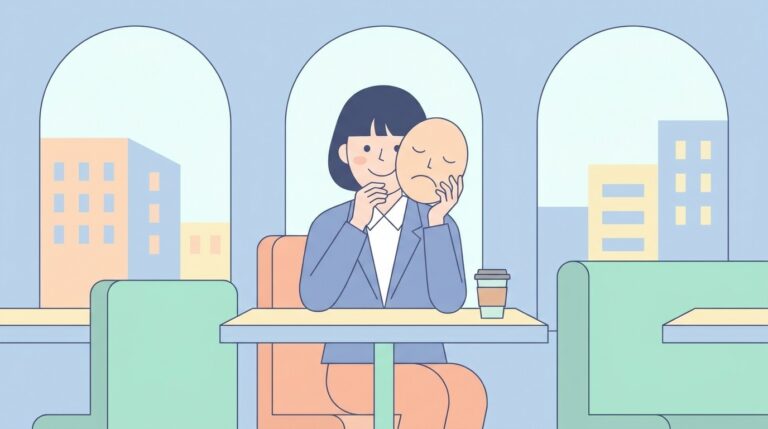
Phase 1: Why “Polite” Textbooks Leave You Clueless
안녕하세요! 매일한글 에디터입니다. (Annyeonghaseyo! Hello, this is your Daily Hangul editor.) Have you ever watched a K-Drama where a coworker ghosts the main character for months, then suddenly shows up with iced coffee and sweet compliments just to ask for a favor? In real life, that two-faced behavior drives us crazy too! Textbooks teach polite words for ‘selfish’ or ‘jealous,’ leaving B2 learners stuck when trying to decode real office gossip or banter. Built from actual feedback from intermediate students struggling with Korean nuance, this guide gives you the sharpest idioms natives use to call out fake friends, flatterers, and opportunists—so you can finally catch every subtle jab like a true local.
Phase 2: Deep Dive into 3 Essential Idioms
1. 간에 붙었다 쓸개에 붙었다 하다 (Gan-e buteotda sseulgae-e buteotda hada)
- Pronunciation: gan-e buteotda sseulgae-e buteotda hada (Think: “gah-neh boo-tuht-dah ssul-geh-eh boo-tuht-dah hah-dah” — make the eo like the “u” in “cup,” and tighten your lips for eu like saying “uh” without rounding.)
- Meaning: Literally “to stick to the liver, then stick to the gallbladder.” In reality, it means to flip-flop one’s loyalties, opinions, or friendliness purely for personal gain—an extreme form of being two-faced or opportunistic.
- K-Culture Moment: Think of the sleazy middle managers in hit office K-Dramas like Reborn Rich or Marry My Husband. One day they praise the struggling protagonist when a project goes well; the next day, they cozy up to the rival executive the second power shifts.
- Editor’s Insight: At a B2 level, you might know the formal word 기회주의적이다 (gihoejueuijeogida — to be opportunistic). However, natives rarely drop stiff Sino-Korean vocabulary over chimaek (chicken and beer). Saying someone “sticks to the liver and gallbladder” is way more visceral—it paints a picture of a parasite clinging to whichever organ benefits them most.
- Situation Spectrum: Casual ✅ / Semi-formal ⚠️ (fine with trusted coworkers) / Formal 🚫 (never use in official presentations or to superiors)
- 🤔 Think About It: English uses phrases like “fair-weather friend” or “flip-flopper.” Why do you think Korean uses internal organs—liver and gallbladder—to describe shifting loyalty?
2. 비위를 맞추다 (Biwireul matchuda)
- Pronunciation: biwireul matchuda (Think: “bee-wee-rul maht-choo-dah” — quick and crisp on the “t-ch” sound, like saying “hot chocolate” fast.)
- Meaning: Literally “to match someone’s spleen and stomach.” Its actual nuance is to humor someone, cater to their mood, or flatter them so you stay on their good side.
- K-Culture Moment: In K-Variety shows like Running Man, whenever a cast member needs extra pocket money or a hint from the PD, they suddenly compliment the producer’s outfit and laugh loudly at dry jokes—pure biwi matchugi (mood-catering) in action.
- Editor’s Insight: Unlike pure praise (칭찬하다 — chingchanhada), 비위를 맞추다 (biwireul matchuda) implies effort or calculation. Sometimes you do it out of survival (like keeping a picky boss happy), and sometimes fake people do it right before asking a favor. Note the antonym too: 비위를 건드리다 (biwireul geondeurida) means “to rub someone the wrong way”!
- Situation Spectrum: Casual ✅ / Semi-formal ✅ / Formal ⚠️ (usable in neutral third-person commentary, e.g., 상사 비위를 맞추기 힘들어요 — sangsa biwireul matchugi himdeureoyo — “It’s hard to keep the boss happy.”)
- 🤔 Think About It: In your native language, is “keeping someone happy” viewed mostly as smart social skill, or as degrading flattery?
3. 시치미를 떼다 (Sichimireul tteda)
- Pronunciation: sichimireul tteda (Think: “shee-chee-mee-rul tteh-dah” — hold your breath slightly before popping the double “tt” sound like the “t” in “stop.”)
- Meaning: Literally “to take off the sichimi” (an identification tag tied to a hunting falcon’s tail). Today, it means to play innocent, feign ignorance, or pretend you had nothing to do with something.
- K-Culture Moment: Imagine a classic K-Drama rom-com scene where the male lead secretly pays off the heroine’s cafe tab or leaves medicine on her desk, then acts completely clueless—sipping water and saying “Who, me?”—when she asks who did it. Or, more frustratingly, a coworker pretending they never saw your urgent KakaoTalk message!
- Editor’s Insight: Just like 모른 척하다 (moreun cheokada — to pretend not to know), 시치미를 떼다 (sichimireul tteda) captures deliberate acting. The difference? 시치미를 떼다 carries a stronger flavor of slick evasion or cheeky denial—often paired with 뻔뻔하다 (ppeonppeonhada — shameless) when someone refuses to own up to a mistake.
- Situation Spectrum: Casual ✅ / Semi-formal ✅ / Formal ⚠️ (avoid accusing a boss directly; better used in storytelling)
- 🤔 Think About It: Both English (“play dumb”) and Korean use imagery to describe feigned innocence. Does knowing the historical falconry origin change how vivid this phrase feels to you?
Phase 3: Textbook Korean vs. Real Korean
Scenario 1: Calling Out Quiet Envy Over Your Success
- 📖 Textbook Korean: 그 친구는 제가 승진해서 질투하는 것 같아요. (Geu chinguneun jega seungjinhaeseo jiltuhaneun geot gatayo.) — “I think that friend is jealous because I got promoted.”
- 🗣️ Real Korean: 걔 지금 내가 승진해서 완전 배 아파 죽으려 그래. (Gyae jigeum naega seungjinhaeseo wanjeon bae apa jugeuryeo geurae.) — “They’re seriously dying of envy right now because I got promoted.”
- 💡 Why the difference? Textbooks rely on the Sino-Korean verb 질투하다 (jiltuhada — to be jealous). In everyday speech, Koreans reach for the classic idiom 배가 아프다 (baega apeuda — “my stomach hurts”), linking jealousy to an actual physical ache, often cranked up with 죽으려 그래 (jugeuryeo geurae — “about to die”).
Scenario 2: Reacting to a Friend Who Only Texts When They Need Something
- 📖 Textbook Korean: 평소에는 연락 없다가 필요할 때만 다정하게 행동하네요. (Pyeongsoeneun yeollak eopdaga piryohal ttaeman dajeonghage haengdonghaneyo.) — “You don’t contact me normally, and only act affectionate when you need something.”
- 🗣️ Real Korean: 자기 아쉬울 때만 간에 붙었다 쓸개에 붙었다 하네, 진짜. (Jagi aswiul ttaeman gan-e buteotda sseulgae-e buteotda hane, jinjja.) — “Seriously, they only flip-flop and kiss up when they’re desperate for a favor.”
- 💡 Why the difference? Notice the keyword 아쉽다 (aswipda)! In B2+ Korean, 자기 아쉬울 때 (jagi aswiul ttae) doesn’t just mean “sad”—it means “when someone is lacking something and needs help.” Pairing it with our liver-and-gallbladder idiom nails that uniquely frustrating feeling of being used.
Phase 4: K-Culture Deep Dive & Non-Verbal Manners
4-1. Nunchi (눈치) & Body Language
When someone in Korea is trying to 비위를 맞추다 (biwireul matchuda — flatter you for a favor), look closely at the subtle nunchi cues. They might lean forward excessively, maintain overly bright eye contact, use both hands just to hand you a coffee cup, and laugh half a second too early at your jokes. Conversely, if a Korean realizes someone is playing the liver-and-gallbladder game, they rarely explode in public. Instead, you’ll see the famous “social freeze”: an awkward, tight-lipped smile (어색한 미소 — eosaekhan miso), pulling back slightly in their chair, and giving flat, short responses like “아, 그러셨어요? (Ah, geureosyeosseoyo? — Oh, is that so?)” without offering follow-up questions.
4-2. Cultural Code Analysis: Uiri (의리) in the Korean Workplace
To understand why 간에 붙었다 쓸개에 붙었다 하다 (gan-e buteotda sseulgae-e buteotda hada) stings so deeply in K-Dramas and real Korean life, you have to understand 의리 (uiri — loyalty and faithfulness). In Korean social circles—from university clubs to corporate teams—relationships are built on consistent reciprocity and shared hardships, not quick transactions. When a colleague disappears during crunch time, ignores your messages, and then suddenly turns sweet right before performance reviews or project deadlines, they aren’t just being annoying—they are violating uiri. That’s why Koreans mock them as “sticking to the liver, then the gallbladder”—because loyalty shouldn’t change with the weather!
Phase 5: Real-Life Roleplay Scenario
Setting: A cozy, sunlit specialty cafe in Seongsu-dong, Seoul. The aroma of roasted beans fills the air while indie K-Pop plays softly. Min-ji, a sharp-witted senior designer (played by you!), is finally taking a breather when Jun-ho—a colleague from another team who left her urgent KakaoTalk messages on read for four months—suddenly glides over holding a freshly baked salt bread (소금빵).
- Jun-ho: 🎭 (Beaming widely, holding out the pastry with both hands) 민지 씨! 오랜만이에요! 요즘 스타일이 더 좋아지셨네요? (Min-ji ssi! Oraenmanieyo! Yojeum seutairi deo joajisyeotneyo?) — “Min-ji! Long time no see! Your style has gotten even better lately, hasn’t it?”
- Min-ji: 🎭 (Blinking slowly, keeping a polite half-smile while stirring her iced Americano) 아, 준호 씨. 네, 감사해요. 근데 웬일이세요? 지난번 카톡은 답장이 없으시던데. (Ah, Jun-ho ssi. Ne, gamsahaeyo. Geunde weniriseyo? Jinanbeon katogeun dapjangi eopseusideonde.) — “Oh, Jun-ho. Yes, thanks. What brings you over? You didn’t reply to my KakaoTalk message last time.”
- Jun-ho: 🎭 (Laughing awkwardly and scratching the back of his neck) 어머, 제가 너무 바빠서 못 봤나 봐요! 진심으로 죄송해요. (Eomeo, jega neomu bappaseo mot bwatna bwayo! Jinsimeuro joesonghaeyo.) — “Oh my, I must have been too busy to see it! I’m sincerely sorry.”
- Min-ji: 🎭 (Thinking to herself: Look at him playing completely innocent—시치미를 떼고 있네) 그러셨구나. 요즘 많이 바쁘신가 봐요. (Geureosyeotguna. Yojeum mani bappeusinga bwayo.) — “I see. You must be super busy these days.”
- Jun-ho: 🎭 (Leaning in enthusiastically, lowering his voice) 사실 민지 씨가 우리 회사에서 디자인을 제일 잘하시잖아요. 이번 신규 프로젝트 제안서 좀 봐주실 수 있어요? (Sasil Min-ji ssiga uri hoesaeseo dijaineul jeil jalhasijanayo. Ibeon singyu peurojekteu jeanseo jom bwajusil su isseoyo?) — “Actually, you’re the best designer at our company, Min-ji. Could you take a look at this new project proposal for me?”
- Min-ji: 🎭 (Raising one eyebrow slightly, instantly clocking his sudden flattery) 아, 그래서 갑자기 제 비위를 맞추러 오신 거군요? (Ah, geuraeseo gapjagi je biwireul matchureo osin geogunyo?) — “Oh, so that’s why you suddenly came over to butter me up?”
- Jun-ho: 🎭 (Panicking slightly, waving both hands) 아니에요! 진심으로 민지 씨 실력을 존경해서 그래요! (Anieyo! Jinsimeuro Min-ji ssi sillyeogeul jongyeonghaeseo geuraeyo!) — “No, no! I genuinely respect your skills, Min-ji!”
- Min-ji: 🎭 (Closing her laptop calmly) 저도 지금 마감 때문에 정신이 없네요. 아쉬울 때만 연락하지 마시고 평소에도 연락 좀 하세요. (Jeodo jigeum magam ttaemune jeongsini eopneyo. Aswiul ttaeman yeollakhaji masigo pyeongsoedo yeollak jom haseyo.) — “I’m swamped with my own deadline too. Don’t just reach out when you need something—say hi once in a while normally too.”
🔀 Interactive Branching Point: How Would You Handle Turn 8?
If you were in Min-ji’s shoes, how would you respond to Jun-ho’s sudden request?
- Option A: “저도 바빠서 어렵겠어요. 대신 팀장님께 여쭤보시는 게 어떨까요?” (Jeodo bappaseo eoryeopgesseoyo. Daesin timjangnimkke yeojjwobosineun ge eotteolkkayo?) — “I’m too busy so it’ll be tough. How about asking the team lead instead?”
- Feedback (Best): Smooth, professional, and oozing with nunchi! You shut down the opportunistic request without burning bridges at work, keeping the high ground.
- Option B: “야, 너 진짜 간에 붙었다 쓸개에 붙었다 한다! 저리 가!” (Ya, neo jinjja gan-e buteotda sseulgae-e buteotda handa! Jeori ga!) — “Hey, you seriously stick to the liver then the gallbladder! Go away!”
- Feedback (Bad): Oof! While it feels satisfying in a K-Drama daydream, yelling this idiom at a coworker in a public Seoul cafe will turn you into the office villain overnight.
- Option C: “아, 그러세요? 근데 저번 프로젝트 때는 제 연락 왜 안 받으셨어요?” (Ah, geureoseyo? Geunde jeobeon peurojekteu ttaeneun je yeollak wae an badeuseosseoyo?) — “Oh, really? Then why didn’t you answer me during the last project?”
- Feedback (Risk): Sharp and direct! It puts Jun-ho right on the spot and forces him to stop feigning ignorance, though it might create awkward tension if you share elevators every morning.
Phase 6: 10-Second Emotion Shadowing Drill
Read these out loud! Pause briefly at each / and really lean into the emotion tags.
- [😒 Cynical and rolling your eyes]
평소엔 연락도 없더니 / 자기 아쉬울 때만 / 간에 붙었다 쓸개에 붙었다 하네.
(Pyeongsoen yeollakdo eopdeoni / jagi aswiul ttaeman / gan-e buteotda sseulgae-e buteotda hane.)
“Never texts me normally, then suddenly flips sides only when they need something.” -
[😏 Playfully teasing a sneaky friend]
에이, 다 알고 있으면서 / 왜 이렇게 시치미를 떼?
(Ei, da algo isseumyeonseo / wae ireoke sichimireul tte?)
“Come on, you already know everything—why are you playing innocent like this?” -
[😤 Frustrated yet staying composed]
누구 비위 맞추는 것도 / 하루 이틀이지 / 정말 지친다.
(Nugu biwi matchuneun geotdo / haru iteuriji / jeongmal jichinda.)
“Pander to someone’s mood for a day or two, fine—but this is exhausting.”
Phase 7: K-Culture Mini Dictionary (4 Key Words)
- 1. 배가 아프다 (baega apeuda) | 2. To be green with envy | 3. Usage: Used playfully among friends (“너 부러워서 배 아파! — Neo bureowoseo bae apa! — I’m so jealous of you!”) or bitingly about bitter rivals who can’t stand seeing others succeed.
- 1. 의리 (uiri) | 2. Loyalty / brotherhood | 3. Usage: A huge badge of honor in Korean friendships and business partnerships. Keeping promises even when there’s zero profit for you shows true uiri.
- 1. 박쥐 같다 (bakjwi gatda) | 2. To be like a bat (two-faced) | 3. Usage: A punchy B2 synonym for “sticking to the liver and gallbladder.” Based on the fable of the bat siding with birds or beasts depending on who’s winning!
- 1. 아부하다 (abuhada) | 2. To flatter / brown-nose | 3. Usage: More bluntly negative than 비위를 맞추다 (biwireul matchuda). Used in workplaces when someone shamelessly sucks up to a boss for a promotion.
Phase 8: Survival Kit for Travelers
Even while traveling in Korea, you’ll occasionally run into overly flattering street vendors or pushy acquaintances trying to steer you into an overpriced spot. Keep these 3 polite shield phrases ready:
- 아직 생각 중이에요. (Ajik saenggak jung-ieyo.) — “I’m still thinking about it.”
- Pro Tip: Say this with a soft smile while gently stepping back in busy markets like Myeongdong or Dongdaemun. It keeps the mood friendly without committing.
- 괜찮습니다, 제가 알아서 할게요. (Gwaenchanseumnida, jega araseo halgeyo.) — “It’s alright, I’ll take care of it myself.”
- Pro Tip: Super helpful when someone overly eager insists on ordering for you or guiding you somewhere you didn’t ask to go.
- 다음에 시간 되면 연락드릴게요. (Daeume sigan doemyeon yeollakdeurilgeyo.) — “I’ll reach out next time if I have time.”
- Pro Tip: The gold-standard Korean soft refusal! Native speakers know “next time” usually means “no thanks,” so it ends awkward chats gracefully.
Editor’s Travel Note
Before hopping on the Seoul subway or meeting local friends at a cafe, make sure you Download the Naver Map App for Accurate Korean Navigation since Google Maps doesn’t provide full walking directions in Korea. Also, Explore Official KakaoTalk Messenger Features before your trip—it’s how everyone in Korea communicates, shares cafe locations, and sends quick favors! For transit and convenience stores, grab a T-money card or WOWPASS at the airport so you can tap and pay smoothly without fumbling for cash.
Phase 9: “One Step Deeper”
In English-speaking cultures, networking and pragmatic friendships—reaching out mainly when opportunities align—are often viewed as normal adult efficiency. In Korea, however, the concept of 우리 (uri — “we”) and 정 (jeong — deep, sticky emotional attachment) blurs the line between personal warmth and social duty. Because relationships are expected to weather both good seasons and dry spells, someone who suddenly turns warm only when they need a favor feels jarring, almost like breaking an unwritten social contract. That cultural backdrop explains why Korean idioms describing opportunistic shifts feel so vivid, physical, and sharp.
💬 Your Turn: Have you ever met someone who acted like a total “liver-and-gallbladder” flip-flopper—or have you spotted one of these idioms in your favorite K-Drama? Drop a comment below and tell us your story!
Phase 10: FAQ & Misconception Prevention
Q: Can I say “배가 아프다 (baega apeuda)” to my doctor if I actually have a stomachache?
A: Yes, of course! Context makes everything crystal clear. If you’re holding your belly and looking pale, 배가 아파요 (baega apayo) simply means your stomach hurts. Only when paired with someone else’s good news (e.g., “사촌이 땅을 사면 배가 아프다 — When a cousin buys land, your stomach hurts”) does it mean envy.
Q: Is “간에 붙었다 쓸개에 붙었다 하다” considered rude or swear-level slang?
A: It is not a swear word (욕 — yok), so you’ll hear it in prime-time K-Dramas and everyday conversations. However, because it harshly criticizes someone’s character as untrustworthy and selfish, saying it directly to someone’s face—especially to a senior or coworker—will definitely start a fight!
Q: What is the difference between “비위를 맞추다” and “눈치를 보다 (nunchireul boda)”?
A: 눈치를 보다 (nunchireul boda) means reading the room or watching someone’s mood cautiously so you don’t upset them—it’s passive observation. 비위를 맞추다 (biwireul matchuda) goes one step further: you actively flatter, agree with, or cater to that person to please them.
🚨 Common Mistakes Warning Board
- Mistake: Saying “당신은 간에 붙었다 쓸개에 붙었다 해요” directly to a boss or older acquaintance.
- Correct Action: Use this idiom to vent about someone with close friends, or express boundary-setting politely using “아쉬울 때만 연락하시네요 (Aswiul ttaeman yeollakhasineyo — You only reach out when you need something).”
- Mistake: Mixing up 시치미를 떼다 (feigning ignorance) with 까먹다 (forgetting).
- Correct Action: Only use 시치미를 떼다 when the person definitely knows the truth and is pretending otherwise on purpose.
- Mistake: Translating “My stomach hurts” literally when trying to say “I’m just teasingly jealous!” without context.
- Correct Action: Add “부러워서 (bureowoseo — out of envy)” or laugh and say “와, 진짜 배 아프다! (Wa, jinjja bae apeuda!)” right after hearing good news so nobody hands you digestive medicine!
Phase 11: Action Mission & Engagement
- 🥉 Bronze Mission (Solo Practice): Stand in front of a mirror and record yourself saying all 3 shadowing sentences from Phase 6 with full facial expressions. Play it back and check your
/pauses! - 🥈 Silver Mission (Social Share): Screenshot your favorite idiom from Phase 2, post it to your Instagram Story or language-study feed, and tag a friend who loves K-Dramas.
- 🥇 Gold Mission (Real-Life Usage): Next time you chat with a Korean language partner, share a funny story about a flaky acquaintance using 아쉽다 (aswipda) or 시치미를 떼다 (sichimireul tteda)!
🎮 K-Culture Mission: Watch one episode of an office or survival K-Drama (like The Glory, Vincenzo, or The Devil’s Plan) tonight and spot at least one character trying to 비위를 맞추다 (flatter someone in power) or 시치미를 떼다 (play totally innocent)!
Phase 12: Interactive Quiz Challenge
Test your B2 instincts! Try answering all three before opening the spoiler box below.
1. Situation Judgment: Your friend Min-su never answers your calls for three months, then suddenly texts “Hey, I miss you!! By the way, can I borrow your car this weekend?” Which idiom best describes Min-su’s behavior?
* A) 배가 아프다 (baega apeuda)
* B) 간에 붙었다 쓸개에 붙었다 하다 (gan-e buteotda sseulgae-e buteotda hada)
* C) 시치미를 떼다 (sichimireul tteda)
2. Fill in the Blank: Complete the sentence naturally: “누가 봐도 네가 케이크 다 먹었는데, 왜 모르는 척 ______?” (Everyone can tell you ate the whole cake, why are you playing innocent?)
* Word Bank: [ 비위를 맞추니 / 배가 아프니 / 시치미를 떼니 ]
3. True or False (Culture Quiz): In Korean, calling someone “박쥐 같다 (like a bat)” is a cute compliment meaning they are nocturnal and hardworking.
Click Here to Check the Answers & Explanations
- Answer: B) 간에 붙었다 쓸개에 붙었다 하다
- Why not A? 배가 아프다 means being jealous of someone else’s success.
- Why not C? 시치미를 떼다 means pretending you don’t know about something you actually did.
- Correct Logic: Min-su changes his warmth purely to gain access to your car—classic opportunistic behavior!
- Answer: 시치미를 떼니 (sichimireul tteni)
- Explanation: Even with crumbs on their face, the person is acting clueless—the exact situation for 시치미를 떼다!
- Answer: False!
- Explanation: Just like 간에 붙었다 쓸개에 붙었다 하다, calling someone “like a bat (박쥐 같다)” is a sharp insult criticizing them for switching sides whenever it benefits them.
🎬 Watch Our Daily Videos! (Daily Hangul Official Instagram)
Review the expressions you learned in this article with our fun daily short videos! Check out native pronunciation and real-life nuances in action.
- Instagram @dailyhangul_en







