

Phase 1: Empathy & Opening
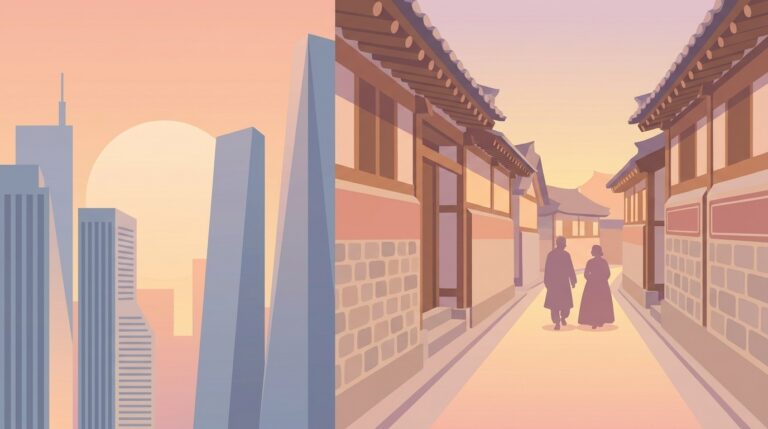
안녕하세요! 매일한글 에디터입니다. (Annyeonghaseyo! Maeil Hangeul Editeo-imnida.) Hello, it’s your Daily Hangul Editor! Have you ever watched a gritty K-Drama like Misaeng or My Mister and felt the crushing weight of Seoul’s neon-lit corporate hustle? That breathless pace is the legacy of Korea’s compressed modernity—going from rubble to global tech titan in one lifetime. Many advanced learners tell me they struggle to move past small talk into deep conversations about burnout, efficiency, and human value. Based on real feedback from C1 students navigating Korean workplaces and cafes, this guide equips you with nuanced expressions to question speed over direction and champion solidarity like a thoughtful local.
Phase 2: Deep Dive into 3 Key Expressions
1. 속도보다 방향이 중요하다 (Sokdoboda banghyang-i jungyohada)
- Pronunciation: Sok-do-bo-da bang-hyang-i jung-yo-ha-da (Imagine saying “soak-dough-bow-dah” smoothly, then “bahng-hyahng-ee” where “hyang” sounds like “hyah” + “ng” in “song,” finishing with “joong-yo-ha-da” like “June-yo-ha-da.”)
- Meaning: Literally “Direction is more important than speed.” In nuanced conversation, it is a philosophical pushback against blind hustle culture, urging people to check their moral compass and long-term well-being.
- K-Culture Moment: Picture the climax of a Korean workplace drama like Misaeng or Start-Up. When an ambitious team leader tries to cut corners to beat a quarterly deadline, the wise mentor pauses, sets down a paper cup of Maxim coffee, and gently reminds them that rushing down the wrong road only wastes life.
- Editor’s Insight: At the C1 level, Koreans rarely use this as a blunt accusation. Instead, it is framed reflectively—using
-보다(-boda, than) to soften the critique of hyper-efficiency without sounding lazy or anti-progress.- Situation Spectrum: Casual ✅ (when chatting deeply with close friends) | Semi-formal ✅ (great in mentor talks or university seminars) | Formal ✅ (ideal for corporate retrospectives or editorials)
- 🤔 Think About It: In English, we say “Haste makes waste” or “Work smarter, not harder,” which still centers on productivity. Why do you think Korean discourse specifically contrasts speed (
속도, sokdo) with direction (방향, banghyang) after decades of rapid industrialization?2. 인간의 존엄성을 되찾다 (Ingan-ui joneomseong-eul doechatda)
- Pronunciation: In-gan-ui jo-neom-seong-eul doe-chat-da (“In-gahn-eh”—note
의softens to “eh” in natural speech—followed by “joe-nuhm-sung-eul” where “eo” sounds like the “uh” in “cup,” and “dweh-chaht-da” with a crisp t-stop before “da.”)- Meaning: Literally “To reclaim/restore human dignity.” In real usage, it goes beyond human rights law; it speaks to treating workers, elders, and neighbors as whole human beings rather than disposable cogs in an economic machine.
- K-Culture Moment: Think of the emotional turning point in critically acclaimed social dramas like D.P. or My Mister, or investigative documentaries on late-night delivery couriers. When characters finally stand up against humiliating mistreatment or systemic indifference, commentators use this exact phrase to describe the moral core of the story.
- Editor’s Insight: Notice the verb
되찾다(doechatda, to win back/restore) rather than simply지키다(jikida, to protect). Saying “restore” implies something precious was temporarily lost during Korea’s breakneck growth—making it an emotionally resonant, empathetic C1 collocation.- Situation Spectrum: Casual ⚠️ (can sound overly heavy over casual drinks unless debating society) | Semi-formal ✅ (excellent for book clubs or cultural discussions) | Formal ✅ (standard in essays, speeches, and news commentary)
- 🤔 Think About It: Does your native language tend to talk about dignity as something inherent that we protect, or something eroded by modern efficiency that must be restored?
3. 사회적 연대를 복원하다 (Sahoejeok yeondae-reul bogwonhada)
- Pronunciation: Sa-hoe-jeok yeon-dae-reul bo-gwon-ha-da (“Sah-hweh-juhk”—say “hweh” like “wet” without the t—then “yuhn-deh-reul” rhyming with “sun-day,” and “bo-gwon-ha-da” where the
ㄱin복softens into a “g” sound before원.)- Meaning: Literally “To restore social solidarity.” Practically, it expresses the urgent need to rebuild community trust, mutual care, and collective responsibility in an increasingly atomized, hyper-competitive society.
- K-Culture Moment: In films like Broker or heartwarming K-Dramas such as Our Blues, neighbors on Jeju Island or misfits in Seoul form makeshift families to support the vulnerable. Film critics routinely praise these works for showing what it means to restore social solidarity.
- Editor’s Insight:
복원하다(bogwonhada) is the same verb used for restoring damaged cultural heritage sites like Sungnyemun Gate! Using it for연대(yeondae, solidarity) paints social trust as a fragile treasure that requires deliberate repair.- Situation Spectrum: Casual 🚫 (too academic for casual banter; use
함께 돕다hamkke dopda instead) | Semi-formal ✅ (natural in civic discussions or podcasts) | Formal ✅ (powerful in academic writing, interviews, and op-eds)- 🤔 Think About It: Korea historically relied on tight-knit village cooperation (
두레, dure), yet today faces intense individualism. How does your own culture balance personal ambition with community solidarity?
Phase 3: Textbook Korean vs. Real Korean
Situation 1: Questioning Burnout & Blind Efficiency
- 📖 교과서 한국어 (Textbook Korean): 효율성만을 추구하면 문제가 발생합니다. (Hyoyulseongman-eul chuguhamyeon munjega balsaenghamnida.) — “If we only pursue efficiency, problems occur.”
- 🗣️ 진짜 한국어 (Real Korean): 너무 효율만 따지다 보면 사람이 먼저 지쳐 나가떨어지죠. (Neomu hyoyulman ttajida bomyeon saram-i meonjeo jichyeo nagatteoreojijyo.) — “If you obsess too much over efficiency alone, people are the first ones to burn out and collapse.”
- 💡 왜 다를까? (Why the difference?): Textbooks love abstract Sino-Korean nouns like
발생하다(balsaenghada, occur). Real Koreans humanize the critique using따지다(ttajida, to nitpick/calculate strictly) and the visceral compound verb지쳐 나가떨어지다(jichyeo nagatteoreojida, to drop from sheer exhaustion), putting human vulnerability front and center.
Situation 2: Calling for Reflection on Modern Speed
- 📖 교과서 한국어 (Textbook Korean): 우리는 과거의 성장을 반성해야 합니다. (Urineun gwageo-ui seongjang-eul banseonghaeya hamnida.) — “We must reflect on past growth.”
- 🗣️ 진짜 한국어 (Real Korean): 앞만 보고 달려온 만큼, 이제는 좀 숨 고르면서 갈 방향을 되짚어볼 때가 됐죠. (Amman bogo dallyeoon mankeum, ijeneun jom sum goreumyeonseo gal banghyang-eul doejipeobol ttaega dwaetjyo.) — “Inasmuch as we’ve run looking only ahead, it’s now time to catch our breath and retrace where we’re going.”
- 💡 왜 다를까? (Why the difference?):
반성하다(banseonghada) can sound like scolding a child or confessing a crime. Using숨 고르다(sum goreuda, to catch one’s breath) and되짚어보다(doejipeoboda, to trace back thoughtfully) acknowledges the hard work of past generations while gently pivoting toward a healthier future.
Phase 4: K-Culture Deep Dive & Non-Verbal Manners
4-1. Nunchi (눈치) & Gestures When Discussing Sensitive Social Topics
Talking about Korea’s compressed modernity (압축 성장, apchuk seongjang) can touch raw nerves—especially across generations. Older Koreans built today’s prosperity through unimaginable sacrifice, while younger Koreans carry the exhaustion of its aftermath. Here is how to read the room with sharp 눈치 (nunchi):
* Soften Your Posture: Avoid pointing fingers or leaning aggressively across the table. Lean slightly forward with open palms resting on the table or holding your warm cup with both hands—this signals empathy rather than lecture mode.
* Validate Before Critiquing: Nod slowly (끄덕이다, kkeudeogida) and use verbal cushions like 당연히 그동안의 노고가 컸지만... (Dangyeonhi geudongan-ui nogoga keotjiman…, “Of course, the hard work up until now was tremendous, yet…”) before introducing thoughts on dignity or slowness.
* Pause Comfortably: In C1 discussions, a two-second silence after a heavy statement isn’t awkward; it shows you are actually digesting the weight of the topic.
4-2. Culture Code Analysis: K-Drama & Urban K-Travel
- K-Drama Mirror: Notice how series like My Mister (
나의 아저씨) or Liberation Notes (나의 해방일지) deliberately slow down their camera pacing. Unlike flashy chaebol thrillers, their characters walk quiet neighborhood streets, share simple stews, and find dignity simply by acknowledging each other’s exhaustion (수고했어요, sugohaesseoyo—”You worked hard”). That quiet solidarity is the cultural antidote to hyper-efficiency. - K-Travel Contrast: Take a stroll from sleek, glass-walled Euljiro skyscrapers directly into the gritty metal-working alleys of old Euljiro (
을지로, nicknamed Hipjiro). Seeing elderly artisans working beside indie specialty cafes visually tells Korea’s entire modern history in three city blocks.
Phase 5: Real-Life Roleplay Scenario
Setting: A quiet, dimly lit craft-tea cafe tucked inside a renovated 1970s printing shop in Euljiro, Seoul. Rain taps softly against the window. You are catching up with Ji-hoon (지훈), a 34-year-old Korean documentary producer who just finished editing a piece on Seoul’s overworked platform laborers.
- Ji-hoon: 오늘 편집실에 14시간 앉아 있었더니 머리가 지끈거리네. 한국은 왜 다들 이렇게 쫓기듯 살까?
(Oneul pyeonjipsir-e 14-sigan anja isseotdeoni meoriga jikkeungeorine. Hangug-eun wae dadeul ireoke jjotgideut salkka?)
I sat in the editing room for 14 hours today and my head is pounding. Why does everyone in Korea live like they’re being chased?
🎭 (Rubs the back of his neck and sighs while staring at the rain.) -
You: 고생 많았어. 아무래도 압축 성장 시대의 관성이 아직 남아 있어서 그런 게 아닐까?
(Gosaeng manasseo. Amuraedo apchuk seongjang sidae-ui gwanseong-i ajik nama isseoseo geureon ge anilkka?)
You worked hard. Could it be because the inertia of the compressed growth era still lingers?
🎭 (Slides a warm mug of jujube tea toward him with a gentle smile.) -
Ji-hoon: 맞아. 효율성만 높이면 다 해결될 줄 알았는데, 정작 사람 마음은 다 망가지는 기분이야.
(Maja. Hyoyulseongman nopimyeon da haegyeoldoel jul aranneunde, jeongjak saram maeum-eun da manggajineun gibun-iya.)
Right. People thought raising efficiency alone would solve everything, yet in reality it feels like everyone’s spirit is breaking.
🎭 (Takes a slow sip, nodding thoughtfully.) -
You: 이제는 속도보다 방향이 중요하다는 성찰이 사회 전반에 더 필요한 것 같아.
(Ijeneun sokdoboda banghyang-i jungyohadaneun seongchar-i sahoe jeonban-e deo piryohan geot gata.)
I feel like society as a whole needs more reflection on how direction matters more than speed now.
🎭 (Maintains calm, steady eye contact to show you genuinely care.) -
Ji-hoon: 그치. 오늘 인터뷰한 배달 기사님도 돈보다 최소한의 존중을 원하시더라고.
(Geuchi. Oneul inteobyuhan baedal gisanim-do donboda choesohan-ui jonjung-eul wonhasideorago.)
Exactly. Even the delivery rider I interviewed today wanted basic respect more than money.
🎭 (Looks down at his notebook, voice dropping slightly.) -
You: 효율성 못지않게 인간의 존엄성을 되찾는 일이 우리 모두의 숙제네.
(Hyoyulseong motjianke ingan-ui joneomseong-eul doechatneun ir-i uri modu-ui sukjene.)
Restoring human dignity just as much as efficiency really is a task for all of us.
🎭 (Nods slowly, pausing a beat to let the thought sink in.) -
Ji-hoon: 다행히 요즘엔 이웃끼리 돕거나 사회적 연대를 복원하려는 움직임도 조금씩 보이긴 해.
(Dahaenghi yojeum-en iutkkiri dopgeona sahoejeok yeondae-reul bogwonharyeoneun umjigim-do jogeumssik boigin hae.)
Thankfully, lately you can slowly see movements to help neighbors and restore social solidarity too.
🎭 (Smiles faintly for the first time, visibly relieved.) -
You: 맞아. 그런 작은 연대가 모여서 우리 사회의 방향을 조금씩 바꿀 수 있을 거야.
(Maja. Geureon jageun yeondaega moyeoseo uri sahoe-ui banghyang-eul jogeumssik bakkul su isseul geoya.)
Yes. Small acts of solidarity like that can gather and gradually shift the direction of our society.
🎭 (Raises your tea cup slightly in quiet solidarity.)
🔀 Interactive Branching Point: How would you respond if Ji-hoon’s older boss walked in and laughed, saying “Young people these days just lack grit!”?
- Option A: “부장님 말씀도 일리가 있지만, 요즘은 효율 못지않게 지속 가능한 방향을 고민할 때인 것 같습니다.” (Bujangnim malsseum-do illiga itjiman, yojeum-eun hyoyul motjianke jisok ganeunghan banghyang-eul gominhal ttaein geot gatseumnida.) — “Sir, your point has merit, yet lately it seems time to consider sustainable direction alongside efficiency.” -> Best! Shows supreme
눈치(nunchi). You respect his seniority (일리가 있지만) while firmly anchoring the conversation in C1 diplomacy. - Option B: “그건 꼰대 같은 생각이에요! 인간 존엄성을 무시하지 마세요.” (Geugeon kkondae gateun saenggag-ieyo! Ingan joneomseong-eul musihaji maseyo.) — “That’s boomer thinking! Don’t ignore human dignity.” -> Bad! Dropping
꼰대(kkondae, condescending old-timer) and lecturing a senior destroys social harmony and shuts down any real reflection. - Option C: “네, 맞아요. 무조건 빨리 열심히 해야죠.” (Ne, majayo. Mujogeon ppalli yeolsimhi haeyajyo.) — “Yes, you’re right. We must just work fast and hard no matter what.” -> Risk! Safe from conflict, yes, but it leaves Ji-hoon feeling unsupported and misses a golden chance to gently broaden the conversation.
Phase 6: 10-Second Emotional Shadowing Drill
Read aloud smoothly, pausing briefly at each / and matching the emotional cue:
[🤔 Thoughtfully and reflectively]
우리가 앞만 보고 달려왔지만 / 이제는 속도보다 / 방향을 물어야 할 때예요.
(Uriga amman bogo dallyeowatjiman / ijeneun sokdoboda / banghyang-eul mureoya hal ttaeyeyo.)
Although we have run looking only ahead, now it is time to ask about direction rather than speed.-
[😔 Empathetically, slowing down]
효율성 못지않게 / 인간의 존엄과 / 사회적 연대를 복원하는 성찰이 / 꼭 필요해요.
(Hyoyulseong motjianke / ingan-ui joneomgwa / sahoejeok yeondae-reul bogwonhaneun seongchar-i / kkok piryohaeyo.)
Reflection that restores human dignity and social solidarity alongside efficiency is truly necessary.
Phase 7: K-Culture Mini Dictionary
- 압축 성장 (Apchuk seongjang) | Compressed Modernity / Rapid Growth | Used in documentaries, history books, and serious café chats to explain how Korea squeezed a century of industrialization into roughly 30–40 years—creating both economic miracles and deep social fatigue.
- 빨리빨리 문화 (Ppallippalli munhwa) | Hurry-Hurry Culture | Used lightly when praising fast Wi-Fi or overnight Coupang delivery, and critically in business/sociology when lamenting burnout or safety shortcuts.
- 연대 (Yeondae) | Solidarity | Common in civic movements, labor news, and thoughtful K-Dramas. Saying
서로 연대하다(seoro yeondaehada, to stand in solidarity together) conveys deeper commitment than casual friendship. - 성찰 (Seongchal) | Deep Self-Reflection / Introspection | A staple C1 noun paired with
하다(hada). Unlike반성(banseong, admitting fault),성찰implies mature, philosophical examination of society or oneself.
Phase 8: Survival Kit for Travelers
Top 3 Slow-Travel Survival Expressions
- 여유롭게 둘러보고 싶어요. (Yeoyuropge dulleobogo sipeoyo.) — “I want to look around at a leisurely pace.” Pro Tip: Use this if a well-meaning tour guide or energetic taxi driver tries to rush you through a palace or market!
- 잠시 숨 좀 돌리고 갈게요. (Jamsi sum jom dolligo galgeyo.) — “I’ll catch my breath for a moment before heading on.” Pro Tip: Natural, idiomatic way to tell Korean friends you want to pause at a quiet tea house instead of sprinting to the next Instagram spot.
- 정말 수고 많으셨어요. (Jeongmal sugo man-eusyeosseoyo.) — “Thank you so much for your hard work.” Pro Tip: Say this warmly to bus drivers, street cleaners, or elderly shopkeepers—a tiny daily gesture that honors human dignity.
Editor’s Travel Note
To experience Korea beyond the fast lane, skip frantic checklist tourism. Check out Naver Map App Download for Walking Alleyways to trace quiet pedestrian routes through Seoul’s historic Bukchon or Seochon neighborhoods, and pair it with Seoul Metro Official Route Guide so you can hop effortlessly between futuristic Gangnam and slower traditional quarters using a T-money card. Remember: in Korean cafes, nobody rushes you out—order one warm drink, sit back, and soak in the rhythm of local life.
Phase 9: One Step Deeper
At the heart of Korean society sits a fascinating paradox: 우리 (uri, “we/our”) culture bred fierce collective solidarity during national crises, yet hyper-modernization turned that same collective energy into relentless comparison and survival competition. When Koreans today ask for reflection on direction over speed, they aren’t rejecting modernity—they are trying to rescue their cherished 정 (jeong, deep human affection) from being swallowed by metrics and efficiency. Learning to voice these ideas in Korean lets you connect not just with the flashy surface of K-Culture, but with its beating, vulnerable human heart.
💬 Your Turn: In your home country, what is one thing modern efficiency took away that you wish society would restore? Share your thoughts in the comments below—bonus points if you try writing one sentence in Korean!
Phase 10: FAQ & Common Mistakes
Q: Is it rude as a foreigner to critique Korea’s “Ppalli-ppalli” or compressed growth culture?
A: Not if you frame it with empathy and humility! Most Koreans are keenly aware of both the triumphs and costs of rapid growth. Using phrases like 속도보다 방향 (sokdoboda banghyang, direction over speed) shows thoughtful engagement rather than cultural superiority, especially if you acknowledge how hard previous generations worked.
Q: What is the difference between 존엄 (joneom) and 존중 (jonjung)?
A: 존엄 (joneom, dignity) refers to the intrinsic, sacred worth of a human being (인간의 존엄성, human dignity). 존중 (jonjung, respect) is the outward attitude or action of honoring someone (서로를 존중하다, to respect one another). At C1, pairing both elevates your speech naturally.
Q: When should I use 성찰 (seongchal) instead of 생각 (saenggak)?
A: 생각 (saenggak) covers everyday thoughts and opinions. Save 성찰 (seongchal) for deep, ethical, or historical reflection—such as examining social values, personal growth, or lessons from history.
🚨 Common Mistakes Warning Board
- Mistake: Saying
사람의 값(saram-ui gap, a person’s price) when trying to say “human worth.” -> Correct Action: Always say인간의 가치(ingan-ui gachi, human value) or인간의 존엄성(ingan-ui joneomseong, human dignity). - Mistake: Overusing
반성하다(banseonghada) in social debates, which sounds like demanding a guilty apology. -> Correct Action: Switch to성찰하다(seongchalhada, reflect deeply) or되짚어보다(doejipeoboda, re-examine thoughtfully). - Mistake: Translating “solidarity” literally as
단결(dangyeol) in casual empathetic contexts, which sounds overly militaristic or political. -> Correct Action: Use사회적 연대(sahoejeok yeondae) for civic compassion and mutual support.
Phase 11: Action Mission & Engagement
- 🥉 Bronze Mission (Solo Practice): Record a 20-second voice memo on your phone reading the two Phase 6 shadowing lines aloud. Listen back and check if your pauses feel calm and unhurried!
- 🥈 Silver Mission (Social Share): Post a slow-living photo from your day (a morning coffee, a quiet walk) on social media with the caption:
오늘도 속도보다 방향! (Oneuldo sokdoboda banghyang!) #DailyHangul - 🥇 Gold Mission (Real-Life Use): Next time you talk with a Korean language partner or tutor, ask them:
한국 사회에서 요즘 가장 복원해야 할 가치는 뭐라고 생각하세요?(Hanguk sahoe-eseo yojeum gajang bogwonhaeya hal gachineun mworago saenggakhaseyo? — “What value do you think most needs to be restored in Korean society today?”) - 🎮 K-Culture Mission: Watch an episode of Misaeng, My Mister, or a Korean news essay on YouTube, and hunt for at least two nouns from our mini dictionary (
성찰,연대,효율, or존엄). Note the speaker’s tone when they say them!
Phase 12: Interactive Quiz Challenge
1. Situational Judgment: Your Korean friend says they feel guilty for taking a weekend off instead of studying for certifications. Which response best matches today’s C1 theme?
* A) 효율만 따지다 보면 금방 지치니까, 가끔은 숨 좀 고르면서 방향을 돌아보는 것도 중요해.
* B) 한국 사람들은 원래 다 그렇게 압축 성장했으니까 너도 참아야 해.
* C) 당장 반성하고 더 빨리 공부해!
Click to reveal Answer & Feedback for Quiz 1
Answer: A! Option A uses natural C1 phrasing (효율만 따지다 보면, 숨 좀 고르면서) to gently remind your friend that rest and direction matter more than nonstop hustle. Option B dismisses their burnout using historical pressure, and Option C misuses 반성 (repentance) while reinforcing toxic speed.
2. Fill in the Blank: Complete the sentence with the most natural C1 verb: 효율성 못지않게 인간의 존엄성과 사회적 연대를 ( ____ ) 성찰이 필요해요.
* A) 발생시키는 (balsaengsikineun)
* B) 복원하는 (bogwonhaneun)
* C) 망가뜨리는 (manggatteurineun)
Click to reveal Answer & Explanation for Quiz 2
Answer: B (복원하는, restoring)! 복원하다 pairs naturally with 존엄성 (dignity) and 연대 (solidarity) to express repairing and bringing back essential human values.
3. True/False Culture Quiz: True or False? In Korean conversation, 성찰 (seongchal) and 반성 (banseong) carry the exact same nuance and can always be swapped without sounding accusatory.
Click to reveal Answer & Explanation for Quiz 3
Answer: False! 반성 carries a strong nuance of admitting personal wrongdoing or guilt, whereas 성찰 refers to mature, philosophical introspection about direction, values, and society.
🎬 Watch Our Daily Videos! (Daily Hangul Official Instagram)
Review the expressions you learned in this article with our fun daily short videos! Check out native pronunciation and real-life nuances in action.
- Instagram @dailyhangul_en







