

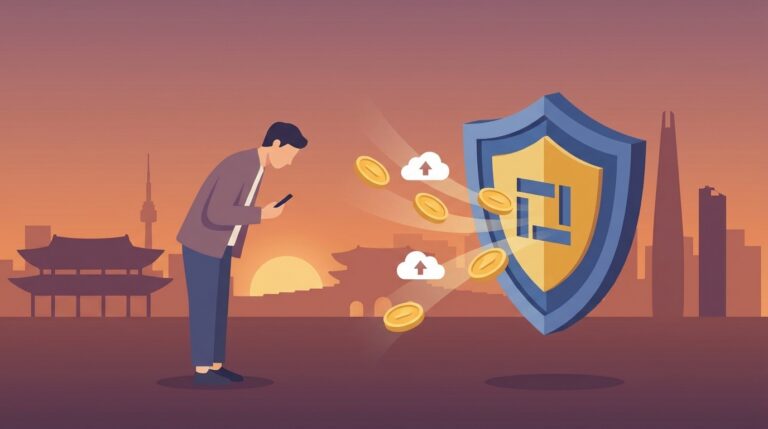
Phase 1: Empathy — Saying Goodbye the Korean Way
Hello! This is your Daily Hangul Editor (안녕하세요! 매일한글 에디터입니다). Picture yourself working late at a sleek Pangyo tech office—straight out of a K-drama—or checking your favorite Korean mobile app over morning coffee, only to see a looming notice: the service is shutting down. Whether you are announcing a sunset schedule or rushing to claim a paid balance refund and export years of data, these moments test everyone’s nerves. Based on real feedback from our B2 learners in Korean startups and expat communities, using cold or vague wording can damage trust overnight, whereas returning users’ funds and data responsibly until the very last day actually protects a brand’s reputation. Let’s master the exact Korean expressions that turn an awkward goodbye into lasting goodwill!
Phase 2: Top 3 Key Expressions Deep Dive
1. 서비스 종료 안내 (Seobiseu jongnyo annae)
- Pronunciation: Suh-bee-seu jong-nyo ahn-nae (Think of “jong” like the end of “mahjong,” followed by a smooth “nyo” like the start of “gnocchi,” and a gentle “ahn-nae” that sounds like saying “on-eh”).
- Meaning: Literally “service end guidance.” In real life, it is the gold-standard, respectful way to announce a planned service sunset without sounding abrupt or irresponsible.
- K-Culture Moment: Just like in tech-focused K-dramas such as Start-Up or when a beloved Korean webtoon platform closes a chapter, companies post a formal
서비스 종료 안내notice weeks ahead so loyal users are never blindsided.- Editor’s Insight: At the B2 level, choosing
종료 (jongnyo - conclusion)instead of폐쇄 (pyeswae - forced closure)or중단 (jungdan - sudden halt)makes a massive difference.종료implies an orderly, dignified wrap-up where the team takes responsibility until the final hour.- Situation Spectrum: Casual 🚫 | Semi-formal ⚠️ | Formal ✅
- 🤔 Think About It: In English, companies often write “We are sunsetting this app.” Why do Korean notices pair the ending with
안내 (annae - guidance/care)? How does framing a closure as “guiding the user” reflect Korean expectations of corporate accountability?2. 유료 결제 잔액 환불 (Yuryo gyeolje janaek hwanbul)
- Pronunciation: Yoo-ryo gyuhl-jeh jahn-ek hwahn-bool (Let “ryo” glide like “Rio” in one beat, “jahn-ek” like “John-eck,” and “hwahn” like “Juan” with an airy H).
- Meaning: Literally “paid payment remaining-balance refund.” Its real nuance is crystal-clear financial integrity—proving the company has zero intention of pocketing users’ unused coins, points, or subscription days.
- K-Culture Moment: Whenever a K-pop fandom messaging app or Korean mobile RPG prepares to close, the very first thing fans scan the notice for is the
유료 결제 잔액 환불schedule to verify their unused digital jelly or gems will be returned.- Editor’s Insight: Don’t confuse
잔액 환불 (janaek hwanbul - refunding remaining credit)with결제 취소 (gyeolje chwiso - canceling a recent charge). Showing you know잔액 (remaining balance)instantly signals fluent B2 business Korean!- Situation Spectrum: Casual ⚠️ | Semi-formal ✅ | Formal ✅
- 🤔 Think About It: Korea has some of the strictest consumer protection expectations in the digital world. How does returning even tiny unused balances compare to “all digital purchases are final” policies in your home culture?
3. 데이터 백업 및 내보내기 (Deiteo baekeop mit naebonaegi)
- Pronunciation: Deh-ee-tuh bek-up mit nae-bo-nae-gi (“Mit” is short and crisp like a baseball “mitt,” and “nae-bo” sounds like “neighbor” without the R).
- Meaning: Literally “data backup and sending-out.” Practically, it means handing users the digital keys so they can safely export photos, journals, or work logs before the servers go dark.
- K-Culture Moment: Think of Korean netizens rushing to rescue old photos and diary entries whenever a nostalgic platform like classic Cyworld undergoes major transitions—Korean users view digital records as emotional memories, not just files.
- Editor’s Insight: That tiny connector
및 (mit)is your B2 secret weapon! It is the formal written equivalent of “and / as well as” used in official notices, menus, and legal terms, making your announcements look 100% native.- Situation Spectrum: Casual 🚫 | Semi-formal ⚠️ | Formal ✅
- 🤔 Think About It: Why might a user forgive a company for shutting down an app if the
내보내기 (export)button works smoothly until the last day? Think about how much personal history lives inside apps today.
Phase 3: Textbook Korean vs. Real Korean
Situation 1: Talking about an app shutting down with coworkers or friends
- 📖 Textbook Korean: 이 애플리케이션은 곧 서비스를 중단할 예정입니다. (I aepeullikeisyeoneun got seobiseureul jungdanhal yejeongimnida.) — “This application is scheduled to discontinue its service soon.”
- 🗣️ Real Korean: 이 앱 곧 섭종한대요! 그전에 얼른 백업해 두세요. (I aep got seopjonghandaeyo! Geujeone eolleun baekeopae duseyo.) — “Apparently this app is shutting down soon! Hurry and back up your stuff before then.”
- 💡 Why the difference? Real Koreans—even in Pangyo tech offices—almost always shorten
서비스 종료to the snappy slang섭종 (seopjong)in spoken conversation, and add-아/어 두다(백업해 두세요) to stress doing something in advance for peace of mind.
Situation 2: Reassuring a worried customer about their refund
- 📖 Textbook Korean: 남은 금액은 모두 반환해 드리겠습니다. (Nameun geumaegeun modu banhwanhae deurigetseumnida.) — “We will return all remaining amounts.”
- 🗣️ Real Korean: 마지막 날까지 잔액 한 푼도 빠짐없이 깔끔하게 환불해 드릴게요. (Majimak nalkkaji janaek han pundo ppajimeopsi kkalkkeumhage hwanbulhae deurilgeyo.) — “Right up until the final day, we’ll refund every single penny cleanly with zero hassle.”
- 💡 Why the difference? While
반환sounds like a legal contract, Koreans trust warmth and vivid reassurance! Phrases like한 푼도 빠짐없이(without missing a single penny) and깔끔하게(cleanly/neatly) show genuine empathy and proactive responsibility.
Phase 4: K-Culture Deep Dive & Non-Verbal Manners
4-1. Nunchi (눈치) & Gestures
Even when a farewell happens through an app screen, Korean professionals bring physical nunchi (social awareness) into every step—especially during livestreamed apologies or customer support calls:
* The Sincere Bow & Posture: If a company representative speaks on camera about a closure, they use a formal 30-to-45-degree bow (정중한 인사) and hold their hands neatly clasped in front (공수 자세). Defensive gestures like pointing or leaning back are a major no-no.
* Digital Nunchi: In written notices, using calm spacing, clear bulleted deadlines, and humble verb endings like -드립니다 (doing for you humbly) shows you aren’t hiding behind fine print. Never bury the refund button in tiny gray text—that destroys trust instantly!
4-2. Cultural Code Analysis: The Art of the “God-Tier Farewell”
In Korean gaming and tech culture, there is a famous contrast between a messy 먹튀 (meoktwi — “eat and run,” taking users’ money and vanishing) and an 아름다운 이별 (areumdaun ibyeol — a beautiful farewell). Korean netizens actually remember companies fondly when they open an easy data-export tool, send proactive email reminders, and refund every won before shutting down. In fact, many Korean founders protect their corporate reputation (기업 평판) specifically by over-delivering on the final day—turning disappointed users into enthusiastic supporters of their next startup!
Phase 5: Real-Life Roleplay Scenario
Setting: A sunlit meeting room on the 8th floor of a Pangyo tech hub. Half-empty iced Americanos sit beside laptops as the clock ticks toward the 10:00 AM public notice release.
Characters: Min-jae (Customer Operations Lead, thoughtful and detail-obsessed) and You (B2 Global Product Manager reviewing the final user care flow).
- Min-jae: 팀장님, 공지 올리기 전에 환불이랑 백업 절차 한 번만 더 점검할까요? (Timjangnim, gongji olligi jeone hwanburirang baekeop jeolcha han beonman deo jeomgeomhalkkayo?) — “Team Lead, before we post the notice, shall we double-check the refund and backup process one more time?” 🎭 [Leans forward over his tablet, tapping the checklist calmly.]
- You: 네, 좋아요. 고객분들이 서비스 종료 안내를 보자마자 당황하지 않도록 일정부터 눈에 잘 띄게 배치했어요. (Ne, joayo. Gogaekbundeuri seobiseu jongnyo annaereul bojamaja danghwanghaji antorok iljeongbuteo nune jal ttuige baechihaesseoyo.) — “Yes, sounds good. So users don’t panic the moment they see the service termination notice, I placed the schedule right where it stands out.” 🎭 [Turns your laptop screen toward him and points to the top banner.]
- Min-jae: 아주 좋네요. 그런데 유료 결제 잔액 환불은 언제까지 신청할 수 있나요? (Aju joneyo. Geureonde yuryo gyeolje janaek hwanbureun eonjekkaji sincheonghal su innayo?) — “That looks great. By the way, until when can users apply for a paid balance refund?” 🎭 [Raises an eyebrow slightly, checking the calendar.]
- You: 서비스 마지막 날까지 넉넉하게 유예 기간을 두었고, 자동 환불도 지원할 예정이에요. (Seobiseu majimak nalkkaji neongneokage yuye giganeul dueotgo, jadong hwanbuldo jiwonhal yejeongieyo.) — “We set a generous grace period right up until the final day of service, and we also plan to support automatic refunds.” 🎭 [Nods reassuringly and takes a sip of coffee.]
- Min-jae: 자동 환불까지요? 고객 입장에서는 정말 안심이 되겠네요. 데이터 백업 및 내보내기 기능은 테스트 끝나셨죠? (Jadong hwanbulkkajiyo? Gogaek ipjangeseoneun jeongmal ansimi doegetneyo. Deiteo baekeop mit naebonaegi gineungeun teseuteu kkeutnasyeotjyo?) — “Even automatic refunds? From the user’s perspective, that’ll be such a relief. Testing for the data backup and export feature is finished, right?” 🎭 [Smiles warmly, looking genuinely impressed.]
- You: 네! 클릭 한 번으로 사진과 기록을 전부 내려받을 수 있게 최적화했어요. (Ne! Keullik han beoneuro sajingwa girogeul jeonbu naeryeobadeul su itge choejeokhwahaesseoyo.) — “Yes! We optimized it so they can download all their photos and records with a single click.” 🎭 [Clicks a demo button, showing an instant green progress bar.]
- Min-jae: 솔직히 문 닫는 게 아쉽긴 하지만, 끝까지 책임지는 모습이 우리 회사 평판을 지켜 줄 거예요. (Soljikhi mun danneun ge aswipgin hajiman, kkeutkkaji chaegimjineun moseubi uri hoesa pyeongpaneul jikyeo jul geoyeyo.) — “Honestly, it’s sad to close down, but taking responsibility until the end will protect our company’s reputation.” 🎭 [Sighs softly, yet looks proud as he closes his notebook.]
- You: 맞아요. 비록 서비스는 종료되지만, 마지막 순간까지 고객의 신뢰를 잃지 않도록 최선을 다합시다. (Majayo. Birok seobiseuneun jongnyodoeeojiman, majimak sungankkaji gogaegui silloereul ilchi antorok choeseoneul dahapsida.) — “Right. Even though the service is ending, let’s do our very best not to lose our users’ trust until the very last moment.” 🎭 [Offers a firm, encouraging nod as the team prepares to hit publish.]
🔀 Interactive Branching Point
Scenario: Right after publishing, a frustrated VIP user posts in the community forum: “I still have 15,000 won in unused points! Are you guys just going to keep my money?” How do you reply?
* Choice A: 고객님, 불편을 드려 죄송합니다. 유료 결제 잔액은 마지막 날까지 한 푼도 빠짐없이 환불해 드릴 예정이니 아래 링크에서 계좌를 확인해 주세요. (Apologize sincerely, promise every penny will be refunded until the last day, and guide them clearly.)
* Choice B: 공지사항에 다 적혀 있으니 자세히 읽어 보시고 문의해 주세요. (Tell them it’s all in the notice, so read carefully before asking.)
* Choice C: 걱정 마세요! 저희 망하는 거 아니고 15,000원은 곧 돌려줄게요. (Tell them casually not to worry, “we aren’t going bankrupt, we’ll give back the 15,000 won soon.”)
Feedback:
* Choice A (Best! ✅): Textbook B2 professionalism meets Korean empathy! You validate their worry (불편을 드려 죄송합니다), give a concrete promise, and provide an immediate next step.
* Choice B (Bad! 🚫): Ouch! Telling an anxious user “just read the notice” feels dismissive and cold in Korea—this is how small misunderstandings turn into viral brand backlash.
* Choice C (Risk! ⚠️): Friendly, but way too casual (망하는 거 아니고, -줄게요) for an official support reply! Using slang like “going bankrupt” makes the company sound unstable and unprofessional.
Phase 6: 10-Second Emotional Shadowing Drill
Read these aloud! Pause briefly at each / and step fully into the emotion:
- [😔 Sincere & apologetic]
오랜 시간 / 함께해 주신 고객님들께 / 무거운 마음으로 / 서비스 종료 안내를 드립니다.
(Oraen sigan / hamkkehae jusin gogaeknimdeulkke / mugeoun maeumeuro / seobiseu jongnyo annaereul deurimnida.)
“To our customers who have been with us for a long time, we deliver this service termination notice with a heavy heart.” -
[🤝 Firm & reassuring]
남아 있는 유료 결제 잔액은 / 마지막 날까지 / 전액 안전하게 환불해 드리겠습니다.
(Nama inneun yuryo gyeolje janaegeun / majimak nalkkaji / jeonaek anjeonhage hwanbulhae deurigetseumnida.)
“We will safely refund all remaining paid balances in full until the very last day.” -
[🌱 Grateful & hopeful]
소중한 추억이 담긴 / 데이터 백업 및 내보내기를 / 꼭 기간 내에 완료해 주세요.
(Sojunghan chueogi damgin / deiteo baekeop mit naebonaegireul / kkok gigan naee wallyohae juseyo.)
“Please be sure to complete your data backup and export containing your precious memories within the period.”
Phase 7: K-Culture Mini Dictionary
- 섭종 (Seopjong) | Service Termination (Slang) | Short for
서비스 종료. Widely used by gamers, app users, and even startup coworkers when talking casually about an app closing down. - 소멸 예정 (Somyeol yejeong) | Scheduled to Expire | Crucial for refund notices! Means unused points, coupons, or data will disappear after a deadline unless claimed or exported.
- 유예 기간 (Yuye gigan) | Grace Period | The extra buffer window between the announcement and the actual shutdown where users can still export files and request refunds.
- 평판 (Pyeongpan) | Reputation / Public Standing | Often paired with
기업 평판(corporate reputation) or브랜드 평판(brand reputation)—the invisible asset every Korean company guards fiercely.
Phase 8: Survival Kit for Travelers & Expats
If a Korean shopping app, gym membership, or local delivery platform you use announces it’s closing, keep these three survival phrases in your pocket:
- 1. Checking your refund timeline:
환불은 영업일 기준으로 며칠 정도 걸리나요? (Hwanbureun yeongeobil gijuneuro myeochil jeongdo geollinayo?) — “How many business days does the refund take?”
💡 Pro Tip: Korean refunds are counted in영업일(business days), excluding weekends and public holidays! - 2. Asking for a data export link:
제 계정 데이터 내보내기 링크를 다시 받을 수 있을까요? (Je gyejeong deiteo naebonaegi ringkeureul dasi badeul su isseulkkayo?) — “Could I receive the data export link for my account again?”
💡 Pro Tip: Always screenshot your confirmation number (접수 번호) after submitting an export or refund request. - 3. Requesting a bank transfer refund:
결제 취소가 안 되면 계좌이체로 환불 가능한가요? (Gyeolje chwisoga an doemyeon gyejwaichero hwanbul ganeunghangayo?) — “If card cancellation isn’t possible, can I get a refund via bank transfer?”
💡 Pro Tip: After 3–6 months, Korean systems often can’t cancel old credit card charges and will ask for your Korean bank account (계좌번호) instead.
Editor’s Travel Note: Before deleting or exporting from any Korean app, check their official support channel first—most Korean brands handle 1:1 refund inquiries directly through the KakaoTalk Customer Support Center or verified Kakao business channels. Also, if you are traveling around Seoul for an in-person customer service visit, make sure you have the Naver Map app download ready, as Google Maps walking directions don’t work reliably in South Korea!
Phase 9: “One Step Deeper” — The Beauty of a Graceful Ending
In Korean culture, there is a cherished four-character idiom: 유종의 미 (Yujongui mi), meaning “the beauty of bringing something to a good end.” Whether it is a K-drama finale, a school semester, or a software product, Koreans deeply judge a person’s or company’s true character not by how loudly they launch, but by how gracefully they wrap up. Notice how Korean service expressions constantly pair responsibility with honorific auxiliary verbs like -아/어 드리다 (to humbly do something for another’s benefit)—reminding everyone that users aren’t just numbers on a server, they are part of a shared community of trust (신뢰). Even in defeat or closure, honoring that bond leaves the door open for tomorrow.
💬 Your Turn: Have you ever experienced an app or favorite service shutting down? Did they handle refunds and exports gracefully, or leave you frustrated? Drop your story in the comments and try writing one Korean phrase from today’s lesson!
Phase 10: FAQ & Myth-Busting
Q: What is the difference between 환불 (hwanbul) and 결제 취소 (gyeolje chwiso) in Korean refund notices?
A: 결제 취소 cancels a recent transaction directly on your card so it disappears from your statement, while 환불 refers to returning money—especially unused credit (잔액) or older payments—back to your card or bank account.
Q: Is it rude to use 섭종 (seopjong) in an official email to Korean users?
A: Yes, avoid 섭종 in official announcements! It is casual internet slang used among users or coworkers in chat. Always write 서비스 종료 (seobiseu jongnyo) in public notices and customer emails.
Q: Why do Korean apps ask for a Korean bank account (계좌번호) when refunding older paid balances?
A: Because Korean payment gateways have strict time limits on reversing old card charges. When a paid balance is older than a few months, companies must send your money manually via direct bank transfer (계좌이체).
🚨 Common Mistakes Alert
- Mistake 1: Using
데이터를 지우다(to erase data) when trying to say “export your data” -> Correct Action: Use데이터를 내보내다 / 백업하다(to export / back up data) so users don’t panic thinking you’re telling them to delete everything! - Mistake 2: Saying
돈을 돌려줄게요(I’ll give your money back) to customers -> Correct Action: Upgrade to잔액을 환불해 드리겠습니다(We will refund your remaining balance) for proper B2 business politeness. - Mistake 3: Leaving out the exact deadline time -> Correct Action: Always specify
OO월 OO일 23시 59분까지(until 23:59 on Month/Day) because Korean users expect exact cutoff timestamps.
Phase 11: Action Mission & Engagement
- 🥉 Bronze (Solo Practice): Read the 3 emotional shadowing sentences in Phase 6 out loud twice, recording yourself on your phone to check your
/pauses. - 🥈 Silver (Share & Connect): Share one new B2 business phrase you learned today—like
유료 결제 잔액 환불—on your study journal or social media and tag a fellow Korean learner. - 🥇 Gold (Real-World Action): Visit the Korean Terms of Service (
이용약관) or FAQ page of a Korean app you use (like Naver, Kakao, or Coupang) and spot at least 3 keywords from today’s lesson in the wild! - 🎮 K-Culture Mission: Watch an episode of a Korean tech or workplace drama (like Start-Up or Misaeng) or search a Korean gaming forum for
섭종notices to see how real Korean teams communicate tough news with empathy.
Phase 12: Interactive Quiz Challenge
Test your B2 instincts! Try answering all three before opening the spoiler below.
1. Situational Judgment: Your Korean language app is closing next month. You need to write the headline of the official email notice to paid subscribers. Which option is the most professional and reassuring?
* A) 이 앱 곧 섭종해요! 돈 돌려받으세요.
* B) 서비스 종료 안내 및 유료 결제 잔액 환불·데이터 백업 안내
* C) 서비스 폐쇄 공지: 남은 포인트는 소멸될 예정입니다.
2. Fill-in-the-Blank: Complete this B2 reassurance sentence with the best phrase:
“마지막 날까지 잔액 한 푼도 ( ) 안전하게 환불해 드릴게요.”
(Hint: “without missing a single penny”!)
3. True / False Cultural Quiz:
In Korean digital culture, as long as a company gives a 24-hour notice before shutting down, keeping tiny unused coin balances under 1,000 won is considered normal and won’t hurt brand reputation. (True / False?)
Click to reveal answers & detailed feedback
- Quiz 1 Answer: B!
- Why? Option B uses polished formal terms (
서비스 종료 안내,유료 결제 잔액 환불,데이터 백업). - Wrong-Answer Feedback: Option A uses casual slang (
섭종) and blunt wording (돈 돌려받으세요). Option C sounds cold and harsh (폐쇄), threatening users that points will expire without offering help.
- Why? Option B uses polished formal terms (
- Quiz 2 Answer: 빠짐없이 (ppajimeopsi)
- Full Sentence: 마지막 날까지 잔액 한 푼도 빠짐없이 안전하게 환불해 드릴게요. (We will safely refund every single penny of your balance until the final day without missing a drop!)
- Quiz 3 Answer: False!
- Explanation: Even small unused balances matter deeply in Korea! Giving a short 24-hour notice or keeping users’ leftover coins is viewed as
먹튀(taking money and running) and can severely damage corporate trust. Returning every won and offering clear data exports protects the brand’s reputation.
- Explanation: Even small unused balances matter deeply in Korea! Giving a short 24-hour notice or keeping users’ leftover coins is viewed as
🎬 Watch Our Daily Videos! (Daily Hangul Official Instagram)
Review the expressions you learned in this article with our fun daily short videos! Check out native pronunciation and real-life nuances in action.
- Instagram @dailyhangul_en







