

Phase 1: Empathy (Story-Driven Opening)
안녕하세요! 매일한글 에디터입니다. (Annyeonghaseyo! I’m your Daily Hangul editor.)
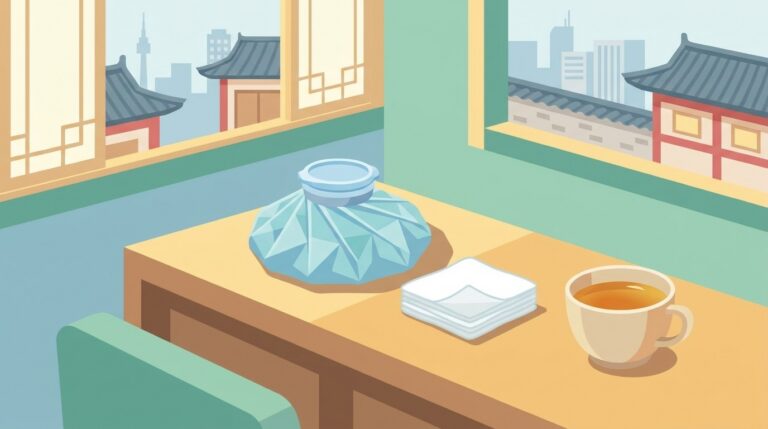
Picture this: You are walking out of a bright, spotless dental clinic in Gangnam. One side of your jaw is completely numb, you are biting down hard on a wad of cotton, and you are clutching an ice pack wrapped in a handkerchief. Just two minutes ago, the dental assistant handed you a prescription sheet and gave a rapid-fire list of instructions in Korean. You caught words like geoju (gauze) and ppaldae (straw), but your brain was too panicked to connect the dots. Back at your apartment, you want a cool iced Americano, and you are wondering whether to spit out the bloody saliva pooling in your mouth.
Navigating dental care in Korea—especially surgical extractions and non-covered costs—can feel intimidating when you are already dealing with discomfort. But understanding these exact medical directions will protect you from painful dry sockets and expensive repeat visits. Based on real questions from our international students living in Seoul, this guide breaks down everything your Korean dentist expects you to do after an extraction.
Phase 2: 3 Core Expressions in Deep Dive
1. 거즈를 두 시간 동안 꽉 물고 계셔야 해요 (Geojeureul du sigan dongan kkwak mulgo gyesyeoya haeyo)
- Pronunciation: Geu-jeu-reul doo shi-gan dong-an kkwak mool-go gyeh-shyeo-ya hae-yo (Imagine ‘kkwak’ as clamping down firmly with a tight snap).
- Meaning: Literal: “You must keep holding the gauze tightly in your bite for two hours.” | Nuance: Emphatic medical direction ensuring steady direct pressure to form an initial blood clot.
- K-Culture Moment: In medical K-Dramas like Hospital Playlist, you often see hygienists demonstrating jaw pressure with clenched fists to show patients exactly how hard to bite.
- Editor’s Insight: The adverb 꽉 (kkwak) means “tightly” or “firmly without slack.” If you bite loosely, the pressure is insufficient, prolonging bleeding.
- Situation Spectrum: Casual ⚠️ | Semi-formal ✅ | Formal ✅
- 🤔 Think About It: Korean medical communication frequently uses honorific obligation patterns like
-셔야 해요(-syeoya haeyo) to balance politeness with strict clinical authority. How does this compare to doctors’ phrasing in your home culture?
2. 침이나 피는 뱉지 말고 삼키셔야 해요 (Chimina pineun baetji malgo samkisyeoya haeyo)
- Pronunciation: Cheem-ee-na pee-neun baet-jee mal-go sam-kee-shyeo-ya hae-yo (‘Baet’ sounds like ‘bet’, cut short crisply).
- Meaning: Literal: “Do not spit saliva or blood; you must swallow it.” | Nuance: Spitting generates intraoral negative pressure, which dislodges the blood clot.
- K-Culture Moment: On Korean lifestyle vlogs, creators recovering from extraction often hold a tissue to their lips while explaining why swallowing bloody saliva is the hardest part of Korean dental aftercare.
- Editor’s Insight: 뱉다 (baetda) means “to spit out” and 삼키다 (samkida) means “to swallow.” The construction
~지 말고(~ji malgo) is the practical way to say “don’t do X, do Y instead.” - Situation Spectrum: Casual ⚠️ | Semi-formal ✅ | Formal ✅
- 🤔 Think About It: Swallowing your own blood feels counterintuitive, but Korean post-op education emphasizes negative pressure prevention above personal squeamishness. Would your culture prescribe gauze replacement or swallowing?
3. 빨대로 음료를 드시면 안 돼요 (Ppaldaero eumryoreul deusimyeon an dwaeyo)
- Pronunciation: Ppal-dae-ro eum-nyo-reul deu-shee-myeon an dwae-yo (Pronounce ‘ppal’ with strong tense ‘p’, like ‘pop’).
- Meaning: Literal: “You must not drink beverages with a straw.” | Nuance: Absolute prohibition against suction that triggers secondary bleeding.
- K-Culture Moment: Cafe orders in Korea almost always come with straws by default; patients post-extraction often ask baristas for flat lids or cups only.
- Editor’s Insight: The postposition
(으)로((eu)ro) denotes the instrument used. Combined with-면 안 돼요(-myeon an dwaeyo), it creates a clear intermediate boundary: “Doing this action is prohibited.” - Situation Spectrum: Casual ⚠️ | Semi-formal ✅ | Formal ✅
- 🤔 Think About It: Suction warnings are universal, but Korean convenience and cafe culture revolves heavily around straw-ready cups. Language helps you proactively decline straws in daily interactions.
Phase 3: Textbook Korean vs Real Korean
Situation 1: Asking if you can take out the gauze early
- 📖 교과서 한국어 (Textbook Korean): 거즈를 제거해도 괜찮습니까? (Geojeureul jegeohaedo gwaenchansseumnikka? – “Is it permissible to remove the gauze?”)
- 🗣️ 진짜 한국어 (Real Korean): 거즈 피 안 멈추면 새 걸로 갈아 물어야 하나요? (Geoju pi an meomchumyeon sae geollo gara mureoya hanayo? – “If the bleeding doesn’t stop, should I swap it with fresh gauze and bite down again?”)
- 💡 왜 다를까?: Native speakers in pain drop heavy Sino-Korean vocabulary like jegeo (removal) in favor of functional active verbs like gara mulda (swap and bite).
Situation 2: Inquiring about non-covered costs at checkout
- 📖 교과서 한국어 (Textbook Korean): 비급여 항목의 비용을 설명해 주십시오. (Bigeubyeo hangmok-ui biyong-eul seolmyeonghae jusipsio. – “Please explain the cost of non-covered items.”)
- 🗣️ 진짜 한국어 (Real Korean): 오늘 치료 중에 실비 청구 가능한 항목이 어떤 거예요? (Oneul chiryo junge silbi cheong-gu ganeunghan hangmogi eotteon geoyeyo? – “Among today’s treatments, which items can I claim through private health insurance?”)
- 💡 왜 다를까?: Rather than asking abstract textbook definitions of non-covered fees (bigeubyeo), locals immediately ask whether procedures qualify for silbi (actual-loss private insurance reimbursement).
Phase 4: K-Culture Deep Dive & Non-Verbal Etiquette
4-1. Nunchi & Clinic Body Language
When receiving post-op instructions at the counter, remember that your mouth is numb and speaking is difficult. Do not attempt long verbal responses with gauze in your mouth; it disrupts the blood clot. Instead, use responsive nodding (gogae kkeudeogim) while holding your aftercare pamphlet. If the staff asks if you have questions, use a short thumbs-up or point to specific lines on the care sheet. Keep your ice pack against your cheek gently—avoid pressing hard against the jawbone.
4-2. Cultural Code: The Korean “Bonjuk” Recovery Ritual
Wisdom tooth extraction in Korea has an almost mandatory culinary ritual: a trip to Bonjuk (본죽), the nationwide rice porridge franchise. Korean dentists explicitly advise against eating hot, spicy, or granular foods immediately after extraction. Friends or coworkers will almost invariably ask: “사랑니 뽑았어? 오늘 점심에 죽 먹어야겠네!” (Sarangni ppobasseo? Oneul jeomsime juk meogeoyagenne! – “You got your wisdom tooth pulled? You will have to eat porridge for lunch today!”). Getting a mild soegogi yachae-juk (beef and vegetable porridge) and asking the staff to split it into two small takeaway containers (du gaero nanwo damajuseyo) is a standard Seoul survival move.
Phase 5: Real-World Roleplay Scenario
Setting: The checkout and discharge desk at Seoul S-Dental Clinic. Desk nurse Min-ji is handing patient Alex an envelope containing spare gauze and prescriptions.
- 간호사 민지 (Nurse Min-ji): 🎭 (소독약 냄새가 나는 데스크에서 처방전과 거즈 봉투를 건네며) 알렉스 님, 오늘 왼쪽 아래 매복 사랑니 뽑으셨어요. (Alex-nim, oneul oenjjok arae maebok sarangni ppobusyeosseoyo. / Alex, you had an impacted wisdom tooth pulled on your lower left side today.)
- 알렉스 (Alex): 🎭 (마취 때문에 뺨을 감싸 쥐고 웅얼거리며) 네, 수고하셨습니다… (Ne, sugohasyeotseumnida… / Yes, thank you for your work…)
- 간호사 민지 (Nurse Min-ji): 🎭 (거즈를 손가락으로 가리키며) 지금 물려드린 거즈는 최소 두 시간 동안 꽉 물고 계셔야 지혈이 돼요. (Jigeum mullyeodeurin geojureul choeso du sigan dongan kkwak mulgo gyesyeoya jihyeori dwaeyo. / You must bite firmly on the gauze we placed for at least two hours so the bleeding stops.)
- 알렉스 (Alex): 🎭 (답답한 표정으로 입안을 가리키며) 피가 자꾸 고이는데 뱉으면 안 되나요? (Piga jakku goineunde baeteumyeon an doenayo? / Blood keeps pooling in my mouth; can I spit it out?)
- 간호사 민지 (Nurse Min-ji): 🎭 (단호하게 고개를 가로저으며) 절대 안 돼요! 침이나 피는 삼키셔야 압력 때문에 피가 다시 안 나요. (Jeoldae an dwaeyo! Chimina pineun samkisyeoya amnyeok ttaemune piga dasi an nayo. / Absolutely not! You must swallow saliva and blood so internal pressure does not cause bleeding to start again.)
- 알렉스 (Alex): 🎭 (눈을 동그랗게 뜨며 고개를 끄덕인다) 아, 빨대도 쓰면 안 되죠? (A, ppaldaedo sseumyeon an doejo? / Ah, I shouldn’t use straws either, right?)
- 간호사 민지 (Nurse Min-ji): 🎭 (주의사항 안내문을 형광펜으로 칠하며) 네, 빨대 사용이랑 흡연은 일주일간 금지예요. 처방 약은 식사 후에 바로 드세요. (Ne, ppaldae sayong-irang heubyeoneun ilju-il-gan geumjiyeyo. Cheobang yageun siksa hue baro deuseyo. / Exactly, straw use and smoking are prohibited for one week. Take your prescribed medication right after meals.)
- 알렉스 (Alex): 🎭 (안내문을 소중히 챙기며 묵례한다) 알겠습니다. 설명 감사합니다. (Algetseumnida. Seolmyeong gamsahamnida. / Understood. Thank you for the explanation.)
🔀 Interactive Decision Point
After arriving home, one hour into biting the gauze, you feel uncomfortable with accumulated saliva. What should you do?
* Option A: Remove the gauze, spit into the sink vigorously, and rinse with cold water.
* Option B: Keep your jaw clamped firmly on the gauze and swallow your saliva steadily.
* Option C: Pull the gauze out, drink cold iced tea with a silicone straw to soothe the swelling, then insert new gauze loosely.
Feedback:
* Option A (Bad): ❌ Spitting creates instant negative pressure inside the oral cavity, which dislodges the developing blood clot and triggers fresh hemorrhaging.
* Option B (Best): ✅ Perfect adherence! Clamping down maintains direct vascular compression, and swallowing preserves intraoral pressure balance.
* Option C (Risk): ⚠️ Suction from the straw creates extreme pressure variations, and loose gauze fails to apply clinical pressure to the extraction socket.
Phase 6: 10-Second Emotion Shadowing Drill
[🥺 조심스럽고 걱정스럽게]침이 계속 고이는데 / 그냥 꿀꺽 삼켜도 괜찮아요? (Chimi gyesok goineunde / geunyang kkulkkeok samkyeodo gwaenchanayo? – “Saliva keeps gathering… is it really safe to just gulp and swallow it down?”)[👩⚕️ 차분하고 단호한 어조로]지혈을 위해서 / 거즈는 두 시간 동안 / 절대 빼지 마세요. (Jihyeoreul wihaeseo / geojureun du sigan dongan / jeoldae bpaeji maseyo. – “For hemostasis / please do not remove the gauze / under any circumstance for two hours.”)[☕ 또박또박 전달하는 톤으로]빨대 없이 / 컵으로만 마실게요. (Ppaldae eopsi / keobeuroman masilgeyo. – “I will drink directly from the cup / without a straw.”)
Phase 7: K-Culture Mini Dictionary
- 지혈 (Jihyeol): Hemostasis / stopping bleeding. Essential medical noun found across clinical sheets (e.g., 지혈 확인 후 거즈 제거 – “Remove gauze after confirming hemostasis”).
- 비급여 (Bigeubyeo): Non-covered treatment by National Health Insurance. Covers specialized implants, bone grafts, and advanced dental materials.
- 실손보험 / 실비 (Silsonboheom / Silbi): Private actual-cost loss insurance. Crucial term when checking whether surgical tooth extractions can be claimed.
- 매복 사랑니 (Maebok Sarangni): Impacted wisdom tooth. Often requires minor surgical incisions and strict post-op bleeding management.
Phase 8: Survival Kit for Travelers
TOP 3 Survival Phrases
- 거즈 여분 더 주실 수 있나요? (Geoju yeobun deo jusil su innayo?)
- Pronunciation: Geu-jeu yeo-boon deo joo-shil soo een-na-yo?
- Pro Tip: Use at checkout if you anticipate bleeding past the initial two-hour window or have a long commute.
- 얼음찜질 팩 하나 더 필요해요 (Eoreum-jjimjil paek hana deo piryohaeyo)
- Pronunciation: Eol-eum-jjeem-jeel pack ha-na deo pee-ryo-hae-yo
- Pro Tip: Intermittent cold packs for the first 48 hours dramatically curb postoperative facial swelling.
- 소독하러 며칠 뒤에 와야 하나요? (Sodok-hareo myeochil dwie waya hanayo?)
- Pronunciation: So-dok-ha-reo myeo-cheel dwee-eh wa-ya ha-na-yo?
- Pro Tip: Korean dental clinics usually schedule a 2-minute wound disinfection checkup (sodok) the following day.
Editor’s Travel Note
Before dental appointments in Korea, bookmark the 건강보험심사평가원 비급여 진료비 정보 페이지 to benchmark transparent fee structures for non-covered procedures. If you need pharmacies that open late for pain relievers, search “심야약국” on the 네이버 지도 앱 다운로드 to locate designated late-night dispensaries in your district.
Phase 9: “One Step Deeper” (Cultural Reflection)
In Korean medical settings, patient discharge involves an exceptionally high level of proactive micro-guidance. Rather than assuming the patient knows common physiological responses, Korean healthcare professionals deliver detailed preventive directives covering swallowing habits, head elevation, and straw usage. This stems from a healthcare philosophy prioritizing shared communal responsibility for recovery outcomes. When clinic staff repeatedly emphasize “침 뱉지 마세요” (do not spit), they are extending clinical vigilance into your home recovery.
💬 Your Turn: Have you ever experienced a visit to a medical or dental clinic in another country? How do post-op instructions in your home country compare to Korea’s strict guidance on swallowing and straw avoidance? Share your thoughts below!
Phase 10: FAQ & Common Mistakes
Q: 거즈를 2시간 물었는데도 피가 계속 나면 어떻게 하나요?
A: Minor oozing mixed with saliva is normal for up to 24 hours. However, if active bright red bleeding continues, fold a fresh sterile gauze pad into a tight square, place it directly over the extraction wound, and bite firmly for another hour. If heavy bleeding persists, contact the clinic or visit an emergency center.
Q: 식사는 언제부터 할 수 있나요?
A: You should wait until the local anesthesia completely wears off (usually 2 to 3 hours) to avoid biting your numb cheek or tongue. Start with cool, soft foods like plain porridge or chilled soup, chewing exclusively on the unaffected side.
Q: 사랑니 발치 비용도 국민건강보험 적용이 되나요?
A: Yes, surgical wisdom tooth extraction (발치술) is covered by Korean National Health Insurance (Geongangboheom). However, optional additions like collagen plugs (콜라겐 지혈제) or specialized panoramic 3D CT scans may include non-covered (bigeubyeo) line items.
🚨 Common Mistakes Alert
- Spitting bloody saliva into the basin: Dislodges the critical fibrin blood clot. Correct Action: Swallow all fluid quietly while gauze is in place.
- Drinking iced coffee through a straw: Creates vacuum suction in the mouth that triggers bleeding. Correct Action: Sip directly from the open rim of a cup.
- Rinsing the mouth forcefully with water: Rinsing dislodges fresh stitches and tissue. Correct Action: If necessary, let lukewarm water gently roll out of your mouth without swishing.
Phase 11: Action Missions
- 🥉 Bronze Mission (Solo Practice): Practice saying
빨대 없이 마실게요(Ppaldae eopsi masilgeyo) three times out loud in front of a mirror until smooth. - 🥈 Silver Mission (Community Share): Order a drink at a Korean cafe or convenience store and ask for no straw using
빨대는 안 주셔도 돼요(Ppaldaeneun an jusyeodo dwaeyo). - 🥇 Gold Mission (Real-world Execution): During your next dental appointment or pharmacy visit, successfully ask
소독하러 언제 와야 해요?without relying on English translation tools. - 🎮 K-Culture Mission: Watch an episode of a Korean medical drama or YouTube dental clinic vlog and note down how clinicians phrase patient instructions using
-셔야 해요.
Phase 12: Interactive Quiz Challenge
1. Situational Judgment
You are 90 minutes post-extraction. Your friend offers you an iced milk tea with a straw. How should you respond?
* A) Take the drink and drink slowly through the straw.
* B) Refuse the straw, remove your gauze immediately, and drink hot tea.
* C) Decline the straw, keep the gauze in place until the two-hour mark, and later sip directly from the cup.
👉 정답과 해설 보기 (View Answer & Explanation)
정답: C
해설: You must maintain gauze pressure for the full 2 hours. Straw suction (A) can tear the healing clot, and hot tea (B) causes vascular dilation and renewed bleeding.
2. Fill-in-the-Blank
지혈을 위해 거즈를 두 시간 동안 _____ 물고 계셔야 해요. (To stop the bleeding, you must bite _____ on the gauze for two hours.)
* A) 살짝 (saljjak – lightly)
* B) 꽉 (kkwak – firmly/tightly)
* C) 천천히 (cheoncheonhi – slowly)
👉 정답과 해설 보기 (View Answer & Explanation)
정답: B
해설: ‘꽉’ (kkwak) conveys firm, continuous physical pressure necessary to secure blood clot stabilization.
3. True / False Cultural Quiz
In Korea, extracting an impacted wisdom tooth at a local dental clinic is entirely non-covered (bigeubyeo) and cannot receive National Health Insurance support. (True / False)
👉 정답과 해설 보기 (View Answer & Explanation)
정답: False
해설: Wisdom tooth extraction is a covered medical procedure under Korean National Health Insurance. Only select specialized materials (like supplemental collagen hemostatic plugs) fall under non-covered (bigeubyeo) charges.
🎬 Watch Our Daily Videos! (Daily Hangul Official Instagram)
Review the expressions you learned in this article with our fun daily short videos! Check out native pronunciation and real-life nuances in action.
- Instagram @dailyhangul_en







