

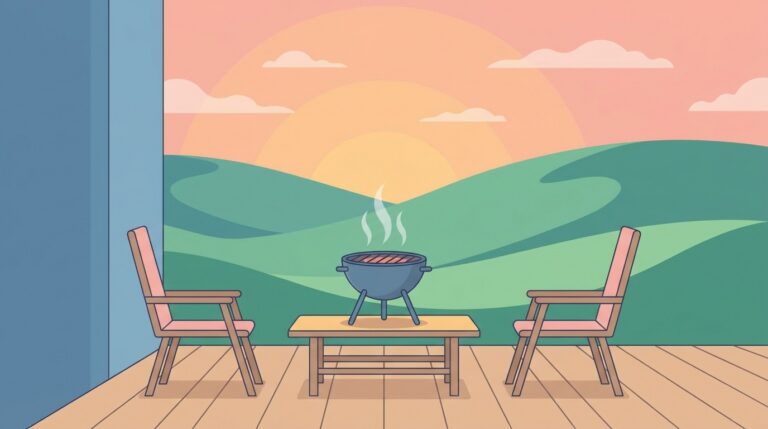
Mastering the Pension BBQ: How to Request Charcoal Right on Time
Phase 1: Empathy & Storytelling Opening
안녕하세요! I’m your Daily Hangul editor and your personal Korean culture navigator! Picture this: You’ve just escaped the bustling streets of Seoul on a Friday afternoon. After a scenic train ride up to Gapyeong, you arrive at a picture-perfect pension (펜션) surrounded by misty pine hills. You stopped by the local Hanaro Mart, your fridge is packed with thick cuts of pork belly (samgyeopsal), fresh perilla leaves, and iced barley tea. There’s only one thing left between you and the ultimate Korean weekend fantasy: the sizzling outdoor barbecue.
Suddenly, the warm, smiling host (the pension sajangnim) pops by and asks a rapid question about charcoal timings. You freeze. In English, you’d casually say, “Could you get the grill going around 7?” But in Korean, you worry about sounding demanding, or worse, using stiff military Korean you picked up from a historical drama! Many of our A2 learners tell us this exact moment brings sudden stage fright: How do I politely set a specific time without sounding rude or getting lost in honorifics?
Don’t worry! Timing a charcoal fire is an art in Korea—charcoal needs about 20 minutes to glow white before grilling starts. Today, we’ll walk through the exact, natural phrases everyday Koreans use to coordinate their BBQ dinner so smoothly that your host will think you’ve lived in rural Gangwon-do for five years.
Phase 2: Core Expressions Deep Dive
Here are the 3 essential power phrases you need for a stress-free pension barbecue evening.
1. 저녁 7시에 맞춰서 불 피워 주세요 (Jeonyeok ilgop-si-e matchwoseo bul piwo juseyo)
- Pronunciation: [Jeo-nyeok il-gop-shi-eh mat-chwo-seo bool pee-wo joo-seh-yo] (Think: “match” + “wo” for 맞춰)
- Meaning: Literal: “Please light the fire timed to 7 PM in the evening.” | Nuance: “Could we have the BBQ fire ready for 7 PM, please?”
- K-Culture Moment: You’ll hear this in virtually every variety show where celebrities travel to the countryside (like Three Meals a Day or In the SOOP). The group leader always confirms the fire time so the side dishes and meat cooking align perfectly.
- Editor’s Insight: The magic word here is 맞춰서 (matchwoseo), which comes from matchuda (to align/sync). Instead of just saying “at 7 PM”, adding matchwoseo shows you appreciate that lighting charcoal requires prep work beforehand!
- Situation Spectrum: Casual: ⚠️ (Only with close friends: 7시에 불 피워 줘) | Semi-formal: ✅ (Perfect for hosts: 7시에 맞춰서 불 피워 주세요) | Formal: ✅ (7시에 맞춰서 불 준비 부탁드립니다)
- 🤔 Think About It: In English, we focus on the request (“Please light the fire”). In Korean, adding 맞춰서 acknowledges the host’s schedule and timing. How does recognizing someone else’s effort change how a request feels?
2. 바비큐 비용은 지금 드리면 될까요? (Babikyu biyong-eun jigeum deurimyeon doelkkayo?)
- Pronunciation: [Bah-bee-kyoo bee-yong-eun jee-geum deu-ree-myeon duel-kkah-yo?] (deuri sounds like “duh-ree”)
- Meaning: Literal: “As for the BBQ cost, will it do if I give it to you now?” | Nuance: “Should I pay for the BBQ setup right now?”
- K-Culture Moment: At almost all Korean pensions, the room price is paid upfront online, but the charcoal/grill fee (usually 20,000–30,000 KRW) is paid directly on-site in cash or via bank transfer.
- Editor’s Insight: Using 드리면 될까요? (deurimyeon doelkkayo?) utilizes the humble verb deurida (to give to a respected elder) rather than juda. It marks you instantly as a well-mannered guest.
- Situation Spectrum: Casual: 🚫 | Semi-formal: ✅ | Formal: ✅
- 🤔 Think About It: Notice how Koreans phrase payment as a polite question rather than “Here is the money.” Why do you think indirect questions soften financial interactions?
3. 숯 조금만 더 추가해 주실 수 있어요? (Sut jogeumman deo chugahae jusil su isseoyo?)
- Pronunciation: [Soot joh-geum-man duh choo-gah-heh joo-sheel soo ee-ssuh-yo?] (Sut rhymes with “soot”)
- Meaning: Literal: “Can you add just a little bit more charcoal?” | Nuance: “Could we get a little more charcoal for the grill, please?”
- K-Culture Moment: You’ve grilled the pork belly, but now you want to grill sweet potatoes wrapped in foil over gentle embers! The flame is dying, and you need a quick top-up.
- Editor’s Insight: Adding 조금만 (jogeumman – just a little) is a classic Korean linguistic cushion. Even if you need a standard scoop of charcoal, saying “just a little” makes the request feel light and modest.
- Situation Spectrum: Casual: ⚠️ | Semi-formal: ✅ | Formal: ✅
- 🤔 Think About It: Why do many cultures use minimizers (“a little bit”, “just a minute”) when asking for extra service?
Phase 3: Textbook Korean vs. Real Korean
Let’s compare robotic textbook lines with what real Koreans say on a weekend getaway.
Situation 1: Confirming the charcoal request
- 📖 교과서 한국어 (Textbook): 숯불을 오후 7시에 점화하여 주십시오. (Sutbureul ohu ilgop-si-e jeomhwahayeo jusipsio. – “Please ignite the charcoal fire at 7:00 PM.”)
- 🗣️ 진짜 한국어 (Real-Life): 사장님, 저희 7시쯤에 바비큐 불 부탁드릴게요! (Sajangnim, jeohui ilgop-si-jjeume babikyu bul butakdeurilgeyo! – “Boss, we’d like to request the BBQ fire around 7, please!”)
- 💡 왜 다를까? (Why the difference?): Nobody says “ignite” (jeomhwahada) in casual vacation settings! Calling the host affectionately as Sajangnim (boss/owner) and using butakdeurilgeyo (I request of you) sounds instantly friendly and natural.
Situation 2: Paying the grill fee
- 📖 교과서 한국어 (Textbook): 바비큐 시설 이용 요금을 지불하겠습니다. (Babikyu siseol iyong yogeumeul jibulhagetseumnida. – “I shall pay the BBQ facility usage fee.”)
- 🗣️ 진짜 한국어 (Real-Life): 숯값 2만 원 현금으로 계좌이체 해드릴게요! (Sut-gap iman-won hyeongeumeuro gyejwa-iche haedeurilgeyo! – “I’ll transfer the 20,000 won charcoal fee to your bank account!”)
- 💡 왜 다를까? (Why the difference?): In everyday speech, locals simply call this fee 숯값 (sut-gap – charcoal money) rather than the formal “facility usage fee.”
Phase 4: K-Culture Deep Dive & Non-Verbal Manners
4-1. 눈치 (Nunchi) & Gestures for Fire Requests
When you make a charcoal request at a pension, timing and body language matter just as much as grammar:
* The 30-Minute Rule: Korean pension hosts prepare charcoal in an outdoor kiln or burner cylinder. It takes at least 15 to 20 minutes for black briquettes to transform into glowing silver coals. If you want to eat at 7:00 PM, ask by 6:30 PM! Never call at 6:58 PM expecting instant flames.
* Two-Handed Courtesy: When handing over cash or showing your bank transfer confirmation screen on your phone, hold your phone or the money with both hands, or support your right elbow gently with your left hand. It radiates warm respect.
4-2. Cultural Code: The Sacred Art of “Bul-meong” (불멍)
In Korea, an outdoor pension trip isn’t just about feeding yourself—it’s a beloved mental reset. After devouring pork belly and kimchi stew, Koreans pull up outdoor camping chairs for 불멍 (bul-meong): spacing out while staring blankly into the embers or fire pit. It is considered therapeutic after stressful work weeks in Seoul. When hosts prepare your charcoal, they take pride in setting up high-quality white charcoal (baektan) so your fire burns clean and long into the night.
Phase 5: Real-Life Roleplay Scenario
Setting: It is 6:25 PM at “Pine Hill Pension” in Gapyeong. You step out onto the wooden deck outside your room where the pension host, Mr. Park (Park Sajangnim), is trimming small shrubs.
Characters:
* Alex (You): An enthusiastic traveler ready to grill dinner.
* Mr. Park (Host): A jovial 50-something pension owner wearing a clean canvas apron.
Alex: 저기요, 사장님! 잠깐 말씀 좀 여쭤봐도 될까요?
(Jeogiyo, sajangnim! Jamkkan malsseum jom yeojjwobwado doelkkayo?)
“Excuse me, Sajangnim! May I ask you a quick question?”
🎭 Stepping onto the deck with a warm smile and slight head bow
Mr. Park: 네, 알렉스 씨! 필요한 거 있으세요?
(Ne, Alex-ssi! Piryohan geo isseuseyo?)
“Yes, Alex! Is there something you need?”
🎭 Pausing his gardening shears and turning around warmly
Alex: 네, 저희 저녁 7시에 맞춰서 바비큐 불 피워 주실 수 있나요?
(Ne, jeohui jeonyeok ilgop-si-e matchwoseo babikyu bul piwo jusil su innayo?)
“Yes, could you please light the BBQ fire timed for 7 PM for us?”
🎭 Pointing gently toward your terrace grill table
Mr. Park: 아, 7시요? 지금이 6시 반이니까 딱 맞네요. 6시 50분까지 숯 준비해 드릴게요.
(A, ilgop-siyo? Jigeumi yeoseot-si ban-inikka ttak manneyo. Yeoseot-si osip-bun-kkaji sut junbihae deurilgeyo.)
“Ah, 7 o’clock? It’s 6:30 right now, so the timing is perfect. I’ll have the charcoal ready by 6:50!”
🎭 Checking his wristwatch with a nod of approval
Alex: 감사합니다! 혹시 숯 비용은 지금 바로 계좌이체 해드릴까요?
(Gamsahamnida! Hoksi sut biyong-eun jigeum baro gyejwa-iche haedeurilkkayo?)
“Thank you! By the way, should I transfer the charcoal fee right now?”
🎭 Taking out your phone ready to show your banking app
Mr. Park: 방 호수가 201호죠? 불 피워 드릴 때 현장에서 주셔도 돼요.
(Bang hosuga ibaek-il-hojyo? Bul piwo deuril ttae hyeonjang-eseo jusyeodo dwaeyo.)
“You’re in Room 201, right? You can just give it to me when I come set up the fire.”
🎭 Waving his hand dismissively to show there's no rush
Alex: 네, 알겠습니다! 그럼 7시에 뵐게요!
(Ne, algetseumnida! Geureom ilgop-si-e boelgeyo!)
“Understood! See you at 7 then!”
🎭 Bowing politely with hands clasped together
Mr. Park: 고기 맛있게 구워 드실 준비 하고 계세요!
(Gogi mas-itge guwo deushil junbi hago gyeseyo!)
“Get ready to grill up some delicious meat!”
🎭 Smiling proudly as he heads to the charcoal shed
🔀 Interactive Choice Point
Suppose Mr. Park tells you: “지금 바람이 너무 많이 불어서 7시에는 조금 위험한데요…” (It’s too windy right now, so 7:00 PM is a bit dangerous…)
How do you respond?
- Option A: “아, 그래요? 그럼 바람 좀 잦아들면 7시 반쯤에 해주실 수 있나요?” (Ah, really? Then when the wind dies down, could you do it around 7:30?)
- Option B: “안 돼요. 배고파요. 그냥 지금 불 피워 주세요.” (No way. I’m hungry. Just light the fire now anyway.)
- Option C: “바람이 불어요? 불 끄세요.” (Is wind blowing? Extinguish the fire.)
Feedback:
* Option A is BEST! You acknowledge the safety issue, practice nunchi, and negotiate a flexible time cleanly.
* Option B is BAD. Demanding fire during heavy winds ignores safety and sounds impolite.
* Option C is a RISK. Saying “extinguish the fire” when no fire has been lit yet will confuse the host completely!
Phase 6: 10-Second Emotional Shadowing Drill
Practice saying these three real-life vacation lines out loud with feeling! Watch the pause slashes (/).
- [😊 밝고 정중하게 – Bright and Courteous]
“사장님! / 저녁 7시에 맞춰서 / 불 피워 주실 수 있으세요?”
(Sajangnim! / Jeonyeok ilgop-si-e matchwoseo / bul piwo jusil su isseuseyo?) -
[🥩 기대 가득하고 신나게 – Excited & Anticipating]
“우와, / 숯불 화력이 / 진짜 좋네요!”
(Uwa, / sutbul hwaryeogi / jinjja jonneyo!)
(“Wow, the charcoal firepower is seriously great!”) -
[🙏 조심스럽고 배려 있게 – Gentle & Inquiring]
“혹시 / 숯 조금만 더 / 추가할 수 있을까요?”
(Hoksi / sut jogeumman deo / chugahal su isseulkkayo?)
Phase 7: K-Culture Mini Dictionary
- 숯불 (Sutbul) | Charcoal Fire
- Unlike gas burners, sutbul gives that smoky authentic barbecue flavor (bul-mat). Most pensions charge 20,000–30,000 KRW for a grill loaded with sutbul.
- 바비큐장 (Babikyujang) | Designated BBQ Area
- The specific area—either a covered communal terrace or a private deck attached to your room—where grilling is permitted. Grilling inside a pension bedroom is strictly prohibited!
- 불멍 (Bulmeong) | Campfire Space-Out
- A modern blend of bul (fire) + meong-tteorida (spacing out). It describes the peaceful state of staring into a fire pit without checking your phone.
- 펜션 (Pensyeon) | Korean-style Vacation Villa / Cottage
- Distinct from Western pensions (simple B&Bs), Korean pensions are modern recreational cottages equipped with kitchens, private BBQ patios, and sometimes spa tubs, nestled in scenic getaways.
Phase 8: Traveler’s Survival Kit
Top 3 On-Site Survival Phrases
- 그릴 망 하나만 더 주실 수 있나요? (Geuril mang hanaman deo jusil su innayo?)
- Meaning: “Could you spare one more grill wire mesh?”
- Pro Tip: Pork belly grease causes flames to flare up and blacken the mesh grill quickly. Asking for an extra wire mesh keeps your meat from burning!
- 호일 있어요? (Hoil isseoyo?)
- Meaning: “Do you have aluminum foil?”
- Pro Tip: Wrap garlic cloves in foil with a splash of sesame oil and set it directly over the coals!
- 쓰레기 분리수거는 어디에 해요? (Sseuregi bunrisugeoneun eodie haeyo?)
- Meaning: “Where do we sort and dispose of the trash?”
- Pro Tip: Pensions expect guests to separate food waste (eumsikmul sseuregi), recyclables, and general waste before checking out.
Editor’s Travel Note
When traveling to remote pensions outside Seoul, local taxis can be scarce. Always download the Naver Map navigation app before you depart—it allows you to check local bus routes and call certified regional call taxis directly from the destination page without needing a Korean driving license! Also, carry at least 30,000 KRW in paper cash, as some rural mountain pensions have spotty Wi-Fi card terminals for the BBQ fee.
Phase 9: One Step Deeper (Cultural Reflection)
In Western dining, timing is often organized around “when you are seated.” In a Korean pension, dinner is an active culinary partnership between host and traveler. The phrase -에 맞춰서 (-e matchwoseo / timed to) reflects the deep Korean habit of synchronizing schedules to respect everyone’s rhythm. The host wants your meat to hit the grill at peak embers, not when the coals are cold or aggressively sparking. By learning to say 7시에 맞춰서, you honor the host’s craftsmanship.
💬 Your Turn: Have you ever experienced outdoor grilling in Korea or seen it in a K-drama? What food would you slap on the charcoal grill first—pork belly, beef ribs, or sweet potatoes? Drop your dream BBQ menu in the comments below!
Phase 10: FAQ & Common Mistakes
Q: Can I bring my own charcoal and grill to a Korean pension?
A: In almost all cases, no. Pensions prohibit personal charcoal or portable gas stoves on wooden decks due to serious fire safety insurance regulations. Always request their official setup.
Q: What if we want to change our BBQ time from 7:00 PM to 8:00 PM?
A: Call or text the host at least 45 minutes beforehand and say: “사장님, 죄송한데 바비큐 8시로 변경해도 될까요?” (Sajangnim, joesonghande babikyu yeodeol-si-ro byeongyeonghaedo doelkkayo?)
Q: Is meat provided with the pension BBQ fee?
A: No! The BBQ fee covers only the equipment (charcoal, grill, tongs, scissors, and gloves). You must bring your own meat, vegetables, and condiments from a grocery mart.
🚨 Common Mistakes Warning Board
- Mistake 1: Calling the host “웨이터” (Waiter).
- Correct Action: Address them warmly as 사장님 (Sajangnim)!
- Mistake 2: Grilling thick pork belly directly over tall open flames.
- Correct Action: Wait until the red flames subside and the charcoal turns white-gray, otherwise your pork will taste like pure soot.
- Mistake 3: Leaving leftover food outside overnight.
- Correct Action: Rural pensions often have friendly wild cats (gil-goyangi) or mountain critters who will raid your table while you sleep. Pack up leftover food before you turn in!
Phase 11: Action Missions
- 🥉 Bronze Level: Stand in front of your mirror and practice saying: “저녁 7시에 맞춰서 불 피워 주세요!” three times with a confident, cheerful smile.
- 🥈 Silver Level: Next time you watch an outdoor scene in a K-drama (like Hospital Playlist or Business Proposal), spot whether they cook inside or out on a pension deck!
- 🥇 Gold Level: On your next trip to Korea, book a pension in Gapyeong or Sokcho and negotiate your BBQ time completely in Korean without opening Google Translate!
🎮 K-Culture Mission: Search YouTube for “가평 펜션 브이로그” (Gapyeong Pension Vlog). Listen closely for the moment the vloggers talk to the owner about the sutbul (숯불). You will hear today’s exact phrases!
Phase 12: Interactive Quiz Challenge
Q1. (Scenario Judgment) You want your charcoal ready right when your friends finish washing lettuce at 6:30 PM. What is the most natural sentence?
* A) 6시 반에 불을 피우시오.
* B) 6시 반에 맞춰서 불 피워 주실 수 있나요?
* C) 불을 6시 반으로 만드세요.
Q2. (Fill in the Blank) 바비큐 ______은(는) 계좌이체로 보내드릴게요! (I will send the BBQ fee via bank transfer!)
* Word options: 비용 / 하늘 / 자동차
Q3. (True or False) At Korean pensions, you can start a charcoal fire inside your bedroom if it rains outside.
* [ True / False ]
👉 Click to reveal answers and explanations!
- Q1 Answer: B (Using -에 맞춰서 and -주실 수 있나요 is the gold standard for polite, natural Korean requests).
- Q2 Answer: 비용 (Biyong – fee/cost) (바비큐 비용 means BBQ fee. You can also colloquially say 숯값).
- Q3 Answer: FALSE! Indoor charcoal creates fatal carbon monoxide risks. Pensions provide covered outdoor terraces or indoor dining halls with special exhaust hoods for rainy days!
Enjoy your smoky, sizzling Korean countryside vacation! 화이팅!
🎬 Watch Our Daily Videos! (Daily Hangul Official Instagram)
Review the expressions you learned in this article with our fun daily short videos! Check out native pronunciation and real-life nuances in action.
- Instagram @dailyhangul_en







