

Phase 1: Empathy & Story Opening
안녕하세요! 매일한글 에디터입니다. (Hello! It’s your Daily Hangul editor.)
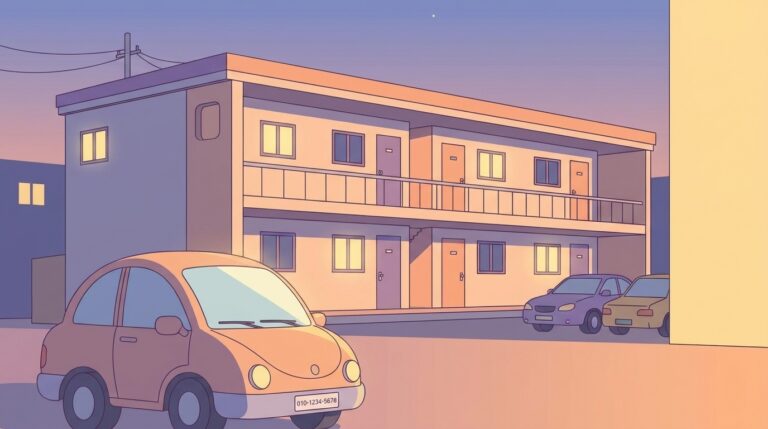
Picture this: You have just survived a grueling workday in Seoul, battling the subway crowds during peak rush hour. Your feet are aching, and all you want to do is park your car, head upstairs to your apartment, kick off your shoes, and collapse into bed with a hot bowl of ramyeon. But as you pull into your villa or apartment complex, your heart sinks. Right in your private, assigned spot (지정 주차 자리) sits a sleek silver sedan that definitely does not belong to you.
Your blood pressure spikes. In many countries, you might immediately call a tow truck or leave an angry note. But in Korea, you walk up to the car, peer through the windshield, and spot a small acrylic card displaying a phone number. Now comes the real challenge: your stomach knots up because you have to actually call a total stranger and ask them to move their car—in polite, natural Korean.
Over the past decade, so many of my expat students have told me that this exact scenario is their ultimate Korean nightmare. Calling a stranger on the phone can be intimidating enough, but navigating confrontation without sounding rude or causing an awkward neighborhood conflict requires real finesse. Don’t worry! Today, we are breaking down the exact phrases, cultural manners, and psychological tricks you need to handle this situation smoothly, confidently, and with pure Korean nunchi.
Phase 2: 3 Core Expressions Breakdown
1. 제 지정 주차 자리에 차가 세워져 있어서요 (Je jijeong jucha jarie chaga sewojyeo isseoseoyo)
- Pronunciation: Je jee-jeong joo-cha ja-ree-eh cha-ga seh-wo-jyeo ee-ssuh-suh-yo. (Sound analogy: Think of sewo like saying “say-woah” quickly, ending with a soft, trailing -suh-yo).
- Meaning: Literal: “Because a car is parked in my designated parking spot…” | Real Nuance: “Hi, I’m calling because someone (you) is parked in my assigned space.”
- K-Culture Moment: Seen constantly in neighborhood slice-of-life K-dramas (like My Liberation Notes or Reply 1988), where crowded alleyway parking leads to daily phone negotiations.
- Editor’s Insight: Notice that the sentence ends with
-어서요 (-eoseoyo), which means “because…”. In Korean conversation, trailing off with an explanation softens the confrontation. Instead of commanding someone directly, you state the situation and let them infer the needed action. - Situation Spectrum: Casual: ⚠️ | Semi-formal: ✅ | Formal: ✅
- 🤔 Think About It: Why does Korean prefer soft, indirect causal endings rather than direct accusations like “You took my spot”?
2. 앞유리에 남겨두신 번호 보고 연락드렸습니다 (Apyurie namgyeodushin beonho bogo yeollakdeolyeossseumnida)
- Pronunciation: Ahp-yoo-ree-eh nahm-gyuh-doo-shin bun-ho bo-go yul-lahk-deul-yut-seum-nee-da. (Sound analogy: Yeollak blends smoothly into a double ‘L’ sound like “yul-lahk”).
- Meaning: Literal: “I saw the number you left on the front windshield and contacted you.” | Real Nuance: “I found your number on the dashboard, so that’s why I’m calling.”
- K-Culture Moment: When a character politely confirms identity in a drama before making a delicate neighborhood request.
- Editor’s Insight: Using the honorific verb
남겨두시다 (namgyeodushida)acknowledges that the driver was courteous enough to leave their contact info. It sets an amicable, collaborative tone right off the bat. - Situation Spectrum: Casual: 🚫 | Semi-formal: ⚠️ | Formal: ✅
- 🤔 Think About It: By crediting the other person for leaving their number, how does this honorific phrase diffuse immediate defensiveness?
3. 혹시 차를 조금만 이동해 주실 수 있을까요? (Hoksi chareul jogeumman idonghae jusil su isseulkkayo?)
- Pronunciation: Hohk-shee cha-reul joh-geum-mahn ee-dong-hae joo-sheel soo ee-sseul-kkah-yo? (Sound analogy: Hoksi sounds like “hawk-shee”, spoken with a tentative rise in intonation).
- Meaning: Literal: “By any chance, could you move the car just a little bit?” | Real Nuance: “Would you mind coming down and moving your car when you have a moment?”
- K-Culture Moment: The standard golden phrase heard across Korean residential parking lots every single evening.
- Editor’s Insight: The magic words here are
혹시 (hoksi - by any chance)and조금만 (jogeumman - just a little bit). Even if you need them to drive away entirely, asking them to move it “just a little bit” softens the psychological burden of the request. - Situation Spectrum: Casual: ⚠️ | Semi-formal: ✅ | Formal: ✅
- 🤔 Think About It: In your native language, do you also minimize requests (e.g., “just a tiny favor”) to maintain social harmony?
Phase 3: Textbook Korean vs. Real Korean
Situation 1: Asking the car owner to move their car
- 📖 교과서 한국어 (Textbook): 당신의 자동차를 지금 즉시 다른 곳으로 이동하십시오. (Dangsin-ui jadongchareul jigeum jeuksi dareun goseuro idonghasipsio. / Move your automobile to another location immediately.)
- 🗣️ 진짜 한국어 (Real-World): 저, 실례지만 차 좀 빼주실 수 있을까요? (Jeo, sillyejiman cha jom bpaejusil su isseulkkayo? / Excuse me, but could you please pull your car out?)
- 💡 왜 다를까? (Why the difference?): Using
당신 (dangsin)sounds aggressive or hostile in spoken Korean, and textbook commands sound like an automated emergency broadcast. Real locals use차 좀 빼주다 (cha jom bpaejuda)(literally: “pull the car out a bit”), which sounds natural and polite.
Situation 2: Reporting an unauthorized car to the building management office
- 📖 교과서 한국어 (Textbook): 관리실 직원님, 등록되지 않은 불법 주차 차량을 견인 조치해 주십시오. (Gwallisil jikwon-nim, deungnokdoeji aneun bulbeop jucha charyangeul gyeonin jochihye jusipsio. / Building staff member, please take action to tow this unregistered illegally parked vehicle.)
- 🗣️ 진짜 한국어 (Real-World): 안녕하세요 관리실이죠? 제 자리에 등록 안 된 차가 서 있어서 그런데, 확인 한 번만 부탁드려요. (Annyeonghaseyo gwallisil-ijyo? Je jarie deungnok an doen chaga seo isseoseo geureonde, hwagin han beonman butakdeuryeoyo. / Hello, is this the management office? There’s an unregistered car in my spot, so could you please check it out?)
- 💡 왜 다를까? (Why the difference?): In Korean apartment communities, towing is rare and reserved for extreme cases. Neighbors rely on the security or management office (
관리실 / 관리사무소) to run the license plate and make an internal announcement or call first.
Phase 4: K-Culture Deep Dive & Non-Verbal Manners
4-1. Nunchi & Phone Etiquette
When calling someone from their windshield phone number, initial tone is everything.
* The Hesitation Breath: Never shout into the phone. Start with a soft, slightly hesitant “저… 안녕하세요? (Jeo… annyeonghaseyo?)”. This subtle pause signals that you are not calling in pure anger, but rather with a reasonable request.
* Check Identity Delicately: Instead of asking “Are you the owner of car 1234?”, say: “혹시 12가 3456 차주분 되실까요? (Hoksi 12-ga 3456 chaju-bun doesilkkayo? / Might you be the owner of car 12-ga 3456?)”. The suffix -분 (-bun) is the polite counterpart to 사람 (person).
4-2. The Windshield Phone Number Culture
In Western countries, leaving your personal mobile phone number clearly visible on your dashboard might feel like a massive privacy risk. In South Korea, however, it is virtually mandatory social etiquette.
Due to high population density and limited space, double parking (이중주차) and tight residential parking lots are daily realities. Displaying a 주차 번호판 (jucha beonhopan) on your front windshield proves that you are a responsible member of the collective community. If someone blocks a spot without leaving a phone number, it is considered a severe social faux pas!
Phase 5: Real-World Roleplay Scenario
Setting: 8:15 PM on a chilly Tuesday in Mapo-gu. You have returned to your villa parking lot. A black SUV is parked right under your unit’s designated sign. You call the windshield number.
Characters: You (Resident) & Mr. Park (the car owner, visiting a friend in building 201).
- Turn 1 (Phone rings twice, picks up)
- Mr. Park: 여보세요? (Yeoboseyo? / Hello?)
- 🎭 행동 지문: [Speaking in a slightly rushed, curious tone]
- Turn 2
- You: 아, 안녕하세요! 혹시 34나 7890 차주분 맞으실까요? (A, annyeonghaseyo! Hoksi 34-na 7890 chaju-bun majeusilkkayo? / Ah, hello! By any chance, are you the owner of vehicle 34-na 7890?)
- 🎭 행동 지문: [Speaking calmly and politely into your smartphone]
- Turn 3
- Mr. Park: 네, 맞는데요. 무슨 일이시죠? (Ne, manneundeyo. Museun irisijyo? / Yes, that’s me. What’s going on?)
- 🎭 행동 지문: [Background noise of an apartment hallway]
- Turn 4
- You: 늦은 시간에 죄송한데요, 앞유리에 남겨두신 번호 보고 연락드렸어요. (Neujeun sigane joesonghandeyo, apyurie namgyeodushin beonho bogo yeollakdeolyeosseoyo. / Sorry to bother you late in the evening; I saw the number you left on your windshield and am contacting you.)
- 🎭 행동 지문: [Looking down at the dashboard while speaking]
- Turn 5
- Mr. Park: 아, 네네! 혹시 차 때문에 그러시나요? (A, nene! Hoksi cha ttaemune geureosinayo? / Ah, yes! Is it regarding the car?)
- 🎭 행동 지문: [Tone immediately shifts to apologetic realization]
- Turn 6
- You: 네, 여기가 제 지정 주차 자리라서요. 혹시 차 좀 빼주실 수 있을까요? (Ne, yeogiga je jijeong jucha jariraseoyo. Hoksi cha jom bpaejusil su isseulkkayo? / Yes, this happens to be my designated parking spot. Would you mind pulling your car out?)
- 🎭 행동 지문: [Smiling gently to keep your voice warm]
- Turn 7
- Mr. Park: 아이고, 죄송합니다! 친구 집에 짐 잠깐 올려놓느라 세워뒀어요. 지금 바로 내려갈게요! (Aigo, joesonghamnida! Chingu jibe jim jamkkan ollyeononneura seowodwosseoyo. Jigeum baro naeryeogalke-yo! / Oh my goodness, I am so sorry! I just stopped to carry some heavy luggage up to a friend’s house. I will be down right away!)
- 🎭 행동 지문: [Sound of car keys jingling as he heads to the elevator]
- Turn 8
- You: 네, 감사합니다. 천천히 조심히 내려오세요. (Ne, gamsahamnida. Cheoncheonhi josimhi naeryeo-oseyo. / Yes, thank you. Take your time and come down safely.)
- 🎭 행동 지문: [Nodding softly and ending the call]
🔀 Interactive Decision Fork
What should you say if the driver replies: “I’m having dinner right now, can I move it in 30 minutes?”
- Option A: “죄송하지만 제가 지금 주차를 해야 해서요. 번거로우시겠지만 지금 이동 부탁드립니다.” (Best Choice)
- Feedback: Perfect! Polite, acknowledges the inconvenience (
번거로우시겠지만), but sets a firm boundary that you need your designated spot immediately.
- Feedback: Perfect! Polite, acknowledges the inconvenience (
- Option B: “야! 내 자리니까 당장 나와서 빼!” (Bad Choice)
- Feedback: Extremely aggressive! Using banmal (informal speech) and commanding them will instantly escalate into a heated shouting match or police report.
- Option C: “네, 그럼 30분 뒤에 내려오세요…” (Risk Choice)
- Feedback: Too passive. You risk waiting in your car in the cold for 45 minutes or longer, and the driver might take advantage of your reluctance to speak up.
Phase 6: 10-Second Emotional Shadowing Drill
Practice these lines out loud with the emotional cadence marks and breath breaks (/).
[🙏 정중하고 조심스럽게 - Polite and gentle]- 저, 실례지만 / 앞유리 번호 보고 / 연락드렸는데요. / (Jeo, sillyejiman / apyuri beonho bogo / yeollakdeolyeonneundeyo.)
- Rhythm tip: Keep the pitch slightly high on sillyejiman, and drop slightly at the end.
[🚗 차분하지만 단호하게 - Calm yet firm]- 여기가 / 제 지정 자리라서 그런데 / 차 좀 이동해 주실 수 있나요? / (Yeogiga / je jijeong jariraseo geureonde / cha jom idonghae jusil su innayo?)
- Rhythm tip: Stress jijeong jari (designated spot) without shouting.
[😊 안도하며 훈훈하게 - Relieved and warm]- 네, 알겠습니다. / 날씨 추운데 / 조심히 내려오세요! / (Ne, algessseumnida. / Nalssi chuunde / josimhi naeryeoo-seyeo!)
- Rhythm tip: Speak with a smile in your vocal cords to leave a friendly impression.
Phase 7: K-Culture Mini Dictionary
- 지정주차 (Jijeong-jucha) | Reserved / Designated Parking
- Context: Common in villas (빌라) and officetels (오피스텔) where each household is assigned one numbered slot or labeled with their unit number (e.g., 302호).
- 주차 번호판 (Jucha beonhopan) | Dashboard Parking Phone Card
- Context: The small display plate placed inside windshields. Many drivers use disposable QR safety numbers (안심번호) now to protect privacy while staying reachable.
- 이중주차 (Ijung-jucha) | Double Parking
- Context: Parking in front of other parked cars in crowded lots. Crucial rule: leave your car in Neutral (N gear) and release the parking brake so others can push it!
- 관리사무소 (Gwalli-samuso) | Building Management Office
- Context: The official administrative hub of an apartment complex. If a parking dispute escalates or a car has no phone number, they are your first line of mediation.
Phase 8: Expat & Traveler Survival Kit
3 Critical Survival Lines
- 차에 전화번호가 없어요. (Chae jeonhwabeonhoga eopseoyo.)
- Pro Tip: Use this when calling the security desk: “There is no phone number on the car.”
- 주차 등록 스티커가 안 붙어 있어요. (Jucha deungnok seutikeoga an buteo isseoyo.)
- Pro Tip: “The apartment parking permit sticker is not attached.” Essential for distinguishing unauthorized visitor cars.
- 언제쯤 내려오실 수 있으세요? (Eonjejjeum naeryeoosil su isseuseyo?)
- Pro Tip: “Around what time will you be able to come down?” A polite way to pin down a specific timeframe without sounding pushy.
Editor’s Travel & Living Note
If you find yourself stuck without parking in Korea, do not risk taking a resident’s spot. Instead, use navigation and parking apps like the Kakao T app download guide or search via Naver Map parking filters by typing 공영주차장 (gong-yeong juchajang - public parking lot). Public lots are affordable, secure, and accept card payments at automated kiosks.
Phase 9: “One Step Deeper” (Cultural Reflection)
In Western urban planning, strict legal individualism dominates: you pay for private space, and unauthorized parking is a property violation solved by towing agencies. South Korea, however, balances high-density living with a deeply rooted tradition of communal interdependence. The ubiquity of phone numbers on windshields represents an unwritten social pact: “I may temporarily inconvenience you, but I trust you to call me, and I promise to apologize and fix it immediately.” It turns a potential legal clash into a neighborly interaction.
💬 Your Turn: Would you feel comfortable leaving your phone number on your car dashboard in your home country? Share your thoughts and parking stories in the comments below!
Phase 10: FAQ & Common Mistakes
Q: What should I do if there is no phone number on the windshield?
A: Do not leave an abusive note or scratch the car. Instead, take a clear photo of the license plate and the car parked in your designated spot, then walk to your building’s security guard station (경비실) or call the management office (관리사무소). They can check building registration records or broadcast an in-building announcement.
Q: Can I just call a tow truck (견인차) right away?
A: In Korea, private towing companies generally cannot tow an unauthorized car off private residential villa property unless the local district office (구청) intervenes, which can take days. Direct communication or management mediation is almost always the fastest solution.
Q: What if the driver gets angry or refuses to move?
A: Keep calm and do not engage in an argument. Simply say, “그럼 관리사무소 통해서 이야기 나누겠습니다 (Geureom gwallisamuso tonghae iyagi nanugessseumnida / In that case, I will speak through the management office)” and hang up. Let the official building manager handle it.
🚨 Common Mistakes Warning Board
- Mistake: Greeting the caller with “야! (Hey!)” or “누구세요? (Who are you?)”.
- Correct Action: Always start with a polite “여보세요, 혹시 OOOO 차주분 되실까요?” to set a cooperative tone.
- Mistake: Forgetting to state your own location or spot number.
- Correct Action: Clearly mention your spot: “여기 102동 지정 자리인데요 (This is the reserved spot for building 102).”
- Mistake: Demanding instant compensation or fines.
- Correct Action: Focus strictly on getting the car moved (
차 이동). Korean parking disputes are solved through apologies and quick action, not roadside cash payouts.
- Correct Action: Focus strictly on getting the car moved (
Phase 11: Action Missions
- 🥉 Bronze Mission (Solo Shadowing): Stand in front of your mirror and practice the 3-sentence sequence: Greeting -> Stating your spot -> Asking them to move, timed under 15 seconds.
- 🥈 Silver Mission (Social Share): Share this guide with an expat friend living in Korea or post your favorite phrase on Instagram/Threads with the hashtag
#DailyHangulParking. - 🥇 Gold Mission (Real-World Execution): Next time you walk through a Korean parking lot, spot 3 dashboard phone numbers and mentally practice saying the license plate numbers in Korean!
🎮 K-Culture Mission: Watch an episode of a neighborhood K-drama (like Hospital Playlist or Welcome to Samdal-ri) and spot a scene where someone double-parks or calls a car owner. Note how fast they apologize!
Phase 12: Interactive Quiz Challenge
Question 1 (Situational): You arrived home and another car is in your designated spot. What is the most culturally appropriate first step?
A) Call 112 (Police) immediately
B) Check the front windshield for a contact phone number
C) Block their car with your own car and turn off your phone
Question 2 (Fill in the Blank): Complete the polite request:
“여기가 제 지정 자리라서 그런데, 혹시 차 좀 ( _______ ) 주실 수 있을까요?”
A) 팔아 (sell)
B) 빼 (pull out/move)
C) 사 (buy)
Question 3 (True or False): In Korea, double parking (이중주차) in crowded lots is acceptable if you leave your car in Neutral gear (N) with the handbrake disengaged and leave your phone number visible.
( True / False )
👉 Click to Check Answers & Explanations
- Answer: B. Checking for a windshield contact number is standard etiquette in Korea before taking any administrative steps.
- Answer: B (빼). The phrase “차 좀 빼주실 수 있을까요?” is the natural, idiomatic way to ask someone to move their car.
- Answer: True. This allows other drivers to gently push your car forward or backward so they can exit, which is a hallmark of Korean residential parking culture.
🎬 Watch Our Daily Videos! (Daily Hangul Official Instagram)
Review the expressions you learned in this article with our fun daily short videos! Check out native pronunciation and real-life nuances in action.
- Instagram @dailyhangul_en







