

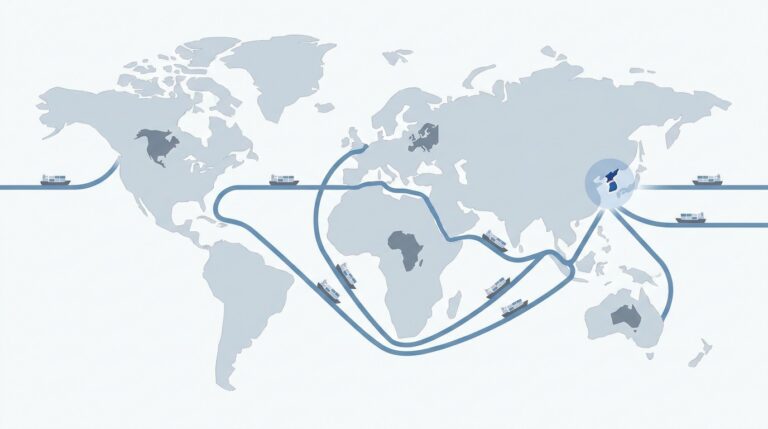
Mastering Global SCM Diversification and Geopolitical Risk Management in Korean
Phase 1: Empathy & Storytelling Opening
안녕하세요! 매일한글 에디터입니다. (Hello! This is your Daily Hangul editor.)
Picture this: You are sitting in an executive boardroom on the 32nd floor of a glass skyscraper in Yeouido, Seoul. Rain is drumming against the panoramic windows as monitors display fluctuating raw material commodity charts and geopolitical alerts. The Managing Director leans forward, furrows his brows, and points directly at the single-source dependency chart on the screen. The entire room goes dead silent. You need to present your countermeasure. If you were in a beginner class, you might scramble with: “외국에서 물건 안 와서 다른 나라 찾아요”—and watch the air leave the room.
In high-stakes Korean corporate environments—just like the gripping boardroom confrontations in K-Dramas like Misaeng (미생) or Reborn Rich (재벌집 막내아들)—communicating supply chain shifts isn’t just about translating logistical words; it’s about conveying strategic foresight, crisis agility, and cross-border resilience. Based on extensive coaching with multinational directors dealing with Korean conglomerates (대기업), this C1 masterclass is designed to help you articulate sophisticated SCM diversification strategies with boardroom gravitas and cultural poise.
Phase 2: Core Expressions Deep Dive
1. 특정 국가에 편중된 공급망을 다변화했습니다. (Teukjeong gukgae pyeonjungdoen gonggeupmang-eul dabyeonhwahaessseumnida.)
- Pronunciation: [Teuk-jeong guk-gae pyeon-jung-doen gong-geup-mang-eul da-byeon-hwa-haet-seum-ni-da] (Think of pyeon-jung like ‘pure-un-joong’ with an abrupt, analytical stop).
- Meaning: “We diversified our supply chain, which was heavily tilted toward a specific country.”
- K-Culture Moment: In corporate dramas like Agency (대행사), when executives explain to the board how they insulated production from unilateral export restrictions.
- Editor’s Insight: The Sino-Korean word 편중 (偏重, pyeonjung) implies an unhealthy, lopsided dependency. Pairing it with 다변화 (多邊化, dabyeonhwa – multilateral diversification) sounds analytical, decisive, and executive-level.
- Situation Spectrum: Casual: 🚫 | Semi-formal: ⚠️ | Formal: ✅
- 🤔 Think About It: In English, we often say “We de-risked our single-source supply.” How does the Korean contrast between ‘편중’ (skewedness) and ‘다변화’ (multi-sided transformation) reflect systemic balance?
2. 리스크 분산 차원에서 조달처 이원화 체제를 구축했습니다. (Liseukeu bunsan cha-woneseo jodalcheo iwonhwa cheje-reul guchukhaessseumnida.)
- Pronunciation: [Ri-seu-keu bun-san cha-won-e-seo jo-dal-cheo i-won-hwa che-je-reul gu-chuk-haet-seum-ni-da] (Pronounce i-won-hwa swiftly, linking ‘i’ and ‘won’ seamlessly).
- Meaning: “We established a dual-sourcing framework to disperse operational risks.”
- K-Culture Moment: A chief procurement officer briefing an audit team on how critical semiconductor components will no longer rely solely on a single overseas factory.
- Editor’s Insight: 조달처 (procurement source) and 이원화 (dualization) are classic C1 business terms. Using ~차원에서 frames the initiative as a high-altitude strategic philosophy rather than an impulsive reaction.
- Situation Spectrum: Casual: 🚫 | Semi-formal: ⚠️ | Formal: ✅
- 🤔 Think About It: Why do Korean organizations favor systemic terms like 체제 구축 (system architecture) when describing procedural risk buffers?
3. 지정학적 불확실성에 선제적으로 대응하고 있습니다. (Jijeonghakjeok bulhwaksilseong-e seonjejeog-euro dae-eunghago itsseumnida.)
- Pronunciation: [Ji-jeong-hak-jeok bul-hwak-sil-seong-e seon-je-jeog-eu-ro dae-eung-ha-go it-seum-ni-da] (Emphasize the crisp seon-je to project proactive control).
- Meaning: “We are proactively responding to geopolitical uncertainties.”
- K-Culture Moment: A strategic crisis team meeting during an international sanctions shockwave in a high-tension business thriller.
- Editor’s Insight: 선제적 (先制的, preemptive/proactive) is the ultimate corporate buzzword that instantly builds leadership confidence. It demonstrates that you dictate the rhythm of events rather than merely enduring disruptions.
- Situation Spectrum: Casual: 🚫 | Semi-formal: ⚠️ | Formal: ✅
- 🤔 Think About It: Contrast ‘선제적 대응’ (preemptive response) with simple ‘대비’ (preparation). Notice how the former paints an active, commanding posture.
Phase 3: Textbook Korean vs. Real Korean
Scenario 1: Proposing to stop purchasing from only one foreign supplier
- 📖 교과서 한국어: 한 나라에서만 원자재를 사면 위험하니까 다른 나라에서도 사야 합니다. (Han nara-eseoman wonjajae-reul samyeon wiheomhanikka dareun nara-eseodo saya hamnida. / Because buying raw materials from only one country is dangerous, we must buy from other countries too.)
- 🗣️ 진짜 한국어: 특정국 익스포저를 완화하기 위해 원자재 조달 파이프라인의 다각화를 추진해야 합니다. (Teukjeong-guk ikseupojo-reul wanhwahagi wihae wonjajae jodal paipeulain-ui dagakhwa-reul chujinhaeya hamnida. / To mitigate specific-country exposure, we need to push forward the diversification of our raw material procurement pipeline.)
- 💡 왜 다를까? Executive Korean replaces clunky conditionals (~하면 위험하니까) with sleek financial nouns like 익스포저 완화 (exposure mitigation) and 파이프라인 다각화 (pipeline diversification).
Scenario 2: Explaining a delivery delay due to trade regulations
- 📖 교과서 한국어: 상대국 정부 규제 때문에 물건이 늦게 도착할 것 같습니다. (Sangdaeguk jeongbu gyuje ttaemune mulgeon-i neutge dochakhal geot gatseumnida. / Things will likely arrive late because of the other country’s government regulations.)
- 🗣️ 진짜 한국어: 대외 통상 규제 강화로 인한 공급망 병목 현상으로 납기 지연이 불가피한 상황입니다. (Dae-oe tongsang gyuje ganghwa-ro inan gonggeupmang byeongmok hyeonsang-euro napgi jiyeon-i bulgahpihan sanghwang-imnida. / Due to supply chain bottlenecks caused by intensified foreign trade regulations, delivery delays are currently unavoidable.)
- 💡 왜 다를까? Professional business communication in Korea minimizes subjective blame and objectively characterizes logistical realities (병목 현상, 납기 지연) using formal Sino-Korean causal markers (~로 인한).
Phase 4: K-Culture Deep Dive & Non-Verbal Manners
4-1. 눈치 (Nunchi) & Boardroom Physicality
When presenting supply chain vulnerabilities in a Korean conference room, humility and collective responsibility must anchor your stance:
* Open Palm Gesture (손바닥 제스처): Never point fingers at the screen or individuals when discussing operational bottlenecks. Instead, use an open, upturned palm angled toward the data chart.
* Attuned Cadence: Regulate your speech tempo. Speaking too fast when presenting crises signals panic. Deliver your solution with grounded, measured pitch to display crisis resilience (위기 관리 역량).
* The Alignment Nod (공감의 끄덕임): When the managing director validates your concerns, sustain brief eye contact, followed by a subtle, respectful nod, indicating collective strategic alignment.
4-2. Cultural Code Analysis: The Spirit of “위기 극복” (Crisis Overcoming)
Korea’s economic transformation is steeped in the cultural DNA of overcoming crises—from the 1997 Asian Financial Crisis to recent global semiconductor wars. In Korean corporate discourse, highlighting geopolitical risk is never seen as whining; rather, framing it as an opportunity for structural upgrading (체질 개선) marks you as an executive-tier leader. When you use words like 선제적 체질 개선 (preemptive structural reform), you tap into this deeply revered corporate narrative.
Phase 5: Real Roleplay Scenario
- Setting: Pangyo Tech Valley HQ, Global Logistics Strategy Room.
- Character: Managing Director Park (박 전무 – veteran trade strategist, demanding, highly analytical).
-
Turn 1 (Director Park): 이번 분기 희토류 수급 동향 보고서 봤습니까? 특정 지역 의존도가 여전히 85%에 육박합니다. (Ibeon bungi huitoryu sugeup donghyang bogoseo bwasseumnikka? Teukjeong jiyeok uijondoga yeojeonhi palsibo-peosenteue yukbakhamnida. / Have you reviewed this quarter’s rare earth procurement report? Our reliance on a specific region still approaches 85%.)
🎭 날카로운 눈빛으로 차트를 두드리며 -
Turn 2 (You): 네, 전무님. 단일 조달처 편중으로 인한 지정학적 리스크를 심각하게 인지하고 있습니다. (Ne, jeonmunim. Dan-il jodalcheo pyeonjung-euro inan jijeonghakjeok liseukeu-reul simgakhage injihago itsseumnida. / Yes, Director. We keenly recognize the geopolitical risk stemming from this single-source skew.)
🎭 차분하게 고개를 끄덕이며 태블릿 프레젠테이션을 전환하며 -
Turn 3 (Director Park): 인지만 하고 있으면 됩니까? 공급선 단절 사태라도 터지면 전 생산 라인이 올스톱됩니다. (Injiman hago isseumyeon doemnikka? Gonggeupseon danjeol sataerado teojimyeon jeon saengsan rain-i ol-seutop-doemnida. / Is mere awareness enough? If a supply severance occurs, all production lines will halt completely.)
🎭 팔짱을 끼고 미간을 찌푸리며 -
Turn 4 (You): 이에 대응하고자 동남아 및 호주 권역으로 공급망 다변화를 추진하고 있습니다. (I-e dae-eunghagoja dongnama mit hoju gwonyeog-euro gonggeupmang dabyeonhwa-reul chujinhago itsseumnida. / In response, we are pursuing supply chain diversification across Southeast Asia and Australia.)
🎭 명확하고 흔들림 없는 음성으로 -
Turn 5 (Director Park): 신규 공급처 확보 시 수율 안정화와 단가 상승 문제는 어떻게 헤지할 생각입니까? (Sin-gyu gonggeupcheo hwakbo si suyul anjeonghwawa danga sangseung munje-neun eotteoke hejihal saenggak-imnikka? / How do you plan to hedge against yield stabilization delays and unit cost hikes with these new suppliers?)
🎭 펜 끝으로 테이블을 톡톡 두드리며 질문을 던진다 -
Turn 6 (You): 1차적으로 쿼터 분할 계약을 맺고, 단계적 기술 협력을 통해 듀얼 벤더 체제를 안착시킬 계획입니다. (Ilchajeog-euro kwoteo bunhal gyeyag-eul maetgo, dangyejeok gisul hyeopnyeog-eul tonghae dyueol bendeo cheje-reul anchaksikil gyehoek-imnida. / We plan to first execute quota-split contracts, then stabilize a dual-vendor architecture via phased technical collaboration.)
🎭 양손을 모으고 로드맵 슬라이드를 가리키며 -
Turn 7 (Director Park): 초기 비용 상승을 감수하더라도 공급 안정성을 최우선으로 하겠다는 뜻이군요. (Chogi biyong sangseung-eul gamsuhadeorado gonggeup anjeongseong-eul choe-useon-euro hagetdaneun tteus-igunyo. / You mean we should prioritize supply stability even if it incurs initial cost increases.)
🎭 안경을 고쳐 쓰며 납득한 표정을 짓는다 -
Turn 8 (You): 맞습니다. 장기적인 지정학적 불확실성을 상쇄하기 위한 불가피한 투자입니다. (Matseumnida. Janggijeogin jijeonghakjeok bulhwaksilseong-eul sangswehagi wihan bulgahpihan tuja-imnida. / Exactly. It is an indispensable strategic investment to offset long-term geopolitical uncertainties.)
🎭 확신에 찬 어조로 고개를 숙이며
🔀 Interactive Decision Branch
How do you handle Director Park’s question in Turn 5 about unit cost increases?
* Option A: “단기적 마진 감소는 불가피하지만, 공급망 붕괴라는 치명적 리스크를 선제적으로 방어하는 보험으로 판단해 주십시오.” (Though short-term margin shrinkage is unavoidable, please evaluate this as an insurance premium that preemptively hedges against catastrophic supply failure.)
Evaluation: Best Choice. Perfectly balances financial realism with long-term strategic resilience.
* Option B: “돈이 더 들더라도 그냥 다른 나라에서 사 오는 게 안전하지 않겠습니까?” (Even if it costs more money, wouldn’t it just be safer to buy from another country?)
Evaluation: Bad Choice. Far too colloquial and lacks executive metric justification.
* Option C: “납품 단가를 이전 수준으로 깎아줄 때까지 협상을 전면 보류하겠습니다.” (We will completely freeze negotiations until they cut supplier unit prices back down.)
Evaluation: Risk Choice. Ignores current supplier leverage and geopolitical shortages, risking supply cutoff.
Phase 6: 10-Second Emotion Shadowing Drill
- Sentence 1
[💼 단호하고 신뢰감 있게 / Firm and Authoritative]:
특정 국가 의존도를 낮추기 위해 / 글로벌 공급망을 / 신속히 다변화했습니다.
(Teukjeong gukga uijondoreul natchugi wihae / geullobeol gonggeupmang-eul / sinsokhi dabyeonhwahaessseumnida.) -
Sentence 2
[📊 전략적이고 침착하게 / Strategic and Measured]:
지정학적 리스크 관리를 위해 / 조달처 이원화 체제를 / 선제적으로 구축하고 있습니다.
(Jijeonghakjeok liseukeu gwanri-reul wihae / jodalcheo iwonhwa cheje-reul / seonjejeog-euro guchukhago itsseumnida.) -
Sentence 3
[🛡️ 단단한 설득력으로 / Convincing and Resilient]:
원자재 수급 불확실성에 대응하여 / 대체 공급선을 / 조기에 확보 완료했습니다.
(Wonjajae sugeup bulhwaksilseong-e dae-eunghayeo / daeche gonggeupseon-eul / jogie hwakbo wanryohaessseumnida.)
Phase 7: K-Culture Mini Dictionary
- 수급 차질 (Sugeup chajil) | Supply and demand disruption
Context: Used constantly in economic headlines and internal memos whenever external bottlenecks impede the inflow of raw parts. - 조달처 다각화 (Jodalcheo dagakhwa) | Sourcing channel diversification
Context: Applied when moving away from a single supplier model toward multi-region vendor networks. - 탈피 (Talpi) | Breaking free / outgrowing a state of dependency
Context: Combined as 단일 의존도 탈피 (shedding single dependency), metaphorically shedding an old skin. - 선제적 조치 (Seonjejeok jochi) | Preemptive action
Context: The quintessential corporate gold star phrase demonstrating proactive foresight before an official audit.
Phase 8: Business Traveler’s Survival Kit
Top 3 Executive Survival Phrases:
- 긴급 대체 공급선 확보 현황을 공유해 주시겠습니까? (Gingeup daeche gonggeupseon hwakbo hyeonhwang-eul gong-yuhye jusigesseumnikka? / Could you share the current status of securing emergency alternative suppliers?)
Pro Tip: Essential when visiting an overseas manufacturing branch facing local trade embargoes. - 지정학적 리스크 요인을 반영한 시뮬레이션 결과가 필요합니다. (Jijeonghakjeok liseukeu yoin-eul banyeonghan simyulleisyeon gyeolgwaga piryohamnida. / We require simulation results incorporating geopolitical risk factors.)
Pro Tip: Use during strategy sprint meetings to demand quantitative risk scenarios. - 듀얼 벤더 체제 도입에 따른 코스트 분석 자료입니다. (Dyueol bendeo cheje do-ib-e ttareun koseuteu bunseok jaryo-imnida. / Here is the cost-benefit analysis regarding the implementation of our dual-vendor system.)
Pro Tip: Perfect handoff phrase when distributing slide decks to finance directors.
Editor’s Travel Note:
When coordinating high-level supply meetings in South Korea, punctuality across transport arteries is non-negotiable. Ensure you arrange executive transportation seamlessly using the Naver Map transportation route planner to track real-time highway express bus and KTX corporate bookings, avoiding transit bottlenecks before your boardroom pitch.
Phase 9: “한 발 더 깊이” (Deep Cultural Thought)
South Korea’s geographic reality—surrounded by continental powers and reliant on maritime trade—has historically forced its industries to master trade diplomacy under extreme constraints. In Korean business philosophy, vulnerability is never considered an excuse for failure; instead, “공급망 안정화” (supply chain stabilization) is treated as a foundational civic and corporate virtue. When you advocate for supply chain diversification in Korean, you are speaking directly to a collective corporate intuition that equates strategic flexibility with national survival.
💬 Your Turn: Has your industry faced sudden supply chain shifts due to international trade barriers? How would you articulate your backup sourcing plan in Korean? Share your sentences below!
Phase 10: FAQ & Misconception Prevention
Q: Can I just use the English word ‘Diversification’ during Korean presentations?
A: While Korean business professionals frequently use English loanwords, pronouncing it simply as 다각화 (dagakhwa) or 다변화 (dabyeonhwa) conveys significantly sharper precision and intellectual command in formal board environments.
Q: What is the exact difference between ‘다변화’ (dabyeonhwa) and ‘다각화’ (dagakhwa)?
A: 다변화 (多邊化) emphasizes diversifying geographical directions or trading partners (e.g., procurement regions), whereas 다각화 (多角化) is broader and often applies to business portfolios, products, or service lines.
Q: Is saying ‘문제가 생겼습니다’ acceptable when reporting a supplier freeze?
A: It is grammatically correct but culturally inadequate for C1 business. Use 수급 불안정성이 대두되었습니다 (Supply instability has come to the fore) or 공급망 이슈가 발생했습니다 to sound professional and analytical.
🚨 Common Mistakes Alert
- Saying 원자재를 다른 데서 사기로 바꿨어요:
Correction: Use 원자재 조달처를 다변화했습니다. Elevate your verbs from casual shopping terms (사다) to procurement jargon (조달하다). - Confusing 이원화 (Dualization) with 이원론 (Dualism):
Correction: Dual-sourcing is 이원화 체제. 이원론 is a philosophical doctrine regarding mind and matter! - Overusing 위험해요 in official memos:
Correction: Replace emotional descriptors with 지정학적 리스크 요인이 상존합니다 (Geopolitical risk factors persist).
Phase 11: Action Missions
- Bronze Mission (Solo Mastery): Practice shadowing Phase 6’s three sentences aloud 5 times each, emphasizing the rhythm stops marked by
/. - Silver Mission (Social Challenge): Write down your company’s core product and post one Korean sentence describing your backup sourcing strategy in the comments.
- Gold Mission (Real Boardroom Pitch): The next time you discuss supply chain friction, deliver the phrase “지정학적 리스크 분산 차원에서 조달처를 다각화했습니다” smoothly without looking at your notes.
- 🎮 K-Culture Mission: Watch Episode 3 of Misaeng (미생) and note how trading managers negotiate logistics contracts when overseas container shipping rates fluctuate.
Phase 12: Interactive Quiz Challenge
- Situational Judgment: If your company is too dependent on one rare earth supplier and you must recommend a dual-sourcing model to the vice president, which sentence sounds most executive?
- A) 다른 데서도 물건을 좀 사야 합니다.
- B) 단일 공급처 리스크를 상쇄하기 위해 조달처 이원화를 추진해야 합니다.
- C) 위험하니까 아무 나라나 계약합시다.
- Fill in the Blank:
특정 국가에 __________ 공급망 구조에서 탈피하여 글로벌 대체 공급선을 확보했습니다.
(We broke away from a supply chain structure that was _________ toward a specific country to secure global alternative supply lines.) -
True / False Cultural Check:
In Korean corporate reports, using Sino-Korean terms like 선제적 조치 (preemptive measures) reflects defensive passivity. (T / F)
👉 Click here to reveal the answers and explanations!
- Answer: B. Option B uses authoritative executive phrasing (단일 공급처 리스크 상쇄, 조달처 이원화 추진). Option A is elementary, while Option C is irresponsible.
- Answer: 편중된 (pyeonjungdoen – skewed/lopsided). The phrase 특정 국가에 편중된 is the standard business collocation for single-source vulnerability.
- Answer: False. 선제적 조치 means taking aggressive, proactive initiative before a problem worsens—highly lauded across Korean conglomerates.
🎬 Watch Our Daily Videos! (Daily Hangul Official Instagram)
Review the expressions you learned in this article with our fun daily short videos! Check out native pronunciation and real-life nuances in action.
- Instagram @dailyhangul_en







