

Stop Saying You Are Happy: How to Express True Daily Joy Like a Real Korean
Phase 1: Empathy & Storytelling Opening
안녕하세요! (Annyeonghaseyo!) It is your Daily Hangul editor and your personal Korean cultural navigator.
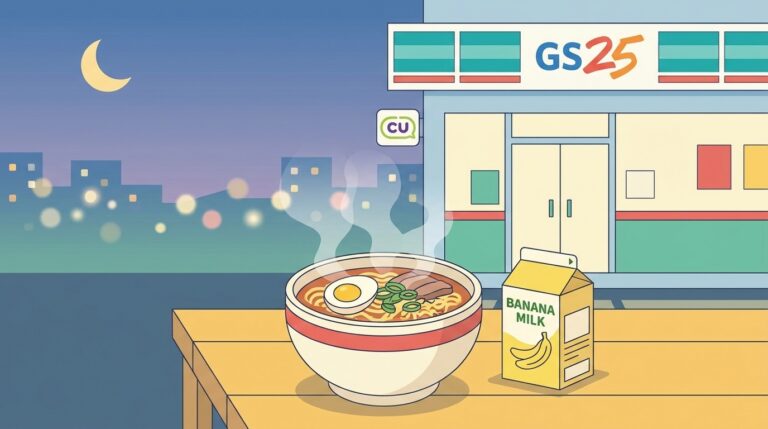
Picture this: It is a brisk autumn evening in Seoul. You just finished a long, walking-heavy day exploring the stone walls of Gyeongbokgung Palace. Your feet are tired, and the chill is starting to bite your fingers. You step into a warm, glowing GS25 convenience store, buy a steaming can of sweet honey-black tea and a freshly microwaved bun, and sit down at the window counter overlooking the bustling street.
You take a sip. Warmth rushes through your chest. You look at your Korean friend across the plastic table and want to say, “Ah, this is absolute bliss. It is the little things in life!”
But your mind freezes. What did chapter 3 of your beginner textbook teach you?
“저는 매우 행복합니다.” (Jeoneun maeu haengbokhamnida – I am very happy.)
You hesitate. If you say that out loud, you will sound like a 19th-century royal scholar reciting a diary entry! In English, we casually say “Life is good” or “This is heaven.” But in Korean, dropping heavy textbook words during casual moments creates an awkward wall. You want to sound natural, relaxed, and tuned into the Seoul vibe.
Good news: Koreans have created some of the most vibrant, cozy slang words specifically for these moments! Today, we are mastering the art of 소확행 (Sohwakhaeng)—the art of finding pure, certain happiness in life’s smallest pleasures. After coaching hundreds of absolute beginners just like you, I have curated the exact slang phrases native speakers use every day. By the end of this guide, you will celebrate your favorite treats and quiet moments just like a born-and-raised Seoulite.
Phase 2: Core 3 Expressions Deep Dive
Here are the top three expressions you must know whenever you feel wonderful about the small things.
1. 소확행이 따로 없어요 (Sohwakhaeng-i ttaro eopseoyo)
- Pronunciation: [Sohwakhaeng-i ttaro eopseoyo] (Sound analogy: Think “So” as in sewing, “hwak” like “whack!”, and “haeng” like “hang”. Then “tah-ro up-seo-yo”)
- Meaning: Literally “There is no separate small-but-certain happiness,” which actually translates to: “This is the definition of simple bliss!” or “It does not get better than this!”
- K-Culture Moment: You will hear this constantly on Korean healing variety shows like Three Meals a Day or travel vlogs whenever someone takes a bite of hot sweet potatoes on a chilly porch.
- Editor’s Insight: 소확행 (Sohwakhaeng) is an abbreviation of 소소하지만 확실한 행복 (small but certain happiness). Adding “-i ttaro eopseoyo” means you do not need to look anywhere else for happiness because this exact moment right here is it.
- Situation Spectrum: Casual ✅ | Semi-formal ✅ | Formal ⚠️
- 🤔 Think About It: Does your language have a single buzzword for finding delight in tiny, inexpensive moments, or do you usually focus on big milestones like promotions and vacations?
2. 힐링돼요 (Hilling-dwaeyo)
- Pronunciation: [Hil-ling-dwae-yo] (Sound analogy: Pronounce “healing” crisply, followed by “dweh-yo”)
- Meaning: Literally “It becomes healing,” meaning “This is so therapeutic” or “I feel completely rejuvenated.”
- K-Culture Moment: Whenever K-Pop idols go on vacation reality shows and lounge by a quiet lake listening to acoustic music, they lean back and whisper this exact word to the camera.
- Editor’s Insight: Koreans turned the English noun “healing” into a lifestyle verb! It does not mean recovering from an injury; it describes anything that washes away mental burnout—a warm beverage, a purring cat, or a quiet park bench.
- Situation Spectrum: Casual ✅ | Semi-formal ✅ | Formal ⚠️
- 🤔 Think About It: Why do you think a hyper-fast society like South Korea adopted the English word “healing” as a daily staple for mental unwinding?
3. 대박 좋아요 (Daebak joayo)
- Pronunciation: [Dae-bak jo-a-yo] (Sound analogy: “Dae” rhymes with “bed”, “bak” sounds like “bark” without the r, followed by “joe-ah-yo”)
- Meaning: Literally “Jackpot good,” meaning “This is totally awesome!” or “I love this so much!”
- K-Culture Moment: Seen in nearly every K-Drama when a character unexpectedly finds their favorite snack in the fridge after an exhausting day at the office.
- Editor’s Insight: You probably already know 대박 (Daebak) as an exclamation for “Wow!” Pairing it with 좋아요 (joayo – it is good) turns an ordinary beginner phrase into an energetic, youthful reaction.
- Situation Spectrum: Casual ✅ | Semi-formal ✅ | Formal 🚫
- 🤔 Think About It: How does combining an energetic slang word like “daebak” with polite sentence endings change the friendliness of your conversation?
Phase 3: Textbook Korean vs. Real Korean
Let us look at how real Seoul locals talk compared to traditional beginner classroom materials.
Situation 1: Relaxing in a peaceful neighborhood cafe
- 📖 Textbook Korean: 저는 지금 매우 기쁩니다. (Jeoneun jigeum maeu gippeumnida. / I am very glad right now.)
- 🗣️ Real Korean: 와, 완전 힐링돼요! (Wa, wanjeon hilling-dwaeyo! / Wow, this is pure healing!)
- 💡 Why is it different? The textbook phrase sounds like an official speech. In real life, Korean speakers use sensory, emotional words like 완전 (wanjeon – totally) and 힐링 (hilling – healing) to share an authentic, cozy vibe.
Situation 2: Eating warm convenience store ramen late at night
- 📖 Textbook Korean: 이것은 작은 행복입니다. (Igeoseun jageun haengbok-imnida. / This is a small happiness.)
- 🗣️ Real Korean: 이게 진짜 소확행이죠! (Ige jinjja sohwakhaeng-ijyo! / This is what true simple happiness is all about!)
- 💡 Why is it different? Koreans love shared intimacy. Saying 소확행 (Sohwakhaeng) instantly signals that you appreciate the quiet beauty of ordinary life without sounding overly poetic or artificial.
Phase 4: K-Culture Deep Dive & Non-Verbal Manners
4-1. 눈치 (Nunchi) & Gestures
Expressing simple joy in Korea involves subtle, endearing body language:
* The Two-Hand Cup Cradle: When holding a warm beverage at a cafe or convenience store, wrap both hands around the cup and hold it close to your chest. It signals modesty, gratitude, and cozy contentment.
* The Gentle Eye Smile & Nod: Instead of throwing your arms up in loud celebration, close your eyes halfway, offer a soft smile, and give two gentle vertical nods while saying: “힐링돼요” (Hilling-dwaeyo).
* The Contented Exhale (크으~ Keuuu): Before speaking, let out a tiny, happy sigh of relief. This micro-sound shows your companions that the stress has officially left your body.
4-2. Culture Code: The “Sohwakhaeng” Movement
South Korea is famous for its fast-paced 빨리빨리 (ppalli-ppalli / hurry-hurry) lifestyle. For decades, success was measured in big, dramatic leaps: university admissions, high-paying corporate jobs, and purchasing real estate.
However, the younger generation sparked a cultural counter-movement known as 소확행 (Sohwakhaeng). Borrowed originally from a concept by Japanese author Haruki Murakami, Koreans transformed it into a modern survival philosophy. When buying an apartment in Gangnam feels unattainable, savoring a freshly baked egg tart, enjoying a cold can of draft beer along the Han River, or buying cute stationery becomes an accessible, guaranteed victory. By using this word, you show that you understand the modern Korean heart.
Phase 5: Real-Life Roleplay Scenario
Setting: It is 6:30 PM at Yeouido Hangul Park by the Han River. The sunset paints the water amber. You and your Korean college buddy, Minji, just rented a picnic mat and cooked instant foil-pan ramen from the riverfront convenience store.
- Minji: 날씨 진짜 좋다! 라면 냄새 대박이지?
(Nalssi jinjja jota! Ramyeon naemsae daebak-iji?)
🎭 [Points excitedly at the steaming bowl with her chopsticks]
“The weather is incredible! Doesn’t this ramen smell insane?” -
You: 와, 국물 진짜 맛있어요!
(Wa, gukmul jinjja masisseoyo!)
🎭 [Blows gently on the soup and takes a hot spoonful]
“Wow, the soup is seriously delicious!” -
Minji: 오늘 과제 때문에 스트레스 많았는데, 여기 오니까 살 것 같아.
(Oneul gwaje ttaemune seuteuleseu mananneunde, yeogi onikka sal geot gata.)
🎭 [Sighs happily and looks out at the sunset]
“I had so much stress from school homework today, but coming here makes me feel alive again.” -
You: 맞아요. 이런 게 진짜 소확행이 따로 없어요.
(Majayo. Ireon ge jinjja sohwakhaeng-i ttaro eopseoyo.)
🎭 [Smiles warmly while holding your warm beverage with both hands]
“Totally. Moments like this are the definition of simple bliss.” -
Minji: 맞아! 완전 힐링돼요. 바람도 시원하고.
(Maja! Wanjeon hilling-dwaeyo. Baramdo siweonhago.)
🎭 [Leans back comfortably on the picnic mat]
“Exactly! It is pure healing. And the breeze is so cool.” -
You: 대박 좋아요. 우리 자주 와요!
(Daebak joayo. Uri jaju wayo!)
🎭 [Nods happily with sparkling eyes]
“I love this so much. Let’s come here often!” -
Minji: 당연하지! 다음엔 치킨 시켜 먹자.
(Dangyeonhaji! Daeumen chikin sikyeo meokja.)
🎭 [High-fives you with a bright laugh]
“Of course! Next time let’s order fried chicken delivery.” -
You: 좋아요! 완벽해요.
(Joayo! Wanbyeokhaeyo.)
🎭 [Gives a cheerful thumbs-up]
“Sounds great! Perfect.”
🔀 Interactive Decision Point
Minji hands you an ice-cold sweet coffee pouch drink after finishing your spicy ramen. How do you respond?
- Option A: “저는 매우 행복합니다.” (Jeoneun maeu haengbokhamnida.)
- Option B: “와, 이게 진짜 소확행이죠! 고마워요!” (Wa, ige jinjja sohwakhaeng-ijyo! Gomaweoyo!)
- Option C: “대박 싫어요.” (Daebak sileoyo.)
Feedback:
* Choice A (Risk): While grammatically correct, Minji might giggle and ask if you are narrating an essay. It sounds stiff and robotic!
* Choice B (Best!): Perfect score! You used 소확행 naturally in context. Minji will be blown away by how natural and friendly you sound.
* Choice C (Bad): Be careful! “싫어요” (sileoyo) means “I hate it / I dislike it.” You would accidentally insult her sweet gesture!
Phase 6: 10-Second Emotion Shadowing Drill
Read these out loud! Pay attention to the pause markers (/) and embody the emotion tag in brackets.
[😊 Pure coziness & peace]
이런 게 / 진짜 / 소확행이 따로 없어요.
(Ireon ge / jinjja / sohwakhaeng-i ttaro eopseoyo.)
Pause slightly after ‘ge’ and ‘jinjja’ to savor the feeling.
“This right here… is true simple bliss.”-
[🌿 Deep exhale, releasing exhaustion]
따뜻한 차 마시니까 / 완전 / 힐링돼요.
(Ttatteutan cha masinikka / wanjeon / hilling-dwaeyo.)
Let out a gentle breath right before saying ‘hilling-dwaeyo’.
“Drinking warm tea… is so therapeutic.” -
[✨ Bright and enthusiastic]
오늘 날씨 / 대박 좋아요!
(Oneul nalssi / daebak joayo!)
Give a lively pitch bounce on ‘dae’ in ‘daebak’.
“The weather today… is totally awesome!”
Phase 7: K-Culture Mini Dictionary
Expand your street-smart Korean vocabulary with these 4 essential happiness terms:
- 소확행 (Sohwakhaeng)
- Meaning: Small but certain happiness.
- Daily Context: Used when finding a quiet cafe corner, eating freshly baked convenience store cookies, or slipping into clean bedsheets.
- 힐링 (Hilling)
- Meaning: Healing; mental relaxation and stress relief.
- Daily Context: Used when visiting nature, listening to calm lofi K-indie music, or receiving a warm compliment from a friend.
- 당 충전 (Dang Chung-jeon)
- Meaning: Sugar recharge / glucose boost.
- Daily Context: In the 3:00 PM office slump, when coworkers grab a boba tea or a sweet macaron together to regain energy.
- 꿀주말 (Kkul-ju-mal)
- Meaning: Honey weekend (a sweet, relaxing weekend).
- Daily Context: Sent on Friday evenings in KakaoTalk chatrooms: “꿀주말 보내세요!” (Have a sweet honey weekend!)
Phase 8: Traveler’s Survival Kit
TOP 3 Survival Phrases
- 이거 완전 힐링이에요! (Igeo wanjeon hilling-ieyo!)
Meaning: “This is so relaxing/therapeutic!”
Pro Tip: Say this to cafe owners or spa attendants when you are visibly enjoying their service. They will beam with pride. - 대박 맛있어요! (Daebak masisseoyo!)
Meaning: “This is insanely delicious!”
Pro Tip: Say this enthusiastically to a street food vendor at Gwangjang Market after trying hot bindaetteok (mung bean pancake). - 소확행 최고! (Sohwakhaeng choego!)
Meaning: “Small simple joys are the best!”
Pro Tip: Use this as your caption when posting cozy travel photos of street snacks or river sunsets on Instagram.
Editor’s Travel Note: Smooth Seoul Adventures
- Essential Navigation: Do not rely on Google Maps in South Korea, as walking routes are restricted by local privacy laws. Make sure you install the Naver Map navigation application on your smartphone before departing for Seoul. It offers English transit directions and accurate subway departure times down to the second.
- Convenience Store Dining Etiquette: When you enjoy your quick ramen at convenience store counters, look for the designated recycling bins near the door. Separate your liquid broth into the disposal bucket, throw the cup into paper/plastic bins, and wipe down your table spot with a tissue. That thoughtful gesture represents true Korean neighborhood manners!
Phase 9: “One Step Deeper” (Cultural Reflection)
In many Western cultures, happiness is framed around bold individual achievement—reaching personal goals, breaking barriers, or embarking on epic journeys. However, Korean sohwakhaeng reflects a collective yearning for emotional pause. In a country that industrialized faster than almost any nation in modern history, survival often meant constant competition. Finding joy in a warm sweet potato or watching river ripples is not giving up on ambition; it is a gentle, collective act of self-care. It whispers: “I survived today, and this little moment is enough.”
💬 Your Turn: What is your personal sohwakhaeng in your daily routine? Is it your morning latte, five minutes of quiet reading, or listening to your favorite K-Pop playlist on the train? Share your simple joy in the comments below!
Phase 10: FAQ & Common Mistakes
Q: Can I say “대박” (Daebak) to my university professor or older boss?
A: No, avoid it in formal situations! While 대박 is widely loved, it is still colloquial slang. Using it with professors, executives, or elderly strangers can sound overly casual or childish. Stick to “정말 좋습니다” (Jeongmal joseumnida – It is truly good) or “감사합니다” (Gamsahamnida) in high-stakes formal settings.
Q: Is “소확행” (Sohwakhaeng) considered an internet slang word that older people do not understand?
A: Not at all! Although it began as a trendy buzzword among young people, it was quickly adopted by news broadcasts, marketing campaigns, and even town hall community posters. Koreans in their 40s, 50s, and 60s know and use this term warmly.
Q: Does “힐링” (Hilling) only refer to medical recovery?
A: No, in Korean culture it is almost exclusively psychological. If someone has a cold, Koreans say “치료” (chiryo – treatment) or “휴식” (hyusik – rest). “힐링” is reserved for recharging mental wellness, soothing your mood, and treating your senses to pleasant tranquility.
🚨 Common Mistakes Alert
- Mistake: Pronouncing “대박” like “Day-back”.
- Correct Action: Keep the vowel short and punchy: “Dae-bak” (rhymes with “bag”, with a crisp stop at the end).
- Mistake: Using “소확행” for massive milestones like getting married or winning the lottery.
- Correct Action: Remember the “소” (So) means small! Save it for affordable, everyday comforts.
- Mistake: Overusing textbook “행복합니다” in relaxed social circles.
- Correct Action: Swap it out for “너무 좋아요” (Neomu joayo) or “힐링돼요” (Hilling-dwaeyo) to sound approachable.
Phase 11: Action Mission & Engagement
Take action right now to lock these expressions into your permanent memory!
- 🥉 Bronze Mission (Solo Mastery): Next time you take a sip of your morning coffee or tea, hold the cup with two hands, close your eyes, and whisper out loud: “완전 힐링돼요!” (Wanjeon hilling-dwaeyo!)
- 🥈 Silver Mission (Social Media): Take a photo of something simple that made you smile today (a snack, a pet, or the sky) and post it with the caption: “이게 바로 소확행! (This is true sohwakhaeng!)”
- 🥇 Gold Mission (Real Life): When you visit a Korean mart, cafe, or restaurant, tell the friendly server: “대박 맛있어요, 감사해요!” (Daebak masisseoyo, gamsahaeyo!)
🎮 K-Culture Media Mission: Watch one episode of any calm Korean vlog or variety show (like Hospital Playlist or Jinny’s Kitchen). Listen carefully—can you catch the cast members using either 대박 or 힐링 when they taste food?
Phase 12: Interactive Quiz Challenge
Test what you have learned before you go!
1. Scenario Judgment
You are sitting in a quiet aesthetic cafe in Hongdae with soft jazz playing and a warm croffle in front of you. Which expression fits best?
* (A) 배고파 죽겠어요! (I am starving to death!)
* (B) 완전 힐링돼요. (This is total healing.)
* (C) 시험이 너무 어려워요. (The test is too difficult.)
2. Fill in the Blank
Complete the sentence for “small but certain happiness”:
“이런 게 진짜 ______이 따로 없어요!”
* (A) 소확행 (Sohwakhaeng)
* (B) 대학교 (Daehakgyo)
* (C) 스마트폰 (Seumateupon)
3. Cultural True or False
True or False: You should shout “대박!” loudly to your professor during a serious formal lecture when you find an answer interesting.
👉 Click here to reveal the answers and explanations!
- Answer: (B) 완전 힐링돼요.
Explanation: Cozy jazz, great atmosphere, and warm treats are the ultimate recipe for “healing” (hilling) in Korean culture! -
Answer: (A) 소확행.
Explanation: 소확행 (Sohwakhaeng) creates the natural idiom meaning “This is the very definition of simple bliss!” -
Answer: False.
Explanation: 대박 (Daebak) is casual slang. In a formal lecture or business setting, using slang with authority figures is culturally inappropriate.
You are officially ready to celebrate life’s coziest moments in authentic Korean! Keep practicing with us at Daily Hangul.
🎬 Watch Our Daily Videos! (Daily Hangul Official Instagram)
Review the expressions you learned in this article with our fun daily short videos! Check out native pronunciation and real-life nuances in action.
- Instagram @dailyhangul_en






