

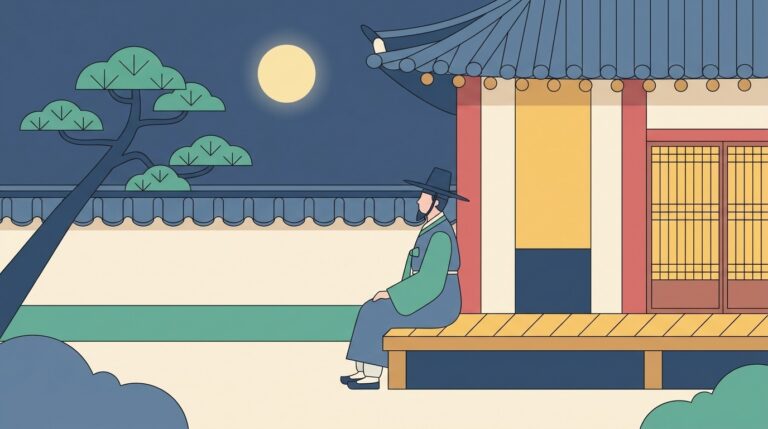
The Art of Strategic Silence: Mastering ‘도광양회(韜光養晦)’ in Advanced Korean
Phase 1: Empathy (Immersive Storytelling Opening)
안녕하세요! 매일한글 에디터입니다. (Hello! This is your Daily Hangul editor.)
Have you ever watched the blockbuster K-Drama Reborn Rich (재벌집 막내아들) or Queenmaker (퀸메이커) and noticed a peculiar moment where the protagonist, cornered by ruthless corporate rivals, simply smiles, bows politely, and offers no resistance whatsoever? To an untrained observer, it looks like utter defeat. But as seasoned K-Drama aficionados—and advanced Korean speakers—you immediately sense the chills down your spine. They aren’t surrendering; they are deliberately retreating into the shadows to sharpen their blade.
At the C2 level, your challenge is no longer about stringing together grammatically flawless sentences. It is about commanding the subtle, geopolitical, and philosophical undercurrents of the Korean language. When navigating Korean corporate boardrooms, high-stakes negotiations, or sophisticated socio-political discourse, expressing raw ambition can brand you as reckless or immature. Conversely, knowing when and how to articulate calculated patience elevates your linguistic stature from a mere fluent speaker to a master strategist.
This guide unpacks the classic idiom 도광양회 (韜光養晦, Togwangyanghoe)—an ancient military philosophy that became the cornerstone of modern strategic doctrine. Built upon years of coaching C-suite executives, diplomats, and advanced Korean learners, this masterclass will teach you how to discuss restraint, power dynamics, and decisive timing with authentic native gravitas.
Phase 2: Core Expressions Deep Dive
1. 도광양회 (韜光養晦)
- Pronunciation: [도광양회 / Do-gwang-yang-hoe] (Imagine saying ‘dough-gwang-yang-hway’ with a sharp, resonant snap on ‘hoe’.)
- Meaning: Literally “Hide the brightness and cultivate strength in obscurity.” Figuratively, it denotes maintaining a deliberately low profile while quietly accumulating undeniable capability until the opportune moment arrives.
- K-Culture Moment: Used relentlessly in historical sageuk dramas like Under the Queen’s Umbrella (슈룹) when a royal prince plays the harmless eccentric to survive deadly court politics while secretly building an unshakeable loyal faction.
- Editor’s Insight: Originating from classical Chinese strategic chronicles and popularized by modern geopolitical doctrine, this expression in contemporary Korea carries a weight far beyond simple patience. It implies intentionality, self-discipline, and a looming, inevitable counter-strike.
- Situation Spectrum: Casual: 🚫 | Semi-formal: ⚠️ | Formal/Corporate: ✅
- 🤔 Think About It: In Western business discourse, visibility and “faking it until you make it” are often lauded. Why does Korean culture place such immense strategic value on deliberately hiding one’s competence?
2. 와신상담 (臥薪嘗膽)
- Pronunciation: [와신상담 / Wa-sin-sang-dam] (Sounds like ‘wah-sheen-sahng-dahm’.)
- Meaning: Literally “Sleeping on brushwood and tasting gall.” Nuance: Enduring extreme hardship and humiliation with an iron will to achieve revenge or complete a long-term ambition.
- K-Culture Moment: Frequently cited in sports journalism and business features when an ousted founder or an athlete recovers from a devastating slump to reclaim the championship.
- Editor’s Insight: While Togwangyanghoe focuses on tactical concealment and quiet growth, Wasinsangdam emphasizes emotional grit and enduring visceral discomfort for future vindication.
- Situation Spectrum: Casual: ⚠️ | Semi-formal: ✅ | Formal/Corporate: ✅
- 🤔 Think About It: How does the visceral metaphor of tasting bitter gall reflect the Korean cultural concept of ‘한(恨, collective unresolved sorrow/determination)’ transformed into fuel for success?
3. 은인자중 (隱忍自重)
- Pronunciation: [은인자중 / Eun-in-ja-jung] (Sounds like ‘uhn-een-jah-joong’ with grounding resonance on ‘jung’.)
- Meaning: Literally “Hiding one’s feelings, enduring patiently, and acting with heavy prudence.” Nuance: Quiet self-restraint and avoiding reckless, impulsive actions despite provocation.
- K-Culture Moment: In high-stakes political dramas, when an advisor whispers to a hot-headed leader: “지금은 은인자중하셔야 할 때입니다” (You must exercise utmost composure and lay low right now).
- Editor’s Insight: This idiom lacks the aggressive counter-attack connotations of the other two; it focuses entirely on the virtue of emotional equilibrium and dignified silence under scrutiny.
- Situation Spectrum: Casual: 🚫 | Semi-formal: ✅ | Formal/Corporate: ✅
- 🤔 Think About It: Contrast the concept of ‘acting heavy’ (자중 – 自重) with Western metaphors of agility and rapid action.
Phase 3: Textbook Korean vs. Real-World Mastery
Situation 1: Advising a colleague to pause a project during internal company politics
- 📖 교과서 한국어 (Textbook):
지금은 위험하니까 아무것도 하지 말고 조용히 기다리세요.
(Jigeumeun wiheomhago amugeotdo haji malgo joyonghi gidariseyo. / Since it’s dangerous right now, do nothing and wait quietly.) - 🗣️ 진짜 한국어 (High-Level Strategic Native):
지금은 무리하게 치고 나갈 타이밍이 아닙니다. 철저히 도광양회하며 물밑에서 내실을 다져야 할 때예요.
(Jigeumeun murihage chigo nagal taimingi animnida. Cheoljeohi dogwangyanghoehamyeo mulmit-eseo naesireul dajyeoya hal ttaeyeyo. / This isn’t the timing to aggressively push forward. We must thoroughly bide our time in obscurity while consolidating our core capabilities beneath the surface.) - 💡 왜 다를까? (Why the difference?):
Telling an executive “do nothing” sounds defeatist and passive. Using 도광양회 paired with 물밑에서 내실을 다지다 frames silence not as weakness, but as an aggressive long-term tactical calculation.
Situation 2: Explaining a rival company’s suspicious silence
- 📖 교과서 한국어 (Textbook):
경쟁사가 요즘 조용하지만 아마 열심히 준비하고 있을 것입니다.
(Gyeongjaengsaga yojeum joyonghajiman ama yeolsimhi junbihago isseul geosimnida. / The competitor is quiet these days, but they are probably preparing hard.) - 🗣️ 진짜 한국어 (High-Level Strategic Native):
저쪽이 조용하다고 안심할 게 못 됩니다. 발톱을 숨긴 채 은인자중하며 결정적인 승부수를 벼리고 있을 가능성이 높습니다.
(Jeojjogi joyonghadago ansimhal ge mot doemnida. Baltopeul sumgin chae euninjajunghamyeo gyeoljeongjeogin seungbusureul byeorigo isseul ganeungseongi nopeumnida. / Their silence is no reason to relax. They are likely keeping their claws retracted, maintaining strategic restraint while forging their decisive winning strike.) - 💡 왜 다를까? (Why the difference?):
Natural C2 discourse employs dynamic physical metaphors like 발톱을 숨기다 (hiding claws) and 승부수를 벼리다 (sharpening a decisive gambit) rather than simplistic textbook adverbs.
Phase 4: K-Culture Deep Dive & Non-Verbal Manners
4-1. 눈치 (Nunchi), Strategic Stillness & Non-Verbal Power
In Korean strategic communication, how you embody silence is as critical as what you say. Practicing 도광양회 requires what master negotiators call 정중동 (靜中動, stillness within motion):
* Gaze Control (시선 처리): Never avert your eyes nervously. Maintain a measured, grounded gaze (지그시 응시함) directed slightly below the interlocutor’s bridge of the nose. Blinking rapidly signals internal panic; slow, measured blinks exude unflappable composure.
* Vocal Modulation (어조): Drop your pitch by a half-octave. Do not raise the ending inflection (avoiding rising tone question tags like ‘~지요?’). End your declarative statements firmly with downward cadence: “~로 판단됩니다” or “~에 집중할 시점입니다.”
* Nunchi Application: True C2 Nunchi here means reading the room’s power balance. If the supreme decision-maker is in an aggressive posture, offering a brilliant rebuttal instantly triggers resistance. Nod thoughtfully, absorb the critique, and withhold your decisive counter-data until the follow-up meeting.
4-2. Cultural Code Analysis: The Chaebol Succession Playbook
From Itaewon Class (이태원 클라쓰) where Park Saeroyi spends seven years deep-sea fishing and running a tiny pub before executing his corporate acquisition, to real-world corporate restructuring among Korean conglomerates (재벌), the mythos of 도광양회 is deeply woven into Korean ambition. In Korea’s hyper-dense, highly networked society, premature exposure invites immediate collective counter-measures from incumbents. Thus, the greatest leaders in Korean lore are never flashy prodigies, but rather those who master temporal patience and strike only when their foundational leverage (내공, Naegong) is absolute.
Phase 5: Real-World Roleplay Scenario
Setting: A private boardroom inside an executive lounge in Yeouido, Seoul.
Characters:
* Managing Director Min (민 전무): A ruthless corporate veteran eyeing immediate aggressive marketing expansions.
* You (C-Suite Strategic Advisor): Tasked with preventing a premature product launch against an entrenched market monopoly.
- Turn 1 (민 전무): 이번 신제품 라인, 다음 달에 바로 언론에 대대적으로 공개하고 전면전으로 갑시다. 시장 반응을 선점해야 해요.
(Ibeon sinjepum rain, daeum dare baro eollone daedaejeogeuro gonggaehago jeonmyeonjeoneuro gapsida. Sijang baneungeul seonjeomhaeya haeyo.)
Let’s unveil the new product line to the press next month and wage an all-out offensive. We must secure market sentiment first.
🎭[눈을 번뜩이며 결재판을 책상에 쾅 내려놓는다] -
Turn 2 (You): 전무님, 시장 선점에 대한 의지는 충분히 공감합니다만, 현시점의 정면충돌은 리스크가 지나치게 큽니다.
(Jeonmunim, sijang seonjeome daehan uijineun chungbunhi gonggamhamnidaman, hyeonsijeomui jeongmyeonchungdoreun riseukeuga jinachige keumnida.)
Executive Director Min, I fully sympathize with the desire to capture market initiative, but a frontal collision at this juncture carries an excessive risk.
🎭[차분하게 서류를 정돈하며 시선을 마주한다] -
Turn 3 (민 전무): 리스크 없는 비즈니스가 어디 있습니까? 기선제압이 핵심인데, 왜 자꾸 미루자는 겁니까?
(Riseukeu eomneun bijeuniseuga eodi isseumnikka? Giseonjeeabi haeksiminde, wae jakku mirujaneun geomnikka?)
What business exists without risk? Seizing psychological initiative is crucial, so why do you keep insisting on delays?
🎭[팔짱을 끼며 불만스러운 표정으로 의자에 기댄다] -
Turn 4 (You): 단순한 지연이 아닙니다. 지금 상대 진영은 우리의 움직임만 기다리며 마케팅 공세를 펼칠 자본을 이미 확보해 둔 상태입니다.
(Dansunhan jiyeoni animnida. Jigeum sangdae jinyeongeun uriui umjigimman gidarimyeo maketing gongseereul pyeolchil jaboneul imi hwakbohae dun sangtaeimnida.)
This is not mere procrastination. Right now, the opposing camp is lying in wait for our move, having already secured capital to launch a devastating marketing counter-strike.
🎭[낮고 단호한 톤으로 태블릿의 데이터 지표를 가리킨다] -
Turn 5 (민 전무): 그럼 마냥 손 놓고 저쪽 점유율이 올라가는 걸 지켜만 보자는 말입니까?
(Geureom manyang son nokko jeojjok jeomyuyuri ollaganeun geol jikyeoman bojaneun marimnikka?)
Then are you telling me to sit on our hands and just watch their market share climb?
🎭[미간을 찌푸리며 목소리를 높인다] -
Turn 6 (You): 결코 아닙니다. 지금이야말로 철저히 도광양회(韜光養晦)할 타이밍입니다. 겉으로는 베타 테스트 명목으로 저자세를 취하되, 내부 소프트웨어 완성도를 압도적인 수준으로 끌어올려야 합니다.
(Gyeolko animnida. Jigeumiya-mallo cheoljeohi dogwangyanghoehal taiming-imnida. Geoteuroneun beta teseuteu myeongmogeuro jeojaseereul chwihadoe, naebu sopeutu-weo wanseongdoreul apdojeogin sujuneuro kkeureo-ollyeoya hamnida.)
By no means. Right now is precisely the timing for thorough Togwangyanghoe. Outwardly, we adopt a low posture under the guise of beta testing, while internally elevating our software stability to an insurmountable level.
🎭[속도를 늦추고 또박또박 무게감을 실어 말한다] -
Turn 7 (민 전무): 저쪽이 방심하고 마케팅 예산을 소진할 때까지 칼날을 숨겨두자는 뜻이군요.
(Jeojjogi bangsimhago maketing yesaneul sojinhal ttaekkaji kalnareul sumgyeodujaneun tteusigunyo.)
You mean to keep our blade concealed until they drop their guard and exhaust their marketing budget.
🎭[서서히 고개를 끄덕이며 깊은 생각에 잠긴다] -
Turn 8 (You): 정확하십니다. 상대가 오판하여 방심의 극치에 달했을 때, 완벽한 품질로 단숨에 판도를 뒤집는 것이 진정한 필승 전략입니다.
(Jeonghwakhasimnida. Sangdaega opanhayeo bangsimui geukchie dahasseul ttae, wanbyeokhan pumjilleo dansume pandoreul dwijimneun geosi jinjeonghan pilseung jeollyagimnida.)
Precisely. When the competitor miscalculates and reaches the peak of complacency, flipping the entire paradigm in a single stroke with flawless quality is our guaranteed path to victory.
🎭[흔들림 없는 미소로 가볍게 목례한다]
🔀 Interactive Decision Branch
What would you say next if Director Min asks: “그렇다면 그 결정적 시기는 언제로 봐야 합니까?” (Then when should we deem that decisive moment to be?)
- Option A: “상대가 3분기 실적 발표 후 자금난에 직면했을 때, 그 틈을 노려 기습적으로 전환해야 합니다.”
(When the rival faces liquidity friction after their Q3 earnings release, we capitalize on that rupture with a surprise offensive.) - Option B: “아무도 모르죠. 그냥 저쪽이 망할 때까지 계속 기다리는 수밖에 없습니다.”
(Nobody knows. We just have to wait indefinitely until they collapse.) - Option C: “기다릴 것 없이 다음 주 월요일에 깜짝 기자회견을 열어 주도권을 잡으시죠!”
(No need to wait—let’s host a surprise press conference next Monday to seize command!)
Strategic Feedback:
* Option A (Best Choice): 🌟 Flawless C2 execution! It defines the exact contingent condition required by the doctrine of Togwangyanghoe. It balances restraint with predatory readiness.
* Option B (Bad Choice): ❌ Catastrophic. Conflates strategic concealment with aimless fatalism. You will appear incompetent to executive management.
* Option C (Risk Choice): ⚠️ High Risk. Directly contradicts the premise of Togwangyanghoe you just established, eroding your strategic credibility.
Phase 6: 10-Second Emotional Shadowing Drill
Practice reading these high-stakes sentences aloud. Pay close attention to rhythm pauses (/) and internalize the emotional markers.
[🤫 차분하고 서늘한 결의로 / With calm, chilling determination]
“지금은 / 판을 벌릴 때가 아닙니다. / 철저히 도광양회하며 / 때를 기다려야 합니다.”
(Jigeumeun / paneul beollil ttaega animnida. / Cheoljeohi dogwangyanghoehamyeo / ttaereul gidaryeoya hamnida.)-
[💼 품격 있고 단호한 어조로 / With dignified, unwavering authority]
“겉으로 드러난 침묵에 속지 마십시오. / 우리는 지금 / 보이지 않는 곳에서 / 승부수를 벼리고 있습니다.”
(Geoteuro deureonan chimmuk-e sokji masipsio. / Urineun jigeum / boiji anneun goseseo / seungbusureul byeorigo isseumnida.) -
[♟️ 냉철한 전략가의 시선으로 / Through the lens of a cold-blooded strategist]
“섣부른 기선제압보다 무서운 것은, / 발톱을 숨긴 채 / 내실을 다져온 자의 / 일격입니다.”
(Seotbureun giseonjeeapboda museoun geoseun, / baltopeul sumgin chae / naesireul dajyeoon jaui / ilgyeogimnida.)
Phase 7: K-Culture Mini Dictionary
-
내공 (內功, Naegong)
Literal Translation: Inner martial art cultivation.
Strategic Nuance: Accumulated, invisible professional expertise, emotional resilience, or corporate leverage that doesn’t show on the surface until tested. -
잠룡 (潛龍, Jamnyong)
Literal Translation: Submerged dragon.
Strategic Nuance: A formidable political or business heavyweight who remains deliberately quiet or unannounced prior to an election or corporate takeover bid. -
승부수 (勝負手, Seungbusu)
Literal Translation: A decisive stone played in Baduk (Go).
Strategic Nuance: A bold, all-in gambit executed only after long preparation to reverse the tide of a battle or business campaign. -
발톱을 숨기다 (Baltopeul sumgida)
Literal Translation: To retract/hide one’s claws.
Strategic Nuance: Feigning weakness, harmlessness, or total submission to disarm a stronger predator while awaiting the ideal strike window.
Phase 8: Professional & Traveler’s Survival Kit
High-Stakes Professional Top 3 Phrases
- “조금 더 추이를 지켜보시지요.” (Jogeum deo chwireul jikyeobosijiyo.)
Pro Tip: The premier phrase to de-escalate hasty corporate decisions without saying “No.” Means: “Let us observe the trajectory a bit further.” - “지금은 내실을 기할 때입니다.” (Jigeumeun naesireul gihal ttaeimnida.)
Pro Tip: Use this to argue against vanity metrics or reckless expansion: “Now is the time to prioritize substance over show.” - “때가 무르익으면 그때 움직이겠습니다.” (Ttaega mureuig-eumyeon geuttae umjigigesseumnida.)
Pro Tip: Signals that you possess a clear operational roadmap and are intentionally timing your execution.
Editor’s Professional Note & App Guide
When navigating Korean corporate circles, saving and exchanging contacts via business card scanners is mandatory etiquette. Download the Remember App Official Page to manage high-level Korean contacts and stay updated on corporate leadership movements. When attending closed-door executive dinners in Gangnam or Yeouido, utilize Naver Map Navigation Guide to secure private dining rooms (룸 형태의 한정식당), which are the quintessential venues where quiet strategic alliances are forged over discreet traditional banquets.
Phase 9: A Step Deeper (Reflective Essay)
In Western classical rhetoric, the hero is often heralded by vocal declarations of destiny and immediate, dramatic overcoming. In contrast, Korean historical philosophy—shaped deeply by centuries of surviving colossal neighboring empires—forged a unique virtue: the power of strategic endurance. 도광양회 is not an admission of inferiority; it is an acknowledgment of temporal reality. In Korean social dynamics, immediate confrontation is considered amateurish, while the ability to endure temporal friction without leaking emotional frustration reflects supreme refinement. By holding your brilliance in check, you grant your adversary the room to overreach, making their own hubris the instrument of their downfall.
💬 Your Turn: Have you ever experienced a situation in your career or personal journey where concealing your true potential proved vastly superior to early revelation? Share your thoughts below in Korean!
Phase 10: FAQ & Avoiding Misunderstandings
Q: Can ‘도광양회’ be used in casual daily conversations with friends?
A: You should exercise caution. Using four-character idioms (사자성어) in trivial everyday contexts—such as hiding your study routine before an exam—can sound overly dramatic or jokingly theatrical. However, among close friends, native speakers often use it with tongue-in-cheek humor (자기비하 유머) to describe dieting secretly or binge-practicing an instrument.
Q: What is the exact difference between ‘도광양회’ and ‘와신상담’?
A: Focus on the motive and texture of the waiting period. 도광양회 (韜光養晦) is about concealing brilliance and cultivating pragmatic strength in quiet obscurity. 와신상담 (臥薪嘗膽), however, implies enduring profound, bitter personal hardship or humiliation with an explicit, vengeful dedication to evening the score.
Q: Is ‘도광양회’ considered purely Chinese, or is it thoroughly integrated into modern Korean?
A: While originating from Chinese historical records (and notably serving as Deng Xiaoping’s diplomatic foreign policy doctrine in the late 20th century), it has been completely assimilated into Korean high-register lexicon. It appears continuously in Korean editorial columns, diplomatic strategy papers, and corporate business plans.
🚨 Common Mistakes Board (외국인 학습자의 흔한 실수)
| Common Mistake | Why It Fails | Correct Strategic Action |
|---|---|---|
| Saying “저는 지금 도광양회하고 있어요” to a boss | Sounds boastful and pretentious; you are declaring yourself a genius in hiding. | Use humble framing: “아직 배울 점이 많아 차분히 역량을 쌓는 중입니다.” |
| Equating 도광양회 with 포기 (Giving up) | Confusing tactical stillness with surrender or laziness. | Clearly articulate the future counter-measure alongside the idiom. |
| Using it for short durations (e.g., waiting 10 minutes) | The idiom inherently describes strategic, medium-to-long-term gestation periods. | Reserve for quarterly, yearly, or generational long-term planning. |
Phase 11: Action Missions
- 🥉 Bronze Tier (Solo Practice): Record a 15-second voice memo delivering Shadowing Drill Sentence #2. Focus on eliminating upward inflection at the ends of your sentences.
- 🥈 Silver Tier (Community Sharing): Write a 2-sentence corporate scenario in the comments below using both 도광양회 and 내실.
- 🥇 Gold Tier (Real-World Execution): In your next Korean business meeting or advanced language exchange, when asked for your perspective on an aggressive deadline, execute this line: “지금은 속도전보다는 도광양회하며 내실을 다져야 할 국면으로 보입니다.”
🎮 K-Culture Mission: Watch an episode of a political or historical drama (e.g., Mr. Sunshine or Secret Forest) and spot the exact scene where a character feigns indifference while collecting evidence. Note down their non-verbal cues!
Phase 12: Interactive Quiz Challenge
1. Context Judgment
Which of the following situations is the most linguistically and culturally appropriate application of ‘도광양회’?
– A) Asking your friend to wait 5 minutes while you grab a coffee.
– B) An emerging tech startup deliberately keeping their core patents unannounced while stockpiling trade secrets to upend an industry giant.
– C) Apologizing to a professor for not submitting an assignment on time.
🔍 Click to reveal Answer & Explanation
Correct Answer: B
Explanation: 도광양회 specifically describes the calculated, long-term concealment of genuine strength to avoid triggering defensive measures by powerful incumbents until one is fully prepared to dominate.
2. Sentence Fill-in-the-Blank
Complete the following high-level boardroom sentence:
“지금은 저쪽의 도발에 일희일비할 것이 아니라, 철저히 __________(이)며 결정적인 반격의 순간을 준비해야 합니다.”
🔍 Click to reveal Answer & Explanation
Correct Answer: 도광양회하(며) / 은인자중하(며)
Explanation: Both 도광양회하다 (cultivating strength in obscurity) and 은인자중하다 (acting with heavy self-restraint) fit seamlessly here to counter the impulse of “일희일비” (swaying between joy and despair over trivial provocations).
3. True or False Cultural Nuance Quiz
True or False: In high-stakes Korean negotiations, showing all your competitive advantages in the opening presentation is universally perceived as a sign of supreme confidence and advanced competence.
🔍 Click to reveal Answer & Explanation
Correct Answer: False
Explanation: Revealing all leverage immediately is frequently interpreted in elite Korean business circles as premature, boastful, and vulnerable to strategic neutralization. Cultivating an aura of unspoken depth (내공) carries far more leverage.
🎬 Watch Our Daily Videos! (Daily Hangul Official Instagram)
Review the expressions you learned in this article with our fun daily short videos! Check out native pronunciation and real-life nuances in action.
- Instagram @dailyhangul_en







