

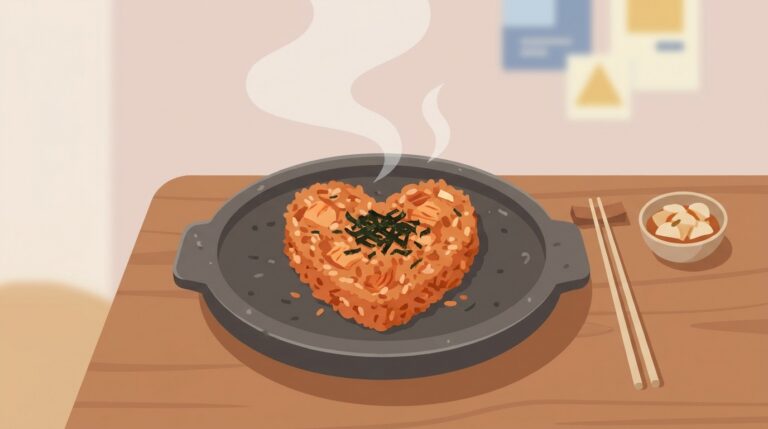
Never Miss the K-Dessert: How to Order Sizzling Fried Rice at K-BBQ
Phase 1: Empathy (Story-Immersive Opening)
안녕하세요! (Annyeonghaseyo!) It’s your friendly Daily Hangul editor here, your 10-year local Korean culture navigator.
Picture this: You are sitting at a bustling Korean barbecue joint in the heart of Seoul. The smell of sizzling pork belly fills the air, the grill is golden and warm, and you have just enjoyed an incredible dinner with friends. Your belly is comfortably full, but you glance over at the local table next to you. The server approaches their table with a huge metal bowl of rice, chopped spicy kimchi, fragrant sesame oil, and seaweed flakes. In seconds, their grill transforms into a sizzling pan of savory fried rice, pressed flat until the bottom turns delightfully crispy.
Your mouth waters. You want that exact experience. But when the server passes your table, your mind freezes. Do you just say “Rice, please”? If you ask for bap (밥), will they just hand you a cold metal bowl of plain white rice? How do you say, “Wait, after we finish this last piece of meat, please stir-fry two servings of rice right on the grill” without feeling awkward?
If this sounds familiar, take a deep breath. You are not alone! Countless foreign learners tell me this is their number one regret after visiting Korea: missing out on the legendary post-meat fried rice because they didn’t know the right phrase at the right time. Today, we are breaking down this essential A2-level Korean conversation so you can order like a seasoned Seoulite with total confidence.
Phase 2: Core Expressions Deep Dive
Here are the 3 magic expressions you need to own the finale of any K-BBQ feast.
1. 고기 다 먹고 볶음밥 볶아 주세요. (Gogi da meokgo bokkeumbap bokkeo juseyo.)
- Pronunciation: [Gogi da meok-go bok-keum-bap bok-keo joo-seh-yo] (Sound clue: “Go-gee da muck-go bo-keum-bap bo-kuh joo-seh-yo”)
- Meaning: Literal: “After eating all the meat, please stir-fry fried rice.” | Real Nuance: “We’ll finish up the meat first, and then we’d love you to make fried rice on this grill!”
- K-Culture Moment: Seen in classic food scenes across K-dramas like Weightlifting Fairy Kim Bok-joo, where pro foodies emphasize pacing: first meat, then fried rice!
- Editor’s Insight: The phrase “다 먹고” (da meokgo = after finishing all) is crucial. It tells the busy staff not to turn off your gas burner or whisk away the grill just yet.
- Situation Spectrum: Casual: ✅ | Semi-formal: ✅ | Formal: ⚠️
- 🤔 Think About It: In many Western traditions, dessert is cold and sugary. In Korea, why do you think a hot, savory carb dish made with meat drippings is crowned the honorary “K-Dessert”?
2. 볶음밥 2인분 볶아 주세요. (Bokkeumbap i-inbun bokkeo juseyo.)
- Pronunciation: [Bok-keum-bap ee-in-boon bok-keo joo-seh-yo] (Sound clue: “ee-in-boon” sounds like the letter ‘E’ + ‘in’ + ‘boon’)
- Meaning: Literal: “Please stir-fry 2 portions of fried rice.” | Real Nuance: “Two orders of fried rice on the grill, please!”
- K-Culture Moment: In Korean variety shows, travel casts always debate the portion count: “Should we do one portion or two? Let’s do two!”
- Editor’s Insight: “인분” (inbun) is the essential counter for restaurant servings. Always pair it with Sino-Korean numbers: 1 = 일 (il), 2 = 이 (i), 3 = 삼 (sam).
- Situation Spectrum: Casual: ✅ | Semi-formal: ✅ | Formal: ✅
- 🤔 Think About It: Why does Korean use Sino-Korean counting words (일, 이, 삼) for meal portions instead of pure Korean numbers (하나, 둘, 셋)? Notice how language reserves different numbering systems for formal transactions!
3. 밥 눋게 좀 놔둘게요. (Bap neutge jom nwadulgeyo.)
- Pronunciation: [Bap neut-ge jom nwa-dool-ge-yo] (Sound clue: “neut-ge” sounds like “noot-geh”)
- Meaning: Literal: “I will leave the rice to scorch slightly.” | Real Nuance: “We are letting it sit so the bottom gets golden, crunchy, and crispy!”
- K-Culture Moment: The sacred, silent 60 seconds at a Korean table where everyone hovers their spoons over the grill, waiting for that crackling sound before taking the first bite.
- Editor’s Insight: Koreans prize nurungji (누룽지, scorched rice). Saying this politely lets the server know you understand the culinary art of waiting for that crisp crust.
- Situation Spectrum: Casual: ✅ | Semi-formal: ✅ | Formal: 🚫
- 🤔 Think About It: Why do textures like chewy (jjondeuk) and crispy-scorched (nuroongji) carry such emotional comfort in Korean culinary culture?
Phase 3: Textbook Korean vs. Real Korean
Let’s compare stiff classroom phrases with real-world Seoul restaurant talk.
Situation 1: Ordering your post-meat rice
- 📖 교과서 한국어 (Textbook): 고기를 다 먹었습니다. 볶음밥을 주문하겠습니다. (Gogireul da meogeotseumnida. Bokkeumbabeul jumunhagetseumnida. – “I have finished the meat. I will order fried rice.”)
- 🗣️ 진짜 한국어 (Real Life): 사장님, 여기 볶음밥 2개만 볶아 주세요! (Sajangnim, yeogi bokkeumbap du-gae-man bokkeo juseyo! – “Boss, could you fry up two fried rices for us here!”)
- 💡 왜 다를까? (Why the difference?): Real diners drop robotic declarative grammar. Addressing the shop owner as “사장님” (sajangnim = boss/owner) establishes an instant friendly rapport.
Situation 2: Asking to keep leftover meat for the rice
- 📖 교과서 한국어 (Textbook): 볶음밥에 고기를 넣어야 하니 고기를 치우지 마십시오. (Bokkeumbabe gogireul neoeoya hani gogireul chiuji masipsio. – “Do not clear the meat because we need to put it into the fried rice.”)
- 🗣️ 진짜 한국어 (Real Life): 고기 몇 점 남겨서 같이 볶아 주세요! (Gogi myeot jeom namgyeoseo gachi bokkeo juseyo! – “Please save a few slices of meat and stir-fry them in together!”)
- 💡 왜 다를까? (Why the difference?): Using the foodie term “몇 점” (myeot jeom = a few cuts/slices of meat) sounds naturally fluent and helps you secure the tastiest possible fried rice.
Phase 4: K-Culture Deep Dive & Non-Verbal Manners
4-1. 눈치 (Nunchi) & Gestures
- Timing is Everything: Timing your order requires nunchi (social sensing). Do not order fried rice when you still have five thick, uncooked pork chops on the grill. Order when you have 2-3 bites left.
- Calling the Server: Look for the small call button (벨) on the side or corner of your table. If there isn’t one, raise one hand gently to shoulder height, make warm eye contact, and call out: “저기요~” (Jeogiyo~, Excuse me).
- The Sacred Spatula Silence: When the server arrives with their metal spatulas and begins rhythmically chopping kimchi and rice on your grill, pause your conversation and watch! It is a Korean cultural micro-ritual showing respect and shared appreciation for the food prep.
4-2. Cultural Code Analysis: The Legend of “K-Dessert”
In Korean food culture, carbs are the true grand finale. Whether it is spicy braised chicken (dakgalbi), pork bone soup (gamjatang), or pork belly (samgyeopsal), every meal converges into bokkeumbap. Koreans affectionately call this the “K-Dessert” (K-디저트). Sharing one hot grill pan with individual long spoons deepens Jeong (정)—the unique Korean sentiment of warm, communal affection.
Phase 5: Real-Life Roleplay Scenario
- Setting: “Mapo Sutbul”, a lively pork belly grill in Seoul. Sizzling grills, laughter, and delicious aromas everywhere.
- NPC Character: Auntie Park (이모님, Imonim), a veteran K-BBQ master wearing a bright apron, brandishing two metal scrapers.
The Dialogue
- You: (Noticing the meat is almost finished) 저기요, 사장님! (Jeogiyo, sajangnim! – Excuse me, boss!) 🎭 Raising one hand politely at chest level.
- Auntie Park: 네, 손님! 뭐 더 드릴까요? (Ne, sonnim! Mwo deo deurilkkayo? – Yes, guests! What can I get for you?) 🎭 Wiping hands on apron, smiling warmly.
- You: 고기 다 먹고 볶음밥 2인분 볶아 주세요. (Gogi da meokgo bokkeumbap i-inbun bokkeo juseyo. – After we finish this meat, please fry two servings of fried rice.) 🎭 Smiling and gesturing toward the grill plate.
- Auntie Park: 알겠어요! 고기 두 점만 남겨 둬요, 가위로 잘라서 같이 볶아 줄 테니까! (Algesseoyo! Gogi du jeom-man namgyeo dwoyo, gawiro jallaseo gachi bok-a jul tenikka! – Got it! Leave two slices of meat; I’ll snip them with scissors and fry them in!) 🎭 Nodding with a knowing chef’s wink.
- Your Friend: 오, 치즈도 추가할래? (O, chijeudo chugahallae? – Oh, do you want to add cheese too?) 🎭 Eyes wide with culinary anticipation.
- You: 네, 사장님! 치즈 사리도 하나 추가해 주세요. (Ne, sajangnim! Chijeu sarido hana chugahae juseyo. – Yes, boss! Please add one cheese topping too.) 🎭 Clapping hands together gently.
- Auntie Park: (Spreads seasoned rice, dumps mozzarella, and covers it with a bowl) 2분 뒤에 뚜껑 열고 드세요! (I-bun dwie ttukkeong yeolgo deuseyo! – Open the lid in two minutes and enjoy!) 🎭 Setting a metal dome over the melting cheese.
- You: 와, 정말 감사합니다! 맛있게 먹겠습니다! (Wa, jeongmal gamsahamnida! Masitge meokgetseumnida! – Wow, thank you so much! We will eat well!) 🎭 Holding spoons ready with a joyful grin.
🔀 Interactive Decision Point
Imagine Auntie Park just finished spreading the rice flat across your grill. What do you do next?
- Option A: Immediately turn off the gas burner completely and start eating with your spoon.
- Feedback (⚠️ Risk): Oh no! You missed out on the crunchy scorched crust (nurungji). The rice will taste good, but you lose the magical textural contrast.
- Option B: Leave the burner on low flame, wait 1-2 minutes until you hear a crackling sizzle, then enjoy.
- Feedback (🏆 Best): Absolute culinary genius! You unlocked authentic crispy fried rice. Auntie Park gives you an approving smile.
- Option C: Wave your hands and say: “불판 갈아 주세요!” (Please change the grill plate!)
- Feedback (❌ Bad): Catastrophe! Changing the grill plate throws away all the seasoned rice Auntie just prepared! Save plate changes for before fried rice, not after.
Phase 6: 10-Second Emotion Shadowing Drill
Practice these lines with rhythm, proper pauses (/), and genuine feeling!
[🙋♂️ 밝고 공손하게 - Bright and courteous]
저기요! / 고기 다 먹고 / 볶음밥 2인분 / 볶아 주세요!
(Jeogiyo! / Gogi da meokgo / bokkeumbap i-inbun / bokkeo juseyo!)-
[🤤 기대 가득 차서 - Hungry and excited]
사장님, / 치즈 사리도 / 하나 추가해 주세요!
(Sajangnim, / chijeu sarido / hana chugahae juseyo!) -
[🤫 사뭇 진지하게 - Whispering with foodie reverence]
쉿! / 누룽지 생기게 / 1분만 / 기다리자.
(Swit! / Nurungji saenggige / il-bun-man / gidarija.)
Phase 7: K-Culture Mini Dictionary
- 볶음밥 (Bokkeumbap) | Stir-fried rice | In BBQ and stews, this is cooked directly in leftover sauces, seaweed (gim), and sesame oil right at the table.
- 누룽지 (Nurungji) | Scorched rice crust | The golden, nutty, crunchy layer formed at the bottom of the pan. Highly prized by Korean diners.
- 사리 (Sari) | Add-on topping / portion | Common extras like noodles, cheese (chijeu sari), or rice cakes added to an existing dish.
- 인분 (Inbun) | Servings / Portions counter | Essential Sino-Korean counter word used when ordering portions for dining tables (1인분, 2인분, 3인분).
Phase 8: Survival Kit for Travelers
Survival Expressions TOP 3
- 볶음밥 되나요? (Bokkeumbap doenayo?)
Meaning: “Can we get fried rice here?”
Pro Tip: Charcoal grills with wire mesh grids cannot do fried rice. Stone or iron solid griddles can! - 불판 갈아 주세요. (Bulpan gara juseyo.)
Meaning: “Please change the grill plate.”
Pro Tip: Use this while eating meat if the surface gets too burnt, but not once you order fried rice. - 덜 맵게 해 주세요. (Deol maepge hae juseyo.)
Meaning: “Please make it less spicy.”
Pro Tip: If standard kimchi fried rice is intimidating, ask for milder seasoning with this phrase.
Editor’s Travel Note
- Navigation Tip: When searching for BBQ restaurants on the go, avoid generic web searches. Open the Naver Map App Download and search for 돌판 삼겹살 (stone-plate pork belly) or 철판 닭갈비 (iron-plate spicy chicken) to find venues famous for grill-fried rice.
- Table Settlement: In Korea, you do not tip, and servers do not bring the credit card terminal to your table. Take the plastic bill clip from your table stand and bring it up to the counter near the door to pay!
Phase 9: One Step Deeper (Reflective Insight)
In Western dining, dessert is an individualized, sweet conclusion brought on pristine separate plates. In contrast, the Korean meal culminates in a shared, savory hot skillet where everyone’s spoons meet in the middle. This mirrors the historic Korean concept of Sikgu (식구), literally meaning “the mouths that eat rice together.” Savoring every scraped spoonful of nurungji side-by-side isn’t just about carbs—it is a collective celebration of intimacy, togetherness, and warmth.
💬 Your Turn: How do celebratory group meals end in your home culture? Do you have an equivalent savory “finale” dish? Share your food stories in the comments below!
Phase 10: FAQ & Avoiding Misunderstandings
Q: Can I order fried rice at any K-BBQ restaurant?
A: No! If the restaurant cooks over charcoal using a thin wire mesh grill (seoksoe), the rice will fall through the grates into the fire. Fried rice is only possible on solid iron, cast-iron, or stone grill plates (bulpan).
Q: What is the difference between 공깃밥 (gonggitbap) and 볶음밥 (bokkeumbap)?
A: 공깃밥 is a small stainless steel bowl of plain steamed white rice, usually eaten during the meal alongside meat and soup. 볶음밥 is seasoned rice stir-fried directly on the hot grill plate with sauces, kimchi, and toppings at the end of the meal.
Q: Should we eat every single piece of meat before calling the server for fried rice?
A: Keep 2 or 3 slices of pork or beef on the side! The server will use their kitchen scissors to dice the meat into bite-sized bits and incorporate it into the rice, making the dish ten times more flavorful.
🚨 Common Mistakes Warning Board
- Mistake 1: Turning off the heat immediately once the rice is placed on the pan.
Correct Action: Keep the flame on low for 1-2 minutes until you hear a sizzling sound so you get that crunchy bottom. - Mistake 2: Asking the server to replace the pan right before requesting fried rice.
Correct Action: Keep the pan as is! The caramelized meat juices and oil on the grill are what give the fried rice its signature taste. - Mistake 3: Omitting the counter word and just saying “밥 두 개” (bap du gae) in formal spots.
Correct Action: Use the polite counter: “볶음밥 2인분 볶아 주세요” (Bokkeumbap i-inbun bokkeo juseyo).
Phase 11: Action Mission & Engagement
Take action today to cement what you’ve learned!
- 🥉 Bronze Mission (Solo Practice): Stand in front of your mirror and practice saying: “고기 다 먹고 볶음밥 2인분 볶아 주세요!” smoothly in one breath under 4 seconds.
- 🥈 Silver Mission (Social Share): Snap a picture of your next rice meal, share it on Instagram or X, and write: “오늘 저녁은 볶음밥 각! (Fried rice vibes tonight!) #DailyHangul”.
- 🥇 Gold Mission (Real-World Test): Next time you visit a local Korean restaurant, ask the server for fried rice using our full phrase in Korean!
🎮 K-Culture Mission: Watch any Korean variety show episode involving food (such as Delicious Rendezvous or 2 Days & 1 Night) and listen for the sound of metal spoons scraping the bottom of the pan at the very end.
Phase 12: Interactive Quiz Challenge
Test your knowledge before your next Korean barbecue night!
Q1. Situational Judgment
You are finishing your pork belly, and there are 2 slices left. What is the most natural way to order fried rice for two people?
* (A) 사장님, 고기 다 먹었으니까 불 꺼 주세요. (Sajangnim, gogi da meogeosseumnikka bul kkeo juseyo.)
* (B) 사장님, 고기 다 먹고 볶음밥 2인분 볶아 주세요! (Sajangnim, gogi da meokgo bokkeumbap i-inbun bokkeo juseyo!)
* (C) 사장님, 여기 공깃밥 2개 불판 위에 올려 주세요. (Sajangnim, yeogi gonggitbap du-gae bulpan wie ollyeo juseyo.)
Q2. Fill in the Blank
Complete the sentence to ask for two servings of fried rice:
“볶음밥 ______ 볶아 주세요!”
* (A) 2마리 (i-mari)
* (B) 2잔 (i-jan)
* (C) 2인분 (i-inbun)
Q3. True or False
Statement: In Korean barbecue restaurants with wire mesh grills over charcoal embers, you can easily ask the server to stir-fry rice right on the grill. (True / False)
👉 Click here to reveal the answers & detailed explanations!
- Q1 Answer: (B)
Explanation: (B) is polite, clear, and perfectly timed. (A) asks to turn off the flame (no fried rice for you!), and (C) asks for plain steamed rice to be dumped onto the plate, which sounds unnatural. - Q2 Answer: (C) 2인분 (i-inbun)
Explanation: “인분” (inbun) is the counter for human servings of food. “마리” is used for counting animals, and “잔” is for counting cups or glasses of drinks. - Q3 Answer: False
Explanation: Wire mesh grills over charcoal cannot hold rice; the grains would fall into the fire! Fried rice is only available on solid iron plates or stone griddles.
🎬 Watch Our Daily Videos! (Daily Hangul Official Instagram)
Review the expressions you learned in this article with our fun daily short videos! Check out native pronunciation and real-life nuances in action.
- Instagram @dailyhangul_en







