

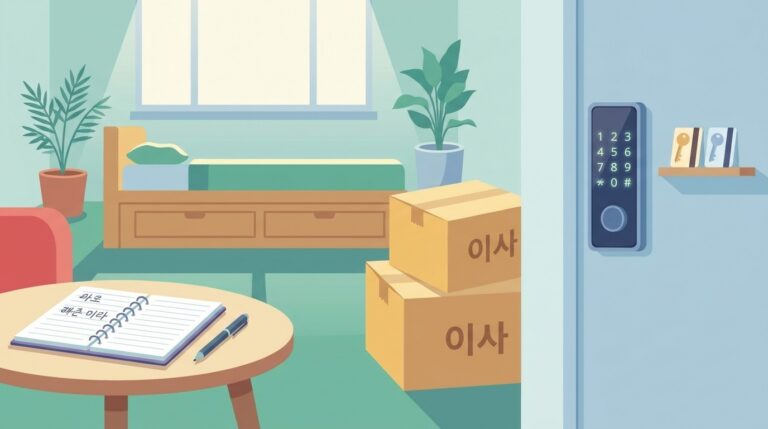
How to Move Out of a Korean Studio and Get Your Full Deposit Back
Phase 1: Empathy & Storytelling
안녕하세요! 매일한글 에디터입니다. (Hello! This is your Daily Hangul editor.)
If you have ever watched a slice-of-life K-drama like Because This Is My First Life or Age of Youth, you know that moving into a cute Seoul studio (원룸, wonrum) feels like the start of a cinematic journey. But moving out? That is pure, heart-pounding suspense.
Imagine this: your suitcases are lined up by the front entryway (hyeon-gwan), the floors are scrubbed clean, and your landlord (jip-ju-in) or real estate agent (budongsan jung-gaesa) walks in with a sharp eye, inspecting the wallpaper and window frames for marks. Your Korean security deposit (bojeunggeum)—often ranging from 5,000,000 to over 10,000,000 KRW—is hanging in the balance! You hand over the RFID card keys, step outside, tap the reset button on the digital door lock, and wait for that glorious notification chime from your banking app: Ding-dong! 보증금이 입금되었습니다 (Your deposit has been deposited).
Many intermediate Korean learners freeze during this critical handover. What if the landlord asks about resetting the digital lock? What if you do not know how to politely ask them to wire your deposit while standing right in front of them? Based on real feedback from dozens of our Daily Hangul learners who survived move-out day in Seoul, this guide gives you the exact phrases, cultural etiquette, and confidence you need to wrap up your lease smoothly and secure every single won of your deposit.
Phase 2: Core 3 Expressions In-Depth
Here are three essential expressions you will need on moving day.
1. 도어락 비밀번호 초기화했어요. (Doorak bimilbeonho chogihwahaesseoyo.)
- Pronunciation: [Doh-uh-rak bee-meel-beon-ho cho-gee-hwa-hae-sseo-yo] (Think of ‘door-lock’ pronounced with a crisp Korean snap, followed by ‘chogi-hwa’ sounding like ‘choke-ee-hwa’).
- Meaning: “I reset the digital door lock passcode.” (Literal: Door lock / secret number / reset / did).
- K-Culture Moment: In modern K-dramas, whenever an ex-partner moves out or a tenant leaves, the ultimate symbolic break is resetting the electronic door lock so the keypad emits its joyful factory-reset jingle.
- Editor’s Insight: Most Korean studio apartments use digital keypads rather than physical brass keys. Landlords always ask if you reset the code to the factory default (usually
1234or0000). Using the Sino-Korean term 초기화 (chogihwa, initialization/reset) instantly shows you know how Korean apartments function.- Situation Spectrum: Casual: ⚠️ (Use 초기화했어 only with close friends) | Semi-formal: ✅ (초기화했어요) | Formal: ✅ (초기화했습니다)
- 🤔 Think About It: In your home country, do you leave keys under the mat, or is everything digital? How does changing a digital code reflect Korea’s blend of ultra-modern technology and compact communal living?
2. 카드키하고 열쇠 여기 반납할게요. (Kadeuki-hago yeolsoe yeogi bannaphalgeyo.)
- Pronunciation: [Kah-deu-kee-hah-go yeol-sweh yeo-gee bahn-nahp-hahl-geh-yo] (Pronounce ‘bannap’ with a soft stop at the end, like ‘bahn-nahp’).
- Meaning: “I will return the card keys and physical keys here.”
- K-Culture Moment: Remember when the main character hands over the apartment card key to the building manager before rolling their suitcase toward a taxi? That decisive handover marks the official end of your tenancy.
- Editor’s Insight: Even if your main door has a passcode, buildings often provide RFID card tags for the lobby and small physical keys for the mailbox or window locks. If you lose one, landlords often deduct 20,000 to 50,000 KRW from your deposit. Announcing that you have returned all of them protects your wallet.
- Situation Spectrum: Casual: 🚫 | Semi-formal: ✅ | Formal: ✅
- 🤔 Think About It: Why does Korean use the specialized term 반납 (bannap, returning a borrowed item) instead of just 주다 (juda, to give)? It signals respect for property boundaries.
3. 보증금 들어온 거 확인했습니다. (Bojeunggeum deureo-on geo hwaginhaesseumnida.)
- Pronunciation: [Boh-jeung-geum deu-reo-ohn guh hwa-geen-hae-sseum-nee-dah] (The ‘geum’ in bojeunggeum rhymes with ‘gum’, and ‘hwagin’ sounds like ‘hwa-geen’).
- Meaning: “I confirmed that the security deposit has arrived in my account.” (Nuance: Professional, polite, and finalizes the contract on the spot).
- K-Culture Moment: The tense moment in a business drama where two executives wait in silence until one checks their smartphone screen, nods respectfully, and bow to seal the deal.
- Editor’s Insight: In Korea, landlords almost never give you your deposit before they inspect the room, but you should never leave the building premises until that money hits your account. Saying this line signals: “The deal is done, we are all squared away, and I am leaving with a clean conscience.”
- Situation Spectrum: Casual: 🚫 | Semi-formal: ✅ (확인했어요) | Formal: ✅ (확인했습니다)
- 🤔 Think About It: Notice the verb 들어오다 (deureo-oda, to come in). Koreans naturally say money “comes in” (돈이 들어오다) rather than simply being received.
Phase 3: Textbook Korean vs. Real Korean
| Context | 📖 Textbook Korean | 🗣️ Real Natural Korean | 💡 Why is it different? |
|---|---|---|---|
| Handing over keys | 이것은 당신의 열쇠입니다. 받으십시오. (Igeoseun dangsineui yeolsoeyimnida. Badeusipsio.) | 열쇠랑 카드키 여기 다 챙겨뒀어요. (Yeolsoerang kadeuki yeogi da chaenggyeodwoesseoyo.) | Textbook sentences sound like a 1980s military manual. Native speakers use the warm, proactive verb 챙겨두다 (to have everything gathered and prepared) to show responsibility. |
| Checking the deposit transfer | 저에게 보증금을 송금해 주시겠습니까? (Jeo-ege bojeunggeumeul songgeumhae jusigesseumnikka?) | 보증금 들어왔는지 바로 확인해 볼게요! (Bojeunggeum deureowanneunji baro hwaginhae bolgeyo!) | Rather than directly demanding money, native speakers say they will check their banking app right now. It subtly prompts the landlord to hit the send button without sounding confrontational. |
Phase 4: K-Culture Deep Dive & Non-Verbal Manners
4-1. Nunchi (눈치) & Gestures
- The Two-Handed Handover (두 손으로 건네기): When giving back physical keys or RFID keyfobs, always hold them with both hands, or support your right forearm with your left hand. Never toss them onto the kitchen counter. This small physical courtesy signals that you have respected the property.
- The Door Lock Melody Check: When you reset the door lock, leave the door propped slightly open and test the default code in front of the landlord. Let them hear the chime. That audible confirmation removes any suspicion that they will be locked out after you leave.
- The Screen Peek Etiquette: When checking your banking app for the deposit, take half a step back. Do not hold your phone right in their face, but once the transfer clears, offer a gentle bow and say 감사합니다 (gamsahamnida).
4-2. Cultural Code Analysis: Won-sang-bok-gu (원상복구)
In Korea, rental contracts operate strictly around the concept of 원상복구 (wonsangbokgu, restoration to original state). Unlike some Western leases where normal “wear and tear” is generously forgiven, Korean landlords examine wallpaper for adhesive hook stains, kitchen tiles for grease, and flooring for heavy furniture dents. If anything is damaged, they will propose deducting repair costs from your deposit right on the spot. By mastering clear, respectful Korean, you can calmly explain what was preexisting damage versus what you repaired, ensuring fair negotiation.
Phase 5: Real-Life Roleplay Scenario
- Setting: A sunny morning in a 3rd-floor officetel in Mapo-gu, Seoul.
- Characters:
- Alex (알렉스): An expat completing a 1-year study program, moving to a new apartment.
- Mrs. Park (박 사장님): The 60-year-old landlord, warm and energetic, but armed with a keen eye for apartment maintenance.
1. 박 사장님 (Landlord):
알렉스 씨, 짐은 다 뺐어요? 빠진 물건 없는지 한번 둘러봤어요?
(Alex-ssi, jimeun da bpaesseoyo? Ppajin mulgeon eomneunji hanbeon dulleobwasseoyo?)
“Alex, did you take all your luggage out? Did you look around to make sure nothing was left behind?”
🎭 Looking around the empty living room with hands on hips
2. 알렉스 (Alex):
네, 사장님! 구석구석 다 청소하고 쓰레기 분리수거도 끝냈어요.
(Ne, sajangnim! Guseokguseok da cheongsohago sseuregi bunrisugeodo kkeunnaesseoyo.)
“Yes, ma’am! I cleaned every corner and finished sorting the recycling.”
🎭 Smiling proudly and holding out a small envelope
3. 박 사장님 (Landlord):
어머, 방을 아주 깨끗하게 썼네! 도어락 비밀번호는 초기화해 뒀어요?
(Eomeo, bangeul aju kkaekkeuthage sseonne! Doorak bimilbeonhoneun chogihwahae dwosseoyo?)
“Oh my, you kept the room so clean! Did you reset the door lock password?”
🎭 Inspecting the kitchen sink and nodding in satisfaction
4. 알렉스 (Alex):
네, 비밀번호 초기화해서 기본 번호 ‘1234’로 맞춰뒀어요.
(Ne, bimilbeonho chogihwahaeseo gibon beonho ‘il-i-sam-sa’ro matchwodwoesseoyo.)
“Yes, I reset the password and set it to the default code ‘1234’.”
🎭 Demonstrating by pressing the lock keypad from the hallway
5. 박 사장님 (Landlord):
잘했어요. 그럼 처음 줬던 마스터키랑 카드키 두 장은 어디 있어요?
(Jalhaesseoyo. Geureom cheo-eum jwotdeon maseuteokirang kadeuki du jangeun eodi isseoyo?)
“Good job. Then where are the master key and the two card keys I gave you at first?”
🎭 Holding out an open palm
6. 알렉스 (Alex):
여기 카드키 두 장하고 열쇠 다 챙겨뒀어요. 확인해 보세요.
(Yeogi kadeuki du jang-hago yeolsoe da chaenggyeodwoesseoyo. Hwaginhae boseyo.)
“I have prepared both card keys and the physical key right here. Please check them.”
🎭 Handing the keys over using both hands with a slight bow
7. 박 사장님 (Landlord):
열쇠 다 맞네. 관리비 정산 끝났으니까, 지금 바로 보증금 입금할게요.
(Yeolsoe da manne. Gwallibi jeongsani kkeunnasseunikka, jigeum baro bojeunggeum ipgeumhalgeyo.)
“The keys are all here. Since the utility settlement is done, I will transfer the deposit right now.”
🎭 Pulling out her smartphone and opening her mobile banking app
8. 알렉스 (Alex):
감사합니다! 입금 들어온 거 바로 확인했습니다. 그동안 감사했습니다!
(Gamsahamnida! Ipgeum deureo-on geo baro hwaginhaesseumnida. Geudong-an gamsahaesseumnida!)
“Thank you! I just confirmed that the transfer arrived. Thank you for everything this past year!”
🎭 Checking his smartphone screen, then bowing respectfully at 45 degrees
🔀 Interactive Choice Point
What should Alex do if the landlord notices a small screw hole on the wall and hesitates to wire the deposit?
* Choice A: Stand firm and shout: “그건 제 잘못 아니에요! 돈 바로 보내세요!” (That is not my fault! Send the money right now!)
* Feedback: [BAD] 🚫 In Korean culture, raising your voice or issuing direct demands instantly damages goodwill and can cause the landlord to prolong the inspection out of spite.
* Choice B: Bow apologetically, offer zero explanation, and say: “제가 다 물어낼게요. 보증금에서 깎으세요.” (I will pay for everything. Just deduct it from the deposit.)
* Feedback: [RISK] ⚠️ You might end up paying hundreds of thousands of won for damage that was already there before you moved in.
* Choice C: Calmly pull up photos from move-in day and say: “사장님, 입주 첫날 찍어둔 사진이 있는데요, 그때도 이 구멍이 있었어요. 한번 확인해 보시겠어요?” (Ma’am, I have photos from my first day moving in, and this hole was already there. Would you like to check?)
* Feedback: [BEST] ✅ Respectful, factual, and backed by undeniable digital evidence. Korean landlords respect clear photographic records!
Phase 6: 10-Second Emotional Shadowing Drill
Practice these lines out loud. Pay attention to the pause slashes (/) and embody the indicated emotion!
[😊 Polite & Assured]
비밀번호는 / 초기화해서 / 1234로 / 바꿔뒀어요.
(Bimilbeonhoneun / chogihwahaeseo / il-i-sam-sa-ro / bakkwodwoesseoyo.)
“As for the password / I reset it / and changed it / to 1234.”-
[🤝 Respectful & Prepared]
카드키 두 장이랑 / 현관 열쇠 / 여기 모두 있습니다.
(Kadeuki du jang-irang / hyeongwan yeolsoe / yeogi modu itsseumnida.)
“The two card keys / and the front door key / are all right here.” -
[🎉 Relieved & Joyful]
네, 사장님! / 보증금 입금 / 방금 잘 들어왔습니다!
(Ne, sajangnim! / Bojeunggeum ipgeum / banggeum jal deureowasseumnida!)
“Yes, ma’am! / The deposit transfer / just came through successfully!”
Phase 7: K-Culture Mini Dictionary
- 원상복구 (Wonsangbokgu)
- Meaning: Restoration to original state.
- Usage: The core legal clause in Korean housing contracts. If you hang heavy picture frames or paint walls, you must return them to how they looked on move-in day.
- 공과금 정산 (Gong-gwageum Jeongsan)
- Meaning: Utility bill settlement.
- Usage: On move-out morning, you or the building manager call the city gas and electricity providers to calculate meter readings up to that exact hour, paying the final balance via bank transfer.
- 비밀번호 초기화 (Bimilbeonho Chogihwa)
- Meaning: Passcode initialization / reset.
- Usage: Resetting the electronic door lock prevents security disputes with the next tenant.
- 보증금 반환 (Bojeunggeum Banhwan)
- Meaning: Return of security deposit.
- Usage: The formal legal term for returning the tenant’s deposit funds upon completion of the move-out inspection.
Phase 8: Expat Survival Kit
Survival Phrases TOP 3
- 비밀번호 어떻게 초기화하는지 알려주세요. (Bimilbeonho eotteoke chogihwahaneunji allyeojuseyo.)
“Please show me how to reset the door lock password.”
Pro Tip: Every digital door lock brand (Gateman, Samsung, Commax) has a slightly different button layout under the battery cover. Ask your landlord early if you are unsure! - 공과금 정산 영수증 문자로 보내드렸어요. (Gonggwageum jeongsan yeongsujeung munjaro bonaedeuryeosseoyo.)
“I sent the utility bill settlement receipt via text message.”
Pro Tip: Landlords will not refund your deposit until you prove city gas and electricity balances are zero. - 제 계좌로 바로 입금 부탁드립니다. (Je gyejwaro baro ipgeum butakdeurimnida.)
“Please deposit the funds directly into my bank account.”
Editor’s Travel & Housing Note
When coordinating moving day in South Korea, make sure your mobile banking transfer limits are high enough if you need to pay for a moving truck (yongdal, 용달). Also, keep your Korean phone number active until you leave the country so you can receive SMS receipts. For navigating to local district offices (jumin center) to report your change of address, check the Seoul Smart Living Guide on Naver Map.
Phase 9: “One Step Deeper” (Cultural Reflection)
In many Western nations, tenancy handovers rely on physical keys, postal checks, and post-tenancy inspection reports mailed weeks later. In South Korea, however, transactions are real-time, digital, and hyper-immediate. The electronic door lock symbolizes both privacy and swift turnover in a high-density society. When you reset that code and stand side by side watching the bank transfer reflect instantaneously on your phone, you are experiencing the quintessential Korean ppalli-ppalli (빨리빨리, fast-paced) efficiency balanced by mutual accountability.
💬 Your Turn: Have you ever experienced moving out of a place in Korea or your home country? Did you have to deal with physical brass keys or high-tech digital keypads? Share your move-out stories in the comments below!
Phase 10: FAQ & Avoiding Misunderstandings
Q: What happens if I forget to reset the door lock password before handing over the apartment?
A: If you forget to reset it, the landlord or incoming tenant will have to disassemble the lock or call a locksmith (yeolsoe-gisa), and the landlord may deduct a service fee (typically 30,000–50,000 KRW) from your deposit. Always reset it before the landlord arrives!
Q: Can the landlord delay sending my deposit after I give back the keys?
A: Under Korean rental custom and housing law, the return of keys/vacating the unit and the return of the deposit are simultaneous obligations (dongsi-ihaeng). You should politely remain at the property until the transfer confirmation appears on your banking screen.
Q: What should I do with my building entrance RFID card if the office is closed?
A: Always coordinate with your landlord or real estate agent ahead of time. Usually, you can leave it on the kitchen counter inside the room right after showing it to the landlord, or hand it directly to the security guard (gyeongbi-ajeossi).
🚨 Common Mistakes Warning Board
- Resetting the passcode while the door is shut: Never test a new code or reset the lock with the door closed! Always keep the door propped open with a doorstopper while pressing the reset button, otherwise you might lock yourself out with your bags inside.
- Leaving personal trash bags behind: In Korea, throwing away furniture or general waste requires pre-paid stickers (daehyeong paegi-mul seutikeo) or authorized trash bags (jongnyangje bongtu). Leaving loose trash gives the landlord justification to deduct a cleanup fee.
- Forgetting the maintenance fee deduction: If your building has a building management office (gwalli-samsuso), your final month’s maintenance fee (gwallibi) might be deducted directly from your deposit. Do not panic if the incoming amount is slightly less than your initial deposit; ask for the itemized statement (jeongsan-seo)!
Phase 11: Action Mission & Engagement
- 🥉 Bronze Level: Stand in front of your room door lock today and shadow sentence #1 from Phase 6 three times: “비밀번호 초기화했어요!”
- 🥈 Silver Level: Take a picture of your favorite Korean keychain or cardholder and share it on Instagram or your study blog with the caption: “열쇠랑 카드키 반납할게요! #DailyHangul #KoreanStudy”
- 🥇 Gold Level: During your next move or mock conversation with a Korean language partner, roleplay the full 8-turn dialogue from Phase 5 without looking at the English translation!
🎮 K-Culture Mission: In the next K-drama episode you watch featuring an apartment move, listen closely to see if characters mention bojeunggeum (보증금) or chogihwa (초기화). Note down how they interact with their landlord!
Phase 12: Interactive Quiz Challenge
Test what you learned today before you pack your bags!
1. Situation Judgment
You are standing in the hallway after emptying your room. The landlord asks: “도어락 비밀번호 어떻게 하셨어요?” Which response is the most natural and reassuring?
* A) 몰라요, 그냥 문 닫고 나왔어요. (I don’t know, I just closed the door and left.)
* B) 초기화해서 기본 번호로 설정해 뒀어요. (I reset it and set it to the default code.)
* C) 제 생일로 바꿔 놨으니까 알아서 쓰세요. (I changed it to my birthday, so figure it out yourself.)
2. Fill-in-the-Blank
Fill in the missing Korean word:
“카드키 두 장하고 열쇠 여기 다 ________할게요.” (I will return both card keys and the physical key here.)
* Word bank: [반납 / 입금 / 초기화]
3. Cultural True or False
True or False: In Korea, it is standard practice to vacate the apartment and leave the country several days before your deposit is wired into your bank account.
👉 Click here to reveal the answers and explanations!
1. Answer: B
Explanation: Stating that you reset it to the default code (chogihwahaeseo gibon beonhoro seoljeonghae dwosseoyo) proves that you handled your tenant responsibilities properly.
2. Answer: 반납 (Bannap)
Sentence: 카드키 두 장하고 열쇠 여기 다 반납할게요. (Bannap means returning a borrowed item or official property).
3. Answer: False
Explanation: Never leave before confirming your deposit! Security deposits in Korea are substantial, and the law considers vacating the room and returning the money a simultaneous exchange. Always verify receipt in real time on your phone.
🎬 Watch Our Daily Videos! (Daily Hangul Official Instagram)
Review the expressions you learned in this article with our fun daily short videos! Check out native pronunciation and real-life nuances in action.
- Instagram @dailyhangul_en







