

Phase 1: Empathy (Story-driven Opening)
안녕하세요! 매일한글 에디터입니다.
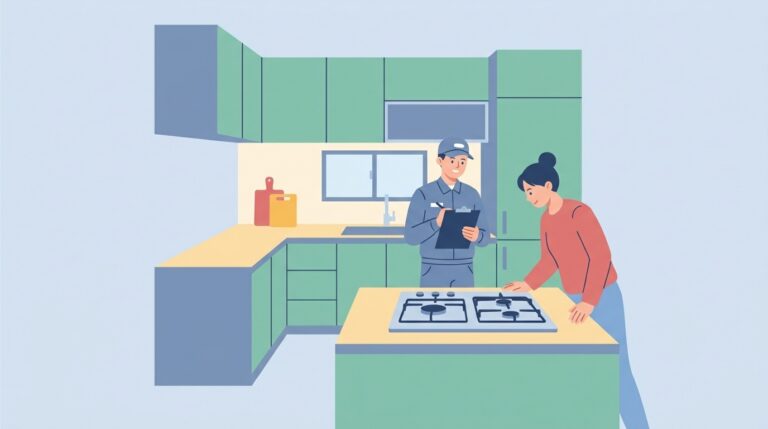
Imagine this: you’ve finally unpacked your last box in your dreamy new Seoul studio apartment (원룸 – wonrum). You are starving after a long day of moving, and just like in every classic K-drama, you want to whip up a celebratory bowl of Shin Ramyun. But wait—you turn the dial on the gas stove, and nothing happens! There’s no blue flame, just a cold metallic click. In Korea, city gas (도시가스 – dosigaseu) is legally disconnected between tenants for fire safety. To use your stove or turn on hot water, you need a licensed technician (기사님 – gisanim) to install the hose and perform a mandatory bubble leak test. Navigating Korean utilities can feel overwhelming when you’re caught between Korean red tape and unfamiliar technical terms. Don’t worry! This guide is built directly from real expat experiences to turn this stressful chore into a smooth, confident milestone in your Korean life.
Phase 2: Core Expressions (Top 3)
1. 가스레인지 호스 연결해 주세요 (Gaseu-leinji hoseu yeongyeol-hae juseyo)
- Pronunciation: [Gaseu-reinji hoseu yeong-yeol-hae joo-seh-yo] (Sounds like: “Gah-soo-rayn-jee ho-soo young-yull-hay joo-say-yo”)
- Meaning: “Please connect the gas stove hose.” (Literal: Gas range hose connect please)
- K-Culture Moment: In slice-of-life dramas like Because This Is My First Life, you often see young tenants waiting awkwardly in bare apartments for the utility technician to set up appliances.
- Editor’s Insight: In Korea, never attempt to attach the rubber gas tube with tape or clamps yourself. By law, it must be sealed with a specific safety valve and recorded in the municipal gas database.
- Situation Spectrum:
- Casual: 🚫 (Unsafe/Rude)
- Semi-formal: ✅ 가스레인지 호스 연결해 주세요 (Standard, polite)
- Formal: ✅ 가스레인지 호스 연결 부탁드립니다 (Gaseu-leinji hoseu yeongyeol butak-deurimnida)
- 🤔 Think About It: Why does Korean emphasize “해 주세요” (do it for my benefit) rather than just stating a request? It highlights relational cooperation.
2. 가스 누출 검사도 해 주시나요? (Gaseu nuchul geomsa-do hae jusinayo?)
- Pronunciation: [Gaseu noochul geom-sa-doh hae joo-she-nah-yo] (Sounds like: “Gah-soo noo-chool gum-sah-doh hay joo-she-nah-yo”)
- Meaning: “Do you also perform the gas leak check?”
- K-Culture Moment: You will see the friendly technician pull out a spray bottle of soapy solution or a digital beeping detector to inspect every pipe joint meticulously.
- Editor’s Insight: Adding the particle ‘-도’ (-do, “also”) makes your inquiry sound natural and polite, demonstrating you are an informed tenant who cares about home safety.
- Situation Spectrum:
- Casual: 🚫 가스 누출 검사도 해 줘? (Too informal for a service technician)
- Semi-formal: ✅ 가스 누출 검사도 해 주시나요? (Perfect balance)
- Formal: ✅ 가스 누출 점검도 함께 진행되나요? (Gaseu nuchul jeomgeom-do hamkke jinhaeng-doenayo?)
- 🤔 Think About It: In high-density apartment blocks (아파트/빌라), individual safety is communal safety. Notice how gas checks are treated as a shared civic responsibility.
3. 설치 비용은 얼마예요? (Seolchi biyong-eun eolmayeyo?)
- Pronunciation: [Seol-chi bee-yong-eun uhl-mah-yeh-yo] (Sounds like: “Soul-chee bee-yong-oon ull-mah-yay-yo”)
- Meaning: “How much is the installation fee?”
- K-Culture Moment: The classic moment of pulling out your smartphone to transfer money instantly via Toss or KakaoPay while standing right by the kitchen counter.
- Editor’s Insight: The connection fee usually covers the rubber hose, metal safety clamp, and labor (출장비 – chuljangbi). Most technicians carry a portable card reader or provide a bank transfer account (계좌번호 – gyejwabeonho).
- Situation Spectrum:
- Casual: 🚫 얼마야? (Rude)
- Semi-formal: ✅ 설치 비용은 얼마예요? (Natural and friendly)
- Formal: ✅ 설치 비용이 어떻게 되나요? (Seolchi biyong-i eotteoke doenayo?)
- 🤔 Think About It: Asking directly about price in Korea is not considered impolite if framed with polite verb endings like ‘-예요’ or ‘-되나요’.
Phase 3: Textbook Korean vs. Real Korean
Situation 1: Inquiring if gas is turned on safely
- 📖 교과서 한국어: 가스 공급이 정상적으로 작동합니까? (Gaseu gonggeub-i jeongsangjeog-euro jakdonghamnikka? – “Is the gas supply functioning normally?”)
- 🗣️ 진짜 한국어: 이제 불 잘 켜지나요? (Ije bul jal kyeojinayo? – “Does the flame light up well now?”)
- 💡 왜 다를까?: Real Korean favors intuitive sensory words (불 – fire/flame, 켜지다 – to light up) over stiff technical jargon like ‘supply operation’.
Situation 2: Asking for the payment receipt or proof
- 📖 교과서 한국어: 영수증을 발급해 주시기를 요청합니다. (Yeongsujeung-eul balgeup-hae jusigireul yocheonghamnida. – “I request the issuance of a receipt.”)
- 🗣️ 진짜 한국어: 영수증 문자로 보내주실 수 있나요? (Yeongsujeung munjaro bonaejusil su innayo? – “Could you text me the receipt?”)
- 💡 왜 다를까?: Almost all service receipts in Korea are sent instantly via automated SMS (문자) or KakaoTalk Alimtalk, making paper receipts obsolete.
Phase 4: K-Culture Deep Dive & Non-verbal Manners
4-1. 눈치 (Nunchi) & Polite Gestures
When the gas technician arrives at your door:
1. Indoor Slippers Ready: Step back slightly and offer indoor slippers (실내화 – silnaehwa) or let them know they can keep their work shoes on with plastic covers.
2. The Beverage Hospitality: Handing the technician a chilled canned coffee, bottled water, or a bottle of Vita500/Bacchus shows exceptional Korean hospitality (정 – jeong).
3. Respectful Distance: While the technician works with tools and soapy foam, do not hover right over their shoulder. Stand about 1.5 meters away with your hands loosely folded in front.
4-2. Cultural Code: The Moving Day Rhythm (이사 문화)
In Korea, moving day is an orchestrated ballet. Gas disconnection at your old residence and connection at your new one must be scheduled at least 2–3 days prior via the regional gas operator (such as Seoul City Gas, Samchully, or Kiturami). The gas technician also double-checks the carbon monoxide detector if you have an individual boiler. Once the technician stamps the safety checklist, your house officially feels like a home!
Phase 5: Real-Life Roleplay Scenario
Setting: Alex’s new studio apartment in Mapo-gu. The doorbell rings. Enter Mr. Park, a veteran gas technician carrying an orange toolbag.
- 박 기사님 (Technician Park): 안녕하세요! 도시가스 연결하러 왔습니다. (Annyeonghaseyo! Dosi-gaseu yeongyeol-hareo watseumnida. – “Hello! I’m here to connect your city gas.”)
🎭 [미소를 지으며 덧신을 신는다 - Smiles while slipping on shoe covers] - 알렉스 (Alex): 안녕하세요! 어서 오세요. 가스레인지 호스 연결해 주세요. (Annyeonghaseyo! Eoseo oseyo. Gaseu-leinji hoseu yeongyeol-hae juseyo. – “Hello! Welcome in. Please connect the gas stove hose.”)
🎭 [주방 쪽을 가리키며 - Pointing toward the kitchen] - 박 기사님 (Technician Park): 네, 밸브 확인하고 바로 작업하겠습니다. 호스는 새 걸로 교체할까요? (Ne, baelbeu hwaginhago baro jageophagesseumnida. Hoseuneun sae geollo gyochehalkkayo? – “Yes, I’ll inspect the valve and start immediately. Shall we replace the hose with a new one?”)
🎭 [밸브 규격을 살핀다 - Inspects the valve dimensions] - 알렉스 (Alex): 네, 안전하게 새 호스로 해 주세요. (Ne, anjeonhage sae hoseuro hae juseyo. – “Yes, please use a new hose for safety.”)
🎭 [고개를 끄덕인다 - Nods affirmatively] - 박 기사님 (Technician Park): 호스 연결 끝났고요, 비눗물로 가스 누출 검사해 드릴게요. (Hoseu yeongyeol kkeunnatgoyo, binutmullo gaseu nuchul geomsa-hae deurilgeyo. – “The hose connection is done; I’ll now check for gas leaks using soapy water.”)
🎭 [이음새에 거품 스프레이를 뿌린다 - Sprays foam onto the pipe joint] - 알렉스 (Alex): 누출 검사도 해 주셔서 안심이 돼요! 불은 켜지나요? (Nuchul geomsa-do hae jusyeoseo ansim-i dwaeyo! Bureun kyeojinayo? – “I’m relieved you checked for leaks! Does the fire light up?”)
🎭 [안도하는 표정으로 바라본다 - Looks on with relief] - 박 기사님 (Technician Park): 네, 점화 잘 됩니다. 거품도 안 일어나니 이상 없습니다! (Ne, jeomhwa jal doemnida. Geopumdo an ireonani isang eopseumnida! – “Yes, ignition is good. No bubbles forming, so all clear!”)
🎭 [스토브 점화기를 켜며 파란 불꽃을 보여준다 - Ignites stove to reveal a steady blue flame] - 알렉스 (Alex): 감사합니다! 설치 비용은 얼마예요? 카드 되나요? (Gamsahamnida! Seolchi biyong-eun eolmayeyo? Kadeu doenayo? – “Thank you! How much is the installation fee? Can I pay by card?”)
🎭 [결제 카드를 꺼내며 - Pulls out a payment card]
🔀 Interactive Choice Branch
What should Alex say next as the technician wraps up?
- Option A: “수고하셨습니다! 시원한 물 한 잔 드세요.” (Sugo-hasyeosseumnida! Siwonhan mul han jan deuseyo. – “Thank you for your hard work! Please have a cool glass of water.”)
- Option B: “돈 없는데 다음에 낼게요.” (Don eomneunde daeume naelgeyo. – “I don’t have money, I’ll pay next time.”)
- Option C: “가스 냄새가 여전히 나는 것 같아요! 다시 봐주세요!” (Gaseu naemsaega yeojeonhi naneun geot gatayo! Dasi bwajuseyo! – “I think I still smell gas! Check again!”)
Feedback:
* Option A (Best): 🌟 100 points! Offering a drink with “수고하셨습니다” is pure Korean warmth. The technician will gladly remember you as a wonderful tenant.
* Option B (Bad): 🚫 Danger! On-site safety and materials fees are required upon completion. Unpaid fees may halt service.
* Option C (Risk): ⚠️ Fair if you truly smell mercaptan (the rotten egg odor), but make sure to phrase it calmly: “혹시 가스 냄새가 조금 나는 것 같은데 다시 한번 확인해 주실 수 있나요?” (Could you check one more time?).
Phase 6: 10-Second Emotional Shadowing Drill
Practice matching these rhythm pauses (/) and emotional moods:
[😊 다정하고 반갑게 - Warm & Welcoming]
안녕하세요! / 가스레인지 호스 연결해 주세요. / 천천히 해주셔도 괜찮아요.
(Annyeonghaseyo! / Gaseu-leinji hoseu yeongyeol-hae juseyo. / Cheoncheonhi haejusyeodo gwaenchanayo.)-
[🧐 진지하고 꼼꼼하게 - Attentive & Curious]
가스 누출 검사도 / 꼼꼼하게 / 해 주시나요?
(Gaseu nuchul geomsa-do / kkomkkomhage / hae jusinayo?) -
[💳 깔끔하고 확실하게 - Clear & Confident]
오늘 작업 비용은 / 얼마예요? / 계좌이체 가능한가요?
(Oneul jageop biyong-eun / eolmayeyo? / Gyejwa-iche ganeunghangayo?)
Phase 7: K-Culture Mini Dictionary
- 도시가스 (Dosi-gaseu) | City Gas (LNG)
- Usage: The piped natural gas used throughout Korean cities for cooking and heating (ondol). Different regions use different providers (e.g., 서울도시가스, 예스코).
- 점검원 / 기사님 (Jeomgeom-won / Gisanim) | Safety Inspector / Technician
- Usage: Always address service professionals respectfully as ‘기사님’ (Gisanim) rather than ‘저기요’ (Jeogiyo) or ‘아저씨’ (Ajeossi).
- 비눗물 검사 (Binutmul geomsa) | Soapy Bubble Leak Inspection
- Usage: The traditional and foolproof method used to check pipe seams. If soap bubbles inflate, gas is escaping.
- 출장비 (Chuljangbi) | Service Call-Out Fee
- Usage: The base fee charged whenever a licensed technician travels to your location, typically ranging between 15,000 to 30,000 KRW depending on region and pipe length.
Phase 8: Traveler & Resident Survival Kit
Survival Expressions TOP 3
- 호스 연결 예약했어요. (Hoseu yeongyeol yeyak-haesseoyo.)
- Meaning: “I made a reservation for hose connection.”
- Pro Tip: Keep your text reservation confirmation handy on your phone when they ring the doorbell.
- 중간 밸브는 어디에 있어요? (Junggan baelbeuneun eodie isseoyo?)
- Meaning: “Where is the main safety valve?”
- Pro Tip: Technicians will gladly teach you how to turn the fuse-cock (safety valve) 90 degrees when going away on vacation.
- 영수증 발송해 주세요. (Yeongsujeung balsong-hae juseyo.)
- Meaning: “Please send me the receipt.”
- Pro Tip: Useful if your landlord covers the installation cost and asks for photographic proof.
Editor’s Living Note
Download the official regional gas utility app like the Seoul City Gas Mobile App on Google Play before moving. You can schedule appointments, submit meter readings, and set up auto-pay in seconds without making an intimidating phone call.
Phase 9: One Step Deeper (Reflection)
In Korean apartment culture, safety is viewed through a collective lens. Because one apartment’s gas leak can impact an entire building of dozens of families, safety regulations (도시가스 안전점검) are uncompromising. Bi-annual safety audits are mandatory nationwide. Showing patience and welcoming these certified inspectors into your private living space reflects mutual trust and community duty.
💬 Your Turn: Have you ever managed home utility appointments in another language? What part felt most nerve-wracking to you? Tell us in the comments below!
Phase 10: FAQ & Avoiding Misunderstandings
Q: Can I connect the gas stove myself to save on the installation fee?
A: Absolutely not! In South Korea, connecting city gas fixtures without a certified gas technician license is illegal under the High-Pressure Gas Safety Control Act and voids your housing insurance.
Q: How much does the gas hose connection usually cost in Seoul?
A: Typical costs range from 20,000 KRW to 40,000 KRW, which includes the technician call-out fee (출장비), new rubber piping, and the shutoff valve connection.
Q: What if my rental has an induction cooktop instead of a gas stove?
A: If your home uses an electric induction stove, you do not need a gas stove connection! However, you still need city gas connected if your floor heating (보일러 – boiler) runs on gas.
🚨 Common Mistakes TOP 3
- Mistake 1: Waiting until moving day to call the gas company.
- Correct Action: Book at least 3 business days in advance, especially during the busy moving season (February, March, October).
- Mistake 2: Addressing the technician as ‘아저씨’ (Ajeossi).
- Correct Action: Always use the honorific title ‘기사님’ (Gisanim).
- Mistake 3: Forgetting to turn off the intermediate valve (중간 밸브) after cooking.
- Correct Action: Make a habit of turning the valve perpendicular (90 degrees) to the pipe when finished.
Phase 11: Action Missions
- 🥉 Bronze Mission (Solo): Stand in your kitchen and practice saying “가스레인지 호스 연결해 주세요” three times with crisp pronunciation.
- 🥈 Silver Mission (Social): Share a photo of your Korean kitchen setup on Instagram or Threads using the hashtag
#DailyHangulUtilitiesand tag our page! - 🥇 Gold Mission (Real World): Locate the gas valve (퓨즈콕) in your current Korean apartment and confirm whether it is currently open (parallel) or shut (perpendicular).
- 🎮 K-Culture Mission: Watch an episode of a Korean variety show like I Live Alone (나 혼자 산다) and spot the yellow gas pipes and valve in their kitchen!
Phase 12: Interactive Quiz Challenge
Q1. What is the most polite and natural way to address the gas technician?
1) 이봐요 (Ibwayo)
2) 아저씨 (Ajeossi)
3) 기사님 (Gisanim)
4) 사장님 (Sajangnim)
👉 Click to reveal Answer & Explanation
Answer: 3) 기사님 (Gisanim)
Explanation: While ‘사장님’ is used for shop owners and ‘아저씨’ for older men casually, certified technical specialists should always be addressed as ‘기사님’.
Q2. Fill in the blank:
“안전을 위해 가스 _______ 검사도 해 주시나요?” (Do you also perform a gas leak check for safety?)
1) 요금 (Yogeum)
2) 누출 (Nuchul)
3) 청소 (Cheongso)
4) 포장 (Pojang)
👉 Click to reveal Answer & Explanation
Answer: 2) 누출 (Nuchul)
Explanation: ‘누출’ (nuchul) means leak/spill. ‘가스 누출 검사’ translates directly to gas leak inspection.
Q3. True or False:
In Korea, you can buy a gas hose at Daiso and clamp it to the gas valve yourself.
👉 Click to reveal Answer & Explanation
Answer: False (X)
Explanation: Connecting gas stove lines without a government-issued license is strictly prohibited by law in South Korea to prevent building-wide gas explosions.
🎬 Watch Our Daily Videos! (Daily Hangul Official Instagram)
Review the expressions you learned in this article with our fun daily short videos! Check out native pronunciation and real-life nuances in action.
- Instagram @dailyhangul_en







