

Phase 1: Empathy (Story-Driven Opening)
안녕하세요! 매일한글 에디터입니다. (Hello! This is your Daily Hangul editor.)
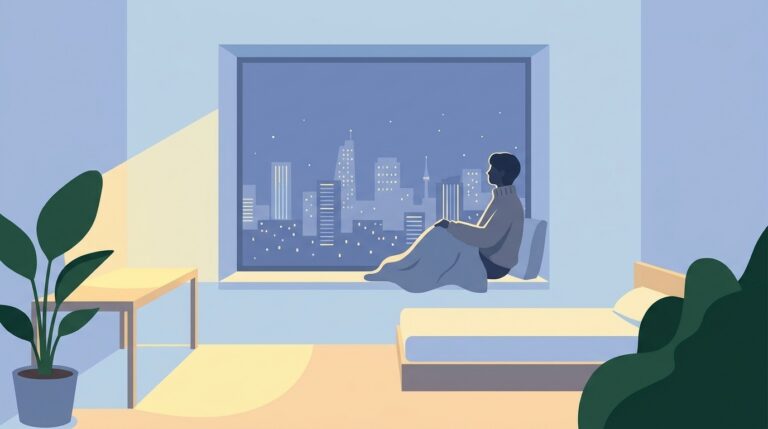
Picture this: It is 11:30 PM on a freezing Thursday night in Seoul. You are sitting on the floor of your cozy one-room officetel in Mapo-gu. The radiator is humming, your favorite playlist is murmuring softly, and you are sipping hot barley tea. On paper, it is the quintessential modern indie dream—independence, quiet freedom, and autonomy. But suddenly, your throat tightens with a searing fever. Your limbs feel like lead. You stretch your arm out for water, knock the glass over, and realize with a sudden jolt: If I pass out right now, nobody in this entire building will know for days.
If you have watched K-dramas like My Liberation Notes (나의 해방일지) or Be Melodramatic (멜로가 체질), you have likely noticed this quiet, poignant shift. South Korea has transformed from a hyper-interconnected, clan-centric society into a nation where single-person households (일인 가구, il-in gagu) represent more than 34% of all residences. Yet, while living alone is celebrated as a personal choice, the fear of isolation during illness and the tragedy of solitary deaths (고독사, godoksa) are urgent societal crises.
As advanced (C1) Korean learners, moving beyond basic food orders and travel banter means learning how to articulate systemic societal realities. Today, we are going to dive into how to talk about the delicate balance between personal autonomy and civic responsibility—specifically, how society must guarantee both independent living and a reliable safety net of care. Drawing directly from real-life debates and feedback from our advanced learners living in Seoul, this guide will equip you with sophisticated, empathetic discourse to discuss contemporary Korean social structures like a true local.
Phase 2: Core Expressions Deep Dive
Here are three crucial, high-register Korean expressions that will elevate your conversational depth to C1 fluency when addressing social networks and public care.
1. 고독사를 예방하기 위한 사회적 안전망이 시급해요
- Pronunciation: [Godoksa-reul yebanghagi wihan sahoejeok anjeonmang-i sigeuphaeyo] (Phonetic flow: think of “go-dok-sa” like ‘go-dock-sah’, and “an-jeon-mang” like ‘ahn-jeon-mahng’ with a clean, crisp ‘g’)
- Meaning: Literal: “A social safety net to prevent lonely deaths is urgent.” | Actual Nuance: Emphasizes an immediate, pressing civic responsibility to construct institutional welfare safeguards so isolated citizens do not perish unnoticed.
- K-Culture Moment: Commonly heard in investigative documentaries like SBS Unanswered Questions (그것이 알고 싶다) or during parliamentary hearings on welfare reform.
- Editor’s Insight: 고독사 (godoksa) combines 고독 (loneliness/solitude) and 사 (death). Pairing it with 시급하다 (to be urgent/pressing) conveys high urgency without being overly dramatic.
- Situation Spectrum: Casual: ⚠️ (too heavy for light chit-chat) | Semi-formal: ✅ | Formal/Debate: ✅
- 🤔 Think About It: In your native country, is dying alone seen as a strictly private family tragedy or an institutional failure of public welfare?
2. 혼자 살더라도 아플 때 기댈 수 있는 돌봄 체계가 필요해요
- Pronunciation: [Honja saldeorado apeul ttae gidael su inneun dolbom chegyega piryohaeyo] (Pronounce “gidael” naturally by softly tapping your tongue against the upper teeth, sounding like ‘gee-dael’)
- Meaning: Literal: “Even if living alone, a care system one can lean on when sick is needed.” | Actual Nuance: Captures both human vulnerability and structural solutions—highlighting that independence should not mean total abandonment when one falls ill.
- K-Culture Moment: A frequent sentiment expressed by solo-living characters in lifestyle shows like I Live Alone (나 혼자 산다) whenever a cast member is incapacitated by the flu.
- Editor’s Insight: The verb 기대다 (to lean against / to rely on) softens administrative jargon like 돌봄 체계 (care caregiving system) with genuine emotional warmth.
- Situation Spectrum: Casual: ✅ | Semi-formal: ✅ | Formal: ✅
- 🤔 Think About It: Notice how Korean uses the physical metaphor of “leaning” (기대다) to describe psychological and medical reliance. What metaphors does your language use?
3. 고립되지 않고 자율적인 삶을 영위할 권리가 보장되어야 해요
- Pronunciation: [Goripdoeji anko jayuljeogin salmeul yeongwihal gwonriga bojangdoeeoya haeyo] (Glide smoothly over “yeong-wi-hal”, where ‘ng’ seamlessly blends into the soft ‘w’)
- Meaning: Literal: “The right to lead an autonomous life without being isolated must be guaranteed.” | Actual Nuance: A sophisticated human-rights framing asserting that solo living is an autonomous dignity, provided structural isolation is actively countered.
- K-Culture Moment: Heard on civic podcasts, editorial columns in major dailies like Hankyoreh or Kyunghyang Shinmun, and neighborhood community boards.
- Editor’s Insight: 영위하다 (yeongwihada) is a C1-C2 level verb meaning to run, manage, or maintain a dignified life over time. It shows command of sophisticated civic vocabulary.
- Situation Spectrum: Casual: 🚫 (sounds like reading a thesis aloud) | Semi-formal: ⚠️ | Formal/Academic: ✅
- 🤔 Think About It: Why is the distinction between 자율 (autonomy) and 고립 (isolation) so fiercely discussed in modern urbanized societies?
Phase 3: Textbook Korean vs. Real-World Korean
When transitioning from textbook C1 grammar to authentic Seoul speech, notice how native speakers blend administrative nouns with empathetic, idiomatic verb endings.
Situation 1: Describing the dread of being sick and alone in an officetel
- 📖 교과서 한국어 (Textbook):
저는 1인 가구로서 질병에 걸렸을 때 간호해 줄 사람이 없어서 매우 곤란합니다.
(Jeoneun ir-in gaguroseo jilbyeong-e geollyeosseul ttae ganhohae jul sarami eopseoseo maeu gonranhamnida. – As a single-person household, when I contract an illness, it is very troublesome because there is no one to nurse me.) - 🗣️ 진짜 한국어 (Real-World):
혼자 사는데 몸살이라도 심하게 나면 진짜 눈앞이 캄캄하고 막막하더라고요.
(Honja saneunde momsarirado simhage namyeon jinjja nun-api kamkamhago mangmakhadeoragoyo. – When you live alone and catch even a severe body ache, everything truly feels pitch black and utterly helpless.) - 💡 왜 다를까? (Why the difference?):
Textbook phrasing relies on stiff Sino-Korean nouns (질병, 간호, 곤란). Real native speakers express the emotional gravity of solo living using expressive idioms like 눈앞이 캄캄하다 (the future looks pitch black) and 막막하다 (feeling desolate and at a loss).
Situation 2: Urging policy change during a community or academic forum
- 📖 교과서 한국어 (Textbook):
정부는 독거 가구를 방문하여 안부를 확인하는 프로그램을 의무화해야 합니다.
(Jeongbuneun dokgeo gagureul bangmunhayeo anbureul hwaginhaneun peurogeuraemeul uimuhwahaeya hamnida. – The government must make programs that visit solitary households to check on them mandatory.) - 🗣️ 진짜 한국어 (Real-World):
최소한 정기적으로 안부를 살피는 돌봄망이 없으면 고립되기 십상이잖아요.
(Choesohan jeonggijeogeuro anbureul salpineun dolbommang-i eopseumyeon goripdoegi sipsang-ijanhayo. – At the very least, without a care network that regularly checks in, it is all too easy for people to slip into total isolation.) - 💡 왜 다를까? (Why the difference?):
The grammar -기 십상이다 (-gi sipsang-ida, “to be prone to / bound to happen”) sounds natural, assertive, and persuasive, moving away from prescriptive mandates (의무화해야 합니다) to shared, empathetic consensus.
Phase 4: K-Culture Deep Dive & Non-Verbal Manners
4-1. 눈치 (Nunchi) & Gestures
When discussing vulnerability or welfare in Korea, balance is everything. Korean cultural communication values 눈치 (nunchi)—the art of assessing relational context. If you complain too aggressively about loneliness, you risk sounding like you are dumping an emotional burden (부담을 주다) on your listener. Conversely, if you discuss loneliness purely from a clinical policy perspective, you risk sounding detached and cold (정이 없다).
* The Softened Stance: When uttering phrases like 막막하더라고요 (it felt so desolate), tilt your head slightly (about 10 degrees) and bring one hand loosely near your chest or collarbone. This physically signals, “I am sharing an authentic human vulnerability, not lodging an aggressive complaint.”
* Eye Contact Modulation: Avoid intense, unblinking eye contact during emotional confessions. Gaze down slightly when admitting feeling helpless, then make warm, steady eye contact when proposing solutions (돌봄 체계가 보장되어야 해요).
4-2. Cultural Code Analysis: From “Daegajok” to “Gokdoksa”
Historically, Korea’s safety net was rooted in Confucian familism (가족주의, gajokjuui). The extended three-generation family (대가족) was expected to absorb all welfare costs—childcare, eldercare, and sickness. To seek outside help was once viewed as an abdication of filial piety (효, hyo).
Fast forward to modern Seoul: rapid industrialization, ultra-compact high-density housing, and changing life values have caused the traditional family safety net to fracture. Yet, public welfare is still playing catch-up. This gap created the phenomenon known as 돌봄 공백 (dolbom gongbaek, caregiving vacuum). Interestingly, local communities have devised hyper-Korean solutions: Yakult delivery ladies (야쿠르트 매니저) checking daily on elderly singles, or district offices creating IoT smart plugs that alert social workers if an officetel’s electricity usage drops to zero for 24 hours. Talking about this shows your Korean conversational partners that you understand Korea far beyond surface-level K-pop glamor.
Phase 5: Real-World Roleplay Scenario
Setting: A public citizen forum hosted at a district office (주민센터) in western Seoul. You are attending a neighborhood panel on “Urban Isolation and Solo-Household Safety Nets” alongside a district welfare coordinator, Manager Park Min-seok (박민석 팀장).
Characters:
* 민석 (Min-seok): Empathetic, hard-working district coordinator tackling urban welfare gaps.
* 나 (You): A thoughtful foreign resident and active civic participant in Seoul.
- 민석: 요즘 우리 자치구도 1인 가구 비율이 40%를 넘겼습니다. 다들 독립된 생활을 원하지만, 복지 사각지대도 만만치 않네요.
(Yojeum uri jachigudo ir-in gagu biyuri sasip-peosenteureul neomgyeotseumnida. Dadeul dongnipdoen saenghwareul wonhajiman, bokji sagakjidaedo manmanchi anneyo.)
“These days, our autonomous district’s single-person household ratio has surpassed 40%. Everyone wants independent living, but the welfare blind spots are no joke.”
🎭 [자료집을 넘기며 깊은 한숨을 내쉰다 - Flips through his briefing papers and lets out a deep sigh] -
나: 맞아요. 혼자 사는 자유도 소중하지만, 혼자 있어도 고립되지 않을 권리가 먼저 보장되어야 하지 않을까요?
(Majayo. Honja saneun jayudo sojunghajiman, honja isseodo goripdoeji anheul gwonriga meonjeo bojangdoeeoya haji aneulkkayo?)
“Indeed. While the freedom of living alone is precious, shouldn’t the right to not be isolated even when alone be guaranteed first?”
🎭 [상대방의 눈을 차분하게 응시하며 고개를 끄덕인다 - Meets his gaze calmly while nodding slowly] -
민석: 전적으로 공감합니다. 특히 청년이나 중장년 1인 가구는 제도적인 지원에서 더 쉽게 소외되곤 하거든요.
(Jeonjeogeuro gonggamhamnida. Teukhi cheongnyeon-ina jungjangnyeon ir-in gaguneun jedojeogin jiwoneseo deo swipge soedoegon hageodeunyo.)
“I completely agree. In particular, young and middle-aged solo households are often alienated from institutional support.”
🎭 [손가락으로 통계 수치를 짚으며 강조한다 - Points out statistical figures with his finger for emphasis] -
나: 실제로 제 주변 친구들도 갑자기 아플 때 약 하나 사다 줄 사람 없을 때 가장 막막하다고 하더라고요.
(Siljerero je jubyeon chingudeuldo gapjagi apeul ttae yak hana sada jul saram eopseul ttae gajang mangmakhadago hadeoragoyo.)
“In fact, my friends living alone say they feel the most desolate when they get sick out of nowhere and don’t even have anyone to buy them medicine.”
🎭 [안타까운 표정으로 한 손을 가슴께에 얹는다 - Places a hand over heart with a look of genuine concern] -
민석: 그게 바로 ‘돌봄 공백’의 무서운 점이죠. 방치되면 비극적인 고독사로 이어지기도 하니까요.
(Geuge baro ‘dolbom gongbaek’ui museoun jeom-ijyo. Bangchidoemyeon bigeukjeogin godoksaro ieojigido hanikkayo.)
“That is precisely the terrifying aspect of the ‘care vacuum.’ Left unaddressed, it sometimes leads to tragic lonely deaths.”
🎭 [목소리를 낮추며 엄숙하게 말한다 - Lowers his voice, speaking solemnly] -
나: 그러니까요. 거창한 간병이 아니더라도, 위급할 때 즉각 기댈 수 있는 지역 사회 안전망이 절실해요.
(Geureonikkayo. Geochanghan ganbyeong-i anideorado, wigeuphal ttae jeukgak gidael su inneun jiyeok sahoe anjeonmang-i jeolsilhaeyo.)
“Exactly. Even if it’s not lavish caregiving, a community safety net one can immediately lean on during emergencies is desperate.”
🎭 [두 손을 모아 테이블 위에 얹으며 단호하게 말한다 - Clasps both hands firmly on the table] -
민석: 이번에 구청에서 ‘병원 동행 서비스’와 정기 안부 확인망을 확대하려는 중인데, 의견을 더 수렴해 봐야겠습니다.
(Ibeone gucheong-eseo ‘byeongwon donghaeng seobiseu’wa jeonggi anbu hwaginmang-eul hwakdaeharyeoneun jung-inde, uigyeoneul deo suryeomhae bwayagesseumnida.)
“Our district office is currently trying to expand our ‘Hospital Escort Service’ and regular wellness-check network, so we should collect more citizen input.”
🎭 [메모 수첩을 펴고 펜을 쥔다 - Opens a notepad and readies his pen] -
나: 정말 반가운 소식이네요. 혼자서도 존엄하게 살아가려면 그런 실질적인 안전망이 밑바탕이 되어야 해요.
(Jeongmal bangaun sosigineyo. Honjaseodo joneomhage saragaryeomyeon geureon siljiljeogin anjeonmang-i mitbatang-i doeeoya haeyo.)
“That is truly welcome news. If one is to live with dignity even alone, such practical safety nets must serve as the foundation.”
🎭 [밝고 확신에 찬 미소를 지으며 고개를 끄덕인다 - Nods with a bright, confident smile]
🔀 인터랙티브 분기점 (Interactive Branching Point)
Imagine Min-seok asks you: “What should our neighborhood prioritize first to prevent extreme isolation?” How do you respond?
- Choice A:
“그냥 다 같이 모여서 밥 먹는 축제나 자주 열면 친해지지 않을까요?”
(Why don’t we just hold frequent communal dining festivals so everyone gets close?)
👉 Feedback [Risk]: While well-intentioned, this suggests an intro-level understanding. Many single-person households value privacy and dislike forced socializing. It overlooks privacy concerns and systemic medical safety nets. -
Choice B:
“사생활을 침해하지 않는 선에서 비대면 안부 확인과 위급 시 병원 동행 같은 현실적인 지원 체계를 촘촘히 구축해야 해요.”
(We must thoroughly build realistic support systems like non-intrusive wellness checks and emergency hospital escorts without infringing on privacy.)
👉 Feedback [Best]: Outstanding C1 execution! You acknowledge the tension between privacy (사생활 침해) and practical care (현실적인 지원 체계), offering a nuanced, policy-literate perspective. -
Choice C:
“가족들이 다시 부모를 모시고 살도록 법으로 강제해야 고독사가 사라집니다.”
(Lonely deaths will only disappear if we legally force families to live with and serve their parents again.)
👉 Feedback [Bad]: Anachronistic and regressive. It ignores demographic shifts and the rise of personal choice, sounding culturally out of touch with modern Korean civic discourse.
Phase 6: 10-Second Emotional Shadowing Drill
Read these three sentences aloud using the rhythm breaks (/) and emotional cues.
[🥺 안타깝고 절실하게 - Sympathetic & Earnest]
혼자 사는 것 자체가 / 문제가 아니라 / 아플 때 기댈 곳이 없다는 게 / 진짜 비극이에요.
(Honja saneun geot jachega / munjega anira / apeul ttae gidael gosi eopdaneun ge / jinjja bigeugi-eyo.)
Living alone in itself / isn’t the problem; / having nowhere to lean on when you’re sick / is the true tragedy.-
[🤝 단호하고 확신에 차서 - Firm & Convinced]
자율적인 삶을 존중하면서도 / 최소한의 사회적 안전망을 / 촘촘하게 엮어 나가야 합니다.
(Jayuljeogin salmeul jonjunghamyeonseodo / choesohan-ui sahoejeok anjeonmang-eul / chomchomhage yeok-eo nagaya hamnida.)
While respecting autonomous lifestyles, / we must weave together / a minimal social safety net / with meticulous density. -
[💡 따뜻하게 공감하며 - Warmly Empathetic]
작은 안부 확인 하나가 / 누군가에게는 / 세상을 살아갈 / 결정적인 버팀목이 되거든요.
(Jageun anbu hwagin hanaga / nugun-ga-egeneun / sesang-eul saragal / gyeoljeongjeogin beotimmog-i doegeodeunyo.)
A single small wellness check / can become for someone / a decisive pillar of support / to keep living in this world.
Phase 7: K-Culture Mini Dictionary
Expand your conceptual arsenal with these four socio-cultural terms:
- 고독사 (Godoksa – Lonely Death):
Usage: A legal and social term referring to a person living alone without contact with relatives who passes away due to suicide, sickness, etc., whose body is discovered only after some time has passed. Used frequently in social welfare policy. -
돌봄 공백 (Dolbom Gongbaek – Care Gap / Vacuum):
Usage: Refers to circumstances where an individual (elderly, child, disabled person, or temporarily bedridden solo worker) lacks family or institutional caregivers. Used widely in municipal urban planning. -
병원 동행 서비스 (Byeongwon Donghaeng Seobiseu – Hospital Escort Service):
Usage: A real municipal program in Korean cities (such as Seoul’s 1-Person Household Care) where trained companions pick you up at your door, help you through hospital registrations, exams, and pharmacies, and bring you safely back home. -
안부 묻기 (Anbu Mutgi – Well-being Inquiries):
Usage: In modern policy, this has evolved from polite personal courtesy to structured civic interventions—such as automated AI phone calls or daily dairy delivery programs to ensure isolated citizens are alive and safe.
Phase 8: Traveler and Resident Survival Kit
If you reside in or are spending an extended period in South Korea as a solo foreigner, memorize these three high-utility expressions:
- 혼자 있는데 너무 아파서 거동이 힘들어요. 도와주세요.
(Honja inneunde neomu apaseo geodong-i himdeureoyo. Dowajuseyo.)
Pro Tip: 거동이 힘들다 means “having difficulty moving/walking.” Use this when calling the 119 emergency dispatch or your building superintendent (관리소장님) if you are completely incapacitated. -
외국인 1인 가구도 병원 안심동행 서비스를 이용할 수 있나요?
(Oegugin ir-in gagudo byeongwon ansimdonghaeng seobiseureul iyonghal su innayo?)
Pro Tip: Registered alien residents (holding an Alien Registration Card / 외국인등록증) in jurisdictions like Seoul are often fully eligible for district-run hospital support services! -
혹시 비상시에 연락할 수 있는 주민센터 담당 부서가 어디인가요?
(Hoksi bisangsie yeonrakhal su inneun juminssenteo damdang buseoga eodi-in-gayo?)
Pro Tip: When moving into a new district, drop by the 주민센터 (Community Service Center) to register your address and ask this directly to identify their welfare division (사회복지과).
Editor’s Travel & Living Note:
Save this resource directly on your phone: use the Seoul 1-Person Household Portal to explore subsidized meal programs, security lock installations, and medical escort assistance. In acute emergencies where language is a barrier, dialing 119 and pressing 2 will immediately conference in a three-way interpretation service in English, Chinese, Japanese, and several other languages.
Phase 9: One Step Deeper (Reflective Thought)
Traditional Korean culture long viewed family loyalty as an absolute moral imperative. If an elderly parent or an ailing sibling suffered alone, societal condemnation fell heavily upon their offspring for failing at 효도 (filial duty). Yet today, the rapid emergence of solo households represents neither moral decay nor apathy; rather, it reflects an embrace of individual identity and self-determination (자기결정권). The challenge South Korea now confronts is philosophical: How can a society balance the sacred right to personal privacy with the collective obligation to ensure that no door remains sealed when life is in peril? Reconciling individual autonomy with communal warmth (정, jeong) is perhaps modern Korea’s defining civic project.
💬 Your Turn:
Does your society also struggle with isolated solo households, or does traditional familism still dominate? How does your native language distinguish between healthy solitude and tragic isolation? Share your thoughts below in Korean or English!
Phase 10: FAQ & Common Pitfalls
Q: What is the difference between ‘외로움’ (oéroum) and ‘고독’ (godok)?
A: 외로움 is a subjective, emotional state of feeling lonely or longing for companionship (e.g., 가을이라 외로워요 – “It’s autumn, so I feel lonely”). 고독 is a deeper, often existential state of solitude or objective isolation (e.g., 고독한 결단 – “a solitary decision”). Hence, the systemic tragedy of unattended death is termed 고독사, never 외로움사.
Q: Can ‘독거노인’ be used for young people living alone?
A: No. 독거노인 (dokgeo-noin) refers exclusively to solitary senior citizens. For general single living, use 1인 가구 (ir-in gagu, single-person household) or 나홀로족 (nahollojok, the solo living tribe).
Q: Is asking about someone’s living situation considered intrusive in Korea?
A: Generally, asking “혼자 사세요?” (Do you live alone?) is common in casual workplace chit-chat among friends or acquaintances. However, probing too deeply into why someone lives alone or whether they plan to marry can easily cross the line into 오지랖 (nosiness). Keep it light and focused on lifestyle tips like neighborhood dining or cooking!
🚨 Common Mistakes Warning Board
- Saying 혼자 죽다 instead of 고독사:
Incorrect: 요즘 한국에서 혼자 죽는 사람이 많아요.
Correct: 요즘 한국에서 고독사 문제가 심각해요.
Reason: In advanced discussions, using the proper civic term 고독사 maintains appropriate gravity and respect. - Confusing 간호 (ganho) and 돌봄 (dolbom):
Explanation: 간호 is clinical medical nursing performed by medical personnel. 돌봄 is holistic social care, companionship, and daily assistance. - Overusing the passive 고립되다 without an agent or context:
Tip: When arguing policy, pair it with 사각지대 (blind spot): 복지 사각지대에서 고립되지 않도록… (So people do not become isolated in welfare blind spots…).
Phase 11: Action Missions
Take your learning into the real world with these step-by-step missions:
- 🥉 Bronze Level (Solo Practice):
Record a 30-second voice memo describing how you feel when you are sick away from home. Use the expression “혼자 살더라도 아플 때 기댈 수 있는…” at least once. - 🥈 Silver Level (Social Sharing):
Write a short 3-sentence post on your language-exchange app (like HelloTalk or Tandem) comparing single-person household policies in Korea to those in your home country. - 🥇 Gold Level (Real-World Application):
Next time you discuss social trends with your Korean language partner or tutor, steer the conversation to urban isolation by asking: “요즘 한국에서는 1인 가구 돌봄 문제가 뉴스에 자주 나오던데, 어떻게 생각하세요?”
🎮 K-Culture Mission: Watch an episode of MBC’s I Live Alone (나 혼자 산다) or a scene from My Liberation Notes. Note how the characters depict the emotional boundary between solitary peace and the fear of isolation. Spot at least two terms from today’s mini dictionary!
Phase 12: Interactive Quiz Challenge
Test your mastery of C1-level discourse on solo living and welfare safety nets!
Question 1 (Situational Judgment)
You are participating in a local community debate in Seoul. An attendee claims: “People choose to live alone, so if they suffer from loneliness, the government shouldn’t intervene.” Which of the following responses is the most sophisticated (C1) and constructive rebuttal?
* A) 맞아요, 세금을 낭비하면 안 되니까 개인 책임이에요.
* B) 자율적인 삶의 선택은 존중받아야 하지만, 최소한의 인간적 존엄을 지킬 돌봄 안전망은 공공의 책임입니다.
* C) 혼자 사는 사람들을 다 강제로 결혼시키면 해결될 문제예요.
Question 2 (Fill-in-the-Blank)
Complete the sentence using the appropriate C1 vocabulary:
가족 해체로 인해 발생하는 ( )을/를 메우기 위해 지자체 단위의 촘촘한 안전망이 요구된다.
* A) 돌봄 공백
* B) 식사 예절
* C) 가족주의
Question 3 (True or False Cultural Insight)
Statement: In South Korea, local district offices offer free or low-cost services where someone will escort an ailing single resident to the hospital, and registered foreigners can often use this service.
* A) True
* B) False
👉 Click to reveal answers & explanations!
Answers & Explanations:
- Q1 Answer: B
Why: Option B perfectly articulates the C1-level perspective—balancing individual autonomy (자율적인 삶의 선택) with public responsibility for human dignity (최소한의 인간적 존엄을 지킬 돌봄 안전망). Option A ignores public welfare, and Option C is illogical and regressive. -
Q2 Answer: A (돌봄 공백)
Why: 돌봄 공백 means “care vacuum/gap,” which fits naturally with 메우다 (to bridge / fill in a vacuum). The full sentence translates to: “To bridge the care vacuum arising from the dissolution of traditional families, tight safety nets at the local municipal level are required.” -
Q3 Answer: A (True)
Why: Through programs like Seoul’s 1인 가구 병원 안심동행 서비스 (Hospital Safe Escort Service for Solo Households), any resident—including registered foreign residents—facing physical mobility issues when seeking hospital care can request an escort for a nominal hourly fee.
🎬 Watch Our Daily Videos! (Daily Hangul Official Instagram)
Review the expressions you learned in this article with our fun daily short videos! Check out native pronunciation and real-life nuances in action.
- Instagram @dailyhangul_en







