

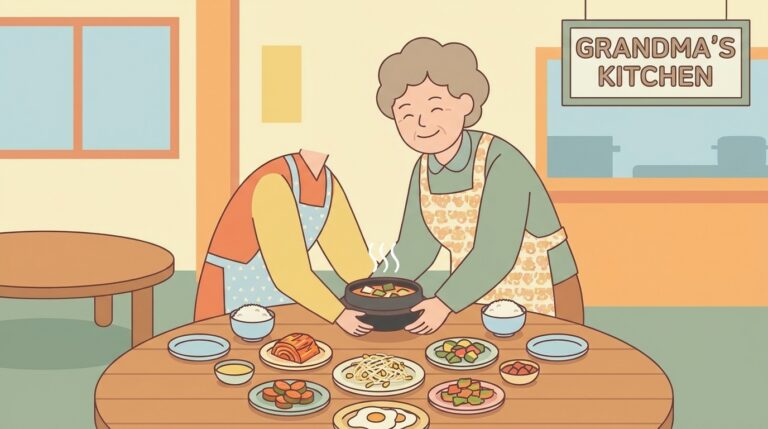
The Secret to Free Food in Korea: Review Like a Local
Phase 1: 공감 (Story-driven Opening)
안녕하세요! 매일한글 에디터입니다. (Hello! This is your Daily Hangul Editor!)
Picture this: You are sitting in a cozy, buzzing restaurant in Seoul. The smell of sizzling pork belly fills the air. You ordered just one stew and rice, but five minutes later, the owner walks over carrying a steaming bowl of fluffy eggs and an extra plate of dumplings. You instantly freeze. Your pulse spikes as you think: “Wait, did they mishear me? Am I going to get charged for all of this? How do I explain in Korean that I didn’t order this?!”
Take a deep breath! You haven’t been overcharged, and the owner hasn’t made a mistake. You just encountered one of the warmest traditions in Korean dining: 서비스 (Seobiseu / On the house) fueled by authentic 인심 (Insim / Generous hospitality).
Every week, our beginner learners tell us they felt awkward or confused when Korean restaurant owners brought out free side dishes. Once you master the right vocabulary to acknowledge and review these heartwarming gestures, you will transform everyday meals into unforgettable cultural connections. Based on real dining stories from our global community, this guide will teach you how to spot, appreciate, and write dazzling reviews for generous Korean restaurant owners!
Phase 2: 핵심 표현 3선 심층 분석 (Top 3 Essential Expressions)
1. 서비스예요 (Seobiseu-yeyo)
- Pronunciation: [Seo-bi-seu-ye-yo] (Think of the English word “service”, but pronounced with soft, bouncy vowels: “suh-bee-soo-yeh-yo”)
- Meaning: Literal: “It’s a service.” / Real Nuance: “It’s on the house!”
- K-Culture Moment: You will hear this constantly in Korean variety shows like Kang’s Kitchen or K-dramas whenever the beloved cook drops an extra soda or dish onto a customer’s table with a playful wink.
- Editor’s Insight: In English, “service” relates to customer care. In Konglish, seobiseu almost exclusively means a complimentary freebie given out of goodwill.
- Situation Spectrum: Casual ✅ | Semi-formal ✅ | Formal ⚠️
- 🤔 Think About It: In many Western cultures, receiving free items might raise suspicion about mistakes or bills. Why do you think Korean restaurants treat spontaneous free gifts as an essential sign of hospitality?
2. 인심이 후해요 (Insim-i huhaeyo)
- Pronunciation: [In-sim-i hu-hae-yo] (Sounds like “Inn-seem-ee hoo-heh-yo”)
- Meaning: Literal: “The human heart is thick/generous.” / Real Nuance: “The owner is exceptionally warm-hearted and generous.”
- K-Culture Moment: Used by food vloggers exploring traditional markets (Sijang) when an elderly grandmother (Halmeoni) piles tteokbokki twice as high as what was ordered.
- Editor’s Insight: Insim (인심) combines the Chinese characters for “Person” (人) and “Heart” (心). It refers specifically to community spirit and kindness towards guests.
- Situation Spectrum: Casual ✅ | Semi-formal ✅ | Formal ✅
- 🤔 Think About It: How does your native language describe a shop owner who gives more than what is paid for? Is it focused on the person’s heart or the product’s value?
3. 상다리가 부러지겠어요 (Sangdariga bureojigesseoyo)
- Pronunciation: [Sang-da-ri-ga bu-reo-ji-ges-seo-yo] (Rhymes with: “Sahng-dah-ree-gah boo-ruh-jee-gess-uh-yo”)
- Meaning: Literal: “The table legs are going to break!” / Real Nuance: “What an incredible feast! There are so many dishes!”
- K-Culture Moment: Classic line uttered by main characters in period dramas (Sageuk) when visiting royalty or returning home to a lavish feast prepared by their mother.
- Editor’s Insight: This is the ultimate compliment in a food review. Saying this shows you appreciate the staggering variety of banchan (side dishes) laid out before you.
- Situation Spectrum: Casual ✅ | Semi-formal ✅ | Formal 🚫
- 🤔 Think About It: Hyperbole is common in food appreciation worldwide. What is your culture’s equivalent dramatic phrase for an overflowing table of food?
Phase 3: 교과서 한국어 vs 진짜 한국어 (Textbook vs. Real-Life Korean)
Situation 1: Expressing gratitude for free side dishes
- 📖 교과서 한국어: 음식을 무료로 주셔서 대단히 감사합니다. (Eumsig-eul muryoro jusyeoseo daedanhi gamsahamnida. / Thank you very much for giving me food for free.)
- 🗣️ 진짜 한국어: 사장님, 서비스 진짜 대박이에요! (Sajangnim, seobiseu jinjja daebak-ieyo! / Boss, this freebie is totally awesome!)
- 💡 왜 다를까?: Saying muryo (free of charge) sounds clinical, like talking about a software trial. Locals use seobiseu paired with daebak (amazing) to spark instant smiles.
Situation 2: Describing generous portion sizes
- 📖 교과서 한국어: 이 식당은 음식의 양이 아주 많습니다. (I sikdang-eun eumsik-ui yang-i aju manseumnida. / This restaurant has a very large amount of food.)
- 🗣️ 진짜 한국어: 양이 완전 푸짐해요! (Yang-i wanjeon pujimhaeyo! / The portions are super generous and hearty!)
- 💡 왜 다를까?: Yang-i manta merely measures physical mass, whereas pujimhada paints a rich emotional picture of abundance, comfort, and satisfaction.
Phase 4: K-Culture 딥다이브 & 비언어적 매너 (Deep Dive & Body Language)
4-1. 눈치 (Nunchi) & Table Manners
When the restaurant owner (Sajangnim) brings an unprompted soda or dish to your table, they will usually say, “서비스예요~ (Seobiseu-yeyo~)”. Here is the golden non-verbal etiquette:
1. Two Hands Receiving: If you take it directly from their hands, hold it with both hands.
2. The Pleasant Gasp: Show visible appreciation! Make eye contact, nod with a slight bow, and say: “우와, 사장님 감사해요! (Uwa, sajangnim gamsahaeyo! / Wow, boss, thank you!)”.
3. Clear Clean Plate: The highest respect for seobiseu is finishing it. Leaving complimentary food untouched is seen as a slight to their kindness.
4-2. Cultural Code: The Culture of 정 (Jeong)
In Korea, eating is not a solitary financial transaction; it is a shared social bond. Historically, sharing meals built neighborhood solidarity. When a restaurant owner gives you seobiseu, they are sharing Jeong (warm emotional attachment). It turns you from an anonymous customer into a welcome guest in their home.
Phase 5: 실전 롤플레이 시나리오 (Real-World Roleplay)
- Setting: A bustling, aromatic neighborhood stew restaurant (Kimchi Jjigae Jip) in Mapo-gu, Seoul.
- Characters: You (Hungry traveler) & Imo-nim (The energetic owner, nicknamed ‘Auntie’).
[Turn 1]
이모님: 여기 김치찌개 나왔어요! 맛있게 드세요.
(Yeogi kimchi-jjigae nawasseoyo! Mas-itge deuseyo.)
“Here is your Kimchi Stew! Enjoy your meal.”
🎭 행동 지문: Sets down a bubbling stone pot and four standard side dishes.
[Turn 2]
You: 와, 냄새가 정말 좋아요! 잘 먹겠습니다!
(Wa, naemsaega jeongmal joayo! Jal meokgetseumnida!)
“Wow, it smells so good! Thank you for the food!”
🎭 행동 지문: Picking up your metal chopsticks with a big smile.
[Turn 3]
이모님: 학생, 외국에서 혼자 여행 왔어? 밥 더 줄까?
(Haksaeng, oeguk-eseo honja yeohaeng wasseo? Bap deo julkka?)
“Dear, did you travel alone from abroad? Want more rice?”
🎭 행동 지문: Tilting her head kindly with a warm grandmotherly gaze.
[Turn 4]
You: 괜찮아요, 지금도 충분해요! 사장님 손맛 최고예요.
(Gwaenchanayo, jigeumdo chungbunhaeyo! Sajangnim sonmat choego-yeyo.)
“I’m okay, this is plenty! Your home-cooked flavor is the best.”
🎭 행동 지문: Giving a friendly thumbs up after tasting the soup.
[Turn 5]
이모님: 아이고 예뻐라! 자, 이건 계란찜 서비스야!
(Aigo yeppeora! Ja, igeon gyeran-jjim seobiseu-ya!)
“Oh, how sweet! Here, this steamed egg is on the house!”
🎭 행동 지문: Plops a giant bowl of fluffy steamed egg in the middle of the table.
[Turn 6]
You: 헐, 진짜요? 상다리 부러지겠어요! 사장님 인심 대박!
(Heol, jinjja-yo? Sangdari bureojigesseoyo! Sajangnim insim daebak!)
“Whoa, really? The table legs are going to snap! Your generosity is amazing!”
🎭 행동 지문: Eyes wide open with delightful surprise, clasping hands together.
[Turn 7]
이모님: 호호! 남기지 말고 배부르게 싹 다 먹고 가요!
(Hoho! Namgiji malgo baebureuge ssak da meokgo gayo!)
“Haha! Don’t leave any leftovers, eat until you are completely full before you go!”
🎭 행동 지문: Chuckles merrily and pats your shoulder softly before moving on.
[Turn 8]
You: 네! 남김없이 다 먹고 리뷰도 꼭 남길게요!
(Ne! Namgim-eopsi da meokgo ribyudo kkok namgilgeyo!)
“Yes! I will eat everything and definitely leave a glowing review!”
🎭 행동 지문: Bowing slightly toward the kitchen counter.
🔀 Interactive Decision Point
When the owner sets down the free steamed egg (gyeran-jjim), what do you do?
* Choice A: Wave your hands defensively and say: “저 이거 안 시켰는데요? 돈 없어요! (I didn’t order this! I don’t have money!)”
* Choice B: Smile warmly, bow slightly with two hands placed on your chest, and say: “우와, 사장님 서비스예요? 감동이에요! (Wow, owner, is this on the house? I’m so touched!)”
* Choice C: Quietly eat it without saying anything or making eye contact, assuming all Korean meals come with it.
[Feedback]
* Choice A (Bad): Creates sudden awkwardness. The owner was showing affection, but will now feel like you suspected them of dishonest sales.
* Choice B (Best): 100 points! You recognized the gesture (*seobiseu*), validated their kindness, and cheered up the entire restaurant vibe.
* Choice C (Risk): Missed opportunity. While not deeply rude, ignoring the gesture denies you a memorable human connection with local elders.
Phase 6: 10초 감정 섀도잉 드릴 (10-Second Shadowing Drill)
Read each line aloud, pausing at the slashes (/), and mimicking the emotional tone!
[😲 깜짝 놀라면서 감격스럽게 / Shocked & Overjoyed]
“어머나, / 사장님! / 이거 서비스예요? / 상다리 부러지겠어요!”
(Eomeona, / sajangnim! / Igeo seobiseu-yeyo? / Sangdari bureojigesseoyo!)
“Oh my goodness, / owner! / Is this on the house? / The table legs are going to break!”-
[😊 따뜻하고 감사한 마음으로 / Warm & Grateful]
“사장님이 / 인심이 너무 후하셔서 / 식탁이 꽉 찼어요!”
(Sajangnim-i / insim-i neomu huhasyeoseo / siktak-i kkwak chasseoyo!)
“Because the owner is so generous, / our table / is completely packed!” -
[⭐ 당당하고 자신 있는 리뷰 톤 / Confident Reviewer Voice]
“맛도 최고지만, / 사장님 인심 때문에 / 무조건 재방문합니다!”
(Matdo choegojiman, / sajangnim insim ttaemune / mujogeon jaebangmunhamnida!)
“The taste is fantastic, / but thanks to the owner’s warm heart, / I will definitely visit again!”
Phase 7: K-Culture 미니 사전 (Mini Dictionary)
- 서비스 (Seobiseu) | Complimentary Gift / Freebie
Everyday Use: Food, drinks, or refills provided free of charge by a business owner as a gesture of appreciation. - 인심 (Insim) | Warm Generosity / Human Kindness
Everyday Use: Used to describe hospitable hosts, especially elders in traditional markets or neighborhood diners. - 푸짐하다 (Pujimhada) | Generous / Hearty (Portion)
Everyday Use: Describes a plate or bowl packed to the brim with hearty food. The ultimate compliment for review blogs. - 이모님 (Imo-nim) | Auntie (Restaurant staff title)
Everyday Use: A respectful, affectionate title for middle-aged female staff or owners at casual restaurants, creating an immediate family-like warmth.
Phase 8: 여행자를 위한 생존 키트 (Traveler’s Survival Kit)
Top 3 Survival Expressions
- 이거 서비스예요? (Igeo seobiseu-yeyo?)
Romanization: I-geo seo-bi-seu-ye-yo?
Pro Tip: Use with a gentle, smiling questioning tone when an unexpected dish lands on your table. - 사장님 인심 최고예요! (Sajangnim insim choego-yeyo!)
Romanization: Sa-jang-nim in-sim choe-go-ye-yo!
Pro Tip: Say this while paying at the counter. The owner’s face will instantly light up! - 너무 푸짐해서 배 터질 것 같아요! (Neomu pujimhaeseo bae teojil geot gat-ayo!)
Romanization: Neo-mu pu-jim-hae-seo bae teo-jil geot gat-a-yo!
Pro Tip: Literal meaning: “It’s so generous my belly might burst!” A playful, beloved compliment for hearty diners.
Editor’s Travel Note
When hunting for authentic culinary spots with big insim, skip sponsored social posts and rely on real Korean diner reviews. We recommend doing a 네이버 지도 앱 다운로드 to search for local spots with the search tag #인심좋은 (Generous hospitality) or #푸짐한 (Abundant portions). Filter for restaurants with 4.5+ stars and high photo-review ratios.
Phase 9: “한 발 더 깊이” (Think Deeper)
In modern commercial societies, every transaction is measured by strict cost-benefit balance. However, traditional Korean food culture retains deep roots in Dure (communal labor) and Pumasi (mutual exchange), where feeding neighbors abundantly was considered both a duty and joy. When an owner gives you seobiseu, they are subtly welcoming you into their community circle.
💬 Your Turn: Have you ever received unexpected free food or kindness when traveling in Korea or at home? How did it make you feel? Share your story in the comments below!
Phase 10: FAQ & 흔한 실수 예방 (FAQ & Common Mistakes)
Q: Can I explicitly ask for free items by asking “서비스 주세요” (Please give me service)?
A: As a beginner, it is better to avoid directly demanding free items right away. While locals sometimes say it playfully after ordering a massive amount of food, asking outright for freebies can sound impolite if you haven’t built rapport with the owner yet.
Q: Is it customary to tip restaurant owners when they provide free dishes?
A: No! South Korea has no tipping culture. Leaving extra cash on the table will confuse the staff, who may run outside to return the money you forgot. The best tip is sincere compliments, smiles, and an enthusiastic online review.
Q: What if I receive a complimentary item that I cannot eat due to allergies or diet?
A: Never push it away disgustedly. Smile, thank them with “정말 감사하지만 (Jeongmal gamsahajiman…)”, and politely explain your restriction: “제가 고기를 못 먹어서 죄송해요 (Jega gogireul mot meogeoseo joesonghaeyo / I’m sorry, I cannot eat meat)”. They will often happily swap it for a beverage!
🚨 흔한 실수 (Common Mistakes) Warning Board
- Mistake: Mistaking “서비스 (Seobiseu)” for actual customer service quality.
Correct Action: Remember seobiseu in food contexts means physical free items (like a free soda or stew), not polite waiting staff. - Mistake: Leaving the complimentary dish completely untouched without explanation.
Correct Action: Even if you’re full, take a taste, or kindly explain why you can’t finish it so the host doesn’t worry that it tasted bad. - Mistake: Using stiff textbook words like Muryo (무료) when thanking the owner.
Correct Action: Use Seobiseu (서비스) and praise their Insim (인심) for immediate rapport.
Phase 11: 액션 미션 & 참여 유도 (Action Missions)
- 🥉 Bronze Mission (Solo): Stand in front of your mirror and practice the 10-second shadowing line: “사장님 인심 대박! 상다리 부러지겠어요!” three times with dramatic facial expressions.
- 🥈 Silver Mission (Social): Next time you eat at a Korean restaurant, snap a photo of the side dishes and post a story tagging us with the caption: “인심 대박! (Insim daebak!)”.
- 🥇 Gold Mission (Live): When visiting a Korean restaurant, use “사장님, 서비스 감사해요!” when handed a free drink or dish, and leave a review using “푸짐해요” on Naver Map!
🎮 K-Culture Mission: Watch an episode of a neighborhood food show like Baek Jong-won’s Alley Restaurant or a K-drama market scene. Count how many times the host mentions the word 서비스 or 인심!
Phase 12: 인터랙티브 퀴즈 챌린지 (Quiz Challenge)
Q1. [상황 판단] The restaurant owner places a free bottle of Coke on your table saying “서비스예요~”. What is the best response?
a) “저 돈 없어요! 가져가세요!” (I have no money! Take it back!)
b) “사장님, 시원하게 잘 마실게요! 감사해요!” (Owner, I will enjoy this cold drink! Thank you!)
c) Silence with no eye contact.
Q2. [빈칸 채우기] Fill in the blank with the correct expression for generous hospitality:
“이 식당은 사장님 ( )이/가 후하셔서 반찬이 끝없이 나와요!”
(This restaurant’s owner has such generous [ ], side dishes keep coming endlessly!)
Q3. [True / False] In Korea, it is polite to leave a 15% cash tip when the owner gives you free food.
(True / False)
👉 Click to reveal answers & explanations!
- Q1 Answer: b) Responding warmly with thanks acknowledges their thoughtful gesture.
- Q2 Answer: 인심 (Insim) – 인심이 후하다 is the natural, authentic phrase meaning warm-hearted and generous.
- Q3 Answer: False – Korea has no tipping culture! Giving compliments and leaving warm online reviews is the proper way to return the favor.
🎬 Watch Our Daily Videos! (Daily Hangul Official Instagram)
Review the expressions you learned in this article with our fun daily short videos! Check out native pronunciation and real-life nuances in action.
- Instagram @dailyhangul_en







