

Master the Art of Academic Contact in Korea: The Perfect Lab Inquiry Email
Phase 1: Empathy (Story-Driven Opening)
안녕하세요! 매일한글 에디터입니다. (Hello! It’s your Daily Hangul editor.)
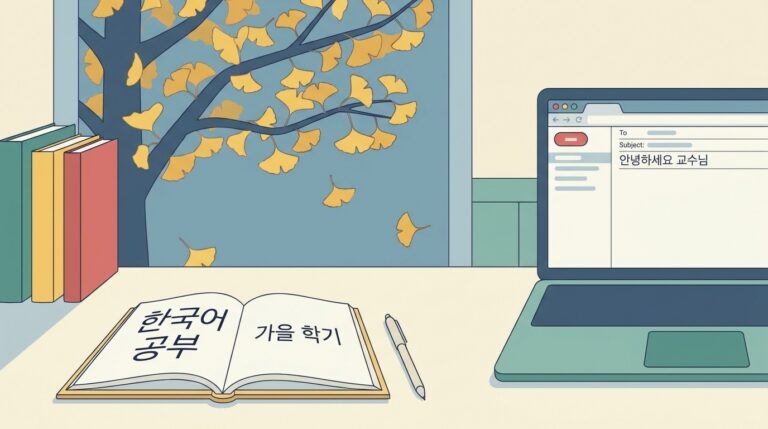
If you have ever watched K-dramas set around academic or corporate power struggles—like Law School or Sky Castle—you know that in Korea, hierarchy and initial greetings make or break your journey before it even starts. Now, imagine yourself sitting in front of a glowing laptop screen at midnight. You have selected your dream university in Seoul, found the ideal advisor whose research papers match your passions, and opened your email client.
Then, panic sets in: What on earth do you write in the subject line? If you write “Hello Professor, I want to join your lab,” will they think you are rude? Does an informal subject mean your application gets trashed without being read?
Yes, Korean professors receive dozens of inquiry emails every single day. The harsh truth is: if your subject line is vague, it will be skipped. But when you write a structured, crystal-clear title like ‘[대학원 진학 문의] OO학과 석사과정 지원 희망자 OOO입니다’ ([Graduate Admission Inquiry] Prospective Master’s Applicant OOO for Department of OO), you instantly communicate professionalism, nunchi (social intuition), and deep respect. Based on real-world success stories from international scholars who successfully entered Korea’s top graduate programs (SKY and KAIST), this guide will transform your anxiety into polished, high-level Korean communication.
Phase 2: Core 3 Expressions Deep Dive
1. 메일 제목은 ‘[대학원 진학 문의] OO학과 석사과정 지원 희망자 OOO입니다’처럼 용건과 이름을 명확히 적었어요. (Meil jemogeun ‘[daehagwon jinhak muni] OO-hakgwa seoksagwajeong jiwon huimangja OOO-imnida’cheoreom yonggeon-gwa ireum-eul myeonghwakhi jeog-eosseoyo.)
- Pronunciation: may-eel je-mok-eun ‘[dae-hak-won jin-hak moon-ee] OO-hak-gwa seok-sa-gwa-jeong jee-won hee-mang-ja OOO-eem-nee-da’ cheo-reom yong-geon-gwa ee-reum-eul myeong-hwak-hee jeok-eo-sseo-yo. (Sounds like: May-il je-mok-eun…)
- Meaning: “I wrote a clear email subject line specifying my purpose and name, such as ‘[Graduate Admission Inquiry] Prospective Master’s Applicant OOO for Department of OO’.”
- K-Culture Moment: In corporate and academic Korea, square brackets
[...]are universally used as a “tagging system” to help busy recipients categorize incoming mail immediately. - Editor’s Insight: 지원 희망자 (jiwon huimangja) literally translates to “applicant with hope/aspiration.” It portrays polite humility compared to simply asserting 지원자 (applicant).
- Situation Spectrum: Casual 🚫 | Semi-formal ⚠️ | Formal ✅
- 🤔 Think About It: In many Western universities, an email subject can be casual like “Prospective Student Inquiry – Alex.” Why do you think Korean professional culture prioritizes department, degree track, and full name upfront?
2. 바쁘신 와중에 메일을 확인해 주셔서 진심으로 감사드립니다. (Bappeusin wajung-e meil-eul hwaginhae jusyeoseo jinsim-euro gamsadeurimnida.)
- Pronunciation: bah-ppeu-sin wah-joong-eh meh-eel-eul hwa-gin-hae joo-syeo-seo jin-sim-eu-ro gahm-sah-deu-rim-nee-da. (Think of wah-joong like the ‘wa’ in water plus joong.)
- Meaning: Direct: “In the middle of being busy, thank you from my heart for checking my email.” / Real nuance: “Thank you so much for taking time out of your busy schedule to read my email.”
- K-Culture Moment: Every Korean polite formal interaction starts with an empathetic acknowledgment that the other person’s time is precious.
- Editor’s Insight: 바쁘신 와중에 (bappeusin wajunge) is the golden formula for formal Korean correspondence. Skipping this feels abruptly blunt.
- Situation Spectrum: Casual 🚫 | Semi-formal ⚠️ | Formal ✅
- 🤔 Think About It: Does your native language require you to apologize or acknowledge the receiver’s busy schedule before stating your business?
3. 교수님의 최근 연구 논문을 감명 깊게 읽었습니다. (Gyosunim-ui choegeun yeon-gu nonmun-eul gammyeong gipge ilgeosseumnida.)
- Pronunciation: gyo-soo-neem-eui choe-geun yeon-goo non-moon-eul gahm-myeong geep-geh eel-geo-sseum-nee-da.
- Meaning: “I was deeply impressed after reading your recent research paper.”
- K-Culture Moment: Graduate school mentors in Korea are revered as lifelong masters (스승, seuseung). Proving that you read their specific work creates instant rapport.
- Editor’s Insight: Instead of the casual 재미있게 읽었습니다 (It was interesting to read), use 감명 깊게 (deeply moved/impressed) to express scholarly admiration at an intermediate-advanced level.
- Situation Spectrum: Casual 🚫 | Semi-formal ⚠️ | Formal ✅
- 🤔 Think About It: How does flattery or intellectual alignment differ when addressing professors in your country versus an East Asian context?
Phase 3: Textbook Korean vs Real Korean
Scenario 1: Stating your interest in the lab
- 📖 교과서 한국어 (Textbook): 저는 교수님 연구실에 들어가고 싶습니다. (Jeoneun gyosunim yeon-gusil-e deureogago sipseumnida. – “I want to enter your lab.”)
- 🗣️ 진짜 한국어 (Real-World B2): 교수님의 연구실에서 석사과정 연구원으로 함께 참여하고 싶어 지원하게 되었습니다. (Gyosunim-ui yeon-gusil-eseo seoksagwajeong yeon-guwon-euro hamkke cham-yeohago sipeo jiwonhage doe-eosseumnida. – “I am applying because I earnestly hope to contribute as a Master’s researcher under your mentorship.”)
- 💡 왜 다를까? (Why is it different?): Plainly saying 들어가고 싶습니다 sounds like a child wanting to step into a room. Real academic Korean frames the lab as a scholarly collective where you participate (참여) and research (연구).
Scenario 2: Requesting an interview or online meeting
- 📖 교과서 한국어 (Textbook): 시간이 있으면 저를 언제 만날 수 있습니까? (Sigani isseumyeon jeoreul eonje mannal su isseumnikka? – “If you have time, when can you meet me?”)
- 🗣️ 진짜 한국어 (Real-World B2): 실례가 되지 않는다면, 연구실 면담이나 짧은 줌(Zoom) 미팅이 가능하실지 조심스럽게 여쭙고 싶습니다. (Sillyega doeji anneundamyeon, yeon-gusil myeondamina jjalbeun jum miting-i ganeunghasilji josimseureopge yeojjupgo sipseumnida. – “If it is not impolite, I would like to carefully inquire if an in-person lab interview or a brief Zoom meeting might be possible.”)
- 💡 왜 다를까? (Why is it different?): Direct questions about time put professors on the spot. Adding softening cushions like 실례가 되지 않는다면 (if it is not an imposition) and honorific inquiry 여쭙다 (to humbly inquire) demonstrates immaculate B2-level tact.
Phase 4: K-Culture Deep Dive & Non-Verbal Manners
4-1. 눈치 (Nunchi) & Digital Etiquette
- Email Timing: Never send your cold email at 11:30 PM on a Friday night or 7:00 AM on a Sunday. Respectful graduate applicants schedule their emails to hit the professor’s inbox between Tuesday and Thursday, 9:30 AM – 11:00 AM, just when professors sit down with their morning coffee.
- PDF Attachment Etiquette: Label your documents neatly. Instead of
CV_final_v2.pdf, save it as:[이름]_석사지원_이력서및연구계획서.pdf(e.g.,[AlexSmith]_석사지원_이력서및연구계획서.pdf). This shows you are organized and considerate of their desktop space. - Body Structure: Keep it to 3 concise paragraphs: (1) Formal greeting & self-introduction, (2) Why this specific professor/paper, (3) Humble request for a brief meeting + attached CV. Long essays will go unread!
4-2. The “Lab-sil” (랩실) Dynamic: The Korean Academic Family
In Korea, joining a 랩실 (raep-sil, research lab) is more than just enrolling in classes—it is entering a tight-knit community. You spend 10 to 14 hours a day with your lab seniors (선배, seonbae) and peers (동기, donggi). The professor is not merely a course instructor; they hold immense sway over your funding, graduation clearance, and career trajectory. Approaching them with deference is not subservience; it is a cultural signal that you know how to operate smoothly within a close community.
Phase 5: Real-World Roleplay Scenario
- Setting: Professor Park’s office (박 교수님 연구실) at a prestigious university in Sinchon, Seoul.
- Characters:
- Prof. Park (박 교수님): Renowned, meticulous artificial intelligence professor.
- Sarah (사라): An international applicant holding her printed research proposal with both hands.
Turn 1
* 🎭 박 교수님: (안경을 고쳐 쓰며 서류를 본다) 사라 씨, 메일 제목과 연구계획서가 아주 인상적이더군요.
* Romanization: Sarah ssi, meil jemok-gwa yeon-gugyehoekseoga aju insangjeog-ideogunyo.
* English: “Sarah, your email subject and research plan were very impressive.”
Turn 2
* 🎭 사라: (허리를 곧게 펴고 고개 숙여 인사하며) 바쁘신 일정 중에도 귀한 시간 내주셔서 진심으로 감사드립니다, 교수님.
* Romanization: Bappeusin iljeong jung-edo gwihan sigan naejusyeoseo jinsim-euro gamsadeurimnida, gyosunim.
* English: “Thank you sincerely for taking your valuable time out of your busy schedule, Professor.”
Turn 3
* 🎭 박 교수님: 우리 랩실에서 지난달 발표한 자연어 처리(NLP) 논문을 언급했던데, 어떤 점이 특히 흥미로웠나요?
* Romanization: Uri raepsil-eseo jinandal balpyohan jayeon-eo cheori nonmun-eul eongeuphaetdeonde, eotteon jeom-i teukhi heungmiroweonnayo?
* English: “You mentioned our lab’s Natural Language Processing paper published last month; what part did you find particularly interesting?”
Turn 4
* 🎭 사라: (아이컨택을 유지하며 차분한 어조로) 한국어 경어 체계 모델링 부분이었습니다. 제 학부 전공과 접목해 더 발전시켜 보고 싶습니다.
* Romanization: Han-guk-eo gyeong-eo chegye modeling bubun-ieosseumnida. Je hakbu jeongong-gwa jeopmokhae deo baljeonsikyeo bogo sipseumnida.
* English: “It was the modeling of Korean honorific systems. I want to integrate it with my undergraduate major and expand upon it.”
Turn 5
* 🎭 박 교수님: (고개를 끄덕이며 미소를 띤다) 학문적 기초가 탄탄하군요. 그런데 우리 랩실은 연구 강도가 센 편인데 괜찮겠어요?
* Romanization: Hakmunjeok gichoga tantanhagunyo. Geureonde uri raepsil-eun yeon-gu gangdoga sen pyeon-inde gwaenchankesseoyo?
* English: “Your academic foundation is solid. However, the research workload in our lab is quite intense; will you be okay?”
Turn 6
* 🎭 사라: (열정적인 눈빛으로) 네! 선배님들과 적극적으로 협력하면서 성실하게 배우고 기여하겠습니다.
* Romanization: Ne! Seonbaenimdeul-gwa jeokgeukjeok-euro hyeopryeokhajansil-hage bae-ugo giyeohagess-eumnida.
* English: “Yes! I will actively collaborate with senior members, study diligently, and contribute to the lab.”
Turn 7
* 🎭 박 교수님: 좋습니다. 다음 학기 지원 절차는 학과 행정실과 상의하고, 다음 주 랩 세미나에 한번 참관해 보죠.
* Romanization: Joeun-sumnida. Daeum hakgi jiwon jeolchaneun hakgwa haengjeongsil-gwa sang-uihago, daeum ju raep semina-e hanbeon chamgwanhae bojo.
* English: “Great. Discuss the application procedures for next semester with the department office, and feel free to sit in on our lab seminar next week.”
Turn 8
* 🎭 사라: (일어서서 공손하게 90도로 목례하며) 네, 교수님! 좋은 기회를 주셔서 정말 감사드립니다!
* Romanization: Ne, gyosunim! Joeun gihoereul jusyeoseo jeongmal gamsadeurimnida!
* English: “Yes, Professor! Thank you so much for giving me this wonderful opportunity!”
🔀 Interactive Choice Point
At Turn 5, the professor warns that the lab’s workload is demanding (연구 강도가 센 편). What is your best response?
- Option A: “저는 밤샘에 익숙해서 일주일 내내 쉬지 않고 일할 수 있습니다!” (I’m used to pulling all-nighters so I can work all week without resting!)
- ⚠️ Risk Feedback: While it shows drive, Korean labs today actively avoid health risks and toxic overpromising. It sounds unrealistic.
- Option B: “선배님들과 적극적으로 협력하면서 성실하게 배우고 기여하겠습니다.” (I will actively collaborate with senior members, study diligently, and contribute.)
- ✅ Best Feedback: Hits the jackpot! It emphasizes team harmony (선배님들과 협력), diligence (성실함), and mutual contribution (기여).
- Option C: “너무 힘들면 조금 조절해 주실 수 있나요?” (If it’s too hard, can you adjust the workload a bit?)
- 🚫 Bad Feedback: Instant rejection flag. Demonstrates low commitment before even being admitted.
Phase 6: 10-Second Emotion Shadowing Drill
Practicing cadence and pause points (/) is vital for sounding sincere:
[💼 격식 있고 정중하게 - Formal and respectful]- 메일 제목은 / ‘[대학원 진학 문의] OO학과 석사과정 지원 희망자 OOO입니다’처럼 / 용건과 이름을 / 명확히 적었어요.
(Meil jemogeun / ‘[daehagwon jinhak muni] OO-hakgwa seoksagwajeong jiwon huimangja OOO-imnida’cheoreom / yonggeon-gwa ireum-eul / myeonghwakhi jeog-eosseoyo.)
- 메일 제목은 / ‘[대학원 진학 문의] OO학과 석사과정 지원 희망자 OOO입니다’처럼 / 용건과 이름을 / 명확히 적었어요.
[🙏 깊은 겸손과 감사 - Deep humility and gratitude]- 바쁘신 와중에 / 메일을 확인해 주셔서 / 진심으로 감사드립니다.
(Bappeusin wajung-e / meil-eul hwaginhae jusyeoseo / jinsim-euro gamsadeurimnida.)
- 바쁘신 와중에 / 메일을 확인해 주셔서 / 진심으로 감사드립니다.
[✨ 눈을 반짝이며 진지하게 - Earnest and enthusiastic]- 실례가 되지 않는다면, / 연구실 면담 기회를 / 조심스럽게 여쭙고 싶습니다.
(Sillyega doeji anneundamyeon, / yeon-gusil myeondam gihoereul / josimseureopge yeojjupgo sipseumnida.)
- 실례가 되지 않는다면, / 연구실 면담 기회를 / 조심스럽게 여쭙고 싶습니다.
Phase 7: K-Culture Mini Dictionary
- 컨택 (Keon-taek)
- Definition: Direct outreach/cold emailing a prospective graduate advisor.
- Usage: “이번 주에 가고 싶은 랩실 세 곳에 컨택 메일을 보냈어요.” (I sent contact emails to three labs I want to join this week.)
- 랩실 (Raep-sil)
- Definition: Research laboratory / Lab room (Portmanteau of English “Lab” + Korean 室 “Sil”).
- Usage: “우리 랩실은 매주 월요일마다 연구 미팅을 해요.” (Our lab holds research meetings every Monday.)
- 지도교수님 (Ji-do-gyo-su-nim)
- Definition: Academic Advisor / Supervising Professor.
- Usage: “지도교수님의 승인을 받아야 졸업 논문 심사를 신청할 수 있어요.” (You must receive your advisor’s approval to apply for your thesis defense.)
- 연구계획서 (Yeon-gu-gye-hoek-seo)
- Definition: Research Proposal / Study Plan.
- Usage: “컨택 메일을 보낼 때 이력서와 연구계획서를 PDF로 첨부하세요.” (When sending a contact email, attach your CV and research proposal as PDFs.)
Phase 8: Applicant Survival Kit
Survival Expressions TOP 3
- 교수님, 연구실 앞에 도착했습니다. (Gyosunim, yeon-gusil ape dochakhaesseumnida.)
- Meaning: “Professor, I have arrived outside your lab office.”
- Pro Tip: Send this via email or text (if given a phone number) exactly 5 minutes before your scheduled interview time.
- 말씀해 주신 부분 메모하며 깊이 고민해 보겠습니다. (Malsseumhae jusin bubun memohamyeo gipi gominhae bogess-eumnida.)
- Meaning: “I will take note of what you pointed out and reflect on it deeply.”
- Pro Tip: Use this when a professor critiques your research ideas. Defending aggressively is a mistake; showing teachability is gold.
- 바쁘실 텐데 귀한 피드백 감사드립니다. (Bappeusil tende gwihan pideubaek gamsadeurimnida.)
- Meaning: “Thank you for your invaluable feedback despite your busy schedule.”
- Pro Tip: The ultimate follow-up thank-you email opener after an interview.
Editor’s Campus Travel Note
- Campus Navigation: Korean university campuses (like Seoul National University or Korea University) are massive and hilly. Download the 네이버 지도 앱 다운로드 to find exact building numbers (공학관, 인문관). A building number like “301동” can be a 20-minute uphill hike from the subway station!
- Paper Search: Before emailing, verify the professor’s latest domestic publications on the KCI 및 RISS 학술연구정보서비스 검색 platform. Citing an article they published in a Korean journal shows exceptional dedication.
Phase 9: A Step Deeper (한 발 더 깊이)
In Western academia, communicating with faculty can often feel horizontal; students comfortably debate professors and address them by their first names. In South Korea, academic etiquette reflects centuries of Confucian reverence captured in the idiom 군사부일체 (Gun-sa-bu-il-che: Monarch, Teacher, and Parent are of one equal dignity). While today’s graduate schools are modern and globalized, the advisor-advisee bond still carries profound moral responsibility. The professor is not merely your intellectual evaluator; they mentor your career and vouch for your character. Honoring that relationship through polite language is the ultimate sign that you value their community.
💬 Your Turn: Have you ever reached out to a mentor or professor in another country? How did your opening words compare to Korean email etiquette? Share your thoughts below!
Phase 10: FAQ & Common Mistakes
Q: What should I do if a professor does not reply to my contact email for a week?
A: Do not panic. Korean professors receive hundreds of emails. Wait at least 7 to 10 business days. Then, send a polite follow-up (리마인드 메일) forwarding your original message with the subject prefix [리마인드]: “교수님, 지난주에 문의 메일을 드렸던 OOO입니다. 바쁘실 줄 알지만 혹시나 하여 다시 연락드립니다.”
Q: Can I use “선생님” (Teacher) instead of “교수님” (Professor)?
A: Always stick to 교수님 (Gyosunim). In general society, 선생님 is a polite honorific, but in higher education, 교수님 is the standard title that recognizes their specific academic post.
Q: Should I write the contact email in English or Korean?
A: If applying for an international program conducted entirely in English, an English email is acceptable. However, writing the subject line and introductory greetings in polished B2 Korean—even if you attach an English CV—gives you a tremendous competitive edge!
🚨 Common Mistakes Warning Board
- ❌ Vague Subject Lines: Writing
안녕하세요(Hello) or문의드립니다(Inquiry). -> Fix: Always include brackets, department, degree, and name:[대학원 진학 문의] 컴퓨터공학과 석사과정 지원 희망자 김민수입니다. - ❌ Using ‘저의’ instead of ‘제’: While grammatically correct, overusing 저의 연구 sounds robotic. Use 제 연구 or simply omit the possessive pronoun.
- ❌ Missing Attachments: Mentioning your CV in the text but forgetting to attach it! Double-check your attachments before hitting send.
Phase 11: Action Missions
- 🥉 Bronze Mission (Solo Practice): Fill in the blanks with your target department and name, and recite the core subject line 5 times aloud until it rolls off your tongue.
- 🥈 Silver Mission (Social Connection): Draft your mock contact email intro in Korean and share it in our comments section below for peer review.
- 🥇 Gold Mission (Real Application): Locate the laboratory webpage of your target university and find the advisor’s title and lab publication list. Draft a real introductory paragraph using 바쁘신 와중에…!
- 🎮 K-Culture Mission: Watch an episode of a university-based drama (such as Law School or Cheese in the Trap) and listen to how students greet professors in hallway encounters.
Phase 12: Interactive Quiz Challenge
1. [상황 판단 – Situational Judgment]
Which of the following email subject lines is most appropriate for contacting a Korean graduate advisor?
* (A) 교수님 질문 있습니다! (Professor, I have a question!)
* (B) [대학원 진학 문의] 국어국문학과 석사과정 지원 희망자 사라 스미스입니다.
* (C) 안녕하세요? 연구실에 들어가고 싶어서 연락드립니다.
* (D) 석사과정 연구원 지원서 (CV 첨부).
2. [빈칸 채우기 – Fill in the Blank]
다음 빈칸에 들어갈 가장 알맞은 정중한 표현은 무엇일까요?
“바쁘신 ( ) 메일을 확인해 주셔서 진심으로 감사드립니다.”
* (A) 와중에
* (B) 시간에
* (C) 가운데에
* (D) 일정에
3. [문화 퀴즈 – True/False]
In Korean academic email etiquette, it is considered polite and enthusiastic to send a cold inquiry email to a professor at 2:00 AM on a Sunday morning. (True / False)
🔍 Click here to reveal Answers & Explanations!
- Answer: (B)
- Explanation: Option (B) uses the standard bracket tag
[대학원 진학 문의], defines the department and target degree track, and states the applicant’s full name clearly.
- Explanation: Option (B) uses the standard bracket tag
- Answer: (A) 와중에
- Explanation: 바쁘신 와중에 (in the midst of your busy schedule) is the quintessential Korean honorific phrase for opening professional and academic emails.
- Answer: False
- Explanation: Late-night and weekend emails disrupt personal boundaries. Always schedule your emails for regular weekday business hours (preferably 9:30 AM – 11:00 AM)!
- Explanation: Late-night and weekend emails disrupt personal boundaries. Always schedule your emails for regular weekday business hours (preferably 9:30 AM – 11:00 AM)!
🎬 Watch Our Daily Videos! (Daily Hangul Official Instagram)
Review the expressions you learned in this article with our fun daily short videos! Check out native pronunciation and real-life nuances in action.
- Instagram @dailyhangul_en







