

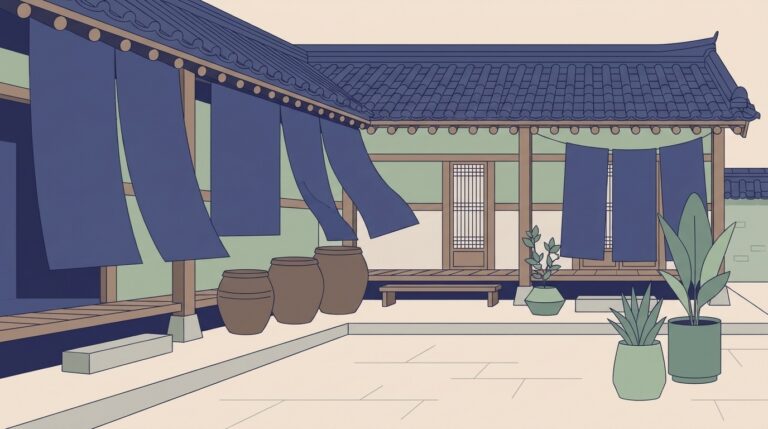
Surpassing the Master: Why Koreans Revere the Art of Cheongchureoram
Phase 1: Empathy (Story Immersion Opening)
안녕하세요! 매일한글 에디터입니다. (Hello! This is your Daily Hangul editor.)
Picture this scene from a high-stakes K-Drama like Romantic Doctor, Teacher Kim (낭만닥터 김사부) or the electrifying culinary arena of Culinary Class Wars (흑백요리사): A veteran mentor—who spent decades perfecting their craft—watches silently from the shadows as their young protege executes an impossible surgical technique or crafts an innovative dish that stuns the panel of judges. The room falls quiet. Tension builds. Will the veteran feel threatened? Resentful? Betrayed?
Instead, a slow, proud smile spreads across the teacher’s face, accompanied by a quiet nod and the murmurs of onlookers: “완전히 청출어람이네… (Wanjeonhi cheongchureoramine… / It is a complete case of cheongchureoram…)”
If you have reached the C2 level of Korean, you already understand complex grammatical structures and can debate geopolitics or literature. Yet, many elite non-native speakers hit a cultural glass ceiling when navigating the exquisite, razor-thin line between academic self-assertion and Confucian reverence. How do you acknowledge having surpassed your mentor without sounding haughty? How do you accept a compliment of superior intellect from a Korean senior without violating the foundational virtue of humility (겸양, gyeomyang)?
Today, we unpack the classical idiom 청출어람 청어람 (靑出於藍 靑於藍)—blue comes from the indigo plant yet is bluer than indigo. Drawing from hundreds of hours mentoring senior diplomats, global researchers, and K-culture creatives, this masterclass is designed to transform your scholarly discourse from “technically correct” to deeply moving, culturally resonant Korean.
Phase 2: Core 3 Expressions In-Depth Analysis
1. 청출어람 (靑出於藍)
- Pronunciation: [Cheong-chul-eo-ram] (Think of ‘cheong’ like ‘churn’ with a soft ‘o’, ‘chul’ like ‘chill-full’, ‘eo’ like the ‘u’ in ‘umbrella’, and ‘ram’ like ‘rum’)
- Meaning: Literal: “Blue extracted from the indigo plant.” Nuance: A pupil outshining their teacher through scholarly advancement, celebrated with collective reverence rather than individual ego.
- K-Culture Moment: Seen in the mentor-mentee showdowns of Culinary Class Wars, where master chefs proudly state that their apprentices winning against them is the ultimate validation of their lifelong teaching.
- Editor’s Insight: You almost never use this idiom to describe yourself (e.g., saying “내가 청출어람이다” sounds shockingly arrogant). It is exclusively an honorific bestowed by a mentor upon a student, or by third-party observers praising the lineage.
- Situation Spectrum: Casual ⚠️ | Semi-formal ✅ | Formal ✅
- 🤔 Think About It: In your native culture, when a student beats a master, is it viewed as an individual victory, a patricidal triumph, or an honor to the master’s pedigree?
2. 온고지신 (溫故知新)
- Pronunciation: [On-go-ji-sin] (Sounds like: ‘on’ as in ‘own’ without glide, ‘go’ as in ‘go’, ‘ji’ like ‘jeep’, ‘sin’ like ‘seen’)
- Meaning: Literal: “Reviewing the old to understand the new.” Nuance: Achieving creative breakthrough not by reckless disruption, but by thoroughly internalizing classical foundations.
- K-Culture Moment: Often cited by world-class K-Pop producers when blending traditional Korean instruments (gugak) with hip-hop beats, proving mastery over both eras.
- Editor’s Insight: Pair this with 청출어람 during speeches or scholarly debates to demonstrate that your innovation is rooted in deep gratitude toward established canons.
- Situation Spectrum: Casual 🚫 | Semi-formal ✅ | Formal ✅
- 🤔 Think About It: Does western modernity view tradition as an obstacle to innovation, while Korean scholarly thought treats tradition as its prerequisite?
3. 일취월장 (日就月將)
- Pronunciation: [Il-chwi-wol-jang] (Sounds like: ‘il’ as in ‘eel’, ‘chwi’ like ‘chewee’, ‘wol’ like ‘wall’, ‘jang’ like ‘jangle’)
- Meaning: Literal: “Daily progress and monthly advances.” Nuance: Explosive, steady intellectual or artistic refinement that astonishes observers over time.
- K-Culture Moment: Used by survival audition show judges (such as Produce or I-LAND) to describe a trainee whose skill has exponentially leaped between evaluation rounds.
- Editor’s Insight: Unlike 청출어람, which strictly compares two generations, 일취월장 evaluates an individual’s personal trajectory against their former self.
- Situation Spectrum: Casual ✅ | Semi-formal ✅ | Formal ✅
- 🤔 Think About It: How does celebrating incremental, consistent mastery alter one’s psychological stamina during long-term research or artistic creation?
Phase 3: Textbook Korean vs. Real Korean
Situation 1: Praising an outstanding student in front of their academic advisor
- 📖 교과서 한국어: 제자의 실력이 교수님보다 훨씬 뛰어납니다. (Jeja-ui sillyeogi gyosunimboda hwolssin ttwieonamnida. / The student’s ability is far superior to the professor’s.)
- 🗣️ 진짜 한국어: 완전히 청출어람입니다. 교수님께서 워낙 대도를 터주신 덕분에 제자가 비범한 성취를 냈네요. (Wanjeonhi cheongchureoramimnida. Gyosunimkkeseo wonak daedoreul teojusin deokbune jejaga bibeomhan seongchwireul naenneyo. / It is absolute cheongchureoram. Because you paved the grand path, your disciple was able to achieve something extraordinary.)
- 💡 왜 다를까?: Directly stating a student is “better” than their mentor in Korean culture creates profound social awkwardness (갑분싸). Framing the student’s brilliance as the direct manifestation of the professor’s greatness honors both parties simultaneously.
Situation 2: Responding when your mentor calls your thesis or artwork “청출어람”
- 📖 교과서 한국어: 감사합니다. 제가 더 열심히 해서 이겼습니다. (Gamsahamnida. Jega deo yeolsimhi haeseo igyeotseumnida. / Thank you. I won because I worked harder.)
- 🗣️ 진짜 한국어: 당치도 않으십니다. 스승님의 그림자 밑에 있었기에 겨우 첫걸음을 뗀 것에 불과합니다. (Dangchido aneusimnida. Seuseungnim-ui geurimja mite isseotgie gyeou cheotgeoreumeul tten geose bulgwahamnida. / Far from it, sir. It is only because I stood beneath your shadow that I could barely take my first steps.)
- 💡 왜 다를까?: At the C2 level, accepting praise from a mentor requires 극존칭 (extreme honorifics) and 겸양 (performative, sincere humility). Agreeing with the praise dissolves the Confucian bond; deflecting it elevates you both.
Phase 4: K-Culture Deep Dive & Non-Verbal Manners
4-1. Nunchi (눈치) & Gestural Etiquette: The Grace of Surpassing
When an esteemed professor, senior director, or artistic master compliments you using the phrase 청출어람, your body language speaks louder than your vocabulary:
* The Physical Deflection: Instantly lower your gaze slightly (avoid holding unbroken eye contact, which conveys defiance or arrogance). Tilt your upper torso downward at a 15-degree angle.
* The Two-Hand Barrier (공수, Gongsu): Clasp your hands neatly in front of your lower abdomen (right hand over left for formal humility in modern contexts) or gently raise one hand with the palm facing inward, lightly waving it from side to side to physically “ward off” excessive praise.
* The Vocal Tone: Lower your pitch slightly, soften your consonants, and ensure your final particle (~ㅂ니다 / ~옵니다) trails off with sincere deference.
4-2. Cultural Code Analysis: The Mythos of Gun-Sa-Bu-Il-Che (군사부일체)
Historically in Korea, the king, teacher, and father were considered an indivisible trinity (군사부일체, 國師父一體). Consequently, overtaking one’s master in intellect was considered dangerous territory—bordering on hubris unless framed through the metaphor of indigo dye.
The original citation from the classical Confucian philosopher Xunzi (순자, 荀子) states: “靑取之於藍而靑於藍” (Blue comes from indigo, yet is bluer than indigo; ice comes from water, yet is colder than water). In Korean intellectual history, 청출어람 is never a story of patricide or replacement. It is a story of transference and continuation. When a master sees an apprentice reach higher, it is not defeat; it is the immortality of their lineage.
Phase 5: Real Roleplay Scenario
Setting: A quiet teahouse in Insa-dong after an international symposium on artificial intelligence and traditional linguistics.
Characters:
* Professor Min (민 교수): Emeritus scholar, visionary linguist, discerning yet fiercely loyal to his lineage.
* Julian (줄리안): Postdoctoral fellow who just presented a paradigm-shifting computational thesis.
— Dialogue —
Turn 1: 민 교수
오늘 자네 발표를 들으며 객석 뒤편에서 가슴이 먹먹했다네. 내 학설의 허점을 그리도 우아하게 보완해 낼 줄이야.
(Oneul jane balpyoreul deureumyeo gaekseok dwipyeon-eseo gaseumi meongmeokhaettane. Nae hakseor-ui heojeomeul geurido uahage bo-wanhae nael juriya.)
(Listening to your presentation today from the back of the auditorium, my heart was overwhelmed. To think you could so elegantly address the blind spots of my theory.)
🎭 행동 지문: 찻잔을 천천히 내려놓으며 깊고 따뜻한 시선으로 줄리안을 응시한다.
Turn 2: 줄리안
교수님, 과찬이십니다. 교수님의 기틀이 없었다면 저는 데이터의 숲에서 길을 잃었을 것입니다.
(Gyosunim, gwachan-isimnida. Gyosunim-ui giteuri eopseotdamyeon jeoneun deiteo-ui sup-eseo gireul ireosseul geosimnida.)
(Professor, you flatter me excessively. Without the theoretical foundation you built, I would have been completely lost in a forest of data.)
🎭 행동 지문: 두 손으로 찻잔을 감싸 쥐고 시선을 낮추며 공손히 답한다.
Turn 3: 민 교수
아닐세. 이건 명백한 청출어람 청어람(靑出於藍 靑於藍)이야. 쪽빛보다 더 푸른 제자를 보는 것이 학자에게 얼마나 찬란한 축복인지 자네는 모를 걸세.
(Anilse. Igeon myeongbaekhan cheongchureoram cheongeoram-iya. Jjokbitboda deo pureun jejareul boneun geosi hakja-ege eolmana chanranhan chukboginji janeneun moreul geolse.)
(No, not at all. This is unequivocal cheongchureoram cheongeoram. You have no idea what a radiant blessing it is for a scholar to witness an apprentice bluer than the indigo plant itself.)
🎭 행동 지문: 만면에 잔잔한 미소를 띠며 고개를 천천히 끄덕인다.
Turn 4: 줄리안
그 찬란함이 있다면 그것은 온전히 교수님께서 비춰주신 빛이 반사된 것뿐입니다.
(Geu chanranhami itdamyeon geogeoseun onjeonhi gyosunimkkeseo bichwojusin bichi bansadoen geotppunimnida.)
(If there is any radiance at all, it is merely the reflection of the light that you, Professor, shone upon me.)
🎭 행동 지문: 맑은 음성으로 흔들림 없이 감사의 뜻을 전한다.
Turn 5: 민 교수
겸양도 지나치면 결례라네. 자네의 성취는 자네의 치열한 내공(內功) 덕이야. 이제 학계의 새로운 봉우리를 자네가 열어가야 해.
(Gyeomyangdo jinachimyeon gyeolryerane. Jane-ui seongchwineun jane-ui chiyeolhan naegong deog-iya. Ije hakgye-ui saeroun bong-urireul janega yeoreogaya hae.)
(Excessive modesty becomes impoliteness, my friend. Your achievement is the fruit of your own fierce inner mastery. It is now up to you to unlock new peaks in this academic field.)
🎭 행동 지문: 테이블 위의 줄리안 손등을 가볍게 토닥인다.
Turn 6: 줄리안
교수님의 말씀을 평생의 경책(警策)으로 삼겠습니다. 그 무게감을 잊지 않고 학문에 정진하겠습니다.
(Gyosunim-ui malsseumeul pyeongsaeng-ui gyeongchaeg-euro samgetseumnida. Geu mugegameul itji anko hangmun-e jeongjinhagetseumnida.)
(I will treat your words as a lifelong guiding rod. I will never forget that gravity as I devote myself to scholarship.)
🎭 행동 지문: 의자에서 허리를 곧게 펴며 깊은 결의를 표한다.
Turn 7: 민 교수
좋아, 그 기개일세. 자, 오늘 저녁은 청출어람의 탄생을 축하하며 내가 사지.
(Joa, geu gigaerilse. Ja, oneul jeonyeog-eun cheongchureoram-ui tansaeng-eul chukhahamyeo naega saji.)
(Splendid, that is the true scholarly spirit. Come, tonight I will treat you to dinner to celebrate the birth of cheongchureoram.)
🎭 행동 지문: 너털웃음을 터뜨리며 지갑을 챙긴다.
Turn 8: 줄리안
영광입니다, 교수님. 평생 잊지 못할 밤이 될 것 같습니다.
(Yeong-gwang-imnida, gyosunim. Pyeongsaeng itji mothal bami doel geot gatseumnida.)
(It is my profound honor, Professor. This will be an unforgettable night of my life.)
🎭 행동 지문: 공손하게 일어서서 민 교수의 외투를 먼저 받아든다.
🔀 인터랙티브 분기점 (Interactive Choice)
At Turn 4, if Julian had answered differently, how would the dynamic shift?
- Option A: “맞습니다. 제가 교수님 세대보다 인공지능 분석 도구를 훨씬 기민하게 다루다 보니 이런 결과가 나왔습니다.” (You are right. Because I handle AI tools much more agilely than your generation, this result occurred.)
- Feedback [Bad 🚫]: Disastrous. While factually true, invoking generational technological superiority (세대 차이) ruptures the relational harmony (의리). Min 교수 would view Julian as academically arrogant.
- Option B: “교수님께서 대도를 열어주신 덕분입니다. 제가 어찌 감히 스승님의 높이를 넘어서겠습니까.” (It is because you opened the grand path. How could I dare surpass the height of my master?)
- Feedback [Best ✅]: Sublime mastery of high-register Korean rhetoric. It honors the mentor’s contribution while validating the master’s magnanimity.
- Option C: “에이, 별거 아닙니다. 운이 좋아서 논문이 잘 풀렸을 뿐입니다.” (Oh, it’s nothing special. I just got lucky and the paper worked out well.)
- Feedback [Risk ⚠️]: Belittling one’s own groundbreaking paper as mere “luck” trivialize the praise and invalidates the mentor’s sincere evaluation.
Phase 6: 10-Second Emotional Shadowing Drill
Practicing these intonations will give your speech the calm weight of a seasoned Korean academic.
- [😌 깊은 존경과 극도의 겸손을 담아]
스승님의 가르침이 없었다면 / 감히 첫걸음조차 / 뗄 수 없었을 것입니다.
(Seuseungnim-ui gareuchimi eopseotdamyeon / gamhi cheotgeoreumjocha / ttel su eopseosseul geosimnida.) -
[🥹 벅찬 감격과 감사를 조심스럽게 누르며]
청출어람이라는 그 무거운 말씀을 / 평생의 채찍으로 삼아 / 더욱 정진하겠습니다.
(Cheongchureoram-iraneun geu mugeoun malsseumeul / pyeongsaeng-ui chaejjig-euro sama / deouk jeongjinhagetseumnida.) -
[🤝 상대방의 업적을 경의를 담아 드높일 때]
스승의 뛰어남은 / 그를 뛰어넘는 제자의 탄생으로 / 비로소 증명되는 법입니다.
(Seuseung-ui ttwieonameun / geureul ttwieoneomneun jeja-ui tansaeng-euro / biroso jeungmyeongdoeneun beobimnida.)
Phase 7: K-Culture Mini Dictionary (Core 4 Terms)
- 사제지간 (師弟之間, Saje-jigan)
- Meaning: The sacred bond between teacher (사) and disciple (제).
- Practical Use: In Korean academia and high-end arts, this bond transcends legal employment contracts. It is an enduring familial tie where emotional reciprocity and ethical fidelity last a lifetime.
- 겸양의 미덕 (謙讓의 美德, Gyeomyang-ui Mideok)
- Meaning: The virtue of yielding and modesty.
- Practical Use: Highly valued in executive and elite scientific circles. The higher your station, the more self-effacing your language register is expected to become.
- 일가견 (一家見, Ilgagyeon)
- Meaning: Possessing an authoritative, unique perspective or mastery in a specific domain.
- Practical Use: Used when acknowledging someone’s undisputed niche dominance: “그 분야에서만큼은 독보적인 일가견이 있으시잖아요.” (In that field at least, you possess an unrivaled, distinct mastery.)
- 내공 (內功, Naegong)
- Meaning: Inner strength, depth of experience, cultivated intellectual resilience.
- Practical Use: Originally a martial arts term, now ubiquitous in professional contexts to praise someone whose quiet expertise shines under pressure.
Phase 8: Survival Kit for Scholars & Travelers
Survival Expressions TOP 3
- “가르침을 주셔서 대단히 감사합니다.”
- Gareuchimeul jusyeoseo daedanhi gamsahamnida.
- Pro Tip: Use this when departing an academic conference, lab visit, or meeting with a Korean master artisan. It honors their status as a knowledge-giver rather than a simple conversationalist.
- “선생님의 고견(高見)을 청해 듣고 싶습니다.”
- Seonsaengnim-ui gogyeoneul cheonghae deutgo sipseumnida.
- Pro Tip: In place of the pedestrian “의견을 듣고 싶어요”, using 고견 (lofty opinion) instantly signals sophisticated stylistic competence.
- “누를 끼치지 않도록 만전을 기하겠습니다.”
- Nureul kkichiji antorok manjeoneul gihagetseumnida.
- Pro Tip: When a mentor entrusts you with an important keynote or clinical case, this phrase (“I will ensure utter perfection so as not to cause burden or dishonor to you”) demonstrates total professional maturity.
Editor’s Travel Note
When visiting traditional workshops, historic universities like Sungkyunkwan (성균관대학교), or high-tech research campuses in Pangyo, local navigation is critical. Install and configure your tools before arrival via the 네이버 지도 앱 다운로드 platform, as global maps lack micro-routing within domestic university and temple campuses. When riding transit, observe the absolute silence in designated scholarly commuter zones and subways; in Korea, intellectual spaces extend into the public sphere.
Phase 9: “한 발 더 깊이” (Step Deeper)
In Western enlightenment traditions, intellectual progress is frequently conceived through dialectical disruption—the younger generation must metaphorically “slay” the intellectual father to establish their own paradigm. In the Neo-Confucian cognitive matrix that underpins Korean relational linguistics, however, knowledge is not conquered; it is inherited and refined. When a Korean mentor declares you to be 청출어람, they are not resigning from the field; they are declaring that their investment in human capital has blossomed into transcendent indigo. The indigo dye (쪽물) stains deeper than the raw stalk ever could, but without the crushed green stalk, the blue pigment would cease to exist.
💬 Your Turn: Have you ever experienced a moment in your career, creative craft, or language journey where someone you taught surpassed you—or where you stood upon the shoulders of a revered mentor? Share your reflection in the comments below using the word 청출어람!
Phase 10: FAQ & Avoiding Misunderstandings
Q: Can I use “청출어람” to praise my own child or junior colleague?
A: Yes, but with strict contextual nunchi. You can warmly praise your own student or mentee by saying “우리 김 박사가 이제 나를 넘어서 청출어람을 이뤄냈네” to colleagues. However, bragging about your biological child using this term to outsiders can come across as uncouth boasting (팔불출). Use it strictly within academic, artistic, or professional mentor-apprentice lineages.
Q: What is the difference between “청출어람” and “후생가외(後生可畏)”?
A: Both express admiration for the younger generation. However, 후생가외 (the younger generation is to be feared and respected) emphasizes the formidable, raw potential of youth that keeps seniors on their toes. 청출어람 specifically focuses on the direct lineage between a teacher’s specific instruction and a student’s superior execution.
Q: Can I shorten it to just “청출어람” instead of the full eight-character idiom?
A: Absolutely! In everyday spoken Korean among intellectuals, 청출어람 is used 95% of the time. The full phrase 청출어람 청어람 (靑出於藍 靑於藍) is reserved for formal ceremonial speeches, retirement retrospectives, or literary publications for elevated rhetorical cadence.
🚨 Common Mistakes (흔한 실수)
- Mistake 1: Boasting of self-mastery. Saying “제가 청출어람 했습니다!” (I did cheongchureoram!).
- Correct Action: Never attribute this idiom to yourself. Instead say: “스승님의 가르침 덕분에 미약하게나마 발전할 수 있었습니다.”
- Mistake 2: Using it for non-hierarchical peer rivalry. Using it when a friend outscores another friend.
- Correct Action: Use 괄목상대 (刮目相對, gwalmoksangdae)—rubbing one’s eyes in awe at a peer’s startling growth.
- Mistake 3: Confusing modern competition with classical continuity. Treating the compliment as a declaration of winning.
- Correct Action: Always respond with filial gratitude rather than a boastful “Thank you, I won.”
Phase 11: Action Missions & Cultural Challenge
- 🥉 Bronze Mission (Solo Shadowing): Stand before a mirror and practice Turn 4 and Turn 6 of Phase 5. Deliver the lines with soft eye contact, a micro-nod, and the authentic Korean gesture of 공수 (hands folded in front of the waist).
- 🥈 Silver Mission (SNS & Writing): Write a short 3-sentence tribute on LinkedIn or your social feed to a former professor, senior mentor, or coach who helped you grow. Tag them and weave in the term: “스승님의 가르침을 바탕으로 청출어람을 꿈꾸며 정진하고 있습니다.”
- 🥇 Gold Mission (Real-life Execution): In your next professional encounter with a Korean scholar, executive, or language instructor, deflect a compliment on your advanced fluency using: “선생님께서 잘 이끌어주신 덕분이지요.”
- 🎮 K-Culture Mission: Watch Episode 14 of Romantic Doctor, Teacher Kim (낭만닥터 김사부) or search clips of Culinary Class Wars (흑백요리사). Identify the exact physical posture mentors and proteges assume when their professional lineage is acknowledged!
Phase 12: Interactive Quiz Challenge
Test your mastery of Korean classical idioms and cultural etiquette below.
1. [상황 판단] Master Chef Park (박 셰프) has just tasted his former junior sous-chef’s signature sauce and says with tears in his eyes: “이 맛은… 완전히 청출어람이구나.” What is the most culturally elevated and appropriate response for the junior chef?
(A) “감사합니다 셰프님! 이제 제가 이 레스토랑의 메인 셰프 자리를 맡아도 되겠습니까?”
(B) “셰프님께서 쪽풀이 되어주셨기에 비로소 제가 푸른빛을 낼 수 있었습니다. 온전히 셰프님의 은혜입니다.”
(C) “에이 아닙니다. 그냥 MSG를 적절하게 배합해서 운 좋게 나온 맛입니다.”
(D) “그렇죠? 제가 프랑스 유학 가서 셰프님 레시피의 단점을 완전히 뜯어고쳤거든요.”
2. [빈칸 채우기] Next to each definition, identify whether the correct classical idiom is ‘청출어람’ or ‘온고지신’:
– (1) 옛것을 익혀 미루어 새로운 지식과 도리를 발견함: [ ____________ ]
– (2) 제자가 스승의 학덕을 이어받아 스승보다 뛰어난 학문적 경지에 이름: [ ____________ ]
3. [True / False Cultural Check]
– (True / False): In high-level Korean professional etiquette, it is considered polite and assertive to write “저는 청출어람한 인재입니다” in your Korean job application cover letter (자기소개서).
👉 Click to reveal answers & detailed explanations!
정답 및 해설 (Answers & Explanations)
1. 정답: (B)
* 해설: Option (B) brilliantly weaves the original botanical metaphor of Xunzi’s idiom (쪽풀 and 푸른빛) while demonstrating radical gratitude (은혜). Option (A) is prematurely aggressive; Option (C) degrades one’s craft with self-sabotaging flippancy; Option (D) commits the ultimate social transgression of disparaging the mentor’s foundational recipe.
2. 정답:
– (1) 온고지신 (溫故知新)
– (2) 청출어람 (靑出於藍)
3. 정답: False
* 해설: Never apply 청출어람 to oneself in a 자기소개서! Calling yourself 청출어람 demonstrates a catastrophic lack of 겸양 (humility). Instead, a C2-level applicant would write: “훌륭한 선배님들의 가르침을 빠르게 체득하여 조직의 새로운 지평을 여는 인재로 성장하겠습니다.”
🎬 Watch Our Daily Videos! (Daily Hangul Official Instagram)
Review the expressions you learned in this article with our fun daily short videos! Check out native pronunciation and real-life nuances in action.
- Instagram @dailyhangul_en







