

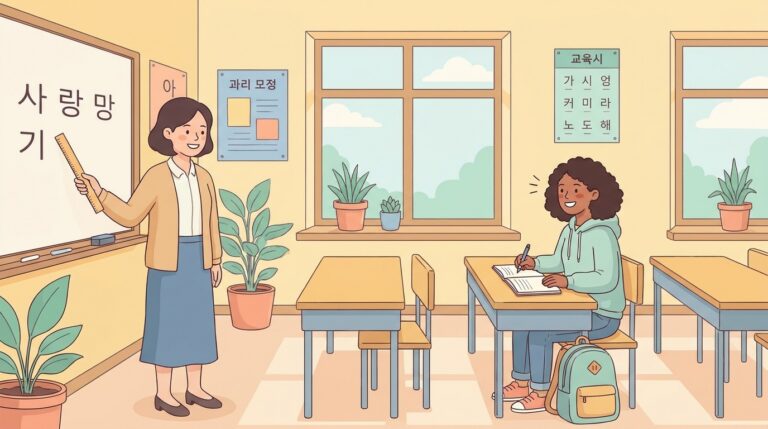
안녕하세요! 매일한글 에디터입니다. Picture this: you are sitting in your very first Korean language lesson. Your teacher warmly writes a sentence on the whiteboard and turns around with a bright, encouraging smile. You nod along enthusiastically like a bobblehead, desperately trying to keep up. Then comes the inevitable question: “이해했어요? (Ihaehaesseoyo? / Did you understand?)” Suddenly, your mind blanks out. You want to proudly declare that you caught every word, but you freeze. Should you say “Yes”? Should you bow? What if you sound like a formal robot from a 1980s textbook? Drawing from years of coaching beginner learners at Daily Hangul, I can tell you that mastering this simple response will instantly melt classroom anxiety, earn you instant praise from your tutor, and turn your learning journey into an exciting, two-way cultural adventure.
Phase 2: Core 3 Expressions Deep Dive
1. 이해했어요 (Ihaehaesseoyo)
- Pronunciation: [I-hae-haess-eo-yo] (Sounds like “ee-hae-hass-uh-yo”)
- Meaning: Literal: “I did understanding” | Actual Nuance: “I understood what you just explained!”
- K-Culture Moment: Imagine a scene from Crash Landing on You where Captain Ri explains a stealth plan, and Yoon Se-ri smiles gently, nodding with complete comprehension: “이해했어요 (Ihaehaesseoyo).”
- Editor’s Insight: This is the gold standard for classroom survival. It shows active mental engagement and is perfectly polite for speaking to teachers or senior language partners.
- Situation Spectrum: Casual: ⚠️ | Semi-formal: ✅ | Formal: ✅
- 🤔 Think About It: In English, we often say “I get it.” Why do you think Korean specifically marks past tense (“did understand”) to confirm comprehension?
2. 알겠습니다 (Algesseumnida)
- Pronunciation: [Al-geess-eum-ni-da] (Sounds like “ahl-get-soom-nee-dah”)
- Meaning: Literal: “I will know / I have come to know” | Actual Nuance: “Understood, loud and clear / I will follow that instruction.”
- K-Culture Moment: Seen frequently in office K-dramas like Misaeng, whenever an intern receives an assignment from a manager and bows crisply.
- Editor’s Insight: While very polite, using this with a casual friend when they tell you a funny joke might sound like you are reporting for military duty. Save it for teachers and formal settings!
- Situation Spectrum: Casual: 🚫 | Semi-formal: ⚠️ | Formal: ✅
- 🤔 Think About It: Notice the crisp ending -nida. How does shifting from casual -yo to formal -nida change your posture and attitude?
3. 네, 알겠어요 (Ne, algesseoyo)
- Pronunciation: [Ne, al-geess-eo-yo] (Sounds like “Neh, ahl-get-suh-yo”)
- Meaning: Literal: “Yes, I know” | Actual Nuance: “Got it! / Okay, I see now.”
- K-Culture Moment: Think of an idol reality show where the dance instructor demonstrates a tricky beat, and the members chant in unison: “네, 알겠어요! (Ne, algesseoyo!)”
- Editor’s Insight: Softer than 알겠습니다 (Algesseumnida), this phrase is warm, friendly, and natural. It is the number one phrase native Korean students use in small study groups.
- Situation Spectrum: Casual: ⚠️ | Semi-formal: ✅ | Formal: ⚠️
- 🤔 Think About It: How does adding “네 (Ne / Yes)” at the front help buffer your tone compared to blurted-out answers?
Phase 3: Textbook Korean vs. Real Korean
Situation 1: Confirming the Teacher’s Grammar Point
- 📖 교과서 한국어 (Textbook): 선생님의 설명을 전부 이해하였습니다. (Seonsaengnim-ui seolmyeong-eul jeonbu ihae-hayeosseumnida. / I have thoroughly comprehended the teacher’s explanation.)
- 🗣️ 진짜 한국어 (Real-Life): 아, 네! 이해했어요! (A, ne! Ihaehaesseoyo! / Ah, yes! I understood!)
- 💡 왜 다를까? (Why the difference?): Real conversation prioritizes warmth and speed. Repeating the word “teacher’s explanation” sounds like a written exam report.
Situation 2: Acknowledging a Homework Assignment
- 📖 교과서 한국어 (Textbook): 숙제를 명심하여 숙지했습니다. (Sukje-reul myeongsimhayeo sukjihaesseumnida. / I have deeply committed the homework assignment to memory.)
- 🗣️ 진짜 한국어 (Real-Life): 네, 알겠어요! 감사합니다! (Ne, algesseoyo! Gamsahamnida! / Got it! Thank you!)
- 💡 왜 다를까? (Why the difference?): Koreans value polite conciseness. A simple acknowledgment paired with appreciation creates an instant positive bond.
Phase 4: K-Culture Deep Dive & Non-Verbal Manners
4-1. 눈치 (Nunchi) & Gestures
In a Korean classroom, silence does not always mean consent or comprehension! If you simply stare blankly, your teacher will instinctively read your 눈치 (Nunchi) and wonder if you are lost. When you understand:
* The Double Nod (끄덕끄덕 – Kkeudeok-kkeudeok): Nod your head twice rhythmically while making soft eye contact.
* The Posture: Keep both hands visible on your desk or laptop keyboard. Slumping backward while saying “이해했어요 (Ihaehaesseoyo)” sends mixed signals.
4-2. Culture Code: The “Aha!” Moment in K-Media
Have you noticed in variety shows like Run BTS or Knowing Bros how cast members react during quiz games? The moment the rules click, they clap once and exclaim: “아~ 뭔지 알겠다! (A~ mwonji algetda! / Ah, I get what this is!)” Korean communication is deeply communal; acknowledging understanding is treated as an active celebration of shared connection.
Phase 5: Real-Life Roleplay Scenario
Setting: You are in a cozy Hangul academy in Hongdae with Teacher Min-ji (선생님 민지). Sunlight pours over study notes.
- Teacher Min-ji: 자, 은/는 하고 이/가는 달라요. 이해했어요? (Ja, eun/neun hago i/ga-neun dallayo. Ihaehaesseoyo? / Now, topic markers and subject markers are different. Did you understand?)
- 🎭 행동 지문: Smiling thoughtfully, glancing down at your worksheet notes.
- You: 아! 네, 이해했어요! (A! Ne, ihaehaesseoyo! / Ah! Yes, I understood!)
- Teacher Min-ji: 오, 정말요? 그럼 예문 하나 만들어 볼까요? (O, jeongmallyo? Geureom yemun hana mandeureo bolkkayo? / Oh, really? Then shall we make an example sentence?)
- 🎭 행동 지문: Pointing at your notebook proudly.
- You: 저는 학생이에요! (Jeoneun haksaeng-ieyo! / I am a student!)
- Teacher Min-ji: 완벽해요! 숙제는 내일까지예요. (Wanbyeokhaeyo! Sukjeneun naeilkkaji-yeyo. / Perfect! Homework is due tomorrow.)
- 🎭 행동 지문: Giving a polite nod of acknowledgment.
- You: 네, 알겠습니다! (Ne, algesseumnida! / Understood!)
- Teacher Min-ji: 오늘도 수고했어요! (Oneuldo sugohaesseoyo! / Great work today!)
🔀 Interactive Choice Point: The Teacher asks if the pronunciation rule is clear!
- Option A: “응, 알았어! (Eung, arasseo!)”
- Option B: “네, 이해했어요! (Ne, ihaehaesseoyo!)”
- Option C: “몰라요. (Mollayo.)” without eye contact
Feedback:
* Choice A (Bad): 응, 알았어 is informal banmal (반말). Using this with your teacher will cause an awkward silence!
* Choice B (Best): Polite, cheerful, and demonstrates respectful A1 Korean proficiency.
* Choice C (Risk): 몰라요 sounds too blunt and dismissive. If you didn’t understand, say 다시 설명해 주세요 (Dasi seolmyeonghae juseyo / Please explain again) instead.
Phase 6: 10-Second Emotion Shadowing Drill
Practice these aloud! Follow the pause markers (/) and embody the emotions:
[😊 Relieved and bright]네! / 이제 / 이해했어요! (Ne! / Ije / ihaehaesseoyo! / Yes! / Now / I understood!)[🫡 Crisp and respectful]네, / 알겠습니다 / 선생님! (Ne, / algesseumnida / seonsaengnim! / Yes, / understood / teacher!)[💡 Sudden realization]아~ / 무슨 말인지 / 알겠어요! (A~ / museun marinji / algesseoyo! / Ah~ / what that means / I see now!)
Phase 7: K-Culture Mini Dictionary
- 이해 (I-hae) | Noun: Understanding / Comprehension | Used in both classrooms and business contracts (이해관계자 – Stakeholders).
- 선생님 (Seon-saeng-nim) | Noun: Teacher / Respected Instructor | A universal polite title in Korea; call doctors, mentors, and language tutors 선생님.
- 질문 (Jil-mun) | Noun: Question | Pair it with 있어요 (Isseoyo) to ask: 질문 있어요! (Jilmun isseoyo! / I have a question!).
- 끄덕끄덕 (Kkeu-deok-kkeu-deok) | Onomatopoeia: Nodding in agreement | Describes the cute, repetitive head-bobbing motion indicating “Yes, I follow!”
Phase 8: Survival Kit for Travelers
Top 3 Survival Expressions
- 네, 알겠습니다 (Ne, algesseumnida): Use when an airport official or hotel receptionist gives you key directions.
- 다시 말씀해 주세요 (Dasi malsseumhae juseyo): Pro Tip: Means “Please say that once more.” Lifesaver when Korean locals speak too quickly!
- 이해 못 했어요 (Ihae mot haesseoyo): Pro Tip: The polite way to say “I didn’t quite catch or understand that.”
Editor’s Travel Note
When studying in Seoul or traveling between classroom meetups, download the 네이버 지도 앱 다운로드 to find local quiet study cafes (스터디 카페). Don’t rely on Google Maps in Korea, as local walking routes are vastly superior on Naver Map!
Phase 9: “한 발 더 깊이” (One Step Deeper)
In Korean culture, communication is an act of shared harmony rather than purely transferring data. When a teacher asks “이해했어요?”, they aren’t testing your IQ—they are asking for permission to proceed together as a group. By answering “이해했어요!”, you validate the speaker’s effort and maintain relational warmth (정 – Jeong).
💬 Your Turn: In your native language, do you prefer saying “I get it” or “Understood”? Drop your thoughts in the comments below!
Phase 10: FAQ & Avoiding Misunderstandings
Q: Can I just say “네 (Ne)” instead of the whole sentence?
A: Yes! A crisp “네! (Ne!)” accompanied by a respectful nod works well. However, saying “네, 이해했어요 (Ne, ihaehaesseoyo)” shows greater effort and enthusiasm.
Q: What is the exact difference between 이해했어요 and 알겠어요?
A: 이해했어요 means you grasped the logic or meaning behind something (“I understand the grammar”). 알겠어요 is broader and often means “Noted / Okay, I will do it.”
Q: Can I say “알았어 (Arasseo)” to my teacher?
A: Never! 알았어 is intimate, casual talk (반말). Reserve it only for close friends of the same age or younger siblings.
🚨 Common Mistakes Warning Board
- Mistake: Answering 이해해요 (Present tense) when the teacher asks 이해했어요?
- Correct Action: Use past tense: 이해했어요 (Ihaehaesseoyo). You have just completed the act of understanding!
- Mistake: Yelling 알겠습니다 to a casual language exchange friend at a pub.
- Correct Action: Say 아, 진짜? 알겠어! (A, jinjja? Algesseo!) to sound natural and relaxed.
- Mistake: Nodding silently without making any sound.
- Correct Action: Always pair your nod with a clear vocal cue: 네! (Ne!).
Phase 11: Action Missions
- 🥉 Bronze Mission: Stand in front of your bathroom mirror and practice saying “네, 이해했어요!” 5 times with a bright nod.
- 🥈 Silver Mission: Write a comment below this blog post using 이해했어요 in a sample sentence!
- 🥇 Gold Mission: In your very next Korean tutoring session or language exchange, use 알겠습니다 and 이해했어요 in real-time.
- 🎮 K-Culture Mission: Watch an episode of any Korean variety show and listen for how many times the cast shouts 알겠어요 or 알겠다.
Phase 12: Interactive Quiz Challenge
- Situational Judgment: Your teacher explains a homework deadline. What is the most polite, crisp response?
- A) 알았어 (Arasseo)
- B) 네, 알겠습니다! (Ne, algesseumnida!)
- C) 이해해요 (Ihaehaeyo)
- Fill-in-the-blank: When you grasp a complex grammar rule, you say: “선생님, 이제 ________! (Teacher, now I understood!)”
-
True or False: Saying 알겠습니다 to a younger toddler friend is the best everyday choice.
👉 Click to reveal answers and explanations!
- Answer: B. 네, 알겠습니다! confirms an instruction politely and professionally.
- Answer: 이해했어요 (Ihaehaesseoyo). Combined, it means: “선생님, 이제 이해했어요! (Teacher, now I understood!)”
- Answer: False. 알겠습니다 is overly formal. With young children or close friends, use casual language (알았어).
🎬 Watch Our Daily Videos! (Daily Hangul Official Instagram)
Review the expressions you learned in this article with our fun daily short videos! Check out native pronunciation and real-life nuances in action.
- Instagram @dailyhangul_en







