

Phase 1: Empathy (Real Talk from Your Korean Bestie)
안녕하세요! 매일한글 에디터입니다. (Hello! This is your Daily Hangul editor.)
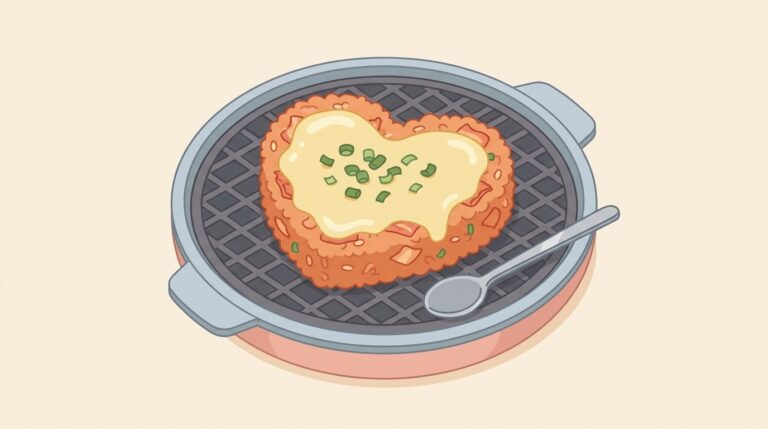
Imagine this classic scene: You are sitting at a bustling Korean BBQ restaurant in Seoul. The sound of sizzling pork belly fills the room, cold side dishes are refreshed, and you’ve savored every juicy bite of your grilled meat. But wait—look around at the local tables. Nobody is grabbing their coats yet! Instead, the waiter is scraping the grill plate, dumping a bowl of seasoned rice, chopped kimchi, fragrant seaweed flakes, and sesame oil right onto the hot iron, deftly pressing it flat.
Yes! That is the legendary post-meat fried rice, often jokingly called “the true Korean dessert” (후식 / Husik). But here comes the sudden panic: When do I order it? Do I eat all my meat first, or should I leave some? What if I ask too early and they take away my grill?
Many of our beginner learners tell us they missed out on the best part of K-BBQ simply because they didn’t know how or when to say: “After we finish the meat, please fry two servings of fried rice.” Don’t worry! In today’s guide, based on real experiences from our global learners, you’ll learn the exact words, timing, and “nunchi” (social intuition) to order post-BBQ fried rice like a born-and-raised Seoulite.
Phase 2: Key Expressions Breakdown
Here are the 3 essential expressions you need to conquer the grand finale of K-BBQ.
1. 볶음밥 2인분 볶아 주세요 (Bokkeumbap i-inbun bokka juseyo)
- Pronunciation: [Bok-keum-bap ee-een-boon bo-kka joo-seh-yo] (Tip: ‘Bok’ sounds like ‘poke’ with a punchy ‘b’, and ‘i-inbun’ rhymes with ‘tea in bun’.)
- Meaning: Literally “Fried rice 2 servings please stir-fry” ➔ “Please make two servings of fried rice for us.”
- K-Culture Moment: You’ll see this in almost every food vlog and K-drama dining scene (like Weightlifting Fairy Kim Bok-joo), where characters celebrate the end of a meat feast with a hot pan of sizzling rice.
- Editor’s Insight: Notice the counter 인분 (inbun). In Korean, you count portions with Sino-Korean numbers: 일인분 (1 serving), 이인분 (2 servings), 삼인분 (3 servings). If you are eating with a friend, “이인분” (i-inbun) is your magic number!
- Situation Spectrum: Casual (Friends): ⚠️ (use 볶아 줘) | Semi-formal (Restaurants): ✅ | Formal: ✅
- 🤔 Think About It: In many Western dining cultures, side dishes or carbs arrive alongside the main meat. Why do you think Koreans wait until the grill is practically empty before adding the rice?
2. 고기 다 먹고 볶아 주세요 (Gogi da meokgo bokka juseyo)
- Pronunciation: [Go-gee dah meok-go bo-kka joo-seh-yo] (Tip: ‘Da’ sounds like ‘dot’ without the ‘t’, meaning ‘all’ or ‘completely’.)
- Meaning: Literally “Meat all after eating please fry” ➔ “Please stir-fry it after we finish all the meat.”
- K-Culture Moment: When the restaurant is packed, servers might ask if you want carbs early. You can warmly set the timing with this phrase so you aren’t rushed.
- Editor’s Insight: The grammar pattern -고 (go) connects two sequential actions (“eat meat, and then fry”). 다 (da) means “all” or “finished,” which signals to the staff: Don’t bring the rice yet; let us enjoy our remaining bites first!
- Situation Spectrum: Casual: ⚠️ | Semi-formal (Staff): ✅ | Formal: ✅
- 🤔 Think About It: How does giving the server a clear chronological sequence help maintain the dining flow in a fast-paced Korean restaurant?
3. 치즈 추가해 주세요 (Chijeu chugahae juseyo)
- Pronunciation: [Chee-jeu choo-ga-hae joo-seh-yo] (Tip: ‘Chugahae’ sounds like a cheerful cheer ‘choo-gah-heh’.)
- Meaning: Literally “Cheese addition please do” ➔ “Please add cheese (topping), please.”
- K-Culture Moment: When the staff brings a dome cover or a blowtorch to melt a thick layer of mozzarella over the heart-shaped fried rice, cameras immediately come out for Instagram and TikTok!
- Editor’s Insight: 추가 (Chuga) means “addition” or “extra.” You can attach this to anything: 계란찜 추가 (add steamed egg), 음료수 추가 (add a soft drink).
- Situation Spectrum: Casual: ⚠️ | Semi-formal: ✅ | Formal: ✅
- 🤔 Think About It: Why has melted cheese become such an iconic staple in modern Korean street food and BBQ culture?
Phase 3: Textbook Korean vs. Real Korean
Let’s compare stiff book phrases with how real people actually talk at the BBQ table.
Situation 1: Ordering fried rice after meat
- 📖 교과서 한국어 (Textbook): 고기를 다 먹은 후에 볶음밥을 조리해 주시겠습니까? (Gogireul da meogeun hue bokkeumbabeul jorihae jusigesseumnikka? / Would you be willing to cook fried rice after the meat is finished?)
- 🗣️ 진짜 한국어 (Real Korean): 사장님, 고기 다 먹고 볶음밥 2인분 볶아 주세요! (Sajangnim, gogi da meokgo bokkeumbap i-inbun bokka juseyo! / Boss, once we finish this meat, please fry two servings of rice for us!)
- 💡 왜 다를까? (Why the difference?): Real Koreans address the owner warmly as 사장님 (Sajangnim) rather than just “저기요” (excuse me) or impersonal textbook questions. Keeping verbs active (“볶아 주세요”) sounds friendly and decisive.
Situation 2: Deciding the portion with friends
- 📖 교과서 한국어 (Textbook): 우리는 볶음밥을 1인분 주문할까요, 아니면 2인분 주문할까요? (Urineun bokkeumbabeul il-inbun jumunhalkkayo, animyeon i-inbun jumunhalkkayo? / Shall we order one portion or two portions of fried rice?)
- 🗣️ 진짜 한국어 (Real Korean): 배부른데 1인분만 볶을까? 아니야, 2인분 가자! (Baebureunde il-inbunman bokkeulkka? Aniya, i-inbun gaja! / I’m full, should we just fry one? Nah, let’s go for two!)
- 💡 왜 다를까? (Why the difference?): In casual talk among friends, Koreans constantly debate “1 serving or 2 servings” because everyone knows fried rice is impossible to resist once it hits the pan.
Phase 4: K-Culture Deep Dive & Non-verbal Manners
4-1. Nunchi (눈치) & Table Gestures: The “Secret 3 Pieces” Rule
Here is a golden insider secret that separates BBQ amateurs from true pros: Never eat every single piece of meat!
Leave two or three pieces of pork belly or grilled galbi sitting on the corner of the grill. When the server comes to make your fried rice, they will use metal tongs and kitchen shears to finely snip your remaining meat into tiny savory bites right into the rice. It adds a smoky, meaty crunch that levels up the entire dish.
* Body Language Tip: When calling the server, give a polite nod, lightly raise your right hand to shoulder height (palm facing inward or slightly downward—never wave a high pointing finger), and make brief eye contact.
4-2. The Holy “K-Dessert” (후식 볶음밥)
In Korea, no matter how much grilled pork belly (삼겹살) or short ribs (갈비) you devoured, saying “I’m full” before the fried rice is considered leaving a movie ten minutes before the twist ending! Stir-fried with remaining pork fat, spicy gochujang, kimchi, crushed seasoned nori (김가루), and drizzled with fragrant perilla oil, the rice creates a crunchy, crispy layer on the bottom called 누룽지 (nurungji). Scraping that crispy crust off with your metal spoon is a shared joy of Korean dining.
Phase 5: Real-World Roleplay Scenario
Setting: A vibrant, bustling K-BBQ joint in Hongdae on a Friday evening.
Characters: You (Alex) and Min-ho (민호), the friendly, swift restaurant server.
- Turn 1 (Min-ho): 🎭 Checks your table with tongs in hand, seeing two pieces of meat left.
손님, 고기 더 구워 드릴까요? 아니면 식사 준비해 드릴까요?
(Sonnim, gogi deo guwo deurilkkayo? Animyeon siksa junbihae deurilkkayo?)
“Would you like more meat grilled, or should I prepare your meal dish?” -
Turn 2 (You): 🎭 Politely raising your hand with a smile.
고기는 다 먹었어요! 볶음밥 2인분 볶아 주세요.
(Gogineun da meogeosseoyo! Bokkeumbap i-inbun bokka juseyo.)
“We’re done with the meat! Please fry two servings of fried rice.” -
Turn 3 (Min-ho): 🎭 Nods energetically and taps the grill lightly.
네! 남은 고기도 같이 잘라서 볶아 드릴까요?
(Ne! Nameun gogido gachi jallaseo bokka deurilkkayo?)
“Sure! Shall I cut up the leftover meat and fry it together?” -
Turn 4 (You): 🎭 Nodding enthusiastically.
네, 같이 볶아 주세요! 그리고 치즈 추가해 주세요.
(Ne, gachi bokka juseyo! Geurigo chijeu chugahae juseyo.)
“Yes, please fry it together! And please add cheese.” -
Turn 5 (Min-ho): 🎭 Rapidly snips the pork with scissors and adds kimchi, rice, and cheese.
치즈 녹을 때까지 1분만 기다렸다가 불 끄고 드세요!
(Chijeu nogeul ttaekkaji il-bunman gidaryeotdaga bul kkeugo deuseyo!)
“Wait just one minute until the cheese melts, then turn off the heat and enjoy!” -
Turn 6 (You): 🎭 Looking at the sizzling pan with your friend.
와, 냄새 진짜 좋다! 감사합니다.
(Wa, naemsae jinjja jota! Gamsahamnida.)
“Wow, it smells so good! Thank you.” -
Turn 7 (Min-ho): 🎭 Smiling as he puts down the spatula.
밑에 눌어붙은 누룽지가 제일 맛있어요! 맛있게 드세요.
(Mite nureobeuteun nurungjiga jeil masisseoyo! Masitge deuseyo.)
“The crispy rice at the bottom is the best part! Enjoy your meal.” -
Turn 8 (You): 🎭 Picking up your metal spoon, ready to scrape the bottom.
네, 맛있게 잘 먹겠습니다!
(Ne, masitge jal meokgetseumnida!)
“Yes, we will eat deliciously!”
🔀 Interactive Choice Point
The server is about to clear your grill while you still have a few bites of meat left. What do you say?
- Choice A: “고기 다 먹고 볶음밥 2인분 볶아 주세요.” (Gogi da meokgo bokkeumbap i-inbun bokka juseyo.)
- Choice B: “밥 주세요, 고기 지금 버려 주세요.” (Bap juseyo, gogi jigeum beoryeo juseyo.)
- Choice C: [Wave both arms frantically across the table in silence.]
Feedback:
* Choice A (Best! ⭐): Perfect communication! The server understands that you want to finish the remaining meat first, and that you want 2 portions of rice prepared right after.
* Choice B (Risk ⚠️): Saying “버려 주세요” (throw away) sounds unnatural and wasteful. Koreans value leaving meat to chop into the rice!
* Choice C (Bad ❌): Waving arms can startle busy servers carrying scorching hot pans or hot coals. Always use calm hand gestures and clear phrases.
Phase 6: 10-Second Emotion Shadowing Drill
Practice these lines out loud! Pay attention to the pauses (/) and embody the emotion tag:
[😋 Excited and mouth-watering]
사장님, / 고기 다 먹고 / 볶음밥 2인분 / 볶아 주세요!
(Sajangnim, / gogi da meokgo / bokkeumbap i-inbun / bokka juseyo!)-
[🧀 Hopeful with sparkly eyes]
혹시 / 여기에 / 치즈 추가 / 되나요?
(Hoksi / yeogie / chijeu chuga / doenayo?) -
[🥄 Happy and fully satisfied]
밑에 누룽지가 / 진짜 / 바삭하고 / 맛있어요!
(Mite nurungjiga / jinjja / basakhago / masisseoyo!)
Phase 7: K-Culture Mini Dictionary
- 볶음밥 (Bokkeumbap): Fried rice. In a K-BBQ context, it specifically refers to rice seasoned with spicy sauce, kimchi, seaweed, and sesame oil, fried directly in the remaining meat oils on your grill.
- 누룽지 (Nurungji): Scorched, crispy rice formed at the bottom of a hot stone pot or grill pan. Revered for its nutty aroma and addictive crunch.
- 인분 (Inbun): Sino-Korean counter word for “servings” or “portions of food” (e.g., 일인분 = 1 portion, 이인분 = 2 portions).
- 띵동 (Tting-dong): The onomatopoeia for the table call bell found in most modern Korean restaurants. If your table has one, press it once gently instead of shouting across the room.
Phase 8: Traveler’s Survival Kit
Top 3 Survival Phrases for K-BBQ
- 여기 볶음밥 되나요? (Yeogi bokkeumbap doenayo?)
- Meaning: Can we make fried rice here?
- Pro Tip: Some specialized charcoal grills with wire mesh (석쇠) cannot make fried rice because the rice would fall through into the coals! If they don’t do fried rice, order 된장찌개 (soybean paste stew) and a bowl of rice instead.
- 치즈 사리 추가해 주세요 (Chijeu sari chugahae juseyo)
- Meaning: Please add a cheese topping.
- Pro Tip: “사리 (sari)” means extra topping or add-in noodles/cheese.
- 불 꺼도 돼요? (Bul kkeodo dwaeyo?)
- Meaning: Can we turn off the gas/burner now?
- Pro Tip: Use this once your rice gets crispy so it doesn’t burn into black soot.
Editor’s Travel Note
- Finding Authentic BBQ Spots: Download the 네이버 지도 앱 다운로드 (Naver Map app download). Don’t just search for “BBQ”; look up 솥뚜껑 삼겹살 (Cauldron Lid Pork Belly). Places using cast-iron cauldron lids make the crispest post-meat fried rice in the country!
- Payment Manners: When paying at the counter near the exit, hold your card out with both hands as a sign of mutual respect.
Phase 9: “한 발 더 깊이” (One Step Deeper)
In Western dining, everyone often orders their own discrete plate of food. But the Korean post-BBQ fried rice is the pinnacle of 우리 (Uri – “Us / We”) culture. The server leaves a single, unified pan in the middle of the table, and everyone dives in with their long metal spoons, digging away together. It’s informal, intimate, and breaks down social barriers. Sharing that single crispy pan of rice signals: “We aren’t just eating food; we are sharing a memorable bond tonight.”
💬 Your Turn: Have you ever shared a communal dish straight from a cooking pan with friends? How does it compare to having individual plates in your home culture? Tell us in the comments below!
Phase 10: FAQ & Common Mistakes
Q: Can I order fried rice at any BBQ restaurant?
A: Not all of them! If the restaurant uses a fine wire mesh grill over open charcoal coals (숯불 석쇠), rice will fall through, so they usually offer cold noodles (냉면) or stew instead. Fried rice is possible on flat iron grill pans (불판) or cast-iron pots (솥뚜껑).
Q: When is the perfect moment to say “고기 다 먹고 볶아 주세요”?
A: The best time is when you have about 2 to 3 pieces of cooked meat remaining. This gives the staff time to prepare the rice ingredients without leaving you with an empty, smoking pan.
Q: Can I order just 1 serving of fried rice for 2 people?
A: Yes! Most Korean BBQ spots happily allow 1 serving (일인분 / il-inbun) of fried rice even if you had multiple cuts of meat earlier.
🚨 Common Mistakes Alert
- Mistake: Eating all the meat down to the last scrap.
- Correct Action: Keep 2–3 pieces on the grill! The staff will chop them up to make your fried rice ten times tastier.
- Mistake: Trying to scrape non-stick Teflon pans with metal spoons.
- Correct Action: If the pan is non-stick Teflon, don’t scrape aggressively or you’ll peel the coating. Only scrape firmly on cast iron or heavy stone pans.
- Mistake: Forgetting to turn off the heat.
- Correct Action: Wait 1–2 minutes for the bottom rice to crackle and crisp, then switch off the burner so it doesn’t char.
Phase 11: Action Missions
- 🥉 Bronze Mission (Solo Practice): Stand in front of your mirror and repeat 3 times with confidence: “사장님, 고기 다 먹고 볶음밥 2인분 볶아 주세요!”
- 🥈 Silver Mission (Social Share): Next time you eat fried rice or stir-fry at home, snap a picture, share it on Instagram, and caption it with the Korean word #누룽지 (crispy scorched rice).
- 🥇 Gold Mission (Real Life Action): Visit your local Korean BBQ spot or travel to Korea, let 3 pieces of pork belly sit on the grill, and boldly order 볶음밥 with extra cheese in fluent Korean!
- 🎮 K-Culture Mission: Watch an episode of a Korean variety show (like Tasty Guys or Sixth Sense). Spot the exact moment when the cast starts scraping the bottom of the grill pan and shout “누룽지!”
Phase 12: Interactive Quiz Challenge
Test what you learned today before you head out to your next BBQ adventure!
- Situation Question: You are at a K-BBQ spot with 2 pieces of meat left on the flat pan. You and your friend are ready for carbs. What should you say?
- a) 고기 다 버려 주세요. (Gogi da beoryeo juseyo.)
- b) 고기 다 먹고 볶음밥 2인분 볶아 주세요. (Gogi da meokgo bokkeumbap i-inbun bokka juseyo.)
- c) 냉면 5그릇 주세요. (Naengmyeon daseot geureut juseyo.)
- Fill in the Blank: “Please add extra cheese!”
➔ 치즈 ________해 주세요! (Chijeu ________-hae juseyo!) -
True or False: You should always wipe your grill clean and leave zero meat before ordering post-BBQ fried rice. (T / F)
👉 Click to reveal answers & explanations!
- Answer: b) You correctly state that you’ll finish the meat and request 2 servings of fried rice!
- Answer: 추가 (chuga) ➔ “치즈 추가해 주세요!” (Chijeu chugahae juseyo!).
- Answer: False (F). Leaving 2-3 pieces of meat allows the server to dice them into the fried rice for amazing flavor and texture!
🎬 Watch Our Daily Videos! (Daily Hangul Official Instagram)
Review the expressions you learned in this article with our fun daily short videos! Check out native pronunciation and real-life nuances in action.
- Instagram @dailyhangul_en







