

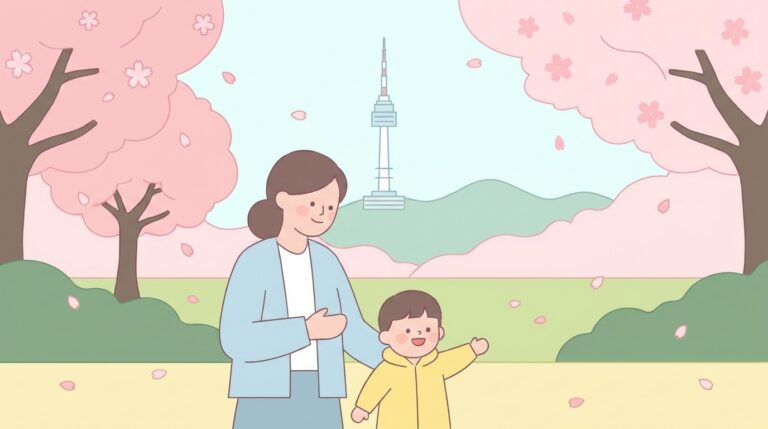
Master Korean Vowel ‘아 (a)’ and the Word ‘아이 (ai)’: Your Fun, Friendly First Step into Hangul
Phase 1: Empathy (Story Immersion Opening)
안녕하세요! 매일한글 에디터입니다. (Hello! I’m your Daily Hangul editor!)
Picture this: You are watching your favorite K-Drama late at night. The main character suddenly drops their ice cream, gasps, and lets out a sharp, dramatic “아! (A!)” A few minutes later, they walk past a playground pointing gently at a playing child, smiling and whispering, “아이… (Ai…)” You look down at your notebook filled with mysterious geometric Korean letters—circles, horizontal bars, little side ticks—and your head starts to spin. “Do these shapes really make those sounds? Is it ‘ah’ like in English, or something softer? Why does everyone in Seoul sound so expressive while I feel like a robot reading a phonetic chart?”
Take a deep breath! You are definitely not alone. Over the past decade tutoring hundreds of absolute beginner (A1) learners, I have watched countless students freeze at this very vowel: the fundamental ㅏ (a). You worry about sounding awkward, or mixing up basic words like 아이 (ai – child) with exclamations. But here is the secret: Korean vowels are not abstract math puzzles; they are snapshots of human breath and body postures. Once you unlock the open, sunny resonance of ㅏ, you don’t just pronounce words—you start feeling the warmth of everyday Korean speech. Let’s build your natural voice step-by-step with real-life K-Culture moments!
Phase 2: Deep Dive into 3 Core Expressions
1. 아! (A!)
- Pronunciation: [A!] (Sounds like opening your mouth wide at the dentist: “Ah!”)
- Meaning: Literal: “Ah!” | Real Nuance: A natural reflex expression of sudden realization, discovery, or mild shock (“Oh, I get it now!” or “Oops!”).
- K-Culture Moment: Every time a K-Pop idol on a variety show finally guesses a mystery quiz question, they clap their hands and shout: “아! 알겠다! (A! Algetda! – Ah! I got it!)”
- Editor’s Insight: It is short, clean, and never dragged out. Unlike the English drawn-out “Aaaah…”, Korean 아! is crisp and bright.
- Situation Spectrum: Casual: ✅ | Semi-formal: ✅ | Formal: ⚠️ (Keep it controlled in business meetings)
- 🤔 Think About It: In your native tongue, do you say “Oh!” or “Ah!” when you realize something? Notice how Korean naturally defaults to an open vocal tone to release emotion.
2. 아이 (Ai)
- Pronunciation: [A-i] (Sounds like “Ah” + “Eee”, blended smoothly: Ah-ee)
- Meaning: Literal: “Child” or “Kid” | Real Nuance: A tender, standard term referring to a young child or a precious little one.
- K-Culture Moment: In family K-Dramas or heart-touching songs (like IU’s lyrical ballads), 아이 (ai) is used to evoke childhood purity and emotional innocence.
- Editor’s Insight: While 아이 (ai) is the correct standard dictionary word, Koreans in casual conversation often shorten it to 애 (ae). However, mastering 아이 first trains your tongue to glide seamlessly between the open vowel ㅏ (a) and the high vowel ㅣ (i).
- Situation Spectrum: Casual: ✅ | Semi-formal: ✅ | Formal: ✅
- 🤔 Think About It: Why do so many languages use simple open-vowel sounds for children? (e.g., babe, niño, ai). It reflects the easiest sounds a human mouth can make!
3. 아파요 (Apayo)
- Pronunciation: [A-pa-yo] (Sounds like Ah-pah-yo, with a soft breath on pa)
- Meaning: Literal: “It hurts” / “I am sick” | Real Nuance: Expressing physical pain, sickness, or even emotional heartache in a polite way.
- K-Culture Moment: When the romantic K-Drama lead gets a paper cut or nurses a broken heart, they clutch their chest and murmur: “마음이 아파요… (Maeumi apayo… – My heart hurts…)”
- Editor’s Insight: The root vowel here is once again ㅏ. In Korean culture, stating your pain clearly with -요 (-yo) is polite and invites warmth and immediate care from those around you.
- Situation Spectrum: Casual: ⚠️ (Use ‘아파 [apa]’ with close friends) | Semi-formal: ✅ | Formal: ✅
- 🤔 Think About It: Do you tend to hide when you feel hurt, or express it openly? In Korean communal culture, acknowledging discomfort lets others show Jeong (affectionate caring).
Phase 3: Textbook Korean vs. Real Korean
Situation 1: Reacting when someone shares interesting news
- 📖 교과서 한국어 (Textbook): 아, 그렇습니까? (A, geureoseumnikka? – “Ah, is that so, sir/ma’am?”)
- 🗣️ 진짜 한국어 (Real-life): 아, 진짜요? (A, jinjjayo? – “Ah, really?!”)
- 💡 왜 다를까? (Why the difference?): While “그렇습니까?” is grammatically impeccable, it sounds overly stiff and military in daily coffee chats. Real Koreans instantly validate their friend’s story with a bright 아, 진짜요?, which shows empathy and active listening.
Situation 2: Spotting an adorable toddler at the park
- 📖 교과서 한국어 (Textbook): 저 아이를 보십시오. (Jeo aireul bosipsio. – “Please look at that child over there.”)
- 🗣️ 진짜 한국어 (Real-life): 어머, 저 애기 봐! (Eomeo, jeo aegi bwa! – “OMG, look at that sweet baby!”)
- 💡 왜 다를까? (Why the difference?): In spontaneous daily life, adults affectionately refer to little toddlers as 애기 (aegi) rather than the formal 아이 (ai), accompanied by the natural exclamation 어머 (eomeo).
Phase 4: K-Culture Deep Dive & Non-Verbal Manners
4-1. 눈치 (Nunchi) & Polite Gestures
When interacting around children or expressing sudden realizations in Korea, your body language speaks louder than your grammar:
* The Realization Tap: When making the sound 아!, Koreans frequently tap one palm with a light fist or gently clap once. It visually signals: “Eureka! The lightbulb just switched on!”
* Gentle Boundaries with Kids: In Western cultures, it’s common to casually ruffle a child’s hair. In modern Korea, respectful personal space is paramount. If you see a cute child (아이), instead of touching them, offer a warm two-finger wave or a soft nod to the parents first. That is high-level 눈치 (Nunchi – situational tact)!
4-2. Cultural Code Analysis: The Child in K-Media
Shows like The Return of Superman (슈퍼맨이 돌아왔다) popularized child-rearing culture across global fandoms. In Korean culture, children are not just individuals; they represent the bright future of the whole family. Notice how idols and actors instantly soften their voices when talking to an 아이 (ai). You will hear gentle, melodic vowel tones where 아 (a) is pronounced with a smiling mouth, projecting warmth (aegyo) and safety.
Phase 5: Real-Life Roleplay Scenario
- Setting: A sunny afternoon on the grass at Yeouido Hangang Park in Seoul.
- Character: Min-ji (민지), your bubbly Korean language exchange partner who brought delivery fried chicken.
Turn 1
민지 (Min-ji): 날씨 진짜 좋다! 주말이라 공원에 아이들이 진짜 많네.
(Nalssi jinjja jota! Jumal-ira gong-wone aideuri jinjja manne.)
“The weather is so nice! Since it’s the weekend, there are so many kids in the park.”
🎭 Pointing cheerfully at toddlers chasing soap bubbles on the grass.
Turn 2
나 (You): 아, 진짜요! 저 아이 너무 귀여워요.
(A, jinjjayo! Jeo ai neomu gwiyeowoyo.)
“Ah, really! That child is so cute.”
🎭 Cupping your hands near your cheeks with a bright smile.
Turn 3
민지 (Min-ji): 그치? 어? 잠깐만, 손에 든 캔 음료수 차가워?
(Geuchi? Eo? Jamkkanman, sone deun kaen eumryosu chagawo?)
“Right? Wait, is that cold soda can hurting your hand?”
🎭 Looking with concern at your frozen fingers holding the iced tea.
Turn 4
나 (You): 아, 괜찮아요! 조금 차가워요.
(A, gwaenchanayo! Jogeum chagawoyo.)
“Ah, I’m okay! Just a little cold.”
🎭 Shaking your hand lightly and laughing.
Turn 5
민지 (Min-ji): 다행이다. 아까 넘어질 뻔해서 다리 아픈 줄 알았잖아.
(Dahaeng-ida. Akka neomeojil ppeonhaeseo dari apeun jul aratjana.)
“Thank goodness. I thought your leg hurt because you almost tripped earlier.”
🎭 Patting your shoulder reassuringly.
Turn 6
나 (You): 아! 다리는 안 아파요!
(A! Darineun an apayo!)
“Ah! My leg doesn’t hurt at all!”
🎭 Patting your knee playfully to demonstrate you're totally fine.
Turn 7
민지 (Min-ji): 한국어 발음 점점 엄청 자연스러워진다! ‘아’ 소리가 아주 시원해.
(Hangugeo bareum jeomjeom eomcheong jayeonseureowojinda! ‘A’ soriga aju siwonhae.)
“Your Korean pronunciation is getting so natural! Your ‘a’ vowel sounds super crisp and refreshing.”
🎭 Giving you an enthusiastic double thumbs-up.
Turn 8
나 (You): 감사해요, 민지 씨! 연습 많이 했어요.
(Gamsahaeyo, Min-ji ssi! Yeonseup mani haesseoyo.)
“Thank you, Min-ji! I practiced a lot.”
🎭 Nodding with a proud, happy grin.
🔀 Interactive Decision Point!
Min-ji suddenly asks: “What Korean vowel did you find easiest to memorize first?”
- Option A: “아! (A!) Because opening my mouth wide is super easy!”
- Option B: “저는 아이가 싫습니다. (I dislike children.)”
- Option C: Stay silent, bite your lip, and look at the ground.
Detailed Feedback:
- Selection A (Best Choice 🌟): Perfect! It keeps the picnic vibe cheerful, practices the target vowel with natural enthusiasm, and showcases confidence.
- Selection B (Risk / Bad 🚫): Grammatically fine, but completely inappropriate for the context! Saying you dislike kids out of nowhere will create awkward silence in a warm social setting.
- Selection C (Risk ⚠️): Freezing up happens, but remember: Korean friends love effort over perfection. Even a simple “아… 어려워요! (Ah… it’s hard!)” will win warm encouragement.
Phase 6: 10-Second Emotional Shadowing Drill
Train your facial muscles! Open your mouth wide like you are greeting the morning sun.
- [😊 Bright & Surprised]
아! / 진짜요?
(A! / Jinjjayo?)
“Ah! / Really?” -
[🥺 Soft & Fond]
저기 / 아이가 / 웃어요.
(Jeogi / aiga / useoyo.)
“Over there / the child / is smiling.” -
[🩹 Polite & Expressive]
조금 / 아파요, / 하지만 / 괜찮아요!
(Jogeum / apayo, / hajiman / gwaenchanayo!)
“A little / it hurts, / but / I’m okay!”
Phase 7: K-Culture Mini Dictionary
-
아이 (Ai) | Noun: Child / Kid
Used in literature, formal situations, and songwriting. Example: 착한 아이 (Chakhan ai – A well-behaved, sweet child). In business, family-friendly marketing frequently uses “아이 사랑” (Love for children). -
아가 (Aga) | Noun: Sweet baby / Infant
An affectionate, endearing term for newborn babies and toddlers. Grandmothers love calling their grandchildren “우리 아가 (Uri aga – Our sweet baby).” -
아저씨 (Ajeossi) | Noun: Middle-aged man / Mister
Any adult male who is past young bachelorhood. You will hear people politely call friendly taxi drivers or food stall owners “아저씨! (Ajeossi!)”. -
아싸 (Assa) | Exclamation & Slang: “Yay!” or “Outsider”
When shouted excitedly, it means “Jackpot! / Hooray!” (short for 아이 좋아). In collegiate youth slang, however, it can also be short for 아웃사이더 (Outsider – an introverted loner). Context is everything!
Phase 8: Traveler’s Survival Kit
Top 3 Survival Expressions
-
아, 네! (A, ne!)
Romanization: [A, ne!]
Pro Tip: The ultimate magic phrase. Whenever a cashier, server, or bus driver speaks to you, nodding and saying “아, 네!” signals: “Ah, yes! I hear and understand you!” -
아이스 아메리카노 주세요. (A-i-seu A-me-ri-ka-no ju-se-yo.)
Romanization: [A-i-seu A-me-ri-ka-no ju-se-yo.]
Pro Tip: South Korea runs on iced coffee (nicknamed “얼죽아 – Eoljuk-a: freezing to death for iced americano”). Notice how both words begin with your target vowel sound: 아 (a)! -
아파요, 도와주세요. (Apayo, dowajuseyo.)
Romanization: [A-pa-yo, do-wa-ju-se-yo.]
Pro Tip: Emergency phrase. If you sprain an ankle or feel sick at an airport or pharmacy, this immediately signals: “I am in pain, please help me.”
Editor’s Travel Note
- Essential Navigation: Google Maps does not give accurate walking directions in South Korea due to local mapping regulations. Be sure to download the Naver Map application on your smartphone before departing Incheon Airport. It provides step-by-step subway transfer directions and real-time bus arrivals in English.
- Card Payments: Seoul is practically cashless! Even street food carts at Myeongdong and Hongdae accept local cards or T-Money transit cards. Keep your transit card loaded with at least 10,000 KRW for convenient subway hopping.
Phase 9: “One Step Deeper” (Reflective Question)
In 1443, King Sejong the Great created Hangul with profound philosophical symbolism. The fundamental vowel ㅏ (a) combines the vertical standing human line ㅣ (Human) with a bright dot reaching outward to the right · (The Sun / Heaven). In Eastern cosmology, the East and Right direction represents the dawn, spring, and vitality. That is why ㅏ is known as a “bright vowel (양성모음)”—it literally sounds like morning light breaking through darkness!
When you pronounce 아이 (ai), you are pairing the rising sun with the upright human being. It’s no coincidence that the word for child carries this bright, hopeful phonetics.
💬 Your Turn: Does your native language have sounds that feel “bright” versus “dark”? Drop a comment below and share which English or mother-tongue word feels as warm as 아!
Phase 10: FAQ & Common Mistakes
Q: What is the exact difference between ‘아’ and ‘어’?
A: This is the #1 hurdle for beginners! For 아 (a), open your mouth vertically wide, dropping your jaw like you’re biting into a huge apple (Ah). For 어 (eo), relax your jaw, keep your mouth half-open, and let the sound resonate from the back of your throat (Uh). Practice looking in a mirror: 아 shows your teeth and tongue clearly!
Q: Why is there an empty circle (ㅇ) in the letter ‘아’?
A: In Hangul, a vowel cannot stand alone naked in a syllable block. The circle consonant 이응 (ieung) acts as a silent placeholder when placed at the top or left of a vowel. So, 아 is purely the sound of the vowel ㅏ—the circle makes zero sound here!
Q: Can I use ‘아이 (ai)’ to call my own child in public?
A: Yes! However, when calling them directly by name, Koreans usually add affectionate vocative particles like “민수야! (Minsu-ya!)” or simply call them “우리 애기 (uri aegi – our baby)”.
🚨 흔한 실수 (Common Mistakes) 경고판
| Foreign Learner Trap | Why It Happens | Correct Action (정답) |
|---|---|---|
| 1. Saying “아이” like the English word “Eye” | English speakers diphthongize it into one syllable (I). | Pronounce two distinct syllables: 아-이 (Ah-ee) with equal length. |
| 2. Clenching teeth when saying ‘아’ | Nervousness causes stiff jaw muscles. | Drop your lower jaw completely. If your fingers can’t fit between your teeth, your mouth isn’t open enough! |
| 3. Writing ‘ㅏ’ with the horizontal tick on the left | Confusing ㅏ (a) with ㅓ (eo). | Remember: The sun rises to the right (ㅏ = a). If it points left, it’s inside/dark (ㅓ = eo). |
Phase 11: Action Mission & Engagement
Ready to turn theory into muscle memory? Take our 3-tiered Daily Hangul challenge!
- 🥉 Bronze Level (Solo Drill): Stand in front of your bathroom mirror. Say 아 (a) and 아이 (ai) 5 times each. Make sure your mouth opens wide and your tongue rests flat on the floor of your mouth.
- 🥈 Silver Level (Voice Note Practice): Record yourself saying: “안녕하세요! 저 아이 너무 귀여워요! (Hello! That child is so cute!)” on your phone’s voice memo app and listen back to ensure your 아 sounds sunny and clear.
- 🥇 Gold Level (Real-World Action): The next time you watch a K-Drama or variety show, keep a tally sheet. Count how many times someone exclaims 아! in a single 30-minute episode. (Spoiler: It will easily be over 10 times!)
🎮 K-Culture Mission: Go to your music streaming app, search for the legendary song 아이와 나의 바다 (My Sea) by IU, listen to the very first line, and listen to how softly she breathes into the vowel 아.
Phase 12: Interactive Quiz Challenge
Test your new skills! Can you ace all three?
1. Context Judgment
You bump into your Korean coworker in the hallway and accidentally spill a drop of coffee on your napkin. What is the most natural immediate vocal reaction?
* (A) 어머, 저는 아이입니다.
* (B) 아! 죄송합니다!
* (C) 아파요, 안녕히 가세요.
2. Fill-in-the-Blank
Complete the standard Korean word for “child”:
* [ ] + 이 = Child
(Hint: It combines a silent circle placeholder and the vowel pointing right)
3. True or False Cultural Quiz
- Statement: In the syllable block 아, the circular letter ‘ㅇ’ produces a strong “NG” consonant sound at the beginning.
- (True / False)
👉 Click to reveal answers & explanations!
- Answer: (B) 아! 죄송합니다! (A! Joesonghamnida! – Ah! I’m sorry!)
Explanation: (A) means “Oh, I am a child,” and (C) means “It hurts, goodbye!” Only (B) captures the natural reflex exclamation of surprise followed by a polite apology. -
Answer: 아 (A)
Explanation: 아 + 이 = 아이 (ai), meaning child! -
Answer: False
Explanation: When ㅇ is in the initial (top or left) position, it is completely silent and serves purely as an aesthetic placeholder for the vowel. It only makes the “ng” sound when placed at the bottom as a final consonant (받침 – batchim), like in the word 강 (gang)!
You just conquered the core foundation of Hangul vowels! Keep your mouth open wide, stay curious, and see you in the next lesson! 화이팅 (Hwaiting)!
🎬 Watch Our Daily Videos! (Daily Hangul Official Instagram)
Review the expressions you learned in this article with our fun daily short videos! Check out native pronunciation and real-life nuances in action.
- Instagram @dailyhangul_en






