

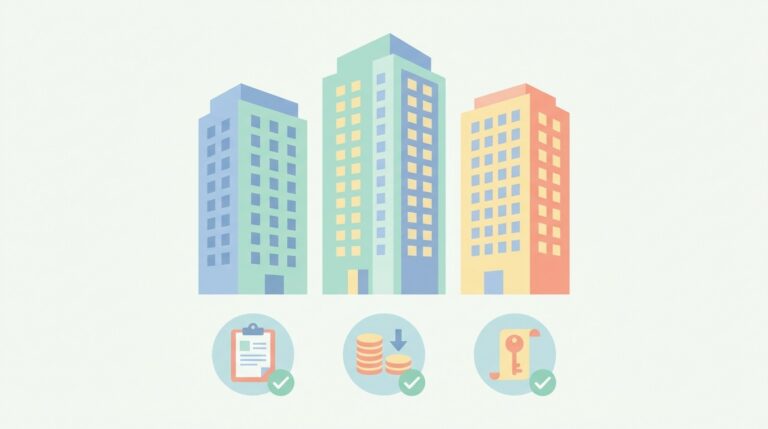
Cracking the Code on Korean Real Estate: Price Caps, Resale Lockups, and Mandatory Stays
Phase 1: 공감 (Story-Driven Opening)
안녕하세요! 매일한글 에디터입니다.
If you have ever watched the K-drama Because This Is My First Life (이번 생은 처음이라) or followed the chaotic race for high-rise living in The Penthouse (펜트하우스), you already know that in South Korea, real estate is not merely about having a roof over your head. It is a national passion, an intricate financial chess match, and a major topic around every office coffee machine.
Perhaps you have worked hard in Korea, gathered your savings, and decided to dive into the world of 주택청약 종합저축 (Housing Subscription Savings Account). You calculate your points, daydream about moving into a brand-new high-rise apartment in Pangyo or Mapo, and hear rumors about “로또 청약” (lottery-style pre-sales with huge profit margins). But then, your Korean friend leans over your desk and drops a serious reality check:
“잠깐만, 거기 분양가상한제 적용 지역인지 확인했어? 전매 제한이랑 실거주 의무 걸리면 진짜 큰일 나!”
Suddenly, you are confronted with dense bureaucratic terminology. What happens if you get selected for a pre-sale apartment, but you cannot legally sell it for five years? What if you are legally required to pack your bags and live there for three continuous years, ruining your plan to fund the purchase with a tenant’s Jeonse deposit?
Navigating this system is one of the highest-friction pain points for intermediate and upper-intermediate learners living long-term in Korea. Today, we will decode the critical housing policy terms that safeguard your rights and keep your financial future secure, all drawn from direct real estate mentoring cases with our Daily Hangul learners.
Phase 2: 핵심 표현 3선 심층 분석 (Top 3 Key Expressions)
1. 분양가상한제 적용 지역 (Bun-yang-ga-sang-han-je jeok-yong ji-yeok)
- Pronunciation: Bun-yang-ga-sang-han-je jeok-yong ji-yeok (Sounds like: boon-yahng-gah-sahng-hahn-jeh juk-yong jee-yuck)
- Meaning:
- Literal: Price ceiling system applied district.
- Real-world Nuance: A government-designated neighborhood where real estate developers are legally capped on how much they can charge per square meter for newly built apartments.
- K-Culture Moment: You will hear this phrase constantly on economic YouTube channels like SyuKa World (슈카월드) or evening news reports whenever a new residential block opens in Gangnam, Songpa, or Gwacheon.
- Editor’s Insight: Think of this compound noun as four distinct blocks: 분양 (pre-sale distribution) + 가(價) (price) + 상한(上限) (upper limit/ceiling) + 제(制) (system). While it sounds like a dream discount for buyers, it always comes with heavy regulatory strings attached.
- Situation Spectrum: Casual ⚠️ | Semi-formal ✅ | Formal ✅
- 🤔 Think About It: In many Western markets, pre-sale prices fluctuate purely on market speculation. Why does the Korean government intervene directly to suppress new apartment prices in high-demand metropolitan zones?
2. 전매 제한 기간 (Jeon-mae je-han gi-gan)
- Pronunciation: Jeon-mae je-han gi-gan (Sounds like: jun-meh jeh-hahn ghee-gahn)
- Meaning:
- Literal: Resale restriction duration.
- Real-world Nuance: The legally mandated lockup period during which you are strictly prohibited from flipping, selling, or transferring the ownership rights of your newly won apartment.
- K-Culture Moment: In corporate break rooms, co-workers comparing real estate subscriptions will whisper: “거기 전매 3년 묶여 있어서 떴다방도 못 와요” (Resale is locked for three years there, so not even unauthorized quick-flip brokers can touch it).
- Editor’s Insight: The word 전매 (Jeon-mae) specifically refers to selling rights or property forward before the permanent final registration is settled. The government uses this timeline (which can range from 6 months up to 10 years depending on the district) to deter short-term speculators.
- Situation Spectrum: Casual ⚠️ | Semi-formal ✅ | Formal ✅
- 🤔 Think About It: How does your home country discourage the speculative flipping of pre-construction property compared to Korea’s strict lockup timelines?
3. 실거주 의무 (Sil-geo-ju ui-mu)
- Pronunciation: Sil-geo-ju ui-mu (Sounds like: sheel-guh-joo wee-moo)
- Meaning:
- Literal: Actual residence obligation.
- Real-world Nuance: The statutory requirement that mandates the apartment lottery winner must physically move in and dwell in the residence for a continuous, defined period rather than leasing it out immediately.
- K-Culture Moment: Financial planning scenes in modern dramas where a newlywed couple realizes they cannot use “전세 놓기” (putting the apartment up for lease) to bridge their shortfall of cash, forcing them to hustle for extra funds.
- Editor’s Insight: The crucial distinction here is between 거주 (general residence) and 실거주 (actual, physical, verified owner-occupancy). If a complex carries this clause, failing to move in can result in criminal penalties or being forced to sell the home back to the Korea Land & Housing Corporation (LH) at purchase cost!
- Situation Spectrum: Casual ⚠️ | Semi-formal ✅ | Formal ✅
- 🤔 Think About It: Korea’s unique Jeonse system allows people to buy properties with low initial liquidity by utilizing the tenant’s deposit. How does the “실거주 의무” rule fundamentally disrupt that investment behavior?
Phase 3: 교과서 한국어 vs 진짜 한국어 (Textbook vs. Real-World Korean)
Scenario 1: Inquiring whether you can lease out a newly won apartment
- 📖 교과서 한국어:
“이 주택 단지는 분양가상한제가 적용되어 입주 후 실거주 의무 기간이 존재합니까?”
(I jutaek danjineun bunyaggasanghanjega jeogyongdoeeo ipju hu silgeoju uimu gigani jonjaehamnikka? / Does this residential complex have a mandatory owner-occupancy period due to the price cap system?) - 🗣️ 진짜 한국어:
“여기 당첨되면 바로 전세 놓을 수 있어요, 아니면 무조건 들어가 살아야 해요?”
(Yeogi dangcheomdoemyeon baro jeonse noeul su isseoyo, animyeon mujogeon deureoga saraya haeyo? / If I win this lottery, can I put it up for Jeonse right away, or do I unconditionally have to move in and live there?) - 💡 왜 다를까? Textbook Korean sounds like an official administrative notice. Real buyers and realtors speak directly to the logistical action: putting it out for Jeonse versus having to pack and move in physically.
Scenario 2: Warning a friend about selling rights prematurely
- 📖 교과서 한국어:
“해당 아파트 분양권은 법적으로 전매 제한 기간이 부과되어 거래가 불가합니다.”
(Haedang apateu bunyanggwoneun beopjeogeuro jeonmae jehan gigani bugadoeeo georaega bulgahamnida. / The pre-sale purchase rights for this apartment are legally subject to a resale restriction period, making transactions impossible.) - 🗣️ 진짜 한국어:
“거기 전매 제한 묶여 있어서 지금 팔면 불법이에요. 괜히 손댔다가 당첨 취소돼요!”
(Geogi jeonmae jehan mukkyeo isseoseo jigeum palmyeon bulbeobieoyo. Gwaenhi sondaettaga dangcheom chwisodoeyeo! / The resale is tied up there, so selling now is illegal. If you fool around with that, your winning status gets canceled!) - 💡 왜 다를까? Everyday speakers use the kinetic verb 묶이다 (to be tied up/locked) instead of formal bureaucratic verbs like 부과되다 (to be imposed).
Phase 4: K-Culture 딥다이브 & 비언어적 매너 (Deep Dive & Nuance)
4-1. 눈치 (Nunchi) & Body Language at the Model House (모델하우스)
When visiting a newly opened apartment display hall (모델하우스) or sitting inside an authorized real estate agency (공인중개사사무소), body language conveys financial literacy:
* Document Scrutiny: When examining the pre-sale brochure (모집공고문), do not just flip to the interior design photos. Bring a highlighter or use a ballpoint pen to deliberately trace the small print at the bottom of the supply table. Real estate agents immediately adjust their tone to a higher professional standard when they see you inspecting the fine print for 전매 제한 and 실거주 의무.
* The Lowered-Tone Inquiry: When inquiring about sensitive financing limitations (대출 규제) or resale clauses, keep your voice steady and discreet. In Korean social norms, speaking loudly about financial maneuvers in public waiting lounges is considered boastful or careless.
4-2. The Cultural Phenomenon: “영끌” (Yeong-kkeul) and the Apartment Hierarchy
In modern Korean society, owning an apartment in a major metropolitan cluster is often viewed as the single most dependable vehicle for generational wealth accumulation. This drive gave rise to the buzzword 영끌 (yeong-kkeul, pulling together every ounce of your soul and borrowing capacity). Because demand consistently exceeds supply in coveted districts, the government enforces the 분양가상한제 to keep entry barriers reasonable for ordinary wage earners. However, to stop opportunists from cashing out immediate capital gains, the state ties that financial discount to your physical presence. Understanding this explains why dinner parties among 30-to-40-year-olds in Seoul almost always gravitate toward real estate regulations.
Phase 5: 실전 롤플레이 시나리오 (Real-Life Roleplay)
Setting: Inside a consulting office near Yangjae Station in Seoul.
Characters:
* Alex (알렉스): An overseas professional working in tech who has saved sufficient funds and wants to enter the subscription market.
* Team Leader Kang (강민우 팀장): A seasoned, sharp real estate consultant.
강 팀장: 알렉스 씨, 이번에 과천 쪽에 나온 일반공급 단지 공고문 확인해 보셨어요?
(Alex-ssi, ibeone Gwacheon jjoge naon ilbangonggeup danji gonggomun hwaginhae boseosseoyo?)
“Alex, did you get a chance to check the general supply public notice that came out over in Gwacheon?”
🎭 [공고문 서류를 톡톡 두드리며 진지한 눈빛으로 쳐다본다]
알렉스: 네, 봤어요! 분양가가 주변 시세보다 훨씬 저렴해서 무조건 넣어보고 싶더라고요.
(Ne, bwasseoyo! Bunyanggaga jubyeon siseboda hwolssin jeoryeomhaeseo mujogeon neoeobogo sipdeoragoyo.)
“Yes, I saw it! The pre-sale price is much cheaper than the neighboring market rates, so I definitely want to apply.”
🎭 [기대에 찬 표정으로 수첩을 펼치며]
강 팀장: 싸다고 덥석 넣으시면 안 돼요. 거기가 바로 분양가상한제 적용 단지거든요.
(Ssadago deopseok neoeusimyeon an dwaeyo. Geogiga baro bunyaggasanghanje jeok-yong danjigeodeunyo.)
“You shouldn’t jump right in just because it’s cheap. That exact complex is subject to the price cap system.”
🎭 [안경을 살짝 고쳐 쓰며 경고하는 손짓]
알렉스: 아, 그렇군요. 그러면 전매 제한 기간이 제법 길게 붙겠네요?
(A, geureokunyo. Geureomyeon jeonmae jehan gigani jebeop gilge butgenneyo?)
“Ah, I see. Then the resale restriction period will likely be quite long, right?”
🎭 [이해했다는 듯 고개를 끄덕이며 메모를 적는다]
강 팀장: 맞아요. 전매 제한 3년에다가, 더 중요한 건 실거주 의무 3년이 걸려 있다는 점이에요.
(Majayo. Jeonmae jehan sam-nyeon-edaga, deo jung-yohan geon silgeoju uimu sam-nyeon-i geollyeo itdaneun jeomieoyo.)
“Exactly. Not only is there a 3-year resale restriction, but more importantly, a 3-year mandatory owner-occupancy period is attached.”
🎭 [중요한 조항에 빨간 펜으로 밑줄을 긋는다]
알렉스: 실거주 의무요? 그럼 당첨돼도 전세 놓아서 잔금 치르는 방법은 아예 못 쓰는 건가요?
(Silgeoju uimuyo? Geureom dangcheomdoedo jeonse noaseo jangeum chireuneun bangbeobeun aye mot sseuneun geongayo?)
“Mandatory residence? Then even if I win, can I not use the strategy of leasing it out on Jeonse to cover the remaining balance?”
🎭 [약간 긴장한 목소리로 눈을 크게 뜨며]
강 팀장: 네, 완공되자마자 알렉스 씨가 직접 들어가서 살아야 해요. 현금 흐름 계획 다시 짜셔야 합니다.
(Ne, wang-gongdoejamaja Alex-ssiga jikjeop deureogaseo saraya haeyo. Hyeongum heureum gyehoek dasi jjasyeoya hamnida.)
“Correct. As soon as construction is completed, you must personally move in and dwell there. You will need to redraw your cash-flow plan.”
🎭 [단호하면서도 진심 어린 조언을 건네며]
알렉스: 와, 큰일 날 뻔했네요. 규제 사항부터 철저하게 따져보고 자금 마련해야겠어요.
(Wa, keunil nal ppeonhaenneyo. Gyu-je sahangbuteo cheoljeohage ttajyeobogo jageum maryeonhaeyagess-eoyo.)
“Wow, I narrowly avoided big trouble. I must scrutinize the regulations first and prepare my funds accordingly.”
🎭 [가슴을 쓸어내리며 안도의 한숨을 쉰다]
🔀 인터랙티브 분기점 (Interactive Choice Point)
Imagine you are Alex. Team Leader Kang asks you what your next step will be. How do you respond?
- Option A: “규제가 복잡하니까 일단 몰래 당첨된 다음에 바로 다른 사람한테 분양권 넘겨버리죠!”
(Since regulations are complex, let’s just win secretly and immediately flip the rights to someone else!) - Option B: “모집공고문의 실거주 의무 유예 기간과 입주 시 대출 가능 한도를 다시 계산해 볼게요.”
(I will recalculate the grace period for mandatory owner-occupancy and my allowable mortgage limit based on the official notice.) - Option C: “외국인은 어차피 한국 법이 약하게 적용되니까 실거주 안 해도 문제없지 않나요?”
(Foreigners aren’t subject to strict enforcement anyway, so living elsewhere shouldn’t be an issue, right?)
💡 Feedback on Your Decision:
- If you chose Option A (Bad): High danger! Illegally trading pre-sale rights during the restriction period can lead to immediate forfeiture of your subscription status, a 10-year ban from future applications, and up to 3 years imprisonment or hefty fines.
- If you chose Option B (Best!): Perfect approach! A savvy property buyer always balances regulatory restrictions with clear liquidity calculations. Checking the grace period gives you room to plan your moving date accurately.
- If you chose Option C (Risk): Critical misconception! Housing subscription policies apply strictly regardless of nationality once you enter the pool. Violating actual residency requirements is monitored via immigration and resident registration cross-checks.
Phase 6: 10초 감정 섀도잉 드릴 (Shadowing Drill)
Practice reading these sentences aloud. Emphasize pauses at the slashes (/) and match the emotional guide markers.
- [🧐 진지하고 꼼꼼하게 – Serious & Analytical]
“분양가상한제 단지라서 / 전매 제한이 3년이나 걸려 있어요.”
(Bun-yang-ga-sang-han-je dan-ji-ra-seo / jeon-mae je-han-i sam-nyeon-i-na geol-lyeo iss-eo-yo.)
“Because it is a price-capped complex, / resale is restricted for as long as three years.” -
[😮 깜짝 놀라며 되물어볼 때 – Surprised & Cautious]
“그럼 / 입주하자마자 전세 못 놓고 / 무조건 실거주해야 하나요?”
(Geu-reom / ip-ju-ha-ja-ma-ja jeon-se mot noh-go / mu-jo-geon sil-geo-ju-hae-ya ha-na-yo?)
“Then / without being able to offer Jeonse right upon moving in, / must I unconditionally live there myself?” -
[💡 결단력 있고 명쾌하게 – Resolute & Clear-minded]
“자금 계획을 세울 때는 / 전매 제한 기간이랑 실거주 요건부터 / 확인해야 해요.”
(Ja-geum gye-hoeg-eul se-ul ttae-neun / jeon-mae je-han gi-gan-i-rang sil-geo-ju yo-geon-bu-teo / hwa-gin-hae-ya hae-yo.)
“When establishing a financial plan, / you must check the resale restriction period and owner-occupancy requirements first.”
Phase 7: K-Culture 미니 사전 (Mini Dictionary)
-
분양가상한제 (Bun-yang-ga-sang-han-je)
Translation: Public Pre-Sale Price Cap System.
Usage: The regulatory anchor designed to keep newly constructed housing affordable, preventing developer-driven price escalations in overheated markets. -
전매 제한 (Jeon-mae Je-han)
Translation: Prohibition of Resale / Lockup Period.
Usage: Applied to subscription winners to block speculative trading of apartment rights before or shortly after completion. -
실거주 의무 (Sil-geo-ju Ui-mu)
Translation: Mandatory Physical Owner-Occupancy.
Usage: A legal clause requiring the purchaser to physically take up primary residence within a set timeframe following initial occupancy. -
갭투자 (Gaep-tu-ja)
Translation: Gap Investment.
Usage: The widespread Korean investment tactic of buying property by funding the difference between the sale price and the incoming tenant’s Jeonse deposit.
Phase 8: 여행자와 정착민을 위한 생존 키트 (Survival Kit)
Survival Expressions TOP 3
-
“이 단지 실거주 의무 몇 년이에요?”
(I danji silgeoju uimu myeot nyeonieoyo? / How many years of mandatory owner-occupancy apply to this complex?)
Pro Tip: Use this at consultation desks to verify how long your capital and living plans will be tied down. -
“전매 제한 언제 풀려요?”
(Jeonmae jehan eonje pulryeoyo? / When does the resale restriction get lifted?)
Pro Tip: Native speakers use the verb 풀리다 (to be released/unlocked) instead of formal bureaucratic words. -
“모집공고문 어디서 다운받나요?”
(Mojipgonggomun eodiseo daunbannayo? / Where can I download the official pre-sale announcement document?)
Pro Tip: This PDF is the single most authoritative legal document containing all exact penalty terms.
Editor’s Real Estate Navigation Note
- Essential Official Portal: When searching for active pre-sale announcements, do not rely on blogs alone. Bookmark and visit the official 한국부동산원 청약홈 공식 포털 웹사이트 to verify property tiers, price caps, and supply brackets.
- Local Map Tracking: For real-time neighborhood transaction averages, download and cross-reference on 네이버 부동산 모바일 앱 서비스 to calculate whether the price-capped listing offers an authentic price advantage.
Phase 9: “한 발 더 깊이” (A Step Deeper)
In Western societies, housing policy frequently emphasizes zoning laws and market incentives to spur building development. In South Korea, however, apartment complexes are considered fundamental social infrastructure and the primary barometer of middle-class economic stability. Because rapid urbanization packed half the nation’s populace into the Seoul Metropolitan Area, real estate regulations like 분양가상한제 and 실거주 의무 reflect a collective societal consensus: a home must primarily be an inhabited sanctuary rather than a trading vehicle. By tying affordable discounted rates to strict physical residency rules, the system forces purchasers to choose genuine settlement over fast profit.
💬 Your Turn: Does your home country require home buyers to live in their purchased property for a fixed period to qualify for government-backed pricing or tax perks? Drop your thoughts and experiences in the comments below!
Phase 10: FAQ & 흔한 실수 (FAQ & Common Mistakes)
Q: Can non-Korean citizens subscribe to and purchase price-capped apartments through 주택청약?
A: Foreign nationals who are registered domestic residents (holding an Alien Registration Card / 외국인등록증) can open a Housing Subscription account and apply for certain General Supply (일반공급) brackets. However, Special Supply (특별공급) categories for newlyweds or multi-child households are generally reserved for South Korean nationals under national citizen welfare frameworks.
Q: What occurs if I am unable to fulfill the 실거주 의무 period due to an overseas job transfer?
A: The law provides narrow statutory exceptions. If you are dispatched abroad for employment, undergoing specialized medical care, or getting married and moving to another province, you can file an official exemption with proof to the Korea Land & Housing Corporation (LH) without forfeiting the apartment.
Q: Does the 전매 제한 period start from the application date or the move-in date?
A: In most instances, the resale restriction begins ticking from the date your winning status is officially finalized (당첨자 발표일). If an apartment takes three years to construct and carries a 3-year resale limit, the lockup may conclude around the time you complete move-in, unless specific municipal clauses say otherwise.
🚨 흔한 실수 (Common Mistakes) 경고판
- Assuming Jeonse can cover the final balance:
Mistake: Planning to clear the remaining 30% construction balance by leasing the unit to a tenant on an apartment that carries 실거주 의무.
Correct Action: Prepare your primary mortgage or personal liquid assets in advance, because you must occupy the unit yourself. - Confusing “분양권” (Pre-Sale Rights) with “입주권” (Reconstruction Tenant Rights):
Mistake: Believing resale rules apply identically to private redevelopment members and general lottery applicants.
Correct Action: Always verify whether the listing is an ordinary public pre-sale right subject to price caps or an association membership allocation. - Overlooking the Grace Period (유예 기간):
Mistake: Assuming you will be evicted if you cannot move in on day one.
Correct Action: Recent legal revisions offer a grace period (often up to 3 years) allowing owners to defer initial move-in under approved financial constraints, provided the total occupancy duration is satisfied before eventual sale.
Phase 11: 액션 미션 & 참여 유도 (Action Missions)
- 🥉 Bronze Mission (Solo Practice): Stand in front of a mirror and recite the three key terms—분양가상한제, 전매 제한, 실거주 의무—five times each using the pronunciation guide.
- 🥈 Silver Mission (Interactive Share): Write a 2-sentence comment below using the pattern: “제가 만약 청약에 당첨된다면, [실거주 의무 / 전매 제한] 때문에…” (If I were to win an apartment subscription, because of…).
- 🥇 Gold Mission (Real-World Hunt): Search any real estate news article on Naver News containing the keyword 분양가상한제 and spot how many years of resale lockup were mentioned for that specific complex!
🎮 K-Culture Mission: Next time you watch an office or family K-drama where characters unfold architectural floor plans on a dinner table, listen closely for the words 분양 or 청약!
Phase 12: 인터랙티브 퀴즈 챌린지 (Interactive Quiz)
1. Situational Judgment
You have won a pre-sale apartment in a district designated under the 분양가상한제 system. You are short on cash to pay the remaining balance upon move-in. Which course of action is legally sound?
* A) Post an online ad on an anonymous bulletin board to secretly sell your pre-sale contract.
* B) Confirm whether your complex has a mandatory owner-occupancy period (실거주 의무) and verify legal grace period rules before committing.
* C) Pretend to live there while leasing it out on a monthly rent (월세) basis without reporting.
2. Fill in the Blank
“이 단지는 시세보다 저렴하게 공급되지만, 법적으로 정해진 기간 동안 집을 다시 팔 수 없는 ( )이 적용됩니다.”
* A) 분양권 전매 제한
* B) 특별공급 우선순위
* C) 주택청약종합저축
3. True or False
True or False: If an apartment complex is subject to the Price Cap System (분양가상한제), the owner can immediately rent out the property on Jeonse without any physical occupancy requirement.
👉 Click here to reveal answers & explanations!
- Answer: B
Explanation: Attempting illegal resales (Option A) or unrecorded leases (Option C) exposes the buyer to cancellation of ownership and criminal prosecution. Checking the exact occupancy requirements and formal deferral clauses is the correct professional path. -
Answer: A (분양권 전매 제한)
Explanation: The regulation that forbids selling pre-sale ownership rights within a statutory period is called 전매 제한. -
Answer: False
Explanation: In almost all price-capped public developments, a mandatory physical residence period (실거주 의무) is assigned, restricting immediate leasing unless an official statutory grace exemption applies.
🎬 Watch Our Daily Videos! (Daily Hangul Official Instagram)
Review the expressions you learned in this article with our fun daily short videos! Check out native pronunciation and real-life nuances in action.
- Instagram @dailyhangul_en







