

Why Regional Climate Dictates the Soul of Korean Kimchi: The Northern Crispness vs. Southern Umami
Phase 1: 공감 (Story-Immersive Opening)
안녕하세요! 매일한글 에디터입니다. Have you ever ordered a bowl of steaming Seolleongtang (ox bone soup) in Seoul, taken a bite of the radish kimchi, and felt a sparkling, icy, almost refreshing fizz dance across your palate? Then, just a week later, you travel down to the coastal food haven of Yeosu or Gwangju, eagerly take a bite of kimchi served with braised pork, and get hit by a velvety, dark crimson tidal wave of umami that tastes unmistakably of salted sea anchovies and aged peppers?
If you found yourself wondering, “Wait, did someone mess up the recipe, or are these two completely different dishes?”—you are definitely not alone! One of the most common hurdles for intermediate learners exploring Korean dining culture is moving past the generic word Maepda (매워요 / spicy). When foreign food lovers call kimchi “just spicy cabbage,” locals secretly wince. Kimchi isn’t a single standardized dish; it is an incredible science of geography, temperature, and microbial preservation tailored meticulously across the Korean peninsula over thousands of years.
Understanding how the biting cold of the north produces a mild, watery delicacy while the humid warmth of the south demands robust jeotgal (fermented seafood) will transform how you experience Korean meals. Today, we’re unlocking the linguistic nuances and cultural wisdom of regional fermentation so you can talk about Korean gastronomy like a true native connoisseur.
Phase 2: 핵심 표현 3선 심층 분석 (Core Expressions In-Depth)
1. 시원하고 담백해요 (Siwonhago dambaekhaeyo)
- Pronunciation: [Si-won-ha-go dam-baek-hae-yo] (Think: See-one-hah-go dahm-back-heh-yo)
- Meaning: Literal: “It is cool and plain/bland” vs. Actual Nuance: “It has a crisp, refreshing, clean taste without greasy or heavy seasoning.”
- K-Culture Moment: You will hear this phrase constantly on food essay shows like Baek Jong-won’s Top 3 Chef King or when K-drama characters taste Kaesong-style bossam kimchi or Pyongyang cold noodle broth (Dongchimi).
- Editor’s Insight: English speakers often mistake Dambaekhada for “tasteless.” In Korean culinary philosophy, Dambaekhada is the highest compliment for balance—it denotes elegance, lightness, and purity.
- Situation Spectrum: Casual ✅ | Semi-formal ✅ | Formal ✅
- 🤔 Think About It: In your native language, how do you describe a dish that satisfies you deeply precisely because it is not heavily spiced?
2. 젓갈 맛이 깊고 진해요 (Jeotgal masi gipgo jinhaeyo)
- Pronunciation: [Jeot-gal ma-si gip-go jin-hae-yo] (Think: Jut-gahl mah-she deep-go jean-heh-yo)
- Meaning: Literal: “The fermented seafood flavor is deep and thick” vs. Actual Nuance: “It delivers a richly layered, savory seafood umami with great body.”
- K-Culture Moment: In dramas set in the Jeolla province (like Reply 1994), family tables are packed with deep-red kimchi glistening with salted hairtail (Galchijeot) or anchovy extract (Myeolchijeot).
- Editor’s Insight: Jinhada indicates concentration and richness, contrasting with watery or thin flavors. Combined with Gipta (deep), it signals master-level aging.
- Situation Spectrum: Casual ✅ | Semi-formal ✅ | Formal ✅
- 🤔 Think About It: Why do many Western cuisines hide anchovies in sauces (like Worcestershire or Caesar dressing), whereas Korean southern food celebrates visible fermented fish as a badge of honor?
3. 김치가 빨리 쉬지 않게 조절해요 (Kimchiga ppalli swiji anke jojeolhaeyo)
- Pronunciation: [Kim-chi-ga ppal-li swi-ji an-ke jo-jeol-hae-yo] (Think: Keem-chee-gah pahl-lee shwee-jee ahn-kay joh-juhl-heh-yo)
- Meaning: Literal: “Adjust it so the kimchi does not turn sour fast” vs. Actual Nuance: “Fine-tuning salt and spices to manage the fermentation curve against the local temperature.”
- K-Culture Moment: During November Gimjang broadcasts on the evening news, elders explain how southern families add extra chili and sea salt because warm winters would otherwise turn the greens mushy and over-sour in weeks.
- Editor’s Insight: Swida (쉬다) means to turn sour/acidic. Notice how Koreans use Jojeolhada (to regulate/adjust)—fermentation is treated as an active partnership with nature rather than passive waiting.
- Situation Spectrum: Casual ✅ | Semi-formal ✅ | Formal ✅
- 🤔 Think About It: How does your culture adapt food storage recipes to local humidity and regional heat?
Phase 3: 교과서 한국어 vs 진짜 한국어 (Textbook vs. Real Korean)
Situation 1: Describing deep umami richness
- 📖 교과서 한국어: 이 김치는 소금과 생선 젓갈이 많이 들어있어서 맵고 짭짤합니다. (I gimchineun sogeumgwa saengseon jeotgari mani deureo-isseoseo maepgo jjapjjalhamnida. / This kimchi contains a lot of salt and fish sauce, so it is spicy and salty.)
- 🗣️ 진짜 한국어: 양념을 아끼지 않아서 입에 착착 감기네요! (Yangnyeomeul kkijji anaseo ibe chakchak gamgineyo! / They really didn’t skimp on the seasoning; it clings to the palate with such satisfying umami!)
- 💡 왜 다를까?: Natural B2 speakers avoid flat mechanical ingredient lists. Phrases like Ibe chakchak gamgida (to stick delightfully to the mouth) evoke tactile sensory satisfaction.
Situation 2: Asking someone about their family’s regional style
- 📖 교과서 한국어: 당신 집안의 김치는 어느 지역 스타일입니까? (Dangsin jibanui gimchineun eoneu jiyeok seutairimnikka? / Which regional style is your family’s kimchi?)
- 🗣️ 진짜 한국어: 댁은 윗지방식으로 담그세요, 아니면 남도식이에요? (Daegeun witjibangsigeuro damgeuseyo, animyeon namdosikieyo? / Does your household make crisp northern-style kimchi, or rich southern Jeolla-style?)
- 💡 왜 다를까?: Koreans rarely say “which region” in an abstract way. They immediately split the spectrum into Witjibang (Northern/Central, known for mild, watery freshness) and Namdosik (Southern coastal, celebrated for spicy, savory intensity).
Phase 4: K-Culture 딥다이브 & 비언어적 매너 (Culture Deep Dive & Non-verbal Manners)
4-1. 눈치 (Nunchi) & Dining Gestures at the Gimjang Table
When sharing kimchi with native Koreans, especially fresh kimchi (Geotjeori) during winter Gimjang season paired with warm boiled pork (Suyuk):
1. The Tender Tear: Never cut artisanal whole-leaf kimchi straight across with metal scissors if an elder is present. Traditional etiquette values tearing the cabbage longitudinally along the fibers with your fingers or chopsticks. It preserves the cellular crunch and distributes the seasoning evenly.
2. Receiving a Leaf Offering: If a matriarch or host pinches a strip of freshly seasoned leaf, wraps a piece of pork, and offers it directly toward you, accept it with both hands cupped underneath, tilt your head slightly, take it in one bite, and widen your eyes in genuine appreciation while saying: “와, 감칠맛이 진짜 대단해요!” (Wa, gamchilmasi jinjja daedanhaeyo! / Wow, the savory umami is incredible!).
4-2. Cultural Code: The Thermodynamics of Fermentation
Kimchi is a geographic map of Korean climate history. In the frigid northern mountainous regions (Hamgyeong, Pyeongan, and Gangwon), winters arrive early and freeze the earth solid. Napa cabbages were submerged in light brines with ginger, garlic, and minimal seafood sauces, buried in clay jars (Onggi) that acted like natural refrigerators. The result? A crisp, effervescent, carbonated vegetable broth that tastes like mountain spring water.
Conversely, the southern coastline (Jeolla and Gyeongsang) experiences long, warm, humid autumns. Left under-salted, kimchi would rapidly spoil (Swida). Southern women counteracted this by blending sun-dried chili pepper powder (Taeyangcho), glutinous rice porridge (Chapssalpul), and deeply aged fish sauces (Myeolchijeot, Galchijeot, and even fresh raw oysters or sea bream). It is food science disguised as traditional intuition!
Phase 5: 실전 롤플레이 시나리오 (Real-Life Roleplay)
Setting: Traditional Hanok culinary atelier in Jeonju. Master artisan Sun-hee is inspecting two different jars of kimchi with Elena, an exchange student.
Characters:
* 선희 (Master Sun-hee): Warm yet exacting fermentation maestro.
* 엘레나 (Elena): Passionate intermediate foodie eager to refine her culinary vocabulary.
선희: 엘레나 씨, 이 두 독에서 숙성된 김치 냄새를 한번 맡아봐요. 차이가 느껴져요?
(Elena ssi, i du dog-eseo sukseongdoen gimchi naemsaereul hanbeon mat-abwayo. Chaiga neukkyeojyeoyo?)
(Elena, take a smell of the fermented kimchi in these two earthenware jars. Do you notice the difference?)
엘레나: 🎭 (독 위에 코를 살짝 가져다 대며 눈을 크게 뜬다)
어? 왼쪽 독은 동치미처럼 톡 쏘면서 아주 개운하고 시원한 향이 나요!
(Eo? Oenjjok dogeun dongchimicheoreom tok ssromyeonseo aju gaeunhago siwonhan hyangi nayo!)
(Huh? The left jar has a fizzy, pungent smell like radish water kimchi—very crisp and refreshing!)
선희: 맞아요. 그건 황해도와 강원도식 북쪽 김치예요. 소금 간을 약하게 해서 배추 본연의 단맛을 살렸지요.
(Majayo. Geugeon Hwanghaedowa Gangwondosik bukjjok gimchi-yeyo. Sogeum ganeul yakhage haeseo baechu bonyeonui danmaseul sallyeotjiyo.)
(Spot on. That is northern-style kimchi from Hwanghae and Gangwon provinces. We lightly salted it to let the natural sweetness of the cabbage shine.)
엘레나: 🎭 (고개를 끄덕이며 오른쪽 독을 조심스럽게 가리킨다)
그럼 오른쪽은요? 색깔도 훨씬 붉고 해산물 젓갈 향이 확 올라오는데요?
(Geureom oreunjjogeunyo? Saekkkaldo hwolssin bulkgo haesanmul jeotgal hyangi hwak ollaoneundeyo?)
(Then what about the right one? The color is much deeper red, and the aroma of fermented seafood sauce rises right up!)
선희: 🎭 (흐뭇하게 미소 지으며 김치 한 조각을 젓가락으로 집어 올린다)
눈썰미가 좋네요! 남도식 김치예요. 따뜻한 기후 때문에 김치가 쉬지 않도록 멸치젓과 찹쌀풀을 넉넉히 넣었거든요.
(Nunsseolmiga jonneyeo! Namdosik gimchi-yeyo. Ttatteuthan gihu ttaemune gimchiga swiji antorok myeolchijeotgwa chapssalpuleul neongneokhi neoeotgeodeunyo.)
(You have great intuition! That is southern Jeolla kimchi. Because of the warmer climate, we added plenty of fermented anchovy sauce and sweet rice paste so it wouldn’t sour too quickly.)
엘레나: 🎭 (감탄하며 두 손을 모은다)
아하! 양념 차이가 단순한 취향이 아니라 날씨를 이겨내기 위한 지혜였군요.
(Aha! Yangnyeom chaiga dansunhan chwihyangi anira nalssireul igyeonaegi wihan jihyeyeotgunyo.)
(Aha! So the seasoning difference wasn’t just personal taste, but scientific wisdom to overcome the climate.)
선희: 자, 맛을 봐요. 이 남도 김치는 어떤 전통주랑 페어링하면 좋을까요?
(Ja, maseul bwayo. I namdo gimchineun eotteon jeontongjurang peoringhamyeon joeulkkayo?)
(Now, taste it. Which traditional liquor do you think would pair best with this southern kimchi?)
엘레나: 🎭 (맛을 음미하고 활짝 웃으며)
젓갈 맛이 진하고 묵직하니까, 깔끔하고 도수 높은 전통 증류식 소주나 산미 있는 탁주가 딱 어울릴 것 같아요!
(Jeotgal masi jinhago mukjjikhannikka, kkalkkeumhago dosu nopeun jeontong jeungnyusik sojuna sanmi inneun takjuga ttak eoulril geot gat-ayo!)
(Because the seafood umami is so rich and hefty, I think a clean, high-proof artisanal distilled soju or an acidic, crisp cloudy takju would pair perfectly!)
🔀 인터랙티브 분기점 (Interactive Choice)
Elena needs to summarize what she learned to the workshop guests. What should she say?
- Option A: “북쪽 김치는 싱겁고 맛이 없지만, 남쪽 김치는 양념이 많아서 무조건 더 맛있어요!”
(Northern kimchi is bland and flavorless, but southern kimchi has lots of paste so it’s strictly better!)- Feedback (Bad): 🚫 Disrespectful and culinary-illiterate. It ignores that northern crispness (Dambaekham) is celebrated for subtle mineral depth.
- Option B: “추운 북쪽은 시원하고 담백한 맛을 살리고, 따뜻한 남쪽은 젓갈과 고춧가루로 깊은 감칠맛을 내어 보관성을 높였어요.”
(Colder northern regions preserve a crisp, clean profile, while warmer southern regions utilize jeotgal and chili pepper for deep umami and longevity.)- Feedback (Best): ✅ Perfect B2 mastery! Displays respect for regional diversity, food thermodynamics, and precise sensory terminology.
- Option C: “김치가 너무 매우면 물에 씻어서 먹으면 남쪽 김치도 북쪽 김치처럼 돼요!”
(If kimchi is too spicy, washing it in water turns southern kimchi into northern kimchi!)- Feedback (Risk): ⚠️ Technically makes it less spicy, but washing away aged anchovy paste doesn’t create the delicate fermentation of northern cabbage broth!
Phase 6: 10초 감정 섀도잉 드릴 (Emotion Shadowing Drill)
Repeat each sentence out loud, honoring the emotional markers and rhythm breaks (/):
[😋 군침 돌며 황홀하게 / With Mouth-Watering Delight]
“북쪽 김치는 / 국물이 동치미처럼 톡 쏘고 / 아주 시원해요!”
(Bukjjok gimchineun / gukmuri dongchimicheoreom tok ssogo / aju siwonhaeyo!)-
[😲 깊은 감탄과 발견 / Wide-Eyed Revelation]
“따뜻한 남쪽 지방은 / 김치가 쉽게 쉬지 않도록 / 젓갈을 진하게 넣는군요!”
(Ttatteuthan namjjok jibangeun / gimchiga swipge swiji antorok / jeotgaleul jinhage neonneungunyo!) -
[🧐 진지하고 세련된 미식가 톤 / Sophisticated Food Critic]
“이 묵직한 감칠맛에는 / 탄산감 있는 생막걸리를 곁들여야 / 밸런스가 맞아요.”
(I mukjjikhan gamchilmaseneun / tansangam inneun saengmakgeollireul gyeotdeuryeoya / baelleonseuga majayo.)
Phase 7: K-Culture 미니 사전 (Mini Dictionary)
-
감칠맛 (Gamchilmat)
- Translation: Umami / Deep mouth-coating savoriness.
- Usage: Essential for discussions of Jeotgal, aged soy sauce (Ganjang), and bone broths. It describes that addictive savory roundness that lingers behind the teeth.
- 슴슴하다 (Seumseumhada)
- Translation: Delicately subtle / understatedly seasoned.
- Usage: Often applied to North Korean dishes (Pyongyang Naengmyeon, Kaesong dumplings, northern white kimchi). It is the opposite of pungent stimulation—prized by food lovers as the ultimate zen flavor.
- 묵은지 (Mugeonji)
- Translation: Well-aged, slow-fermented kimchi (usually aged 6 months to over 3 years at low temperatures).
- Usage: Distinct from spoiled kimchi! Mugeonji undergoes long lacto-fermentation, developing complex acidity without rotting. Phenomenal when stewed with pork belly or paired with artisanal spirits.
- 풀국 / 찹쌀풀 (Pulguk / Chapssalpul)
- Translation: Sweet rice paste or barley starch slurry.
- Usage: The unsung hero of southern kimchi. It acts as immediate food for lactic acid bacteria, harmonizes seafood sauces, and helps red pepper flakes cling evenly to the cabbage leaves.
Phase 8: 여행자를 위한 생존 키트 (Traveler’s Survival Kit)
Top 3 Gastronomy Survival Phrases
- “이 집 김치는 남도식인가요, 아니면 서울식인가요?”
(I jip gimchineun namdosikingayo, animyeon seoulsikingayo?)
Pro Tip: Ask this at BBQ or traditional soup restaurants. Waitstaff will immediately recognize you as someone with an elevated palate! -
“젓갈 향이 세지 않은 담백한 김치 좀 맛볼 수 있을까요?”
(Jeotgal hyangi seji aneun dambaekhan kimchi jom matbol su isseulkkayo?)
Pro Tip: If you have a sensitive stomach or dislike fishy notes, this polite request fetches crisp white kimchi (Baek-kimchi) or mild radish water cubes. -
“이 묵은지에는 어떤 막걸리가 제일 잘 어울려요?”
(I mugeonji-eneun eotteon makgeolliga jeil jal eoullyeoyo?)
Pro Tip: Shows you understand artisanal pairing; the server might recommend a dry, unpasteurized local brew over standard commercial brands.
Editor’s Travel Note
When wandering culinary capitals like Jeonju or Gwangju, skip international map software which frequently glitches with regional alleyways. Use the 네이버 지도 앱 다운로드 (Naver Map App Download) to search for heritage restaurants marked with Baeknyeon Gage (백년가게 / Century Stores). At regional traditional markets, look for the outdoor fermentation pottery row (Onggi-jeon); the smell alone will teach you more about local salinity than any textbook!
Phase 9: “한 발 더 깊이” (One Step Deeper Essay)
In contemporary Western culinary culture, refrigeration homogenizes flavor—every supermarket shelf holds uniform produce preserved against time. But in traditional Korean food philosophy, human beings do not conquer the weather; we negotiate with it. Gimjang, recognized as UNESCO Intangible Cultural Heritage, was never simply an isolated home chore. It was community solidarity (Pumasi), where entire villages moved from house to house salting, quartering, and seasoning hundreds of cabbage heads before the ground froze.
A jar of northern kimchi tasting of crisp mountain water, and a jar of southern kimchi tasting of fermented deep-sea anchovies, are living geological records of how ordinary families listened to the humidity, winter winds, and soil of their hometowns.
💬 Your Turn: What flavors or preservation rituals in your culture reflect your local climate? Drop a comment below using the word 담백하다 or 감칠맛!
Phase 10: FAQ & 오해 방지 (FAQ Schema & Common Mistakes)
Q: Why does northern kimchi feel carbonated and bubbly on the tongue?
A: Northern kimchi contains minimal seafood proteins and is pickled with low salt in higher liquid volumes. This promotes cold-tolerant heterofermentative lactic acid bacteria (such as Leuconostoc mesenteroides), which produce natural carbon dioxide gas, giving that sparkling, champagne-like effervescence!
Q: Is southern kimchi always spicier than northern kimchi?
A: Not necessarily hotter in Scoville heat units, but noticeably richer in depth. Southern kimchi incorporates more red pepper powder along with glutinous rice paste and seafood extracts. This creates a denser, heavier paste coating the cabbage, resulting in deep umami rather than sheer capsaicin burn.
Q: What is the linguistic difference between “쉬었다” (swieotda) and “익었다” (igeotda)?
A: This is vital! Igeotda (익었다) means the kimchi has fermented properly to its delicious peak ripeness. Swieotda (쉬었다) means it has fermented past peak ripeness into sharp, mouth-puckering sourness. If kimchi is Swieotda, don’t throw it out—that’s your cue to make Kimchi Jjigae (stew) or Kimchijeon (savory pancakes)!
🚨 Common Mistakes (흔한 실수) 경고판
- Mistake 1: Assuming all red kimchi tastes the same nationwide.
- Correct Action: Inspect the broth clarity! Clear, watery red broth indicates northern/central style; thick, dark, glossy paste clinging to the leaves indicates southern style.
- Mistake 2: Confusing “비리다” (birida / unpleasantly fishy) with “쿰쿰하다” (kumkumhada / pleasantly deep, earthy fermented funk).
- Correct Action: Southern kimchi carries a robust aged aroma that mellows into sweetness as you chew. Don’t be afraid of the initial scent!
- Mistake 3: Eating aged Mugeonji straight from the fridge without rice, pork, or alcohol.
- Correct Action: Aged kimchi is rich in lactic acidity. Balance its high flavor intensity by pairing it with fatty meats like Suyuk or a soothing bowl of rice soup.
Phase 11: 액션 미션 & 참여 유도 (Action Mission)
- 🥉 Bronze Mission (Solo Shadowing): Stand in front of your mirror and practice saying: “이 집 김치는 시원하고 담백해서 참 좋네요!” with an appreciative, satisfied smile.
- 🥈 Silver Mission (SNS Food Detective): The next time you visit a Korean restaurant or eat kimchi at home, snap a photo. Post a story captioning whether it leans #북쪽스타일_담백함 (Northern style crispness) or #남도스타일_감칠맛 (Southern style umami).
- 🥇 Gold Mission (Live Ordering Challenge): At your next Korean dining spot, ask the server: “여기 김치는 직접 담그신 건가요? 젓갈 맛이 깊어서 여쭤봐요!” (Did you make this kimchi in-house? I ask because the fermented seafood flavor is wonderfully deep!). Notice how their face lights up!
- 🎮 K-Culture Mission: Watch an episode of a Korean food travel documentary (like Netflix’s Korean Cold Noodle Rhapsody) and tally how many times food critics use the words 시원하다 versus 감칠맛.
Phase 12: 인터랙티브 퀴즈 챌린지 (Interactive Quiz Challenge)
Test your cultural and linguistic fermentation instincts below!
1. Situational Judgment
You are dining in Gangneung (northeast coast) during early spring. The host brings out a clear, pale radish-cabbage kimchi with very little red paste. Which comment demonstrates genuine culinary appreciation?
a) “양념을 너무 아끼셔서 김치가 덜 만들어진 것 같아요.”
b) “고춧가루를 더 넣어야 남도식처럼 깊은 맛이 날 텐데요.”
c) “국물이 동치미처럼 톡 쏘고 시원해서 입안이 아주 개운해요!”
2. Fill in the Blank (B2 Level)
“따뜻한 남쪽 지방에서는 김치가 빨리 (_______) 않도록 소금과 멸치젓갈을 넉넉하게 넣어요.”
a) 얼지 (freeze)
b) 쉬지 (turn over-sour)
c) 마르지 (dry out)
3. Cultural True or False
True or False: True northern-style kimchi always includes heavy amounts of raw hairtail fish and sweet rice porridge to guarantee long-term preservation.
👉 Click here to reveal the answers and explanations!
- Answer: c
- Explanation: Northeast and northern varieties celebrate crisp, clean effervescence (Gaeunhago siwonhan mat). Criticizing it for lacking red chili reveals unfamiliarity with regional styles!
- Answer: b (쉬지)
- Explanation: Swida (쉬다) means to over-acidify due to heat and ambient yeast. Southern recipes compensate with salt and jeotgal to prolong steady lactic preservation.
- Answer: False
- Explanation: Hairtail (Galchi) and sweet rice porridge (Chapssalpul) are signatures of the warm southern coastline (Jeolla and Gyeongsang provinces). Northern kimchi keeps porridge minimal to maintain a crisp, sparkling broth.
- Explanation: Hairtail (Galchi) and sweet rice porridge (Chapssalpul) are signatures of the warm southern coastline (Jeolla and Gyeongsang provinces). Northern kimchi keeps porridge minimal to maintain a crisp, sparkling broth.
Keep practicing your palate and your Korean will naturally become richer, deeper, and full of Gamchilmat! Until next time, 행복한 한글 공부 하세요!”,
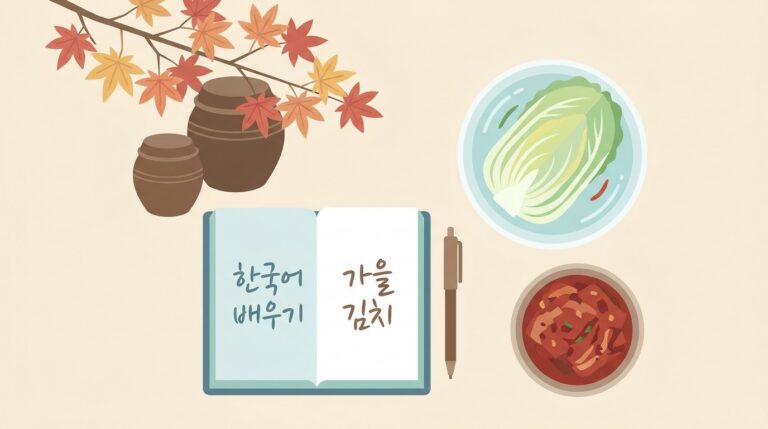
“generate_image_prompt”: “Minimalist flat vector illustration of Korean Onggi fermentation jars under autumn maple leaves, sliced Napa cabbage showing pale crisp broth and rich deep red kimchi, elegant pastel aesthetic.”,
“title”: “Why Your Korean Kimchi Tastes Different Everywhere: The North vs South Fermentation Secret”,
“seo_title”: “Regional Kimchi: North vs South”,
“seo_desc”: “Explore Korean regional fermentation science and master authentic B2 dining phrases.”,
“keyword”: “Gimjang culture, Korean fermentation, regional kimchi, Korean food vocabulary, Daily Hangul”
}
“`
🎬 Watch Our Daily Videos! (Daily Hangul Official Instagram)
Review the expressions you learned in this article with our fun daily short videos! Check out native pronunciation and real-life nuances in action.
- Instagram @dailyhangul_en







