

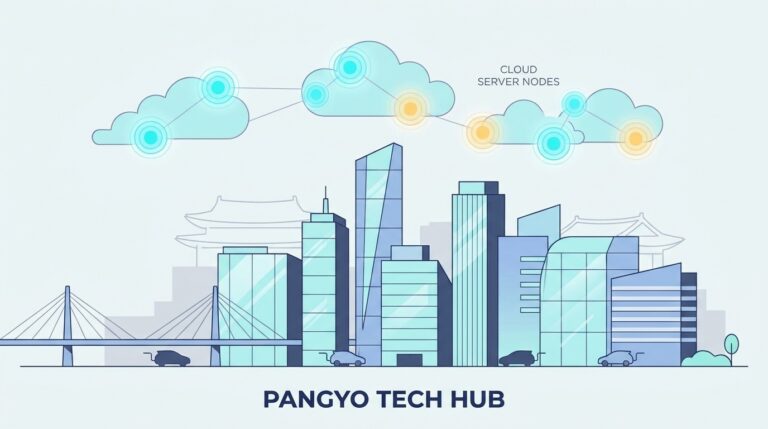
Mastering Zero-Downtime Deployments in Korea’s Silicon Valley
Phase 1: Empathy (Real Talk from Pangyo Techno Valley)
안녕하세요! 매일한글 에디터입니다. (Hello! It’s your Daily Hangul editor.)
Picture this: You are sitting in an open-concept, glass-walled conference room in Pangyo Techno Valley (판교 테크노밸리)—South Korea’s booming answer to Silicon Valley. Outside, modern high-rises house titans like Kakao, Naver, and Coupang. Inside, your team’s Slack channel is buzzing. It is 2:00 PM on a Wednesday, peak shopping hours, and your team is preparing to ship an updated microservice.
You raise your hand, wanting to confirm that the automated Jenkins and ArgoCD pipelines will handle traffic without dropping a single user transaction. You open your mouth and recite the phrase straight out of your university textbook: “시스템의 가동 중지 시간 없이 배포 작업을 개시하도록 조치하겠습니다” (Siseutemui gadong jungji sigan eopsi baepo jag-eobeul gaesihadorok jochihagetseumnida).
The room goes silent for two seconds before your tech lead chuckles gently. Technically, you spoke correct Korean, but to modern cloud engineers, you sounded like a 1980s government bureaucrat operating a mainframe! In modern Korean enterprise environments, cloud-native vocabulary is punchy, agile, and heavily laced with what locals affectionately call Pangyo-mal (판교말—Pangyo Tech Dialect).
If you want to lead enterprise transformations, orchestrate Kubernetes clusters, or seamlessly converse during high-stakes deployments in Korea, you need C1-level fluency that commands respect. This guide is crafted from real war-room experiences and feedback from expat software engineers thriving in Korean unicorns. Let’s upgrade your technical Korean pipeline from legacy monolith to cloud-native!
Phase 2: Core Expressions Deep Dive
1. 무중단 배포를 태우다 (Mujeungdan baeporeul taeuda)
- Pronunciation: [Moo-jeung-dan bae-po-reul tae-oo-da] (Think of Moo like the cow sound, jeung rhyming with lung, bae like ‘bagel’, and tae-oo-da sounding like ‘tell-da’ with an open vowel).
- Meaning: Literal: “To ride/load a zero-downtime deployment.” | Actual Nuance: To trigger an automated pipeline that releases code to production with zero service interruption.
- K-Culture Moment: Seen in tech office K-dramas like Search: WWW (검색어를 입력하세요 WWW) or Start-Up (스타트업), where engineers launch high-risk code during high-traffic viral events without taking down the portal.
- Editor’s Insight: In Korean tech slang, the verb 태우다 (literally ‘to give a ride’ or ‘to burn’) is used whenever you load a workload onto a schedule, server, or automated pipeline. You don’t just ‘execute’ a build; you give it a ride on the pipeline!
- Situation Spectrum: Casual: ⚠️ | Semi-formal: ✅ | Formal: ✅
- 🤔 Think About It: In English, we ‘push’ or ‘ship’ code (industrial, nautical shipping metaphors). Why do you think Korean engineers gravitate toward transit metaphors like ‘riding’ (태우다) or ‘shooting’ (쏘다)? What does this reveal about movement and momentum in Korean work culture?
2. 파이프라인이 꼬이다 (Paipeuraini kkoida)
- Pronunciation: [Pai-peu-ra-in-i kko-ee-da] (The kko uses a tense, popped double-k sound, like the sharp ‘c’ in scat).
- Meaning: Literal: “The pipeline got twisted/tangled.” | Actual Nuance: A continuous deployment flow broke down due to merge conflicts, broken dependencies, or failed integration tests.
- K-Culture Moment: When a live-commerce server experiences a checkout bottleneck during a flash sale with BTS merchandise, and engineers panic over GitHub Actions red lights.
- Editor’s Insight: 꼬이다 comes from twisting threads or intestines. Koreans use it whenever human relationships, life events, or automated scripts become hopelessly tangled. It captures the exact sinking feeling of a red CI/CD build badge.
- Situation Spectrum: Casual: ✅ | Semi-formal: ✅ | Formal: ⚠️
- 🤔 Think About It: How does personifying inanimate technical workflows with organic words like 꼬이다 soften the blow of technical failure among colleagues?
3. 카나리 배포로 간을 보다 (Kanari baeporo ganeul boda)
- Pronunciation: [Kah-nah-ri bae-po-ro gahn-eul bo-da] (Gahn sounds like ‘gone’ with a clipped, crisp ending).
- Meaning: Literal: “To taste the soup seasoning using a canary deployment.” | Actual Nuance: To route 2% to 5% of production traffic to a new release to observe metrics and stability before a 100% rollout.
- K-Culture Moment: Just like a Korean mother tastes doenjang-jjigae (soybean paste stew) with a spoon before serving the entire family, an SRE tests a small pod cluster before letting millions of users in.
- Editor’s Insight: 간을 보다 (to taste-test broth for saltiness) is one of the most versatile Korean idioms. Applying it to Canary Kubernetes deployments shows effortless, witty C1-level bilingual command.
- Situation Spectrum: Casual: ✅ | Semi-formal: ✅ | Formal: 🚫 (In boardrooms, use 점진적 트래픽 전환 검증 jeomjinjeok teuraepik jeonhwan geomjeung).
- 🤔 Think About It: Does your native language use culinary metaphors inside high-tech engineering rooms? What makes food metaphors so universally disarming?
Phase 3: Textbook Korean vs. Real Korean
Situation 1: Informing your team that zero-downtime deployment will run continuously
- 📖 교과서 한국어 (Textbook):
“자동화된 지속적 배포 환경을 통하여 시스템 중단 없이 변경 사항을 수시로 적용하겠습니다.”
(Jadonghwadoen jisokjeok baepo hwan-gyeong-eul tonghayeo siseutem jungdan eopsi byeon-gyeong sahang-eul susiro jeok-yonghagetseumnida.) - 🗣️ 진짜 한국어 (Real Pangyo Native):
“CI/CD 파이프라인 태워서 하루에도 수십 번 무중단으로 바로 라이브 쏠게요.”
(CI/CD paipeurain taewoseo haruedo susip beon mujeungdan-euro baro raibeu ssolgeyo.) - 💡 왜 다를까? (Why the difference?):
Modern cloud engineering moves too fast for passive bureaucratic phrases. Verbs like 태우다 (load/pipeline) and 쏘다 (fire/shoot directly into live environments) express speed, agility, and modern ownership.
Situation 2: Asking if automatic rollback will trigger upon failure
- 📖 교과서 한국어 (Textbook):
“오류가 검출되는 경우 즉각 시스템이 이전 상태로 복구되도록 설정되어 있습니까?”
(Oryuga geomchuldoeneun gyeong-u jeuk-gak siseutemi ijeon sangtaero bokgudoedorok seoljeongdoeeo itseumnikka?) - 🗣️ 진짜 한국어 (Real Pangyo Native):
“에러율 튀면 바로 카나리 닫고 롤백 돌게 세팅 끝났죠?”
(Ereoyul twimyeon baro kanari datgo rolbaek dolge seting kkeutnatjyo?) - 💡 왜 다를까? (Why the difference?):
Korean developers talk about metrics “jumping or popping” (튀다 – twida) and workflows “turning/running” (돌다 – dolda). This natural rhythm signals that you actually operate live systems.
Phase 4: K-Culture Deep Dive & Non-Verbal Manners
4-1. Nunchi (눈치) in the Cloud War-Room
In Korean enterprise IT, an automated pipeline isn’t just software; it’s a team contract. When deployments happen dozens of times a day without downtime, real-time communication requires subtle nunchi (situational awareness):
* The One-Earbud Rule: In tech hubs like Pangyo and Teheran-ro, everyone wears noise-canceling headphones. However, during high-velocity release windows, senior engineers leave one earbud slightly off. If you keep both noise-canceling cups clamped down when deployment telemetry flags red, colleagues perceive it as a lack of situational empathy.
* Slack Emoji Protocol: Words can feel heavy. When an automated build finishes in Slack, acknowledge it immediately with emojis: :rocket: (fired), :eyes: (monitoring the Grafana dashboard), or :pray: (hoping no errors surface). Typing long text messages can trigger unnecessary anxiety.
4-2. The “Ppallippalli” (빨리빨리) DevOps Evolution
Korea’s legendary Ppallippalli (hurry, hurry!) mindset historically led to high-stress, late-night “Big Bang” deployments where monolith servers were shut down at 2:00 AM on Sunday while engineers survived on energy drinks and instant cup noodles (ramyeon).
Today, cloud-native architecture has transformed Ppallippalli into high-frequency CI/CD. Korean developers pride themselves on releasing code dozens of times a day seamlessly. Instead of staying up all night, engineering excellence is now measured by whether users can browse, stream, and purchase without noticing a single microsecond of service lag. Fast-paced efficiency has found its ultimate match in zero-downtime Kubernetes deployments!
Phase 5: Real-World Roleplay Scenario
Setting: A standing desk cluster at a top fintech unicorn in Pangyo.
Characters:
* Min-woo (민우): Cloud Architecture Lead. Calm, data-driven, holding an iced Americano.
* You: Senior Cloud Infrastructure Specialist leading the GitOps migration.
민우: 이번 결제 서비스 MSA 전환 건, 트래픽 몰려도 무중단 배포 문제없을까요?
(Ibeon gyeolje seobiseu MSA jeonhwan geon, teuraepik mollyeodo mujeungdan baepo munjeeopseulkkayo?)
Min-woo: Regarding this payment microservice migration, can we maintain zero-downtime releases even during traffic spikes?
🎭 [He taps his tablet, pointing at the live traffic graph.]

나 (You): 네, 아르고CD 기반 파이프라인 태워서 블루-그린으로 안전하게 넘어갑니다.
(Ne, Areugo-CD giban paipeurain taewoseo beullu-geurin-euro anjeonhage neomeogamnida.)
Me: Yes, we've loaded it on an ArgoCD pipeline, transitioning safely via Blue-Green deployments.
🎭 [Nodding with confidence, showing the deployment manifest.]

민우: 오, 하루에 수십 번 릴리즈 나가도 유저 세션 안 끊기게 세팅된 거죠?
(O, harue susip beon rilrijeu nagado yujeo sesyeon an kkeunkkige setingdoen geojyo?)
Min-woo: Oh, so even if dozens of releases go out daily, user sessions won't drop at all, right?
🎭 [He raises an eyebrow, genuinely curious about the session persistence.]

나 (You): 당연하죠. 카나리로 트래픽 5% 먼저 간 보고, 에러율 안 튀면 전량 교체해요.
(Dang-yeonhajyo. Kanariro teuraepik o-peosenteu meonjeo ganeul bogo, ereoyul an twimyeon jeonryang gyochehaeyo.)
Me: Absolutely. We taste the waters with 5% canary traffic first; if the error rate doesn't spike, we swap the rest.
🎭 [Smiling calmly, using a relaxed hand sweep to indicate traffic shifting.]

민우: 만약 DB 커넥션 풀에서 병목 생기면 어떻게 대응하나요?
(Manyak DB keonekseon pul-eseo byeongmok saenggimyeon eotteoke dae-eunghanayo?)
Min-woo: What if a bottleneck occurs in the database connection pool?
🎭 [He tilts his head, testing your edge-case contingency plan.]

나 (You): 헬스체크 터지는 순간 자동으로 파드 드레인되고 이전 버전으로 롤백 돌아요.
(Helseuchekeu teojineun sungan jadong-euro padeu deureindoego ijeon beojeoneuro rolbaek dorayo.)
Me: The second health checks fail, pods drain automatically and it rolls back to the previous stable release.
🎭 [Typing a command to demonstrate the automated fallback script.]

민우: 완벽하네요! 그럼 오늘 오후 피크 타임 전에 프로덕션 첫 배포 태워보죠.
(Wanbyeokhaneyo! Geureom oneul ohu pikeu taim jeone peurodeokseon cheot baepo taewobojo.)
Min-woo: Perfect! Let’s push our first production release before the afternoon peak traffic hits.
🎭 [He clinks his iced coffee cup against your mug in approval.]

나 (You): 좋습니다. 파이프라인 모니터링하면서 바로 슬랙에 공유드릴게요!
(Joteuseumnida. Paipeurain monitoringhamyeonseo baro seullaeg-e gong-yudeurilgeyo!)
Me: Sounds great. I’ll monitor the pipeline and share real-time updates directly on Slack!
🎭 [Turning to your monitor with a focused, ready posture.]
🔀 Interactive Decision Point
Min-woo suddenly notices a transient latency spike during the canary phase! What do you say?
- Option A: “서버를 당장 전부 끄고 내일 다시 배포하겠습니다.” (Let’s shut down all servers immediately and deploy tomorrow.)
- Option B: “카나리 쪽 트래픽 즉시 차단하고 파이프라인 롤백 태울게요. 로그 까보겠습니다.” (Let’s cut canary traffic immediately and trigger an automated pipeline rollback. I’ll unpack the logs.)
- Option C: “컴퓨터 재부팅하면 알아서 해결될 거예요.” (If we reboot the computer, it’ll probably fix itself.)
Feedback:
- If you chose A [Risk]: Shutting down the entire enterprise infrastructure creates the very downtime you promised to avoid! Your tech lead will question your cloud-native readiness.
- If you chose B [Best!]: Flawless C1 response! You used 롤백 태우다 (trigger rollback) and the authentic tech verb 로그를 까보다 (to crack open/dissect logs). You demonstrated quick, agile incident management.
- If you chose C [Bad]: Cloud-native distributed microservices do not heal by “rebooting the desktop.” This sounds amateur and breaks enterprise reliability!
Phase 6: 10-Second Emotional Shadowing Drill
Practice these lines out loud with native cadence, mimicking the emotion tags and pausing at the slashes (/).
Line 1:
* [🔥 단호하고 프로페셔널하게 - Confident & Professional]
* “무중단 배포 / 파이프라인 태웠으니까, / 유저 영향도 / 전혀 없습니다.”
* (Mujeungdan baepo / paipeurain taewosseunikka, / yujeo yeonghyangdo / jeonhyeo eopseumnida.)
* “Since we loaded it on a zero-downtime pipeline, there is zero impact on our users.”
Line 2:
* [☕ 침착하고 든든하게 - Calm & Reassuring]
* “에러율 튀면 / 카나리가 알아서 차단하고 / 바로 롤백 돌아요.”
* (Ereoyul twimyeon / kanariga araseo chadanhago / baro rolbaek dorayo.)
* “If error rates jump, the canary blocks it automatically and triggers an instant rollback.”
Line 3:
* [🚀 에너제틱하고 협업 지향적으로 - High-Energy & Collaborative]
* “수십 번 배포해도 / 라이브 안 죽으니까 / 마음 놓고 푸시하세요!”
* (Susip beon baepohaedo / raibeu an juk-eunikka / ma-eum noko pusihaseyo!)
* “Even with dozens of deployments, production won’t crash, so push code with peace of mind!”
Phase 7: K-Culture Mini Dictionary
- 판교 사투리 (Pangyo Saturi):
- Meaning: Pangyo Tech Dialect.
- Usage: The rapid blending of English cloud terminology (컨테이너, 오케스트레이션, 프로비저닝) with colloquial Korean action verbs (태우다, 치다, 까보다). Master this to sound like an industry insider.
- 무중단 (Mujeungdan):
- Meaning: Non-stop / Zero-downtime.
- Usage: Essential for high-availability enterprise architecture. Often combined with 배포 (deployment) or 마이그레이션 (migration).
- 롤백 (Rolbaek):
- Meaning: Rollback (reverting to a stable previous version).
- Usage: Treated in Korean offices as an automated safety blanket. When things go wrong, someone yells: “롤백 돌려요!” (Trigger the rollback!)
- 핫픽스 (Hatpikseu):
- Meaning: Hotfix.
- Usage: An immediate patch applied directly to production bugs. Culturally, running a late-night 핫픽스 often justifies ordering late-night snacks (야식) like fried chicken for the team.
Phase 8: Expat & Tech Professional Survival Kit
Top 3 Survival Tech Phrases
- “지금 배포 태워도 될까요?” (Jigeum baepo taewodo doelkkayo?)
- Pro Tip: Ask this before running your automated pipeline during lunch hours or marketing events.
- “파이프라인 통과했는지 슬랙 확인해 주세요.” (Paipeurain tong-gwahaenneunji seullaek hwag-inhae juseyo.)
- Pro Tip: Perfect, polite sentence to alert your pair-programmer to check deployment CI passes.
- “헬스체크 정상이라 트래픽 전체 오픈하겠습니다.” (Helseuchekeu jeongsang-ira teuraepik jeonche opeunhagetseumnida.)
- Pro Tip: Say this right before transitioning canary traffic to 100% full capacity.
Editor’s Travel & Tech Expat Note
If you visit South Korea for business meetings or tech hackathons, head down to Pangyo Station (판교역) via the rapid Sinbundang Line (신분당선). You can easily plan your commute by checking routes through the Naver Map application navigation guide. The underground tech corridor between Kakao Agit and Krafton Tower has public robotic cafes and co-working spaces where engineers discuss microservices over specialty drip coffee. Bring corporate business cards (명함 – myeongham), and always hand them over with both hands!
Phase 9: “한 발 더 깊이” (One Step Deeper)
In Western software engineering, automation is often discussed in terms of dry engineering metrics: MTTR (Mean Time to Resolution), SLA (Service Level Agreements), and cost optimization. In Korea, however, automated CI/CD pipelines carry an emotional and communal dimension. Because Korean office culture historically emphasized collective responsibility, a service outage on a Friday night meant the entire squad had to cancel family plans and stay at their desks.
Adopting zero-downtime automated pipelines is therefore celebrated not merely as an architectural achievement, but as an act of team care (동료애 – dongryo-ae). It frees teammates from midnight alerts and protects their work-life balance (워라밸 – worabal). When you tell a Korean engineer, “무중단 배포 자동화해 뒀어요” (I have automated zero-downtime deployments for us), you are essentially saying: “I respect your evening, and I’ve got your back.”
💬 Your Turn: How does automation change interpersonal workplace dynamics in your country? Does reliability bring your team closer together? Share your thoughts below!
Phase 10: FAQ & Common Mistakes
Q: Can I use the verb ‘던지다’ (to throw) instead of ‘태우다’ (to ride) for pipelines?
A: Yes! Engineers often say “배포 파이프라인에 던져놨어요” (I threw it onto the deployment pipeline) when they want to convey that they’ve handed over code to automated CI testing without needing manual supervision.
Q: How do I distinguish between ‘빌드’ (build) and ‘배포’ (deployment) in conversation?
A: While they often occur together, 빌드 refers strictly to compiling and containerizing artifacts (“빌드 깨졌어요” – The build broke), whereas 배포 refers to routing artifacts onto servers and shifting live users (“무중단 배포 진행 중이에요” – Zero-downtime deployment in progress).
Q: Is it rude to speak using tech Konglish verbs in front of directors (상무님/이사님)?
A: Not in tech companies! High-ranking executives in cloud-native Korean firms frequently use terms like 롤백, 프로비저닝, and 모니터링. However, keep the sentence endings strictly formal (~습니다/십니까) rather than casual (~요).
🚨 흔한 실수 (Common Mistakes) Warning Board
- Mistake: Saying “서버가 죽었습니다” in an overly dramatic tone during minor canary glitches.
- Correct Action: Say “카나리에서 에러율이 살짝 튀어서 확인 중입니다” (Error rates jumped slightly in canary, currently inspecting). Keep panic out of the war room.
- Mistake: Confusing 다운타임 (downtime) with 지연 (latency/lag).
- Correct Action: Say “다운타임 없이 레이턴시만 잡으면 됩니다” (No downtime; we just need to optimize latency).
- Mistake: Using textbook polite verbs like “배포를 거행하겠습니다” (sounds like conducting a wedding ceremony!).
- Correct Action: Use modern action verbs: “배포 태우겠습니다” or “배포 진행하겠습니다.”
Phase 11: Action Mission & Engagement
- 🥉 Bronze Mission (Solo Practice):
Record yourself speaking Line 2 of the Emotional Shadowing Drill three times. Focus on the tense double consonant in 튀면 (twimyeon) and the rhythm of 롤백 돌아요 (rolbaek dorayo). - 🥈 Silver Mission (Interactive Share):
Write a 1-sentence Slack update in Korean announcing that your project pipeline passed with zero downtime, and share it in our discussion comments. - 🥇 Gold Mission (Real-world Deployment):
Next time you submit a Git PR or chat with a Korean colleague, use the phrase: “무중단 배포 파이프라인 태워두었습니다!”
🎮 K-Culture Mission: Watch an episode of a Korean workplace series (like Misaeng or Search: WWW). Listen closely: can you spot when characters shift from formal book-Korean to fast-paced industry office slang?
Phase 12: Interactive Quiz Challenge
Test your C1 enterprise tech fluency!
1. [Contextual Judgment] Your automated Kubernetes canary deployment shows a 4% HTTP 500 error spike. What should you immediately announce in the war-room channel?
* (A) “축하합니다! 배포가 무사히 끝났습니다!”
* (B) “카나리 쪽 에러율 튀어서 트래픽 닫고 자동 롤백 태우겠습니다.”
* (C) “서버 코드를 새로 처음부터 작성하겠습니다.”
2. [Fill in the Blank] Fill in the authentic verb for loading code onto an automated CI/CD pipeline:
* “하루에도 수십 번 무중단 배포를 _________ 안정적으로 운영해요.”
(Hint: Riding/loading verb)
3. [True or False] In Korean cloud startups, zero-downtime architecture is seen merely as a metric, having no connection to team work-life balance (워라밸).
* (True / False)
👉 Click here to reveal Answers & Detailed Explanations!
- Answer: (B)
Why: Option B accurately diagnoses the issue (에러율 튀어서), stops bad traffic (트래픽 닫고), and initiates the automated fallback (롤백 태우겠습니다). - Answer: 태워서 (taewoseo)
Why: The phrase 배포를 태우다 is the golden standard idiom for running automated delivery pipelines in Pangyo IT hubs. - Answer: False
Why: Zero-downtime automation directly protects colleagues from disruptive off-hours emergencies, embodying the cultural value of communal care (동료애).
🎬 Watch Our Daily Videos! (Daily Hangul Official Instagram)
Review the expressions you learned in this article with our fun daily short videos! Check out native pronunciation and real-life nuances in action.
- Instagram @dailyhangul_en







