

Exploring Korean Mega Bakery Cafes: The Ultimate Survival Guide for Foodies and Aesthetic Seekers
Phase 1: Empathy (Story Immersion Opening)
안녕하세요! 매일한글 에디터입니다. (Hello! I’m your Daily Hangul editor.)
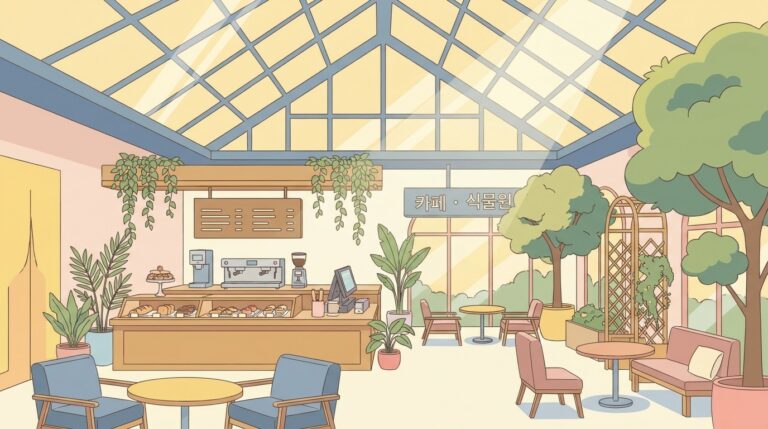
Picture this: You step off a weekend commuter bus just outside Seoul, in places like Paju, Gimpo, or coastal Gangneung. You open the doors of a building that looks like an ultra-modern Guggenheim museum, only to find an indoor tropical botanical garden, cascading indoor waterfalls, and panoramic ocean vistas right in front of your eyes. Then, the scent hits you—warm brioche, garlic butter baguettes, salted butter rolls (소금빵), and matcha croissants lining a pastry runway that stretches as long as a bowling lane!
Suddenly, excitement turns into sheer panic. There are three massive floors, dozens of visitors scouting for seats like detectives, and an intricate ordering counter where locals are moving with practiced efficiency. Do you pick the bread first, or race up the spiral staircase to reserve a table? How do you ask the barista which pastry is fresh out of the oven without freezing up?
Many of our intermediate learners have confessed: “I knew how to say ‘Ice Americano, please,’ but inside these colossal bakeries, I froze because the entire flow was completely different from a typical coffee shop!” Don’t worry. This guide draws from real classroom feedback and field-tested local tips. By the time you finish this guide, you will navigate Korea’s breathtaking mega cafes with the swagger of a seasoned Seoul local.
Phase 2: Core 3 Expressions In-Depth
Here are three essential expressions tailored for your mega cafe adventure.
1. 여기 자리 먼저 잡아야 해요? (Yeogi jari meonjeo jab-aya haeyo?)
- Pronunciation: [Yeo-gi ja-ri meon-jeo ja-ba-ya hae-yo?] (Sounds like: “Yuh-ghee jah-ree mun-juh jah-bah-yah heh-yo?” — smooth, flowing cadence)
- Meaning: “Should we secure seats here first?” (Literal: Here seat first must catch?)
- K-Culture Moment: In weekend K-vlogs or variety shows like I Live Alone (나 혼자 산다), you will always see friends entering a sprawling suburban cafe and declaring this phrase before even touching a pastry tray.
- Editor’s Insight: In colossal bakery cafes with hundreds of seats, lines at the cashier can take 15 minutes, while popular window seats disappear in seconds. Asking your companion or a floor attendant this question prevents the tragedy of holding a tray of melting cream pastries with nowhere to sit.
- Situation Spectrum: Casual (Friend): ✅ | Semi-formal (Staff/Acquaintance): ✅ | Formal: ⚠️ (여기 자리를 먼저 잡아야 합니까? is overly stiff)
- 🤔 Think About It: In many Western countries, taking a table before ordering at a counter-service cafe is considered slightly impolite. Why does Korean cafe culture encourage seat reservation first?
2. 여기 시그니처 빵이 뭐예요? (Yeogi sigeunicheo ppang-i mwoyeyo?)
- Pronunciation: [Yeo-gi si-geu-ni-cheo ppang-i mwo-ye-yo?] (Sounds like: “Yuh-ghee see-geu-nee-chuh ppang-ee mwo-yeh-yo?” — make sure the double pp in ppang pops with no aspiration, like the p in spin)
- Meaning: “What is the signature pastry here?”
- K-Culture Moment: When food creators visit destination cafes on YouTube, they always ask the head baker or counter staff this exact phrase to ensure they photograph the cafe’s hero item.
- Editor’s Insight: Mega bakery cafes almost always specialize in one flagship bake—such as 대파 크림치즈 베이글 (scallion cream cheese bagel) or 연탄빵 (coal-shaped brioche). Even if dozens of loaves look tempting, asking for the 시그니처 guarantees you don’t miss the masterpiece.
- Situation Spectrum: Casual: ✅ | Semi-formal: ✅ | Formal: ⚠️
- 🤔 Think About It: Notice how the English word “signature” is adopted directly into Korean (시그니처). How does loanword adoption in Korean cafe culture reflect modern consumer trends?
3. 사진 찍기 완전 좋은데요! (Sajin jjikgi wanjeon joeundeyo!)
- Pronunciation: [Sa-jin jjik-gi wan-jeon jo-eun-de-yo!] (Sounds like: “Sah-jeen jeek-ghee wahn-jun jo-eun-deh-yo!” — emphasis on wanjeon for natural flavor)
- Meaning: “This place is totally fantastic for taking photos!”
- K-Culture Moment: Used by K-Drama characters whenever a romantic date takes them to an aesthetic architectural cafe surrounded by pine trees or ocean waves.
- Editor’s Insight: 완전 (wanjeon) literally means “complete/perfect,” but in conversational B1 Korean, it works just like “totally” or “super.” Using the sentence ending -는데요 adds an expressive, inviting tone rather than a blunt factual statement.
- Situation Spectrum: Casual: ✅ | Semi-formal: ✅ | Formal: 🚫 (Too colloquial for high-level business settings)
- 🤔 Think About It: Aesthetic spaces in Korea are often built specifically with social media visual balance in mind. How does language adapt when aesthetics become an essential part of the dining experience?
Phase 3: Textbook Korean vs. Real Korean
Let’s bridge the gap between classroom grammar and the living speech of Korean cafe hoppers.
Situation 1: Asking when a sold-out pastry will be restocked
- 📖 교과서 한국어 (Textbook):
- 빵이 언제 새로 나옵니까? (Ppang-i eonje saero naombnikka?) — “When will new bread emerge?”
- 🗣️ 진짜 한국어 (Real-World):
- 다음 빵 언제 나와요? (Daeum ppang eonje nawayo?) — “When does the next batch come out?”
- 💡 왜 다를까?: While the textbook version is grammatically flawless, it sounds like an official inspection report! Locals use 다음 빵 (next bread) and the active, casual polite ending -아요/어요.
Situation 2: Praising the breathtaking interior view
- 📖 교과서 한국어 (Textbook):
- 경치가 대단히 아름답습니다. (Gyeongchiga daedanhi areumdapssumnida.) — “The landscape is exceedingly beautiful.”
- 🗣️ 진짜 한국어 (Real-World):
- 뷰가 진짜 미쳤어요! (Byuga jinjja michyeosseoyo!) — “The view is totally insane!”
- 💡 왜 다를까?: Young Koreans frequently use 뷰 (view) combined with 미쳤다 (literally “crazy/insane”, used positively for mind-blowing experiences). It captures instant awe much better than archaic adjectives.
Phase 4: K-Culture Deep Dive & Non-Verbal Manners
4-1. Nunchi (눈치) & Non-Verbal Cafe Etiquette
- The Sacred Tray Paper Ritual: Before picking up metal tongs (집게), always place a sheet of parchment paper (유산지) onto your tray (쟁반). Grabbing bread directly onto a bare tray is considered a major faux pas!
- The Laptop/Coat Seat Reservation: It is completely customary in Korea to leave a personal belonging—such as a jacket, an umbrella, or even a drink coaster—on a table to signify that the seat is taken. However, keep your nunchi sharp: never occupy a six-person panoramic booth if you are alone during peak weekend hours.
- The Buzzer Reflex: When your vibrating pager (진동벨, jindongbel) buzzes, walk back to the pickup counter immediately. Leaving it buzzing creates disruptive noise in open architectural halls.
4-2. Cultural Code: The Rise of Destination Mega Cafes
Why build massive cafes resembling art museums or botanical gardens in the middle of nature? In densely populated Korean metropolitan areas, personal living quarters are often compact. Suburban 대형 베이커리 카페 (mega bakery cafes) serve as an affordable weekend luxury—a “third place” (제3의 공간) where friends and families travel for a mini-vacation (근교 나들이). You are not just paying for coffee; you are renting space, scenery, and architectural peace.
Phase 5: Real-World Roleplay Scenario
Setting: Forest Outpost Bakery, a 3-story glass greenhouse cafe near an arboretum. You are standing with your friend Jina near the pastry counter.
- You: 와, 여기 식물원인 줄 알았어요! 사람 진짜 많네요. (Wa, yeogi singmul-won-in jul arasseoyo! Saram jinjja man-neyo.)
🎭 Eyes wide open, looking up at the 10-meter palm trees.
(Wow, I thought this was a botanical garden! There are so many people.) - Jina: 맞지? 주말엔 항상 이래. 빵 고르기 전에 자리 먼저 찾아볼래? (Matji? Jumal-en hangsang irae. Ppang goreugi jeone jari meonjeo chaj-abollae?)
🎭 Pointing up toward the 2nd-floor glass terrace.
(Right? It’s always like this on weekends. Shall we find a seat before picking bread?) - You: 네! 제가 2층 가서 자리 먼저 잡고 올게요. (Ne! Jega icheung gaseo jari meonjeo japgo olgeyo.)
🎭 Taking off your light jacket to save a spot.
(Yes! I’ll go up to the second floor, grab a seat first, and come right back.) - Jina: 고마워! 나는 트레이에 유산지 깔고 기다릴게. (Gomawo! Naneun teurei-e yusanji kkalgo gidarilge.)
🎭 Picking up two sets of tongs and a tray.
(Thanks! I’ll lay the parchment paper on the tray and wait.) - You (returns): 2층 창가 자리 잡았어요! 뷰가 진짜 미쳤어요. (Icheung chang-ga jari jab-asseoyo! Byuga jinjja michyeosseoyo.)
🎭 Walking down with a triumphant smile.
(I got a window seat on the second floor! The view is totally insane.) - Jina: 나이스! 이제 빵 골라보자. 종류가 너무 많아서 결정장애 오네. (Naiseu! Ije ppang golla-boja. Jongnyuga neomu manhaseo gyeoljeong-jang-ae one.)
🎭 Glancing down at the 40 different artisan loaves.
(Nice! Now let’s pick the bread. There are so many kinds, I’m having choice paralysis.) - You: 직원분한테 물어볼게요. 저기요, 여기 시그니처 빵이 뭐예요? (Jik-won-bun-hante mureobolgeyo. Jeogiyo, yeogi sigeunicheo ppang-i mwoyeyo?)
🎭 Making polite eye contact with the head baker behind the display.
(I’ll ask the staff. Excuse me, what is the signature pastry here?) - Baker: 저희는 마늘 크림치즈 바게트랑 소금빵이 제일 인기 많아요! (Jeohuineun maneul keurimchijeu bageteu-rang sogeum-ppang-i jeil ingi man-ayo!)
🎭 Proudly pointing with tongs to the steaming fresh batch.
(Our garlic cream cheese baguette and salt bread are the most popular!)
🔀 Interactive Branch Point: You have leftover bread after eating
What should you say to handle your leftover pastries?
- Choice A: “저기요! 이거 남았는데 그냥 버려주세요.” (Jeogiyo! Igeo nam-anneunde geunyang beoryeo-juseyo. / Excuse me! This is leftover, just throw it away.)
- Choice B: “남은 빵 포장해 갈 수 있는 자율 포장대가 어디예요?” (Nameun ppang pojanghae gal su inneun jayul pojangdaega eodiyeyo? / Where is the self-packaging counter where I can pack the leftover bread?)
- Choice C: “이거 카운터에서 예쁘게 선물 포장 다시 해주세요.” (Igeo kaunteo-eseo yeppeuge seonmul pojang dasi hae-juseyo. / Please re-pack this as a fancy gift at the counter.)
Decision Feedback:
* Choice A (Bad): Wasting artisanal pastry without asking is a pity, and staff will often remind you that taking it home is very common.
* Choice B (Best!): Perfect B1 Korean! Mega bakery cafes have a dedicated 자율 포장대 (self-packaging counter) with wax paper, plastic bags, and tape.
* Choice C (Risk): During busy hours, counter staff do not hand-package leftovers for you; asking them to do custom gift packaging causes awkward delays.
Phase 6: 10-Second Emotion Shadowing Drill
Practice these natural rhythm pauses (/) and pitch inflections!
[🤩 Deeply impressed & wide-eyed]
와, / 여기 인테리어 / 진짜 대박이다!
(Wa, / yeogi interi-eo / jinjja daebak-ida!)
“Wow, the interior here is seriously epic!”-
[🤔 Curious & inquiring politely]
혹시 / 이 빵 방금 나온 건가요?
(Hoksi / i ppang bang-geum naon geon-gayo?)
“By any chance, did this bread just come out fresh?” -
[😊 Relaxed & content]
창가 쪽에 / 앉으니까 / 힐링 제대로 되네요.
(Chang-ga jjok-e / anjeunikka / hilling jedaero doeneyo.)
“Sitting by the window is giving me such pure healing.”
Phase 7: K-Culture Mini Dictionary
- 대형 카페 (Daehyeong Kape): Mega / Destination Cafe. Refers to sprawling suburban multi-story cafes built around scenic nature spots or avant-garde architecture.
- 빵지순례 (Ppangjisullye): Pastry Pilgrimage. A portmanteau of 빵 (bread) and 성지순례 (sacred pilgrimage), describing the popular Korean trend of traveling across regions solely to taste famous bakeries.
- 뷰 맛집 (Byu Matjip): Scenery Sanctuary / Great View Spot. A playful blend of View and Matjip (delicious restaurant). It highlights places where the landscape is just as appetizing as the food.
- 자율 포장대 (Jayul Pojangdae): Self-Packaging Station. The amenity corner where customers can independently wrap unfinished pastries, grab extra napkins, and find paper bags.
Phase 8: Survival Kit for Travelers
Top 3 Survival Phrases
- 포장해 갈게요. (Pojanghae galgeyo.) — I’ll take this to go.
Pro Tip: If you don’t plan on sitting down, say this at the counter so they don’t apply dine-in reusable cup regulations. - 진동벨 울리면 어디로 가요? (Jindongbel ullimyeon eodiro gayo?) — Where do I go when the buzzer vibrates?
Pro Tip: Mega cafes often have separate pickup zones for bakery items versus espresso beverages. - 따뜻하게 데워 먹을 수 있어요? (Ttatteuthage dewo meogeul su isseoyo?) — Can I warm this up?
Pro Tip: Most self-service counters feature high-end toaster ovens or microwaves with instructions on reheating times.
Editor’s Travel Note
Suburban destination cafes are rarely located right outside subway exits. Before setting out, install the 네이버 지도 앱 다운로드 to check suburban bus routes, parking availability, and real-time crowd updates. If traveling on weekends, aim to arrive before 11:30 AM or after 4:00 PM to bypass grueling 40-minute pastry queues.
Phase 9: “One Step Deeper” (Reflective Essay)
In South Korea’s hyper-dense urban landscape, where high-rise apartment complexes dominate residential living, physical space itself becomes the ultimate luxury. The meteoric rise of mega bakery cafes reflects a communal longing for open horizons, lush green foliage, and natural sunlight without the stress of remote camping. These vast architectural spaces act as democratic sanctuaries: for the price of an Americano and a sea-salt roll, anyone can claim an afternoon in a botanical conservatory or a seaside pavilion. Language reflects this emotional exchange; Koreans rarely say they go to these cafes simply “to drink coffee,” but rather “힐링하러 가다” (to go seek healing).
💬 Your Turn: What does your home culture’s ideal cafe space look like? Would you prefer a tiny hidden alleyway nook or an open three-story greenhouse cafe? Share your thoughts below in Korean or English!
Phase 10: FAQ & Avoiding Misunderstandings
Q: Can I bring my dog or young children to these huge cafes?
A: It depends on their policy! Many mega cafes with large outdoor lawns designate specific zones as 키즈존 (Kids Zone) vs. 노키즈존 (No Kids Zone), or 반려견 동반 가능 (Pet-friendly). Look for signage near the entrance door or check their profile on Naver Map before entering.
Q: Why did the cashier ask if I am drinking inside or taking out before ringing up my coffee?
A: By Korean government environmental law, single-use plastic cups are strictly prohibited for customers seated inside cafes. If you state you will sit inside, you will receive glass or ceramic mugs.
Q: Can I share one drink and one pastry if we are a group of three?
A: Most large destination cafes enforce a 1인 1음료 (one beverage per person) rule to maintain the huge facility costs. Even if you purchase multiple pastries, you are usually expected to order one drink per adult.
🚨 Common Mistakes
- ❌ Mistake 1: Leaving trays on your table when leaving.
Correct Action: Look for the sign that reads 반납대 (Bannapdae – Return Station) and return your trays, glassware, and trash directly there. - ❌ Mistake 2: Cutting fresh artisan bread with dining knives on decorative display platters.
Correct Action: Move items to your personal wooden cutting board or use shears provided at the 자율 포장대. - ❌ Mistake 3: Assuming all tables have electrical outlets for laptops.
Correct Action: Mega cafes designed around natural views often limit wall outlets to prevent 카공족 (cafe studiers) from monopolizing panoramic seats for hours.
Phase 11: Action Mission & Engagement
- 🥉 Bronze Level: Stand in front of your mirror and practice the phrase: “여기 시그니처 빵이 뭐예요?” three times with a confident smile.
- 🥈 Silver Level: Find a photo of a Korean cafe on Instagram and write a Korean comment using our B1 keyword: “뷰가 진짜 미쳤어요!”
- 🥇 Gold Level: Visit a local bakery or Korean cafe this week. Pick your tray, lay the parchment paper, and greet the staff with: “안녕하세요!” while scouting your seat.
- 🎮 K-Culture Mission: Watch an episode of a recent slice-of-life K-Drama (like 웰컴투 삼달리 or 눈물의 여왕) and see if you can spot a suburban destination cafe with floor-to-ceiling glass windows!
Phase 12: Interactive Quiz Challenge
Test your mega cafe survival smarts!
- Situational Judgment: You enter a bustling 3-story coastal cafe with your friend on a Sunday afternoon. What is the most practical first step?
- (A) Pick five pastries onto your tray immediately.
- (B) Ask a companion to locate and secure a table (자리 잡기) first.
- (C) Demand paper takeout cups so you can sit anywhere.
- Fill-in-the-Blank: Complete the real-world Korean phrase to express awe at the scenery:
“여기 창밖 _____가 진짜 미쳤어요!”- (A) 계산 (Gyesan)
- (B) 뷰 (Byu)
- (C) 포장 (Pojang)
- True or False: At a Korean mega bakery cafe, if you cannot finish your bread, you must leave it behind because staff are not allowed to let food leave the building.
- [True / False]
👉 Click to reveal answers & explanations!
- Answer: (B). In crowded weekend destination cafes, seating fills up rapidly. Securing a spot first ensures your hot coffee and pastries don’t sit on a tray while you wander between floors!
- Answer: (B) 뷰 (Byu). Combined as 뷰가 진짜 미쳤어요! to mean “The view is totally insane!”
- Answer: False. Almost all mega bakery cafes provide a 자율 포장대 (Self-Packaging Station) stocked with bags and ties so visitors can easily take home remaining treats.
🎬 Watch Our Daily Videos! (Daily Hangul Official Instagram)
Review the expressions you learned in this article with our fun daily short videos! Check out native pronunciation and real-life nuances in action.
- Instagram @dailyhangul_en







