

Phase 1: 공감 (Story-Driven Opening)
안녕하세요! 매일한글 에디터입니다.
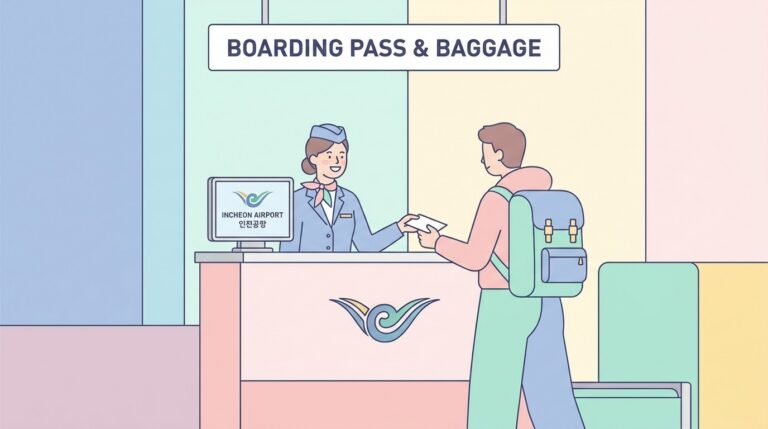
Imagine this: You have just arrived at Incheon International Airport after months of binge-watching your favorite K-dramas. The air smells of excitement, delicious toast from airport cafes, and fresh beginnings. You confidently roll your heavy suitcase up to the airline check-in counter. With a polite smile, the airline counter agent scans your passport, prints a boarding pass, and briskly sticks a tiny white barcoded sticker onto the back of your ticket sleeve.
Then, she looks directly into your eyes and says in gentle Korean: “수하물표는 도착할 때까지 잘 보관하세요!” You nod instinctively, say “Kamsahamnida!”, and casually stuff your boarding pass into your back pocket. But wait—fast forward 14 hours. You are standing in front of the luggage carousel at your transit stop or final destination. The belt stops moving. Your mint-green suitcase with the cute plushie keychain is nowhere in sight. An airport staff member approaches you asking for your claim tag, and your mind goes blank. Where did that tiny sticker go?
Many of our Daily Hangul learners tell us this exact moment gave them intense travel anxiety! At Incheon and Gimpo airports, airport ground staff rely heavily on luggage tags (수하물표) to resolve luggage mix-ups swiftly. In this lesson, we will master the exact phrases you need at the baggage counter so you never lose your luggage tag—or your cool—ever again!
Phase 2: 핵심 표현 3선 심층 분석 (Top 3 Key Expressions)
1. 수하물표 잘 챙겨 두세요 (Suhwamulpyo jal chaenggyeo duseyo)
- Pronunciation: Suh-hwa-mool-pyo jal cheng-gyuh doo-seh-yo (Sounds like: “Sue-hwa-mool-pyo” + “jal” as in jalapeño without the p + “cheng-gyuh”)
- Meaning: Literal: “Pack/manage your luggage tag well in advance.” | Real Nuance: “Please make sure you keep your baggage claim tag safe and within easy reach.”
- K-Culture Moment: You often see this verb in airport departure scenes in K-dramas (like Crash Landing on You or King the Land), where thoughtful characters remind their traveling loved ones: “여권 잘 챙겼어?” (Did you pack your passport safely?).
- Editor’s Insight: The verb 챙기다 (chaenggida) is one of the most culturally warm words in Korean. It doesn’t just mean to mechanically keep something; it conveys active care, attentiveness, and responsibility.
- Situation Spectrum:
- Casual: 🚫 (Not to airport staff)
- Semi-formal (Polite): ✅ 수하물표 잘 챙기세요 (Suhwamulpyo jal chaenggiseyo)
- Formal: ✅ 수하물표 잘 챙겨 두시기 바랍니다 (Suhwamulpyo jal chaenggyeo dusigi baramnida)
- 🤔 Think About It: In English, we simply say “keep this safely.” Why do you think Korean uses a word rooted in emotional caring (챙기다) even during routine airline procedures?
2. 도착할 때까지 가지고 계세요 (Dochakhal ttaekkaji gajigo gyeseyo)
- Pronunciation: Do-chak-hal ttae-kka-ji ga-ji-go gye-seh-yo (Rhythm tip: Pause slightly after “ttaekkaji”)
- Meaning: Literal: “Until the time you arrive, please remain in possession of it.” | Real Nuance: “Hold on to this until you land at your final destination.”
- K-Culture Moment: Friendly cabin crew on Korean Air or Asiana Airlines repeating arrival instructions over the PA system before landing.
- Editor’s Insight: Notice 계세요 (gyeseyo) instead of 있으세요 (isseuseyo). Korean customer service applies honorific honor markers directly to the customer’s actions to show utmost respect.
- Situation Spectrum:
- Casual: 🚫 도착할 때까지 갖고 있어 (Only between close friends)
- Semi-formal: ✅ 도착할 때까지 갖고 계세요
- Formal: ✅ 도착하실 때까지 소지해 주시기 바랍니다
- 🤔 Think About It: Notice the particle -까지 (-kkaji) which means “until”. How does clearly stating the end point (“until arrival”) change the psychological urgency of holding onto a receipt?
3. 짐 찾을 때 필요해요 (Jim chajeul ttae pil-yo-hae-yo)
- Pronunciation: Jim cha-jeul ttae peel-yo-heh-yo (“Jim” sounds like the English name Jim, but spoken with a short, neat vowel sound!)
- Meaning: Literal: “When finding luggage, it is necessary.” | Real Nuance: “You’ll definitely need this when you pick up your bags.”
- K-Culture Moment: When tourists at Seoul Station City Airport Terminal check their oversized luggage and the attendant taps the back of their flight ticket twice with a highlighter pen.
- Editor’s Insight: Koreans colloquially use 짐 (jim) for any luggage, bag, or cargo instead of the Sino-Korean word 수하물 (suhwamul) in spoken conversation.
- Situation Spectrum:
- Casual: ⚠️ 짐 찾을 때 필요해 (Friends only)
- Semi-formal: ✅ 짐 찾을 때 필요해요
- Formal: ✅ 수하물 수취 시 필요하십니다
- 🤔 Think About It: English uses the verb “to claim” or “to pick up” baggage, but Korean uses 찾다 (chatda), which literally means “to find / to search for”. Does this make luggage pickup feel like a scavenger hunt?
Phase 3: 교과서 한국어 vs 진짜 한국어 (Textbook vs. Real Korean)
Situation 1: The agent tells you where your tag is stuck
- 📖 교과서 한국어 (Textbook):
- 수하물 표는 탑승권 뒷면에 부착되어 있습니다. (Suhwamul pyoneun tapseunggwon dwinmyeone buchagdoe-eo itsseumnida.) — “The baggage claim tag has been affixed to the rear surface of your boarding pass.”
- 🗣️ 진짜 한국어 (Real Life):
- 태그는 여기 표 뒤에 붙여 드렸어요! (Taegeuneun yeogi pyo dwie buchyeo deuryeosseoyo!) — “I stuck the tag right here on the back of your ticket for you!”
- 💡 왜 다를까? (Why is it different?):
- Native Korean staff prefer friendly loanwords like 태그 (tae-geu) and warm service endings like -어 드렸어요 (-eo deuryeosseoyo) over stiff passive legal jargon.
Situation 2: Warning you not to discard the receipt
- 📖 교과서 한국어 (Textbook):
- 수하물 교환권을 분실하지 않도록 유의하십시오. (Suhwamul gyohwankwoneul bunsilhaji antorok yuihasipsio.) — “Take precaution so as not to forfeit your baggage exchange ticket.”
- 🗣️ 진짜 한국어 (Real Life):
- 이거 버리시면 안 돼요, 꼭 갖고 계세요! (Igeo beorisimyeon an dwaeyo, kkok gatgo gyeseyo!) — “You shouldn’t throw this away, please definitely hold onto it!”
- 💡 왜 다를까? (Why is it different?):
- Ground staff communicate with quick, clear, and caring phrasing (-면 안 돼요) to make sure international travelers don’t mistake the tag for a regular receipt and toss it in the airport trash bin.
Phase 4: K-Culture 딥다이브 & 비언어적 매너 (K-Culture Deep Dive)
4-1. 눈치 (Nunchi) & Two-Hand Etiquette at the Counter
When the airport counter staff hands your passport and boarding pass back, look closely at their hands. In Korea, service professionals will almost always hand documents using two hands (두 손으로 주기) or with one hand lightly supporting the opposite wrist.
- Your Nunchi Move: Never grab your passport with one casual hand while scrolling on your phone! Receive it with both hands, make gentle eye contact, and offer a light 15-degree head bow (목례, mok-rye). This tiny action immediately shows mutual respect and puts a warm smile on the counter agent’s face.
4-2. Incheon Airport: World-Class Speed Meets “Palli-Palli” Culture
Korea is world-renowned for its Palli-Palli (quick, efficient) culture, and nowhere is this more evident than Incheon International Airport (ICN). The luggage sorting systems here move bags with millimeter precision using RFID technology embedded into that tiny 수하물 태그.
When airport ground crews say “수하물표 잘 챙기세요”, they aren’t just giving a robotic warning—they know that if your luggage is delayed or misdirected at your destination, reading the alphanumeric code off your tag is the fastest way Korean airline apps track your suitcase down. Keeping this tag handy is your golden ticket to stress-free travel!
Phase 5: 실전 롤플레이 시나리오 (Real-World Roleplay)
Setting: Terminal 1 Check-in Counter at Incheon Airport. Friendly airline agent Minji is processing traveler Alex’s heavy suitcase before a flight.
- Turn 1 (Minji): 안녕하세요! 여권과 탑승권 확인해 드리겠습니다. (Annyeonghaseyo! Yeogwongwa tapseunggwon hwaginhae deurigesseumnida.)
🎭 두 손으로 여권을 받으며 미소 짓는다.- “Hello! Let me check your passport and boarding pass.”
- Turn 2 (Alex): 네, 여기 있어요! 창문 쪽 자리로 부탁드려요. (Ne, yeogi isseoyo! Changmun jjok jariro butakdeuryeoyo.)
🎭 두 손으로 여권을 건넨다.- “Yes, here you go! A window seat, please.”
- Turn 3 (Minji): 네, 창가 자리로 배정해 드렸습니다. 부치실 짐을 저울에 올려주세요. (Ne, changga jariro baejeonghae deuryeotseumnida. Buchisil jimeul jeoure ollyeojuseyo.)
🎭 저울 벨트를 가리킨다.- “Sure, I have assigned you a window seat. Please place your checked baggage on the scale.”
- Turn 4 (Alex): 가방은 하나예요. 짐은 목적지까지 바로 가나요? (Gabangeun hanayeyo. Jimeun mokjeokjikkaji baro ganayo?)
🎭 캐리어를 벨트 위에 올린다.- “Just one bag. Does the luggage go directly to the final destination?”
- Turn 5 (Minji): 네, 최종 목적지에서 찾으시면 됩니다. 무게는 18kg으로 통과되셨어요. (Ne, choejong mokjeokjieseo chajeusimyeon doemnida. Muge-neun sip-pal-ki-lo-ro tong-gwa-doe-syeo-sseo-yo.)
🎭 모니터를 확인하며 고개를 끄덕인다.- “Yes, you can pick it up at your final destination. Weight is 18kg, so it passed.”
- Turn 6 (Alex): 다행이네요! (Dahaeng-ineyoyo!)
🎭 안도하며 웃는다.- “What a relief!”
- Turn 7 (Minji): 수하물표는 비행기 표 뒤에 붙여 드렸으니 도착할 때까지 잃어버리지 않게 잘 보관하세요! (Suhwamulpyoneun bihaenggi pyo dwie buchyeo deuryeosseuni dochakhal ttaekkaji ireobeoriji anke jal bogwanhaseyo!)
🎭 탑승권 뒷면 스티커를 손가락으로 톡톡 가리킨다.- “I attached your baggage tag to the back of your flight ticket, so keep it safe without losing it until you arrive!”
- Turn 8 (Alex): 아, 네! 도착할 때까지 잘 챙길게요. 감사합니다! (A, ne! Dochakhal ttaekkaji jal chaenggilgeyo. Gamsahamnida!)
🎭 탑승권을 두 손으로 받으며 고개 숙여 인사한다.- “Ah, yes! I will keep it safe until I arrive. Thank you!”
🔀 인터랙티브 분기점 (Interactive Decision Point)
Imagine Minji points to the small barcode sticker on your boarding pass and says: “이거 잃어버리시면 짐 찾기 어려워요! (If you lose this, it’s hard to find your luggage!)” How do you respond?
- Option A: “네, 가방 안에 소중히 넣어 둘게요!” (Ne, gabang ane sojunghi neoheo dulgeyo! — “Yes, I’ll put it safely inside my checked bag!”)
- 👉 Feedback [Risk!]: Wait! If you put the baggage tag inside the checked bag, how will you show it if your bag is lost? Keep it in your wallet, passport holder, or smartphone case!
- Option B: “걱정 마세요, 여권 케이스에 잘 챙겨 둘게요!” (Geokjeong maseyo, yeogwon keiseue jal chaenggyeo dulgeyo! — “Don’t worry, I’ll keep it safely in my passport case!”)
- 👉 Feedback [Best!]: Perfect! This uses natural A2 grammar (챙겨 둘게요) and shows you understand how to keep it accessible.
- Option C: “필요 없어요, 버려주세요.” (Pilyo eopseoyo, beoryeojuseyo. — “I don’t need it, please throw it away.”)
- 👉 Feedback [Bad!]: Oh no! Never throw this away before retrieving your bags. Airport staff will not be able to track missing bags without the number.
Phase 6: 10초 감정 섀도잉 드릴 (10-Second Emotion Shadowing)
Practice saying these aloud with real emotional intonation! Slash marks (/) indicate where to pause for natural phrasing:
[😊 다정하고 또렷하게 (Warm & Clear)]- 수하물표는 / 도착할 때까지 / 잘 챙기세요.
- (Suhwamulpyoneun / dochakhal ttaekkaji / jal chaenggiseyo.)
[🙋♂️ 밝고 씩씩하게 (Bright & Confident)]- 네! / 여권 케이스에 / 잘 보관할게요.
- (Ne! / Yeogwon ke-i-seu-e / jal bogwanhalgeyo.)
[🧐 꼼꼼하게 확인하며 (Careful & Attentive)]- 짐 찾을 때 / 이 스티커 보여주면 되나요?
- (Jim chajeul ttae / i seutikeo boyeojumyeon doenayo?)
Phase 7: K-Culture 미니 사전 (Core Vocabulary)
- 수하물 (Suhwamul)
- Meaning: Checked baggage / Cargo
- Usage: Formal airline term used on counter signs, monitors, and airline apps.
- 짐표 / 수하물 태그 (Jimpyo / Suhwamul tae-geu)
- Meaning: Luggage claim tag
- Usage: Daily spoken word. You can say 짐표 주세요 (Please give me the luggage tag) if the agent forgets to hand it over.
- 챙기다 (Chaenggida)
- Meaning: To pack, look after, not forget, or keep safely
- Usage: Essential everyday verb: “밥 잘 챙겨 먹어!” (Make sure you eat well!) or “짐 잘 챙겼어?” (Did you pack everything?).
- 수하물 찾는 곳 (Suhwamul channeun got)
- Meaning: Baggage claim area
- Usage: Follow these directional signs after clearing customs and immigration.
Phase 8: 여행자를 위한 생존 키트 (Traveler’s Survival Kit)
Top 3 Survival Phrases for Baggage Check-in
- 제 짐은 바로 가나요? (Je jimeun baro ganayo?)
- Pro Tip: Use this during layovers to verify whether your bag transfers automatically to your final destination.
- 수하물표 하나 더 받을 수 있나요? (Suhwamulpyo hana deo badeul su innayo?)
- Pro Tip: Great if you are traveling with companions and want a backup photo or duplicate tag.
- 가방이 아직 안 나왔어요. (Gabangi ajik an nawasseoyo.)
- Pro Tip: Essential sentence if the baggage carousel is empty and your suitcase hasn’t appeared yet.
Editor’s Travel Note 💡
- Digital Backup: As soon as the agent attaches your baggage tag, take a quick smartphone photo of both the barcode and your physical suitcase. If you have to file a claim, visuals speed up the process tenfold!
- Helpful Navigation: When landing at Incheon Airport, use the Incheon Airport Official Guide App to check real-time baggage carousel numbers directly on your phone.
- Smart Tag Placement: Keep your boarding pass inside a transparent phone pocket or passport pouch so the sticker adhesive doesn’t peel off inside your bag.
Phase 9: “한 발 더 깊이” (Cultural Insight)
In Korean culture, the act of “챙기다” (chaenggida) reflects Korea’s deep-rooted communal care (정, Jeong). When customer service staff or flight attendants persistently remind you to keep your tag safe, it isn’t viewed as nagging or distrust. Rather, it represents an attentive mindset where the speaker actively anticipates potential troubles on your behalf to protect your journey. In Korea, true hospitality means ensuring you reach your destination without missing a single beat—or a single bag!
💬 Your Turn: Have you ever lost your luggage or a crucial receipt while traveling abroad? What is the most organized way you keep track of your travel documents? Share your travel habits in the comments below!
Phase 10: FAQ & 흔한 실수 예방 (FAQ Schema)
Q: What should I do if the baggage tag peels off my boarding pass?
A: Don’t panic! Take your passport and boarding pass back to the airline transfer desk or arrival customer service counter immediately. As long as you have your passport and flight booking number, airline staff can look up your baggage tag number in their internal system.
Q: Is “수하물” (Suhwamul) the only word for luggage?
A: No! In formal announcements and tickets, you will see 수하물 (suhwamul). But in daily speech, Koreans almost exclusively use the single syllable word 짐 (jim). For example, “짐 부치다” (check bags) or “짐 찾다” (pick up bags).
Q: Do I need to show the baggage claim tag when exiting the airport?
A: At most international airports, including Incheon Airport, exit spot-checks are rare unless customs inspects your bag. However, in smaller regional airports or during international layovers, security staff may compare the barcode on your suitcase with your tag stub before you exit the arrivals hall.
🚨 Common Mistakes Checklist
- ❌ Mistake 1: Tossing the boarding pass in the airplane seat pocket after boarding.
- 👉 Correct Action: Keep your boarding pass in your passport sleeve until you physically roll your suitcase out of the arrival hall!
- ❌ Mistake 2: Saying “수하물 가방을 던져주세요” (Throw my luggage bag).
- 👉 Correct Action: Say “수하물 부쳐주세요” (Please check my luggage). The verb 부치다 (buchida) specifically means to dispatch or check in cargo.
- ❌ Mistake 3: Answering with informal speech (응! 잘 챙길게) to airport staff.
- 👉 Correct Action: Always end your sentence with -요 (-yo): “네, 잘 챙길게요!”
Phase 11: 액션 미션 & 참여 유도 (Action Missions)
- 🥉 Bronze Mission (Solo Practice): Stand in front of a mirror with your passport. Practice saying: “수하물표 여기 붙여주세요 (Please attach the luggage tag here)” smoothly in 3 seconds.
- 🥈 Silver Mission (Social Share): Snap a picture of your passport holder or travel wallet and tag
@DailyHangulwith the caption: “수하물표 잘 챙겨 둘게요!” - 🥇 Gold Mission (Real Flight Action): On your next flight to or from Korea, reply to the airline counter agent with “네, 도착할 때까지 잘 보관할게요!” and watch their surprised, delighted reaction!
- 🎮 K-Culture Mission: Watch any travel vlog filmed at Incheon Airport on YouTube. Listen closely for the word 짐 (jim) or 수하물 (suhwamul) and leave a comment with the exact timestamp!
Phase 12: 인터랙티브 퀴즈 챌린지 (Quiz Challenge)
Q1. Situational Judgment: You just checked your bags. The agent hands you your boarding pass and points to the sticker saying: “도착할 때까지 잃어버리지 않게 보관하세요!” What does this mean?
* A) Take this sticker and paste it on your shirt now.
* B) Keep this baggage tag safe and do not lose it until you arrive.
* C) Give this tag to the flight attendant when boarding.
🔍 View Answer & Explanation
Correct Answer: B
Explanation: 도착할 때까지 (until arrival) + 잃어버리지 않게 (so you don’t lose it) + 보관하세요 (please keep/store it). The agent is reminding you to hold onto your claim tag safely until you pick up your luggage!
Q2. Fill in the Blank: Complete the sentence with the correct polite verb form for taking good care of your ticket:
* “수하물표 여권 케이스에 잘 [______]게요!” (I will keep my luggage tag safely in my passport case!)
* (Hint: The warm Korean verb meaning ‘to look after / pack / keep safe’)
🔍 View Answer & Explanation
Correct Answer: 챙길 (챙길게요)
Explanation: 챙기다 becomes 챙길게요 (chaenggilgeyo) in the future polite promise form (-(으)ㄹ게요).
Q3. True or False: In casual Korean conversation, native speakers usually use the word “수하물” rather than “짐” when talking about their suitcases with friends.
* (True / False)
🔍 View Answer & Explanation
Correct Answer: False
Explanation: 수하물 (suhwamul) is a formal Sino-Korean term seen on airport signage. In daily conversational Korean, native speakers almost always use the native word 짐 (jim)!
🎬 Watch Our Daily Videos! (Daily Hangul Official Instagram)
Review the expressions you learned in this article with our fun daily short videos! Check out native pronunciation and real-life nuances in action.
- Instagram @dailyhangul_en







