

Phase 1: Empathy & Immersion
안녕하세요! 매일한글 에디터입니다.
Have you ever watched an intense K-drama like Queenmaker or the epic political sageuk Six Flying Dragons, where a high-ranking politician or chaebol titan seemingly commands immense power, only to watch their entire empire evaporate overnight because of a single recording leaked onto the internet? At that exact turning point, the veteran strategist in the drama invariably stares out of the glass window of their skyscraper office and mutters a somber four-character or eight-character classical phrase that captures the chilling fragility of authority.
For advanced learners navigating C2 Korean, stepping into the realm of classical political philosophy (통치와 경세, tongchiwa gyeongse) is both exhilarating and intimidating. Many students tell me: “Editor, I know plenty of idioms for everyday life, but when I read Korean political columns, corporate crisis communications, or historical scripts, the language feels completely out of reach.”
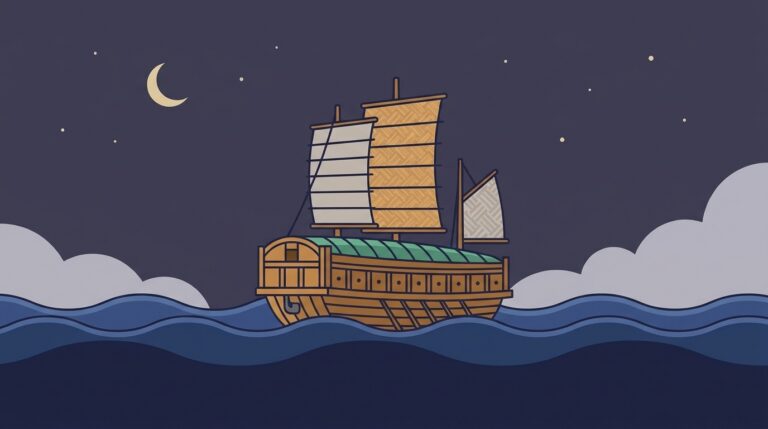
Today, we are unlocking one of the most revered and formidable maxims in Korean intellectual history: 수능재주 역능복주 (水能載舟 亦能覆舟). Originally rooted in the teachings of the Confucian philosopher Xunzi (순자) and later crystallized in the statecraft treatise Zhenguan Zhengyao (정관정요), this proverb warns that the very water that buoys a boat can also surge, turn wrathful, and capsize it without hesitation. In Korean socio-political culture, “water” is the ordinary citizen—the public sentiment (민심, minsim)—while the “boat” is sovereign authority, governance, or corporate leadership. Mastering this phrase will elevate your Korean from merely fluent to philosophically profound, giving you instant insight into why Korean society responds so dynamically to social equity, protests, and public accountability.
Phase 2: Core 3 Expressions Deep Dive
1. 수능재주 역능복주 (水能載舟 亦能覆舟)
- Pronunciation: Su-neung-jae-ju yeok-neung-bok-ju (Think: Soo-neung-jeh-joo yuck-neung-bok-joo — with a crisp, decisive stop on the final syllable -ju).
- Meaning:
- Literal: Water can float a boat, yet water can also overturn a boat.
- Real Nuance: Authority is never an absolute entitlement; it exists purely at the pleasure and mercy of the governed. If leadership loses moral legitimacy, the collective will of the people will violently dismantle it.
- K-Culture Moment: Used by editorial cartoonists and political commentators during nationwide election cycles, major corporate consumer boycotts (불매운동, bulmaeundong), or when an arrogant leader falls from grace in a legal drama.
- Editor’s Insight: The beauty of this 8-character phrase lies in the symmetry of 수능재주 (water can carry) and 역능복주 (yet also capsize). In high-level Korean boardroom or editorial discourse, quoting the full phrase signals deep literacy in Classical Chinese (한문) and statesmanship.
- Situation Spectrum: Casual 🚫 | Semi-formal ⚠️ | Formal/Written ✅
- 🤔 Think About It: Does your native culture compare public opinion to a natural element like water, or is authority viewed more like a legal contract? Notice how water implies fluid, irresistible, and sometimes merciless momentum.
2. 민심은 천심이다 (民心은 天心이다)
- Pronunciation: Min-si-meun cheon-sim-i-da (Sounds like: Mean-sheem-eun chuhn-sheem-ee-da).
- Meaning:
- Literal: The heart of the people is the heart of Heaven.
- Real Nuance: Public consensus is sacred and supreme. It cannot be bought, silenced, or manipulated indefinitely.
- K-Culture Moment: Frequently proclaimed by historical kings in Joseon-era period dramas when rejecting corrupted court ministers who wish to levy heavy taxes on starving peasants.
- Editor’s Insight: While 수능재주 역능복주 focuses on the kinetic danger of revolution or downfall, 민심은 천심이다 operates on ethical and metaphysical grounds. It is often paired with our main phrase to remind officials to remain humble.
- Situation Spectrum: Casual ⚠️ | Semi-formal ✅ | Formal/Written ✅
- 🤔 Think About It: Notice the word 천 (天, Heaven)—in East Asian philosophy, Heaven withdraws its mandate (천명, Cheonmyeong) when the common people suffer.
3. 여론의 뭇매를 맞다
- Pronunciation: Yeo-ron-ui mun-mae-reul mat-da (Sounds like: Yuh-rohn-eh moon-meh-reul maht-dah).
- Meaning:
- Literal: To be beaten by the club/bundle of public opinion.
- Real Nuance: To endure severe, unanimous societal backlash or widespread condemnation in the press and on social media.
- K-Culture Moment: Used on prime-time 9 PM news broadcasts when a conglomerate executive is summoned to the National Assembly audit after mistreating an employee.
- Editor’s Insight: 뭇매 originally refers to a crowd surrounding someone and beating them simultaneously with sticks. Modern Koreans use this vivid idiom to capture cancel culture or sudden PR catastrophes.
- Situation Spectrum: Casual ⚠️ | Semi-formal ✅ | Formal/Written ✅
- 🤔 Think About It: How does your language express intense public outcry? Is it physical like a beating (뭇매), or meteorological like a “storm”?
Phase 3: Textbook Korean vs. Real Korean
Situation 1: Discussing a brand’s downfall after ignoring consumer ethics
- 📖 Textbook Korean:
소비자의 의견을 무시하면 회사의 경영권이 흔들릴 수 있습니다.
(Sobijaui uigyeoneul musihamyeon hoesaui gyeong-yeong-gwoni heundeullil su itseumnida.)
“If you ignore consumers’ opinions, the company’s management rights may be shaken.” - 🗣️ Real C2 Korean:
소비자를 적으로 돌리는 순간 끝장입니다. 수능재주 역능복주라고, 민심을 거스른 기업이 무너지는 건 순식간이에요.
(Sobijareul jeogeuro dollineun sungan kkeutjang-imnida. Suneungjaeju yeongneungbokjurago, minsimeul geoseureun gieobi muneojineun geon sunsikgan-ieyo.)
“The moment you turn consumers into enemies, it’s game over. As the saying goes, ‘water can float a boat, yet overturn it’—companies that defy public sentiment collapse in an instant.” - 💡 왜 다를까? (Why is it different?): Textbook Korean states dry business consequences. Advanced native speakers utilize classical maxims as rhetoric weapons to deliver impactful moral weight.
Situation 2: Analyzing sudden political polling drops on a podcast
- 📖 Textbook Korean:
정치인들은 국민들의 감정과 지지를 항상 조심해야 합니다.
(Jeongchiindeureun gungmindeurui gamjeonggwa jijireul hangsang josimhaeya hamnida.)
“Politicians must always be cautious about citizens’ emotions and support.” - 🗣️ Real C2 Korean:
지금 민심이 완전히 돌아섰어요. 권력의 배를 띄운 것도 국민이지만, 언제든 뒤집어엎을 수 있다는 걸 간과한 거죠.
(Jigeum minsimi wanjeonhi doraseosseoyo. Gwonryeogui baereul ttiun geotdo gungmin-ijiman, eonjedeun dwijibeoeopeul su itdaneun geol ganggwahan geojyo.)
“Public sentiment has completely turned away. They overlooked the fact that while it was the people who floated the ship of power, they can capsize it at any time.” - 💡 왜 다를까? (Why is it different?): C2 speakers frequently paraphrase the metaphor of 배 (boat) and 물 (water) directly into vernacular phrasing (배를 띄우다 / 뒤집어엎다) without having to recite the ancient Chinese characters word for word.
Phase 4: K-Culture Deep Dive & Non-Verbal Manners
4-1. Nunchi & Public Contrition Gestures
In Korean corporate and political statecraft, understanding 민심 (public sentiment) is not just an intellectual exercise; it is an embodied ritual. When high-ranking officials or celebrity CEOs trigger public fury (여론의 뭇매), they do not enter press rooms defensively with folded arms or direct eye contact.
Instead, observe the 90-degree bow (폴더 사과, folder sagwa). The executive keeps their feet together, bends deeply from the waist for at least three to five seconds without speaking, keeping their eyes cast firmly on the carpet. When taking questions, their vocal register drops to a solemn, breathy tone, frequently using ultra-deferential humility markers such as:
* 송구스럽기 그지없습니다 (Songguseureopgi geujieopseumnida – “I am beyond devastated with guilt”)
* 뼈를 깎는 반성을 하겠습니다 (Ppyeoreul kkakneun banseong-eul hagesseumnida – “I will reflect until my bones are shaved down”)
Refusing this ritualized contrition is interpreted as arrogant defiance against the “water,” guaranteeing that the “boat” will be capsized.
4-2. Cultural Code: The Gwanghwamun Candlelight Paradigm
Why does 수능재주 역능복주 resonate so viscerally in contemporary South Korea compared to other democracies? Look no further than the iconic rallies at Gwanghwamun Square (광화문 광장). Throughout modern Korean history—from the June Democracy Movement of 1987 to the nationwide Candlelight Vigils that led to peaceful constitutional impeachments—the Korean public has physically demonstrated that when the state breaks the social contract, millions of citizens holding gentle candles become an ocean that capsizes the ship of state.
Unlike political cultures where cynicism leads to voter apathy, in Korea, public sentiment retains a dynamic, volatile urgency. When you discuss Korean politics, acknowledging this civic agency will immediately earn you the respect of educated native peers.
Phase 5: Real-World Roleplay Scenario
Setting: A sleek high-floor conference room in Yeouido, Seoul. Midnight.
Characters:
* Director Kang (강 국장): Veteran Public Affairs Director, visibly tense, staring at trending search queries on a tablet.
* You (Foreign Senior Strategic Consultant): Advising a multinational tech conglomerate facing a massive consumer data leak and boycott.
Turn 1
강 국장: (이마를 짚으며 깊은 한숨을 쉰다) 에디터 님, 언론 보도 보셨습니까? 사태가 걷잡을 수 없이 번지고 있어요.
(Director Kang: [Iwareul jipeumyeo gipeun hansumeul swinda] Editeo nim, eonron bodo bosyeotseumnikka? Sataega geotjabeul su eopsi beonjigo isseoyo.)
“Director Kang: (Pressing his forehead with a heavy sigh) Did you see the press coverage? The situation is spreading out of control.”
Turn 2
You: 🎭 (태블릿의 실시간 검색어와 댓글 반응을 냉철하게 분석하며) 네, 불매운동 해시태그가 이미 백만 건을 돌파했습니다.
(Ne, bulmaeundong haesitaegeuga imi baekman geoneul dolpahayeotseumnida.)
“You: 🎭 (Calmly analyzing real-time search rankings and online sentiment on the tablet) Yes, the boycott hashtag has already surpassed one million posts.”
Turn 3
강 국장: (초조하게 펜을 딱딱거리며) 이사회에서는 법적으로 배상 책임이 없으니 일단 침묵하고 로펌을 앞세우자고 합니다. 어떻게 보십니까?
(Iwoeeseoneun beopjeogeuro baesang chaegimi eopseuni ildan chimmukhago ropeomeul apsaeujago hamnida. Eotteoke bosimnikka?)
“Director Kang: (Tapping his pen nervously) The board says we have no legal liability, so we should stay silent and let the law firm handle it. What do you think?”
Turn 4
You: 🎭 (단호하게 고개를 가로저으며 이사회 문건을 덮는다) 절대 안 됩니다. 지금 법리를 따질 때가 아닙니다.
(Jeoldae an doemnida. Jigeum beomnireul ttajil ttaega animnida.)
“You: 🎭 (Shaking your head decisively and closing the board dossier) Absolutely not. This is not the time to split legal hairs.”
Turn 5
강 국장: (당황한 눈빛으로) 법무팀에서는 공식 사과문을 내면 과실을 인정하는 꼴이 된다고 극구 반대하는데요.
(Beopmuthimeseoneun gongsik sagwamuneul naemyeon gwasireul injeonghaneun kkori doendago geukgu bandaohaneundeyo.)
“Director Kang: (Flustered) But the legal team vehemently objects, arguing that an official apology equates to admitting negligence.”
Turn 6
You: 🎭 (강 국장의 눈을 똑바로 응시하며 무게감 있게) 수능재주 역능복주라 했습니다. 고객의 신뢰라는 물이 우리 회사를 띄웠지만, 분노하면 배를 뒤집는 것도 순식간입니다.
(Suneungjaeju yeongneungbokjura haetseumnida. Gogaegui sinroeraneun muri uri hoesareul ttiwotjiman, bunnohamyeon baereul dwijipneun geotdo sunsikgan-imnida.)
“You: 🎭 (Looking squarely into Director Kang’s eyes with deliberate gravity) As the classic says: ‘water can float a boat, yet overturn it.’ It was the water of consumer trust that floated our company, but when provoked, capsizing the ship takes only a moment.”
Turn 7
강 국장: (충격을 받은 듯 잠시 멍하니 있다가 고개를 끄덕인다) …수능재주 역능복주라… 맞습니다. 법보다 무서운 게 민심이죠.
(…Suneungjaeju yeongneungbokjura… Matseumnida. Beopboda museoun ge minsim-ijyo.)
“Director Kang: (Stunned for a moment, then nodding solemnly) …Water can float yet overturn… You are right. What is more terrifying than the law is public sentiment.”
Turn 8
You: 🎭 (사과문 초안 파일을 열어 건네며) 바로 대표이사님의 진정성 있는 대국민 사과와 전면적 보상안을 발표해야 합니다.
(Baro daepyo-isanimui jinjeongseong inneun daegungmin sagwawa jeonmyeonjeok bosang-aneul balpyohaeya hamnida.)
“You: 🎭 (Opening and sliding the draft apology statement across the desk) We must immediately release an earnest public apology from the CEO along with a comprehensive compensation plan.”
🔀 Interactive Choice Point
At Turn 6, if Director Kang insisted on burying the scandal with legal jargon, how would you counter?
- Choice A (Best): “법적인 승리가 기업의 파산으로 이어질 수 있습니다. 수능재주 역능복주를 기억하십시오.” (A legal victory could lead to the company’s bankruptcy. Remember: water can float a boat, but can also capsize it.)
- Feedback: 🌟 Outstanding (Best). Flawlessly combines corporate consequence with classical statesmanship. The board will listen.
- Choice B (Bad): “그냥 기자들한테 돈을 좀 쓰거나 맛있는 밥을 사서 기사를 막아보시죠.” (Why don’t we just spend some money on journalists or buy them nice meals to block the articles?)
- Feedback: ❌ Catastrophic (Bad). Illegal under the Kim Young-ran Act (Anti-Graft Act) and wildly unethical. Public fury will destroy the company instantly.
- Choice C (Risk): “이사회 분들이 감이 너무 없으시네요. 다 물러나라고 하세요.” (The board members are completely out of touch. Tell them all to step down.)
- Feedback: ⚠️ High Risk. While emotionally valid, attacking internal hierarchy directly without diplomatic framing will cause you to be sidelined from the strategy table.
Phase 6: 10-Second Emotion Shadowing Drill
Train your voice to articulate the deliberate pauses (/) and gravity expected of high-level statecraft rhetoric.
[⚖️ 진중하고 단호하게 | Weighty and Resolute]
수능재주 / 역능복주라 하였습니다. / 민심의 바다를 / 결코 얕보아서는 안 됩니다.
(Suneungjaeju / yeongneungbokjura hayeotseumnida. / Minsim-ui badareul / gyeolko yatboaseoneun an doemnida.)
“It was said: water can float a boat, yet overturn it. We must never take the ocean of public sentiment lightly.”-
[⚡ 냉철하고 경고하듯 | Chilling and Analytical]
배를 띄운 것이 / 백성이라면, / 그 배를 침몰시키는 것 또한 / 성난 파도입니다.
(Baereul ttiun geosi / baekseong-iramyeon, / geu baereul chimmolsikineun geot ttohan / seongnan pado-imnida.)
“If it was the people who buoyed the vessel, that which sinks the vessel is likewise the raging wave.” -
[🥺 비장하고 겸허하게 | Solemn and Penitent]
모든 권력은 / 국민에게서 나옵니다. / 오만함을 버리고 / 다시 초심으로 돌아가야 합니다.
(Modeun gwonryeogeun / gungmin-egeseo naomnida. / Omanhameul beorigo / dasi chosimeuro doragaya hamnida.)
“All power emanates from the people. We must shed our arrogance and return to our founding principles.”
Phase 7: K-Culture Mini Dictionary
-
민심 (民心, Minsim) | Noun | Public sentiment / The collective soul of the populace.
Usage: Unlike the statistical term 여론 (yeoron – public opinion polling), 민심 carries historical, moral, and emotional gravity. E.g., “민심을 얻은 자가 천하를 얻는다” (He who wins the heart of the people wins the realm). -
역풍 (逆風, Yeokpung) | Noun | Headwind / Backlash.
Usage: Frequently used in political analysis when a tactic backfires. E.g., “상대방을 향한 무리한 비방이 오히려 거센 역풍을 불렀다” (Excessive slandering of the opponent invited a furious public backlash). -
경세제민 (經世濟民, Gyeongsejemin) | Noun | Governing the world and saving the people (The classical etymology of the modern word 경제, Gyeongje – Economy).
Usage: Used when discussing high-level statesmanship that prioritizes the economic livelihoods of citizens over partisan squabbles. -
복주 (覆舟, Bokju) | Noun | The capsizing of a vessel / Overthrow of a regime or leadership.
Usage: Rarely used as an isolated word today; almost exclusively invoked within the idiom 수능재주 역능복주 to signify dramatic political ruin.
Phase 8: The Intellectual Traveler’s Survival Kit
When exploring Seoul’s historic and civic centers, understanding how public assembly functions is essential.
Top 3 Intellectual & Civic Expressions
- 정중히 의견을 표명합니다. (Jeongjunghi uigyeoneul pyomyeonghamnida.)
Meaning: “I respectfully express my view.”
Pro Tip: Use this in academic forums, civic debates, or formal panel discussions to maintain dignified decorum. - 민심의 동향을 파악 중입니다. (Minsimui donghyang-eul pa-ak jung-imnida.)
Meaning: “We are currently assessing the trends of public sentiment.”
Pro Tip: Excellent phrase for business executives, journalists, and market researchers in meetings. - 상생(相生)의 길을 찾아야 합니다. (Sangsaeng-ui gireul chajaya hamnida.)
Meaning: “We must seek a path of mutual coexistence.”
Pro Tip: The ultimate diplomatic closing phrase when mediating disputes between management and unions, or companies and local residents.
Editor’s Cultural & Travel Note
- Civic Landmark Walk: Visit Gwanghwamun Square in central Seoul. Stand in front of King Sejong’s statue and look south toward City Hall. This precise corridor is where modern Korean history has repeatedly verified 수능재주 역능복주.
- Essential App Guide: To observe public sentiment real-time in Korea, check trending civic topics using Naver News Editorial Section rather than generic social media feeds, paying attention to the “오피니언 (Opinion/Column)” tab where classical idioms are most commonly parsed.
Phase 9: “한 발 더 깊이” (One Step Deeper)
In Western political theory rooted in Thomas Hobbes or John Locke, governance is frequently conceptualized as a contractual arrangement—citizens relinquish certain natural rights in exchange for the Leviathan’s security. East Asian political thought, shaped profoundly by Mencius (맹자) and Xunzi (순자), treats authority through an organic, hydrological lens. Water does not sign a contract; water accommodates, nourishes, and sustains, but if the container becomes toxic or the dam restricts its natural flow, water annihilates the obstruction. In 21st-century South Korea, where ultra-fast broadband and hyper-connected civic forums act like digital nervous systems, the water responds faster than anywhere else on earth. A leader who treats power as an absolute personal possession will discover that the tide rises in hours, not centuries.
💬 Your Turn:
Have you ever seen an influential leader, creator, or company in your country experience “수능재주 역능복주”—being made successful by their fans or public, only to be dismantled when they forgot their roots? Share your perspective in the comments below! (여러분의 생각을 댓글로 자유롭게 남겨주세요!)
Phase 10: FAQ & Mistake Prevention
Q: Is ‘수능재주 역능복주’ attributed to Confucius or Xunzi?
A: It is primarily attributed to Xunzi (순자) in the chapter Wangzhi (왕제편, 王制篇), where he writes: 君者舟也 庶人者水也 水則載舟 水則覆舟 (“The ruler is the boat; the common people are the water. The water can float the boat, the water can capsize the boat”). Later, during the Tang Dynasty, Emperor Taizong and his imperial advisor Wei Zheng recorded it into the classic treatise Zhenguan Zhengyao (정관정요), which Joseon Dynasty kings studied obsessively during royal lectures (경연, Gyeong-yeon).
Q: Can I use this phrase to talk about romantic relationships or friendships?
A: No, absolutely not. Using 수능재주 역능복주 for personal relationships sounds humorously overdramatic or bizarrely tyrannical. It is exclusively reserved for structural dynamics: statecraft, governance, corporate leadership, or massive public-facing phenomena (such as the relationship between a global pop idol and their fandom).
Q: Can I shorten it to just ‘수능재주’?
A: Avoid shortening it to 수능재주 unless your audience already knows the context intimately. The true moral and rhetorical punch of the proverb comes from the antithetical second half—역능복주 (亦能覆舟, yet can also capsize it). Without the warning of destruction, the idiom loses its philosophical tension.
🚨 Common Mistakes Warning Board
- Mistake 1: Confusing “수능” with the College Entrance Exam!
Wrong Thought: Thinking 수능재주 has something to do with 수능 (College Scholastic Ability Test – 대학수학능력시험).
Correct Action: Remember that 수 (水) here means Water, and 능 (能) means Ability/Can. It has zero relation to the university exam! -
Mistake 2: Using it down the hierarchy instead of up the hierarchy.
Wrong Action: A CEO saying to an intern: “I am the water and you are the boat!”
Correct Action: The water is always the greater public, the consumers, the citizens, or the rank-and-file employees. The boat is the ruler or executive. -
Mistake 3: Pronouncing the Hanja reading with incorrect vowel length.
Wrong Action: Slurring 역능복주 as yeong-neung-bok-jo.
Correct Action: Crisp articulation: [Yeong-neung-bok-ju]. Make sure the final ju (舟, boat) is distinct from jo (條/潮).
Phase 11: Action Mission & Engagement
- 🥉 Bronze Mission (Solo Practice): Read the Phase 6 Shadowing Drill aloud three times. Focus on shifting your facial expression to match the somber gravity of an imperial statesman.
- 🥈 Silver Mission (Social/Writing Challenge): Write a 2-sentence political commentary or business case study in Korean on your study journal or social feed using the phrase: “수능재주 역능복주라는 말처럼, 고객의 신뢰를 잃으면…”
- 🥇 Gold Mission (Real-World Application): Watch a Korean political commentary clip on YouTube or read an editorial column in the Kyunghyang Shinmun or Chosun Ilbo. Identify at least one instance of 민심, 역풍, or 배를 뒤집다.
🎮 K-Culture Mission:
In your next K-drama binge (try political or historical dramas like Secret Forest / Stranger or Under the Queen’s Umbrella), listen carefully when the villain or protagonist addresses the court or the press. Spot the moment someone mentions that public sentiment cannot be defied!
Phase 12: Interactive Quiz Challenge
Test your mastery of statecraft idioms and cultural context!
1. Situational Judgment:
Which of the following scenarios is the MOST appropriate context to employ 수능재주 역능복주?
(A) A university professor warning a student that failing exams will result in academic probation.
(B) A veteran brand consultant advising a gaming company that ignores player feedback and suddenly faces a mass-boycott.
(C) A mother telling her child that eating too much candy will lead to dental cavities.
2. Fill-in-the-Blank:
민심을 거스르고 오만하게 행동하는 권력자는 결국 여론의 (________)을/를 맞고 침몰하게 마련이다.
(Hint: An idiom from Phase 2 meaning “to endure collective beating from the public”)
3. True or False:
In the metaphor 수능재주 역능복주, the “boat” represents the general populace, while the “water” represents the monarch or prime minister. (True / False)
👉 Click here to reveal Answers & Explanations!
- Answer: (B)
Explanation: The idiom strictly applies to asymmetric power dynamics where authority or commercial success relies upon the voluntary goodwill of the collective public/consumers. When that trust is breached, the public overturns the boat. -
Answer: 뭇매 (여론의 뭇매를 맞다)
Explanation: 뭇매 refers to being pummeled by a crowd, perfectly describing intense, unanimous societal condemnation. -
Answer: False
Explanation: The exact reverse! The water (水) is the populace/citizens, and the boat (舟) is the sovereign/ruler. The water is vastly larger and more powerful than the tiny boat floating atop it.
🎬 Watch Our Daily Videos! (Daily Hangul Official Instagram)
Review the expressions you learned in this article with our fun daily short videos! Check out native pronunciation and real-life nuances in action.
- Instagram @dailyhangul_en







