

Phase 1: Empathy & Narrative Immersion
안녕하세요! 매일한글 에디터입니다.
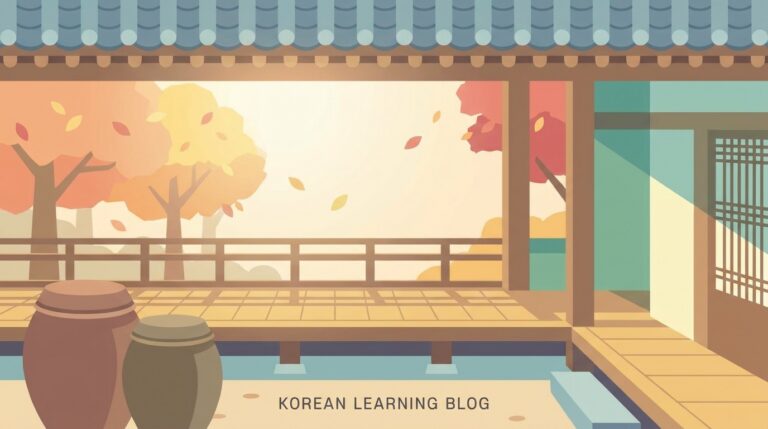
Have you ever stood in the courtyard of a weathered Hanok in Bukchon just as dusk settles, watching amber lantern light spill across mossy stones while autumn rain drizzles into an earthenware basin? You want to encapsulate the moment in Korean. You reach into your linguistic toolkit and find Hanja-derived academic terms like 점진적으로 (gradually), 한적하다 (quiet and secluded), or 고독하다 (solitary). Yet, the moment you articulate them, the magic evaporates. The words feel clinical, bureaucratic, and sterile—like describing a lover’s silhouette using a medical chart.
This is the quintessential wall encountered by advanced learners at the C1 and C2 tiers. You have mastered complex grammar, devoured news editorials, and conquered TOPIK VI. Yet, when watching a poignant K-drama like My Liberation Notes or reading modern Korean lyrical essays, you stumble upon pure native Korean adverbs and adjectives that seem to defy literal translation: 시나브로, 하릴없이, 고즈넉하다, and 호젓하다.
These are not merely words; they are emotional time capsules refined across centuries. They carry an untranslatable lyric warmth (운치) rooted in sensory connection rather than Sino-Korean abstraction. Based on deep fieldwork with advanced literature students, this comprehensive masterclass will elevate your Korean from merely functional fluency to deep, poetic resonance.
Phase 2: Deep Dive into 3 Core Pure Native Korean Expressions
1. 시나브로 (Sinabeuro)
- Pronunciation: [Si-na-beu-ro] (Think of a gentle breeze whispering “see-nah-boo-ro” without sharp plosives)
- Meaning:
- Literal: Bit by bit without knowing.
- Nuanced Reality: The imperceptible, quiet osmosis of time, emotion, or change. Unlike the rational, analytical Sino-Korean adverb 점진적으로 (gradually) or 조금씩 (little by little), 시나브로 describes changes that occur so tenderly beneath your conscious radar that you only notice them once the transformation is complete.
- K-Culture Moment: In indie melodramas and introspective webtoons, when a character realizes their platonic affection has evolved into an overwhelming romance: “그 사람에게 시나브로 마음을 빼앗겼다 (I lost my heart to that person, slowly, without even realizing it).”
- Editor’s Insight: 시나브로 is a quintessential Pure Korean (순우리말) adverb. It has no Hanja roots. It belongs to the realm of contemplation. If used in a quarterly financial report, native speakers would chuckle at its dreamy incongruity. In a literary essay, personal letter, or evening conversation, it will instantly move your listener.
- Situation Spectrum: Casual ⚠️ | Semi-formal ✅ | Formal (Literary/Reflective) ✅
- 🤔 Think About It: Does your native tongue distinguish between mechanical passage of time (“gradually”) and poetic, unconscious temporal drift?
2. 하릴없이 (Harileopsi)
- Pronunciation: [Ha-ril-leop-si] (Flows like “Ha-reel-up-shee”, where the final consonant slips effortlessly into the vowel)
- Meaning:
- Literal: With no other deed or recourse available.
- Nuanced Reality: Aimlessly, helplessly, or drifting without active agenda, surrendered to the current of the afternoon. While learners often confuse it with the casual critique 할 일 없이 (unemployed / having nothing productive to do), 하릴없이 carries a sweet, melancholic resignation—watching petals fall, gazing out a train window, or lingering over black coffee.
- K-Culture Moment: Found in acoustic K-indie lyrics (think Lucid Fall or Jannabi): “하릴없이 걷다 보니 너의 집 앞이더라 (Having drifted aimlessly with nowhere else to turn, I found myself in front of your gate).”
- Editor’s Insight: Be vigilant: 하릴없이 conveys existential surrender, not lazy procrastination. Saying “오늘 하릴없이 넷플릭스 봤어” can sound unintentionally archaic or hyper-poetic. Reserve it for times when circumstance or emotional weight renders you motionless.
- Situation Spectrum: Casual ⚠️ | Semi-formal ✅ | Formal (Literary/Reflective) ✅
- 🤔 Think About It: Why does modern society equate “having nothing to do” with guilt, while native Korean preserves a word that validates purposeless aesthetic wandering?
3. 고즈넉하다 (Gojeuneok-hada) & 호젓하다 (Hojeot-hada)
- Pronunciation: [Go-jeu-neok-ha-da] / [Ho-jeot-ha-da] (Pronounce with a mellow, chest-resonant tone, avoiding sharp crispness)
- Meaning:
- Literal: Serenely hushed / Pleasantly solitary.
- Nuanced Reality: While textbook Korean defaults to 조용하다 (quiet) or 한적하다 (sparsely populated), these two adjectives distinguish between spatial atmosphere and personal interiority. 고즈넉하다 captures the quiet gravitas of a place steeped in tranquil historical depth (an ancient pine forest, an empty palace pavilion). 호젓하다 captures the delightful, secluded solitude of a stroll where you are alone, unburdened, and comfortably out of the crowd’s eye.
- K-Culture Moment: Used by travel writers exploring hidden alleyways in Tongin-dong or temple stays in Jirisan: “눈 내린 산사는 말할 수 없이 고즈넉했다 (The temple covered in snow was unspeakably tranquil).”
- Editor’s Insight: 고즈넉하다 is sensory stillness rooted in space; 호젓하다 is the soothing freedom of solitude felt in the chest. You cannot describe an empty subway car at 3:00 AM as 고즈넉하다—it lacks historical warmth and organic breath.
- Situation Spectrum: Casual ⚠️ | Semi-formal ✅ | Formal (Essays/Connoisseur talk) ✅
- 🤔 Think About It: How does your culture differentiate between terrifying loneliness and restorative, serene solitude?
Phase 3: Textbook Korean vs. Real Native Nuance
Situation 1: Describing a quiet evening stroll through Seochon Hanok Village
- 📖 교과서 한국어 (Textbook Korean):
- 이곳은 사람이 없고 매우 조용해서 좋습니다. (Igot-eun saram-i eopgo maeu joyonghaeseo joeusseumnida. / This place has no people and is very quiet, so it is good.)
- 🗣️ 진짜 한국어 (Real Nuance):
- 골목이 참 아늑하고 호젓해서, 하릴없이 걷기만 해도 마음이 차분해지네요. (Golmok-i cham aneukhago hojeothaeseo, harileopsi geotgiman haedo maeum-i chabunhaejineyo. / The alley is so cozy and pleasantly secluded that even wandering aimlessly calms my spirit.)
- 💡 왜 다를까? (Why the difference?):
The textbook sentence relies on objective, sterile descriptors (absence of humans, noise level). The refined native expression infuses personal sensory response, framing solitude as a luxurious retreat rather than a void.
Situation 2: Realizing autumn has arrived and feelings have deepened
- 📖 교과서 한국어 (Textbook Korean):
- 시간이 지나면서 점진적으로 날씨가 추워지고 정이 들었습니다. (Sigan-i jinamyeonseo jeomjinjeogeuro nalssiga chuwojigo jeong-i deureosseumnida. / As time passed, the weather gradually grew colder and affection developed.)
- 🗣️ 진짜 한국어 (Real Nuance):
- 시나브로 계절이 바뀌더니, 어느새 그 온기가 마음에 스며들었더라고요. (Sinabeuro gyejeor-i bakkwideoni, eoneusae geu ongiga maeum-e seomyeodeureotdeoragoyo. / The season shifted like mist unnoticed, and before I knew it, that gentle warmth had seeped into my heart.)
- 💡 왜 다를까? (Why the difference?):
점진적으로 is a technical Sino-Korean term fit for economic forecasts. In personal storytelling, 시나브로 evokes organic permeation, mirroring nature’s seamless transitions.
Phase 4: K-Culture Deep Dive & Non-Verbal Manners
4-1. 눈치 (Nunchi) & The Resonance of Restraint
When using pure native Korean poetic vocabulary, verbal delivery is only half the message. In Korean cultural aesthetics, true linguistic sophistication is marked by 여백의 미 (the beauty of empty margins).
* The Breath: Never rush 시나브로 or 고즈넉하다. Native speakers soften their vocal volume, dropping down a half-octave, and allow a micro-pause (약 1초) before continuing. This signals to your listener that you are inviting them to savor the mental picture with you.
* The Gaze: Avoid aggressive direct eye contact when uttering these words. Lower your gaze slightly toward the tea cup, the tree branch, or the courtyard stones. This is not evasiveness; it is shared deference to the atmosphere.
4-2. Cultural Code: The Lyrical World of Korean Healing Dramas
Notice how in dramas like When the Weather Is Fine or My Liberation Notes, the characters speak sparse dialogues against prolonged frames of wind rustling through barley fields or twilight falling on rural platforms. Unlike high-concept thrillers driven by hyper-articulate rapid dialogue, contemporary Korean narrative culture places premium value on characters who embody “quiet depth” (진중함). Mastering these words unlocks the subtext of modern Korean cinematic melancholia.
Phase 5: Real-World Roleplay Scenario
Setting: An antique traditional tea atelier nestled beneath the stone walls of Samcheong-dong on a rainy October afternoon.
Character: Master Han (한 명인), a silver-haired artisan of wild fermented teas, quietly arranging persimmon blossoms.
- Turn 1 (Master Han):
비가 오는데도 용케 이 외진 곳까지 찾아오셨군요. 빗소리가 꽤 거셉니다. (Biga oneundedo yongke i oejin gotkkaji chajaosyeotgunyo. Bissoriga kkwae geosemnida. / Despite the rain, you skillfully found your way to this out-of-the-way spot. The rain falls quite fiercely.) - Turn 2 (Learner):
🎭 [Damp umbrella folded neatly, bowing gently with a calm smile]
복잡한 도심을 벗어나고 싶었는데, 이곳에 들어서니 분위기가 참 고즈넉하네요. (Bokjapan dosim-eul beoseonago sipeonneunde, igot-e deureoseoni bunwigiga cham gojeuneokaneyo. / I wanted to step away from the crowded city center, and stepping into here, the atmosphere is wonderfully serene.) - Turn 3 (Master Han):
🎭 [Pouring amber Hwangcha into an unglazed celadon cup]
차를 덖으며 종일 혼자 앉아 있었지요. 가끔은 이렇게 고요한 시간이 약이 되곤 합니다. (Chareul deokkeumyeo jong-il honja anja isseotjiyo. Gakkeum-eun ireoke goyohan sigan-i yag-i doegon hamnida. / I spent the entire day roasting tea leaves alone. Sometimes, quiet hours like these become medicine.) - Turn 4 (Learner):
네, 혼자 차를 마시며 하릴없이 창밖을 바라보는 것만으로도 위로가 됩니다. (Ne, honja chareul masimyeo harileopsi changbakkeul baraboneun geonman-eurodo wiroga doemnida. / Yes, just drinking tea alone and gazing out the window without a care in the world is a comfort in itself.) - Turn 5 (Master Han):
🎭 [Eyes lighting up with warm appreciation for your word choice]
‘하릴없이’라는 말을 아시는군요. 현대인들은 늘 분주해야 마음이 놓인다는데, 그 여유를 아시다니 놀랍습니다. (Harileopsiraneun mar-eul asineungunyo. Hyeondaeindeur-eun neul bunjuhaeya maeum-i noeindaneunde, geu yeoyureul asidani nollapseumnida. / You know the word ‘harileopsi’. Modern people say they feel at ease only when frantic, so I am impressed that you recognize the luxury of purposeless pause.) - Turn 6 (Learner):
한국어를 배우며 알게 된 순우리말들인데, 모르는 사이에 시나브로 제 마음에 스며들었습니다. (Hangugeo-reul baeumyeo alge doen sun-urimaldeur-inde, moreuneun saie sinabeuro je maeum-e seomyeodeureosseumnida. / They are pure Korean words I encountered while studying; unnoticed, they have seeped deeply into my heart.) - Turn 7 (Master Han):
🎭 [Gently placing a dried sweet persimmon slice before you]
‘시나브로’라… 참 아름다운 말을 품으셨네요. 오늘 우리 다담(茶談)이 참 호젓하고 그윽합니다. (Sinabeurora… Cham areumdaun mar-eul pumusyeotneyo. Oneul uri dadam-i cham hojeothago geueukhamnida. / ‘Sinabeuro’… What a lyrical word to carry in your heart. Our tea conversation today is so delightfully intimate and deep.) - Turn 8 (Learner):
좋은 차와 온기 덕분에 깊은 운치를 배우고 갑니다. (Joeun chawa ongi deokbune gipeun unchireul baeugo gamnida. / Thanks to your fine tea and warmth, I leave having experienced true poetic savor.)
🔀 Interactive Decision Point
How would you conclude the tea visit when the master offers to wrap a small pouch of vintage tea as a gift?
* Choice A (Poetic & Reverent): “마음이 담긴 귀한 선물이 시나브로 제 일상에 스며들 것 같습니다. 소중히 마시겠습니다.” (Best: Expresses that the tea’s subtle fragrance will seep into your daily life with deep respect.)
* Choice B (Too Bureaucratic): “이 상품의 품질이 점진적으로 저의 건강을 증진시킬 것입니다. 감사합니다.” (Bad: Reduces an artisanal cultural exchange into an analytical medical transaction.)
* Choice C (Slight Tone Clash): “대박! 오늘 진짜 힐링 제대로 하고 가네요! 차 개이득!” (Risk: While friendly, street slang completely punctures the refined ambiance.)
Phase 6: 10-Second Shadowing Drill
Practice reading these lines with deliberate cadence. The / marks a soft breath pause.
- Line 1 [🍂 차분하고 아련하게 – Calm and wistful]:
계절은 / 언제나처럼 / 시나브로 바뀌어 가고 / 우리 마음도 / 조금씩 익어갑니다.
(Gyejeor-eun / eonjenacheoreom / sinabeuro bakkwieo gago / uri maeumdo / jogeumssik igeogamnida. / The season, as always, shifts imperceptibly, and our hearts ripen alongside it.) -
Line 2 [☕ 여유롭고 고요하게 – Peaceful and leisurely]:
비 내리는 오후, / 하릴없이 처마 끝을 보며 / 따뜻한 차 한 잔을 기울입니다.
(Bi naerineun ohu, / harileopsi cheoma kkeut-eul bomyeo / ttatteutan cha han jan-eul giurimnida. / On a rainy afternoon, watching the roof eaves aimlessly, I tilt a warm cup of tea.) -
Line 3 [🏮 그윽한 감탄을 담아 – Deep appreciative wonder]:
달빛이 비치는 고궁의 뜰은 / 숨이 멎을 만큼 / 고즈넉하고 호젓했습니다.
(Dalbichi bichineun gogung-ui tteur-eun / sum-i meojeul mankeum / gojeuneokhago hojeothaesseumnida. / The courtyard of the ancient palace under moonlight was serene and delightfully tranquil, almost taking my breath away.)
Phase 7: K-Culture Mini Dictionary
-
윤슬 (Yunseul) | Rippling Sunlight/Moonlight
The sparkling light shimmering across gentle water ripples. A favorite among modern Korean photographers and literature lovers when gazing at the Han River at sunset.
Example: 한강에 부서지는 윤슬이 참 곱네요. (The shimmering light rippling across the Han River is so lovely.) -
여울 (Yeoul) | Shallower Rushing Water
The swift, murmuring current of a shallow riverbank where water tumbles over smooth stones. Metaphorically evokes rhythmic, clear life energy. -
온새미로 (Onsaemiro) | In Its Natural, Unbroken State
An ancient native adverb meaning “without splitting, damage, or alteration; purely as it was born.” Often used in high-end organic brands or artisanal pottery exhibits. -
너울가지 (Neoulgaji) | Warm, Inclusive Charm
The innate grace of someone who embraces people warmly and gets along harmoniously with everyone without sharp edges.
Phase 8: Connoisseur & Traveler Survival Kit
-
Top 3 Aesthetic Phrases for Slow Travel in Korea:
- “이 골목은 참 호젓해서 걷기 좋네요.” (I golmok-eun cham hojeothaeseo geotgi jonneyo.)
Pro Tip: Say this to a local cafe owner in Seochon or Gangneung. It shows immense cultural refinement. - “시나브로 해가 저물어 가네요.” (Sinabeuro haega jeomureo ganeyo.)
Pro Tip: Perfect comment when sitting on the ramparts of Naksan Park as the golden hour turns indigo. - “고즈넉한 정취가 참 마음에 듭니다.” (Gojeuneokan jeongchwiga cham maeum-e deumnida.)
Pro Tip: The ultimate polite compliment when checking into a traditional Hanok stay or visiting a temple.
- “이 골목은 참 호젓해서 걷기 좋네요.” (I golmok-eun cham hojeothaeseo geotgi jonneyo.)
- Editor’s Travel Note:
For travelers seeking these untranslatable pure sensations, skip the bustling shopping corridors of Myeongdong. Instead, open your 네이버 지도 앱 다운로드 to search for “백인제가옥” (Baek In-je House) in Bukchon or walk the quieter western paths of 창경궁 (Changgyeonggung Palace) during weekday mornings. Bring a notebook, turn your phone on airplane mode, and write down what you observe through the lens of pure Korean vocabulary.
Phase 9: “한 발 더 깊이” (One Step Deeper)
Korean is famously categorized into Pure Korean roots (순우리말), Sino-Korean compounds (한자어), and Loanwords (외래어). While Sino-Korean vocabulary serves analytical precision, law, administration, and science, it was historically the written domain of the scholar-bureaucrats (양반). Pure native words, by contrast, lived on the tongues of mothers, farmers, lovers, and storytellers. They mirror the geography of the peninsula: the winding valleys, the lingering twilight, and the emotional resilience (정 and 한) of its people. When you choose 시나브로 over 점진적으로, you cease analyzing the world from the outside and begin feeling it from the inside out.
💬 Your Turn: Is there an untranslatable word in your mother tongue that describes the gentle, bittersweet passage of time or a peaceful solitude? Tell us your favorite in the comments below!
Phase 10: FAQ & Mistake Prevention
Q: Can I use ‘시나브로’ in formal business presentations or academic thesis papers?
A: Generally, no. 시나브로 belongs to literary, conversational, and aesthetic registers. Using it in a corporate earnings forecast (e.g., “매출이 시나브로 증가했습니다”) sounds inappropriately whimsical. In business, stick to 점진적으로 (gradually) or 순차적으로 (sequentially).
Q: What is the exact difference between ‘하릴없이’ and ‘할 일 없이’?
A: Pronunciation sounds similar, but the nuance is worlds apart! 할 일 없이 literally means “having no work to do” and often carries a slightly negative or self-deprecating tinge of being idle or bored. 하릴없이 is an ancient pure adverb meaning “having no other option, naturally surrendered to circumstance or reverie.”
Q: Can a modern apartment or a trendy cafe be ‘고즈넉하다’?
A: Rarely. 고즈넉하다 requires an element of weathered stillness, timeless quiet, and organic depth (wood, stone, nature, old roofs). A quiet cafe with minimalist concrete walls is better described as 호젓하다 (peacefully secluded) or 차분하다 (calm).
🚨 Common Mistakes Alert
- Over-dramatizing everyday chores: Saying “하릴없이 빨래를 했다” sounds like you were weeping while loading the washing machine. Use it for reflective states.
- Confusing ‘호젓하다’ with loneliness: 호젓하다 is positive seclusion. If you feel painfully isolated, use 쓸쓸하다 or 외롭다.
- Using Pure Korean poetic words as single-word exclamations: You cannot shout “시나브로!” the way you shout “대박!”. These words require full syntactic harmony.
Phase 11: Action Mission & Engagement
- 🥉 Bronze Level: Pick one word—시나브로—and write a single introspective journal sentence about a change in your own life this year.
- 🥈 Silver Level: Next time you take a walk in a quiet neighborhood or local park, post a photo with the caption: “참 호젓한 시간.”
- 🥇 Gold Level: During your next slow conversation or language exchange, use the phrase: “요즘 한국어 실력이 시나브로 늘고 있는 것 같아요.” (My Korean seems to be improving bit by bit without me noticing.)
- 🎮 K-Culture Mission: Watch an episode of a slice-of-life drama (like Hospital Playlist or Little Forest) and see if you spot the characters embracing silence over excessive words.
Phase 12: Interactive Quiz Challenge
Q1. Context Judgment
Which sentence uses the poetic adverb ‘시나브로’ most naturally?
1. 이번 분기 영업 이익이 시나브로 25% 급증했습니다.
2. 매일 아침 단어를 외우다 보니 시나브로 한국어 실력이 늘었어요.
3. 지하철이 시나브로 출발하니 빨리 탑승해 주세요.
🔍 View Answer & Explanation
Correct Answer: 2
Explanation: Sentence 1 is corporate analytics (should use 점진적으로 or 급격히). Sentence 3 is immediate physical movement. Sentence 2 beautifully captures the imperceptible accumulation of language skill over time.
Q2. Fill-in-the-Blank
Complete the sentence to describe a quiet, ancient forest path where you are walking alone in soothing peace:
“복잡한 생각을 비우고 싶어서 나무가 우거진 _______ 숲길을 걸었습니다.”
1. 하릴없는
2. 호젓한
3. 시나브로한
🔍 View Answer & Explanation
Correct Answer: 2 (호젓한)
Explanation: 호젓하다 modifies the trail (숲길) into a pleasantly secluded path ideal for peaceful solitary walking. 시나브로 is an adverb, not an adjective stem, and cannot modify nouns directly in that form.
Q3. True or False Cultural Quiz
Statement: In Korean aesthetics, an empty Hanok room with gentle wind sounds is described as 고즈넉하다, and this conveys an uncomfortable, scary emptiness.
🔍 View Answer & Explanation
Correct Answer: False
Explanation: 고즈넉하다 denotes a warm, profound, calming stillness, completely distinct from ominous or chilling quiet (적막하다 or 음산하다).
🎬 Watch Our Daily Videos! (Daily Hangul Official Instagram)
Review the expressions you learned in this article with our fun daily short videos! Check out native pronunciation and real-life nuances in action.
- Instagram @dailyhangul_en







