

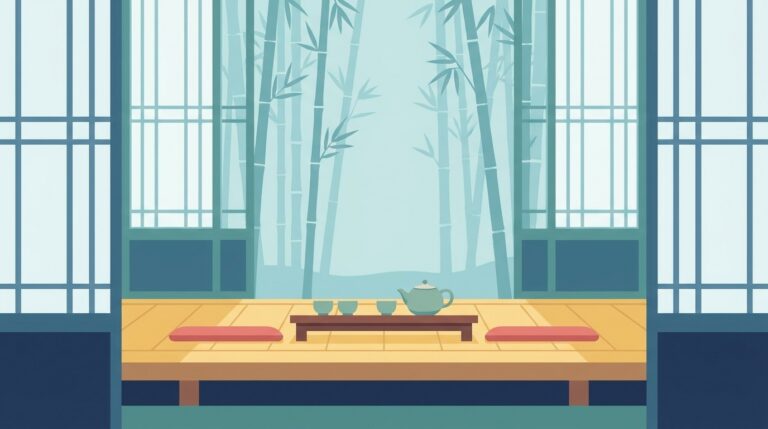
Finding Peace in Subtraction: Exploring Korean Minimalism
Phase 1: Empathy & Story-Driven Opening
안녕하세요! 매일한글 에디터입니다. (Annyeonghaseyo! It’s your Daily Hangul editor.)
If you have spent any time immersed in contemporary Korean media—scrolling through trendy vlogs set in Seoul’s Seongsu-dong, watching serene healing K-dramas like Summer Strike (아무것도 하고 싶지 않아), or browsing social feeds—you might have noticed a fascinating juxtaposition. On one hand, South Korea is renowned for its hyper-fast consumer speed, vibrant retail therapy, and lightning-speed dawn deliveries. Yet right beneath this high-voltage consumerism, a quiet, profound counter-revolution has taken root: Korean minimalism.
Many of our advanced C1 learners tell us: “I want to talk about simplifying my life and sustainable living with my Korean friends, but my vocabulary is stuck at basic terms like ‘물건을 버려요’ (I throw away things) or ‘쇼핑 안 해요’ (I don’t shop). It feels so elementary and detached from how mature adults articulate life philosophies.”
They are completely right. At a C1 level, discussing minimalism is not just about cleaning your bedroom; it is about articulating a conscious philosophical shift away from hyper-materialism. It is about “emptying out” space, time, and emotional clutter to make room for authenticity. In this masterclass guide, backed by real classroom discussions and curated cultural insights, you will master the elegant, evocative vocabulary that Koreans use to describe intentional, mindful, and sustainable living.
Phase 2: Core Expressions In-Depth Analysis
1. 비우는 삶 (Bieuneun salm)
- Pronunciation: [Bi-u-neun salm] (Sound metaphor: Think of the “bee” in honeybee followed by a brisk “oo”, ending in a crisp “salm” like a gentle exhale.)
- Meaning: Literally “an emptying life.” Nuance: An intentional, curated lifestyle centered on shedding unnecessary possessions, thoughts, or obligations to achieve mental and physical tranquility.
- K-Culture Moment: Often heard in introspective lifestyle essays, architecture shows like Architecture 101, or home makeover variety shows where celebrities declutter chaotic spaces to start fresh.
- Editor’s Insight: The verb 비우다 (to empty) carries a deeply cathartic resonance in Korean culture. While English speakers often focus on the physical act of decluttering, Koreans frame it spiritually as creating empty space (여백, yeobaek) where serenity can breathe.
- Situation Spectrum:
- Casual: ✅ (비우는 삶을 살고 싶어 / Bieuneun salmeul salgo sipeo)
- Semi-formal: ✅ (요즘은 비우는 삶을 실천하고 있어요 / Yojeumeun bieuneun salmeul silcheonhago isseoyo)
- Formal: ✅ (현대인에게 비우는 삶은 새로운 성찰을 제시합니다 / Hyeondaeinege bieuneun salmeun saeroun seongchareul jesihamnida)
- 🤔 Think About It: Does your native language view “emptying” as a loss or as a mindful creation of space? Notice how Korean celebrates the void itself.
2. 소유보다 경험에 집중하다 (Soyuboda gyeongheome jipjunghada)
- Pronunciation: [So-yu-bo-da gyeong-heom-e jip-jung-ha-da] (Sound metaphor: Flow the “So-yu” smoothly like “so you”, then snap into the energetic “jip-jung” like ‘concentrate’.)
- Meaning: Literally “To focus on experiences rather than possessions.” Nuance: Embracing value-driven living by prioritizing memory-making, cultural growth, and personal exploration over collecting branded physical goods.
- K-Culture Moment: Frequently quoted in modern Korean editorial columns, travel documentaries, and podcasts analyzing the cultural pivot of MZ generations toward “Meaning Out” (가치 소비).
- Editor’s Insight: Use this expression when you want to defend your decision to travel, take pottery classes, or read rather than buy the latest gadget. It signals intellectual maturity and deliberate self-awareness.
- Situation Spectrum:
- Casual: ⚠️ (Slightly literary; casually you’d say: 물건 사는 것보다 경험하는 게 더 좋아 / Mulgeon saneun geotboda gyeongheomhanean ge deo joa)
- Semi-formal: ✅ (소유보다 경험에 집중하는 편이에요 / Soyuboda gyeongheome jipjunghaneun pyeon-ieyo)
- Formal: ✅ (소유보다 경험에 집중하는 가치관이 확산되고 있습니다 / Soyuboda gyeongheome jipjunghaneun gachgwani hwaksandoego isseumnida)
- 🤔 Think About It: How does consumerist advertising in your home culture try to equate material possession with personal happiness, and how does this Korean phrase push back against that?
3. 덜어내는 미학 (Deoreonaeneun mihak)
- Pronunciation: [Deo-reo-nae-neun mi-hak] (Sound metaphor: “Deo-reo” sounds like ‘door-raw’ spoken softly, followed by a crisp scholarly “mi-hak”.)
- Meaning: Literally “The aesthetics of subtracting/taking away.” Nuance: The refined art of eliminating non-essentials to let intrinsic beauty, purpose, and clarity shine through.
- K-Culture Moment: A quintessential phrase among Korean interior designers, architectural critics, and modern artists praising Hanok (traditional wooden houses) or minimalist ceramics like the Moon Jar (달항아리).
- Editor’s Insight: 덜어내다 means to scoop out or strip down excess. When paired with 미학 (aesthetics), it turns minimalist decluttering from a mundane chore into an elevated, artistic discipline.
- Situation Spectrum:
- Casual: 🚫 (Sounds overly philosophical over casual lunch)
- Semi-formal: ✅ (저는 디자인할 때 덜어내는 미학을 중시해요 / Jeoneun dijainhal ttae deoreonaeneun mihageul jungsihangyo)
- Formal: ✅ (덜어내는 미학이야말로 지속 가능한 삶의 핵심입니다 / Deoreonaeneun mihag-iyamallo jisok ganeunghan salmui haeksim-imnida)
- 🤔 Think About It: How does this contrast with Western design traditions that often equate ornamentation or abundance with luxury?
Phase 3: Textbook Korean vs. Real Korean
Situation 1: Decluttering your wardrobe without regrets
- 📖 Textbook Korean:
- 안 쓰는 물건들을 모두 쓰레기통에 버렸습니다. (An sseuneun mulgeondeureul modu sseuregitonge beoryeotseumnida.) — “I threw all the unused things into the trash can.”
- 🗣️ Real C1 Korean:
- 미련 남던 옷가지들을 이번에 아주 싹 비워냈어요. (Miryeon namdeon otgajideureul ibeone aju ssak biwonaesseoyo.) — “I cleanly emptied out all those lingering clothes I had attachments to, once and for all.”
- 💡 Why the difference? Textbook phrasing describes the physical mechanical act of dumping trash. Real C1 Korean captures the emotional weight: 미련 (lingering attachment) and the freeing, sweeping sensation of 싹 비워내다 (to clear completely out).
Situation 2: Explaining why you stopped impulsive online shopping
- 📖 Textbook Korean:
- 과소비를 막기 위해 쇼핑을 그만두기로 결심했습니다. (Gwasobireul makgi wihae syoping-eul geumandugiro gyeolsimhaetseumnida.) — “I decided to stop shopping to prevent overspending.”
- 🗣️ Real C1 Korean:
- 끝없는 물욕을 좀 내려놓고, 군더더기 없는 삶을 살아보려고요. (Kkeuteomneun mulyogeul jom naeryeonoko, gundeodeogi eomneun salmeul saraboryeogoyo.) — “I’m letting go of endless material desires and aiming for a life free of unnecessary clutter.”
- 💡 Why the difference? C1 speakers do not just talk about finances; they express existential choices using refined idioms like 물욕을 내려놓다 (to put down material lust) and 군더더기 없는 (clean, crisp, without flab or fluff).
Phase 4: K-Culture Deep Dive & Non-Verbal Manners
4-1. 눈치 (Nunchi) & Mindful Non-Verbal Gestures
Minimalism in Korea is intimately linked to community etiquette and consideration for others:
* Refusing Excess Politely: When a store clerk offers unneeded plastic bags, receipts, or single-use plastics, do not simply say “싫어요” (I dislike it). Instead, use a gentle two-handed refusal gesture: place one hand lightly across your chest or raise both hands palms outward at waist height, nod slightly, and say: “영수증은 괜찮습니다” (Yeongsujeungeun gwaenchansumnida – The receipt is okay [to skip]) with soft eye contact.
* Karrot Market (당근마켓) Manners: Second-hand culture is Korea’s favorite vehicle for minimalism. When handing over an item to a neighbor, hand it with both hands while bowing slightly. Saying “필요하신 분께 가서 기쁘네요” (Pil-yohasin bunkke gaseo gippeuneyo – I’m glad it goes to someone who needs it) shows top-tier social elegance.
4-2. Cultural Code Analysis: The Rebirth of “여백의 미” (Beauty of White Space)
From the cinematic simplicity of director Hong Sang-soo’s unadorned frames to the serene aesthetics of K-dramas like My Liberation Notes (나의 해방일지), contemporary Korean storytelling rejects the suffocating tempo of modern urban survival. The concept of 여백의 미 (Yeobaegui mi – the beauty of negative space), which originated in classical ink wash paintings, has migrated into urban lifestyle philosophy. Young Koreans are actively rejecting “맥시멀리스트” (maximalist) apartment interiors loaded with trendy decor, opting instead for bare wooden surfaces, neutral linens, and carefully curated single objects that cultivate breathing room in a crowded city.
Phase 5: Real-World Roleplay Scenario
Setting: A sunlit tea atelier in Mangwon-dong, Seoul.
Characters:
* You: A mindful expat curating your space before an apartment move.
* Min-ji (민지): An interior architect and dedicated minimalist living in a refurbished Hanok.
[Dialogue]
민지: 이번에 이사 준비하면서 짐 정리는 좀 돼 가요? (Ibeone isa junbihamyeonseo jim jeongnineun jom dwae gayo?)
🎭 Smiling warmly while placing a cup of roasted buckwheat tea before you.
“How’s the packing and decluttering going for your upcoming move?”
You: 생각보다 쉽지 않네요. 막상 버리려니 아까운 것투성이더라고요. (Saenggakboda swipji anneyo. Maksang beoriryeoni akkaun geottuseong-ideoragoyo.)
🎭 Sighing ruefully and gently tapping your temple.
“It’s tougher than I thought. When I actually sit down to discard things, everything seems such a waste to part with.”
민지: 그 마음 백번 이해해요! 공간을 채우는 것보다 비우는 게 훨씬 큰 용기가 필요하거든요. (Geu ma-eum baekbeon ihaehaeyo! Gong-ganeul chaeuneun geotboda biuneun ge hwolssin keun yong-giga piryohageodeunyo.)
🎭 Nodding deeply with empathetic eye contact.
“I completely understand that feeling! Emptying a space takes vastly more courage than filling it up.”
You: 맞아요. 그래서 이번엔 소유보다 경험에 집중하는 삶을 제대로 실천해 보려고 마음먹었어요. (Majayo. Geuraeseo ibeonen soyuboda gyeongheome jipjunghaneun salmeul jedaero silcheonhae boryeogo ma-eummogeosseoyo.)
🎭 Speaking with calm resolve while taking a steady sip of tea.
“Exactly. That’s why this time, I made up my mind to genuinely practice focusing on experiences rather than possessions.”
민지: 멋져요! 정말 나에게 울림을 주지 않는 물건들은 과감하게 덜어내 보세요. (Meotjyeoyo! Jeongmal na-ege ullimeul juji anneun mulgeondeureun gwagamhage deoreonae boseyo.)
🎭 Clapping her hands softly with genuine encouragement.
“Brilliant! Try boldly stripping away items that no longer genuinely resonate with you.”
You: 네, 덜어내는 미학을 방 한구석부터 차근차근 적용해 보는 중이에요. (Ne, deoreonaeneun mihakeul bang hanguseokbuteo chageunchageun jeok-yonghae boneun jung-ieyo.)
🎭 Showing a photo of your half-cleared, serene wooden desk on your phone.
“Yes, I’m taking the aesthetic of subtraction and applying it step-by-step, starting right from one corner of my room.”
민지: 와, 사진만 봐도 숨통이 확 트이네요! 미니멀리즘은 결국 나 자신을 돌보는 일이더라고요. (Wa, sajinman bwado sumtong-i hwak teu-ineyo! Minimallijeumeun gyeolguk na jasineul dolboneun irideoragoyo.)
🎭 Leaning in to inspect the screen with an appreciative beam.
“Wow, just looking at this picture gives me breathing room! In the end, minimalism is really about tending to your inner self.”
You: 동감해요. 물건을 비워낼수록 제 일상이 오히려 더 풍요로워지는 기분이에요. (Donggamhaeyo. Mulgeoneul biwonaelsurok je ilsang-i ohiryeo deo pung-yorowojineun gibun-ieyo.)
🎭 Smiling peacefully, posture relaxed and centered.
“I couldn’t agree more. The more I empty out physical items, the more abundant my daily life strangely feels.”
🔀 Interactive Decision Point
Min-ji asks: “그동안 모았던 전공 서적이나 기념품들은 어떻게 처분할 생각이에요?” (What are you planning to do with all your old college textbooks and souvenirs?)
- Option A: “그냥 아까우니까 창고에 쑤셔 박아 두고 안 보려고요.” (Geunyang akka-unikka chang-go-e ssusyeo baga dugo an boryeogoyo.)
- Option B: “꼭 간직할 몇 가지만 추리고, 나머지는 필요한 분들에게 나눔 하거나 정리하려고요.” (Kkok ganjikhal myeot gajiman churigo, nameojineun piryohasin bundeurege nanum hageona jeongniharyeogoyo.)
- Option C: “필요 없으니까 내일 아침에 쓰레기 봉투에 전부 다 쓸어 담아서 버릴 거예요.” (Piryoeopseunikka naeil achime sseuregi bongtue jeonbu da sseureo damaseo beoril geoyeyo.)
Feedback:
* Option A [Bad]: Defeats the essence of minimalism. Hiding items out of sight retains the psychological clutter.
* Option B [Best]: Fluent, considerate, and culturally refined. Uses advanced terms like 추리다 (to curate/filter down) and 나눔 하다 (to share/gift to community).
* Option C [Risk]: Abrupt and dismissive. Trashing sentimental or reusable items contradicts sustainable “Meaning Out” consciousness.
Phase 6: 10-Second Emotion Shadowing Drill
Practice these lines focusing on natural cadence, pauses marked by /, and emotional inflection.
[🌿 담담하고 평온하게 - Calm and serene]- 물건을 / 하나씩 비워낼수록 / 제 마음은 / 오히려 더 가벼워져요. (Mulgeoneul / hanassik biwonaelsurok / je ma-eumeun / ohiryeo deo gabyeowojyeoyo.)
- “As I empty things out / one by one / my heart, rather / feels so much lighter.”
[✨ 결단력 있고 홀가분하게 - Decisive and liberated]- 끝없는 물욕 대신 / 덜어내는 미학을 / 일상에서 실천해 보려고요. (Kkeuteomneun mulyok daesin / deoreonaeneun mihageul / ilsang-eseo silcheonhae boryeogoyo.)
- “Instead of bottomless materialism / the aesthetics of subtraction / I intend to practice in my daily life.”
[🤝 따뜻하고 격려하듯 - Warm and supportive]- 공간을 비워야 / 비로소 / 진짜 소중한 것들이 / 눈에 들어오기 시작해요. (Gong-ganeul biwoya / biroso / jinjja sojunghan geotdeuri / nune deureo-ogi sijakhaeyo.)
- “Only when you empty the space / at long last / do the things that truly matter / begin to enter your sight.”
Phase 7: K-Culture Mini Dictionary
- 비움 (Bi-um) | The state or act of intentional emptying
- Usage: Beyond household organizing, this word represents mental and emotional renewal. Example: “템플스테이에서 마음의 비움을 경험했어요” (I experienced an emptying of the mind at the temple stay).
- 물욕 (Mul-yok) | Material desire / greed for goods
- Usage: Widely used humorously or introspectively among friends when browsing sale racks. Example: “신상품 보니까 또 물욕이 솟구치네요” (Seeing the new arrivals makes my material greed surge again).
- 미닝아웃 (Meaning Out) | Value-driven, expressive consumption
- Usage: A Korean portmanteau referencing shoppers who align purchases with ethics, eco-friendly policies, and sustainability. Example: “친환경 패키지를 쓰는 브랜드로 미닝아웃을 실천 중이에요” (I’m practicing Meaning Out by buying brands using eco-friendly packaging).
- 군더더기 (Gun-deo-deo-gi) | Extraneous excess / fluff
- Usage: Used to praise sleek lifestyle design, speech, or aesthetics. Example: “그의 인테리어는 군더더기 없이 깔끔하다” (His interior decor is neat and free of any needless excess).
Phase 8: Traveler’s Survival Kit
Top 3 Eco-Minimalist Travel Expressions
- “영수증은 안 주셔도 괜찮아요.” (Yeongsujeungeun an jusyeodo gwaenchana-yo.)
- Meaning: You don’t need to give me a receipt, thank you.
- Pro Tip: Keep it casual yet polite. Most Korean card terminals print automated paper receipts unless you opt out.
- “개인 텀블러에 담아 주실 수 있나요?” (Gaein teombeullore dameo jusil su innayo?)
- Meaning: Could you please put this into my personal tumbler?
- Pro Tip: Most major Korean franchises (like Mega Coffee, Compose, Twosome Place) will give a 100~300 KRW eco-discount.
- “포장 용기나 일회용 수저는 빼주세요.” (Pojang yong-gina ilhoeyong sujeoneun bpaejuseyo.)
- Meaning: Please leave out takeout containers or disposable cutlery.
- Pro Tip: Essential when ordering takeout or using delivery apps.
Editor’s Travel Note: Sustainable Seoul Navigation
- Digital Commutes: Ditch rental cars and taxis. Seoul has one of the world’s finest public transit grids. Check out the Climate Card unlimited transit pass details launched by the Seoul Metropolitan Government for unlimited subway and bus access.
- Zero Waste Pit-Stops: When exploring, use the map app by searching 네이버 지도 앱 다운로드 with the search query “제로웨이스트 샵” (Zero-Waste Shop) to discover zero-waste refilleries in Mangwon, Yeonnam, and Seochon.
Phase 9: “한 발 더 깊이” (One Step Deeper)
Following the Korean War, rapid industrialization compressed a century’s worth of economic development into mere decades. In what sociologists often term the “Apartment Republic” (아파트 공화국), material accumulation was once an undeniable symbol of security, survival, and societal validation. However, today’s generation is redefining success. By questioning hyper-fast consumption and embracing 비움, modern Koreans are not renouncing beauty; they are reclaiming sovereignty over their time and mental well-being from the relentless pressure to keep acquiring.
💬 Your Turn: What is one possession or habit you recently “emptied out” (비워냈어요) to bring more peace to your daily routine? Let us know in the comments below in Korean! (댓글로 여러분의 비움 이야기를 들려주세요!)
Phase 10: FAQ & Mistake Prevention
Q: Can I use “버리다” and “비우다” interchangeably?
A: Not quite! While 버리다 simply means to throw away, discard, or dump into the garbage bin, 비우다 means to empty a vessel, space, or mind. You 버리다 the trash, but you 비우다 the room or your schedule. Use 비우다 when emphasizing the mindful creation of empty space.
Q: Is “미니멀리즘” (Minimalism) an accepted loanword in Korean?
A: Absolutely. It is ubiquitous in media and everyday speech. However, using native stylistic collocations like 비우는 삶 or 덜어내는 미학 will instantly distinguish your proficiency as advanced (C1) rather than relying on phonetic English loans.
Q: What is the difference between “소비” and “가치 소비”?
A: 소비 (Sobi) refers to general economic consumption or spending. 가치 소비 (Gachi sobi) or 미닝아웃 refers specifically to principled consumption where buyers support ethical, green, vegan, or fair-trade values regardless of price.
🚨 Common Mistakes Alert
- Mistake: Saying “제 인생을 버렸어요” (I dumped my life) when trying to say you simplified your life.
- Correct Action: Say “삶의 군더더기를 비워냈어요” (I cleared away the excess fluff in my life).
- Mistake: Using “미니멀 라이프 해요” as a clumsy direct verb translation.
- Correct Action: Say “미니멀 라이프를 지향해요” (I orient myself toward a minimal life) or “미니멀하게 살고 있어요” (I live minimally).
- Mistake: Saying “물건 욕심 없어요” in an excessively stiff tone during polite company.
- Correct Action: Say “요즘은 물욕을 많이 내려놓은 편이에요” (Lately, I’ve tended to let go of much of my material desire).
Phase 11: Action Missions
- 🥉 Bronze Mission (Solo Practice): Look around your desk. Identify three objects you don’t need and say aloud in Korean: “이 물건들은 미련 없이 정리해야겠어요.” (I should tidy up these items without lingering attachment.)
- 🥈 Silver Mission (Community/Social): Take a photo of an uncluttered, peaceful scene or your reusable tumbler. Post it on Instagram or your study journal with the caption: “오늘도 소유보다 경험에 집중하는 하루! #비우는삶 #미니멀리즘”.
- 🥇 Gold Mission (Real-Life Mastery): The next time you visit a Korean café or shop, decline the unneeded disposable paper or receipt by saying gracefully: “영수증은 버려주셔도 괜찮습니다.”
- 🎮 K-Culture Mission: Watch an episode of a healing K-drama (like Little Forest or Summer Strike) and write down every moment a character chooses calm, nature, or relationships over luxury goods.
Phase 12: Interactive Quiz Challenge
1. Context Judgment: Which response is the most culturally refined and natural for a C1 speaker declining unnecessary purchases?
* A) “저는 돈이 아까워서 이런 쓰레기 같은 물건 안 사요.”
* B) “요즘은 물욕을 좀 내려놓고, 꼭 필요한 것만 남기려고 노력 중이에요.”
* C) “소비주의 사회가 싫으니까 물건 버리세요.”
2. Fill-in-the-Blank: Choose the proper collocation:
* “화려하게 꾸미기보다는 불필요한 장식을 과감하게 (________) 미학이 돋보인다.”
* (A) 먹어치우는
* (B) 덜어내는
* (C) 채워넣는
3. True or False: In Korea, “미닝아웃” (Meaning Out) means publicly confessing that you went bankrupt from overspending.
* (True / False)
정답 및 해설 확인하기 (Click to reveal answers)
- Answer: B
- Explanation: Option B gracefully communicates personal mindfulness (물욕을 내려놓다) without offending the other party or sounding unnecessarily cynical.
- Answer: B (덜어내는)
- Explanation: 덜어내는 미학 is the fixed, elegant advanced collocation meaning “the aesthetics of subtraction.”
- Answer: False
- Explanation: “미닝아웃” is a Konglish blend of “Meaning” and “Coming Out,” meaning to actively express one’s social, ethical, or political values through buying choices.
- Explanation: “미닝아웃” is a Konglish blend of “Meaning” and “Coming Out,” meaning to actively express one’s social, ethical, or political values through buying choices.
🎬 Watch Our Daily Videos! (Daily Hangul Official Instagram)
Review the expressions you learned in this article with our fun daily short videos! Check out native pronunciation and real-life nuances in action.
- Instagram @dailyhangul_en







