

Master the Korean ㄲ (kk) Sound: From Wobbly Tones to Confident Words
Phase 1: Empathy (Story-Driven Opening)
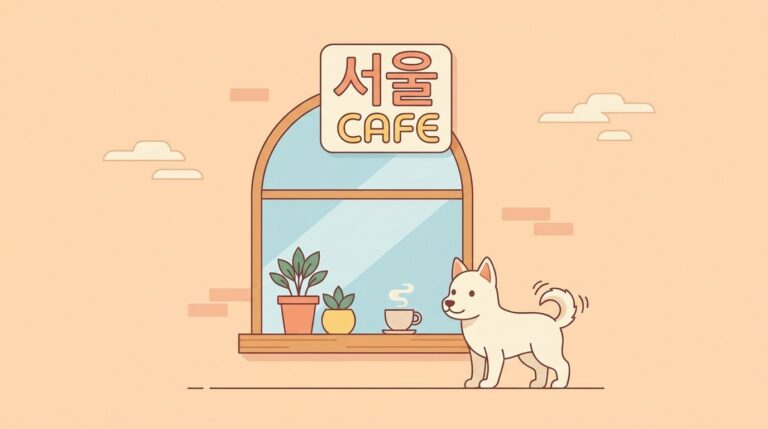
안녕하세요! 매일한글 에디터입니다. Have you ever visited a cozy pet cafe in Seoul or watched a K-pop idol squeal over an adorable puppy, wanting to say how cute its little tail is? You try to say 꼬리 (kkori – tail), but freeze! Does it sound like ‘gori’? Or did you puff out air and say ‘kori’? You are not alone! Hangul’s tense double consonant ㄲ (ssang-giyeok) is a classic stumbling block for beginners because English lacks this exact standalone letter. Over 10 years of coaching Korean learners, I have helped hundreds master this crisp sound through simple voice hacks. Learning ㄲ gives you instant native-like confidence in daily Korean. Let’s unlock it together!
Phase 2: In-Depth Breakdown of 3 Key Expressions
1. 꼬리 흔들어요 (Kkori heundeuleoyo)
- Pronunciation: [Kkori heundeuleoyo] (Make a tight, tense ‘k’ sound like the ‘sk’ in English ‘sky’—no breath puff!)
- Meaning: Literal: “The tail shakes.” vs Real Nuance: “The tail is wagging! (So cute!)”
- K-Culture Moment: In K-dramas, when an excited character greets someone they crush on, friends tease them by saying they are wagging their puppy tail.
- Editor’s Insight: 꼬리 (kkori) means “tail.” Notice how the double ㄲ gives the word a crisp, bouncing rhythm that matches a happy pet’s movement.
- Situation Spectrum: Casual: ✅ | Semi-formal: ✅ | Formal: ⚠️
- 🤔 Think About It: In Korean culture, comparing someone’s joyful reaction to a puppy’s wagging tail is a warm sign of affection. How does your culture describe pure, unfiltered excitement?
2. 꼭이요! (Kkok-iyo!)
- Pronunciation: [Kkok-iyo] (Tight ‘k’ sound again, stopping the breath abruptly at the end like saying ‘clasp’ without the ending ‘p’ sound!)
- Meaning: Literal: “Surely!” vs Real Nuance: “Definitely! / It is a promise!”
- K-Culture Moment: Seen in variety shows when cast members make a pinky swear (약속 / yaksok) before a challenge, loudly chanting “꼭이요!”.
- Editor’s Insight: 꼭 (kkok) is one of the most versatile words in Korea. Adding -이요 (-iyo) makes it friendly yet polite enough for store owners, friends, and coworkers.
- Situation Spectrum: Casual: ✅ | Semi-formal: ✅ | Formal: ⚠️
- 🤔 Think About It: Why do Koreans place so much emotional value on words of certainty like 꼭 (kkok) during casual promises with friends?
3. 꼬마 (Kkoma)
- Pronunciation: [Kkoma] (Tense ‘k’ + soft ‘ma’)
- Meaning: Literal: “Little child” vs Real Nuance: “Little cutie / Kiddo”
- K-Culture Moment: Older siblings in family K-dramas playfully teasing their younger brothers and sisters by calling them 꼬마 (kkoma).
- Editor’s Insight: While 어린이 (eorini) is the formal word for child, 꼬마 (kkoma) sounds affectionate, nostalgic, and adorable.
- Situation Spectrum: Casual: ✅ | Semi-formal: ⚠️ | Formal: 🚫
- 🤔 Think About It: Diminutives in Korean often use tense consonants like ㄲ to sound compact and cute. Does your language use specific sounds for cuteness?
Phase 3: Textbook Korean vs Real Korean
Situation 1: Making a Promise
- 📖 교과서 한국어 (Textbook): 반드시 약속을 지키겠습니다. (Bandusi yaksogeul jikigesseumnida. / I will surely keep my promise.)
- 🗣️ 진짜 한국어 (Real-life): 내일 꼭 와요! (Naeil kkok wayo! / Definitely come tomorrow!)
- 💡 왜 다를까? (Why is it different?): Textbook forms sound like a formal corporate vow. Real Koreans use 꼭 (kkok) to deliver warm, personal commitment in everyday conversations.
Situation 2: Reacting to a Dog Wagging Its Tail
- 📖 교과서 한국어 (Textbook): 개가 꼬리를 움직입니다. (Gaega kkorireul umjigimnida. / The dog moves its tail.)
- 🗣️ 진짜 한국어 (Real-life): 꼬리 살랑살랑 흔들어요! (Kkori sallangsallang heundeuleoyo! / The tail is wagging so gently!)
- 💡 왜 다를까? (Why is it different?): Koreans love sensory onomatopoeia like 살랑살랑 (sallangsallang – gently swaying) to capture vivid pet moments naturally.
Phase 4: K-Culture Deep Dive & Non-Verbal Manners
4-1. 눈치 (Nunchi) & Gestures
When using words with ㄲ like 꼭 (kkok), body language reinforces your sincerity. When saying 꼭 약속해요 (Kkok yaksokhaeyo / Definitely promise), hook your pinky finger with the other person, stamp your thumbs together like a seal (도장 / dojang), and swipe your palms together as a sign-off (복사 / boksa). Eye contact should be bright and warm, never aggressive.
4-2. Culture Code: The “Pet Family” Boom in Korea
Korea is currently experiencing a huge pet renaissance. In trendy neighborhoods like Seongsu and Yeonnam, you will see pet-friendly bakeries and fashion boutiques everywhere. Knowing how to compliment someone’s pet using 꼬리 (kkori – tail) and 귀여워요 (gwiyeowoyo – cute) is the fastest social icebreaker with local dog owners during your Seoul travels!
Phase 5: Real-World Roleplay Scenario
Setting: Mong-Mong Dog Cafe in Hongdae.
NPC: Minho (Friendly cafe host holding a fluffy white puppy).
- Minho: 안녕하세요! 강아지 좋아하세요? (Annyeonghaseyo! Gang-aji joahaseyo? / Hello! Do you like puppies?) 🎭 Smiles warmly and kneels down with the puppy
- Learner: 네! 강아지 너무 귀여워요! (Ne! Gang-aji neomu gwiyeowoyo! / Yes! The puppy is so cute!) 🎭 Gently waves hand
- Minho: 이름은 구름이에요. 사람을 정말 좋아해요. (Ireumeun Gureum-ieyo. Sarameul jeongmal joahaseyo. / His name is Gureum. He really loves people.) 🎭 Pets Gureum’s head
- Learner: 와, 꼬리 흔들어요! (Wa, kkori heundeuleoyo! / Wow, the tail is wagging!) 🎭 Points gently with a soft smile
- Minho: 맞아요, 기분 좋을 때 꼬리 흔들어요. (Majayo, gibun joeul ttae kkori heundeuleoyo. / That’s right, he wags his tail when he feels good.) 🎭 Laughs softly
- Learner: 저 간식 줘도 돼요? (Jeo gansik jwodo dwaeyo? / May I give him a treat?) 🎭 Shows a small treat cup
- Minho: 네! 조금씩 천천히 주세요. (Ne! Jogeumssik cheoncheonhi juseyo. / Yes! Please give it little by little slowly.) 🎭 Hands over a safe feeding glove
- Learner: 네, 꼭 천천히 줄게요! (Ne, kkok cheoncheonhi julgeyo! / Yes, I will definitely give it slowly!) 🎭 Nods politely
- Minho: 구름이가 손님을 정말 좋아하네요! (Gureum-iga sonnimeul jeongmal joahane-yo! / Gureum really likes you!) 🎭 Claps lightly
🔀 Interactive Choice Point
Gureum happily jumps on his paws. What do you say?
* A: 꼬리 너무 예뻐요! (Kkori neomu yeppeoyo! / The tail is so pretty!)
Feedback: Best! Natural, warm, and shows great command of today’s vocabulary.
* B: 고리 흔들어요! (Gori heundeuleoyo!)
Feedback: Risk. ‘Gori’ means ring or hook in Korean! Minho might guess from context, but your tense ㄲ slipped into a soft ㄱ.
* C: 조용히 하세요. (Joyonghi haseyo. / Be quiet.)
Feedback: Bad. Very rude and inappropriate for a pet cafe setting!
Phase 6: 10-Second Emotion Shadowing Drill
[😊 Exciting & Cheerful]
강아지가 / 꼬리 흔들어요!
(Gang-ajiga / kkori heundeuleoyo! / The puppy is wagging its tail!)-
[🤝 Sincere & Reassuring]
내일 / 꼭 / 만나요!
(Naeil / kkok / mannayo! / Let’s definitely meet tomorrow!) -
[🥺 Cute & Playful]
귀여운 / 꼬마 강아지예요!
(Gwiyeoun / kkoma gang-ajiyeyo! / It’s an adorable little puppy!)
Phase 7: K-Culture Mini Dictionary
- 꼬리 (Kkori) | Tail | Used for animals, but also playfully in food like 소꼬리찜 (ox-tail stew) or describing lines of cars.
- 꼭 (Kkok) | Definitely / Exactly | Used daily when emphasizing promises, punctuality, or necessary actions.
- 꼬마 (Kkoma) | Little one / Kid | Affectionate term for small children or tiny puppies.
- 꿀 (Kkul) | Honey | Slang for anything sweet, easy, or high-value (e.g., 꿀팁 / kkul-tip = golden tip).
Phase 8: Traveler’s Survival Kit
Top 3 Survival Phrases with ㄲ:
- 꼭 갈게요! (Kkok galgeyo!)
Romanization: [Kkok gal-ge-yo]
Pro Tip: Use this when a street food vendor or shopkeeper invites you back. - 꼬리 있어요? (Kkori isseoyo?)
Romanization: [Kkori isseoyo]
Pro Tip: Handy if ordering specialized Korean BBQ cuts like ox-tail or pork tail delicacy. - 꼭꼭 씹어 드세요! (Kkok-kkok ssibeo deuseyo!)
Romanization: [Kkok-kkok ssibeo deuseyo]
Pro Tip: Warm phrase said by restaurant grandmothers meaning “Chew thoroughly and enjoy your meal!”
Editor’s Travel Note:
When exploring Seoul’s pet cafes or hidden alleys, avoid getting lost by checking out the official Naver Map navigation mobile app download page. It tracks local Seoul bus stops far more accurately than foreign map apps!
Phase 9: One Step Deeper
Korean sounds carry sensory weight. While basic consonants like ㄱ (g/k) feel neutral and aspirated consonants like ㅋ (k) feel airy and sharp, tense double consonants like ㄲ (kk) pack concentrated energy into the vocal cords. In Korean psychology, words starting with ㄲ often evoke smallness, tightness, or intense focus (think 꽉 / kkwak = tight, 꼭 / kkok = definitely). Understanding this connection between sound tension and emotional intimacy will transform your Korean pronunciation from robotic to native.
💬 Your Turn: Which word starting with ㄲ do you find easiest to say? Tell us in the comments below!
Phase 10: FAQ & Common Mistakes
Q: How can I produce the ㄲ sound if my native language is English?
A: Place your hand in front of your lips. Say “kite”—feel that puff of air? That is ㅋ. Now say the word “sky”. Notice how the ‘k’ in “sky” has zero air puffing out? That exact throat tension is ㄲ!
Q: Does confusing ㄱ and ㄲ change the meaning of a word?
A: Yes! For example, 방귀 (banggwi) means flatulence, while 바구니 (baguni) is basket, and 꼬리 (kkori) means tail while 고리 (gori) means a metal ring or connection hook. Getting the tension right matters!
Q: Can I use 꼬마 (kkoma) to address unfamiliar children on the street?
A: It’s best used softly in passing comments (e.g., “꼬마야 안녕?” / Hi kiddo!). In polite or formal settings, refer to children as 아이 (ai) or 어린이 (eorini).
🚨 Common Mistakes Board:
- Mistake 1: Blowing air out while saying ㄲ.
Correct Action: Keep your vocal cords tight; no air should blow onto your hand. - Mistake 2: Pronouncing 꼭 (kkok) with a long vowel like ‘coke’.
Correct Action: Keep the vowel short and snap the ending shut instantly. - Mistake 3: Slurring ㄲ into a soft English ‘G’.
Correct Action: Build slight tension in your throat before releasing the vowel.
Phase 11: Action Missions & Community
- 🥉 Bronze Mission (Solo): Stand before a mirror with a tissue in front of your mouth. Practice saying 꼬리 (kkori) 5 times without letting the tissue move from your breath!
- 🥈 Silver Mission (Social): Leave an audio voice note or comment on your social media saying: “내일 꼭 만나요! (Naeil kkok mannayo!)”.
- 🥇 Gold Mission (Real Life): Next time you watch a K-drama or visit a Korean store, spot a word using ㄲ and note its spelling.
- 🎮 K-Culture Mission: Watch a clip of variety show ‘Running Man’ or an idol vlog and listen for how many times they say “꼭 (kkok)” when making bets!
Phase 12: Interactive Quiz Challenge
1. Situation Check: You want to assure your Korean language partner that you will attend study class tomorrow. What is the most natural phrase?
– A) 내일 꼬리 만나요!
– B) 내일 꼭 갈게요!
– C) 내일 어린이 가요!
2. Fill in the Blank: 강아지가 기분이 좋아서 _____ 흔들어요. (The puppy is in a good mood, so it wags its tail.)
– [ ___ ]
3. Culture True or False: Tense double consonants like ㄲ always release a stronger blast of breath than normal consonants.
– [True / False]
Click to reveal answers & explanations!
- Answer: B) 내일 꼭 갈게요! (I will definitely go tomorrow! 꼭 expresses certainty).
- Answer: 꼬리 (kkori) (꼬리 means tail).
- Answer: False! Double consonants (쌍자음) are tense and unaspirated—meaning they release virtually no breath compared to aspirated sounds like ㅋ.
🎬 Watch Our Daily Videos! (Daily Hangul Official Instagram)
Review the expressions you learned in this article with our fun daily short videos! Check out native pronunciation and real-life nuances in action.
- Instagram @dailyhangul_en







