

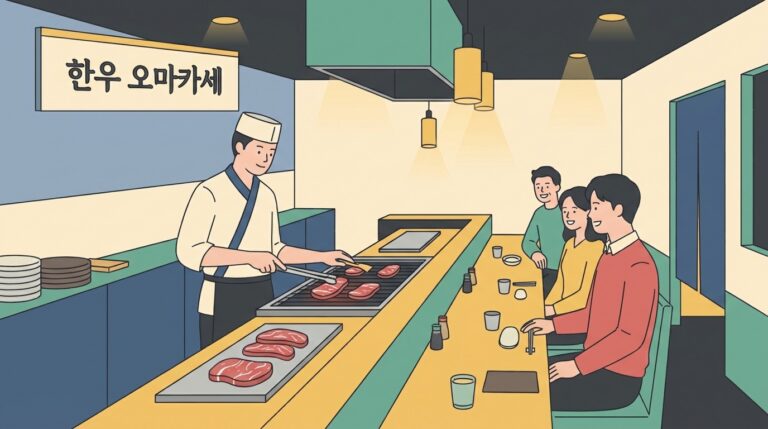
The Ultimate Guide to Korean Beef ‘Umakase’ and Fine Dining for Special Occasions
Phase 1: Empathy & Storytelling
안녕하세요! 매일한글 에디터입니다.
Picture this: your anniversary or partner’s birthday is coming up in Seoul. You want an unforgettable evening that screams thoughtful romance. You open Instagram or NAVER search, expecting traditional barbecue recommendations, but your feed is flooded with glowing charcoal grills, sleek minimalist counter bars, and captions reading: “우마카세 예약 성공!” (Succeeded in booking Umakase!). You pause: isn’t omakase strictly a Japanese sushi custom?
In contemporary Korea, the culinary scene has brilliantly adopted and redefined this concept. Today, booking a premium Korean Hanwoo beef omakase—affectionately dubbed 우마카세 (Umakase)—or a boutique fine dining course is the undisputed gold standard for celebrating milestones. Yet, navigating reservation apps, speaking with the grill master at the counter bar, and knowing what to say when that glistening marble cut drops in front of you can feel intimidating for intermediate Korean learners. Drawing from hundreds of learner questions and genuine culinary nights in Cheongdam and Hannam, this friendly guide will give you the confidence to dine, chat, and celebrate just like a savvy local.
Phase 2: Core Expressions Deep Dive
1. 우마카세 예약했어요 (Umakase yeyakhaesseoyo)
- Pronunciation: [U-ma-ka-se ye-yak-hae-sseo-yo] (Sounds like: Oo-mah-kah-seh yeh-yahk-heh-ssuh-yo)
- Meaning: Literal: “I reserved a beef omakase.” / Actual Nuance: “I booked something exclusive, trendy, and indulgent for our special day.”
- K-Culture Moment: Seen in romantic K-dramas where the lead character reveals a surprise dinner date at a dimly lit, private counter grill to impress their partner.
- Editor’s Insight: The word blends U (from U / 牛 meaning beef) with Omakase. It represents Korea’s modern “small luxury” dining culture where you leave the cuts and cooking entirely to the chef.
- Situation Spectrum: Casual: ✅ | Semi-formal: ✅ | Formal: ⚠️
- 🤔 Think About It: In many Western dining styles, guests choose their exact cut from an à la carte menu. How does handing total control over to the chef reflect trust and hospitality in Korean culinary culture?
2. 입에서 살살 녹아요 (Ib-eseo salsal nogayo)
- Pronunciation: [Ibe-seo sal-sal no-ga-yo] (Sounds like: Eeb-eh-suh sahl-sahl noh-gah-yo)
- Meaning: Literal: “It softly melts in the mouth.” / Actual Nuance: “This meat is astonishingly tender and juicy!”
- K-Culture Moment: The quintessential reaction uttered by food vloggers and celebrities on Korean culinary variety shows like Tasty Guys after taking their first bite of grade 1++ Hanwoo.
- Editor’s Insight: 살살 (Salsal) is a delightful Korean onomatopoeia describing a gentle, gliding sensation. Use it right after savoring the first bite of tender tenderloin (안심) to delight the grill master.
- Situation Spectrum: Casual: ✅ | Semi-formal: ✅ | Formal: ✅
- 🤔 Think About It: Korean food descriptions often focus on texture and mouthfeel rather than just seasoning. Does your native language have sound-symbolic words for tender textures?
3. 셰프님 추천으로 부탁드려요 (Sepeunim chucheoneuro butakdeuryeoyo)
- Pronunciation: [Sye-peu-nim chu-cheon-eu-ro bu-tak-deu-ryeo-yo] (Sounds like: Sheh-peu-neem choo-chun-oo-roh boo-tahk-deuh-ryuh-yo)
- Meaning: Literal: “Chef, we request your recommendation.” / Actual Nuance: “We trust your pairing expertise—surprise us!”
- K-Culture Moment: Commonly heard when ordering wine pairings, artisanal traditional liquors (전통주), or choosing dessert options at high-end dining spots.
- Editor’s Insight: Adding -님 (nim) to 셰프 (Chef) elevates the title with natural courtesy, establishing immediate warmth and mutual respect.
- Situation Spectrum: Casual: ⚠️ | Semi-formal: ✅ | Formal: ✅
- 🤔 Think About It: Showing deference to the culinary artist’s choice often earns you extra storytelling, better table interaction, or even a complimentary seasonal side dish.
Phase 3: Textbook Korean vs. Real-World Korean
Situation 1: Inquiring about a meat cut and how best to enjoy it
- 📖 교과서 한국어 (Textbook): 이 고기는 어떤 부위입니까? (I gogineun eotteon buwiimnikka? – Which cut is this meat?)
- 🗣️ 진짜 한국어 (Real-World): 이건 어떤 부위예요? 굽기는 어떻게 먹는 게 제일 맛있나요? (Igeon eotteon buwiyeoyo? Gupgineun eotteoke meongneun ge jeil masinnayo? – Which cut is this, and what cooking doneness brings out the best flavor?)
- 💡 Why the difference? Textbook phrasing sounds like an interrogation. Real-world Korean fine diners ask engaging questions that show curiosity about the chef’s culinary philosophy.
Situation 2: Informing the restaurant about your celebration
- 📖 교과서 한국어 (Textbook): 오늘 기념일이니까 서비스를 주십시오. (Oneul ginyeomirinikka seobiseureul jusipsio. – Give us free service because today is an anniversary.)
- 🗣️ 진짜 한국어 (Real-World): 저희 오늘 1주년 기념일이라서 왔는데, 레터링 디저트 혹시 가능할까요? (Jeohui oneul iljunyeon ginyeomiriraseo wanneunde, reteoring dijeoteu hoksi ganeunghalkkayo? – We came to celebrate our first anniversary today; would custom lettering on the dessert be possible by any chance?)
- 💡 Why the difference? Directly demanding “서비스 (service / free items)” is considered impolite. Using the soft softening connector
-는데 (neunde)allows the kitchen team to celebrate you gracefully.
Phase 4: K-Culture Deep Dive & Non-Verbal Manners
4-1. 눈치 (Nunchi) & Counter Etiquette
In an intimate 우마카세 (Umakase), most seating is arranged along a sleek wooden counter bar (다찌 / 바 테이블). The interaction with the chef is personal and close-up.
* The Photo Etiquette: Snapping pictures of the raw marbled Hanwoo beef platter presented before grilling is practically expected! However, practice quick nunchi: take 2-3 quick photos, thank the chef with a slight nod, and avoid letting cooked meat sit cooling on your plate while adjusting camera angles. Hanwoo fats solidify quickly.
* The Chopstick Rest: High-end restaurants provide ceramic chopstick rests (수저받침). Never leave your chopsticks planted vertically in rice or directly resting on top of communal serving plates.
4-2. The Cultural Trend: The Rise of “Small Luxury”
Why are 20- and 30-somethings in Korea spending 150,000 to 250,000 KRW per person on curated beef courses? It stems from the contemporary lifestyle trend known as 스몰 럭셔리 (Small Luxury). Rather than saving for distant, unattainable life purchases, younger Koreans prioritize memorable, sensory experiences on milestone dates. Umakase dining is considered an artistic performance where charcoal aromas, specialized salts (like smoked Maldon salt), and plating tell a narrative.
Phase 5: Real-World Roleplay Scenario
Setting: Min-jun Chef’s 8-seat boutique Hanwoo Umakase restaurant in Apgujeong, Seoul. Soft jazz plays in the background.
Characters: Chef Min-jun (attentive, passionate beef artisan) & Alex (dining for an anniversary celebration).
- Turn 1 (Chef Min-jun): 어서 오세요! 오늘 기념일 예약이시죠? (Eoseo oseyo! Oneul ginyeom-il yeyagisijyo? / Welcome! You have the anniversary reservation today, right?)
- Turn 2 (Alex): 🎭 Smiling warmly, removing jacket 네, 저희 오늘 1주년이라서 우마카세 코스로 예약했어요. (Ne, jeohui oneul iljunyeoniraseo umakase koseuro yeyakhaesseoyo. / Yes, today is our first anniversary, so we booked the umakase course.)
- Turn 3 (Chef Min-jun): 축하드립니다! 오늘 가장 신선한 1++ 한우 안심부터 준비해 드리겠습니다. (Chukhadeurimnida! Oneul gajang sinseonhan tu-ppul han-u ansimbuteo junbihae deurigesseumnida. / Congratulations! We’ll start by preparing today’s freshest grade 1++ Hanwoo tenderloin for you.)
- Turn 4 (Alex): 🎭 Looking at the beef platter in awe 와, 마블링이 대박이네요! 굽기는 미디엄 레어로 부탁드려요. (Wa, mabeullingi daebagineyo! Gupgineun midieom reeoro butakdeuryeoyo. / Wow, the marbling is incredible! Could we have it cooked medium-rare, please?)
- Turn 5 (Chef Min-jun): 🎭 Grilling over binchotan charcoal and plating a cut 첫 점은 말돈 소금만 살짝 찍어 드셔 보세요. (Cheot jeomeun maldon sogeumman saljjak jjigeo deusyeo boseyo. / For your first piece, please try it with just a touch of Maldon salt.)
- Turn 6 (Alex): 🎭 Taking a bite and closing eyes in delight 와… 고기가 진짜 입에서 살살 녹아요! (Wa… gogiga jinjja ibeseo salsal nogayo! / Wow… the beef literally melts in my mouth!)
- Turn 7 (Chef Min-jun): 입맛에 맞으시다니 기쁘네요. 다음 부위에 어울리는 와인 한 잔 페어링해 드릴까요? (Inmase majeosidani gippeuneyo. Daeum buwie eoullineun wain han jan peeoringhae deurilkkayo? / I’m glad it suits your taste. Would you like a glass of wine paired with the next cut?)
- Turn 8 (Alex): 네! 셰프님 추천으로 부탁드려요. (Ne! Sye-peunim chucheoneuro butakdeuryeoyo. / Yes! We’d love your recommendation, chef.)
🔀 Interactive Decision Point
The chef asks if you have any dietary restrictions or preferences before the richer, fattier ribeye cut (등심) arrives. How do you respond?
- Option A: “아무거나 다 괜찮아요. 셰프님 손에 맡길게요!” (Amugeona da gwaenchanayo. Sye-peunim sone matgilgeyo! – Anything is fine. We trust your hands completely!)
- Option B: “배불러요. 고기 그만 주시고 밥이나 빨리 주세요.” (Baebulleoyo. Gogi geuman jusigo babina ppalli juseyo. – I’m full. Stop giving meat and just bring rice quickly.)
- Option C: “고기 기름기가 많아서 느끼할 것 같은데, 와사비 많이 주세요.” (Gogi gireumgiga manaseo neukkihal geot gateunde, wasabi mani juseyo. – The meat seems too fatty and greasy, so give me a lot of wasabi.)
Feedback:
* Option A (Best): Friendly, enthusiastic, and honors the chef’s culinary pacing while confirming no allergies.
* Option B (Bad): Disrespectful of the pacing and comes off blunt and confrontational in fine dining.
* Option C (Risk): Prejudging the food as “느끼하다 (greasy)” before tasting might hurt the chef’s pride. Instead, try asking politely: “와사비 조금 더 주실 수 있나요?” (Could I have a little more wasabi, please?).
Phase 6: 10-Second Emotional Shadowing Drill
Practice speaking with authentic emotion and natural pauses (/ indicates a natural breath pause):
- [😊 Proud and Romantic]
오늘 우리 기념일이라서 / 특별히 우마카세 예약했어!
(Oneul uri ginyeomiriraseo / teukbyeolhi umakase yeyakhaesseo!)
“Today is our anniversary, so I reserved a beef omakase specially for us!” -
[🤤 Pure Sensory Amazement]
와, / 육즙이 가득해서 / 입에서 살살 녹아요!
(Wa, / yukjeubi gadeukhaeseo / ibeseo salsal nogayo!)
“Wow, it’s so full of juices that it literally melts in my mouth!” -
[🍷 Sophisticated and Courteous]
이 부위랑 잘 어울리는 음료로 / 셰프님 추천 부탁드려요.
(I buwirang jal eoullineun eumryoro / sye-peunim chucheon butakdeuryeoyo!)
“Could we ask for the chef’s recommendation for a beverage that pairs well with this cut?”
Phase 7: K-Culture Mini Dictionary
- 우마카세 (Umakase): A Korean portmanteau of Hanwoo beef (U) and Japanese Omakase. Refers to premium multi-course beef dining where the chef controls each dish.
- 투뿔 한우 (Tu-ppul Han-u): Grade 1++ Hanwoo beef, the pinnacle tier of Korean native cattle, renowned for its intricate intramuscular marbling and sweet, nutty aroma.
- 피켓팅 (Piketing): A blend of 피 (blood) and 티켓팅 (ticketing). Used to describe the intense, bloodbath-level race to reserve coveted dining spots the second booking opens.
- 콜키지 프리 (Kolkiji Peuri): “Corkage Free” dining policy. Many upscale Korean meat dining venues allow guests to bring their celebratory wine without an extra uncorking fee.
Phase 8: Traveler’s Survival Kit
Top 3 On-Site Survival Phrases
- 레터링 서비스 가능한가요? (Reteoring seobiseu ganeunghangayo? / Is custom dessert lettering service available?)
- Pro Tip: Message the restaurant in advance through your reservation notes with your partner’s name or milestone.
- 굽기 정도는 미디엄으로 해주세요. (Gupgi jeongdoneun midieomeuro haejuseyo. / Please prepare the meat medium doneness.)
- Pro Tip: If you are unsure, Hanwoo tenderloin is best medium-rare, while fattier short ribs shine at medium.
- 다음 코스 준비해 주셔도 돼요. (Daeum koseu junbihae jusyeodo dwaeyo. / You may prepare the next course now.)
- Pro Tip: Perfect when you’ve finished chatting and want to signal the waitstaff smoothly.
Editor’s Travel Note: How to Book Like a Local
Hotspots in Seongsu and Cheongdam do not take walk-ins. To secure a table, download the Catchtable reservation app for Korea, which supports foreign credit cards and English interfaces. Mark the reservation release date—usually the 1st or 15th of each month at midnight or noon sharp. If you miss out, turn on the “cancellation notification (빈자리 알림)” to snatch sudden openings!
Phase 9: A Step Deeper (Cultural Reflection)
In traditional Korean culture, dining was predominantly communal: big bubbling stews placed squarely in the center, banchan dishes shared across the table, and bustling, lively conversations. The meteoric popularity of Umakase and fine dining courses signifies an intriguing modern shift. It reflects an evolving appetite for individualized pacing, culinary storytelling, and curated personal luxury. Yet beneath the Western and Japanese culinary formats, the quintessential Korean spirit remains: honoring celebration through nourishing, generous, top-tier beef.
💬 Your Turn: What is the traditional “celebration meal” in your home country? Would you enjoy letting a chef surprise you with every course? Let us know in the comments below!
Phase 10: FAQ & Common Pitfalls
Q: Can I request well-done meat at a high-end Hanwoo Umakase?
A: Yes, but chefs usually recommend medium-rare or medium because overcooked Hanwoo loses its signature marbling moisture. You can politely say: “기름기가 적당히 익도록 미디엄 웰던으로 부탁드려요” (Please cook it medium-well so the fat renders nicely).
Q: What is the dress code for fine dining in Seoul?
A: Most Korean fine dining and Umakase spots adhere to “smart casual.” While suits and cocktail dresses aren’t strictly required, avoid athletic shorts, flip-flops, or overly casual gym wear out of respect for the ambiance.
Q: Do I need to tip the chef at the counter?
A: Absolutely not! Tipping is not part of Korean dining culture and can actually cause confusion. The listed menu price includes all service charges and tax.
🚨 Common Mistakes Alert!
- Mistake: Arriving 15 minutes late without calling.
Correct Action: Umakase runs on synchronized seatings. Being late disrupts the grill schedule for all guests. Always arrive 5–10 minutes early. - Mistake: Pouring soy sauce all over the meat immediately.
Correct Action: High-grade Hanwoo is delicately seasoned. Taste the first bite plain or with sea salt before adding wasabi or accompanying sauces. - Mistake: Demanding free food by saying “서비스 주세요” (Give me service).
Correct Action: Let the staff know about your celebration with gentle phrasing: “오늘 특별한 날이라서 방문했어요” (We visited because it’s a special day today).
Phase 11: Action Missions
- 🥉 Bronze Mission (Solo Practice): Read the phrase “입에서 살살 녹아요!” three times aloud with genuine delight.
- 🥈 Silver Mission (Social Media): Take a photo of your dinner tonight and post an Instagram story with the caption: “입에서 살살 녹는다 🤤 #DailyHangul”.
- 🥇 Gold Mission (Real Life): Visit a Korean barbecue restaurant or counter dining spot and use “셰프님 추천으로 부탁드려요” when deciding what to order.
- 🎮 K-Culture Mission: Watch an episode of a Korean gourmet variety show and spot how many times the hosts use the phrase “살살 녹아요”.
Phase 12: Interactive Quiz Challenge
1. Situational Judgment: You want to compliment the chef on an exceptionally tender piece of Hanwoo beef. What do you say?
a) 고기가 너무 질겨요. (Gogiga neomu jilgyeoyo.)
b) 입에서 살살 녹아요! (Ib-eseo salsal nogayo!)
c) 서비스 더 주세요. (Seobiseu deo juseyo.)
2. Fill-in-the-Blank: Complete the polite request for a recommendation:
“셰프님 ________으로 부탁드려요.”
(Hint: starts with ‘추’)
3. True or False: In Korea, you should leave a 15% cash tip directly on the counter for the chef after an Umakase dinner.
👉 Click to reveal Quiz Answers & Explanations!
- Correct Answer: b) 입에서 살살 녹아요!
Explanation: (a) means “the meat is too tough,” and (c) rudely demands free items. (b) is the highest compliment for tender, juicy meat. - Correct Answer: 추천 (Chucheon – Recommendation)
Explanation: “셰프님 추천으로 부탁드려요” means “We’d like the chef’s recommendation, please.” - Correct Answer: False
Explanation: Tipping does not exist in Korean restaurants. A warm bow and heartfelt “정말 맛있게 잘 먹었습니다!” (Thank you for a truly delicious meal!) is the greatest reward for the chef.
🎬 Watch Our Daily Videos! (Daily Hangul Official Instagram)
Review the expressions you learned in this article with our fun daily short videos! Check out native pronunciation and real-life nuances in action.
- Instagram @dailyhangul_en







