

Korean Clinic Checkout Made Easy: How to Handle Prescriptions and Pharmacies Like a Local
Phase 1: Empathy (Story Immersion Opening)
안녕하세요! 매일한글 에디터입니다. (Hello! This is your Daily Hangul editor!)
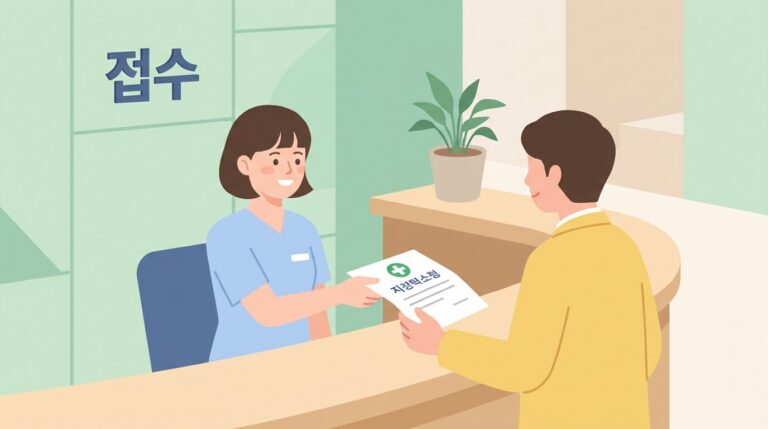
Picture this: You just survived your first doctor’s visit in Seoul. You bravely explained your sore throat using gestures and translator apps, and you’re feeling proud. You step up to the front desk to settle the bill. The receptionist types at lightning speed, hands you your credit card, and slides a piece of paper across the counter while saying: “약국 제출용 처방전 한 장을 옆 건물 약국에 내시면 돼요.”
Your mind freezes. Prescription? Building next door? Wait, don’t they sell medicine right here inside the hospital? Why are there two identical-looking papers stapled together? Which one do I hand over?
If you have ever stared blankly at a Korean prescription wondering if you just agreed to surgery or simple cold pills, don’t worry—you are definitely not alone! In Korea, prescribing medication and dispensing it are strictly separated by law. You will almost always visit a separate pharmacy right outside or in the neighboring building. Today, based on real experiences from our global learners at Daily Hangul, we are unpacking front desk conversations, health insurance checks, and prescription etiquette so you can walk out of any Korean clinic with calm confidence.
Phase 2: Core Expressions Deep Dive
Here are three essential expressions you will hear or use at the front desk when wrapping up your clinic visit.
1. 약국 제출용 처방전 (Yakguk jechulyong cheobangjeon)
- Pronunciation: yahk-gook jeh-chool-yong chuh-bahng-jeon (Sounds like “yahk-gook” + “jeh-chool” [submission] + “yong” [for/use] + “chuh-bahng-jeon” [prescription])
- Meaning: “Prescription for pharmacy submission”
- K-Culture Moment: In K-dramas like Hospital Playlist, you often see patients holding two sheets of paper with green borders. One says 환자 보관용 (for patient’s records) and the other says 약국 제출용 (for pharmacy submission).
- Editor’s Insight: Korean clinics often print two copies: one for you to keep and one to give to the pharmacist. Look closely at the top right header. The one marked 약국 제출용 is the only one the pharmacist needs!
- Situation Spectrum:
- Casual: ⚠️ (Used only as a noun in formal/official medical settings)
- Semi-formal: ✅
- Formal: ✅
- 🤔 Think About It: In many Western countries, prescriptions are sent electronically straight to your designated pharmacy. Why do you think Korea still issues paper copies directly to patients alongside digital logs?
2. 옆 건물 약국에 내시면 돼요 (Yeop geonmul yakguge naesimyeon dwaeyo)
- Pronunciation: yuhp geon-mool yahk-goo-geh neh-she-myeon dweh-yo (Think “yuhp” [side/next] + “geon-mool” [building] + “naesimyeon dwaeyo” [you can submit it])
- Meaning: Literal: “If you submit it to the pharmacy in the next building, it’s fine.” / Natural: “Just hand this in to the pharmacy next door.”
- K-Culture Moment: Every time an idol or actor visits a community clinic (내과 or 이비인후과), the desk clerk points out the glass door toward the neon green “약” (Yak – Pharmacy) cross outside.
- Editor’s Insight: The grammar pattern
-(으)시면 돼요is the golden key of Korean customer service. It gently guides you on what step to take next without sounding like a rigid order. - Situation Spectrum:
- Casual: 🚫 (내면 돼 is too blunt for reception staff)
- Semi-formal: ✅ (Standard polite customer service tone)
- Formal: ✅ (제출하시면 됩니다 is the strict high-formal equivalent)
- 🤔 Think About It: Notice how Korean polite endings like
-시면 돼요soften instructions into friendly suggestions. How does your native language guide customers gently?
3. 건강보험 적용돼요? (Geongangboheom jeok-yongdwaeyo?)
- Pronunciation: gun-gahng-boh-hum juhk-yong-dweh-yo? (“gun-gahng” [health] + “boh-hum” [insurance] + “jeok-yong” [apply] + “dwaeyo” [is it okay?])
- Meaning: “Is this covered by National Health Insurance?”
- K-Culture Moment: Foreign residents in dramas often ask this when paying their medical bills to verify whether their National Health Insurance (NHIS) discount was registered using their Alien Registration Card (ARC).
- Editor’s Insight: If you hold a Korean ARC (외국인등록증) and are enrolled in NHIS, your copay is drastically reduced. Always confirm this at the counter if the total fee looks unexpectedly high!
- Situation Spectrum:
- Casual: 🚫
- Semi-formal: ✅ (Perfect for talking to receptionists)
- Formal: ✅ (건강보험 적용이 됩니까?)
- 🤔 Think About It: Korea’s universal healthcare system makes routine clinic visits remarkably affordable. How does asking about insurance change the tone of payment in your home country?
Phase 3: Textbook Korean vs. Real Korean
Let’s compare robotic textbook phrasing with natural clinic talk.
Situation 1: Asking where the nearest pharmacy is
- 📖 교과서 한국어 (Textbook): 약국이 어디에 위치하고 있습니까? (Yakgugi eodie wichi-hago isseumnikka? / Where is the pharmacy located?)
- 🗣️ 진짜 한국어 (Real-Life): 처방전 어디로 가져가면 돼요? (Cheobangjeon eodiro gajyeogamyeon dwaeyo? / Where should I take this prescription?)
- 💡 왜 다를까?: In real life, asking “where should I take the prescription?” is much more natural and actionable than formally inquiring about geographic location coordinates.
Situation 2: Requesting a medical certificate for your workplace or school
- 📖 교과서 한국어 (Textbook): 저에게 진단서를 교부해 주십시오. (Jeoege jindanseoreul gyobuhae jusipsio. / Please bestow a medical certificate upon me.)
- 🗣️ 진짜 한국어 (Real-Life): 회사 제출용 진단서 한 장 부탁드려요. (Hoesa jechulyong jindanseo han jang butakdeuryeoyo. / Could I please get one medical certificate to submit to my company?)
- 💡 왜 다를까?: Words like 교부하다 (to issue/bestow) belong in legal statutes. Koreans use
~용 ~ 한 장 부탁드려요(One copy for [purpose], please) for everyday paperwork requests.
Phase 4: K-Culture Deep Dive & Non-Verbal Manners
4-1. Nunchi & Clinic Body Language
When receiving your prescription and credit card back from the desk staff:
* Use Two Hands: Receive the paper and card with both hands (or place your left hand gently under your right wrist/forearm). This simple gesture conveys deep respect in Korean culture.
* The Nodding Exit: A slight 15-degree bow accompanied by “감사합니다! (Gamsahamnida! / Thank you!)” is the golden standard before stepping away from the counter.
* Spotting the Sign: Look out the building doors for a bright red or green square sign displaying the single syllable 약 (Yak). That is your next destination.
4-2. The “Medical Building” Phenomenon (메디컬 빌딩)
In South Korea, you will frequently see entire multi-story buildings packed with doctors: dermatology on the 2nd floor, internal medicine on the 3rd floor, ENT on the 4th, and dental on the 5th.
And what sits right on the 1st floor? Almost without exception: a busy pharmacy (약국). This clustering happens because Korean healthcare relies on 의약분업 (the statutory separation of medical examination and pharmaceutical dispensing). Doctors prescribe; pharmacists prepare. Because patients need their pills immediately, pharmacies compete fiercely for prime ground-floor real estate directly beneath these clinics!
Phase 5: Real-Life Roleplay Scenario
Setting: You are standing at the reception desk of “Seoul Best Internal Medicine Clinic” in Mapo-gu after completing your doctor’s consultation.
Character (NPC): Receptionist Minji (민지) – Swift, professional, wearing a warm smile and a lanyard badge.
- 민지 (Minji): 데이비드 님, 수납 도와드릴게요. 진료비 7,200원입니다. (Deibideu nim, sunap dowadeurilgeyo. Jinlyobi chilcheon-ibaek-won-imnida.)
🎭 Looking at the computer screen and stretching her hand out toward the card reader.
“Mr. David, I can help you with payment. Your consultation fee is 7,200 KRW.” -
You: 네, 여기 카드요. 혹시 건강보험 적용된 거 맞아요? (Ne, yeogi kadeuyo. Hoksi geongangboheom jeok-yongdoen geo majayo?)
🎭 Handing over your card with both hands.
“Yes, here is my card. By the way, was this covered under National Health Insurance?” -
민지 (Minji): 네, 외국인등록번호로 건강보험 적용되셨어요. (Ne, oegugindeungnokbeonhoro geongangboheom jeok-yongdoesyeosseoyo.)
🎭 Swiping the card and printing out the paperwork smoothly.
“Yes, health insurance was applied via your foreigner registration number.” -
You: 다행이네요! 그리고 회사 제출용 진단서도 발급 가능할까요? (Dahaeng-ineyoyo! Geurigo hoesa jechulyong jindanseodo balgeup ganeunghalkkayo?)
🎭 Leaning in slightly with a polite tone.
“What a relief! Also, would it be possible to get a medical certificate for my company?” -
민지 (Minji): 네, 진단서 한 장 같이 출력해 드렸어요. (Ne, jindanseo han jang gachi chullyeokae deuryeosseoyo.)
🎭 Stapling two sheets together and placing them neatly on the desk.
“Yes, I have printed one medical certificate together for you.” -
You: 감사합니다. 약은 어디서 받으면 돼요? (Gamsahamnida. Yageun eodiseo badeumyeon dwaeyo?)
🎭 Picking up the papers attentively.
“Thank you. Where should I pick up the medicine?” -
민지 (Minji): 약국 제출용 처방전 한 장을 옆 건물 약국에 내시면 돼요. (Yakguk jechulyong cheobangjeon han jangeul yeop geonmul yakguge naesimyeon dwaeyo.)
🎭 Pointing out the glass lobby door to the left.
“You just need to submit the pharmacy copy of the prescription to the pharmacy in the building next door.” -
You: 아, 알겠습니다. 안녕히 계세요! (A, algesseumnida. Annyeonghi gyeseyo!)
🎭 Giving a light polite bow and sliding the papers into your pocket.
“Ah, understood. Have a good day!”
🔀 Interactive Decision Point
You walk out into the lobby holding your papers. What do you do next?
- Choice A: Hand all the papers (including the medical certificate and your receipt) in a crumpled pile to the pharmacist counter.
- Feedback (Risk): The pharmacist only needs the single sheet labeled 약국 제출용 처방전. Handing over personal diagnostic records and receipts causes confusion and slows down service!
- Choice B: Walk straight to your subway station, assuming you can buy the exact same prescription pills at home online.
- Feedback (Bad): Prescriptions in Korea generally expire within 3 to 7 days from the date stamped on the paper. Once expired, you must pay for another doctor consultation to reissue it!
- Choice C: Look at the top right header of the sheets, pull out the 약국 제출용 copy, walk into the pharmacy next door marked with the green “약” sign, and hand it across the counter.
- Feedback (Best! ⭐): Perfect! The pharmacist will scan the barcode, dispense your medication in little portion packets, and explain your dosage clearly.
Phase 6: 10-Second Emotion Shadowing Drill
Practice reading these sentences aloud. Emphasize the slashes (/) as natural breathing pauses!
[😊 정중하고 명확하게 / Polite and clear]
처방전 어디로 / 가져가면 돼요?
(Cheobangjeon eodiro / gajyeogamyeon dwaeyo?)
“Where / should I take the prescription?”-
[💡 궁금하고 조심스럽게 / Inquiring and polite]
건강보험 / 적용된 거 맞아요?
(Geongangboheom / jeok-yongdoen geo majayo?)
“Was health insurance / applied properly?” -
[🤝 똑 부러지고 친절하게 / Crisp and friendly reception desk tone]
옆 건물 약국에 / 내시면 돼요.
(Yeop geonmul yakguge / naesimyeon dwaeyo.)
“To the pharmacy in the next building / you can hand it in.”
Phase 7: K-Culture Mini Dictionary
- 처방전 (Cheobangjeon): Prescription. Issued by a licensed medical doctor. It contains medicine names, dosage times, and a barcode scanned by pharmacists.
- 약국 제출용 (Yakguk jechulyong): For Pharmacy Submission. The specific copy of your prescription destined for the dispensing pharmacist. The counterpart is 환자 보관용 (For patient retention).
- 건강보험 (Geongangboheom): National Health Insurance (NHIS). Foreigners living in Korea for more than 6 months are automatically enrolled. It covers a vast majority of primary care costs.
- 진단서 (Jindanseo): Medical Certificate / Diagnostic Report. An official stamped document declaring your illness or injury, commonly submitted to schools, employers, or travel insurance providers.
Phase 8: Traveler’s Survival Kit
Top 3 Survival Phrases
- 이 근처에 약국 있어요? (I geuncheoe yakguk isseoyo?)
Is there a pharmacy nearby?
Pro Tip: Use this if the receptionist forgot to point out where to turn. - 진단서 영문으로 발급돼요? (Jindanseo yeongmuneuro balgeupdwaeyo?)
Can I get the medical certificate issued in English?
Pro Tip: Great for submitting to international insurance or foreign airlines without paying for translation services later. - 처방전 유효기간이 언제까지예요? (Cheobangjeon yuhyogigani eonjekkajiyeyo?)
Until when is this prescription valid?
Pro Tip: It is typically 3 days. Check the bottom date box (사용기한)!
Editor’s Travel Note
- Navigation Guide: Never use Google Maps in Korea for walking directions; it does not support pedestrian routing well. Download and check the Naver Map app navigation guide and search “약국” (pharmacy) to see opening hours right on your screen.
- Payment Tip: Almost all clinics and pharmacies accept international credit cards (Visa, MasterCard, Amex) and contactless payments like Apple Pay or Samsung Pay.
- ID Reminder: Korea now strictly enforces the requirement to show your ARC or Passport when registering at medical clinics. Keep identification handy!
Phase 9: “One Step Deeper” (Reflective Prompt)
Korean medical visits are famous for their sheer speed and clinical efficiency. Within 20 minutes, you can register, consult a physician, get blood tests done, pay, and receive your medicine next door. This reflects the Korean cultural concept of 빨리빨리 (Ppalli-ppalli / quick-quick) harmonized with high-tech organization. While some newcomers feel the checkout process feels rushed, it is actually designed to get you back home resting in bed as fast as humanly possible.
💬 Your Turn: Have you ever experienced a hospital or pharmacy visit abroad? How does the process in your home country compare to Korea’s separation of clinic and pharmacy? Share your story in the comments below!
Phase 10: FAQ & Avoiding Misunderstandings
Q: What should I do if the clinic didn’t give me any paper prescription?
A: If the doctor prescribed medication, you must receive a paper prescription at the checkout counter, as clinics cannot send prescriptions to neighborhood pharmacies via email for privacy reasons. If you only received a payment receipt, ask immediately: “처방전은 안 나와요? (Cheobangjeoneun an nawayo? / Did no prescription come out?)”
Q: Can I take my prescription to any pharmacy in Korea?
A: Yes! Prescriptions can theoretically be filled at any pharmacy nationwide. However, it is strongly advised to visit the pharmacy located in or right next to the clinic building (문전약국). Nearby pharmacies maintain the exact stock of drugs prescribed by those specific neighborhood doctors.
Q: Why did the clinic charge me extra for a medical certificate (진단서)?
A: While medical consultations and prescriptions are heavily subsidized by National Health Insurance, official administrative documents like 진단서 (Medical Certificate) or 소견서 (Doctor’s Note) have set non-reimbursable fees, ranging from 10,000 to 20,000 KRW.
🚨 Common Mistakes Warning Board
- Mistake: Throwing away the prescription paper thinking it is just a paper receipt.
Correct Action: Always keep the paper labeled 약국 제출용 safe and deliver it to a pharmacy within 3 days. - Mistake: Leaving the clinic without showing your Foreigner Registration Card (ARC) or passport.
Correct Action: Show your ID card at the reception counter before being seen so your NHIS insurance discount is applied automatically. - Mistake: Handing both the “환자 보관용” and “약국 제출용” sheets to the pharmacy and losing your personal copy.
Correct Action: Keep your 환자 보관용 (Patient Copy) in your bag for your own medical history records.
Phase 11: Action Mission & Engagement
- 🥉 Bronze Level: Practice saying “약국 제출용 처방전 (Yakguk jechulyong cheobangjeon)” three times aloud until your tongue feels natural with the syllables.
- 🥈 Silver Level: Look up your nearest pharmacy on your map app and locate the Korean character 약 on the street view.
- 🥇 Gold Level: Next time you visit a Korean clinic or pharmacy, ask “처방전 어디로 가져가면 돼요?” completely in Korean without switching to English!
🎮 K-Culture Mission: In the next medical or daily life K-drama episode you watch, spot the scene where characters pay at the reception desk. Listen closely for the word 처방전 (Cheobangjeon)!
Phase 12: Interactive Quiz Challenge
Test your clinic knowledge below! Click to reveal the correct answers.
Quiz 1: Situation Judgment
You are standing at the reception desk and need an official certificate to prove your absence to your boss. What should you say?
* A) 처방전 한 장 주세요. (Cheobangjeon han jang juseyo.)
* B) 회사 제출용 진단서 한 장 부탁드려요. (Hoesa jechulyong jindanseo han jang butakdeuryeoyo.)
* C) 약국에 내시면 돼요. (Yakguge naesimyeon dwaeyo.)
👉 Click here to reveal the answer and explanation!
Correct Answer: B
Explanation: Option B correctly requests a medical certificate (진단서) for company submission (회사 제출용). Option A requests a prescription, and Option C is an instruction said by receptionists, not patients!
Quiz 2: Fill in the Blank
Complete the receptionist’s sentence:
“약국 제출용 처방전 한 장을 옆 건물 약국에 __________ 돼요.”
* A) 가시면 (gasimyeon)
* B) 내시면 (naesimyeon)
* C) 사시면 (sasimyeon)
👉 Click here to reveal the answer and explanation!
Correct Answer: B (내시면)
Explanation: 내다 means “to hand in / submit / pay”. Combined with the gentle instruction ending -(으)시면 돼요, 내시면 돼요 means “you just need to submit it”.
Quiz 3: True or False Cultural Quiz
True or False: In Korea, you can take your paper prescription to a pharmacy one month later and still receive your medicine.
👉 Click here to reveal the answer and explanation!
Correct Answer: False! ❌
Explanation: Korean prescriptions have an expiration window (usually 3 to 7 days from the consultation date). Always take your prescription to a nearby pharmacy on the same day you visit the clinic!
🎬 Watch Our Daily Videos! (Daily Hangul Official Instagram)
Review the expressions you learned in this article with our fun daily short videos! Check out native pronunciation and real-life nuances in action.
- Instagram @dailyhangul_en







