

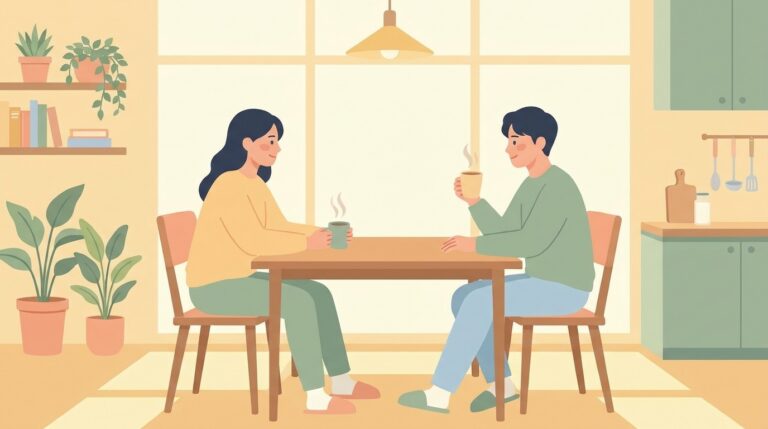
Finding Warmth in Solitude: How Korea Reconnects Isolated Youth and Builds New Communities
Phase 1: Empathy (Immersive Storytelling Opening)
안녕하세요! 매일한글 에디터입니다. (Hello! I’m your Daily Hangul editor.)
Have you ever watched the K-drama Daily Dose of Sunshine (정신병동에도 아침이 와요) or felt that heavy, suffocating silence of coming home to a pitch-black studio apartment after a grueling day? In South Korea, where one-person households (1-in gagu) now exceed 40%, the rapid shift toward hyper-individualism has introduced deep social aches: eundun-hyeong oetori (은둔형 외톨이, socially withdrawn youth) and the quiet dread of godoksa (고독사, lonely death).
Many of our intermediate learners share a common frustration: “When discussing serious social concerns or comforting a Korean friend who is burning out, textbook phrases like ‘힘내세요’ (Cheer up) feel too shallow or even dismissive.” In Korean culture, true empathy is not about pushing someone forward; it is about gently standing beside them without judgment. Today, local governments and grassroots centers across Seoul are opening dedicated Youth Support Centers (고립·은둔 청년 지원센터), offering cozy communal kitchens, psychological counseling, and judgment-free workshops.
By mastering the nuanced B2-level language of modern care, community building, and psychological safety, you will connect with Korean speakers on a deeply personal, human level. This guide was crafted using authentic fieldwork, consultations with youth counselors, and feedback from hundreds of our intermediate students. Let’s take this meaningful step together.
Phase 2: Core Expressions (In-Depth Analysis)
1. 밥 한 끼 같이 먹어요 (Bap han kki gachi meogeoyo)
- Pronunciation: [Bap han kki ga-chi meo-geo-yo] (Sounds like Bahp hahn kkee gah-chee muh-guh-yo)
- Meaning: Literal: “Let’s eat a meal together” | Real Nuance: “You don’t have to carry your burdens alone; let’s reconnect over warm comfort food.”
- K-Culture Moment: In youth community centers, counselors never start with “What is wrong with you?” Instead, they softly say, “밥 한 끼 같이 먹어요” (Bap han kki gachi meogeoyo), drawing on Korea’s foundational belief that eating together turns strangers into sikgu (식구, family who shares meals).
- Editor’s Insight: In English, asking someone out for a meal can feel like an invitation to perform socially. In Korean, offering a warm bowl of rice (bap) is the supreme expression of protective affection. It signals zero expectations and pure solidarity.
- Situation Spectrum:
- Casual (Friends/Peers): 밥 한 끼 같이 먹자! (✅)
- Semi-formal (Community setting/Polite): 밥 한 끼 같이 먹어요. (✅)
- Strict Formal (Public speech): 함께 식사하시기를 권합니다. (⚠️ – lacks emotional warmth)
- 🤔 Think About It: Why does your home culture link food to meetings, and how does that compare to the Korean concept of bap-jeong (affection built through dining together)?
2. 한 걸음씩 천천히 나아가요 (Han georeumssik cheoncheonhi na-agayo)
- Pronunciation: [Han geo-reum-ssik cheon-cheon-hi na-a-ga-yo] (Sounds like Hahn guh-reum-sheek chuhn-chuhn-hee nah-ah-gah-yoh)
- Meaning: Literal: “Let’s step forward slowly one step at a time” | Real Nuance: “There is no rush to fix everything; healing and re-entering society is a step-by-step journey.”
- K-Culture Moment: Frequently uttered in modern healing variety shows and counseling scenes when a young adult steps outside their apartment room after months of isolation.
- Editor’s Insight: The suffix -ssik (-씩) emphasizes pacing each individual unit. It de-escalates the immense pressure of South Korea’s ppalli-ppalli (hurry-hurry) culture, validating the learner’s or friend’s emotional state.
- Situation Spectrum:
- Casual: 한 걸음씩 천천히 가자. (✅)
- Semi-formal: 한 걸음씩 천천히 나아가요. (✅)
- Formal: 한 걸음씩 천천히 나아갑시다. (✅)
- 🤔 Think About It: In competitive societies, pacing is often viewed as falling behind. How does acknowledging “small steps” foster psychological safety in language?
3. 곁에 있어 줄게요 (Gyeote isseo julgeyo)
- Pronunciation: [Gyeot-e is-seo jul-ge-yo] (Sounds like Gyuh-teh ees-suh jool-geh-yoh)
- Meaning: Literal: “I will stay by your side” | Real Nuance: “I am here with you without unsolicited advice or pressure.”
- K-Culture Moment: A hallmark phrase in Korean ballads and human dramas highlighting solidarity against loneliness (godok).
- Editor’s Insight: The auxiliary verb -eoju-da (-어주다) shows benevolent favor. Combining it with gyeot (곁, immediate physical and emotional proximity) promises steady presence, which is the strongest antidote to social withdrawal.
- Situation Spectrum:
- Casual: 곁에 있어 줄게. (✅)
- Semi-formal: 곁에 있어 줄게요. (✅)
- Formal: 늘 곁에서 힘이 되어 드리겠습니다. (✅)
- 🤔 Think About It: What sounds more comforting to you: someone offering advice on how to solve your loneliness, or someone promising simply to stay near?
Phase 3: Textbook Korean vs. Real Korean
Situation 1: Inquiring about a withdrawn friend’s emotional wellbeing
- 📖 Textbook Korean: 당신의 심리 상태는 어떻습니까? (Dangsin-ui simni sangtae-neun eotteoseumnikka? – “How is your psychological condition?”)
- 🗣️ Real Korean: 요즘 마음은 좀 어때요? 별일 없죠? (Yojeum ma-eum-eun jom eottaeyo? Byeol-il eoptjyo? – “How is your heart feeling these days? Everything going okay?”)
- 💡 Why it’s different: The pronoun “당신” (you) feels confrontational and clinical. Native speakers soften the check-in by asking about the ma-eum (heart/mind) and offering an easy out with byeol-il eoptjyo (nothing concerning, right?).
Situation 2: Inviting someone to an open community support center
- 📖 Textbook Korean: 정부 지원 프로그램 참여를 권장합니다. (Jeongbu jiwon peurogeuraem cham-yeo-reul gwonjanghamnida. – “I recommend participation in the government support program.”)
- 🗣️ Real Korean: 혼자 있기 적적할 때 편하게 차 한잔하러 와요. (Honja itgi jeokjeokhal ttae pyeonhage cha hanjan-hareo wayo. – “Whenever you feel empty or lonely, feel free to drop by for tea.”)
- 💡 Why it’s different: Bureaucratic phrasing intimidates those struggling with anxiety. Words like jeokjeokhadal (적적하다, feeling lonely or quietly secluded) normalize vulnerability and frame the support center as an inviting tearoom.
Phase 4: K-Culture Deep Dive & Non-Verbal Manners
4-1. Nunchi (눈치) & Gentle Gestures
When interacting in community spaces designed to prevent isolation, traditional aggressive enthusiasm can backfire. Nunchi (social intuition) here means lowering emotional intensity.
* Eye-Line Softening: Maintain an open angle rather than laser-focused direct eye contact, which can feel interrogative. Direct your gaze toward tea cups or shared craft materials.
* Subtle Nodding (끄덕임): Use slow, muted head nods while listening, signaling validation without interrupting the speaker’s fragile flow.
* Proximity Etiquette: Respect the “one-mat” personal bubble. Sit at a 90-degree angle rather than directly facing opposite someone at a table.
4-2. Cultural Code: From Biological Family to “Sikgu 2.0”
Traditionally, Korean safety nets were built almost entirely on bloodlines (hyeoryeon, 혈연) and hometown networks (jiyeon, 지연). But with millions of young adults migrating to solo goshiwons or one-room studios in Seoul, that safety net broke, leading to the heartbreaking crisis of godoksa (unattended deaths).
In response, Korea is actively rewriting the definition of family. Initiatives like 청년밥상 (Youth Dining Tables) and 소셜 다이닝 (Social Dining) redefine sikgu not by shared DNA, but by shared physical presence. By cooking seasonal doenjang-jjigae or peeling mandarins together, young people form low-pressure emotional safety zones.
Phase 5: Real-World Roleplay Scenario
Setting: Seoul Youth Support Center (서울시 고립·은둔 청년 지원센터) — A sunlit lounge with soft indie acoustic music, filled with plants, bookshelves, and a cozy kitchen island.
Character: Facilitator Min-ji (민지), a warm counselor in her early 30s who guides re-entry programs.
- Turn 1 (Min-ji): 어서 와요! 바깥 날씨가 많이 쌀쌀하죠? 따뜻한 보리차 한잔 드릴까요? (Eoseo wayo! Bakkat nalssiga mani ssalssalhajyo? Ttatteutan boricha hanjan deurilkkayo?)
🎭 Hands you a warm ceramic mug with two hands and smiles reassuringly.
Welcome! It is quite chilly outside, isn’t it? May I offer you a warm cup of barley tea? - Turn 2 (You): 네, 감사합니다. 센터 방문은 처음이라 조금 긴장되네요. (Ne, gamsahamnida. Senteo bangmun-eun cheo-eum-ira jogeum ginjangdoeneyo.)
🎭 Holding the mug with both hands, taking a gentle sip.
Yes, thank you. This is my first time visiting the center, so I feel a bit nervous. - Turn 3 (Min-ji): 당연히 낯설 수 있죠. 그래도 이렇게 용기 내서 문을 열고 와주셔서 정말 기뻐요. (Dang-yeonhi natseol su itjyo. Geuraedo ireoke yonggi naeseo mun-eul yeolgo wajusyeoseo jeongmal gippeoyo.)
🎭 Lightly nods, keeping comfortable distance.
Of course it feels unfamiliar. Still, I am so glad you found the courage to open our door and come in. - Turn 4 (You): 혼자 있는 시간이 길어지다 보니 사람 만나는 게 점점 두려웠거든요. (Honja inneun sigani gireojida boni saram mannaneun ge jeomjeom duryeowotgeodeunyo.)
🎭 Looking down slightly, voice quiet but honest.
Since I spent so much time alone, meeting people gradually became frightening. - Turn 5 (Min-ji): 그런 마음 충분히 이해해요. 여기선 아무 말 없이 그냥 책만 읽다 가셔도 괜찮아요. (Geureon ma-eum chungbunhi ihaehaeyo. Yeogiseon amu mal eopsi geunyang chaekman ikda gasyeodo gwaenchannayo.)
🎭 Warmly gesturing toward the reading corner.
I completely understand that feeling. Here, you are welcome to just read books in silence without saying a word. - Turn 6 (You): 정말 그래도 되나요? 무언가를 억지로 해야 하는 줄 알았어요. (Jeongmal geuraedo doenayo? Mueon-ga-reul eokjiro haeya haneun jul arasseoyo.)
🎭 Shoulders noticeably relaxing.
Is that really okay? I thought I would be forced to participate in something. - Turn 7 (Min-ji): 전혀요! 오늘은 가볍게 둘러보고, 다음 주에 소셜 다이닝에서 밥 한 끼 같이 먹어요. (Jeonhyeoyo! Oneul-eun gabyeopge dulleobogo, da-eum jue sosyeol daining-eseo bap han kki gachi meogeoyo.)
🎭 Handing over a brochure with a soft smile.
Not at all! Just look around today, and next week, let’s share a warm meal together at our social dining table. - Turn 8 (You): 네, 부담 갖지 않고 한 걸음씩 천천히 나아가 볼게요. (Ne, budam gatji anko han georeumssik cheoncheonhi na-aga bolgeyo.)
🎭 Smiling gently and bowing your head politely.
Yes, without feeling burdened, I will try moving forward one small step at a time.
🔀 Interactive Branching Choice
Min-ji asks if you would like to join the weekly woodwork craft session tomorrow.
* Option A: “네, 부담 갖지 않고 한번 참관만 해볼게요.” (Ne, budam gatji anko hanbeon chamgwanman haebolgeyo. – I will just observe without pressure.)
👉 Best Choice! Shows personal agency while embracing the center’s no-pressure ethos.
* Option B: “아니요, 저는 사람들과 어울리는 게 싫습니다.” (Aniyo, jeoneun saramdeulgwa eoullineun ge silsumnida. – No, I dislike mingling with people.)
👉 Bad Choice! Overly blunt and closes the door on the counselor’s supportive offer.
* Option C: “매일 나와서 모든 프로그램에 다 참여하겠습니다!” (Maeil nawaseo modeun peurogeuraeme da cham-yeohagessumnida! – I will come every day and join every program!)
👉 Risk Choice! Setting unrealistically intense expectations can trigger rapid emotional burnout.
Phase 6: 10-Second Emotion Shadowing Drill
Read aloud along the slash marks (/), matching the emotional tags:
- [🌿 따뜻하고 조심스럽게 / Warm & Gentle Presence]
혼자 있기 적적할 때 / 언제든 편하게 / 놀러 와요.
(Honja itgi jeokjeokhal ttae / eonjedeun pyeonhage / nolleo wayo.)
Whenever you feel isolated or down, drop by anytime without pressure. -
[🌱 안도하며 결심하듯 / Relieved & Encouraged]
조급해하지 않고 / 한 걸음씩 / 천천히 나아가 볼게요.
(Jogeup-hae-haji anko / han georeumssik / cheoncheonhi na-aga bolgeyo.)
Without feeling rushed, I will try stepping forward one step at a time. -
[🤝 진심 어린 연대의 어조 / Deep, Unwavering Solidarity]
아무것도 증명하지 않아도 돼요. / 그냥 곁에 있어 줄게요.
(Amugeotdo jeungmyeonghaji anado dwaeyo. / Geunyang gyeote isseo julgeyo.)
You don’t need to prove anything. I will simply stay right by your side.
Phase 7: K-Culture Mini Dictionary
- 고독사 (Godoksa): Unattended/Lonely Death. The tragic social phenomenon where a person living alone passes away unnoticed. Korea’s prevention policies focus on creating frequent social touchpoints.
- 은둔형 외톨이 (Eundun-hyeong oetori): Socially withdrawn individuals (often compared to Japanese hikikomori). In modern Korea, youth centers approach this not as a character flaw, but as a systemic symptom of hyper-competition.
- 밥정 (Bap-jeong): Affection forged over meals. The unique emotional bond cultivated through the recurring ritual of cooking, dining, and sharing side dishes together.
- 소셜 다이닝 (Social Dining): A community trend in urban Korea where single households assemble at shared neighborhood kitchens to cook and dine, combating social isolation.
Phase 8: Traveler & Local Survival Kit
Survival Expressions TOP 3
- 혹시 잠시 쉬어갈 수 있을까요? (Hoksi jamsi swieogal su isseulkkayo?)
- Pro Tip: Use this in local community hubs or youth center cafes when you need a quiet recharge space.
- 도움이 필요하면 언제든 말씀해 주세요. (Doumi piryohamyeon eonjedeun malsseumhae juseyo.)
- Pro Tip: The gold standard for expressing voluntary, non-intrusive support to colleagues or neighbors.
- 마음 써 주셔서 진심으로 감사해요. (Ma-eum sseo jusyeoseo jinsim-euro gamsahaeyo.)
- Pro Tip: Expresses deep appreciation for someone’s emotional consideration (ma-eum sseuda).
Editor’s Travel Note
If you are spending an extended period in Seoul and feel overwhelmed by loneliness, open your 네이버 지도 앱 다운로드 and search for 청년이음센터 (Youth Connection Centers) or 서울시 청년센터 (Seoul Youth Centers). Spaces such as the Mapo or Gwanak youth centers offer free co-working desks, quiet healing lounges, and zero-barrier cultural gatherings for residents and foreigners alike.
Phase 9: “One Step Deeper” (Reflective Question)
Korea’s transformation from a traditional collective agrarian society to an ultra-dense, solitary metropolis has created a unique psychological paradox: we are surrounded by millions of people on the subway, yet feel completely cut off. The rise of youth support centers signifies that community is no longer an obligation inherited by birth, but an intentional sanctuary chosen by individuals. Healing begins when we replace the societal mandate to achieve (seong-gong, 성공) with the permission to simply breathe together.
💬 Your Turn: Have you ever experienced a moment when a simple, warm meal changed your entire emotional day? Share your thoughts in the comments below!
Phase 10: FAQ & Common Mistakes
Q: Can foreigners visit or receive assistance from local Korean youth centers?
A: Yes! Most municipal youth centers (서울시 청년센터) are open public facilities. Anyone can utilize their open lounges, library corners, and community events, though clinical psychological counseling subsidies may require local alien registration.
Q: Isn’t asking “밥 먹었어요?” just a casual greeting like “How are you?”
A: While “밥 먹었어요?” often acts as an everyday greeting, contextual cues change its weight. In a support center or deep conversation, pairing it with “밥 한 끼 같이 먹어요” is an earnest invitation to build emotional trust.
Q: How do I express encouragement without sounding toxic or dismissive?
A: Avoid commanding “힘내세요!” (Cheer up!) or “열심히 사세요!” (Work hard!). Instead, validate their current exhaustion with “그동안 많이 지쳤죠? 천천히 쉬어가도 괜찮아요” (You must have been exhausted, right? It’s okay to take a slow rest).
🚨 Common Mistakes Warning Board
- Mistake 1: Using “당신” (Dangsin) when trying to express personal concern.
- Correct Action: Drop the pronoun entirely or address them by title/name: “민지 씨, 요즘 마음은 좀 어때요?”
- Mistake 2: Telling a withdrawn person “왜 방에만 있어요? 나오세요!” (Why are you only in your room? Come out!).
- Correct Action: Respect their pace: “나오고 싶을 때 언제든 연락해요. 기다릴게요” (Reach out whenever you feel like coming out. I’ll be waiting).
- Mistake 3: Assuming godoksa only affects elderly people.
- Correct Action: Youth solitary death (cheong-nyeon godoksa) is an urgent social topic in Korea; refer to both demographics with sensitive, dignified phrasing.
Phase 11: Action Missions & K-Culture Challenge
- Bronze Level: Record yourself speaking the three lines from Phase 6, paying close attention to the pause markers (
/). - Silver Level: Write a supportive Korean comment on an Instagram or YouTube reel regarding youth mental health using: “한 걸음씩 천천히 나아가요.”
- Gold Level: Visit a local neighborhood community cafe, purchase a drink, and thank the host using: “편하게 쉴 수 있는 공간을 마련해 주셔서 감사해요.”
🎮 K-Culture Mission: Watch an episode of a healing K-drama (such as My Mister or Daily Dose of Sunshine). Identify the moment characters share food in silence, and notice how body language conveys comfort.
Phase 12: Interactive Quiz Challenge
1. Situational Judgment: Your Korean language exchange partner has been skipping classes and confesses they feel overwhelmed by job hunting and isolation. What is the most empathetic B2 response?
* (A) 빨리 자격증을 더 따서 취업에 성공하세요!
* (B) 그동안 마음고생 많았죠? 우리 부담 없이 밥 한 끼 같이 먹어요.
* (C) 왜 그렇게 나약한 생각을 하는지 이해할 수 없어요.
2. Fill-in-the-Blank: Choose the phrase that best completes the center counselor’s motto:
“조급해하지 말고 우리 함께 [ ______ ] 천천히 나아가요.”
* (A) 단숨에 (at one breath)
* (B) 억지로 (by force)
* (C) 한 걸음씩 (one step at a time)
3. True or False Cultural Check:
In Korean support centers, social re-entry programs always force participants to introduce themselves and engage in public speaking on day one. [ True / False ]
Click to reveal answers & explanations!
-
Answer: (B)
Explanation: Option (B) validates the emotional exhaustion (ma-eum-gosaeng) and extends a pressure-free invitation to connect over a meal. Option (A) reinforces systemic stress, and (C) is openly judgmental. -
Answer: (C) 한 걸음씩
Explanation: “한 걸음씩” (step by step) embodies the healthy, step-by-step re-entry philosophy championed by youth centers. -
Answer: False
Explanation: Modern youth isolation programs emphasize “zero-pressure participation.” Visitors are permitted to sit quietly, read, or enjoy snacks without any forced socialization until they feel ready.







