

Celebrating 100 Days of Life: The Heartfelt Culture of Korean Baek-il Rice Cakes
Phase 1: Empathy (Story-Driven Opening)
안녕하세요! 매일한글 에디터입니다. (Hello! This is your Daily Hangul Editor.)
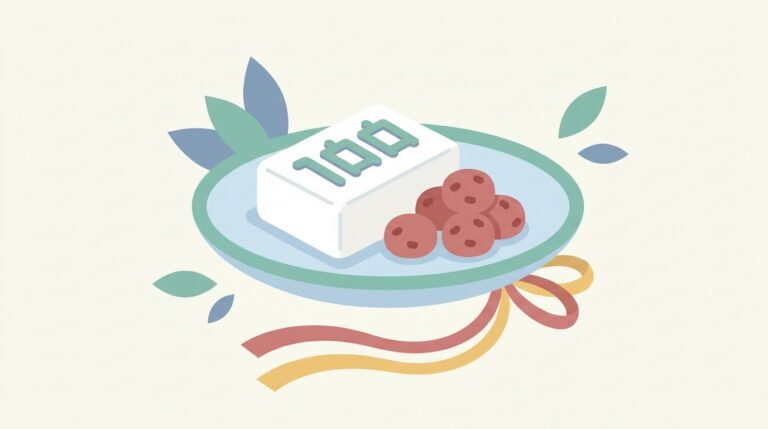
Imagine this scene: You are sitting at your desk in a bustling Seoul office or relaxing in your apartment on a Tuesday morning. Suddenly, a smiling colleague or neighbor gently knocks and hands you a small, pastel-colored gift box tied with traditional twine. Inside rests a snowy white cube of steamed rice cake (Baekseolgi) alongside several round, reddish cakes dusted with toasted powder (Susu-patteok). A small sticker shows a chubby-cheeked newborn with the words “지호의 백일을 축하해 주셔서 감사합니다” (Thank you for celebrating Jiho’s 100th day).
Panic kicks in: Is it a birthday? Do I need to buy a gift right now? What am I supposed to say?
Take a deep breath! You have just encountered one of Korea’s most cherished family milestones: 백일 (Baek-il, the 100th-Day Celebration). Historically, harsh winters and infant illnesses made the first 100 days of life precarious. Reaching the hundredth day was a triumphant survival milestone. To celebrate, parents steamed white rice cakes and shared them with at least 100 people to grant the child health, purity, and longevity. Today, even in modern high-tech Korea, neighbors, friends, and coworkers continue this warm ritual.
By mastering a few heartfelt phrases and understanding the symbolism of these treats, you will transform an awkward encounter into an unforgettable moment of cross-cultural bonding. This guide is crafted directly from our classroom experiences helping international residents navigate Korean community milestones with total confidence.
Phase 2: In-Depth Analysis of 3 Key Expressions
1. 백일 축하드려요! 건강하게 무럭무럭 자라길 바랄게요. (Baegil chukhadeuryeoyo! Geonganghage mureokmureok jaragil baralgeyo.)
- Pronunciation: Baek-il choo-ka-deu-ryeo-yo! Geon-gang-ha-ge moo-reok-moo-reok ja-ra-gil ba-ral-ge-yo. (Sounds like: bake-eel chew-car-dew-ryuh-yo, with moo-reok-moo-reok rolling smoothly off your tongue).
- Meaning:
- Literal: “Congratulations on the 100th day! I hope [the baby] grows healthily and vigorously.”
- Nuance: The gold-standard blessing for a new baby. It pairs polite congratulation with a tender wish for steady, vibrant growth.
- K-Culture Moment: You will hear this in slice-of-life K-dramas (like Hospital Playlist or Reply 1988) whenever a colleague hands out treats after parental leave.
- Editor’s Insight: The word 무럭무럭 (mureokmureok) is a vivid Korean mimetic adverb (의태어) depicting a young plant shooting upward after fresh spring rain. Koreans love using sensory words when expressing affection for infants.
- Situation Spectrum: Casual: ⚠️ (Use 백일 축하해! with close friends) | Semi-formal: ✅ | Formal: ✅
- 🤔 Think About It: In many Western cultures, major baby parties happen before birth (like baby showers). Why does Korean tradition prioritize post-birth survival markers like the 100th day and 1st birthday?
2. 떡 너무 맛있게 잘 먹겠습니다. (Tteok neomu mas-itge jal meokgetseumnida.)
- Pronunciation: Tteok neo-moo ma-sit-ge jal meok-get-seum-ni-da. (Pronounce tteok with a crisp, popped “t” sound, not a soft “d”).
- Meaning:
- Literal: “I will eat the rice cake very deliciously.”
- Nuance: “Thank you so much for the delicious rice cake; I will truly enjoy it!”
- K-Culture Moment: Used whenever anyone in a Korean workplace or neighborhood shares celebration food—such as opening a new shop, moving in, or celebrating a baby.
- Editor’s Insight: While standard textbook Korean teaches 잘 먹겠습니다 (Thank you for the meal), adding 너무 맛있게 elevates the recipient’s gratitude. In Korean folk belief, savoring the Baek-il cake with delight actively transfers vitality and good fortune back to the baby.
- Situation Spectrum: Casual: ⚠️ (잘 먹을게!) | Semi-formal: ✅ | Formal: ✅
- 🤔 Think About It: Notice how Korean politeness frequently focuses on appreciating food that someone gave you, linking communal dining directly to mutual respect.
3. 아기가 엄마(아빠) 쏙 빼닮았네요! (Agiga eomma(appa) ssok ppaedalmanneyo!)
- Pronunciation: A-gi-ga eom-ma(ap-pa) ssok ppae-dal-man-ne-yo. (Pronounce ssok like popping a wine cork: an energetic burst).
- Meaning:
- Literal: “The baby looks completely plucked out of mom (dad)!”
- Nuance: “The baby is the spitting image of you!”
- K-Culture Moment: A staple phrase on Korean family reality shows like The Return of Superman whenever guests coo over baby photos.
- Editor’s Insight: 쏙 (ssok) expresses effortless, snug extraction. Saying a child 쏙 빼닮았다 means they inherited the absolute best likeness of their parent. It is the ultimate compliment to a new Korean parent.
- Situation Spectrum: Casual: ✅ | Semi-formal: ✅ | Formal: ⚠️ (In very stiff corporate environments, say 부모님을 많이 닮았네요 instead).
- 🤔 Think About It: Why is highlighting physical resemblance to parents considered one of the highest compliments in family-centric societies?
Phase 3: Textbook Korean vs. Real-World Korean
Scenario 1: Acknowledging the 100th-Day Milestone
- 📖 교과서 한국어 (Textbook): 아기의 백일을 진심으로 축하합니다. (Agiui baegireul jinsimeuro chukhahamnida. – “I sincerely congratulate your baby’s 100th day.”)
- 🗣️ 진짜 한국어 (Real-World): 벌써 백일이에요? 시간 진짜 빠르네요! 축하드려요! (Beolsseo baegirieyo? Sigan jinjja ppareuneyo! Chukhadeuryeoyo! – “It’s already the 100th day? Time flies so fast! Huge congratulations!”)
- 💡 왜 다를까? (Why the difference?): Textbook phrasing sounds like a scripted greeting card. Native speakers show empathy by expressing awe at how fast time flies (벌써 백일이에요?), which immediately validates the parents’ hard work during those sleepless first months.
Scenario 2: Wishing the Child Good Health
- 📖 교과서 한국어 (Textbook): 아동의 건강한 성장을 기원합니다. (Adong-ui geonganghan seongjangeul giwonhamnida. – “I wish for the child’s healthy growth.”)
- 🗣️ 진짜 한국어 (Real-World): 아프지 말고 씩씩하게 자랐으면 좋겠어요! (Apeuji malgo ssikssikhage jarasseumyeon jokesseoyo! – “I hope the little one stays healthy and grows up brave and strong!”)
- 💡 왜 다를까? (Why the difference?): Terms like 기원합니다 (I pray/wish) are reserved for formal corporate slogans. Real Koreans use warm, concrete wishes like 아프지 말고 (don’t get sick) and 씩씩하게 (spiritedly/bravely).
Phase 4: K-Culture Deep Dive & Non-Verbal Manners
4-1. 눈치 (Nunchi) & Body Language Etiquette
- The Two-Handed Reception: When someone hands you the small cake box, never snatch it with one hand. Always extend both hands with a slight 15-degree head bow. This acknowledges the sanctity of the blessing.
- The “Never Return an Empty Dish” Rule: If a Korean neighbor brings homemade Baek-il treats on an actual ceramic plate rather than in a disposable box, never return the plate empty (빈 그릇 돌려주지 않기). In traditional folklore, returning an empty plate invites poverty to the baby. Koreans return the plate loaded with fruit, nuts, or a small gift.
- Eye Contact and Photo Reaction: Parents will almost certainly show you a smartphone photo of the baby wrapped in traditional silk or sitting before a celebratory banquet table. Lean in, smile warmly, and gently marvel with “어머나!” (Oh my goodness!).
4-2. Cultural Code Analysis: The Colors of Protection
- 백설기 (Baekseolgi – White Steamed Rice Cake): Made of pure white rice flour and sugar. The pure white color symbolizes purity, innocence, and living a clean life up to 100 years without illness (무병장수, Mubyeongjangsu). Often, the Chinese character 百 (hundred) is stenciled on top with cocoa or mugwort powder.
- 수수팥떡 (Susu-patteok – Sorghum Red Bean Cake): These chewy sorghum balls are coated in coarse, reddish-brown adzuki bean powder. In ancient Korean folk belief, ghosts and bad spirits (액운, Aek-un) despise the color red. Serving this cake protects the child from misfortune until their tenth year.
Phase 5: Real-Life Roleplay Scenario
Setting: The sunlit office pantry of a design agency in Mapo-gu, Seoul. Freshly brewed coffee fills the air.
Characters: Minji (민지), an approachable senior designer returning from maternity leave, and You (학습자).
- 민지: [😊 두 손으로 예쁜 떡 상자를 건네며] 에디터 씨, 오늘 우리 지호 백일이라 떡 좀 돌려요! (Editor-ssi, oneul uri Jiho baegirira tteok jom dollyeoyo! / Editor, today is my baby Jiho’s 100th day, so I’m sharing some rice cakes around!)
- You: [😲 깜짝 놀라며 두 손으로 공손히 받으며] 와, 벌써 백일이에요? 민지 씨, 정말 축하드려요! (Wa, beolsseo baegirieyo? Minji-ssi, jeongmal chukhadeuryeoyo! / Wow, it’s already the 100th day? Minji, congratulations so much!)
- 민지: [🥰 수줍게 웃으며] 시간 참 빠르죠? 하얀 백설기랑 수수팥떡 넣었으니까 꼭 맛있게 드세요. (Sigan cham ppareujo? Hayan baekseolgirang susupat-tteok neoeosseunikka kkok mas-itge deuseyo. / Time flies, right? I packed white seolgi and red bean sorghum cakes, so please enjoy them.)
- You: [😋 상자를 살짝 열어보며 감탄하듯] 우와, 백설기 위에 ‘百’ 자가 너무 귀여워요! 떡 맛있게 잘 먹겠습니다. (Uwa, baekseolgi wie ‘Baek’ jaga neomu gwiyeowoyo! Tteok mas-itge jal meokgetseumnida. / Wow, the character ‘Baek’ on the white rice cake is so cute! Thank you, I will really enjoy it.)
- 민지: [📱 신나서 스마트폰 사진첩을 열며] 어제 백일상 차리고 찍은 건데, 우리 지호 사진 한번 보실래요? (Eoje baegilsang charigo jjigeun geonde, uri Jiho sajin hanbeon bosillaeyo? / We set up the 100-day table yesterday. Want to see a photo of Jiho?)
- You: [😍 화면을 다정하게 들여다보며] 세상에! 아기가 민지 씨 눈매를 쏙 빼닮았네요! 볼도 너무 통통하고 귀여워요. (Sesange! Agiga Minji-ssi nunmaereul ssok ppaedalmanneyo! Boldo neomu tongtonghago gwiyeowoyo. / Oh my goodness! The baby’s eyes look identical to yours, Minji! Those chubby cheeks are adorable.)
- 민지: [😆 활짝 웃으며 감동한 목소리로] 다들 아빠 닮았다고 했는데, 저 닮았나요? 오늘 들은 말 중에 제일 기분 좋네요! (Dadeul appa dalmatdago haenneunde, jeo dalmannayo? Oneul deureun mal junge jeil gibun jonneyo! / Everyone kept saying he looks like his dad, but you think he looks like me? That’s the happiest thing I’ve heard all day!)
- You: [🙏 두 손을 가슴에 모으며 따뜻하게] 지호가 앞으로 아프지 말고 건강하게 무럭무럭 자라길 바랄게요! (Jihoga apeuro apeuji malgo geonganghage mureokmureok jaragil baralgeyo! / I hope Jiho never gets sick and grows up healthy and strong!)
🔀 Interactive Choice Point
What would you say if Minji offers you an extra box to take home to your roommate?
- Choice A (Best): “감사합니다! 룸메이트한테도 지호 백일 이야기하면서 맛있게 나눠 먹을게요!” (Thank you! I will share it with my roommate while telling them all about Jiho’s 100th day!)
- Feedback (Best): Perfect! Baek-il cakes are meant to be shared with many people. Telling the parent you will share the story spreads the blessing.
- Choice B (Bad): “아니요, 저 탄수화물 다이어트 중이라서 한 개도 다 못 먹어요.” (No, I’m on a low-carb diet, so I can’t even finish one.)
- Feedback (Bad): Ouch! Even if true, bluntly rejecting symbolic celebration food dampens the joy. Accept graciously and share it with someone else later.
- Choice C (Risk): “감사해요. 그런데 제가 답례로 축의금을 얼마 드려야 하나요?” (Thanks. But how much congratulatory money should I give in return?)
- Feedback (Risk): Awkward. Casual 100-day tteok distribution among coworkers or neighbors does not obligate a cash gift. Asking about money makes things overly formal.
Phase 6: 10-Second Emotion Shadowing Drill
Read these sentences aloud, pausing briefly at each slash (/) while leaning into the emotion cue:
- [🎉 진심 어린 축하와 놀라움 / Genuine Wonder & Delight]
벌써 백일이에요? / 시간 진짜 빠르네요! / 진심으로 축하드려요!
(Beolsseo baegirieyo? / Sigan jinjja ppareuneyo! / Jinsimeuro chukhadeuryeoyo!) -
[😋 진솔한 감사와 식욕 / Heartfelt Food Gratitude]
떡 너무 / 맛있게 잘 먹겠습니다! / 지호 덕분에 / 입이 호강하네요!
(Tteok neomu / mas-itge jal meokgetseumnida! / Jiho deokbune / ibi hoganghaneyo!) -
[😍 사랑스러운 칭찬 / Adoring Praise]
어머나! / 아기가 엄마를 / 쏙 빼닮아서 / 인물이 훤하네요!
(Eomeona! / Agiga eommareul / ssok ppaedalmaseo / inmuri hwonhaneyo!) -
[🌱 따뜻한 덕담 / Gentle Lifelong Blessing]
아프지 말고 / 씩씩하게, / 무럭무럭 자라렴!
(Apeuji malgo / ssikssikhage, / mureokmureok jararyeom!)
Phase 7: K-Culture Mini Dictionary
- 백설기 (Baekseolgi): Traditional snow-white steamed rice cake made from non-glutinous rice flour. Represents innocence, purity, and a long life free from disease.
- 수수팥떡 (Susu-patteok): Sorghum ball cakes coated with red bean powder. According to Korean folklore, red beans repel mischievous spirits (귀신) from vulnerable infants.
- 백일상 (Baegilsang): The ceremonial table set up on the 100th day, filled with fruits, rice cakes, clean water, and yarn (symbolizing longevity) for commemorative photos.
- 품앗이 (Pum-asi): Traditional Korean communal labor-sharing system. Distributing rice cakes is a culinary relic of Pum-asi, where the entire village collectively nurtured each child.
Phase 8: Traveler’s & Resident’s Survival Kit
Survival Expressions Top 3
- 축하드려요! (Chukhadeuryeoyo! / Congratulations!)
- Pro Tip: Always accompany this with a slight bow and two hands touching your midriff.
- 맛있게 잘 먹겠습니다. (Mas-itge jal meokgetseumnida. / I will enjoy this treat.)
- Pro Tip: Say this immediately upon receiving the box before opening it.
- 사진 보여주세요! (Sajin boyeojuseyo! / Please show me a picture!)
- Pro Tip: The easiest way to become an instant favorite with any Korean parent.
Editor’s Neighborhood Note
Craving fresh, authentic Korean rice cakes? Skip the Western chain bakeries and look for a neighborhood mill called a 방앗간 (Bang-at-gan) or 떡집 (Tteok-jip). To find local hidden gems with morning-steamed rice cakes, open your map and consult the Naver Map app installation page to search for “동네 떡집” (neighborhood rice cake shop). Most traditional mills accept local credit cards and cash, and early morning (8:00 AM – 10:00 AM) is when the cakes are delightfully warm!
Phase 9: “One Step Deeper” (Cultural Reflection)
In Western individualist frameworks, child-rearing is often viewed as a nuclear family’s private endeavor. In Korea, however, historical harshness produced a collective social mindset known as 정 (Jeong). Sharing food is not merely an exchange of calories; it is an invisible contract of mutual care. When parents hand you a Baek-il rice cake, they are symbolically saying: “We kept this tiny life safe for 100 days; please help our community watch over them as they grow.” Taking a bite of that rice cake makes you a guardian in that child’s extended world.
💬 Your Turn: Have you ever received unexpected food from a neighbor, colleague, or landlord in Korea? How did you respond, and what did that interaction feel like? Share your experience in the comments below!
Phase 10: FAQ & Common Mistakes
Q: Do I need to buy an expensive gift or prepare cash when someone gives me a Baek-il rice cake?
A: No! Distributing Baek-il rice cakes at work or to neighbors is considered a pure act of sharing blessings (복을 나누는 것). You are not expected to give an envelope of money (축의금). A sincere verbal congratulation or a small cup of coffee in return later is more than enough.
Q: What should I do if I cannot eat rice cakes due to allergies or dietary restrictions?
A: Never decline the box outright at the moment of gifting! Accept the box graciously with two hands and say “축하드려요!” Later, you can quietly share the cakes with your roommates, friends, or other colleagues. The crucial cultural act is accepting the blessing.
Q: What is the difference between Baek-il (백일) and Dol (돌)?
A: Baek-il marks 100 days after birth and is traditionally a modest, home-centered celebration focused on health and sharing rice cakes. Dol (돌 or 돌잔치) marks the 1st birthday and is a much larger party where guests are invited to a banquet hall and the baby predicts their future through the Doljabi (돌잡이) fortune-telling ritual.
🚨 Common Mistakes Warning Board
- Mistake: Returning the empty plastic box or ceramic plate back to the parent without acknowledging it.
- Correct Action: Thank them warmly again: “떡 정말 맛있게 잘 먹었어요!” (The rice cake was so delicious!). If given on real dishware, return it with some fruit.
- Mistake: Saying the baby looks “small” or “fragile.”
- Correct Action: In traditional Korean culture, babies are praised for looking “healthy and spirited” (건강하고 씩씩하다). Avoid words like “weak” or “tiny.”
- Mistake: Snatching the cake box with one hand while continuing to type or look at your phone.
- Correct Action: Pivot your chair, make brief eye contact, and receive the gift using two hands.
Phase 11: Action Missions
- 🥉 Bronze Mission (Solo Drill): Practice the shadowing drill in Phase 6 in front of a mirror until the phrase “건강하게 무럭무럭 자라길 바랄게요!” rolls off your tongue in under 3 seconds.
- 🥈 Silver Mission (Community Connection): The next time a friend or online acquaintance posts about a newborn or a 100-day celebration, leave a comment in Korean: “벌써 백일이라니 축하해요! 아프지 말고 씩씩하게 자라길 바랄게요!”
- 🥇 Gold Mission (Real Encounter): Visit a local 떡집 (Tteok-jip) this week. Buy a piece of 백설기 and say to the shopkeeper: “백설기 하나 주세요. 맛있게 잘 먹겠습니다!”
- 🎮 K-Culture Mission: Watch an episode of a family K-drama or the reality show The Return of Superman (슈퍼맨이 돌아왔다). Spot whether the parents mention 백일 or show a traditional rice cake table!
Phase 12: Interactive Quiz Challenge
Test your cultural knowledge and language reflexes!
1. Situation Judgment
A coworker brings a box of Baek-il rice cakes to your desk. Which response is the most culturally thoughtful?
* A) “저는 다이어트 중이니 다른 사람 주세요.” (I’m on a diet, give it to someone else.)
* B) “벌써 백일이에요? 축하드려요! 떡 정말 맛있게 잘 먹겠습니다.”
* C) “이 떡 얼마짜리예요? 돈으로 드릴까요?” (How much is this cake? Should I pay you in cash?)
2. Fill in the Blank
Complete the classic blessing for a baby’s vigorous, healthy growth:
“아기가 아프지 말고 ________ 자라길 바랄게요!”
* A) 허겁지겁 (heogeop-jigeop)
* B) 무럭무럭 (mureok-mureok)
* C) 슬금슬금 (seulgeum-seulgeum)
3. True or False Cultural Quiz
- (T/F) In traditional Korean folk belief, the red bean powder on 수수팥떡 is intended to ward off bad luck and mischievous spirits from the child.
👉 Click to reveal answers & explanations!
- Answer: B
Explanation: Responding with wonder at the passage of time (벌써 백일이에요?) and thanking them for the food (맛있게 잘 먹겠습니다) is the ideal polite response. - Answer: B (무럭무럭)
Explanation: 무럭무럭 describes plants or children growing robustly and vigorously. (허겁지겁 means eating hurriedly; 슬금슬금 means sneaking around). - Answer: True (T)
Explanation: Red adzuki beans (팥) have been used for centuries in Korea to repel negative energies (액운) and protect vulnerable infants.







