

Phase 1: Empathy & Context (Story Opening)
안녕하세요! 매일한글 에디터입니다. (Hello! I’m your Daily Hangul editor.)
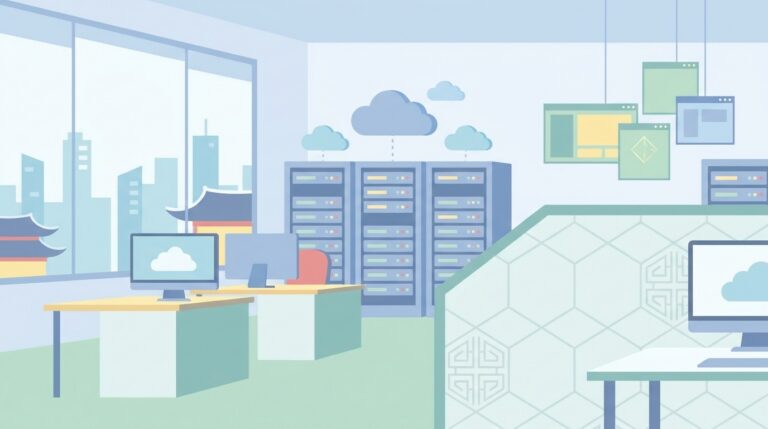
Picture this: You are sitting in an open-concept glass meeting room in Pangyo Techno Valley—South Korea’s Silicon Valley. Your team is preparing for a nationwide product drop. Perhaps it’s a high-profile K-pop merchandise flash sale or a seasonal ticket lottery where hundreds of thousands of eager fans will hit the checkout button at exactly 8:00 PM KST. Your product manager turns to you with wide eyes and asks, “트래픽 터지면 어떡하죠?” (Teuraepik teojimyeon eotteokhajyo? / “What if the server crashes from traffic?”).
At the same time, the chief financial officer keeps reminding everyone to cut cloud waste because AWS or GCP bills have gotten out of hand. You know the exact technical solution: trim the idle fat during normal days, configure aggressive auto-scaling policies, and let elasticity absorb the spike. But how do you express this balance fluently in Korean business meetings without sounding like a robotic machine translation?
Navigating Korean tech meetings requires balancing sharp technical concepts with culturally nuanced business idioms. Based on feedback from foreign software engineers working at Korean unicorns like Coupang, Toss, and Woowa Brothers, mastering this balance is what turns an outsider into a trusted tech lead. Let’s master the Korean expressions that will make you sound like a savvy, battle-tested engineer in Pangyo!
Phase 2: Top 3 Core Expressions Deep-Dive
1. 군살을 빼다 (Gunsal-eul ppaeda)
- Pronunciation: [Goon-sahl-eul bbae-da] (Sounds like “goon-sal” + “bae-da”, rhyming with shedding weight)
- Meaning: Literally “to lose belly flab/body fat”; idiomatically “to eliminate bloat, trim idle overhead, or optimize unnecessary cloud costs.”
- K-Culture Moment: You often hear this in Korean fitness vlogs, but in the corporate world of K-dramas like Start-Up, founders use it when pitching lean operational efficiency to venture capitalists.
- Editor’s Insight: Rather than using the dry textbook phrase 비용을 절감하다 (biyong-eul jeolgamhada – reduce costs), saying 인프라 군살을 빼다 (inpeura gunsal-eul ppaeda) shows you understand the operational nuance of eliminating zombie instances and idle databases.
- Situation Spectrum:
- Casual: ✅
- Semi-formal: ✅
- Formal: ✅
- 🤔 Think About It: Koreans naturally use physical body metaphors (군살 / flab, 손발이 맞다 / hands and feet match) to describe organizational efficiency. How does your native language personify technical architecture?
2. 트래픽이 몰리다 (Teuraepig-i mollida)
- Pronunciation: [Teu-rae-pig-ee mohl-lee-da] (Imagine traffic being driven into a single lane)
- Meaning: Literally “traffic flocks or clusters together”; idiomatically “a sudden surge in concurrent user traffic.”
- K-Culture Moment: When Melon or Interpark servers freeze during an IU or BTS concert ticket drop, netizens instantly flood social media shouting: “사람들이 한꺼번에 너무 몰렸어!” (Saramdeuri hankeobeone neomu mollyeosseo! / “Too many people rushed in at once!”).
- Editor’s Insight: The verb 몰리다 (mollida) carries the passive sense of being cornered or suddenly surrounded by a stampede. In system architecture, it perfectly describes traffic spikes that trigger auto-scaling alarms.
- Situation Spectrum:
- Casual: ✅
- Semi-formal: ✅
- Formal: ✅
- 🤔 Think About It: Notice the difference between passive verb forms in Korean engineering jargon compared to active transitives in Western tech dialogues.
3. 탄력적으로 확장하다 (Tallyeokjeog-euro hwakjanghada)
- Pronunciation: [Tahl-lyeok-jeog-eu-ro hwak-jang-ha-da] (Sounds like “tahl-ryuk” like an elastic rubber band)
- Meaning: Literally “to expand with elasticity”; idiomatically “to scale resources dynamically in real time.”
- K-Culture Moment: In Korean business discussions, anything adaptable—from flexible working hours (탄력근무제) to cloud auto-scaling (탄력적 인프라)—carries a modern, forward-thinking prestige.
- Editor’s Insight: 탄력 (tallyeok) implies bouncing back effortlessly after stress. Pairing this with 확장하다 (hwakjanghada – expand) communicates that your system will safely shrink back down once the traffic subsides, protecting company funds.
- Situation Spectrum:
- Casual: ⚠️ (Sounds a bit too formal for quick hallway chats)
- Semi-formal: ✅
- Formal: ✅
- 🤔 Think About It: Why is elasticity seen as a virtue in fast-paced Korean commercial settings?
Phase 3: Textbook Korean vs. Real Korean
Scenario 1: Addressing Server Overload During Peak Hours
- 📖 Textbook Korean: 트래픽이 급증하여 서버 용량을 늘려야 합니다. (Teuraepigi geupjeunghayeo seobeo yongryangeul neullyeoya hamnida. / “Traffic has surged rapidly, so we must increase server capacity.”)
- 🗣️ Real Korean: 트래픽 폭주해서 서버 터지기 전에 바로 오토스케일링 땡겨야 돼요. (Teuraepik pokjuhaseo seobeo teojigi jeone baro otoseukeilling ddaenggyeoya dwaeyo. / “Before the traffic surge blows up the server, we need to fire up auto-scaling right away.”)
- 💡 Why is it different? Engineers rarely use stiff Sino-Korean words like 급증 (geupjeung) in production crises. Instead, they say 폭주 (pokju – rampage/stampede) and refer to server crashes colloquially as 서버가 터지다 (seobeoga teojida – server exploding).
Scenario 2: Proposing Cost Optimization in a Sprint Review
- 📖 Textbook Korean: 불필요한 인프라 지출을 절감하는 방안을 검토합시다. (Bulpillyohan inpeura jichureul jeolgamhaneun bang-aneul geomtohapsida. / “Let us review a measure to reduce unnecessary infrastructure expenditure.”)
- 🗣️ Real Korean: 평소엔 군살 싹 빼두고, 피크 때만 탄력적으로 스케일아웃 하죠. (Pyeongso-en gunsal ssak ppaedugo, pikeu ttaeman tallyeokjeog-euro seukeil-aut hajo. / “Let’s keep it completely lean on ordinary days, and scale out elastically only during peak moments.”)
- 💡 Why is it different? Real Korean developers naturally weave established English cloud terms (스케일아웃 / scale-out, 피크 / peak) into streamlined idiomatic Korean phrases using crisp adverbs like 싹 (ssak – cleanly, completely).
Phase 4: K-Culture Deep-Dive & Non-Verbal Nuance
4-1. Nunchi & Professional Presence
When discussing budget cuts and server risks in Korean tech teams, non-verbal cues (눈치 / nunchi) are critical:
* The Head Tilt of Consideration: Never flatly say “비용이 너무 많이 나와요” (Biyongi neomu mani nawayo / “The bill is too high”), which sounds accusatory to the infrastructure team. Tilt your head slightly, tap your laptop touchpad, and frame it around collective efficiency: “군살을 조금만 더 뺄 수 있을 것 같아요” (Gunsaleul jogeumman deo ppael su isseul geot gatayo / “I think we could trim the fat just a little bit more”).
* The Reassuring Nod: When explaining auto-scaling limits to leadership who fear runaway billing costs, hold your hands palm down at chest level and make small downward motions. This physically signals, “We have automated boundaries; don’t worry about the bill exploding.”
4-2. The Cultural Reality: K-Pop Ticket Drops & Midnight Surges
South Korea operates on hyper-connected fiber and 5G infrastructure with zero tolerance for latency. Platforms like Coupang offer “Dawn Delivery” (새벽배송), meaning ordering traffic spikes every night between 11:30 PM and midnight. Similarly, ticketing for concerts on Interpark or Melon involves hundreds of thousands of users refreshing simultaneously at 20:00:00 KST.
If an engineering team over-provisions permanently, the burn rate triggers executive audits. If they under-provision, the brand gets roasted on trending community feeds within minutes. This high-wire balance has made “군살 없는 탄력적 아키텍처” (gunsal eomneun tallyeokjeok akitegcheo) the ultimate golden standard in Korean IT culture.
Phase 5: Real-World Roleplay Scenario
Setting: A 4:00 PM sprint review inside a sleek tech hub in Pangyo.
Characters:
* Minji (Tech Lead / 팀장): Experienced, cost-conscious, but terrified of downtime.
* Alex (Cloud DevOps Engineer – You): Pragmatic, skilled, proposing an automated elastic architecture.
- Minji: 알렉스 씨, 다음 주 플래시 세일 프로모션 준비는 잘 되어가나요? (Alex-ssi, da-eum ju peullaesi seil peuromosyeon junbineun jal doe-eoganayo? / “Alex, how are preparations going for next week’s flash sale promotion?”)
- Alex (You): 🎭 [Confidently looking at system dashboards] 네, 팀장님. 이번엔 평소 인프라 군살을 확실히 뺐습니다. (Ne, timjangnim. Ibeonen pyeongso inpeura gunsaleul hwaksilhi ppaessumnida. / “Yes, Team Lead. This time we have cleanly trimmed down our baseline infrastructure flab.”)
- Minji: 🎭 [Frowning with concern] 군살을 빼는 건 좋은데… 트래픽이 한꺼번에 몰리면 서버 터지는 거 아니에요? (Gunsaleul ppaeneun geon joeunde… teuraepigi hankeobeone mollimyeon seobeo teojineun geo anieyo? / “Trimming flab is great, but… if traffic rushes in all at once, won’t the servers blow up?”)
- Alex (You): 🎭 [Smiling gently with reassuring hand gesture] 걱정 안 하셔도 됩니다. 오토스케일링 정책을 훨씬 더 공격적으로 세팅해 뒀거든요. (Geokjeong an hasyeodo doemnida. Otoseukeilling jeongchaegeul hwolssin deo gonggyeokjeog-euro setinghae dweotgeodeunyo. / “You don’t need to worry. We configured our auto-scaling policy much more aggressively.”)
- Minji: 구체적으로 어떻게 대응되는데요? (Guchejeog-euro eotteoke dae-eungdoeneundeyo? / “How does it respond specifically?”)
- Alex (You): CPU 사용량이 60%를 넘으면 1분 만에 인스턴스가 탄력적으로 확장되도록 구성했습니다. (Sipi-yu sayongryang-i yuksip-peosenteureul neomeumyeon ilbun mane inseuteonseuga tallyeokjeog-euro hwakjangdoedorok guseonghaessumnida. / “If CPU utilization passes 60%, instances are configured to scale elastically within one minute.”)
- Minji: 🎭 [Nodding with relief] 아, 평소에는 비용을 아끼고 피크 때만 유연하게 늘어나는 구조군요? (A, pyeongso-eneun biyongeul akkigo pikeu ttaeman yuyeonhage neureonaneun gujogyunyo? / “Ah, so it stays cost-effective normally and expands flexibly only during peaks?”)
- Alex (You): 맞습니다. 이벤트 끝나면 바로 스케일인 되니까 비용 낭비도 전혀 없을 겁니다. (Masseumnida. Ibeonteu kkeutnamyeon baro seukeil-in doenikka biyong nangbido jeonhyeo eopseul geomnida. / “Exactly. As soon as the event ends, it scales in immediately, so there will be zero wasted cost.”)
🔀 Interactive Choice Point
Minji asks: “만약 결제 게이트웨이 쪽에서 병목 현상이 생기면 어떻게 대처할 건가요?” (What if a bottleneck occurs on the payment gateway side?)
- Choice A: “큐 시스템을 둬서 트래픽을 순차적으로 진입시키고, 인스턴스는 탄력적으로 유지하겠습니다.” (Best: Professional, technical, calm solution using asynchronous queueing.)
- Choice B: “서버 사양을 무조건 최고 스펙으로 미리 올려두면 해결됩니다.” (Risk: Fails cost optimization, shows disregard for lean spending.)
- Choice C: “결제 대행사 문제니까 우리 팀 소관은 아닙니다.” (Bad: Defensive, violates team solidarity and cultural ownership.)
Phase 6: 10-Second Emotion Shadowing Drill
Practice these natural rhythm pauses indicated by / along with the emotion markers:
[😌 Calm & Confident]
평소에는 / 인프라 군살을 빼고, / 피크 때는 / 탄력적으로 늘려야죠.
(Pyeongso-eneun / inpeura gunsaleul ppaego, / pikeu ttaeneun / tallyeokjeog-euro neullyeoyajo.)
“On ordinary days / we trim the infrastructure fat, / and during peaks / we expand elastically.”-
[🚨 Urgent & Decisive]
트래픽 몰리기 시작했습니다! / 지금 바로 / 오토스케일링 트리거 확인해 주세요!
(Teuraepik molligi sijakhaessumnida! / Jigeum baro / otoseukeilling teurigeo hwaginhae juseyo!)
“Traffic has started flooding in! / Right now / please check the auto-scaling trigger!” -
[🤝 Cooperative & Reassuring]
비용 최적화와 / 서비스 안정성 / 두 마리 토끼를 다 잡았습니다.
(Biyong choejeokhwa-wa / seobiseu anjeongseong / du mari tokkireul da jabassumnida.)
“We caught both rabbits: / cost optimization / and service reliability.”
Phase 7: K-Culture Mini Dictionary
| Korean Keyword (Hangul + Romanization) | Translation | Real-World Context & Usage |
|---|---|---|
| 1. 서버가 터지다 (seobeoga teojida) | The server crashes / blows up | Ubiquitous slang used by developers and general netizens whenever an app or web portal halts under massive connection loads. |
| 2. 동접자 (dongjeopja) | Concurrent users | Short for 동시 접속자 (dongsi jeopsokja). Tech leads ask: “최대 동접자 몇 명까지 버텨요?” (How many concurrent users can it hold?). |
| 3. 군살 빼기 (gunsal ppaegi) | Lean optimization / flab trimming | Applied to cloud architectures, team restructuring, or recurring operational costs. |
| 4. 대기조 (daegijo) | On-call standby squad | Engineers assigned to stay online with laptops open during midnight software releases or mega sales events. |
Phase 8: Tech Traveler & Expat Survival Kit
Top 3 On-Site Tech Phrases:
-
“서버 모니터링 대시보드 링크 좀 공유해 주시겠어요?”
(Seobeo moniteoring daesibodeu ringkeu jom gong-yuhae jusigesseoyo?)
“Could you share the server monitoring dashboard link?”
Pro Tip: Use this when onboarding onto a new engineering project in Korea to sound instantly proactive. -
“스펙업보다는 오토스케일링 설정을 먼저 확인해 보죠.”
(Seupek-eop-bodaneun otoseukeilling seoljeongeul meonjeo hwaginhae bojo.)
“Let’s check the auto-scaling settings first before vertically scaling server specs.”
Pro Tip: Shows you prioritize lean operating costs over quick-and-dirty budget burns. -
“장애 복구 완료되었습니다.”
(Jang-ae bokgu wanryodoeeossumnida.)
“Incident recovery is complete.”
Pro Tip: The exact sentence your team is waiting to see posted in your Slack incident response channel.
Editor’s Field Note:
If you are commuting to tech hubs like Pangyo, Yeouido, or Teheran-ro in Gangnam, standard Google Maps won’t offer dependable walking routes or live bus transit arrival times. Instead, be sure to set up your navigation using the official Naver Map application download to seamlessly navigate Korean public transit and locate developer-friendly cafes with high-speed Wi-Fi.
Phase 9: Stepping Deeper (Cultural Thought Reflection)
In Korean corporate philosophy, resourcefulness is deeply linked to the historical virtue of 알뜰함 (altteulham – thriftiness and wisdom in managing resources). While global tech discourse often celebrated “hyper-growth at all costs,” modern Korean companies celebrate engineers who respect capital efficiency without sacrificing resilience. A cloud architecture that sits lean on ordinary days yet expands decisively under pressure isn’t merely a technical choice; it reflects the team’s professional respect for shared resources and strategic foresight.
💬 Your Turn: How does your workplace culture handle the tension between cloud infrastructure cost and reliability? Share your team’s approach in the comments below!
Phase 10: FAQ & Common Pitfalls
Q: Can I use the term “오토스케일링” (Auto-scaling) in formal documentation?
A: Yes! In fact, Korean cloud engineers almost exclusively use the transliterated English term 오토스케일링 (otoseukeilling) or 자동 확장 (jadong hwakjang). Writing or saying 오토스케일링 is standard practice in sprint reviews, architecture diagrams, and client proposals.
Q: Is “서버가 터지다” (the server blew up) appropriate in an executive meeting?
A: In an informal dev huddle or Slack chat, it is universal. However, when reporting directly to C-level executives or outside clients, switch to formal terminology: 서비스 접속 장애가 발생했습니다 (seobiseu jeopsok jang-aega balsaenghaessumnida – A service connection failure has occurred).
Q: What is the difference between 스케일아웃 and 스케일업 in everyday Korean dev speech?
A: Just like in English, Korean engineers distinguish between 스케일아웃 (seukeil-aut / horizontal scaling) and 스케일업 (seukeil-eop / vertical scaling). Auto-scaling policies typically refer to 스케일아웃 (scale-out).
🚨 Common Mistakes Alert
- Mistake: Translating “trim the cost” literally as 비용을 자르다 (biyong-eul jareuda – to physically cut costs with scissors).
- Correct Action: Use 비용을 절감하다 (biyong-eul jeolgamhada) or idiomatically 인프라 군살을 빼다 (inpeura gunsaleul ppaeda).
- Mistake: Using excessive slang like 서버 터짐 (seobeo teojim) in official post-mortem incident documentation.
- Correct Action: Write 트래픽 폭주로 인한 인프라 가용성 장애 (teuraepik pokjuro inan inpeura gayongseong jang-ae – Infrastructure availability failure due to traffic congestion).
- Mistake: Confusing 탄력적 (tallyeokjeok – elastic/dynamic) with 유동적 (yudongjeok – fluid/variable).
- Correct Action: For automated infrastructure elasticity, stick with 탄력적인 인프라 (tallyeokjeogin inpeura).
Phase 11: Action Missions
- 🥉 Bronze Mission (Solo Shadowing): Read Phase 6 Shadowing Drill #1 out loud five times. Focus on the emotional shift from calm baseline to elastic expansion.
- 🥈 Silver Mission (Interactive Slack/SNS): Next time you log onto your dev workspace or social feed, write a status message using today’s keyword: “이번 분기 목표: 인프라 군살 빼기!” (This quarter’s goal: trimming infrastructure flab!“).
- 🥇 Gold Mission (Real-World Application): In your next standup or Korean language exchange, describe an architectural decision using 탄력적으로 확장하다 (tallyeokjeog-euro hwakjanghada).
- 🎮 K-Culture Mission: Watch an episode of a Korean workplace tech drama (like Start-Up or Search: WWW) and listen for how engineers describe sudden site traffic rushes (트래픽이 몰린다).
Phase 12: Interactive Quiz Challenge
Test your mastery of Korean cloud and infrastructure terms!
1. Situation Judgment: You need to tell your Korean tech manager that your microservices will automatically scale up when concert ticket buyers rush in. Which sentence is the most natural and professional?
* A) 우리 서버는 살이 쪄서 트래픽을 못 견뎌요.
* B) 트래픽이 몰려도 오토스케일링을 통해 탄력적으로 대응할 수 있습니다.
* C) 손님들이 오면 서버를 손으로 늘리겠습니다.
👉 Click to reveal Answer & Explanation
Answer: B
* Explanation: Option B cleanly combines “트래픽이 몰리다” (traffic surges) with “탄력적으로 대응하다” (respond elastically). Option A is humorous nonsense, and Option C implies manual resizing rather than automated cloud architecture!
2. Fill-in-the-Blank: Complete the sentence with the appropriate idiom for eliminating idle infrastructure bloat:
“불필요한 인스턴스를 정리해서 인프라의 ________을/를 확실하게 뺐습니다.”
👉 Click to reveal Answer & Explanation
Answer: 군살 (gunsal)
* Explanation: “군살을 빼다” is the exact idiom used by business-minded Korean engineers to describe trimming idle instances, unused storage buckets, and operational waste.
3. True or False: Korean tech companies consider using Konglish loanwords like “오토스케일링” (auto-scaling) and “모니터링” (monitoring) to be incorrect or poor Korean.
👉 Click to reveal Answer & Explanation
Answer: False
* Explanation: Tech loanwords are an organic and essential part of modern Korean engineering culture. Trying to invent non-standard pure Korean equivalents for standard cloud terminology often leads to confusion.







