

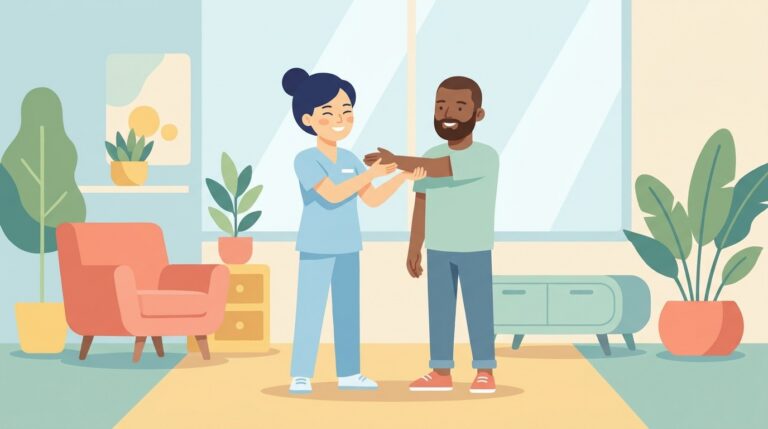
Surviving the Korean Orthopedic Clinic: Posture & Stretches for Sore Muscles
Phase 1: Empathy (Story Immersion Opening)
안녕하세요! 매일한글 에디터입니다.
Imagine this: You just spent an exhilarating week exploring Seoul—walking 20,000 steps along the hilly stone alleys of Bukchon Hanok Village, hunting for vintage clothes in Hongdae, and spending late nights gaming in a cozy PC bang. But the next morning, disaster strikes. You roll out of bed, and your ankle gives out with a sharp twinge. On top of that, your lower back feels like solid stone from hours of hunched sitting. You finally gather your courage to step into a local Korean orthopedic clinic (정형외과 – Jeonghyeong-oegwa).
As you lie on the treatment bed, the physical therapist gently adjusts your leg and gives you crucial life advice: “중간에 앉은 자세를 자주 바꾸고 한 시간마다 스트레칭을 해 주세요” (Change your sitting posture often and stretch every hour). Hearing medical instructions in Korean can feel daunting, but learning how to understand health advice and describe your symptoms unlocks real independence in Korea. This guide is built on real experiences of foreign residents who navigated Korean clinics, designed to make your next clinic visit stress-free!
Phase 2: Core Expressions Deep Dive
Here are the three most essential expressions you will hear and use at a Korean physical therapy room.
1. 중간에 앉은 자세를 자주 바꾸세요 (Junggan-e anjeun jase-reul jaju bakkuseyo)
- Pronunciation: Joong-gahn-eh ahn-jeun jah-seh-reul jah-joo bah-kkoo-seh-yo (Think of “jazz-eh” for posture, and “bah-kkoo” sounds like snapping two wooden blocks together).
- Meaning: “Change your sitting posture frequently in between.”
- Literal: In the middle, sitting posture often change, please.
- Nuance: A friendly, professional instruction reminding you not to freeze in one position while working or resting.
- K-Culture Moment: Seen in K-dramas like Hospital Playlist (슬기로운 의사생활) whenever compassionate doctors lecture desk-bound office workers.
- Editor’s Insight: The word 자세 (jase) means “posture” or “stance.” In Korea, having a “good posture” (바른 자세 – bareun jase) is considered an important daily habit taught from kindergarten.
- Situation Spectrum: Casual: ⚠️ (Use ‘자세 좀 바꿔’ with friends) | Semi-formal: ✅ | Formal: ✅
- 🤔 Think About It: Does your language have a distinct everyday word for “sitting posture,” or do you simply say “move around”? Notice how Korean emphasizes the specific form of the body.
2. 한 시간마다 스트레칭을 해 주세요 (Han siganmada seuteureching-eul hae juseyo)
- Pronunciation: Hahn she-gahn-mah-dah seu-teu-reh-ching-eul hae joo-seh-yo (Notice the English loanword “stretching” pronounced with a snappy Korean rhythm: seu-teu-reh-ching).
- Meaning: “Please do some stretching every hour.”
- Literal: Every one hour, stretching please do.
- Nuance: A warm, encouraging medical recommendation rather than a strict command.
- K-Culture Moment: You will hear this exact announcement on internal workplace monitors in Korean tech companies during afternoon wellness hours!
- Editor’s Insight: The particle -마다 (-mada) means “every” or “each” (e.g., 날마다 = every day, 시간마다 = every hour). It is an essential A2-level building block.
- Situation Spectrum: Casual: ⚠️ | Semi-formal: ✅ | Formal: ✅
- 🤔 Think About It: How does attaching “-해 주세요” soften an order into a supportive request of care?
3. 무리하지 마세요 (Murihaji maseyo)
- Pronunciation: Moo-ree-hah-jee mah-seh-yo (Rhymes gently with “spree” and “mah-seh-yo”).
- Meaning: “Don’t overdo it” or “Take it easy.”
- Literal: Do not perform excessive/unreasonable actions.
- Nuance: One of the most loving and frequently used Korean expressions for expressing concern about someone’s physical or mental stamina.
- K-Culture Moment: Often whispered by your favorite K-pop idols to fans during live streams when fans say they are studying all night.
- Editor’s Insight: 무리 (muri) means beyond one’s reasonable limit. When a doctor says this, they mean “avoid heavy lifting, running, or sitting still too long.”
- Situation Spectrum: Casual: ⚠️ (Use ‘무리하지 마’ with close peers) | Semi-formal: ✅ | Formal: ✅
- 🤔 Think About It: In fast-paced societies, what does it mean when the first word of care is a gentle reminder not to push past your physical limits?
Phase 3: Textbook Korean vs. Real Korean
Situation 1: Telling someone their back/neck is stiff
- 📖 Textbook Korean: “저는 현재 척추 근육의 뻐근함을 느끼고 있습니다.” (Jeoneun hyeonjae cheokchu geunyuk-ui ppeogeunhameul neukkigo itseumnida. – I am currently feeling stiffness in my spinal muscles.)
- 🗣️ Real Korean: “허리랑 목이 너무 뻐근해요.” (Heorirang mogi neomu ppeogeunhaeyo. – My lower back and neck feel super stiff!)
- 💡 Why the difference?: Koreans rarely say “spine muscle” in casual speech; instead, they name the body part (허리 = lower back, 목 = neck) and use the sensory adjective 뻐근하다 (ppeogeunhada – stiff/dull ache).
Situation 2: The therapist advising you to take breaks
- 📖 Textbook Korean: “규칙적인 휴식 시간을 철저히 준수하십시오.” (Gyuchikjeogin hyusik siganeul cheoljeohi junsuhasipsio. – Strictly observe regular rest periods.)
- 🗣️ Real Korean: “중간에 일어나서 몸 좀 풀어 주세요.” (Junggan-e ireonaseo mom jom pureo juseyo. – Please stand up in between and loosen up your body a bit.)
- 💡 Why the difference?: Real-life therapists use colloquial idioms like 몸을 풀다 (mom-eul pulda), which literally means “untie the body” (to loosen up or stretch).
Phase 4: K-Culture Deep Dive & Non-Verbal Manners
4-1. Nunchi & Clinic Body Language
When you enter a Korean 물리치료실 (mulrichiryosil – physical therapy room):
* The Two-Handed Gesture: When the therapist asks where it hurts, point to the pain spot using an open hand rather than jabbing with a single finger.
* The Verbal Signal: Therapists will repeatedly say, “아프시면 말씀하세요” (Apeusimyeon malsseumhaseyo – Please tell me if it hurts). It is polite and expected to give feedback like “조금 뻐근해요” (It’s a bit stiff) or “아파요!” (Ouch, that hurts!). Never endure intense pain in silence out of politeness!
* Slippers Protocol: Most orthopedic clinics ask you to swap your outdoor shoes for clinic slippers at the entrance or inside the therapy room. Look down at your feet as soon as you enter the reception area.
4-2. The Cultural Phenomenon: “Geobungmok” (Turtle Neck Syndrome)
If you watch any Korean office drama, you will notice characters wearing posture correction straps or using monitor elevation stands. Korea’s intensive study culture (야간자율학습) and long office hours have made 거북목 (geobungmok – turtle neck / forward head posture) a national topic. Physical therapy clinics in Seoul are packed during lunch hours with 20-somethings getting heat packs and neck traction therapy. Going to an orthopedic clinic is not considered a severe emergency here; it is viewed as routine self-care and maintenance!
Phase 5: Real-Life Roleplay Scenario
Setting: A modern, sunlit physical therapy room in Gangnam.
Characters:
* 민우 (Min-woo): A kind, attentive physical therapist in medical scrubs.
* 알렉스 (Alex): An exchange student experiencing severe ankle and back stiffness after study week.
[Turn 1] 민우:
“알렉스 님, 오늘 발목이랑 허리는 좀 어떠세요?”
(Alex-nim, oneul balmogirang heorineun jom eotteoseyo?)
“Alex, how are your ankle and back feeling today?”
🎭 Gently checks Alex's ankle mobility with warm hands
[Turn 2] 알렉스:
“발목은 많이 나았는데, 앉아 있으면 허리가 너무 뻐근해요.”
(Balmogeun mani naanneunde, anja isseumyeon heoriga neomu ppeogeunhaeyo.)
“My ankle is much better, but when I sit down, my lower back feels really stiff.”
🎭 Points to the lumbar area with an open hand, frowning slightly
[Turn 3] 민우:
“시험 기간이라 오래 앉아 계셨죠?”
(Siheom gigan-ira orae anja gyesyeotjyo?)
“You were sitting for long hours because of exam week, right?”
🎭 Nods empathetically while setting up the heating pad
[Turn 4] 알렉스:
“네, 도서관에서 계속 컴퓨터만 봤어요.”
(Ne, doseogwan-eseo gyesok keompyuteoman bwasseoyo.)
“Yes, I only looked at my computer continuously in the library.”
🎭 Sighs sheepishly
[Turn 5] 민우:
“먼저 온찜질하고 초음파 치료 들어갈게요. 엎드려 누워 주세요.”
(Meonjeo onjjimjilhago choeumpa chiryo deureogalkeyo. Eopdeuryeo nuwo juseyo.)
“We’ll do a hot pack and ultrasound therapy first. Please lie on your stomach.”
🎭 Adjusts the pillow on the treatment bed
[Turn 6] 알렉스:
“네, 감사합니다. 시원하고 좋네요.”
(Ne, gamsahamnida. Siwonhago jonneyeo.)
“Thank you. It feels refreshingly warm and nice.”
🎭 Lies down gently and relaxes shoulders
[Turn 7] 민우:
“치료도 중요한데요, 평소에 중간에 앉은 자세를 자주 바꾸고 한 시간마다 스트레칭을 꼭 해 주세요.”
(Chiryodo jung-yohan-deyo, pyeongsoe junggan-e anjeun jase-reul jaju bakkuseyo, geurigo han siganmada seuteureching-eul kkok hae juseyo.)
“Therapy is important, but please change your sitting posture often during the day, and stretch every hour without fail.”
🎭 Demonstrates a simple chest-opening stretch with his arms
[Turn 8] 알렉스:
“네, 선생님! 알람 맞춰 두고 꼭 실천할게요.”
(Ne, seonsaengnim! Allam matchwo dugo kkok silcheonhalgeyo.)
“Yes, therapist! I will set an alarm and put it into practice!”
🎭 Gives a grateful nod and a bright smile
🔀 Interactive Decision Point
After your physical therapy session ends, the therapist tells you: “내일도 무리하지 마세요!” (Don’t overdo it tomorrow!). How do you respond?
- Choice A: “네, 내일 마라톤 뛸게요!” (Ne, naeil maraton ttwilgeyo! – Yes, I will run a marathon tomorrow!)
- 👉 Feedback (Risk): Wait! Running a marathon is the definition of 무리 (overexertion)! The therapist might look at you in pure shock thinking your Korean was misunderstood.
- Choice B: “싫어요, 계속 누워만 있을래요.” (Sireoyo, gyesok nuwomeon isseullaeyo. – No, I just want to stay lying down forever.)
- 👉 Feedback (Bad): While relatable when you’re sore, using 반말 (반말 / informal speech) with 싫어요 sounds defiant and blunt to medical staff.
- Choice C: “네, 조심할게요! 스트레칭도 열심히 하겠습니다.” (Ne, josimhalgeyo! Seuteurechingdo yeolsimhi hagesseumnida. – Yes, I’ll be careful! I’ll also stretch diligently.)
- 👉 Feedback (Best!): Perfect! It confirms understanding, shows polite respect (해요체/하십시오체 blend), and reassures them that you will follow their guidance.
Phase 6: 10-Second Emotion Shadowing Drill
Practice these lines with pauses (/) and dynamic voice inflections:
[🩹 차분하고 또박또박하게 - Calm and clear]
중간에 / 앉은 자세를 / 자주 바꾸세요.
(Junggan-e / anjeun jase-reul / jaju bakkuseyo.)-
[💡 다정하게 조언하듯 - Warm and advisory]
한 시간마다 / 스트레칭을 / 꼭 해 주세요.
(Han siganmada / seuteureching-eul / kkok hae juseyo.) -
[😊 감사와 다짐을 담아 - Grateful and determined]
네, 선생님! / 무리하지 않고 / 조심할게요.
(Ne, seonsaengnim! / murihaji anko / josimhalgeyo.)
Phase 7: K-Culture Mini Dictionary
- 물리치료 (Mulrichiryo) | Physical therapy / Physiotherapy
- Used everywhere in Korean clinics. In hospital navigation signs, look for “물리치료실” (Physical Therapy Room).
- 거북목 (Geobungmok) | Turtle neck / Forward head posture
- Everyday term used by doctors, friends, and coworkers when you slouch forward toward a smartphone or laptop.
- 담 (Dam) | Sudden muscle knot / acute spasm
- Common idiom: “담에 걸렸어요” (Dam-e geollyeosseoyo – I caught a muscle spasm in my neck/shoulder).
- 뻐근하다 (Ppeogeunhada) | To feel stiff / heavy ache in joints or muscles
- The holy grail descriptor for back, shoulder, or neck fatigue after studying or traveling.
Phase 8: Traveler’s Survival Kit
Top 3 Clinic Survival Expressions
- 발목을 삐었어요. (Balmog-eul bpieosseoyo.)
- Pronunciation: Bahl-mohk-eul bpee-uhss-uh-yo.
- Pro Tip: Use this at the front desk when you sprained your ankle on stairs or curbs.
- 물리치료 받을 수 있나요? (Mulrichiryo badeul su innayo?)
- Pronunciation: Mool-lee-chee-ryo bah-deul soo een-nah-yo?
- Pro Tip: Ask this to confirm if same-day physical therapy is available without a long doctor waitlist.
- 여기가 찌릿찌릿해요. (Yeogiga jjirit-jjirithaeyo.)
- Pronunciation: Yuh-gee-gah jjee-reet-jjee-reet-hae-yo.
- Pro Tip: “찌릿찌릿” is a sound-symbolic word (의태어) describing a tingling, electric nerve pain.
Editor’s Travel Note
- Clinic Navigation: To find reputable local orthopedic clinics with English support or fast walk-in queues, check reviews using the 네이버 지도 앱 다운로드 instead of international apps that may lack updated local clinic hours.
- Payment & Insurance: You do not need Korean National Health Insurance to visit an orthopedic clinic! A regular foreign traveler without NHIS usually pays around 25,000 to 50,000 KRW for a consultation, X-ray, and a physical therapy session. Pay by international credit card at the front desk and ask for an itemized receipt in English: “영문 진료비 영수증 부탁드립니다” (Yeongmun jinryobi yeongsujeung butakdeurimnida).
Phase 9: “One Step Deeper” (Reflective Question)
In Korean everyday culture, the phrase “무리하지 마세요” (Don’t overdo it) is so much more than clinical advice. In a society famously driven by the “Ppal-li, Ppal-li” (quick, quick!) work ethic and relentless diligence, telling someone not to push past their physical limit is an expression of deep human solidarity. It is an acknowledgment that your body has worked hard and deserves grace.
💬 Your Turn: In your home culture, what is the default phrase friends or caregivers say when you are physically exhausted? Is it focused on taking medicine, resting, or just toughing it out? Share your thoughts below!
Phase 10: FAQ & Avoiding Misunderstandings
Q: Can I walk into a 정형외과 (orthopedics) without a prior appointment in Korea?
A: Yes! Almost all neighborhood orthopedic clinics in Korea welcome walk-ins. Simply present your passport or Alien Registration Card (ARC) at the front desk (접수처 – jeopsucheo) and say: “진료 받으러 왔어요” (I’m here for a consultation).
Q: What is included in standard Korean physical therapy (물리치료)?
A: A standard 40-to-60 minute routine typically includes three phases: 온찜질 (hot pack), 전기치료/간섭파 (TENS electrical muscle stimulation), and 레이저 or 초음파 치료 (laser/ultrasound). Some clinics also provide mechanized water-bed massages!
Q: Is “물리치료사” the right title to call my therapist?
A: While “물리치료사” is their job title, calling them directly by that sounds cold. Instead, politely call them “선생님” (seonsaengnim – teacher/expert), which is the universal respectful title for medical professionals in Korea.
🚨 Common Mistakes Warning Board
- Mistake: Calling the therapist “아저씨” (mister) or “언니” (older sister).
- Correct Action: Always call clinic staff and doctors 선생님 (seonsaengnim).
- Mistake: Confusing “무리하지 마세요” (Don’t overexert) with “걱정하지 마세요” (Don’t worry).
- Correct Action: Remember that 무리 (muri) specifically targets physical strain and overwork.
- Mistake: Leaving shoes on in the therapy cubicle when there is a raised step.
- Correct Action: Notice the floor border; take off clinic slippers and place your feet on the bed paper.
Phase 11: Action Mission & Engagement
- 🥉 Bronze Mission (Solo Practice): Stand up from your chair right now. Roll your shoulders, look up at the ceiling, and say out loud 3 times: “한 시간마다 스트레칭을 해요!” (I stretch every hour!).
- 🥈 Silver Mission (Social Connection): Text a friend who studies or works long desk hours: “오늘 무리하지 마세요!” (Don’t overdo it today!).
- 🥇 Gold Mission (Real Life / Voice Note): Record a 15-second voice note mimicking our physical therapist dialogue from Phase 5, focusing on pausing at the slash (
/) marks.
🎮 K-Culture Mission: Next time you watch a modern K-drama featuring an office or university scene, count how many times characters stretch or complain about their stiff neck (목이 뻐근해)! Write the character’s name in our comment box!
Phase 12: Interactive Quiz Challenge
Test what you’ve learned today! Click to reveal each answer:
Question 1 (Situational Judgment)
You have been sitting at a desk for 3 hours straight. Which sentence represents the advice given by a Korean physical therapist?
* A) 계속 똑같은 자세로 앉아 계세요. (Stay in the exact same posture.)
* B) 중간에 앉은 자세를 자주 바꾸세요. (Change your sitting posture often in between.)
* C) 물을 마시지 마세요. (Do not drink water.)
Question 2 (Fill in the Blank)
Complete the sentence meaning “Please stretch every hour”:
“한 시간_____ 스트레칭을 해 주세요.”
Question 3 (True or False Cultural Quiz)
In Korea, you must always make a hospital reservation weeks in advance to get physical therapy for a stiff neck. (True / False)
👉 Click to reveal answers & explanations!
- Answer 1: B) 중간에 앉은 자세를 자주 바꾸세요. (Explanation: 자주 바꾸세요 means “change frequently,” preventing muscle knots!)
- Answer 2: 마다 (-mada) (Explanation: Adding -마다 to 한 시간 creates 한 시간마다, meaning “every single hour”.)
- Answer 3: False (Explanation: Korean neighborhood clinics are famous for fast walk-in care! You can usually register, see a doctor, and complete physical therapy within an hour without an appointment.)







