

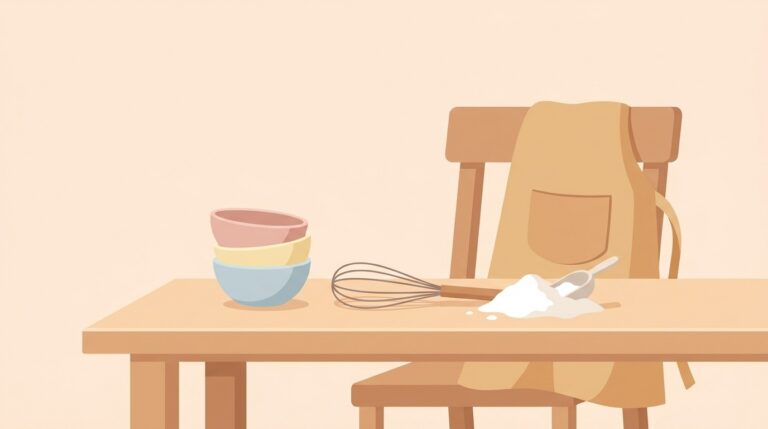
Signing Up for and Experiencing Korean One-Day Classes: From Perfume to Baking
Phase 1: Empathy & Storytelling
안녕하세요! 매일한글 에디터입니다. (Hello! It is your Daily Hangul editor.)
Imagine walking down a picturesque alley in Seongsu-dong or Yeonnam-dong. You push open a pastel-colored wooden door, welcomed by the rich aroma of browned butter and warm vanilla. You booked your very first Korean baking one-day class! But within seconds, your heart races with classic learner anxiety: What if I measure the sugar wrong? What if the instructor talks too fast, and my madeleines turn into flat charcoal biscuits?
Then, your teacher smiles warmly and guides you to your work station. Right in front of you sits a pristine wooden tray with every single ingredient already weighed down to the exact gram in tiny ceramic ramekins. No intimidating industrial scales, no messy flour spills. You breathe an enormous sigh of relief and whisper to your friend: 초보자도 실패 없이 따라 할 수 있게 재료 계량을 다 준비해 주셨어요 (They pre-measured all the ingredients so even beginners could follow along without failing).
One-day workshops—from pottery wheel throwing to bespoke perfume making—are among the hottest weekend activities in Korea today. Expressing genuine appreciation for your host’s thoughtful prep work will instantly turn an awkward workshop into a heartwarming cultural connection. Based on real feedback from international learners living in Seoul, this guide gives you the exact conversational tools you need to shine with zero stress.
Phase 2: Core Expressions Deep Dive
1. 재료 계량을 다 준비해 주셨어요 (Jaeryo gyeryang-eul da junbihae jusyeosseoyo)
- Pronunciation: [Jae-ryo gye-ryang-eul da jun-bi-hae joo-syeo-ssuh-yo] (Think of ‘jae-ryo’ like ‘J-Rio’, and ‘gyeryang’ rhyming with ‘young’ with a soft ‘g’ sound)
- Meaning:
- Literal: They prepared all the ingredient measuring for us.
- Real Nuance: “Everything is already measured out so thoughtfully!”
- K-Culture Moment: Seen in lifestyle vlogs and variety shows like I Live Alone when a guest visits a boutique cooking studio and gasps at how neat the counter looks.
- Editor’s Insight: Notice the ending -해 주셨어요 (-hae jusyeosseoyo). In Korean, adding 주다 (to give) implies that someone did an action as a favor or kindness to you. It adds a layer of sweet gratitude.
- Situation Spectrum: Casual (⚠️ with friends: 계량 다 해줬어) | Semi-formal (✅) | Formal (✅)
- 🤔 Think About It: In English, we often say “The ingredients were measured.” Why does Korean grammar focus so heavily on who performed the thoughtful act for you?
2. 초보자도 쉽게 따라 할 수 있어요 (Chobojado swipge ttara hal su isseoyo)
- Pronunciation: [Cho-bo-ja-do swip-ge tta-ra hal su i-sseo-yo] (Pronounce ‘ttara’ with a crisp, popped ‘t’ sound, like ‘taco’)
- Meaning:
- Literal: Even a beginner can easily follow along.
- Real Nuance: “It’s totally beginner-friendly! Anyone can do this without feeling lost.”
- K-Culture Moment: Plastered across workshop flyers in Hongdae or mentioned by K-Pop idols doing pottery crafting challenges on YouTube.
- Editor’s Insight: The particle -도 (-do) means “even” or “also”. By saying 초보자도 (chobojado), you acknowledge that while the craft looks intricate, the teaching makes it foolproof.
- Situation Spectrum: Casual (✅) | Semi-formal (✅) | Formal (✅)
- 🤔 Think About It: Does your native language have a specific word like 초보 (chobo) that instantly softens expectations and builds encouragement?
3. 실패 없이 완성했어요 (Silpae eopsi wanseonghaesseoyo)
- Pronunciation: [Sil-pae eop-si wan-seong-hae-sseo-yo] (Pronounce ‘eop-si’ like ‘up-she’ with a soft ‘p’)
- Meaning:
- Literal: I completed it without failure.
- Real Nuance: “It turned out a complete success! Not a single mistake!”
- K-Culture Moment: The caption every Korean 20-something posts on Instagram while holding up their newly poured scented candle or glazed ceramic mug.
- Editor’s Insight: -없이 (-eopsi) means “without”. Pairing it with 완성했어요 (wanseonghaesseoyo) gives an aura of humble triumph—celebrating that the guided method protected you from ruining the project.
- Situation Spectrum: Casual (✅ with friends: 실패 없이 완성했어) | Semi-formal (✅) | Formal (✅)
- 🤔 Think About It: Koreans love the feeling of guaranteed success in leisure classes. How does this compare to DIY cultures in your country that embrace making messy mistakes?
Phase 3: Textbook Korean vs. Real Korean
Situation 1: Praising the pre-measured setup
- 📖 교과서 한국어 (Textbook): 재료의 양을 미리 측정해 놓았습니다. (Jaeryoui yangeul miri cheukjeonghae noasseumnida. / The quantity of ingredients has been measured in advance.)
- 🗣️ 진짜 한국어 (Real-life): 계량이 다 되어 있어서 진짜 편해요! (Gyeryangi da doeeo isseoseo jinjja pyeonhaeyo! / It’s already measured out, so it’s super convenient!)
- 💡 왜 다를까? (Why the difference?): Real people don’t use technical words like 측정 (measurement). Instead, they highlight comfort and convenience using 진짜 편해요 (really convenient).
Situation 2: Asking if clumsy beginners can manage
- 📖 교과서 한국어 (Textbook): 초심자도 이 작업을 잘 수행할 수 있습니까? (Chosimjado i jageobeul jal suhaenghal su itseumnikka? / Can a beginner perform this operation well?)
- 🗣️ 진짜 한국어 (Real-life): 저 똥손인데 저도 잘할 수 있을까요? (Jeo ttong-son-inde jeodo jalhal su isseulkkayo? / I’m all thumbs, can I still do well?)
- 💡 왜 다를까? (Why the difference?): In everyday Korea, admitting you have 똥손 (poop hands / clumsy hands) is charming self-deprecating humor that breaks the ice instantly with any craft instructor.
Phase 4: K-Culture Deep Dive & Non-Verbal Manners
4-1. 눈치 (Nunchi) & Polite Workshop Gestures
- Receiving Prepared Bowls: When the teacher hands you a measured bowl of scented oils or tempered chocolate, receive it using two hands (두 손) with a slight nod of the head. It shows respect for their prep time.
- Expressing Delight: Koreans don’t just stay quiet when impressed. Offer an animated reaction: clasp your hands gently and say, “우와, 대박!” (Woah, amazing!) when you see the meticulous setup. Instructors take great pride in aesthetic organization.
- Cleanliness as Etiquette: One-day class studios are shared spaces. Leaving your prep mat tidy by gathering used scrap paper or wiped spoons signals that you have great workshop manners (매너).
4-2. The “One-Day Class” Phenomenon in Korea
Why are Koreans obsessed with 원데이 클래스 (One-Day Classes)? In a fast-paced society driven by busy workweeks, young Koreans seek 소확행 (Sohwakhaeng)—small but certain happiness. Spending 2 hours crafting a customized perfume bottle or baking six Earl Grey madeleines offers immediate psychological gratification without long-term weekly commitments. Because the classes are short, Korean studios have perfected the art of the “zero-fail curriculum”: everything is pre-weighed, pre-cut, and pre-mixed so every student walks away feeling like a master artisan.
Phase 5: Real-Life Roleplay Scenario
Setting: At ‘Atelier Haru’, a cozy baking studio in Yeonnam-dong. Minji, the instructor, stands behind a marble counter welcoming you.
- Turn 1 (Minji): 어서 오세요! 베이킹 클래스는 처음이신가요? (Eoseo oseyo! Beiking keullaeseuneun cheoeum-isingayo? / Welcome! Is this your first baking class?) 🎭 Smiles warmly while smoothing her linen apron.
- Turn 2 (You): 네, 처음이에요. 제가 솜씨가 없어서 걱정돼요. (Ne, cheoeum-ieyo. Jega somssiga eopseoseo geokjeongdwaeyo. / Yes, it’s my first time. I’m worried because I’m not very handy.) 🎭 Rubs the back of neck with an embarrassed chuckle.
- Turn 3 (Minji): 걱정 마세요! 초보자도 실패 없이 만들 수 있어요. (Geokjeong maseyo! Chobojado silpae eopsi mandeul su isseoyo. / Don’t worry at all! Even beginners can make it without failing.) 🎭 Gestures toward your personal workspace table.
- Turn 4 (You): 와, 재료 계량을 다 준비해 주셨네요! (Wa, jaeryo gyeryang-eul da junbihae jusyeonne-yo! / Wow, you pre-measured all the ingredients for us!) 🎭 Gasps softly looking at the tidy, color-coded bowls.
- Turn 5 (Minji): 네, 버터랑 가루를 순서대로 섞기만 하시면 돼요. (Ne, beoteorang garureul sunseodaero seokgiman hasimyeon dwaeyo. / Yes, you just have to mix the butter and flour in order.) 🎭 Hands you a silicone spatula with both hands.
- Turn 6 (You): 정말요? 그러면 저도 쉽게 따라 할 수 있겠어요. (Jeongmalyo? Geureomyeon jeodo swipge ttara hal su itgesseoyo. / Really? Then I can easily follow along too.) 🎭 Puts on the apron with renewed confidence.
- Turn 7 (Minji): 자, 그럼 이제 천천히 저어 볼까요? (Ja, geureom ije cheoncheonhi jeoeo bolkkayo? / Now, shall we stir slowly together?) 🎭 Demonstrates a gentle wrist motion.
- Turn 8 (You): 네, 선생님! 잘 부탁드립니다. (Ne, seonsaengnim! Jal butakdeurimnida. / Yes, teacher! Please guide me well.) 🎭 Bows head lightly with an eager smile.
🔀 Interactive Decision Point
At the end of class, your madeleines emerge golden and aromatic from the oven! What do you say to the teacher?
- Choice A: “선생님, 재료 계량을 다 해 주셔서 실패 없이 잘 만들었어요!” (Seonsaengnim, jaeryo gyeryang-eul da hae jusyeoseo silpae eopsi jal mandeureosseoyo!)
- 👉 Feedback [BEST]: Perfect balance of polite honorifics and sweet praise! Minji will beam with pride and probably pack an extra dessert box for you.
- Choice B: “내가 만들었지만 진짜 맛있네! 얼마야?” (Naega mandeureotjiman jinjja masinne! Eolmaya?)
- 👉 Feedback [BAD]: You used 반말 (informal speech) to the instructor and asked how much it costs, even though one-day classes are paid online in advance. Awkward silence guaranteed!
- Choice C: “초보자도 할 수 있지만, 너무 힘들었어요.” (Chobojado hal su itjiman, neomu himdeureosseoyo.)
- 👉 Feedback [RISK]: Grammatically correct, but saying it was “too tiring” sounds a bit like a complaint, dampening the celebratory mood.
Phase 6: 10-Second Emotion Shadowing Drill
Read these aloud, pausing at the slashes (/) and matching the emotion markers!
[😊 감탄하며 안도하기 - Relieved & Impressed]- 와, / 재료 계량을 다 해 주셔서 / 진짜 편해요!
- (Wa, / jaeryo gyeryang-eul da hae jusyeoseo / jinjja pyeonhaeyo!)
[💪 씩씩하고 자신감 있게 - Confident & Encouraging]- 걱정 마세요! / 초보자도 / 실패 없이 따라 할 수 있어요!
- (Geokjeong maseyo! / chobojado / silpae eopsi ttara hal su isseoyo!)
[🥰 하트 뿅뿅 감사 인사 - Full of Sincere Gratitude]- 선생님 덕분에 / 예쁘게 완성했어요 / 감사합니다!
- (Seonsaengnim deokbune / yeoppeuge wanseonghaesseoyo / gamsahamnida!)
Phase 7: K-Culture Mini Dictionary
- 계량 (Gyeryang) [Noun]: Precise measuring of weight or volume. In Korean baking or perfume classes, “계량 완료 (gyeryang wanryo)” means pre-measured and ready.
- 똥손 vs 금손 (Ttong-son vs Geum-son) [Slang]: “Poop hands” (clumsy at crafts) versus “Golden hands” (someone magically talented at DIY arts).
- 소확행 (Sohwakhaeng) [Trendy Acronym]: Small but certain happiness (소소하지만 확실한 행복). The guiding philosophy behind weekend hobbies in Korea.
- 인증샷 (Injeung-syat) [Modern Term]: “Proof shot.” The mandatory aesthetic photo you snap holding your handmade item at the studio photo zone.
Phase 8: Survival Kit for Travelers
Top 3 Workshop Survival Phrases
- 1. 사진 한 장만 찍어주실 수 있나요? (Sajin han jangman jjigeojusil su innayo?)
- Meaning: Could you take a picture of me, please?
- Pro Tip: Korean instructors are seasoned Instagram photographers! They know the best studio angles.
- 2. 이거 선물 포장 가능한가요? (Igeo seonmul pojang ganeunghangayo?)
- Meaning: Is gift wrapping available for this?
- Pro Tip: Most craft studios offer gorgeous ribbon boxes for a tiny fee (or free).
- 3. 다음 단계는 뭐예요? (Daeum dangyeneun mwoyeyo?)
- Meaning: What is the next step?
- Pro Tip: Keep this ready if you get confused during multi-step perfume blending.
Editor’s Travel Note
To find and book authentic Korean one-day classes, most locals use the Naver Reservation platform. Make sure you complete your 네이버 지도 앱 다운로드 to find tucked-away studios in quiet neighborhoods like Mangwon, Ikseon-dong, or Seongsu. Foreign credit cards are accepted easily on international booking portals (like Klook or Creatrip), but local studios usually confirm bookings via KakaoTalk!
Phase 9: A Step Deeper (Reflection)
In many Western craft classes, instructors encourage you to “mess around, experiment, and learn through trial and error.” But Korean culture deeply cherishes 배려 (Baeryeo – thoughtful consideration) and 완성도 (Wanseongdo – high standard of completion). When a Korean instructor pre-measures all the ingredients into neat little ramekins, they aren’t treating you like a child—they are offering a hospitality gift. They want your 2-hour holiday escape to be totally devoid of frustration, embarrassment, or failure.
💬 Your Turn: Have you ever attended a one-day workshop while traveling abroad? Would you prefer measuring raw ingredients from scratch, or having everything pre-measured so you never fail? Drop your thoughts below!
Phase 10: FAQ & Common Mistakes
Q: Can I take a one-day class in Korea if I only speak basic A2 Korean?
A: Absolutely! Most one-day class studios rely heavily on visual demonstrations and tactile steps. Knowing simple phrases like “이거 맞아요?” (Is this correct?) and “다 했어요!” (I finished!) is more than enough to have a blast.
Q: What is the grammar difference between 준비했어요 and 준비해 주셨어요?
A: “준비했어요” simply states that someone prepared something. “준비해 주셨어요” includes the honorific -시- (showing respect to the teacher) and -주다 (showing gratitude that the preparation was done for our benefit).
Q: Is it customary to tip the instructor in Korea?
A: No! Tipping does not exist in Korea. Sincere verbal thanks like “선생님, 오늘 정말 재미있었어요!” (Teacher, today was so fun!) and tagging their studio Instagram account is the highest form of appreciation.
🚨 흔한 실수 (Common Mistakes)
- Mistake 1: Calling the instructor “아줌마” (Ajumma) or “선생” (Seonsaeng).
- 👉 Correct Action: Always address your workshop tutor as 선생님 (Seonsaengnim).
- Mistake 2: Mixing up 계량 (Gyeryang – measuring) with 계산 (Gyesan – paying the bill).
- 👉 Correct Action: Remember: “계량을 다 해 주셨어요” (measured ingredients), but “계산할게요” (I’ll pay the bill).
- Mistake 3: Saying “실패 안 했어요” when praising the final product.
- 👉 Correct Action: While understandable, saying “실패 없이 만들었어요” sounds far more natural and native-like.
Phase 11: Action Missions
- 🥉 Bronze Mission (Solo Practice): Stand in front of your kitchen mirror and say the shadowing drill sentence #1 with bright eyes and a grateful tone.
- 🥈 Silver Mission (Social Media): Post a photo of your hobby, baking, or DIY craft on Instagram or Threads with the caption: 초보자도 실패 없이 만들 수 있어요! #DailyHangul
- 🥇 Gold Mission (Real-Life Application): Next time someone prepares cooking ingredients or materials for you, say: “재료를 다 준비해 주셔서 감사합니다!”
- 🎮 K-Culture Mission: Search YouTube for “베이킹 원데이 클래스 브이로그” (Baking one-day class vlog) and spot how many times the creator compliments the pre-measured ingredients!
Phase 12: Interactive Quiz Challenge
Question 1: Situation Judgment
You walked into a perfume studio and saw 20 glass droppers neatly labeled and measured on your desk. What is the most natural compliment?
* A) 왜 재료를 다 계산했어요?
* B) 재료 준비를 혼자 다 하세요.
* C) 재료 계량을 다 준비해 주셨네요!
Question 2: Fill in the Blank
초보자_____ 실패 없이 쉽게 따라 할 수 있어요. (Fill in the particle meaning ‘even’ beginners)
* A) 만 (man)
* B) 도 (do)
* C) 가 (ga)
Question 3: True or False (Culture)
In Korean workshop culture, admitting you are a “똥손” (clumsy/all thumbs) is considered an unforgivable insult to the instructor.
* True or False?
👉 Click here to reveal answers and explanations!
- Question 1 Answer: C
- Explanation: C correctly uses the polite expression “재료 계량을 다 준비해 주셨네요!” Choice A mistakes ‘계산’ (payment) for ‘계량’, and B sounds rude.
- Question 2 Answer: B
- Explanation: The particle -도 means “even” or “also”, creating the meaning “Even beginners can follow along without failing.”
- Question 3 Answer: False
- Explanation: “똥손” is a popular, funny self-deprecating term used casually to break the ice and let the teacher know you need extra patience!
- Explanation: “똥손” is a popular, funny self-deprecating term used casually to break the ice and let the teacher know you need extra patience!







