

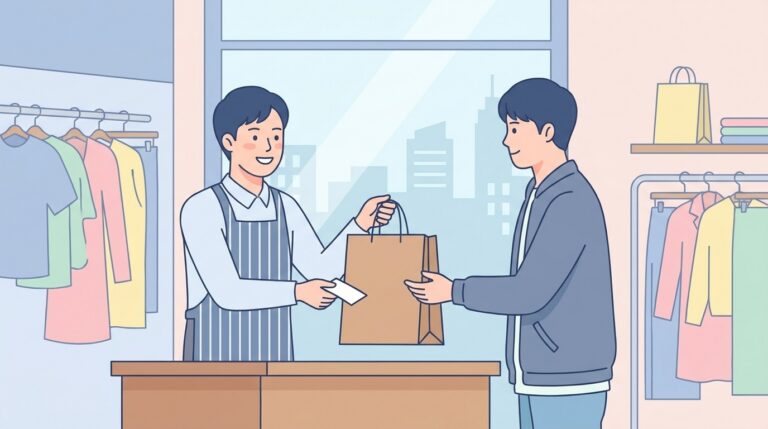
No More Shopping Panic in Seoul: How to Return or Exchange Items Like a Local
Phase 1: 공감 (Story-Immersive Opening)
안녕하세요! 매일한글 에디터입니다. (Hello! I’m your Daily Hangul editor.)
Picture this: You are having the absolute time of your life shopping around the trendy boutiques of Hongdae or Seongsu-dong. You pick up an oversized knit sweater that looks just like something your favorite K-drama lead wore in their casual airport photos. You proudly tap your credit card, take the shopping bag, and walk out feeling victorious.
Back at your hotel, however, reality hits. You try on the sweater, and the shoulders drop down to your elbows. Or worse, you spot a tiny loose thread near the hem. Your heart sinks. In your home country, exchanging an item is second nature. But here in Seoul, you suddenly freeze. Do you just walk up to the counter and say “Refund please”? What if the clerk asks a flurry of fast Korean questions? What if they think you’re being rude?
You end up clutching that crumpled paper receipt and your bank card, staring at the store entrance from across the street, feeling that all-too-familiar surge of eot-teok-hae (what do I do?) anxiety.
Don’t worry! Every single Korean learner has stood right where you are standing now. Returning or exchanging an item in Korea isn’t a confrontation; it’s a completely standard daily interaction with its own polite, predictable rhythm. Based on real feedback from hundreds of our international students, this guide breaks down the exact natural phrases, gestures, and cultural etiquette you need. Once you finish this lesson, you’ll walk up to that cash register with quiet confidence, hand over your receipt, and get your swap or refund sorted in under two minutes flat.
Phase 2: 핵심 표현 3선 심층 분석 (Deep Dive into 3 Core Expressions)
1. 구매할 때 받은 영수증과 결제했던 카드 여기 있어요.
- Pronunciation: Gumehal ttae badeun yeongsujeunggwa gyeoljehaetdeon kadeu yeogi isseoyo.
(Sound metaphor: Imagine saying “Goo-meh-hal tteh / bah-dun young-soo-joong-gwa / gyuhl-jeh-het-dawn kah-deu / yuh-gee ee-ssuh-yo”)- Meaning: Literal: “Here is the receipt received when purchasing and the card that made the payment.” / Natural Nuance: “Here is my receipt from when I bought this, along with the card I used to pay.”
- K-Culture Moment: In Korean consumer culture, credit card transaction cancellations require the original card to run through the reader again. Presenting both together instantly signals: “I know how the process works, and I have everything ready for you.”
- Editor’s Insight: Notice the grammar pattern -(으)ㄹ 때 (when doing something) and -았/었던 (past completed experience). At the A2 level, this sentence shows the clerk that you can link time markers cleanly without sounding like a robotic translation app.
- Situation Spectrum: Casual (🚫) | Semi-formal polite
~요(✅) | Strict Formal~습니다(✅)- 🤔 Think About It: In English, we usually ask “Can I return this?” first before handing over documents. Why do you think Korean interactions favor presenting the physical proof (card + receipt) right at the start of the sentence?
2. 이거 다른 사이즈로 교환할 수 있을까요?
- Pronunciation: Igeo dareun sa-ijeuro gyohwanhal su isseulkkayo?
(Sound metaphor: “Ee-guh / dah-run sah-ee-joo-ro / gyo-hwan-hal soo / ee-ssul-kkah-yo?”)- Meaning: Literal: “Can this be exchanged for a different size?” / Natural Nuance: “Could I possibly swap this for another size?”
- K-Culture Moment: The ending -(으)ㄹ 수 있을까요? adds a gentle, cushiony politeness. You hear this everywhere in Korean lifestyle vlogs when YouTubers ask store clerks for assistance without sounding demanding.
- Editor’s Insight: Using the particle -로 indicates direction or choice of transformation (to another size). If you want to change colors instead of size, simply replace
사이즈(size) with색상(color): “이거 다른 색상으로 교환할 수 있을까요?”- Situation Spectrum: Casual (🚫) | Semi-formal polite
~요(✅) | Strict Formal~습니다(✅)- 🤔 Think About It: Notice how adding
있을까요?softens the question compared to a direct command. How does your native language soften requests without sounding overly timid?3. 단순 변심인데, 환불 부탁드립니다.
- Pronunciation: Dansun byeonsim-inde, hwanbul butakdeurimnida.
(Sound metaphor: “Dahn-soon byun-shim-in-deh, / hwan-bool / boo-tahk-doo-rim-nee-dah.”)- Meaning: Literal: “It is a simple change of mind, but I request a refund.” / Natural Nuance: “I just changed my mind, so I’d like a refund, please.”
- K-Culture Moment: In Korea, “change of mind” (단순 변심 – dansun byeonsim) is an official, legitimate category printed on almost every return form and e-commerce policy. Admitting it upfront saves time and prevents unnecessary questions.
- Editor’s Insight: You don’t have to invent an excuse like “my friend didn’t like it.” Korean retail clerks appreciate direct clarity. Stating 단순 변심 proves the product is intact, just not your cup of tea.
- Situation Spectrum: Casual (🚫) | Semi-formal polite
~요(⚠️) | Strict Formal~습니다(✅)- 🤔 Think About It: Is “changing your mind” seen as an acceptable, guilt-free reason for returning an item in your home country, or do you feel pressured to say the item was defective?
Phase 3: 교과서 한국어 vs 진짜 한국어 (Textbook vs. Real Korean)
Situation 1: Telling the clerk you want a refund
- 📖 교과서 한국어: 저는 이 물건의 환불을 원합니다. (Jeoneun i mulgeon-ui hwanbur-eul wonhamnida. – “I desire the refund of this object.”)
- 🗣️ 진짜 한국어: 저, 이거 환불하고 싶어서요. (Jeo, igeo hwanbulhago sipeoseoyo. – “Excuse me, I’d like to get a refund for this.”)
- 💡 왜 다를까?: Native Koreans rarely use the verb
원하다(to want/desire) for commercial transactions. It sounds poetic or overly dramatic. Ending your sentence with -고 싶어서요 (because I’d like to…) sounds naturally polite, giving the conversational partner room to respond.
Situation 2: Giving your receipt and card to the cashier
- 📖 교과서 한국어: 여기 영수증과 신용카드를 당신에게 드립니다. (Yeogi yeongsujeunggwa sinyongkadeureul dangsinege deurimnida. – “Here I give the receipt and credit card to you.”)
- 🗣️ 진짜 한국어: 영수증이랑 결제 카드 여기 있어요. (Yeongsujeung-irang gyeolje kadeu yeogi isseoyo. – “Here’s the receipt and the card I paid with.”)
- 💡 왜 다를까?: Avoid the pronoun
당신(you)—it can sound aggressive or awkwardly translated! In real spoken Korean, skipping the recipient pronoun entirely and linking items with conversational -이랑/랑 makes you sound warm and natural.
Phase 4: K-Culture 딥다이브 & 비언어적 매너 (Non-Verbal Manners & Culture)
4-1. 눈치 (Nunchi) & Gestures
When handing over your receipt and credit card, always use two hands (두 손). You don’t need a deep theatrical bow; a gentle 15-degree nod of the head while extending both hands holding the card and receipt displays instant respect.
- Eye Contact: Keep soft, friendly eye contact. Staring intensely can make the staff member nervous (they might fear you are about to file an angry complaint!).
- Item Placement: Place the item gently on the counter with the price tags (택 – taek) facing up so the clerk can scan the barcode immediately without having to dig through folds.
4-2. Cultural Code Analysis: The “7-Day Tag Rule”
In South Korea’s bustling fashion hubs (Myeongdong, Dongdaemun, Hongdae, Express Bus Terminal Underground Mall), return policies are strict but crystal clear:
1. The Golden 7 Days: Most major brand stores and department stores allow returns or exchanges within 7 to 14 days of purchase.
2. The Sacred Tag (택 – Taek): If the paper tag is detached (택을 뗐어요), refunds or exchanges are almost universally rejected unless the garment has an undeniable manufacturing defect.
3. Underground Shopping Malls & Small Boutiques: Warning! Many independent basement stalls in subway stations operate under an “Exchange Only, No Refund” (교환만 가능, 환불 불가) policy. Always look out for the sign on the counter before buying!
Phase 5: 실전 롤플레이 시나리오 (Real-Life Roleplay Scenario)
Setting: A chic minimalist clothing store in Seongsu-dong. Indie lo-fi beats play in the background.
Characters:
* Staff (Minji): Kind, efficient retail associate in an oversized beige blazer.
* You (Traveler/Learner): Holding your shopping bag with the original receipt and credit card ready.
Turn 1
* You: 저기요, 죄송한데 환불 좀 도와주실 수 있나요?
(Jeogiyo, joesonghande hwanbul jom dowajusil su innayo?)
“Excuse me, sorry to bother you, but could you help me with a refund?”
🎭 Action: Step up to the register with a soft smile, nodding slightly.
Turn 2
* Minji: 네, 고객님! 구매하신 지 며칠 되셨을까요?
(Ne, gogaengnim! Gumehasin ji myeochil doesyeosseulkkayo?)
“Yes, valued customer! How many days has it been since you purchased this?”
🎭 Action: Smiles warmly and reaches out both hands over the counter.
Turn 3
* You: 어제 샀어요. 단순 변심인데, 환불 가능할까요?
(Eoje sasseoyo. Dansun byeonsim-inde, hwanbul ganeunghalkkayo?)
“I bought it yesterday. I just changed my mind; would a refund be possible?”
🎭 Action: Take the sweater out of the bag, showing the untouched price tag attached.
Turn 4
* Minji: 네, 택 안 떼셨으면 가능하세요. 영수증이랑 결제 카드 있으실까요?
(Ne, taek an ttesyeosseumyeon ganeunghaseyo. Yeongsujeung-irang gyeolje kadeu isseusilkkayo?)
“Yes, as long as the tag hasn’t been removed, that is possible. Do you happen to have the receipt and payment card?”
🎭 Action: Taps the POS register screen to prepare the return transaction.
Turn 5
* You: 네! 구매할 때 받은 영수증과 결제했던 카드 여기 있어요.
(Ne! Gumehal ttae badeun yeongsujeunggwa gyeoljehaetdeon kadeu yeogi isseoyo.)
“Yes! Here is the receipt I received when buying and the card I paid with.”
🎭 Action: Hand over the paper receipt and the credit card using both hands together.
Turn 6
* Minji: 확인 감사합니다. 카드 취소 영수증 나왔습니다. 서명 한번 부탁드릴게요.
(Hwag-in gamsahamnida. Kadeu chwiso yeongsujeung nawasseumnida. Seomyeong hanbeon butakdeurilgeyo.)
“Thank you for checking. The card cancellation receipt has printed. May I please ask for your signature here?”
🎭 Action: Points the digital stylus pad toward you with an inviting gesture.
Turn 7
* You: 네, 여기 서명했어요. 바로 취소 처리된 거죠?
(Ne, yeogi seomyeonghaesseoyo. Baro chwiso cheoridoen geojyo?)
“Yes, I signed right here. It was processed for cancellation right away, correct?”
🎭 Action: Sign the touch screen neatly and gently set down the stylus.
Turn 8
* Minji: 네! 카드사에 따라 2~3일 정도 소요될 수 있어요. 좋은 하루 보내세요!
(Ne! Kadeusa-e ttara i-sam-il jeongdo soyodoel su isseoyo. Joeun haru bonaeseyo!)
“Yes! Depending on your card issuer, it may take about 2 to 3 days. Have a wonderful day!”
🎭 Action: Hands back the card and the new cancellation receipt with both hands.
🔀 Interactive Branching Decision Point
The clerk looks at the receipt, pauses, and says: “고객님, 죄송하지만 구매하신 지 일주일이 지나서 환불은 어렵고 교환만 가능하세요.” (Customer, I am sorry, but since over a week has passed, a refund is not possible and we can only offer an exchange.) What do you say?
- Choice A: 아, 그래요? 그럼 다른 옷으로 교환할게요! 둘러봐도 될까요?
(Ah, really? Then I will exchange it for different clothes! May I look around?)
👉 Feedback [BEST]: Perfect! Demonstrates adaptability, keeps the vibe positive, and uses natural shopping Korean. The staff will happily assist you. -
Choice B: 안 돼요! 그냥 돈으로 바로 돌려주세요!
(No way! Just give me the money back right now!)
👉 Feedback [BAD]: Yikes! This sounds aggressive, skips polite verb endings, and will likely cause tension (gapjil vibes) without changing the store’s policy. -
Choice C: 영수증 있어요! 카드 있어요! 취소해!
(Have receipt! Have card! Cancel it!)
👉 Feedback [RISK]: Using informal speech (panmal) like취소해will sound blunt and disrespectful to retail staff, even if you just forgot the polite ending~요.
Phase 6: 10초 감정 섀도잉 드릴 (10-Second Emotion Shadowing Drill)
Practice reading these out loud. Pay attention to the pauses marked with / and mimic the emotion!
[😊 Polite & Organized]
구매할 때 받은 / 영수증과 / 결제했던 카드 / 여기 있어요.
(Gumehal ttae badeun / yeongsujeunggwa / gyeoljehaetdeon kadeu / yeogi isseoyo.)-
[🥺 Inquiring & Gentle]
혹시 / 다른 색상이나 사이즈로 / 교환할 수 있을까요?
(Hoksi / dareun saeksang-ina sa-ijeuro / gyohwanhal su isseulkkayo?) -
[🤝 Calm & Courteous]
단순 변심인데 / 혹시 / 환불 부탁드려도 될까요?
(Dansun byeonsim-inde / hoksi / hwanbul butakdeuryeodo doelkkayo?)
Phase 7: K-Culture 미니 사전 (Mini Dictionary)
- 영수증 (Yeongsujeung) | Receipt
Every cashier will ask: “영수증 필요하세요?” (Do you need a receipt?). Always say “네, 주세요!” if you think you might need an exchange! - 결제 카드 (Gyeolje Kadeu) | Payment Card
The specific debit or credit card used during purchase. Korean cash registers cannot refund money to a different card than the one originally swiped. - 교환 (Gyohwan) | Exchange / Swap
Trading an item for another size, color, or different product of equal or greater value. - 환불 (Hwanbul) | Refund
Getting your money back. Remember: In Korea, refunds usually revert credit transactions rather than handing you cash for a card swipe.
Phase 8: 여행자를 위한 생존 키트 (Traveler’s Survival Kit)
Top 3 Survival Phrases
- 이거 교환돼요? (Igeo gyohwandoeyo?) — “Can this be exchanged?”
Pro Tip: Shortest, punchiest A2 phrase when you’re in a rush at a busy market stall. - 택 아직 안 뗐어요. (Taek ajik an ttesseoyo.) — “I haven’t removed the tag yet.”
Pro Tip: Saying this before they even ask proves the item is unworn! - 카드 취소해 주세요. (Kadeu chwisohae juseyo.) — “Please cancel the card payment.”
Pro Tip: Crystal clear instruction if you want a complete card reversal.
Editor’s Travel Note
Before heading out on your shopping spree, make sure to check store locations and opening hours using the Naver Map App Download. Remember that small boutique shops in underground metro stations or Dongdaemun night markets often operate with cash or local account transfers. Always ask “카드 결제 돼요?” (Can I pay with card?) and keep your physical card on hand, as overseas digital wallets (like Apple Pay) are not supported on every single local reader in Korea.
Phase 9: “한 발 더 깊이” (Food for Thought)
In many Western retail environments, customer service is built on individual dispute resolution—where arguing your case might grant an exception. In South Korea, however, customer service is structured around transparent system rules designed to maintain mutual harmony and fairness for everyone in line.
Presenting your receipt and card promptly with both hands isn’t just about following rules; it’s an unspoken gesture of consideration (배려 – baeryeo) for the staff worker’s time. When you show respect for their process, Korean retail workers will bend over backward to ensure your shopping experience is pleasant and stress-free.
💬 Your Turn: Have you ever experienced returning an item in another country? How does the return policy back home compare to Korea’s quick 7-day card cancellation system? Let us know in the comments below!
Phase 10: FAQ & 오해 방지 (FAQ Schema)
Q: Can I get a refund if I lost my paper receipt?
A: In large department stores or brand flagships (like Olive Young or Spao), staff can sometimes pull up your transaction if you know the exact time and present the identical credit card. However, at street boutiques and smaller indie shops, having no receipt (영수증 없음) often means no refund or exchange at all. Always keep the slip!
Q: I paid with Apple Pay or a foreign credit card. Does refunding work the same way?
A: Yes, but keep in mind foreign transaction reversals can take anywhere from 3 to 14 business days to appear on your home bank statement. Make sure to keep the “Cancellation Slip” (취소 영수증 – chwiso yeongsujeung) as proof until the money clears back into your account.
Q: Can I return cosmetics or beauty products in Korea?
A: Only if the box packaging seal is completely unopened and intact! Once the protective sticker is broken, Korean health and safety laws prohibit returns unless an adverse allergic reaction is medically proven.
🚨 Common Mistakes (흔한 실수) Warning Board
- ❌ Mistake 1: Cutting the price tag off immediately in your hotel room before trying on the clothes.
✅ Correct Action: Keep tags securely attached until you’ve tried everything on in full lighting and decided 100% to keep it. - ❌ Mistake 2: Bringing a different bank card than the one used at purchase.
✅ Correct Action: Bring the exact card you tapped; Korean POS machines match authorization numbers strictly. - ❌ Mistake 3: Shouting “Refund!” across the store.
✅ Correct Action: Walk calmly to the cash counter, say “저기요, 교환이나 환불 좀 도와주세요” (Excuse me, please help with an exchange or refund), and hand over your items with two hands.
Phase 11: 액션 미션 & 참여 유도 (Action Missions)
- 🥉 Bronze Mission (Solo Practice): Stand in front of your mirror. Hold an old card and a piece of paper with both hands, bow your head 15 degrees, and recite: “구매할 때 받은 영수증과 결제했던 카드 여기 있어요!” 3 times smoothly.
- 🥈 Silver Mission (Social Share): Snap a picture of a Korean receipt from your trip (blur out private info!) and tag
@DailyHangulon Instagram with your favorite new vocabulary word from Phase 7. - 🥇 Gold Mission (Real Life Action): On your next trip to Seoul, successfully ask a store associate: “이거 다른 사이즈로 교환할 수 있을까요?” and complete an exchange completely in Korean!
🎮 K-Culture Mission: Next time you watch an episode of a modern slice-of-life K-drama (like Business Proposal or Crash Landing on You), watch out for scenes inside department stores. Spot whether the characters hold out their credit cards with one hand or two hands!
Phase 12: 인터랙티브 퀴즈 챌린지 (Interactive Quiz Challenge)
Question 1: Situational Judgment
You bought a jacket 3 days ago in Hongdae. You want to exchange it for a larger size. What should you bring to the shop?
* A) Just the jacket with the tag removed.
* B) The jacket with the tag intact, the original receipt, and the credit card you paid with.
* C) Only the credit card.
Question 2: Fill in the Blank
“Excuse me, here is the receipt I received when buying and the card I paid with.”
구매할 때 받은 영수증과 결제했던 [ ______ ] 여기 있어요.
* A) 가방 (gabang)
* B) 카드 (kadeu)
* C) 모자 (moja)
Question 3: True / False Cultural Check
In Korea, it is considered very polite to flip your credit card onto the counter with one hand so the clerk can pick it up quickly. (True / False)
👉 Click to view answers and explanations!
- Question 1 Answer: B
Explanation: To ensure an effortless exchange, always keep the original tag intact (택), and present both the receipt (영수증) and the payment card (결제 카드). - Question 2 Answer: B (카드)
Explanation: 카드 means card! The full sentence reads: “구매할 때 받은 영수증과 결제했던 카드 여기 있어요.” - Question 3 Answer: False
Explanation: Tossing or sliding a card onto the counter with one hand is considered rude. Always hand it directly to the staff’s hands using both hands or with your right hand supported at the wrist by your left hand!







