

Phase 1: Empathy (Story-driven Opening)
안녕하세요! 매일한글 에디터입니다.
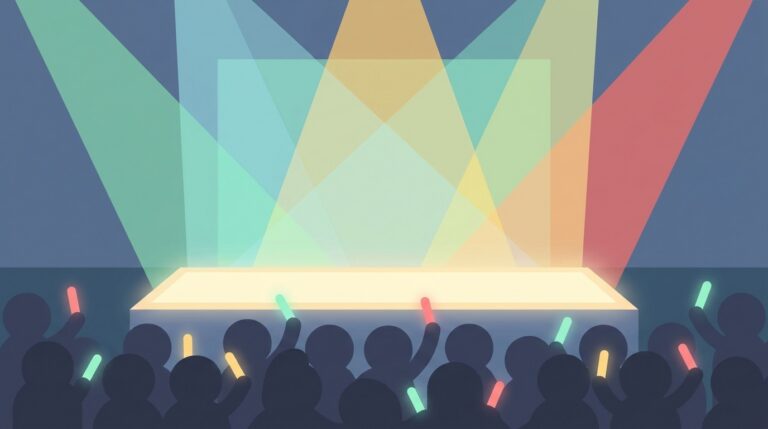
Picture this: You are standing shoulder-to-shoulder inside the buzzing Olympic Gymnastics Arena (KSPO Dome) in Seoul. The house lights suddenly drop, the bass thumps violently against your chest, and a silver ocean of lightsticks illuminates the dark. Your absolute ultimate bias group bursts onto the stage, executing razor-sharp choreography while hitting spine-tingling high notes. Confetti rains down as the song ends in thunderous fireworks. The Korean fan right next to you turns, eyes wide with adrenaline, screaming in absolute awe. You desperately want to scream something more expressive than just “Good!” or a polite “감사합니다 (Gamsahamnida),” but your mind goes blank.
Every K-pop fan dreams of shouting words that match the explosive energy of live music shows and stadium tours. Knowing textbook phrases won’t cut it when the arena is on fire with excitement. Based on dozens of student interviews from K-pop live events in Seoul, this guide equips you with the exact words local fans scream when a show is out-of-this-world. Master these lines, and you will bridge the gap between being a silent foreign tourist and an energized, connected part of the fandom community.
Phase 2: Top 3 Core Expressions Deep Dive
1. 무대 찢었다! (Mudae jjijeotta!)
- Pronunciation: [Mu-dae jji-jeot-da] (Sound analogy: Imagine “Moo-day” followed by “cheese” but with a sharp, punchy JJ sound like “Jjee-jut-tah”).
- Meaning: Literal: “They ripped the stage!” | Actual Nuance: “They totally destroyed the performance!” / “They killed it!”
- K-Culture Moment: Screamed right after an explosive dance break or high-energy chorus on Mnet M Countdown or KBS Music Bank.
- Editor’s Insight: Just like the English slang “you ate and left no crumbs” or “tore it up,” Korean fans visualize the idols having so much power that the wooden floor of the stage literally ripped apart.
- Situation Spectrum: Casual (Friends/Fans): ✅ | Semi-formal: ⚠️ | Formal: 🚫
- 🤔 Think About It: In English, we say “break a leg” before a show or “killed it” after. Why do both cultures use violent, destructive verbs to praise outstanding musical talent?
2. 대박이다 (Daebak-ida)
- Pronunciation: [Dae-bak-i-da] (Sound analogy: Say “Day” and “Bahk” with an open, breathless sigh).
- Meaning: Literal: “It’s a big jackpot!” | Actual Nuance: “That is insane!” / “Mind-blowing!”
- K-Culture Moment: Spoken by fans when an unexpected special guest appears or when an idol reveals unexpected abs or killer live vocals.
- Editor’s Insight: This is the ultimate A1 exclamation. At a concert, you don’t even need the ending “-ida”; simply gasping “대박! (Daebak!)” communicates 100% of your shock and admiration.
- Situation Spectrum: Casual: ✅ | Semi-formal: ⚠️ | Formal: 🚫
- 🤔 Think About It: “Daebak” originally referred to a huge gourd full of treasures in Korean folktales. How does ancient folklore shape modern pop idol fandom?
3. 폼 미쳤다 (Pom michyeotta)
- Pronunciation: [Pom mi-chyeot-da] (Sound analogy: English “Form” pronounced “Pom” + “Me-chut-tah”).
- Meaning: Literal: “Form is crazy!” | Actual Nuance: “Their condition/skill is on another level today!”
- K-Culture Moment: Spammed in live stream chat rooms on Weverse or YouTube during year-end award shows when a group performs flawlessly.
- Editor’s Insight: Borrowed from sports commentary (“good athletic form”), this trendy gen-Z Korean phrase praises someone who is operating at their absolute peak performance.
- Situation Spectrum: Casual: ✅ | Semi-formal: ⚠️ | Formal: 🚫
- 🤔 Think About It: How did sports jargon become the highest compliment for musical theater and idol groups in digital youth culture?
Phase 3: Textbook Korean vs. Real Korean
Situation 1: Praising the performance right after the title song
- 📖 Textbook Korean: 공연이 정말 훌륭했습니다. (Gong-yeoni jeongmal hullyunghaessseumnida. – The performance was very magnificent.)
- 🗣️ Real Korean: 오늘 무대 완전 찢었다! (Oneul mudae wanjeon jjijeotta! – They completely tore the stage apart today!)
- 💡 Why is it different? Textbook phrases belong in a formal review or newspaper article. In a standing pit surrounded by screaming fans, textbook grammar sounds emotionless and robotic.
Situation 2: Expressing shock at live vocals or high notes
- 📖 Textbook Korean: 노래 실력이 매우 대단합니다. (Norae sillyeogi maeu daedanhapnida. – Their singing ability is very great.)
- 🗣️ Real Korean: 와, 라이브 폼 미쳤다! (Wa, ra-i-beu pom michyeotta! – Wow, their live vocal form is crazy!)
- 💡 Why is it different? Real concert speech favors short, high-impact buzzwords combined with emotional exclamations like “와 (Wa!)” rather than elaborate grammar endings.
Phase 4: K-Culture Deep Dive & Non-Verbal Manners
4-1. Nunchi & Concert Gestures
Korean concert pits are high-energy yet surprisingly orderly. Showing enthusiasm requires quick 눈치 (Nunchi – social situational awareness):
* The Lightstick Rule: Hold your 응원봉 (Eungwonbong – lightstick) strictly at chest or head level. Raising it high above your head blocks the sightlines of fans behind you and will earn you polite but stern taps on the shoulder.
* The Jaw-Drop Clench: When an idol hits an unreal note, locals often cup both hands over their mouths in shock or lightly shake their hands back and forth in front of their chest rather than waving frantically.
4-2. Culture Code: Pre-recordings (사녹 – Sanok) & Fanchants (응원법)
Music shows like Inkigayo or Music Bank feature official 응원법 (Eungwonbeop – fan cheering methods). Organized fan clubs print cheat sheets or upload official cheering guides before the broadcast. Instead of random screaming throughout the lyrics, fans shout member names rhythmically during instrumental breaks and belt out chorus endings in unison. Yelling “무대 찢었다!” is reserved specifically for the silence right after the ending fairy (엔딩요정) pose!
Phase 5: Real-Life Roleplay Scenario
Setting: KSPO Dome standing area floor, immediately after the grand encore finale.
NPC Character: Minji (A friendly local Korean fan holding a slogan and a lightstick with customized glitter ribbons).
- Minji: 🎭 (Gasping for breath, wiping sweat, looking at you with shining eyes) 혹시 방금 무대 봤어요? (Hoksi bang-geum mudae bwasseoyo? – Did you just see that stage?)
- You: 🎭 (Nodding enthusiastically, holding up your lightstick) 네! 오늘 무대 완전 찢었어요! (Ne! Oneul mudae wanjeon jjijeosseoyo! – Yes! They totally tore up the stage today!)
- Minji: 🎭 (Clapping hand over mouth in excitement) 맞죠! 특히 마지막 댄스 브레이크 봤어요? (Matjyo! Teukhi majimak daenseu beure-ikeu bwasseoyo? – Right! Especially, did you see the final dance break?)
- You: 🎭 (Shaking head in disbelief) 네, 진짜 폼 미쳤어요! (Ne, jinjja pom michyeosseoyo! – Yes, seriously their form was crazy!)
- Minji: 🎭 (Beaming warmly) 라이브도 대박이었어요, 그쵸? (Ra-i-beu-do daebag-ieosseoyo, geuchyo? – Their live vocals were also insane, right?)
- You: 🎭 (Smiling widely) 완전 대박이었어요! (Wanjeon daebag-ieosseoyo! – It was totally unbelievable!)
- Minji: 🎭 (Offering a candy from her bag) 목 다 쉬었죠? 이거 드세요! (Mok da swieotjyo? Igeo deuseyo! – Your throat is all hoarse, right? Have one of these!)
- You: 🎭 (Bowing slightly with two hands) 와, 정말 감사합니다! (Wa, jeongmal gamsahamnida! – Wow, thank you so much!)
🔀 Interactive Branching Decision Point
Minji asks you: “오늘 누구 보러 왔어요? (Oneul nugu boreo wasseoyo? – Who did you come to see today?)”
* Option A: “제 최애는 정국이에요! (Je choe-aeneun Jungkook-ieyo! – My ultimate bias is Jungkook!)”
* Option B: “저는 그냥 구경 왔어요. (Jeoneun geunyang gugyeong wasseoyo. – I just came to look around.)”
* Option C: “몰라요. (Mollayo. – I don’t know.)”
Feedback:
* Option A (Best): Fantastic! Using the authentic term 최애 (Choe-ae – Ultimate bias) immediately bonds you with fellow K-pop fans.
* Option B (Risk): Honest, but it dampens the passionate energy of a concert pit where everyone is dedicated to the artist.
* Option C (Bad): Blunt and cold; Korean social etiquette favors shared warmth and conversational effort.
Phase 6: 10-Second Emotion Shadowing Drill
Practice these natural rhythm pauses marked with / and mimic the emotion tags!
[🔥 Heart-pounding hype]- 오늘 / 무대 / 완전 / 찢었다! (Oneul / mudae / wanjeon / jjijeotta!)
[😱 Mouth-covered shock]- 와… / 진짜 / 폼 / 미쳤다! (Wa… / jinjja / pom / michyeotta!)
[😍 Pure adoration]- 오늘 / 라이브 / 완전 / 대박이야! (Oneul / ra-i-beu / wanjeon / daebag-iya!)
Phase 7: K-Culture Mini Dictionary
- 떼창 (Ttechang)
- Meaning: Crowd sing-along.
- Usage: Korea’s signature concert culture where the entire stadium sings both the Korean verses and the rap sections alongside the singers.
- 응원봉 (Eungwonbong)
- Meaning: Official concert lightstick.
- Usage: Essential concert accessory wirelessly synced via Bluetooth to change colors according to stage lighting.
- 막콘 (Makcon)
- Meaning: The final night of a concert tour.
- Usage: Short for 마지막 콘서트 (Majimak kon-seoteu). Known for emotional speeches and the longest encore stages.
- 직캠 (Jikkam)
- Meaning: Fan-cam / focus camera.
- Usage: High-definition video recording focused on a single member throughout an entire song.
Phase 8: Traveler’s Survival Kit
Survival Phrases TOP 3
- 목소리 다 쉬었어요. (Moksori da swieosseoyo.)
- Pro Tip: Use this when buying water at the convenience store after shouting your lungs out (“I lost my voice”).
- 물 좀 마실게요. (Mul jom masilgeyo.)
- Pro Tip: In a packed standing pit, tell your neighbor “I’m going to take a sip of water” so they don’t think you are pushing them.
- 사진 같이 찍어요! (Sajin gachi jjigeoyo!)
- Pro Tip: Great phrase for taking commemorative photos with local fans outside the arena venue.
Editor’s Travel Note
- When attending concerts at the KSPO Dome or Gocheok Sky Dome, thousands exit simultaneously. Plan your trip smoothly by using the 네이버 지도 앱 다운로드 to check express subway exits and real-time bus alternatives.
- Always top up your physical T-money card with at least 10,000 KRW before arriving at the concert, as station top-up machines will have massive lines after the show ends.
Phase 9: A Step Deeper (한 발 더 깊이)
In Korean performance culture, emotional resonance is never a one-way street. The concept of 흥 (Heung – infectious collective joy) and 정 (Jeong – deep emotional bonding) implies that a great show is co-created by both the artist and the audience. When you shout “무대 찢었다!”, you aren’t just an observer rating a product; you are reciprocating the artist’s physical sacrifice on stage with your own passionate reaction.
💬 Your Turn: What was the single most electrifying concert or musical performance of your life? If you could tell that artist one Korean slang phrase from today’s lesson, which one would it be? Drop your comment below!
Phase 10: FAQ & Avoiding Misunderstandings
Q: Can I say “무대 찢었다” directly to an older person or my boss?
A: Definitely not! “찢었다” is extreme informal slang (반말). Using it with professors, bosses, or elderly strangers is considered rude. Stick to friends, peers, or screaming out loud toward the stage.
Q: What is the polite version if I want to tell an artist in person at a fan sign?
A: Add the honorific polite ending: “오늘 무대 완전 찢으셨어요! (Oneul mudae wanjeon jjijeosyeosseoyo! – You totally tore up the stage today!“)
Q: Does “폼 미쳤다” only apply to dancing?
A: No! It applies to vocals, visuals, runway fashion, comedic timing on variety shows, or even someone doing great work at their job.
🚨 Common Mistakes Alert
- Mistake: Pronouncing 찢었다 as “Jij-eot-da” with a soft English J.
- Correct Action: Make a tense, sharp “JJ” sound by building pressure behind your teeth before releasing.
- Mistake: Shouting full slang sentences in the middle of a delicate acoustic ballad.
- Correct Action: Use 눈치 (Nunchi). Reserve these phrases for energetic dance tracks or post-song silence.
- Mistake: Forgetting to sync your wireless lightstick before entering the dome.
- Correct Action: Visit the venue’s lightstick sync booth (매핑 부스) outside the stadium at least 2 hours prior to showtime.
Phase 11: Action Missions
- 🥉 Bronze Level: Stand in front of your mirror, raise an imaginary lightstick, and practice shadowing “오늘 무대 완전 찢었다!” 5 times with genuine excitement.
- 🥈 Silver Level: Find a recent stage clip of your favorite K-pop group on YouTube, X (Twitter), or Weverse, and leave a Korean comment: “오늘 무대 찢었다! 폼 미쳤다 🔥”
- 🥇 Gold Level: At your next live concert or K-pop cup sleeve event, say “오늘 무대 대박이었어요!” to a fellow fan!
- 🎮 K-Culture Mission: Search the hashtag
#무대찢었다on X (Twitter) right now and see which K-pop performance is trending today among Korean fans!
Phase 12: Interactive Quiz Challenge
1. Situational Judgment: Your favorite idol just finished a breath-taking 3-minute solo rap stage without missing a beat. What is the most natural thing to scream?
* A) 공연이 양호합니다. (Gong-yeoni yanghohamnida.)
* B) 오늘 무대 완전 찢었다! (Oneul mudae wanjeon jjijeotta!)
* C) 식사하셨습니까? (Siksahasyeossseumnikka?)
2. Fill-in-the-Blank: Complete the trending phrase for someone whose skills are operating at peak level today:
* “와, 오늘 라이브 ___ 미쳤다! (Wa, oneul ra-i-beu ___ michyeotta!)”
3. True or False: In Korean concerts, it is polite manners to wave your lightstick as high above your head as possible so the singers can spot you.
* [True / False]
Click here for Answers & Explanations
- Answer: B (오늘 무대 완전 찢었다!). Option A is too clinical (“The performance is fair”), and Option C asks “Have you eaten?”
- Answer: 폼 (Pom). “폼 미쳤다” means their current form/condition is insane.
- Answer: False. Holding lightsticks above head height blocks fellow audience members’ views. Keep it at chest or eye level!






