

Phase 1: Empathy & Story-Driven Opening
안녕하세요! (Annyeonghaseyo!) It’s your Daily Hangul editor and your 10-year Seoul culture guide here.
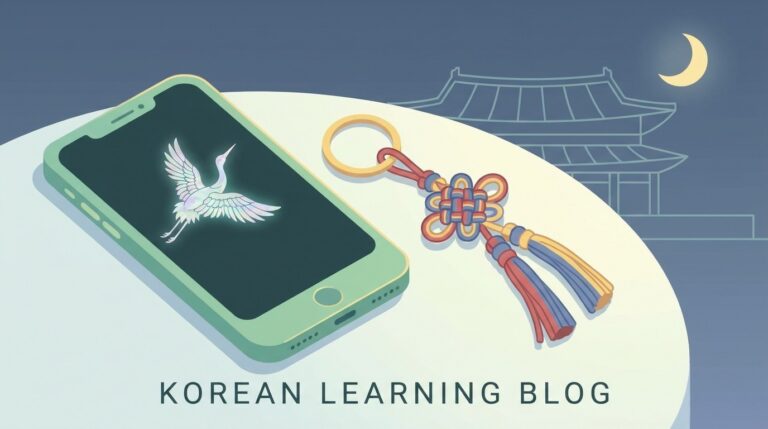
Picture this: You’ve just finished a magical evening stroll under the lanterns of Deoksugung Palace. The gentle night breeze is blowing, the city skyline gleams behind ancient tiled roofs, and your camera roll is already overflowing. As you wander down the cobblestone alleys of Anguk-dong or Bukchon, a warm boutique window catches your eye. Inside, modern smartphone cases, MagSafe grip-toks, and silk knot (maedeup) keyrings are glowing under pinpoint lights. But these aren’t ordinary plastic gadgets—they are inlaid with real najeonchilgi (traditional Korean mother-of-pearl lacquerware), reflecting shifting rainbow hues of emerald, lavender, and silver.
Around you, trendy young Koreans in their twenties are whispering excitedly: “헐, 실물 깡패다… 완전 영롱해!” You pick up an iPhone case adorned with an inlaid crane soaring over gentle waves. It’s the ultimate convergence of old-world Joseon elegance and cutting-edge streetwear aesthetic—what locals proudly dub “힙트래디션” (Hip-Tradition).
You want to ask if it fits your exact phone model, whether they have a matching keyring, and if they offer traditional gift wrapping. But suddenly, your mind freezes. You remember textbook phrases like “이것은 얼마입니까?” (How much is this?), but that feels robotic and misses the fun of engaging with passionate indie artisans.
Don’t worry! Based on real field feedback from our Daily Hangul learners who visit Seoul’s hottest concept stores, this guide gives you the exact phrases, cultural nuances, and conversational confidence you need to shop like a savvy Seoul insider. Let’s turn your souvenir hunt into an unforgettable cultural exchange!
Phase 2: Top 3 Core Expressions
1. 실물이 훨씬 영롱해요! (Silmuri hwolssin yeongnonghaeyo!)
- Pronunciation: [Sil-mu-ri hwol-ssin yeong-nong-hae-yo] (Pronunciation tip: ‘Yeongnong’ flows smoothly from the back of the mouth, resonating like a soft temple chime).
- Meaning: Direct: “The physical item is much more iridescent!” / Nuance: “Photos really don’t do this justice; it looks breathtakingly luminous in real life!”
- K-Culture Moment: You’ll hear K-pop idols and design YouTubers say this during unboxings of National Museum of Korea (MU:DS) merchandise or limited-edition concert goods when the metallic or pearl finish catches the camera light.
- Editor’s Insight: While 예뻐요 (It’s pretty) works for anything, 영롱하다 (yeongnonghada) is a poetic adjective reserved for luminous, iridescent surfaces like morning dew, diamonds, and mother-of-pearl (자개). Using it proves you truly appreciate Korean craft aesthetics.
- Situation Spectrum:
- Casual: 실물이 훨씬 영롱해! (Silmuri hwolssin yeongnonghae!) [⚠️ Friends only]
- Semi-formal: 실물이 훨씬 영롱해요! (Silmuri hwolssin yeongnonghaeyo!) [✅ Boutique staff/Designers]
- Formal: 실물이 훨씬 영롱합니다. (Silmuri hwolssin yeongnonghamnida.) [✅ Official showcases]
- 🤔 Think About It: English often lumps visual beauty into broad terms like “gorgeous” or “shiny.” Why do you think Korean preserves distinct words like 영롱하다 specifically for translucent, multi-layered luster?
2. 이거 완전 제 취향 저격이에요. (Igeo wanjeon je chwihyang jeogyeogieyo.)
- Pronunciation: [I-geo wan-jeon je chwi-hyang jeo-gyeo-gi-e-yo] (Pronunciation tip: ‘Chwihyang’ starts with a clean ‘chw’ sound, like blowing out a birthday candle).
- Meaning: Direct: “This completely snipers my personal taste.” / Nuance: “This is 100% my aesthetic / hits my sweet spot!”
- K-Culture Moment: A staple on Korean variety shows when cast members discover custom hanbok outerwear or accessories that fit their personal fashion identity.
- Editor’s Insight: 취향 means “taste/preference” and 저격 means “sniping/hitting a bullseye.” In modern Korean, when something feels custom-made for your stylistic soul, you call it 취향 저격.
- Situation Spectrum:
- Casual: 이거 완전 내 취향 저격이야! (Igeo wanjeon nae chwihyang jeogyeogiya!) [✅]
- Semi-formal: 이거 완전 제 취향 저격이에요. (Igeo wanjeon je chwihyang jeogyeogieyo.) [✅ Perfect for shopkeepers]
- Formal: 제 취향에 매우 잘 맞습니다. (Je chwihyang-e maeu jal matseumnida.) [🚫 Too stiff for boutique banter]
- 🤔 Think About It: Using the playful military metaphor of “sniping” to describe falling in love with a piece of art shows how modern Korean youth inject energetic humor into casual conversations.
3. 선물용으로 포장 가능할까요? (Seonmulyong-euro pojang ganeunghalkkayo?)
- Pronunciation: [Seon-mul-yong-eu-ro po-jang ga-neung-hal-kka-yo] (Pronunciation tip: Notice the soft double ‘kk’ sound at the end in ‘kkayo’, gently questioning rather than demanding).
- Meaning: Direct: “Is packaging possible for gift purpose?” / Nuance: “Would it be possible to wrap this up as a gift, please?”
- K-Culture Moment: Walking into heritage gift shops near Gyeongbokgung where items come wrapped in exquisite bojagi (traditional cloth wrapping) or minimalist hanji paper.
- Editor’s Insight: Adding -용으로 (-yong-euro, for the purpose of) softens your request and signals to the shopkeeper to offer their signature presentation packaging instead of a simple plastic bag.
- Situation Spectrum:
- Casual: 선물 포장 돼? (Seonmul pojang dwae?) [🚫 Rude to staff]
- Semi-formal: 선물용으로 포장 가능할까요? (Seonmulyong-euro pojang ganeunghalkkayo?) [✅ Standard & highly courteous]
- Formal: 선물용 포장을 부탁드려도 되겠습니까? (Seonmulyong pojang-eul butakdeuryeodo doegesseumnikka?) [✅ Ultra-respectful]
- 🤔 Think About It: In Korea, packaging isn’t just trash to discard; it represents the sender’s sincerity (정, jeong). How does gift wrapping in your home culture compare?
Phase 3: Textbook Korean vs. Real-World Korean
Situation 1: Praising a modern twist on ancient craft
- 📖 교과서 한국어 (Textbook Korean):
“이 전통 공예품은 현대적이고 매우 아름답습니다.”
(I jeontong gong-yepumeun hyeondaejeog-igo maeu areumdapseumnida.)
“This traditional handicraft is modern and very beautiful.” - 🗣️ 진짜 한국어 (Real-World Korean):
“전통 느낌인데 완전 힙해요! 요새 이런 게 대세죠?”
(Jeontong neukkim-inde wanjeon hiphaeyo! Yosae ireon ge daesejyo?)
“It has a traditional vibe, but it’s totally hip! This is the trend these days, right?” - 💡 왜 다를까? (Why the difference?):
Textbooks teach formal adjectives that make you sound like an art history textbook. Locals combine words like 힙하다 (to be hip) and 대세 (the prevailing trend) to create an upbeat, conversational rhythm that validates the designer’s modern vision.
Situation 2: Checking if a grip-tok or phone case fits your device
- 📖 교과서 한국어 (Textbook Korean):
“이 케이스는 제 스마트폰 기종에 맞습니까?”
(I ke-i-seuneun je seumateupon gijong-e matseumnikka?)
“Does this case match my smartphone model?” - 🗣️ 진짜 한국어 (Real-World Korean):
“혹시 이거 아이폰 15 프로도 호환돼요?”
(Hoksi igeo A-i-pon sip-o peu-ro-do hohwandwaeyo?)
“Excuse me, does this happen to be compatible with the iPhone 15 Pro too?” - 💡 왜 다를까? (Why the difference?):
Native speakers cushion inquiries with 혹시 (by any chance) to soften the approach, and they use the tech-friendly loanword 호환되다 (hohwandwoeda, to be compatible) instead of the generic 맞다 (to fit).
Phase 4: K-Culture Deep Dive & Non-Verbal Manners
4-1. 눈치 (Nunchi) & Mindful Touch in Craft Boutiques
Mother-of-pearl (자개) and natural lacquer (옻칠) are resilient once cured, but handmade boutique samples deserve mindful etiquette:
* Two-Handed Appreciation: When lifting a najeonchilgi phone case or silk knot keychain to inspect its detailing, cradle it using both hands. Resting your thumbs along the edges avoids oil transfers onto freshly polished lacquer.
* The 45-Degree Light Tilt: The true luster of najeon cannot be appreciated under direct top-down lighting. Hold the piece at a 45-degree angle toward the boutique lamp and gently tilt your wrist. Shopkeepers love seeing foreign visitors who know how to inspect the authentic shell iridescence.
* Presenting Your Phone Discreetly: Never push your phone into the clerk’s personal space to show your model. Hold your phone near your own chest with the screen illuminated, showing the “Settings > About” screen or camera lens layout.
4-2. The Cultural Phenomenon: “Hip-Tradition” (힙트래디션)
Just a decade ago, mother-of-pearl furniture (자개장) was teased as something you’d only see in your grandmother’s countryside bedroom. However, a massive cultural shift occurred. Propelled by K-pop icons wearing customized modernized hanbok, along with the viral sensation of the National Museum of Korea’s souvenir line (such as miniature Gilt-bronze Maitreya statues and mother-of-pearl stationery), Korea’s Gen Z rebranded heritage arts into “힙트래디션” (Hip-Tradition).
Young Koreans now prioritize sustainable, heirloom-quality craftsmanship over fast fashion accessories. Attaching a hand-tied traditional silk knot (maedeup) to an everyday canvas tote or snapping a shimmering abalone-shell MagSafe grip-tok onto the latest smartphone allows city dwellers to carry a piece of tranquil Joseon history through bustling subway commutes.
Phase 5: Real-World Roleplay Scenario
Setting: Bit-Gyeol Craft (빛결공방), a chic boutique situated in a renovated hanok alley near Anguk Station after the Changgyeonggung Palace Night Tour.
Characters:
* You: An intermediate Korean learner hunting for a special souvenir.
* Min-ji: The 20-something designer-curator wearing a stylish modernized linen jacket.
[Turn 1]
* You: 🎭 (Tilting a shimmering abalone-inlaid phone case under the light with a gentle smile)
안녕하세요! 이거 사진으로 보던 것보다 실물이 훨씬 영롱해요.
(Annyeonghaseyo! Igeo sajin-euro bodeon geotboda silmuri hwolssin yeongnonghaeyo.)
“Hello! This looks so much more iridescent in person than in photos.”
[Turn 2]
* Min-ji: 🎭 (Beaming with pride, placing a velvet display tray on the counter)
어머, 알아봐 주셔서 감사해요! 통영산 천연 자개로 하나하나 수작업한 케이스예요.
(Eomeo, arabwa jusyeoseo gamsahaeyo! Tong-yeong-san cheon-yeon jagae-ro hana-hana sujag-eophan ke-i-seu-ye-yo.)
“Oh my, thank you for noticing! Each case is handcrafted individually with natural mother-of-pearl from Tongyeong.”
[Turn 3]
* You: 🎭 (Showing your current phone display politely)
와, 대단해요. 혹시 이거 갤럭시 S24 울트라 모델도 호환돼요?
(Wa, daedanhaeyo. Hoksi igeo Gaelleoksi S-isipsa Ulteura model-do hohwandwaeyo?)
“Wow, impressive. By any chance, is this compatible with the Galaxy S24 Ultra model as well?”
[Turn 4]
* Min-ji: 🎭 (Nodding warmly and opening a neat wooden drawer behind her)
네, 그럼요! 울트라 기종 재고 딱 두 개 남아 있어요. 자개 문양 한번 골라보시겠어요?
(Ne, geureomyo! Ulteura gijong jaego ttak du gae nama isseoyo. Jagae munyang hanbeon gollabosigesseoyo?)
“Yes, of course! We have exactly two left in stock for the Ultra. Would you like to pick out your preferred shell pattern?”
[Turn 5]
* You: 🎭 (Pointing gently with index and middle finger together at the crane design)
달빛 아래 학이 날아가는 이 디자인이 완전 제 취향 저격이에요.
(Dalbit arae hagi naraganeun i dijain-i wanjeon je chwihyang jeogyeogieyo.)
“This design with the crane soaring under the moonlight totally hits my aesthetic.”
[Turn 6]
* Min-ji: 🎭 (Carefully placing the chosen case on the velvet tray)
안목이 정말 좋으시네요! 여기에 전통 매듭 키링을 같이 달면 훨씬 멋스러워요.
(Anmogi jeongmal joeusineyo! Yeogie jeontong maedeup kiring-eul gachi dalmyeon hwolssin meotseureowoyo.)
“You have wonderful taste! If you pair this with a traditional knot keyring, it looks even more stylish.”
[Turn 7]
* You: 🎭 (Nodding enthusiastically and holding up a matching indigo knot keyring)
좋아요, 그것도 같이 할게요! 저… 친구 줄 건데 선물용으로 포장 가능할까요?
(Joayo, geugeot-do gachi halkeyo! Jeo… chingu jul geonde seonmulyong-euro pojang ganeunghalkkayo?)
“Sounds great, I’ll take that too! Um… this is for a friend, so would it be possible to wrap it as a gift?”
[Turn 8]
* Min-ji: 🎭 (Clapping softly and bringing out an elegant mulberry paper box)
당연하죠! 전통 한지 상자에 예쁜 노리개 태슬 달아서 정성껏 포장해 드릴게요.
(Dang-yeonhajyo! Jeontong hanji sangja-e yeppeun norigae taeseul daraseo jeongseongkkeot pojanghae deurilkeyo.)
“Certainly! I will package it thoughtfully in a traditional Hanji paper box decorated with a pretty norigae tassel.”
🔀 Interactive Decision Point!
You’re finalizing your purchase at the counter and notice a matching mini mother-of-pearl grip-tok on 20% discount if bought together. What do you say?
- Option A: “저기요, 이거 깎아주면 같이 살게요.” (Jeogiyo, igeo kkak-ajumyeon gachi salkeyo. – “Hey, if you give me a discount on this, I’ll buy it together.”)
- Feedback [Bad]: In independent designer craft shops, aggressively demanding price cuts sounds abrasive and diminishes the artisan’s manual effort.
- Option B: “혹시 이 그립톡도 세트로 같이 하면 할인 적용되나요?” (Hoksi i geurip-tok-do seteuro gachi hamyeon harin jeog-yongdoenayo? – “By any chance, if I take this grip-tok as a set, does the discount apply?”)
- Feedback [Best!]: Courteous, utilizes polite cushioning (혹시), and inquires naturally about bundle policies without being pushy.
- Option C: “이거 그냥 서비스로 하나 넣어주세요!” (Igeo geunyang seobiseuro hana neo-eojuseyo! – “Just throw this in for free as ‘service’!”)
- Feedback [Risk]: While asking for 서비스 (freebies) can happen in traditional wet markets with produce, asking for handmade lacquer crafts for free creates intense second-hand embarrassment (수치심).
Phase 6: 10-Second Emotion Shadowing Drill
Read these aloud matching the emotional tone tags! The slash / indicates a micro-pause for rhythmic breathing.
- [✨ Amazed & Wonder-struck]
“와… / 사진으로 보던 것보다 / 실물이 훨씬 영롱해요!”
(Wa… / sajin-euro bodeon geotboda / silmuri hwolssin yeongnonghaeyo!)
“Wow… / compared to what I saw in photos / it’s way more iridescent in person!” -
[🎯 Playfully Enthusiastic]
“이 전통 매듭 키링, / 완전 제 취향 저격이에요!”
(I jeontong maedeup kiring, / wanjeon je chwihyang jeogyeogieyo!)
“This traditional knot keyring, / is completely my aesthetic!” -
[🎁 Polite & Hopeful]
“혹시… / 한지 상자에 / 선물용으로 포장 가능할까요?”
(Hoksi… / hanji sangja-e / seonmulyong-euro pojang ganeunghalkkayo?)
“By any chance… / in a Hanji box / would it be possible to wrap it as a gift?”
Phase 7: K-Culture Mini Dictionary
-
자개 (Jagae)
Pronunciation: [Ja-gae]
Meaning: Mother-of-pearl / Nacre.
Contextual Usage: Refers to thin sheets of abalone or conch shell inlaid into wood or resin. Commonly seen in modern compounds like 자개 케이스 (mother-of-pearl case) or 자개 스티커 (DIY nacre decals). -
그립톡 (Geurip-tok)
Pronunciation: [Geu-rip-tok]
Meaning: Phone grip / PopSocket.
Contextual Usage: Universal Konglish term in Korea for collapsible phone grips attached to the back of devices. In Hip-Tradition shops, look for 자개 그립톡. -
힙트래디션 (Hip-teuraedisyeon)
Pronunciation: [Hip-teu-rae-di-syeon]
Meaning: Hip-Tradition.
Contextual Usage: A trendy blend of English “Hip” and “Tradition.” Used across social media to describe Gen Z’s obsession with reimagined traditional culture—from palace night strolls to Hanbok streetwear and modernized tea houses. -
매듭 (Maedeup)
Pronunciation: [Mae-deup]
Meaning: Traditional Korean decorative knotting.
Contextual Usage: An ancient braided silk craft where intricate symmetrical knots are formed without tools. Today, mini maedeup keyrings are standard EDC (Everyday Carry) accents for AirPod cases and designer bags.
Phase 8: Traveler’s Survival Kit
Survival Expressions TOP 3
- 자개 빛깔이 진짜 예뻐요.
(Jagae bitkkari jinjja yeppeoyo.)
“The mother-of-pearl coloring is genuinely gorgeous.”
Pro Tip: Use 빛깔 (bitkkal, shade of natural glow) instead of basic 색깔 (color) when praising craft luster. - 다른 색상이나 디자인도 볼 수 있을까요?
(Dareun saeksang-ina dijain-do bol su isseulkkayo?)
“Could I possibly see other colors or designs as well?”
Pro Tip: Ideal when you love the craftsmanship but want to browse alternative mother-of-pearl layouts (e.g., peony vs. landscape). - 이거 스크래치에 강한가요?
(Igeo seukeuraechie ganghangayo?)
“Is this resistant to scratches?”
Pro Tip: Crucial practical question for daily accessories like phone cases and keyrings.
Editor’s Travel Note: Palace & Craft Shopping Guide
- Navigation Tip: Google Maps often lacks real-time walking accuracy in historic Seoul alleyways. For hidden craft workshops tucked inside Bukchon and Seochon, use the 네이버 지도 앱 다운로드 to search terms like 공방 (artisan workshop) or 나전칠기 (lacquer craft).
- Palace Night Tour Sync: Both Gyeongbokgung and Changgyeonggung palace night openings feature temporary pop-up craft pavilions near their gates. Check the official Palace Heritage website early—night admission tickets often require advance online reservation, though limited on-site foreigner tickets are sold at the gate with passport verification.
- Tax Refund & Payments: Most craft boutiques accept international credit cards and mobile payments. If spending over 15,000 KRW, ask: “택스 리펀드 영수증 발행되나요?” (Taekseu ripeondeu yeongsujeung balhaengdoenayo? – Can you issue a tax refund receipt?) to save up to 8% at the airport!
Phase 9: 한 발 더 깊이 (A Step Deeper)
For generations, traditional Asian craft was locked away behind glass museum cases or reserved exclusively for elderly ceremonial rites. What makes Seoul’s “Hip-Tradition” movement fascinating from a socio-cultural standpoint is how it reclaims heritage as an active, tactile identity statement. When Korean youths snap a mother-of-pearl grip-tok onto an iPhone or tie a Joseon military knot to their gym backpack, they are not escaping modern tech; they are domesticating hyper-digital life with tactile cultural roots. It’s an assertion that ancient tradition isn’t a dead ritual—it’s a living, breathing design language.
💬 Your Turn: What traditional craft from your own country would look amazing if reinterpreted into a modern smartphone accessory? Tell us in the comments below in Korean or English!
Phase 10: FAQ & Common Mistakes
Q: Is najeonchilgi fragile? Will the mother-of-pearl peel off my phone case?
A: Authentic modern craft items use industrial-grade clear epoxy or traditional lacquer over the shell inlays. While highly scratch-resistant for daily pocket use, avoid dropping your device onto rough asphalt, as localized point impacts can crack natural abalone shell beneath the seal.
Q: Can I use MagSafe wireless chargers through a mother-of-pearl case?
A: Yes, provided the case specifies 맥세이프 호환 (MagSafe compatible). The thin layer of natural shell does not block electromagnetic induction, though cases with extra-thick wooden backplates might slow charging speeds slightly.
Q: Where are the best places in Seoul to buy authentic Hip-Tradition goods?
A: Top recommendations include: 1) The National Museum of Korea Souvenir Shop (MU:DS) in Yongsan, 2) The K-Heritage (KHmall) shops located inside Gyeongbokgung and Incheon Airport, and 3) Indie designer studios clustered along Samcheong-dong and Insadong Ssamzigil.
🚨 Common Mistakes Alert!
- Mistake: Shouting “깎아주세요!” (Kkak-ajuseyo! / Give me a discount!) in indie design studios.
Correct Action: Traditional bargaining belongs in wholesale clothing markets like Dongdaemun. In artisan boutiques, respect the fixed pricing of handmade works. - Mistake: Scratching the surface with fingernails to test if it’s “real shell.”
Correct Action: Test authenticity with your eyes! Natural 자개 shifts colors dynamically under changing light angles, whereas cheap printed vinyl remains flat. - Mistake: Using the overly humble marker 저희 나라 (jeohui nara) when introducing your own country.
Correct Action: Always say 우리 나라 (uri nara) when speaking about your nation to native speakers—humbling your own country with 저희 is considered grammatically awkward.
Phase 11: Action Missions
- 🥉 Bronze Mission (Solo Shadowing): Stand in front of your mirror, hold up your smartphone, and say with expressive enthusiasm:
“이 디자인, 완전 제 취향 저격이에요!”
(I dijain, wanjeon je chwihyang jeogyeogieyo!) -
🥈 Silver Mission (SNS Discovery): Open Instagram or TikTok, search the Korean hashtag #힙트래디션 or #자개케이스, find a craft post you adore, and leave a comment in Korean:
“실물이 진짜 영롱하네요! ✨”
(Silmuri jinjja yeongnonghaneyo!) -
🥇 Gold Mission (Real-World Challenge): Visit an artisan market or heritage museum gift shop (or message a Korean creator on K-craft platforms like Idus). Inquire about compatibility or gift wrapping in Korean using the Phase 5 script!
-
🎮 K-Culture Mission: Watch a vlog of someone touring Seoul’s National Museum of Korea or Insadong. Listen carefully for when someone describes a shimmering object. Can you spot them using the word 영롱하다 or 힙하다?
Phase 12: Interactive Quiz Challenge
1. Situational Judgment: You’ve chosen a delicate mother-of-pearl grip-tok as a souvenir for your sister. What is the most polite and natural way to request gift wrapping at the boutique counter?
(A) 이거 그냥 싸 줘요.
(B) 선물용으로 포장 가능할까요?
(C) 포장 서비스 공짜로 해주세요.
2. Fill-in-the-Blank: Complete the sentence that praises the multi-dimensional, luminous beauty of natural abalone craft:
“사진보다 실물이 훨씬 ________!”
(Hint: B1-level poetic adjective for radiant iridescence, starts with 영)
3. True or False Cultural Quiz:
True or False? In modern Korean, calling something “힙트래디션” (Hip-Tradition) implies that it looks old-fashioned and boring like an outdated museum relic.
👉 Click to reveal answers & explanations!
-
Answer: (B)
Explanation: “선물용으로 포장 가능할까요?” is courteous, natural, and standard for boutique interactions. (A) uses rude casual language (반말), and (C) impolitely demands freebies. -
Answer: 영롱해요 (or 영롱합니다)
Explanation: 영롱하다 (Yeongnonghada) is the perfect descriptor for the glistening iridescence of mother-of-pearl. -
Answer: False
Explanation: “Hip-Tradition” is high praise! It describes traditional Korean culture innovatively reinterpreted into ultra-stylish, trendy lifestyle goods adored by Gen Z.







