

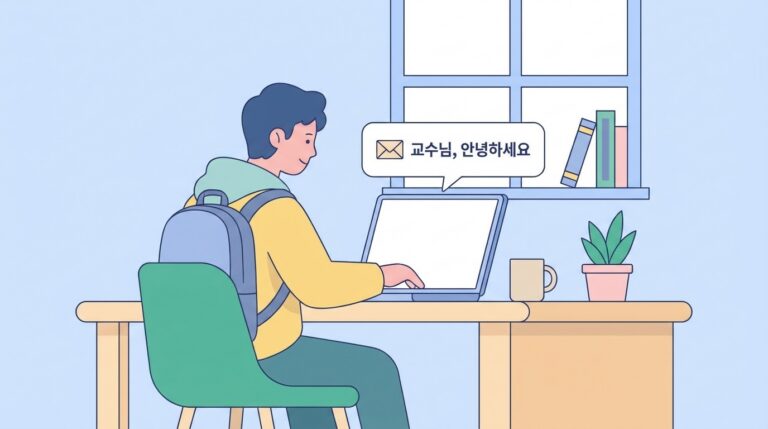
The Art of the Gentle Reminder: Emailing Your Korean Professor Without the Stress
Phase 1: 공감 (Story-driven Opening)
안녕하세요! 매일한글 에디터입니다.
Imagine this scenario: the Global Korea Scholarship (GKS) portal deadline is exactly seven days away. Your personal statement is meticulously polished, your official transcripts are notarized, and your study plan is ready to submit. Yet, every time you refresh your application dashboard, the recommendation letter slot remains empty. Your heart races. You open your email client, type out “Dear Professor…” and freeze. How do you nudge a distinguished Korean professor without sounding demanding, entitled, or impolite?
If you have ever watched the university legal drama Law School or the campus scenes in Cheese in the Trap, you know that Korean academia operates on deep-seated respect, hierarchical protocol, and subtle interpersonal nuances (nunchi). Sending a direct “Did you finish my letter yet?” can unknowingly burn bridges. But don’t panic! Over the past decade, we have guided hundreds of international scholars through this exact high-stakes moment. Today, you will master the art of writing a courteous, stress-free reminder email that protects your relationship while ensuring your scholarship packet gets completed on time.
Phase 2: 핵심 표현 3선 심층 분석
1. 바쁘신 와중에 번거롭게 해 드려 정말 죄송합니다 (Bappeusin wajunge beongeoropge hae deulyeo jeongmal joesonghamnida)
- Pronunciation: [Bah-ppeu-shin wah-joong-eh bun-guh-rop-geh hae deu-ryeo jung-mahl joe-song-hahm-ni-dah] (Sounds like: bah-ppeu-shin / wah-joong-eh)
- Meaning: “I am truly sorry to cause you inconvenience amidst your busy schedule.”
- K-Culture Moment: In the office drama Misaeng, whenever the rookie protagonist Jang Geu-rae needs to ask his senior manager for a critical document update, he opens with this humble phrase.
- Editor’s Insight: In Korean communication, apologizing in advance is not an admission of wrongdoing; it is a rhetorical cushion (kushon-eeo). It acknowledges the professor’s demanding schedule before placing your request.
- Situation Spectrum: Casual 🚫 | Semi-formal ⚠️ | Formal ✅
- 🤔 Think About It: In many Western cultures, repeatedly saying “I’m sorry” before asking a routine question can sound unconfident. Why does Korean culture view this preemptive apology as high emotional intelligence?
2. 혹시 추천서 작성 진행 상황을 여쭈어보아도 될지요? (Hoksi chucheonseo jakseong jinhaeng sanghwang-eul yeojjueoboado doeljiyo?)
- Pronunciation: [Hohk-shi choo-cheon-seo jahk-seong jin-haeng sang-hwang-eul yeo-jjoo-eo-boh-ah-doh doel-ji-yoh]
- Meaning: “By any chance, may I respectfully inquire about the progress of the recommendation letter?”
- K-Culture Moment: Heard often in academic and professional dramas when junior researchers approach department heads to seek status reports without sounding coercive.
- Editor’s Insight: Notice the double softening technique: starting with ‘혹시’ (by any chance) and using the honorific humble verb ‘여쭈다’ (to ask a superior) combined with ‘-아도 될지요?’ (would it be permissible?). This eliminates any demanding tone.
- Situation Spectrum: Casual 🚫 | Semi-formal ⚠️ | Formal ✅
- 🤔 Think About It: Notice how ‘여쭈다’ replaces ‘물어보다’. How does choosing dedicated humble vocabulary alter the social dynamic between speaker and listener?
3. 마감 기한이 일주일 앞으로 다가와 조심스럽게 메일 올립니다 (Magam gihani iljuil apeuro dagawa josimseureopge meil ollimnida)
- Pronunciation: [Mah-gahm gee-hahn-ee eel-joo-eel ahp-eu-roh dah-gah-wah joh-shim-seu-ruhp-geh meh-eel ohl-leem-nee-dah]
- Meaning: “As the deadline is now one week away, I am cautiously sending this email.”
- K-Culture Moment: Frequently seen in formal emails exchanged between startup founders and senior investors in dramas like Start-Up.
- Editor’s Insight: The phrase ‘조심스럽게’ (cautiously / carefully) is a magic word in Korean emails. It explicitly communicates that you know this reminder might add mental load, while ‘올립니다’ (submitting upward) elevates the recipient.
- Situation Spectrum: Casual 🚫 | Semi-formal ⚠️ | Formal ✅
- 🤔 Think About It: Why do Koreans use vertical spatial metaphors like ‘올리다’ (to offer up) instead of just ‘보내다’ (to send) when emailing superiors?
Phase 3: 교과서 한국어 vs 진짜 한국어
Situation 1: Inquiring about the recommendation status
- 📖 교과서 한국어: 추천서를 아직 안 쓰셨나요? (Chucheonseoreul ajik an sseusyeonnayo? / Have you not written the recommendation letter yet?)
- 🗣️ 진짜 한국어: 교수님, 혹시 추천서 관련하여 확인 부탁드려도 되겠습니까? (Gyosunim, hoksi chucheonseo gwanlyeonhayeo hwag-in butakdeulyeodo doegesseumnikka? / Professor, may I gently check with you regarding the recommendation letter?)
- 💡 왜 다를까?: Asking directly if a superior has “not done” something implies negligence and damages interpersonal harmony (gibun). Native speakers reframe the sentence around requesting permission to verify.
Situation 2: Stating the deadline timeline
- 📖 교과서 한국어: 마감이 7일 남았으니 빨리 보내주세요. (Magami chiril namasseuni ppalli bonaejuseyo. / 7 days are left until the deadline, so please send it quickly.)
- 🗣️ 진짜 한국어: 마감 기한이 다가와 노파심에 짧게 메일 올립니다. (Magam gihani dagawa nopasime jjalbge meil ollimnida. / With the deadline drawing near, I am sending a short note purely out of my own nervous concern.)
- 💡 왜 다를까?: The word ‘빨리’ (quickly) triggers extreme pressure. Natural Korean shifts the responsibility onto one’s own anxious heart (‘노파심’), relieving the professor of perceived blame.
Phase 4: K-Culture 딥다이브 & 비언어적 매너
4-1. 눈치 (Nunchi) & Email Etiquette
In Korean academic culture, timing your email is as vital as the words you write. Never send an academic reminder email past 7:00 PM or during the weekend unless an emergency arises. The golden window is Tuesday through Thursday between 9:30 AM and 11:00 AM, right after professors have settled in and reviewed their daily agendas.
Always formulate your subject line with clarity and deference:
[GKS 장학금 지원] 알렉스 학생 추천서 관련하여 정중히 메일 올립니다 (Regarding GKS Scholarship Recommendation: Alex sending a respectful inquiry).
Crucially, re-attach your original study plan, updated CV, and the scholarship foundation’s submission link to the email. Making the professor search through an overloaded inbox creates friction; serving the documents on a digital platter exhibits first-class nunchi.
4-2. Cultural Code Analysis: The Weight of “스승의 은혜” (Grace of the Mentor)
In South Korea, university professors hold an esteemed status inherited from Confucian values. A recommendation letter is not viewed as a simple bureaucratic tick-box; it is considered a personal sponsorship of your character and intellectual future. Professors frequently manage demanding research grants, undergraduate lectures, and university governance. When students understand this administrative weight, reminder emails shift from nagging to a respectful partnership.
Phase 5: 실전 롤플레이 시나리오
Setting: Alex visits Professor Park’s office during office hours after sending a gentle reminder email earlier that week.
- Alex: 교수님, 연구실에 잠시 들어가도 되겠습니까? (Gyosunim, yeon-gusire jamsi deureogado doegesseumnikka? / Professor, may I step into your office for a moment?)
🎭[문 노크 후 조심스럽게 목례하며] - Prof. Park: 어, 알렉스 학생. 들어와요. 무슨 일이에요? (Eo, Al-lek-seu haksaeng. Deureowayo. Museun irieyo? / Oh, Alex. Come in. What brings you here?)
🎭[서류에서 시선을 떼고 미소를 띤다] - Alex: 바쁘신 와중에 불쑥 찾아뵈어 정말 죄송합니다. (Bappeusin wajunge bulssuk chajaboeeo jeongmal joesonghamnida. / I am truly sorry to stop by unannounced amidst your busy schedule.)
🎭[두 손을 모으고 정중한 태도로 서서] - Prof. Park: 아니에요. 지난번 부탁했던 GKS 추천서 때문이죠? (Anieyo. Jinanbeon butakhaetdeon GKS chucheonseo ttaemunijyo? / Not at all. It is about the GKS recommendation letter you requested earlier, right?)
🎭[찻잔을 내려놓으며 모니터를 확인한다] - Alex: 네, 마감 기한이 일주일 앞으로 다가와 노파심에 진행 상황을 여쭈어보아도 될지요? (Ne, magam gihani iljuil apeuro dagawa nopasime jinhaeng sanghwang-eul yeojjueoboado doeljiyo? / Yes, as the deadline is a week away, may I carefully inquire about the progress?)
🎭[차분하고 공손한 목소리로] - Prof. Park: 아, 벌써 일주일 전인가요? 안 그래도 어제 초안 작성을 마쳤어요. (A, beolsseo iljuil jeoningayo? An geuraedo eoje choan jakseong-eul machyeosseoyo. / Ah, is it already a week away? In fact, I finished the draft yesterday.)
🎭[마우스를 클릭하며 서류를 확인한다] - Alex: 혹시 제가 추가로 준비해 드릴 서류나 정보가 필요하실지요? (Hoksi jega chugaro junbihae deuril seolyuna jeongboga pil-yohasiljiyo? / By any chance, are there any additional documents or details I can provide?)
🎭[메모 수첩을 손에 쥐며 적극적으로 경청한다] - Prof. Park: 아니에요, 충분해요. 내일 오후까지 대사관 서식에 맞춰 등록해 둘게요. (Anieyo, chungbunhaeyo. Naeil ohukkaji daesagwan seosige matchwo deungrokhae dulgeyo. / No, it is quite sufficient. I will upload it according to the embassy format by tomorrow afternoon.)
🎭[따뜻하게 웃으며 고개를 끄덕인다]
🔀 인터랙티브 분기점 (Interactive Branching)
What should Alex say next before exiting?
- Option A: “교수님, 내일까지 꼭 제출해 주셔야 합니다!” (Professor, you must submit it by tomorrow without fail!)
- Feedback: [Bad 🚫] Using ‘꼭’ (must) and commanding tone damages the professor’s dignity and violates polite speech etiquette.
- Option B: “신경 써 주셔서 진심으로 감사드립니다. 연구실 일정에 차질 없으시길 바랍니다.” (Thank you sincerely for your support. I wish you smooth progress with your lab schedule.)
- Feedback: [Best ✅] Flawless balance of sincere gratitude, humility, and consideration for the professor’s workload.
- Option C: “네, 확인했습니다. 그럼 가보겠습니다!” (Yes, understood. I will get going then!)
- Feedback: [Risk ⚠️] While not grammatically incorrect, it ends the interaction abruptly without expressing warm appreciation.
Phase 6: 10초 감정 섀도잉 드릴
Practice these lines out loud with appropriate emotional inflection and breathing pauses (/).
[🙇♂️ 조심스럽고 공손하게 / Carefully & Politely]
바쁘신 와중에 / 번거롭게 해 드려 / 정말 죄송합니다.
(Bappeusin wajunge / beongeoropge hae deulyeo / jeongmal joesonghamnida.)-
[🙏 간절하지만 차분하게 / Earnest yet Composed]
마감 기한이 일주일 앞으로 다가와 / 노파심에 조심스럽게 메일 올립니다.
(Magam gihani iljuil apeuro dagawa / nopasime josimseureopge meil ollimnida.) -
[✨ 사려 깊고 적극적으로 / Thoughtful & Proactive]
혹시 추천서 작성과 관련하여 / 추가로 필요하신 서류가 있으실지요?
(Hoksi chucheonseo jakseong-gwa gwanlyeonhayeo / chugaro pil-yohasin seolyuga isseusiljiyo?)
Phase 7: K-Culture 미니 사전
- 노파심 (Nopasim) | Over-anxiety / Cautious concern | Literally meaning “an elderly grandmother’s anxious care,” this word softens reminders by framing the inquiry as one’s own natural worry rather than the recipient’s tardiness.
- 재촉하다 vs 리마인드하다 (Jaechokhada vs Rimaindeuhada) | Pressuring vs Reminding | ‘재촉’ carries a negative nuance of nagging or rushing someone. In Korean business, professionals often use the Konglish loanword ‘리마인드 드리다’ to sound neutral and gentle.
- 올림 / 드림 (Ollim / Deurim) | Respectfully submitted / Offered by | Formal sign-offs placed immediately after your name at the bottom of letters and emails (e.g., 알렉스 올림).
- 첨부파일 (Cheombufail) | Attachment | In academic emails, always mention attached files clearly in the body so recipients do not overlook them.
Phase 8: 여행자를 위한 생존 키트
서바이벌 표현 TOP 3
- 확인 부탁드립니다 (Hwag-in butakdeurimnida)
* Meaning: Please kindly check this.
* Pro Tip: The universal phrase to close business and university emails.
2. 편하신 시간에 확인해 주시면 감사하겠습니다 (Pyeonhasin sigane hwag-inhae jusimyeon gamsahagesseumnida)
* Meaning: I would be grateful if you could review this whenever it is convenient for you.
* Pro Tip: Perfect for removing urgency and showing empathy for busy mentors.
3. 환절기에 건강 유의하십시오 (Hwanjeolgie geongang yu-yihasipsio)
* Meaning: Please take care of your health during this seasonal transition.
* Pro Tip: Standard seasonal courtesy placed right before your sign-off.
Editor’s Travel & Campus Note
When visiting a Korean professor’s office on campus, locate their specific building and room number beforehand using the official university campus map or via the 네이버 지도 앱 다운로드. Korean campuses can be sprawling with steep inclines. Arriving 5 minutes prior and waiting outside until the exact office hour time shows exemplary etiquette.
Phase 9: “한 발 더 깊이” (Cultural Reflection)
In Korean society, formal honorific language (jondaenmal) is not merely a linguistic filter; it is an emotional shock absorber. When an applicant uses indirect clauses like “노파심에 여쭈어봅니다,” they construct a shared psychological space where the professor’s authority is honored while the student’s legitimate urgency is voiced. Politeness here does not signify emotional distance; rather, it manifests deep consideration for the other person’s peace of mind.
💬 Your Turn: In your home country, how do students politely remind professors about approaching deadlines? Do you prefer direct inquiries, or do you also use conversational cushions?
Phase 10: FAQ & 오해 방지 (FAQ Schema)
Q: Can I send a KakaoTalk message to my Korean professor instead of an email?
A: Unless the professor explicitly instructed you to use KakaoTalk, sending mobile messenger texts for official scholarship documentation is considered an overstep of personal boundaries. Always stick to university webmail as your primary channel.
Q: What should I do if the professor does not reply after 3 or 4 days?
A: If 72 to 96 hours pass with no response and the deadline is imminent, visit their departmental office during posted office hours, or call the departmental administrative office (hak-gwa samusil) to politely ask if the professor is currently on campus.
Q: Should I bring a gift when I visit the professor to ask for a recommendation?
A: Be extremely careful. Under South Korea’s anti-graft law (known as the Kim Young-ran Act), university professors are strictly prohibited from accepting gifts or coffee coupons from currently enrolled students when evaluating grades or academic credentials. Sincere words and a warm thank-you card are the best and safest approach.
🚨 Common Mistakes Warning Board
- Mistake 1: Ending sentences in
-요throughout a formal faculty email.
Correct Action: Use formal endings like-습니다and-ㅂ니다for academic correspondence. - Mistake 2: Forgetting to attach the original application guidelines and draft.
Correct Action: Always include the required forms and study plan summary as a PDF attachment. - Mistake 3: Sending follow-up emails late on a Friday evening.
Correct Action: Queue your message to send on Monday or Tuesday morning at 9:30 AM.
Phase 11: 액션 미션 & 참여 유도
- Bronze Mission: Read Expression #2 out loud 5 times using the 10-second shadowing pauses.
- Silver Mission: Draft your own 4-sentence Korean scholarship reminder email in the comments below for community feedback.
- Gold Mission: Send a genuine, properly formatted reminder email to your mentor or advisor using the cushions learned today!
- 🎮 K-Culture Mission: Next time you watch an office or campus K-drama, listen carefully for the words 노파심 or 여쭈어보다 and notice the speaker’s body posture.
Phase 12: 인터랙티브 퀴즈 챌린지
Test your knowledge before hitting send on that crucial email!
1. Situational Judgment: You need to remind your professor one week before the GKS deadline. Which email subject line is the most culturally appropriate?
* A) 교수님, 추천서 아직 안 쓰셨나요? 확인 바랍니다.
* B) [GKS 장학금] 알렉스 학생 추천서 관련하여 조심스럽게 확인 메일 올립니다.
* C) 추천서 마감 일주일 전입니다. 빨리 부탁드립니다.
2. Fill in the Blank: “마감 기한이 다가와 ________에 짧게 메일 올립니다.”
* Hint: A word meaning cautious concern or grandmotherly anxiety.
3. True or False: It is completely fine under Korean university protocol to send a KakaoTalk message to a professor at 10:00 PM on Sunday night if the deadline is Monday morning.
🔍 Click to reveal answers and explanations
1. Answer: B
Explanation: Option B includes clear identification tags and uses respectful phrasing (‘조심스럽게 확인 메일 올립니다’). Options A and C are blunt and disrespectful.
2. Answer: 노파심 (Nopasim)
Explanation: ‘노파심’ humbly frames the email as stemming from the sender’s own anxiety, removing pressure from the professor.
3. Answer: False
Explanation: Messaging a professor’s private messenger on a weekend evening violates academic boundaries and shows a lack of nunchi. Always respect personal hours.







